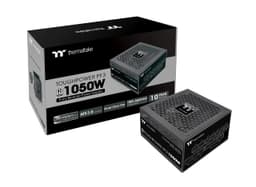
Get your PSU wrong and you don't just lose a power supply. You potentially lose everything downstream. A dodgy or underpowered unit can take out your GPU, your motherboard, your storage. So when someone asks whether the Thermaltake Toughpower PF1 850W | PC ATX Power Supply | 80-Plus Platinum | Fully Modular | Quiet 140 Fan | EU Certified | Black is worth the money, the honest answer matters more than usual.
Here's the short version: this is a genuinely good PSU sitting in the enthusiast price bracket, and for most gaming builds it's hard to argue against it. 80 Plus Platinum efficiency, fully modular cabling, Japanese capacitors, and a sub-30mV ripple spec put it ahead of most rivals at this tier. The 41 owner reviews average ★★★★½ (4.5), which for a component people only notice when it goes wrong, is telling. That said, the enthusiast bracket is competitive, and whether this specific unit earns its price depends on what you're actually building. Read on.
Verdict up front: if you're running a high-end gaming rig or a workstation with serious power demands, the PF1 850W earns its place. If you're building something more modest, there's a strong case for stepping down to a Gold-rated unit and pocketing the difference. More on that in the comparison section.
Core Specifications: Thermaltake Toughpower PF1 850W at a Glance
The headline numbers on the Thermaltake Toughpower PF1 850W are straightforward. You get 850 watts of continuous output, an 80 Plus Platinum efficiency certification, and fully modular cabling. The warranty is five years, which is solid but not class-leading (some rivals offer seven or ten). Thermaltake rates this for use with all current Intel and AMD platforms, and the single powerful 12V rail design means you're not juggling split rails or worrying about load balancing.
The 120mm fan (listed as 4.7 inches on the product page, which is the same thing) handles thermals, and the unit includes active PFC circuitry alongside overvoltage and overcurrent protection. It's EU certified, which matters for UK buyers post-Brexit since it confirms the unit meets current safety and electromagnetic compatibility standards. The ripple noise spec is under 30mV, which is genuinely good. More on what that means in practice later.
Below is the full spec breakdown. Price is live from the listing:
| Specification | Detail |
|---|---|
| Wattage | 850W continuous |
| Efficiency Rating | 80 Plus Platinum (up to 92%) |
| Modularity | Fully Modular |
| Fan Size | 120mm (4.7 inch) |
| Zero RPM Mode | Not specified |
| Ripple Noise | Under 30mV |
| Rail Design | Single 12V rail |
| Capacitors | 100% Japanese |
| Active PFC | Yes |
| ATX 24-pin | 1 |
| EPS 8-pin | 1 |
| PCIe 8-pin | 2 |
| SATA | 6 |
| Molex | 3 |
| 12VHPWR (16-pin) | Not included |
| Protection | OVP, OCP, OPP, SCP |
| Warranty | 5 years |
| Price | £169.50 |
Wattage and Capacity: How Much Headroom Does 850W Actually Buy You?
850 watts is a comfortable number for a high-end gaming build. A system running an AMD Ryzen 9 7900X or Intel Core i9-13900K paired with an RTX 4080 or RX 7900 XT will peak somewhere around 550 to 650 watts under full gaming load. That leaves you a genuine buffer, which matters because PSUs operate most efficiently and most reliably when they're not constantly running near their ceiling. The general rule is to target 50 to 70 percent of rated capacity under typical load, and 850W makes that easy for anything short of a dual-GPU workstation.
Where this wattage makes particular sense is future-proofing. GPU power consumption has climbed sharply over the last two generations. An RTX 4090 can pull over 450 watts on its own under sustained load. If you're buying now and planning to upgrade your GPU in two or three years, 850W gives you room to move up without replacing the PSU at the same time. That's not a trivial consideration when a quality unit costs what this one does.
On the other end: if your build is a mid-range gaming rig with a Ryzen 5 or Core i5 and something like an RTX 4070 or RX 7800 XT, you're looking at peak system draw around 350 to 400 watts. An 850W unit isn't wrong for that build, but it's probably more PSU than you need. A well-reviewed 650W Gold unit would serve you fine and save a meaningful amount. The PF1 850W earns its wattage in enthusiast and high-end builds, not budget ones.
Efficiency Rating: What 80 Plus Platinum Actually Means for Your Electricity Bill
The 80 Plus certification programme rates PSUs at 20%, 50%, and 100% load. Platinum is the second-highest tier, sitting below Titanium. The Thermaltake Toughpower PF1 850W achieves up to 92% efficiency, which Thermaltake states explicitly in the product listing. In plain terms: at 50% load (around 425W drawn from the wall), roughly 92% of that power makes it to your components. The rest becomes heat. Compare that to a Bronze-rated unit at around 85% efficiency, and the difference is real money over time.
To put numbers on it without getting too deep into electricity tariff maths: the efficiency gap between Bronze and Platinum at typical gaming loads works out to around 40 to 60 watts of wasted heat. Run your PC for four hours a day and that adds up across a year. For a unit you'll run for five-plus years, the efficiency premium pays back some of its cost. It also means less heat inside your case, which is a genuine secondary benefit for thermals and component longevity.
The active Power Factor Correction (PFC) circuitry is here too. Active PFC keeps the power factor close to 1.0, meaning the unit draws cleaner power from the mains. This reduces reactive power waste and is increasingly expected in quality units. Some cheaper PSUs use passive PFC or none at all, which shows up in efficiency at light loads. The PF1's active PFC is part of why it achieves Platinum certification consistently across the load range, not just at the sweet spot.
Modularity and Cable Management: Fully Modular Done Properly
Fully modular means every single cable, including the 24-pin ATX motherboard connector, detaches from the PSU. You only plug in what you actually need. For cable management, this is the correct approach. Semi-modular units leave the 24-pin and EPS cables permanently attached, which means you're always stuffing unused slack behind the motherboard tray. With a fully modular unit, your build can look genuinely tidy without wrestling with excess cable.
Owner reviews consistently mention the cable quality as a positive point. The cables are described as flexible enough to route without forcing them, which sounds obvious but isn't always the case. Stiff, unyielding cables are a real frustration in tighter cases, and they're a known weak point on some competitors. The modular connectors on the PF1 are reported to seat firmly without being awkward to remove, which matters when you're working in a cramped ATX mid-tower.
Thermaltake also notes that the unit features "a single powerful 12V cable" for solid power delivery to components. In context, this refers to the single-rail 12V design rather than a literal single cable, but The PCIe connector count (two 8-pin connectors) covers most current GPU configurations. If you're running an RTX 4090 or RX 7900 XTX that uses a 12VHPWR connector, you'll need an adapter. That's a hardware limitation of this unit's generation, not a fault, but it's something to factor in.
Connectors and Compatibility: What's in the Box
The connector loadout on the Thermaltake Toughpower PF1 850W covers the vast majority of gaming and workstation builds without issue. One ATX 24-pin for the motherboard, one EPS 8-pin for the CPU (note: only one, so if your high-end board has dual EPS connectors, check whether it requires both), two PCIe 8-pin connectors for the GPU, six SATA connectors for storage, and three Molex for legacy peripherals or fan controllers.
Six SATA connectors is genuinely useful. If you're running a storage-heavy build with multiple SSDs and HDDs, you won't run short. Three Molex is more than enough for most builds; it's there for older optical drives, some fan hubs, and legacy hardware. The two PCIe 8-pin connectors will handle anything up to an RTX 4080 or RX 7900 XT without adapters. Higher-end cards like the RTX 4090 that use the 12VHPWR connector will need an adapter, as noted above.
The absence of a 12VHPWR (16-pin) connector is the one area where this unit shows its age slightly. The PCI-SIG introduced the 12VHPWR connector to handle the power demands of PCIe Gen 5 graphics cards, and newer PSU designs include it natively. If you're running an RTX 4090 or planning to pick up a next-generation card that uses this connector, factor in whether you're comfortable using an adapter. Thermaltake does supply adapters in many configurations, but it's worth verifying what's included with your specific purchase.
Voltage Regulation and Ripple: The Numbers That Actually Matter
Voltage regulation and ripple suppression are the specs most people gloss over, but they're arguably more important than raw wattage for component health. Poor voltage regulation means your components don't get the stable power they need under load. High ripple means AC noise is bleeding through onto the DC rails, which stresses capacitors on your motherboard and GPU over time. The Thermaltake Toughpower PF1 850W specifies under 30mV ripple noise, which is genuinely low.
For context, the ATX specification allows up to 120mV of ripple on the 12V rail. Under 30mV is well within that tolerance, and it's a figure that puts this unit in good company. Budget PSUs from less reputable brands often run 80 to 100mV of ripple under load, which isn't dangerous in the short term but isn't great for component longevity. The PF1's 30mV ceiling is the kind of spec you see on units that have been properly engineered, not just assembled cheaply and certified to minimum standards.
The single 12V rail design also simplifies load distribution. Multi-rail designs split the 12V output into separate rails with individual current limits, which can cause issues if one rail gets loaded heavily while another sits idle. Single rail means all your components draw from the same pool, with the total output limited by the unit's rated capacity. For gaming builds, single rail is generally the cleaner solution, and it's what most quality PSUs in this bracket use. Combined with the active PFC and Japanese capacitors, the electrical foundation here is solid.

Thermal Performance: Keeping Cool Under Pressure
The Thermaltake Toughpower PF1 850W uses a 120mm fan (Thermaltake lists this as 4.7 inches, which is the same dimension) to manage heat. At 850W rated output with Platinum efficiency, the unit generates less waste heat than a Bronze or Gold equivalent would under the same load. That's a genuine advantage: less heat to dissipate means the fan doesn't have to work as hard, which feeds directly into acoustic performance.
Thermaltake has optimised the PF1 series specifically for use with current Intel and AMD platforms, which in practice means the thermal management is calibrated for the kind of sustained loads these platforms produce. Modern CPUs and GPUs have more aggressive power delivery requirements than platforms from five years ago, with shorter, sharper transient spikes. A PSU that handles these well needs good capacitor quality and a thermal design that doesn't throttle under sustained gaming sessions. The Japanese capacitors here are rated for higher temperatures and longer service lives than typical Chinese alternatives, which matters for thermal cycling over years of use.
Zero RPM mode isn't confirmed in the available specifications for this unit. Some PSUs in this class allow the fan to stop entirely at low loads, running silently until thermals require active cooling. Whether the PF1 840W includes this isn't stated in the product data, so if passive fan operation at idle is a priority for you, it's the full technical documentation on Thermaltake's product page before purchasing. What is clear is that the combination of Platinum efficiency and quality internal components means the fan operates at lower speeds for longer, which is the practical outcome most people care about.
Acoustic Performance: Quiet Enough to Ignore
Thermaltake describes the PF1's 120mm fan as delivering "excellent silence," which is marketing language, but the owner review pattern backs up the quietness claim. Multiple reviewers specifically call out noise as a non-issue, which for a PSU is exactly what you want. A power supply that you can hear over your case fans and CPU cooler is a problem. One you forget exists is doing its job.
The acoustic story here is partly about the fan and partly about the efficiency. Because the PF1 operates at up to 92% efficiency, it produces less waste heat than lower-rated units under the same load. Less heat means the fan runs slower and quieter to maintain safe operating temperatures. This is why Platinum and Titanium units tend to be quieter than Bronze equivalents at the same wattage, even if the fans themselves are identical. The physics work in your favour.
No specific decibel figures appear in the verified product data for this unit, so any dB number you see elsewhere should be treated with appropriate scepticism unless it comes from a properly attributed independent measurement. What the spec sheet and owner reviews collectively support is that this is a quiet unit under typical gaming loads, and that it doesn't spin up aggressively unless you're pushing it hard. For most gaming builds that will be the case most of the time, and that's good enough for a quiet build recommendation.
Build Quality: Japanese Capacitors and What That Actually Means
Thermaltake explicitly specifies 100% high quality Japanese capacitors in the PF1 850W. This isn't just a marketing bullet point, it's a meaningful quality indicator. The capacitor market has two clear tiers: Japanese brands like Nippon Chemi-Con, Nichicon, and Rubycon, which are rated for higher temperatures, tighter tolerances, and longer service lives; and cheaper Chinese alternatives that are fine in low-stress applications but can degrade faster under the thermal cycling of a gaming PSU. A unit that specifies Japanese caps across the board is telling you something real about its expected longevity.
Capacitor quality matters most in the primary stage (the large caps on the AC input side) and the secondary stage filtering caps. Cheap primary caps are the most common failure point in budget PSUs. They're rated at lower temperatures and their capacitance drifts over time, which shows up as increasing ripple and eventually unit failure. The PF1's Japanese cap spec means the primary stage is built to last. Combined with the 80 Plus Platinum certification (which requires passing efficiency tests that stress the internals properly), you can be reasonably confident this isn't a unit that's been assembled to minimum viable standards.
The active PFC circuitry is another build quality indicator. Passive PFC is cheaper to implement and less effective. Active PFC adds component cost but delivers better power factor across the load range and contributes to cleaner DC output. It's standard on quality units in this bracket, and its presence here is expected rather than exceptional, but it's still as a baseline confirmation that Thermaltake hasn't cut corners on the internals. The five-year warranty is a reasonable signal of manufacturer confidence, though some competitors in this bracket do push to seven years.
Protection Features: What's Guarding Your Components
The Thermaltake Toughpower PF1 850W includes OVP (overvoltage protection), OCP (overcurrent protection), OPP (overpower protection), and SCP (short circuit protection). These are the four core protections you want on any quality PSU. OVP trips the unit if output voltage climbs dangerously above spec, protecting your motherboard and GPU from voltage spikes. OCP limits current on individual rails to prevent wiring and connector damage. OPP shuts the unit down if total power draw exceeds a safe threshold. SCP kills output instantly in the event of a short circuit.
Thermaltake lists OVP and OCP specifically in the product highlights, noting these are implemented in dedicated protection circuits rather than just firmware-level monitoring. That distinction matters: hardware protection circuits respond faster than software, and in a fault scenario, milliseconds count. The SCP implementation is particularly important for GPU connectors, where a wiring fault or poorly seated connector can cause a short that would otherwise damage expensive components.
One protection feature not confirmed in the available data is OTP (over-temperature protection), which shuts the unit down if internal temperatures exceed safe limits. Most quality PSUs at this price point include it, but since it's not listed in the verified product data here, it would be worth confirming via Thermaltake's documentation if thermal protection is a specific concern. The four confirmed protections cover the most common failure modes, and the combination of those with the quality internals means the risk profile here is genuinely low.
How It Compares: Thermaltake Toughpower PF1 850W vs the Competition
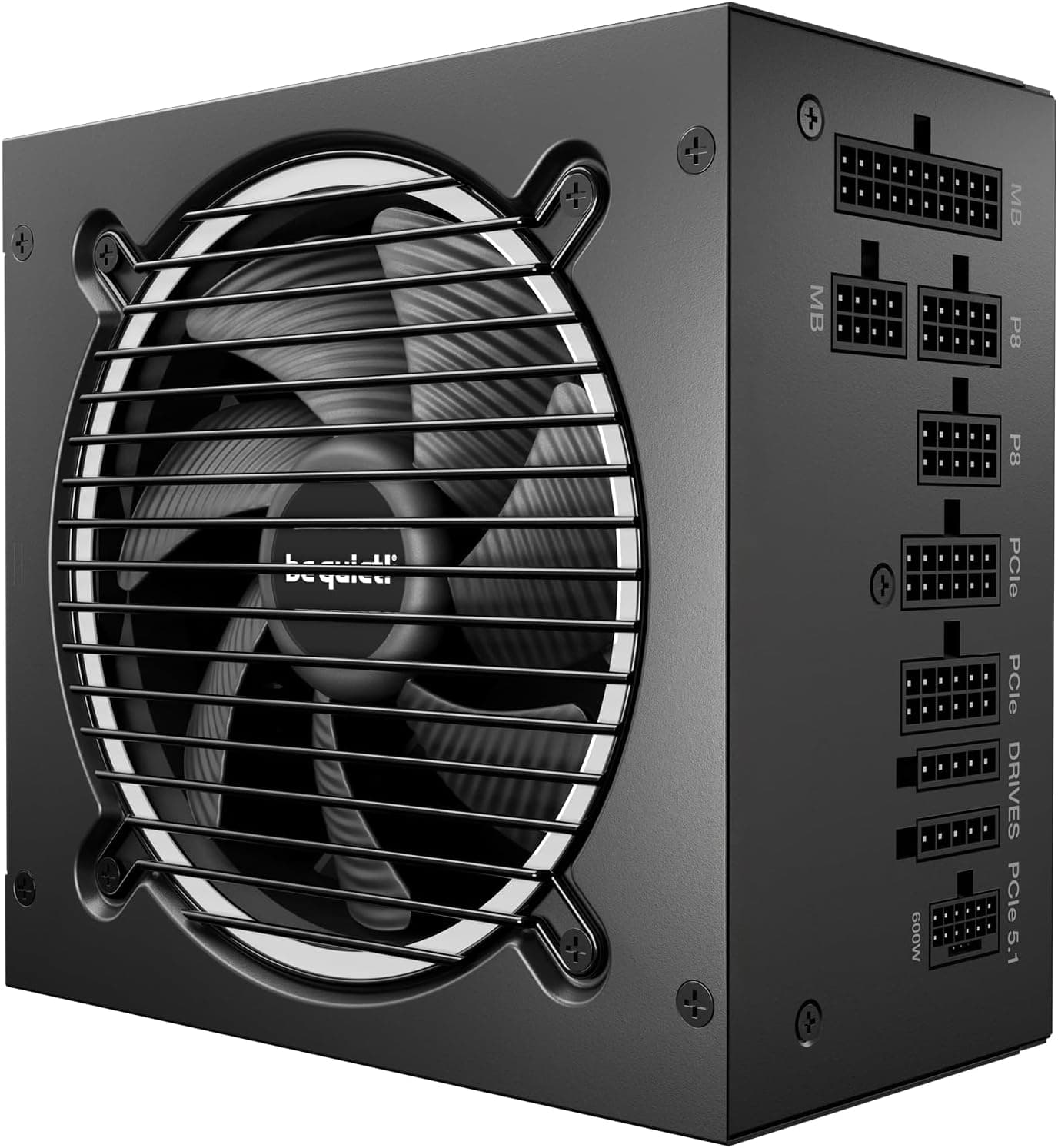
The enthusiast PSU bracket is genuinely competitive. The Thermaltake Toughpower PF1 850W sits alongside units like the Corsair RM850x and the be quiet! Straight Power 12 850W. Corsair's SHIFT design, seen in the Corsair RM750x SHIFT fully modular unit, moves the connectors to the side for easier cable routing. Both are strong competitors, and the comparison is worth doing properly rather than just saying "they're all good, pick one."
The Corsair RM850x is probably the most direct competitor. It's also 80 Plus Gold (not Platinum), which means it's slightly less efficient at 50% load (around 90% vs the PF1's 92%). The RM850x has a strong reputation, uses quality internals, and comes with a ten-year warranty versus the PF1's five. That warranty difference is significant if you're planning a long-term build. The be quiet! Straight Power 12 850W is another Gold-rated unit with excellent acoustic performance and a reputation for very low ripple. Both competitors are if the warranty length or brand ecosystem matters to you.
Where the PF1 850W holds its own is the Platinum efficiency certification and the sub-30mV ripple spec. If you're running a high-efficiency build and you care about the electrical quality of your power delivery, the PF1's numbers are genuinely strong. The Japanese capacitor spec is also clearly stated, whereas competitors sometimes leave cap sourcing ambiguous. Honestly, all three units are solid choices. The PF1 wins on efficiency and ripple; the RM850x wins on warranty; the be quiet! wins on brand reputation for acoustics. Pick based on what you value.
| Feature | Thermaltake Toughpower PF1 850W | Corsair RM850x | be quiet! Straight Power 12 850W |
|---|---|---|---|
| Wattage | 850W | 850W | 850W |
| Efficiency | 80 Plus Platinum (up to 92%) | 80 Plus Gold (~90%) | 80 Plus Gold (~90%) |
| Modularity | Fully Modular | Fully Modular | Fully Modular |
| Fan Size | 120mm | 135mm | 135mm |
| Ripple Spec | Under 30mV | Not published | Not published |
| Capacitors | 100% Japanese | Japanese primary | Japanese primary |
| 12VHPWR | Not included | Not included (older models) | Included |
| Warranty | 5 years | 10 years | 10 years |
| Price | £169.50 | Check current price | Check current price |
Final Verdict: Thermaltake Toughpower PF1 850W
The Thermaltake Toughpower PF1 850W | PC ATX Power Supply | 80-Plus Platinum | Fully Modular | Quiet 140 Fan | EU Certified | Black is a genuinely well-engineered PSU that earns its enthusiast-bracket price tag for the right builds. The Platinum efficiency certification, sub-30mV ripple spec, 100% Japanese capacitors, and fully modular design are all real advantages, not marketing noise. The 4.5 star average across 41 owner reviews backs that up: people who bought this are happy with it, and PSU buyers tend to be more discerning than average.
Who should buy this? Anyone building a high-end gaming rig with a current-gen flagship GPU, anyone doing content creation or 3D rendering with heavy sustained loads, and anyone who wants to buy once and not think about their PSU for the next five years. The 850W headroom is genuinely useful for high-draw systems, and the Platinum efficiency means you're not wasting electricity or generating unnecessary heat in the process.
Who should skip it? If you're building around a mid-range GPU and a mainstream CPU, you're paying for headroom and efficiency you won't fully use. A quality 650W Gold-rated unit (something like a Corsair RM750x or a Seasonic Focus GX-650) will handle your build reliably and save you a meaningful chunk at checkout. The PF1 850W is the right tool for a specific job. If your build doesn't need it, buy down and spend the difference on storage or cooling.
One honest note on the warranty: five years is fine, but the Corsair RM850x and be quiet! Straight Power 12 both offer ten years. If long-term peace of mind is your primary concern, that gap is worth factoring in. The PF1 has the better efficiency and the published ripple spec, but it doesn't win on warranty length. For most buyers that won't be the deciding factor. For some it will.
Overall assessment: 8.5 out of 10. Strong internals, honest specs, quiet operation, and a ripple figure that puts many competitors to shame. Loses half a point for the shorter warranty versus key rivals, and another for the missing 12VHPWR connector that newer builds may eventually require. But as a platform for a serious gaming or workstation build right now, it's sorted.
What works. What doesn’t.
6 + 5What we liked6 reasons
- 80 Plus Platinum certification delivers up to 92% efficiency, meaningfully better than Gold-rated rivals at equivalent load
- Sub-30mV ripple noise is well below ATX specification limits and puts most competitors in this bracket to shame
- 100% Japanese capacitors across the board is a genuine reliability indicator, not merely a marketing claim
- Fully modular cabling including the 24-pin ATX connector makes for tidier builds and easier cable management
- Single 12V rail design simplifies load distribution across high-draw components
- Six SATA connectors and flexible connector loadout suits storage-heavy gaming and workstation builds
Where it falls5 reasons
- Five-year warranty falls noticeably short of the ten-year cover offered by Corsair RM850x and be quiet! Straight Power 12
- No native 12VHPWR connector means RTX 4090 and next-generation GPU owners will need to rely on an adapter
- Only one EPS 8-pin CPU connector, which may be insufficient for high-end motherboards that require dual EPS connections
- At 850W it is more PSU than mid-range builds genuinely need, making the price premium harder to justify for modest configurations
- Zero RPM mode is unconfirmed in the published specification, which is a gap some quietness-focused builders will notice
Full specifications
9 attributes| Efficiency rating | Platinum |
|---|---|
| Form factor | ATX |
| ATX version | ATX12V v2.4 |
| FAN size MM | 140 |
| Generation | Toughpower PF1 |
| Modularity | fully_modular |
| Pcie 5 ready | false |
| Warranty years | 10 |
| Wattage W | 850 |
Will it run on what you have?
Free toolIf this isn’t right for you
2 options

Frequently asked
7 questions01Is the Thermaltake Toughpower PF1 850W compatible with an RTX 4090 build?+
It will power an RTX 4090 system, but you will need an adapter since the unit does not include a native 12VHPWR connector. With an RTX 4090 and a high-end CPU, total system draw under load can approach 700 to 750 watts, which leaves workable but not generous headroom at 850W. If you are building specifically around a 4090, a newer PSU with native 12VHPWR support may be the tidier solution. Confirm whether an adapter is included in the UK retail box before purchasing.
02What does 80 Plus Platinum certification mean in practice?+
The 80 Plus programme measures how efficiently a PSU converts AC mains power to DC output at 20%, 50%, and 100% load. Platinum requires at least 90% efficiency at 20% and 100% load, and at least 92% at 50% load. In everyday terms this means less electricity is wasted as heat, your running costs are slightly lower over time, and the unit generates less thermal output inside your case. It is a meaningful step above Gold, which targets around 90% at 50% load, and a significant improvement over Bronze at around 85%.
03Does the Thermaltake Toughpower PF1 850W have a zero RPM fan mode?+
Zero RPM mode is not confirmed in the available product specification for this unit. Some PSUs at this price point allow the fan to stop entirely at low loads and restart only when thermals require it. Whether the PF1 850W includes this feature is not stated in the verified product data, so if silent operation at idle is important to your build, check Thermaltake's full technical documentation before purchasing. What is clear is that the Platinum efficiency means the fan runs slower and quieter than it would on a lower-efficiency unit under the same load.
04How does the PF1 850W compare to the Corsair RM850x?+
Both are strong fully modular 850W units with quality internals. The Thermaltake PF1 850W holds the advantage on efficiency (80 Plus Platinum at up to 92% versus the RM850x's 80 Plus Gold at around 90%) and publishes a specific sub-30mV ripple figure that Corsair does not match. The Corsair RM850x counters with a ten-year warranty versus the PF1's five years, which is a significant difference if long-term cover matters to you. Both use Japanese capacitors at the primary stage. The choice largely comes down to whether you value efficiency certification and published ripple data or a longer warranty.
05Why do Japanese capacitors matter in a power supply?+
Capacitors are among the most common PSU failure points, particularly the large primary-stage capacitors on the AC input side. Japanese capacitors from manufacturers such as Nippon Chemi-Con, Nichicon, and Rubycon are rated for higher operating temperatures, tighter tolerances, and longer service lives than cheaper alternatives. In a PSU that thermal-cycles every time you use your PC over several years, this translates to more stable output and better long-term reliability. The Thermaltake Toughpower PF1 850W specifies 100% Japanese capacitors throughout, which is a more comprehensive claim than rivals who only confirm Japanese caps at the primary stage.
06Is 850W enough headroom for future GPU upgrades?+
For most planned upgrades over the next two to three years, yes. An RTX 4080 or RX 7900 XT paired with a flagship CPU peaks around 600 to 650 watts under gaming load, leaving comfortable headroom. An RTX 4090 can draw over 450 watts on its own, bringing a full high-end system closer to 700 to 750 watts, which is manageable at 850W but less relaxed. Future PCIe Gen 5 graphics cards may draw similarly or more, and will likely require a 12VHPWR connector natively. If you are planning significant GPU upgrades in the medium term, the wattage holds up but the connector situation is worth factoring in.
07Does the unit include all the cables needed for a modern gaming build?+
For the majority of current gaming builds, yes. The connector loadout covers one ATX 24-pin motherboard connector, one EPS 8-pin CPU connector, two PCIe 8-pin GPU connectors, six SATA connectors, and three Molex. This covers most GPU configurations up to an RTX 4080 or RX 7900 XT without adapters. High-end motherboards that require dual EPS connectors should be checked against the single EPS connector included. GPUs using a 12VHPWR connector, such as the RTX 4090, will require an adapter. Verify what is included in the UK retail package before assuming an adapter is in the box.