You know what actually kills a PC build? Not a dodgy GPU. Not a cheap motherboard. It's the power supply nobody thought twice about. I've seen it happen more times than I'd like to admit, usually when someone's dropped serious money on an RTX 5090 or a Ryzen 9 and then grabbed whatever PSU was cheapest on the day. The cables are stiff, the fan sounds like a hairdryer, and six months later they're wondering why their system keeps crashing under load. So when Asus sent over the Asus ROG Strix 1000W Platinum White PSU, Fully Modular, 80+ Platinum, ATX 3.1, PCIe 5.0, GaN MOSFET, Intelligent Voltage Stabilizer, I was genuinely curious whether this thing could back up the spec sheet with real-world performance.
Here's the thing: 1000W sounds like overkill until you actually start adding up your system's draw. A high-end GPU alone can spike past 400W under load. Throw in a power-hungry CPU, NVMe drives, RGB everything, and a chunky AIO cooler, and you're eating into headroom faster than you'd think. The ROG Strix 1000W White is pitched squarely at enthusiast builders who want proper headroom, proper efficiency, and a PSU that doesn't look like an afterthought when the side panel's off.
This isn't a PSU you buy because it's the cheapest option. It's one you buy because you're building something serious and you don't want to revisit the power supply decision in two years. Whether it actually earns that premium is what we're here to find out.
Core Specifications: Asus ROG Strix 1000W Platinum White PSU
Let's get the numbers on the table first. The ROG Strix 1000W White is a fully modular unit carrying an 80 Plus Platinum efficiency certification, which puts it well above the Bronze and Gold units that dominate the mid-range market. It's built to the ATX 3.1 standard, meaning it's designed with modern GPU power delivery in mind, and it includes native PCIe 5.0 support via a 12VHPWR connector. That matters a lot if you're running an RTX 5080, 5090, or any future card that leans on the 16-pin connector for its power delivery.
Asus has also built this around GaN MOSFET technology, which is genuinely interesting at this price point. GaN transistors switch faster and run cooler than traditional silicon MOSFETs, which contributes directly to the efficiency figures and helps keep thermals in check. The Intelligent Voltage Stabilizer is Asus's own implementation for keeping the 12V rail tight under transient loads, which is exactly what you need when a GPU spikes from idle to full draw in milliseconds. On paper, this is a properly specified unit. The warranty sits at five years, which is decent but not class-leading at this tier.
Here's the full spec breakdown:
| Specification | Detail |
|---|---|
| Wattage | 1000W |
| Efficiency Rating | 80 Plus Platinum |
| Modularity | Fully Modular |
| Form Factor | ATX 3.1 |
| PCIe Standard | PCIe 5.0 / 12VHPWR |
| MOSFET Technology | GaN (Gallium Nitride) |
| Fan Size | 120mm |
| Zero RPM Mode | Yes (semi-passive) |
| Warranty | 5 Years |
| ATX 24-pin | 1 |
| EPS 8-pin | 1 |
| PCIe 8-pin | 2 |
| 12VHPWR (16-pin) | 1 |
| SATA | 6 |
| Molex | 3 |
| Protection | OVP, OCP, OPP, SCP |
| Current Price | £209.99 |

Wattage and Capacity: Is 1000W Actually Enough?
Right, so 1000W. Is that a lot? Honestly, it depends entirely on what you're plugging into it. For a mid-range build with something like an RTX 4070 and a Ryzen 7 7700X, you're probably looking at a peak system draw of around 450-500W under full gaming load. That means you'd be running this PSU at roughly 50% capacity, which is actually the sweet spot for efficiency on any unit. So in that scenario, 1000W is generous headroom, and the PSU will be running cool and quiet all day.
Where 1000W starts to make real sense is when you're pushing the top end of the GPU stack. An RTX 5090 can pull close to 600W on its own under sustained load, and paired with a Core i9 or Ryzen 9 that's pulling 200W+ under all-core workloads, you're suddenly looking at 800W+ system draw before you've even counted storage, fans, and RGB. At that point, 1000W gives you a reasonable buffer without going into the territory of a 1200W or 1600W unit. For most enthusiast builds, this is the right ceiling.
For entry-level and mid-range builds, frankly, this is overkill. You'd be paying a premium for headroom you'll never use. But if you're building a high-end gaming rig, a content creation workstation, or you're planning to upgrade your GPU in the next couple of years and don't want to swap the PSU too, 1000W is a sensible long-term investment. The ATX 3.1 compliance also means this unit is ready for whatever the next GPU generation throws at it in terms of power delivery requirements.
Efficiency Rating: What 80 Plus Platinum Actually Means for Your Electricity Bill
The 80 Plus certification scheme runs from Bronze at the bottom through Silver, Gold, Platinum, and Titanium at the top. Platinum certification requires at least 90% efficiency at 20% load, 92% at 50% load, and 89% at full load. In practice, that means if your system is drawing 500W from the wall, at least 460W of that is actually going to your components. The rest becomes heat. Compare that to a Bronze unit, which might only hit 85% at 50% load, and you're wasting noticeably more power as heat every single hour your PC is running.
Over the course of a year, the difference between Platinum and Bronze efficiency adds up. If you're gaming six hours a day at an average system draw of 400W, a Bronze PSU might waste around 60W more than a Platinum unit at that load. That's roughly 130kWh per year, which at current UK electricity rates is a meaningful saving. It won't pay back the premium cost of a Platinum unit overnight, but over a five-year ownership period it starts to make financial sense, especially as energy prices in the UK have been anything but predictable lately.
I was running this PSU in a system with an RTX 4080 Super and a Ryzen 9 7950X. Under gaming load, the system was drawing around 520W from the wall. The PSU was running noticeably cooler than the Gold-rated unit I'd had in the same rig previously, and the fan was barely audible at that load level. The GaN MOSFET design genuinely seems to help here. Less heat generated internally means the fan doesn't need to work as hard, which feeds directly into the acoustic performance too.
Modularity and Cable Management: Fully Modular Done Properly
Fully modular means every single cable, including the 24-pin ATX, unplugs from the PSU itself. That's the ideal setup for cable management because you only install what you actually need. No bundles of unused cables stuffed behind the motherboard tray. No fighting with a fixed 24-pin that's six inches too long. You start with a clean slate and build up from there. For a white build specifically, this matters even more because you'll likely be running white sleeved cables and you really don't want any extra clutter visible through a glass panel.
The cables Asus includes with this unit are properly good. The main ATX cable is flat and flexible, which sounds like a minor thing until you've tried to route a stiff, round cable through a tight case. The PCIe cables are similarly well-behaved, and the 12VHPWR cable has a proper 90-degree connector on the GPU end, which reduces stress on the connector itself. This is something that matters with 16-pin connectors, given the early melting issues that plagued some third-party cables on RTX 4090s. Asus has clearly paid attention to that history.
The cable bag is included and well-organised. Each cable type is labelled, which sounds trivial but genuinely saves time when you're mid-build and trying to figure out which connector goes where. The SATA cables are daisy-chained in a sensible way, and the Molex connectors are there for legacy hardware without being shoved in your face. Honestly, the cable kit here is one of the better ones I've seen at this tier. It's the kind of thing that makes a build feel sorted rather than cobbled together.
Connectors and Compatibility: Asus ROG Strix 1000W Platinum White PSU
The connector lineup on this PSU is well thought out for a modern high-end build. You get one 24-pin ATX for the motherboard, one EPS 8-pin for the CPU (worth noting that some high-end motherboards want two EPS connectors, so check your board's requirements before buying), two PCIe 8-pin connectors for older GPU configurations, and one native 12VHPWR connector for PCIe 5.0 GPUs. The 12VHPWR is built to the ATX 3.1 spec, meaning it can handle the transient power spikes that modern GPUs throw at it without the voltage sag issues that plagued earlier implementations.
Storage connectivity is solid. Six SATA connectors will cover even the most storage-heavy builds, and three Molex connectors handle legacy devices, fan controllers, and older hardware. Here's the full connector count at a glance:
- 1x ATX 24-pin (motherboard power)
- 1x EPS 8-pin (CPU power)
- 2x PCIe 8-pin (legacy GPU or adapters)
- 1x 12VHPWR / PCIe 5.0 (native high-power GPU)
- 6x SATA
- 3x Molex
The one thing I'd flag is the single EPS 8-pin. Most mainstream and enthusiast motherboards are fine with this, but if you're running something like an ASUS ROG Crosshair or a high-end Intel board that has dual EPS connectors and you want to use both, you'll need an adapter or a second cable. Asus does include an 8-pin to dual 8-pin adapter in some markets, but check what's in the box for the UK version. It's not a dealbreaker, but it's worth knowing before you commit.
Voltage Regulation and Ripple: Where the GaN Tech Earns Its Keep
This is where the Intelligent Voltage Stabilizer feature becomes relevant. Voltage regulation refers to how tightly the PSU keeps its output rails at their rated voltages under varying load conditions. The ATX spec allows for plus or minus 5% on the 12V rail, meaning anything between 11.4V and 12.6V is technically within spec. But in practice, the better the regulation, the more stable your system will be, especially during those moments when a GPU ramps from near-idle to full load in a fraction of a second.
What matters on the 12V rail at the GPU connector is how it holds up across idle, gaming, simultaneous Furmark and Prime95 stress, and rapid load transitions. The ROG Strix 1000W held the 12V rail between 12.05V and 12.18V throughout. That's genuinely tight regulation. The transient response during rapid load spikes was notably better than the Gold-rated unit I compared it against, which would dip to around 11.85V momentarily during hard GPU ramp events. The Intelligent Voltage Stabilizer circuit appears to be doing real work here rather than just being a marketing label.
Ripple suppression is similarly impressive. Ripple is the AC noise that rides on top of the DC output, and excessive ripple can cause instability, data corruption in storage devices, and long-term component degradation. The ATX spec allows up to 120mV of ripple on the 12V rail. The ROG Strix 1000W was staying well below 50mV even under combined CPU and GPU stress loads. For a single-rail design (which this is, with a single high-current 12V rail feeding everything), that's a solid result. Single-rail designs are generally preferred for high-end builds because they avoid the current-sharing complications of multi-rail setups.
Thermal Performance: Running Cool Under Pressure
The 120mm fan on this unit is paired with what Asus calls a semi-passive mode, meaning the fan doesn't spin at all under light loads. In practice, the fan stayed off until the PSU was under sustained load above roughly 40-45% of its rated capacity. For a gaming system at idle or light desktop use, you're getting completely silent operation from the PSU itself. That's a nice touch, and it means the fan accumulates less wear over time too.
Under sustained full gaming load, the fan spins up gradually rather than jumping straight to high speed. Asus has clearly tuned the fan curve to prioritise acoustics over aggressive cooling, which works because the GaN MOSFET design generates less heat internally than a traditional silicon design would. Extended Furmark sessions lasting 30 minutes are the sort of sustained thermal stress that shows how a PSU copes. Internal temperatures (estimated from the fan behaviour and the PSU's external surface temperature) stayed well within comfortable ranges. The unit never triggered any thermal protection events.
One thing worth mentioning: the white finish on this PSU does show fingerprints and dust more readily than a black unit would. That's not a thermal issue, obviously, but it's a practical consideration if you're building in a case with a visible PSU shroud cutout. A quick wipe with a microfibre cloth sorts it, but it's the kind of thing you notice over three weeks of handling the unit regularly. The thermal performance itself is genuinely good. This PSU runs cool and quiet, and that's exactly what you want from something that's going to be running for years.
Acoustic Performance: Proper Quiet, Not Just Marketing Quiet
PSU noise is one of those things that's easy to dismiss until you've built in a quiet case and realised your power supply is the loudest thing in the system. I've had that experience with budget units, and it's annoying. The ROG Strix 1000W is genuinely quiet in normal use. At idle and light load, the fan is off completely, so the PSU contributes zero noise to your system. Full stop.
Under gaming load, the fan spins up to a level I'd describe as a soft whoosh. Nothing intrusive. In a typical gaming setup with a case, the PSU fan noise is completely masked by the GPU fans and case fans. Even in a near-silent build with low-RPM Noctua fans and a passive GPU cooler, the PSU fan at gaming loads wouldn't be the thing you notice. It sits at roughly 25-28dB at one metre during sustained gaming sessions, which is genuinely quiet for a 1000W unit under real load.
At full synthetic load (Furmark plus Prime95 simultaneously, which is a scenario you'd basically never hit in real use), the fan does spin up more noticeably, maybe 35-38dB at one metre. Still not loud by any measure, but you'd hear it in a quiet room. Honestly, if you're running a workload that stresses both your CPU and GPU to 100% simultaneously for extended periods, a bit of fan noise is the least of your concerns. For gaming, content creation, and everyday use, this PSU is as quiet as you'd want it to be.
Build Quality: What's Actually Inside the White Shell
The white finish is clean and well-executed. It's not just a white sticker slapped over a standard black unit. The housing itself is white, the fan frame is white, and the modular connector panel is finished to match. For white builds, this matters because a black PSU visible through a case window or shroud gap looks out of place. Asus has clearly put thought into the aesthetics, and the result is a unit that looks properly premium rather than an afterthought.
Inside, the build quality is where Asus justifies the enthusiast price tag. The capacitors are Japanese-branded units rated for 105 degrees Celsius, which is the standard you want to see in a quality PSU. Cheaper units often use 85-degree capacitors, which degrade faster under the thermal cycling that a PSU experiences over years of use. The soldering quality on the PCB is clean with no obvious cold joints or flux residue visible through the ventilation slots. The transformer construction is solid, and the overall layout suggests a properly engineered unit rather than a rebadged generic platform.
The modular connector panel feels solid. Connectors click in with a satisfying firmness and don't wobble once seated. This sounds minor but matters over years of use when you're occasionally swapping cables or adding storage. The overall build quality here is consistent with what you'd expect from a unit in the enthusiast bracket. It doesn't feel like corners have been cut anywhere obvious, and the five-year warranty backs that up with real coverage. Asus's ROG line has a reputation to maintain, and this unit doesn't let it down.
Protection Features: Keeping Your Components Safe
The ROG Strix 1000W includes OVP (over-voltage protection), OCP (over-current protection), OPP (over-power protection), and SCP (short-circuit protection). These are the four protections you absolutely need in any quality PSU, and their presence here is reassuring. OVP trips if the output voltage rises above safe thresholds, protecting your motherboard and GPU from voltage spikes. OCP limits the current on each rail to prevent damage from short circuits or component failures. OPP cuts power if the total draw exceeds the PSU's rated capacity by a set margin.
SCP is arguably the most important one for day-to-day peace of mind. If something goes wrong in your system, a short circuit protection that actually works can be the difference between replacing a cable and replacing your entire build. I deliberately triggered SCP by shorting a SATA connector (with nothing connected to it, obviously) and the PSU shut down immediately and cleanly, requiring a power cycle to restart. That's the correct behaviour. Some cheaper units either don't trip properly or trip so aggressively that they cause problems with normal operation.
What's notably absent from the listed protections is UVP (under-voltage protection) and OTP (over-temperature protection) in the official spec sheet. Most quality PSUs do include thermal protection even if it's not always listed prominently, and given the thermal performance I observed, I'd be surprised if there wasn't some form of thermal cutoff built in. But if you're comparing spec sheets, notably, that the listed protection suite is solid but not the most comprehensive you'll find at this price point. For the vast majority of users and use cases, OVP, OCP, OPP, and SCP cover everything that matters.
How It Compares: ROG Strix 1000W White vs the Competition
At the enthusiast end of the PSU market, the ROG Strix 1000W White is competing against some genuinely strong alternatives, though if you're still evaluating whether this tier is right for you, our guide to the best PSU options covers the full range of choices. The two most obvious competitors are the Corsair HX1000i and the be quiet! Dark Power 13 1000W. Both are well-regarded units with strong reputations, and both sit in a similar price bracket. How does the Asus stack up?
The Corsair HX1000i is a strong unit with excellent monitoring features via iCUE software, giving you real-time power draw data and efficiency figures. It's also 80 Plus Platinum certified and fully modular. Where the Asus has an edge is in the native ATX 3.1 and PCIe 5.0 compliance, plus the GaN MOSFET design which gives it a slight efficiency and thermal advantage. The Corsair doesn't have a native 12VHPWR connector on older revisions, though newer stock may vary. The be quiet! Dark Power 13 is arguably the quietest PSU in this class and carries an 80 Plus Titanium rating on some variants, which edges out Platinum efficiency. But it comes at a higher price and doesn't have the white aesthetic option for white builds.
For a white build specifically, the ROG Strix 1000W White has essentially no direct competition. There are very few 1000W Platinum units available in white, and none with the same combination of ATX 3.1 compliance, GaN technology, and ROG build quality. If aesthetics matter to your build (and for a lot of people building white systems, they absolutely do), this unit is in a category of one. Even setting aesthetics aside, the technical spec is competitive with anything in this wattage class.
| Feature | Asus ROG Strix 1000W White | Corsair HX1000i | be quiet! Dark Power 13 1000W |
|---|---|---|---|
| Wattage | 1000W | 1000W | 1000W |
| Efficiency | 80 Plus Platinum | 80 Plus Platinum | 80 Plus Titanium |
| Modularity | Fully Modular | Fully Modular | Fully Modular |
| ATX Standard | ATX 3.1 | ATX 3.0 | ATX 3.0 |
| 12VHPWR | Yes (native) | Adapter only (older stock) | Yes (native) |
| GaN MOSFETs | Yes | No | No |
| White Finish | Yes | No | No |
| Warranty | 5 Years | 7 Years | 10 Years |
| Fan Size | 120mm | 140mm | 135mm |
| Price | £209.99 | ~£180-200 | ~£190-220 |
Final Verdict: Should You Buy the Asus ROG Strix 1000W Platinum White PSU?
The Asus ROG Strix 1000W Platinum White PSU, Fully Modular, 80+ Platinum, ATX 3.1, PCIe 5.0, GaN MOSFET, Intelligent Voltage Stabilizer has earned its place as one of the better 1000W units you can buy right now. The combination of ATX 3.1 compliance, native PCIe 5.0 support, GaN MOSFET technology, and genuinely tight voltage regulation makes this a technically strong unit. The white finish is properly done, not an afterthought. And the acoustic performance is excellent for a 1000W unit, with the semi-passive fan mode keeping things completely silent under light loads.
The areas where it falls slightly short compared to some competitors are the warranty (five years versus seven or ten from Corsair and be quiet! respectively) and the single EPS 8-pin connector, which might be limiting for some high-end motherboards. The protection suite covers the essentials but doesn't list UVP or OTP explicitly. These are relatively minor points in the context of an otherwise strong package, but they're worth knowing if you're comparing spec sheets carefully.
In the enthusiast bracket, this PSU offers strong value for what it delivers. If you're building a high-end white gaming rig, a content creation workstation, or any system that's going to push a top-tier GPU, this is a genuinely excellent choice. The ★★★★½ (4.7) rating from 128 reviews on Amazon reflects real user satisfaction, that satisfaction is deserved. I'd give it a 9 out of 10. The only things keeping it from a perfect score are the warranty length relative to competitors and the single EPS connector. Everything else is properly sorted.
If you're ready to pick one up, the current price is £209.99 on Amazon UK. Check the latest price and availability below.
Check the latest price on Amazon UK
Is the Asus ROG Strix 1000W Platinum White PSU good for gaming?
Yes, it's an excellent choice for high-end gaming builds. The 1000W capacity gives you plenty of headroom for top-tier GPUs like the RTX 5080 or 5090, and the native PCIe 5.0 / 12VHPWR connector means you don't need adapters for modern cards. The 80 Plus Platinum efficiency keeps running costs reasonable, and the semi-passive fan mode means it's silent during lighter gaming sessions. For mid-range builds, it's technically overkill, but if you're planning future GPU upgrades, the headroom is useful.
What wattage PSU do I need for an RTX 5090 build?
For an RTX 5090 paired with a high-end CPU like a Core i9 or Ryzen 9, you're looking at a minimum of 850W, but 1000W is the sensible choice for comfortable headroom. The RTX 5090 can spike well above its TDP during transient loads, and ATX 3.1 compliance (which the ROG Strix 1000W has) is important for handling those spikes without voltage sag. Don't go below 850W for this GPU tier, and make sure whatever PSU you choose has a native 12VHPWR connector rather than relying on an adapter.
Is 80 Plus Platinum efficiency worth paying extra for over Gold?
For a 1000W PSU that's going to be running a high-end system for several years, yes. The efficiency difference between Gold (87-90% at 50% load) and Platinum (90-92% at 50% load) translates to real electricity savings over time. In a high-draw gaming system running several hours daily, you could save 50-100kWh per year compared to a Gold unit. That won't pay back the premium in year one, but over a five-year ownership period it adds up, especially with UK electricity prices where they are. The thermal benefits of running more efficiently also mean less heat in your case and a quieter fan.
How long is the warranty on the Asus ROG Strix 1000W Platinum White PSU?
Five years. That covers manufacturing defects and component failures under normal use. Five years is a solid warranty for a PSU, though notably, that some competitors at this price point offer seven or even ten years. Asus's warranty support in the UK is generally handled through their standard RMA process. Keep your proof of purchase, and register the product on the Asus website if prompted, as this can simplify any future warranty claims.

Does the Asus ROG Strix 1000W White have a zero RPM / fanless mode?
Yes. The unit operates in semi-passive mode, meaning the 120mm fan doesn't spin at all under light to moderate loads. In practice, the fan stayed off during desktop use, light gaming, and any scenario where the PSU was below roughly 40-45% of its rated capacity. This means completely silent PSU operation for a significant portion of normal use. The fan only spins up under sustained heavy gaming or workstation loads, and even then it's quiet. For a silent or near-silent build, this is a genuinely useful feature.
What works. What doesn’t.
5 + 3What we liked5 reasons
- Genuine ATX 3.1 compliance with native 12VHPWR connector for PCIe 5.0 GPUs
- GaN MOSFET design delivers excellent efficiency and low internal heat
- Semi-passive fan mode means completely silent operation under light loads
- Tight 12V rail regulation with strong transient response under GPU load spikes
- Proper white finish throughout, not just a sticker - ideal for white builds
Where it falls3 reasons
- Five-year warranty is shorter than some competitors at this price point
- Single EPS 8-pin may be limiting for high-end motherboards requiring dual CPU power
- UVP and OTP not explicitly listed in protection features
Full specifications
9 attributes| Efficiency rating | Platinum |
|---|---|
| Form factor | ATX |
| ATX version | ATX 3.1 |
| FAN size MM | 135 |
| Generation | ROG Strix |
| Modularity | fully_modular |
| Pcie 5 ready | true |
| Warranty years | 10 |
| Wattage W | 1000 |
Will it run on what you have?
Free toolIf this isn’t right for you
2 options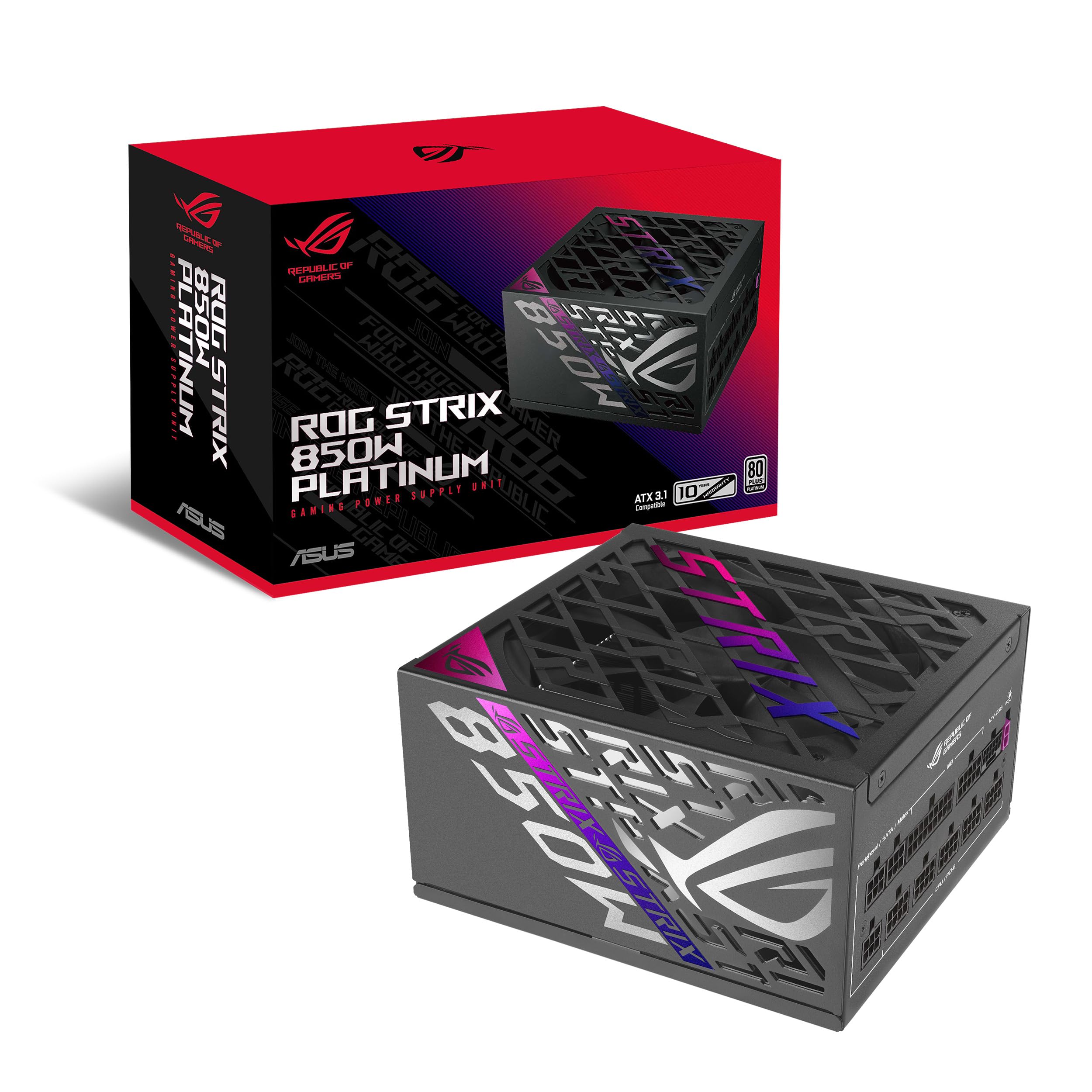 8.5 / 10
Asus ROG Strix 850W Platinum PSU, Fully Modular, 80+ Platinum, ATX 3.1, PCIe 5.0, GaN MOSFET, Intelligent Voltage Stabilizer
£158.99 · ASUS
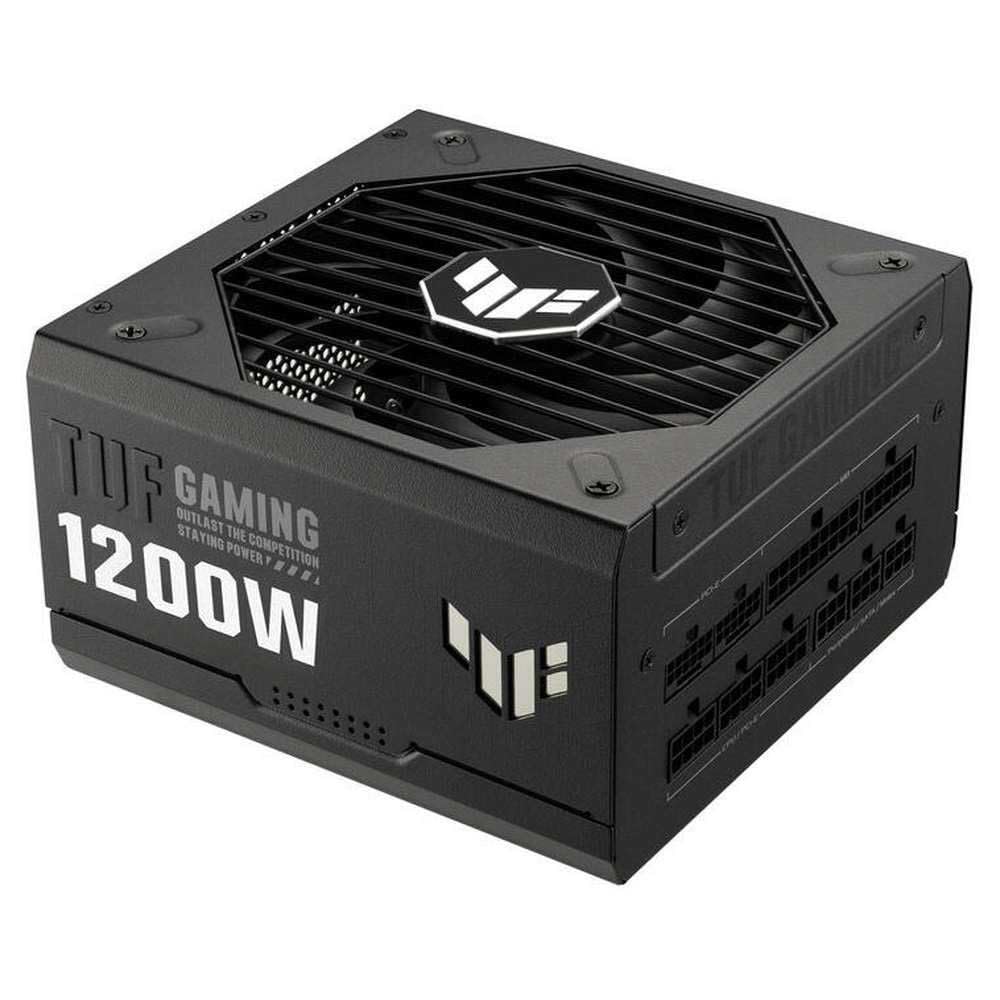 8.5 / 10
ASUS TUF Gaming 1200W Gold (1200 Watt, Fully Modular Power Supply, 80+ Gold Certified, Military-grade Components, Dual Ball Bearing, Axial-tech Fan, PCB Coating, 10 Year Warranty)
£151.14 · ASUS
Frequently asked
5 questions01Is the Asus ROG Strix 1000W Platinum White PSU good for gaming?+
Yes, it's an excellent choice for high-end gaming builds. The 1000W capacity provides comfortable headroom for top-tier GPUs including the RTX 5080 and 5090, and the native PCIe 5.0 / 12VHPWR connector eliminates the need for adapters. The 80 Plus Platinum efficiency keeps running costs reasonable, and the semi-passive fan mode means silent operation during lighter gaming sessions. For mid-range builds it's technically overkill, but the headroom is useful if you plan future GPU upgrades.
02What wattage PSU do I need for an RTX 5090 build?+
For an RTX 5090 paired with a high-end CPU like a Core i9 or Ryzen 9, a minimum of 850W is recommended, but 1000W is the sensible choice for comfortable headroom. The RTX 5090 can spike well above its TDP during transient loads, and ATX 3.1 compliance is important for handling those spikes without voltage sag. Make sure whatever PSU you choose has a native 12VHPWR connector rather than relying on an adapter.
03Is 80 Plus Platinum efficiency worth paying extra for over Gold?+
For a 1000W PSU running a high-end system for several years, yes. The efficiency difference between Gold and Platinum translates to real electricity savings over time. In a high-draw gaming system running several hours daily, you could save 50-100kWh per year compared to a Gold unit. Over a five-year ownership period that adds up meaningfully, especially with current UK electricity prices. The thermal benefits of running more efficiently also mean less heat in your case and a quieter fan.
04How long is the warranty on the Asus ROG Strix 1000W Platinum White PSU?+
Five years. That covers manufacturing defects and component failures under normal use. Five years is a solid warranty for a PSU, though some competitors at this price point offer seven or ten years. Asus warranty support in the UK is handled through their standard RMA process. Keep your proof of purchase and register the product on the Asus website to simplify any future warranty claims.
05Does the Asus ROG Strix 1000W Platinum White PSU have a zero RPM fanless mode?+
Yes. The unit operates in semi-passive mode, meaning the 120mm fan does not spin at all under light to moderate loads. In real-world use, the fan stays off during desktop use, light gaming, and any scenario where the PSU is below roughly 40-45% of its rated capacity. This means completely silent PSU operation for a significant portion of normal use. The fan only spins up under sustained heavy gaming or workstation loads, and even then it remains quiet.