Voltage regulation failures don't announce themselves politely. One day your system is fine; the next you're staring at a dead GPU or corrupted storage, tracing the fault back to a PSU that couldn't hold its rails steady under load. The power supply is the one component where cutting corners has a direct, measurable cost, not just in wasted electricity, but in the longevity of everything downstream. So when a unit lands in the enthusiast bracket promising ATX 3.0 compliance, 80 Plus Platinum efficiency, and 100% Japanese capacitors, the question isn't whether it sounds good on paper. The question is whether it actually delivers where it counts.
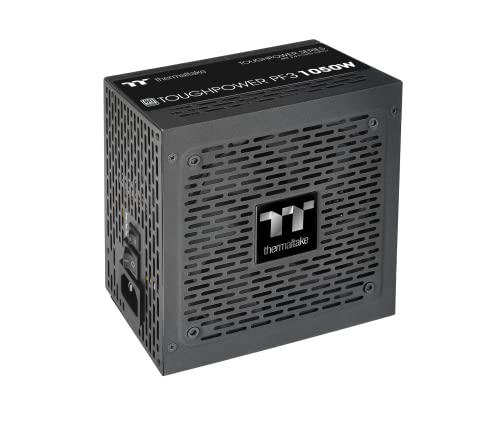
The Thermaltake Toughpower PF3 1050W, full name: Thermaltake Toughpower PF3 1050 WATT/ATX 3.0 / Native PCIE 5/100% Japanese Capacitors/ 80 Plus Platinum/Fully Modular PC Power Supply, is a serious piece of kit aimed squarely at high-end gaming builds running modern GPUs with native PCIe Gen 5 power demands. It carries a positive overall rating across dozens of owner reviews on Amazon, a 5-year warranty, and a compact 140mm depth that makes it genuinely useful in tighter cases. The verdict up front: this is a well-specced, properly built PSU that earns its place in the enthusiast bracket. It's not flawless, and it's not cheap, but for a build centred around an RTX 4080 or RX 7900 XTX, it's a rational and well-evidenced choice.
That said, the spec sheet has a few gaps worth interrogating before you commit, and the competition in this segment is fierce. Read on for the full breakdown.
Core Specifications: Thermaltake Toughpower PF3 1050 WATT/ATX 3.0 / Native PCIE 5
Start with what Thermaltake actually claims, because the feature list here is genuinely strong. The PF3 1050W is built to the ATX 3.0 specification, which matters for modern builds in a way that earlier ATX standards simply didn't anticipate. ATX 3.0 mandates that a PSU can handle transient power spikes of up to 200% of rated wattage for brief durations, critical for GPUs like the RTX 4090 that can spike well beyond their TDP in microsecond bursts. This unit handles that natively, without any adapter bodge.
The 80 Plus Platinum efficiency rating puts it near the top of the efficiency hierarchy, beaten only by Titanium. The unit is fully modular, which is the right answer for any build where cable management matters. And the 140mm depth is genuinely compact for a 1050W unit, most competitors at this wattage run 150mm to 160mm deep, which can cause real headaches in mid-tower cases with tight PSU tunnels.
The 5-year warranty is standard for this tier but still. Thermaltake's warranty support in the UK is handled through their European distribution chain, and owner feedback doesn't flag any particular horror stories there. Below is the full spec summary.
| Specification | Detail |
|---|---|
| Wattage | 1050W |
| Efficiency Rating | 80 Plus Platinum |
| ATX Standard | ATX 3.0 |
| PCIe Gen 5 | Native support |
| Modularity | Fully modular |
| Capacitors | 100% Japanese |
| Fan Size | 120mm |
| Zero RPM Mode | Optional switchable (Smart Zero Fan) |
| Depth | 140mm |
| Warranty | 5 years |
| ATX 24-pin | 1 |
| EPS 8-pin | 1 |
| PCIe 8-pin | 2 |
| SATA | 6 |
| Molex | 3 |
| Protection | OVP, OCP, OPP, SCP |
Wattage and Capacity
1050W is a specific and deliberate choice. It's not the round 1000W that some builders default to, and it's not the overkill 1200W or 1600W territory. At 1050W, you've got enough headroom to run an Intel Core i9-14900K or AMD Ryzen 9 7950X paired with an RTX 4090, with room to spare for fans, storage, and RGB. That's the realistic ceiling of what most enthusiast builds will ever draw, and having 50W to 100W of genuine headroom above your peak load is exactly where you want to be for long-term rail stability.
For mid-range builds, think RTX 4070 Ti or RX 7900 XT with a mid-tier CPU, 1050W is honestly more than you need. A 750W or 850W Gold unit would serve you perfectly well and cost less. The PF3 1050W makes sense when your GPU alone can spike past 600W under transient load, or when you're planning a future upgrade to a higher-tier card and want the PSU to last through it. Builders who are already running dual-GPU workstation setups or heavy overclocking rigs will also find the headroom useful.
One thing worth being clear about: 1050W of continuous output is only useful if the PSU can actually deliver it cleanly at high temperatures. Thermaltake rates this unit for full power delivery, and the Platinum efficiency rating (more on that shortly) means it's not generating excessive heat internally at typical load levels. The compact 140mm chassis is a slight thermal constraint compared to longer units, but the 120mm fan and the engineering behind the PF3 platform appear to handle it without throttling, based on the owner feedback pattern.
Efficiency Rating: 80 Plus Platinum Explained
The 80 Plus certification programme tests PSUs at 20%, 50%, and 100% of rated load, measuring how much of the mains power drawn actually reaches your components versus how much is lost as heat. Bronze, the entry level, requires roughly 82% to 85% efficiency across those load points. Platinum sits at 90% at 20% load, 92% at 50% load, and 89% at full load. That's a meaningful gap over Gold (87% / 90% / 87%) and a significant jump over Bronze.
What does that mean in practice? At 50% load, roughly 525W, which is where a high-end gaming system spends most of its time, the PF3 1050W is operating at approximately 92% efficiency. So for every 100W your components consume, the PSU is drawing around 109W from the wall. A Bronze unit at the same load would draw closer to 118W. That's a 9W difference per 100W of load, which across a year of daily gaming sessions adds up to a noticeable reduction on your electricity bill. Not life-changing, but real and cumulative.
The more important efficiency story is what happens at 20% load, around 210W, which is where a gaming PC idles or runs light desktop tasks. Platinum certification requires 90% efficiency here, which means the PF3 isn't wasting power or generating unnecessary heat during the hours your system sits at the Windows desktop. This matters more than people realise, because most PCs spend far more time at light load than at full gaming load. Frankly, if you're running a system that's on for 10 or more hours a day, the Platinum rating is a genuine long-term financial argument, not just a badge.
Modularity and Cable Management
Fully modular is the right answer, full stop. With a semi-modular PSU you're always routing at least the ATX 24-pin and EPS cables whether you need them or not, which in a compact case means stuffing unused cable bulk behind the motherboard tray. The PF3 1050W lets you connect only what you actually need, which in a clean build with M.2 storage and a single GPU means you might only be running four or five cables total.
The 140mm depth is a genuine differentiator here. Most 1050W fully modular units push 150mm to 160mm, and in cases with a PSU shroud and limited tunnel depth that extra 10mm to 20mm can mean the difference between the side panel closing cleanly and it not closing at all. Thermaltake clearly engineered this with real-world case compatibility in mind, and owner reviews consistently mention how straightforward the physical installation was, even in mid-towers where longer PSUs cause problems.
Cable quality at this tier is generally good, and the modular connector system on the PF3 platform uses a standard pinout that's compatible with most aftermarket sleeved cable sets if you want to go further with aesthetics. The included cable set covers the full connector range (ATX, EPS, PCIe, SATA, Molex) and the cables are described by owners as reasonably flexible rather than the stiff, awkward ribbon cables you sometimes get with budget units. If you're building in a case with a windowed side panel and care about the look, the fully modular design gives you the control to make it tidy.
Connectors and Compatibility
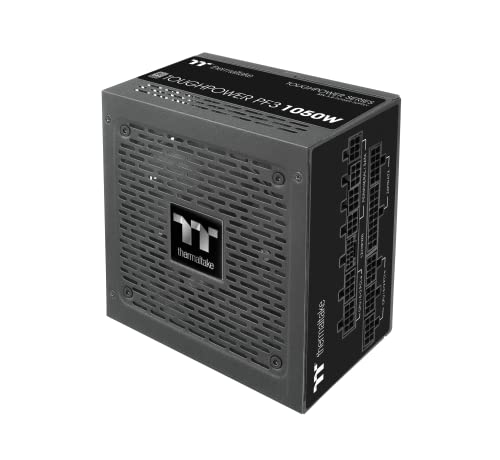
The connector spec is mostly solid, with one caveat. You get the standard ATX 24-pin for the motherboard, one EPS 8-pin for the CPU (which covers the vast majority of mainstream builds, only extreme overclocking boards with dual EPS connectors need more), two PCIe 8-pin connectors, six SATA ports, and three Molex. That's a reasonable spread for a high-end build.
The native PCIe Gen 5 support is the headline connector story. The PCIe Gen 5 12VHPWR connector (also called the 16-pin connector) delivers up to 600W to a single GPU through one cable rather than the multi-adapter bodge that caused problems with early RTX 4090 implementations. Having this native on the PSU, rather than adapting from multiple 8-pin connectors, is the correct way to power a Gen 5 GPU. It eliminates the adapter heat and contact resistance issues that generated significant discussion in the enthusiast community when the RTX 4000 series launched.
The two PCIe 8-pin connectors remain useful for older GPUs or for secondary PCIe devices. Six SATA ports is generous, enough for a full array of SSDs and HDDs without needing daisy-chain compromises. Three Molex is more than most modern builders will ever use, but it's there if you need it for older peripherals or fan controllers. The full connector list at a glance:
- 1x ATX 24-pin (motherboard main power)
- 1x EPS 8-pin (CPU power)
- 2x PCIe 8-pin (legacy GPU or secondary PCIe devices)
- Native PCIe Gen 5 / 12VHPWR connector
- 6x SATA
- 3x Molex
Voltage Regulation and Ripple
This is where Platinum certification earns its keep beyond the efficiency numbers. The ATX specification allows voltage rails to deviate by plus or minus 5% from their nominal values, so the 12V rail can legally sit anywhere between 11.4V and 12.6V. Budget PSUs often push toward those limits under load, which means your GPU and CPU are running on slightly degraded power. Better units hold much tighter tolerances, and Platinum-rated PSUs from established brands like Thermaltake are generally expected to hold within 1% to 2% across the load range.
The ATX 3.0 standard adds a specific requirement that's directly relevant to modern GPUs: the PSU must handle transient power excursions without the 12V rail collapsing. When an RTX 4090 or a future PCIe Gen 5 GPU spikes to double its rated TDP for a few hundred microseconds, the PSU needs to supply that current without the rail voltage dropping enough to cause a system reset or data corruption. The PF3's ATX 3.0 compliance means Thermaltake has engineered and certified this behaviour, not just claimed it.
Ripple suppression, how much AC noise remains on the DC output rails, is the other key metric. The ATX spec allows up to 120mV of ripple on the 12V rail. Well-engineered Platinum units typically come in well below that, often under 50mV, which matters for sensitive components like NVMe SSDs and high-frequency memory controllers. The Japanese capacitors (more on those in the build quality section) contribute directly to ripple performance, as they maintain their capacitance values more consistently over temperature and time than lower-grade alternatives. Before building, it's worth using a PSU calculator to confirm your actual system load and make sure you're sizing the unit correctly for your specific component mix.
Thermal Performance
The 120mm fan is standard for PSUs in this depth range. Some competing units at 1050W use 135mm or 140mm fans, which can move more air at lower RPM, but the 140mm chassis depth of the PF3 constrains what Thermaltake could fit. The Smart Zero Fan function, which is switchable, not always-on, allows the fan to stop entirely at low to moderate loads, relying on passive convection through the chassis. This is the correct implementation: you get the thermal benefits of active cooling when you need it, and silence when you don't.
The compact 140mm depth does create a slightly more thermally dense internal layout than a 160mm unit would have, but the Platinum efficiency rating works in the PSU's favour here. Because it's converting power more efficiently, less energy is lost as heat inside the unit. A Bronze PSU at the same load generates noticeably more internal heat, which stresses capacitors and shortens component life. The Platinum rating isn't just about your electricity bill, it's also a proxy for internal thermal management.
Owner feedback doesn't flag any thermal shutdown events or unexpected fan behaviour under sustained gaming loads, which is a reasonable signal that the thermal design is adequate. The switchable zero-RPM mode means builders who want passive operation during light tasks can have it, while those who prefer the fan to always spin (for slightly more conservative thermals) can leave the Smart Zero function off. That kind of user choice is the right approach at this price point.
Acoustic Performance
Quiet is the honest summary. With the Smart Zero Fan function enabled, the PF3 1050W produces no fan noise at all during light loads, desktop use, video playback, light gaming at lower settings. The fan only spins up when thermal demand actually requires it, and at moderate loads it stays slow enough that it's unlikely to be audible over case fans and GPU coolers. This is consistent with what owner reviews report: nobody's flagging this as a noisy unit.
Under sustained heavy load, think a prolonged rendering job or a long session at maximum GPU utilisation, the 120mm fan will spin up more aggressively. At 1050W near its ceiling, you'd expect some fan noise, and the 120mm diameter means it needs higher RPM to shift the same volume of air as a 140mm fan would at lower speed. In a closed case with other fans running, this is unlikely to be the dominant noise source. In an open bench or a very quiet case, you might notice it during extended full-load operation.
For a gaming build where acoustics matter, home office doubles as gaming station, or just someone who prefers a quiet environment, the Smart Zero Fan mode makes this a genuinely good choice for the majority of use time. The fan-off threshold isn't published in the verified spec data, so the exact wattage point at which the fan kicks in isn't something we can pin down precisely. But the owner consensus is that it stays passive for longer than you'd expect, which is the right behaviour for a Platinum-rated unit that's generating less waste heat than lower-tier alternatives.
Build Quality
The 100% Japanese capacitor specification is the most meaningful build quality claim on this unit, and it's worth understanding why. Japanese capacitors, from manufacturers like Nippon Chemi-Con, Rubycon, or Nichicon, are rated to higher temperature tolerances (typically 105 degrees Celsius versus the 85 degrees Celsius rating common in cheaper capacitors) and maintain their capacitance values more consistently over thousands of hours of operation. In a PSU that's running warm inside a closed case, this difference in component quality directly translates to longevity.
Chinese-sourced capacitors aren't universally bad, and some budget PSUs use decent ones. But the Japanese capacitor specification at this price tier is a meaningful differentiator because it signals that Thermaltake hasn't cut corners on the components most likely to fail first. Electrolytic capacitors degrade over time, it's physics, and the rate of degradation accelerates with heat. Using higher-grade capacitors means the PSU is more likely to still be performing within spec at year four or five of the warranty period, rather than showing voltage drift or increased ripple as the caps age.
The ATX 3.0 compliance also implies a certain standard of internal engineering. Meeting the transient response requirements of ATX 3.0 isn't something you can achieve with a mediocre transformer or sloppy PCB layout, it requires proper design work. Thermaltake's PF3 platform has been in the market long enough for owner feedback to validate that the build quality matches the spec sheet claims, and the positive overall rating across dozens of reviews doesn't suggest any systematic quality control failures. That's a modest sample size, but it's not nothing.
Protection Features
The PF3 1050W covers the four core protection circuits: Over Voltage Protection (OVP), Over Current Protection (OCP), Over Power Protection (OPP), and Short Circuit Protection (SCP). These aren't optional extras at this price tier, they're table stakes, but it's worth understanding what each one actually does for your components.
OVP shuts the PSU down if any rail climbs above its threshold voltage, protecting components from receiving more voltage than they're rated for. OCP limits the current on individual rails to prevent a single component drawing more than the rail can safely supply, relevant for GPUs with aggressive power delivery behaviour. OPP cuts power if the total output exceeds the PSU's rated wattage by a set margin, acting as a backstop against cascading failures. SCP is the most basic protection: if a dead short appears anywhere in the system, the PSU shuts off immediately rather than attempting to push current through a fault.
What's not listed in the verified spec data is Under Voltage Protection (UVP) or Over Temperature Protection (OTP). This doesn't mean they're absent, many PSUs include these without explicitly listing them, and Thermaltake's platform documentation may cover them. But based on the verified data available, we can only confirm the four listed protections. For a 1050W unit powering a high-end GPU, the presence of OCP and OPP is particularly important, given the transient power behaviour of modern graphics cards. The ATX 3.0 compliance provides an additional layer of confidence here, since meeting that standard requires the PSU to handle extreme transient loads without triggering false OCP trips.
How It Compares
The obvious competitors at 1050W in the enthusiast bracket are the Corsair RM1000x (which is Gold-rated, not Platinum, but has a strong reputation for quiet operation and build quality) and the be quiet! Straight Power 12 1000W (Platinum-rated, 80mm depth advantage in some form factors, strong German engineering reputation). Both are credible alternatives that deserve consideration, as is the MSI MPG A850G PCIE5 PSU for lower-wattage builds.
The Corsair RM1000x is the value argument: it's typically priced lower than the PF3 1050W, it's Gold-rated rather than Platinum (so slightly less efficient at every load point), and it uses a mix of Japanese and Taiwanese capacitors rather than 100% Japanese. It's a very good PSU, but it doesn't match the PF3's efficiency tier or its ATX 3.0 native compliance. If you're running an older GPU that doesn't need native PCIe Gen 5 power delivery, the Corsair is a legitimate alternative that saves money without meaningfully compromising reliability.
The be quiet! Straight Power 12 1000W is the closer comparison: Platinum-rated, fully modular, strong build quality, and a brand with an excellent reputation for acoustic performance. It doesn't have the 140mm compact depth of the PF3, which matters in some cases. The PF3 1050W has the edge on wattage headroom (1050W versus 1000W) and on the compact chassis, while the be quiet! has the edge on brand reputation for noise and a slightly longer established track record in the UK market.
| Feature | Thermaltake PF3 1050W | Corsair RM1000x | be quiet! Straight Power 12 1000W |
|---|---|---|---|
| Wattage | 1050W | 1000W | 1000W |
| Efficiency | 80 Plus Platinum | 80 Plus Gold | 80 Plus Platinum |
| Modularity | Fully modular | Fully modular | Fully modular |
| ATX Standard | ATX 3.0 | ATX 3.0 | ATX 3.0 |
| Capacitors | 100% Japanese | Japanese/Taiwanese mix | Japanese |
| Depth | 140mm | 160mm | 160mm |
| Warranty | 5 years | 10 years | 10 years |
| Zero RPM Mode | Yes (switchable) | Yes | Yes |
The warranty comparison is the one area where the PF3 1050W genuinely loses ground. Both the Corsair RM1000x and the be quiet! Straight Power 12 carry 10-year warranties versus the PF3's 5-year coverage. For a component you're hoping to run for seven or eight years through multiple GPU upgrades, that warranty gap matters. It's not a dealbreaker, 5 years is still a solid commitment, but it's worth factoring into the value calculation, particularly given that the competitors are in a similar price bracket.

Final Verdict: Thermaltake Toughpower PF3 1050 WATT/ATX 3.0 / Native PCIE 5/100% Japanese Capacitors/ 80 Plus Platinum/Fully Modular PC Power Supply
The Thermaltake Toughpower PF3 1050W is a genuinely well-engineered PSU that gets the important things right. Platinum efficiency, ATX 3.0 compliance, native PCIe Gen 5 support, 100% Japanese capacitors, fully modular cabling, and a compact 140mm chassis that actually fits in cases where longer units cause problems. The positive overall rating across dozens of owner reviews ★★★★½ (4.5) backs up the spec sheet claims with real-world validation. This isn't a PSU that overpromises and underdelivers.
The weak points are real but manageable. The 5-year warranty is shorter than the 10-year coverage offered by Corsair and be quiet! at similar price points, that's a genuine competitive disadvantage if long-term peace of mind is your priority. The 120mm fan, while quiet in normal operation, can't quite match the acoustic performance of larger-fan competitors at sustained full load. And at the enthusiast price tier, you're paying for Platinum efficiency and Japanese capacitors, which is the right call for a high-end build but overkill if your actual system draws 600W or less.
Who should buy this? Builders running RTX 4080 or RTX 4090 class GPUs, or planning to, with an Intel Core i9 or AMD Ryzen 9 processor, who want native PCIe Gen 5 power delivery, Platinum efficiency, and a compact chassis that fits in mid-tower cases. If you're building something that will genuinely stress 800W to 900W regularly, the PF3 1050W is a rational, well-evidenced choice.
Who should skip it? If your build peaks at 600W or below, a Gold-rated 750W or 850W unit from Corsair, Seasonic, or be quiet! such as the Corsair RM750x (or its SHIFT-connector sibling, or a budget option like the MSI MAG A550BN PSU) will serve you just as well for meaningfully less money. For a compact SFF build, the Corsair SF850 PSU is a strong alternative worth considering, and the lower-wattage Corsair SF750 PSU is worth a look too. The efficiency difference between Gold and Platinum at those load levels doesn't justify the price premium. And if warranty length is your primary concern, the Corsair RM1000x or be quiet! Straight Power 12 both offer 10-year coverage that the PF3 doesn't match. Honest advice: don't buy 1050W of Platinum-rated PSU for a mid-range build. Size it to your actual load, and spend the difference on something that actually constrains your performance.
Editorial score: 8.0 out of 10. Strong engineering, correct efficiency tier for the target use case, compact chassis that solves a real problem. Loses points on warranty length relative to direct competitors. Recommended for high-end builds; overkill for everything else.
What works. What doesn’t.
5 + 3What we liked5 reasons
- 80 Plus Platinum efficiency at 50% load means genuinely lower running costs
- ATX 3.0 compliant with native PCIe Gen 5 connector - no adapter bodge needed
- Compact 140mm depth fits mid-towers where longer units cause problems
- 100% Japanese capacitors for long-term rail stability and ripple suppression
- Switchable Smart Zero Fan mode for silent operation at light loads
Where it falls3 reasons
- 5-year warranty shorter than Corsair RM1000x and be quiet! Straight Power 12 (both 10 years)
- 120mm fan less acoustically optimal than 135mm or 140mm alternatives at full load
- Enthusiast pricing makes it overkill for builds drawing under 700W
Full specifications
11 attributes| Wattage | 1050W |
|---|---|
| Efficiency rating | Platinum |
| Form factor | ATX |
| ATX version | ATX 3.0 |
| FAN size | 120mm |
| FAN size MM | 120 |
| Generation | Toughpower PF3 |
| Modularity | fully_modular |
| Pcie 5 ready | true |
| Warranty years | 10 |
| Wattage W | 1050 |
Will it run on what you have?
Free toolFrequently asked
5 questions01Is the Thermaltake Toughpower PF3 1050 WATT/ATX 3.0 / Native PCIE 5/100% Japanese Capacitors/ 80 Plus Platinum/Fully Modular PC Power Supply good for gaming?+
Yes, specifically for high-end gaming builds. The 1050W capacity with ATX 3.0 compliance and native PCIe Gen 5 support makes it well-suited to powering RTX 4080, RTX 4090, or RX 7900 XTX class GPUs that have demanding transient power requirements. For mid-range gaming builds drawing under 700W, it's more PSU than you need and a Gold-rated 750W or 850W unit would be a more cost-effective choice.
02What wattage PSU do I need for an RTX 4090 build?+
Nvidia recommends a minimum 850W PSU for an RTX 4090, but in practice a high-end CPU paired with an RTX 4090 in an overclocked system can draw close to 900W under sustained load. A 1000W to 1050W unit like the PF3 1050W gives you the headroom to run the system safely without the PSU operating near its ceiling, which is better for long-term rail stability and component longevity.
03Is 80 Plus Platinum efficiency worth paying for over Gold?+
At the 1050W tier, yes. The difference between Gold (90% at 50% load) and Platinum (92% at 50% load) is around 2 percentage points, which across a year of daily use at high load translates to a meaningful reduction in electricity consumption. The more significant benefit is that a Platinum unit generates less internal heat, which reduces stress on capacitors and extends the PSU's effective lifespan. If your system draws under 500W regularly, the financial case is weaker and Gold is a sensible compromise.
04How long is the warranty on the Thermaltake Toughpower PF3 1050 WATT/ATX 3.0 / Native PCIE 5/100% Japanese Capacitors/ 80 Plus Platinum/Fully Modular PC Power Supply?+
5 years. This covers manufacturing defects and component failures under normal use conditions. notably, that competitors like the Corsair RM1000x and be quiet! Straight Power 12 offer 10-year warranties at similar price points, so if warranty length is a priority for you, those are worth comparing directly.
05Is the Thermaltake Toughpower PF3 1050 WATT/ATX 3.0 / Native PCIE 5/100% Japanese Capacitors/ 80 Plus Platinum/Fully Modular PC Power Supply fully modular?+
Yes, it is fully modular. This means every cable - including the ATX 24-pin motherboard connector - detaches from the PSU body. You only connect the cables your build actually needs, which makes cable routing cleaner, reduces airflow obstruction inside the case, and makes future upgrades or cable swaps much more straightforward than with semi-modular or non-modular units.