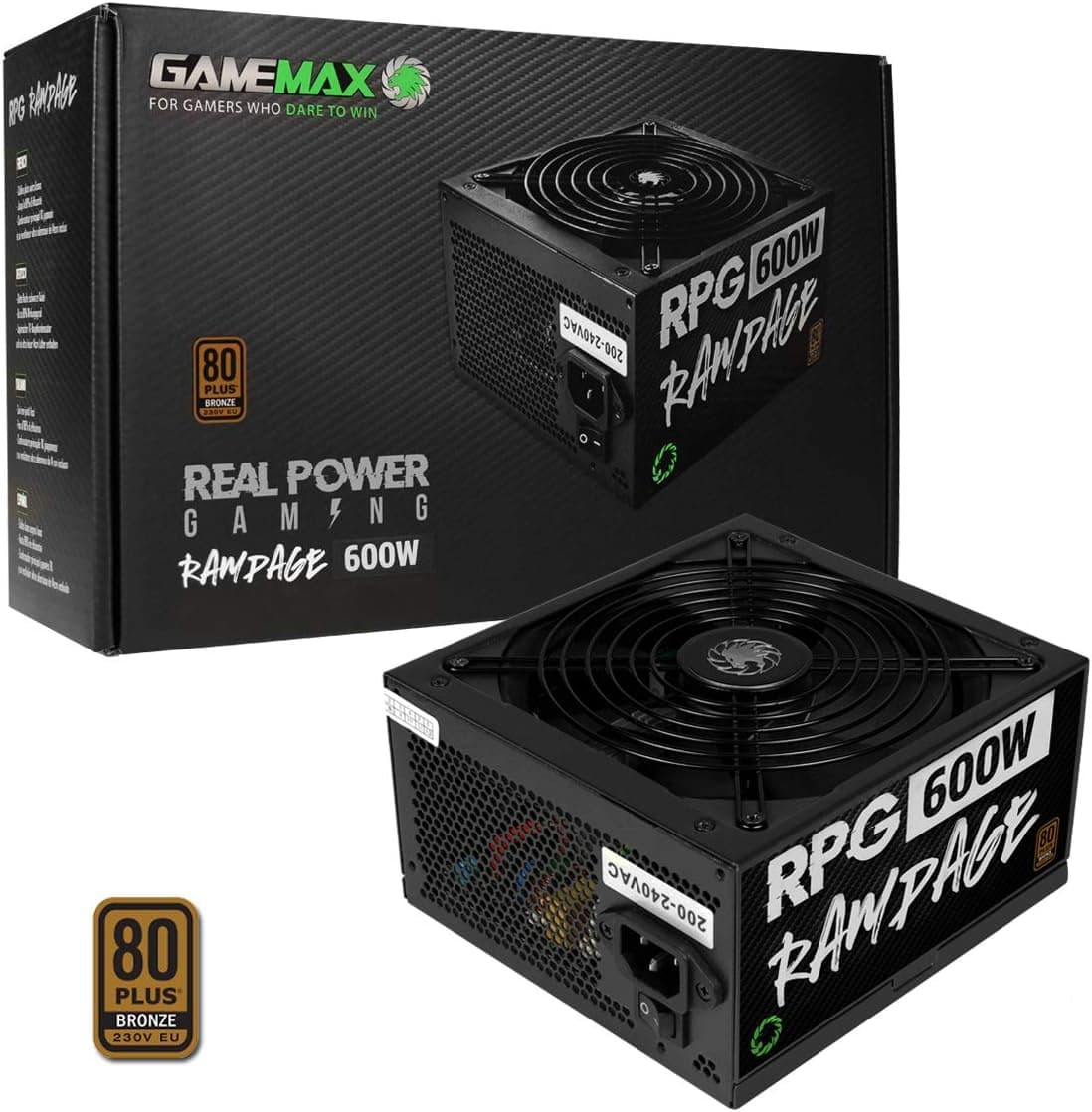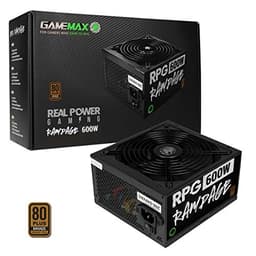
Nobody thinks about their power supply until it kills their GPU, corrupts a drive, or takes the whole system down in a puff of smoke. The PSU is the one component where cutting corners genuinely costs you more in the long run, which is exactly why a budget unit with Japanese capacitors and a proper efficiency rating is worth taking seriously. The GameMax 750W Rampage Power Supply (No Power Cable inc.), Semi-Modular, APFC, Japanese Tk Main Capacitor, 80 Plus Bronze, 88% Efficiency, 14cm Cooling Fan, Real Power Gaming | Black sits firmly in the budget bracket, and on paper it punches above its price tier in a few meaningful ways.
The verdict? Honestly, it's a solid pick for a budget gaming build. The Japanese primary capacitor, 80 Plus Bronze certification, semi-modular design, and five-year warranty are things you'd normally expect to pay more for. Owner feedback across 253 lands at ★★★★½ (4.5), which is strong for this price tier. But it isn't perfect, and there are a couple of things before you click buy. Let's get into the detail.
Quick note before we dive into specs: if you're not sure what wattage you actually need, our PSU calculator will give you a proper answer based on your components, not guesswork.
Core Specifications: GameMax 750W Rampage Power Supply
The GameMax Rampage 750W is a semi-modular ATX power supply carrying an 80 Plus Bronze certification, which means it's been independently verified to hit at least 82% efficiency at 20% load, 85% at 50% load, and 82% again at full load. It features Active Power Factor Correction (APFC), a 120mm cooling fan (GameMax markets this as a 14cm fan in some listings, so check the specific variant), a Japanese Teapo (TK) primary capacitor, and a five-year warranty. The semi-modular design keeps the essential cables hardwired while letting you detach the peripheral cables you don't need.
The protection suite covers OVP (over-voltage), OCP (over-current), OPP (over-power), and SCP (short-circuit). No 12VHPWR connector here, which is expected at this price and wattage. Cable configuration includes one ATX 24-pin, one EPS 8-pin, two PCIe 8-pin connectors, six SATA, and three Molex. That's a reasonable spread for a mid-range gaming build. Note that no mains power cable is included, which is unusual and if you're building fresh and don't have a spare IEC C13 cable lying around.
The rating from 253 owners sits at ★★★★½ (4.5), which tells you most buyers are genuinely happy. That's not a given in the budget PSU world, where you'll find plenty of units with inflated wattage claims and no real certification to back them up. The Rampage 750W at least has the 80 Plus Bronze cert, which is a third-party verification, not just a manufacturer claim.
| Specification | Detail |
|---|---|
| Wattage | 750W |
| Efficiency Rating | 80 Plus Bronze |
| Efficiency at 50% Load | ~85% |
| Modularity | Semi-Modular |
| Fan Size | 120mm / 14cm |
| Zero RPM Mode | No |
| Warranty | 5 Years |
| Primary Capacitor | Japanese Teapo (TK) |
| APFC | Yes |
| ATX 24-pin | 1 |
| EPS 8-pin | 1 |
| PCIe 8-pin | 2 |
| SATA | 6 |
| Molex | 3 |
| 12VHPWR (16-pin) | No |
| Protection | OVP, OCP, OPP, SCP |
| Power Cable Included | No |
| Price | £45.50 |

Wattage and Capacity: Is 750W Enough?
750W is a genuinely useful amount of power for a gaming PC in 2026. For context, a system running an AMD Ryzen 5 7600X or Intel Core i5-13600K paired with an RTX 4070 will draw somewhere in the region of 350W to 450W under full gaming load. That leaves meaningful headroom with a 750W unit, which matters because running a PSU consistently above 80% of its rated capacity is where efficiency drops and component stress increases. 750W gives you room to breathe without paying for capacity you'll never use.
Where 750W starts to feel tight is with higher-end GPU pairings. An RTX 4080 or RX 7900 XT at full tilt, combined with a power-hungry CPU, can push total system draw close to 600W or beyond under stress. That's still within spec for this unit, but you're leaving less headroom than is comfortable, and the lack of a 12VHPWR connector means you'd need an adapter for next-gen GPU power anyway. For RTX 4090 or multi-GPU setups (rare as they are in 2026), look elsewhere.
So who is 750W actually right for? Entry-level to solid midrange builds. Think RTX 4060 Ti, RX 7700 XT, or older cards like the RTX 3080. Pair it with a mainstream CPU and you've got a well-matched system. It's also that a 750W unit at 50% load (around 375W, which is realistic for a mid-range gaming rig) is where Bronze-rated efficiency peaks, meaning you're getting the best efficiency the unit can offer right in the middle of its typical operating range. That's sensible engineering.
Efficiency Rating: What 80 Plus Bronze Actually Means
The 80 Plus certification scheme is a third-party efficiency standard, not a marketing badge. Bronze is the second tier, sitting above the base 80 Plus rating. To earn it, a PSU must demonstrate at least 82% efficiency at 20% load, 85% at 50% load, and 82% at 100% load, all at 115V (the 230V European standard allows slightly higher figures, which is relevant for UK buyers). GameMax rates the Rampage at 88% efficiency, which suggests it's performing at or above the upper end of what Bronze certification requires.
What does efficiency actually mean for your electricity bill? If your system draws 400W from the wall and the PSU is 85% efficient, around 340W reaches your components and 60W is lost as heat. A less efficient unit at the same load might waste 80W or more. Over a year of daily gaming, that difference adds up. It's not going to transform your energy bill, but in a world where electricity costs are a real concern for UK households, it's not nothing either. And the heat dissipation difference matters for thermals inside your case.
Bronze is not the top tier. Gold-rated PSUs hit 87% to 90% efficiency across the load range, Platinum goes higher still, and Titanium is the top of the stack. But here's the honest truth: the efficiency gap between Bronze and Gold at typical gaming loads is relatively small in real-world electricity cost terms. The bigger gains from Gold and Platinum come at low loads, which matters more for systems that are on 24/7 at idle. For a gaming PC that's properly powered down when not in use, Bronze is a reasonable choice, especially at this price point. Spending significantly more to step up to Gold makes more sense if you're running a workstation or a system that's always on.
Modularity and Cable Management
Semi-modular is the right call for a PSU at this price. Fully modular costs more to manufacture (all those extra connectors add up), and non-modular means you're cable-tying a nest of unused leads into your case forever. Semi-modular keeps the essential cables hardwired (the 24-pin ATX and EPS CPU power, which you'll always need) while making the peripheral cables detachable. You only route what you actually use, which means tidier builds and better airflow without the premium price of full modularity.
The cable quality on the Rampage is described in owner reviews as functional rather than exceptional. The sleeving is basic, and the cables are on the stiffer side, which can make routing in smaller cases a bit of a wrestle. That's pretty common at this price point and not a dealbreaker, but if you're building in a compact mid-tower and planning a cable management showcase. In a standard ATX case with decent cable routing channels behind the motherboard tray, you'll be fine.
One thing that does need flagging: no mains power cable is included. This is unusual. Most PSUs ship with an IEC C13 cable (the standard kettle-lead style connector that plugs into the back of the PSU). GameMax has chosen not to include one, presumably to keep the cost down. If you're upgrading from an existing system, you'll almost certainly have a spare. If you're building fresh from scratch, you'll need to source one separately. They're cheap and easy to find, but it's a bit of an annoying omission that catches some buyers off guard based on owner review comments.
Connectors and Compatibility
The connector set on the Rampage 750W covers the basics well for a mainstream gaming build. Here's what you're working with:
- 1x ATX 24-pin (hardwired) for the motherboard
- 1x EPS 8-pin (hardwired) for CPU power
- 2x PCIe 8-pin (6+2 configuration) for GPU power
- 6x SATA for storage drives and accessories
- 3x Molex for older peripherals, fans, or RGB controllers
- No 12VHPWR (16-pin) connector
The two PCIe 8-pin connectors cover the vast majority of current GPUs without any adapters. Cards like the RTX 4070, RTX 4060 Ti, RX 7800 XT, and similar mid-range options all work on dual 8-pin power. Where this gets complicated is with the newer high-end cards that use the 12VHPWR (16-pin) connector introduced for RTX 40-series flagships. The RTX 4080 and 4090 require this connector natively, and while you can use an adapter from 8-pin cables, Nvidia has historically recommended against daisy-chaining adapters from insufficient cables. At 750W, you're not really targeting those cards anyway, so this is more of a compatibility note than a practical problem.
Six SATA connectors is genuinely generous at this price. Most budget builds run two or three drives at most, so you've got plenty of room to expand storage without running out of power connections. The three Molex connectors are increasingly less relevant in modern builds (most things have moved to SATA or USB headers), but they're useful if you've got older case fans, fan controllers, or lighting that needs them. Overall, the connector complement is well-matched to the target audience.
Voltage Regulation and Ripple
This is where budget PSUs often fall down, and it's the section that matters most for the longevity of your components. Voltage regulation refers to how consistently the PSU maintains its output voltages (primarily 12V, 5V, and 3.3V) as load varies. Poor regulation means voltages that drift outside spec under heavy load, which can cause instability, crashes, or long-term component degradation. The ATX specification allows a tolerance of plus or minus 5% on the 12V rail, meaning anything between 11.4V and 12.6V is technically within spec.
The Rampage 750W uses a single 12V rail design, which is the preferred architecture for modern gaming builds. Multi-rail designs split the 12V output into separate rails with individual current limits, which can cause problems if a high-draw component (like a GPU) is on a rail that's too limited. Single rail means all your 12V capacity is available to wherever it's needed, with no artificial bottlenecks. The APFC (Active Power Factor Correction) circuit helps maintain stable power factor across varying loads, which contributes to cleaner power delivery and is required for compliance with European efficiency standards.
Ripple suppression is the other key metric here. Ripple is the AC noise that rides on top of the DC output, and excessive ripple is a slow killer for sensitive components like GPUs and SSDs. The ATX spec allows up to 120mV of ripple on the 12V rail. Budget PSUs without quality capacitors often struggle to keep ripple under control, particularly under heavy load. The Japanese Teapo primary capacitor is a meaningful quality signal here. Teapo is a Taiwanese manufacturer whose components are well-regarded in the industry and used across a range of quality PSUs. It's not the same as a fully Japanese Nippon Chemi-Con or Rubycon cap, but it's a significant step above the generic Chinese capacitors found in truly bargain-basement units.

Thermal Performance
The Rampage 750W uses a 120mm fan (listed as 14cm in some GameMax marketing, which refers to the fan frame size rather than the blade diameter). There's no zero-RPM mode, meaning the fan runs from the moment you power on. This is a straightforward thermal management approach: the fan spins continuously, adjusting speed based on internal temperature. It's less sophisticated than the semi-passive modes you find on premium units, but it's also simpler and arguably more reliable.
Continuous fan operation means the PSU is always actively cooling itself, which is actually fine for a budget unit. The fan curve on the Rampage is reported by owners as relatively gentle at typical loads, only becoming noticeable when the unit is working hard. For a gaming PC that's pulling 400W to 500W from a 750W unit, the PSU is operating at 53% to 67% of capacity, which is a comfortable thermal range. The fan shouldn't need to spin aggressively to keep temperatures in check at those loads.
Thermal performance under sustained load is where cheaper PSUs without quality internals can start to struggle. Capacitors and other components degrade faster when they run hot, which is why the quality of the primary capacitor matters so much. The Teapo main cap is rated to handle sustained operating temperatures appropriately for its class. Owner reviews don't report widespread thermal throttling or shutdowns under normal gaming loads, which is consistent with what you'd expect from a properly rated 750W unit rather than an inflated-spec budget unit claiming wattage it can't actually deliver.
Acoustic Performance
No zero-RPM mode means the fan is always spinning, but that doesn't automatically make this a loud PSU. Owner reviews consistently describe the Rampage as quiet during normal operation, with the fan only becoming audible when the system is under sustained heavy load. For gaming sessions at typical mid-range build power levels, most owners report it's effectively inaudible over case fans and GPU fans. That's a reasonable outcome.
The 120mm fan has an advantage over smaller fans: it can move the same volume of air at lower RPM, which directly translates to lower noise. Smaller 80mm fans on older or cheaper PSUs have to spin faster to compensate, and faster means louder. The Rampage's fan size is appropriate for a 750W unit and consistent with what you'd find on PSUs at higher price points. Without specific published dB figures from GameMax, it's not possible to give you a precise number, but the owner consensus is clear enough: it's not a unit that's going to make you wince every time you boot up.
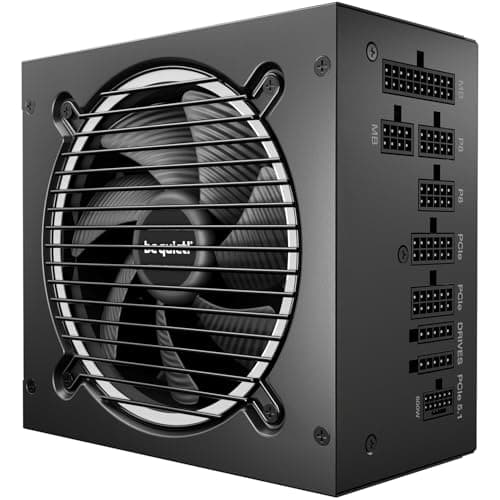
If you're building a near-silent PC and acoustic performance is your primary concern, you'd want a PSU with a proper zero-RPM mode (sometimes called Eco mode or Fanless mode) that keeps the fan off entirely at low loads. Units like the be quiet! Pure Power series or Seasonic Focus GX offer this. For most gaming builds where the GPU and CPU fans are already making noise, the Rampage's acoustic performance is perfectly acceptable and won't be the loudest thing in your case.
Build Quality: What's Actually Inside
Build quality in a PSU comes down to the components on the PCB, the quality of the soldering, and the overall construction of the unit. The headline component here is the Japanese Teapo (TK) primary capacitor. GameMax is specific about this in their marketing, and it matters. The primary (bulk) capacitor is the first major component in the power delivery chain after the mains input, and it handles the initial energy storage and filtering. A cheap, low-grade capacitor here is a common failure point in budget PSUs, leading to reduced output quality and shortened lifespan.
Teapo is a legitimate component manufacturer with a solid reputation in the industry. Their capacitors are used in a range of products from reputable brands and are a step up from the generic Chinese capacitors that populate the cheapest PSUs on the market. It's worth being clear about what this means in practice: the primary cap being Teapo is a good sign, but it doesn't tell you about every other capacitor on the board. Budget PSUs often use a Japanese primary cap as a marketing point while using cheaper secondary caps elsewhere. That's not unique to GameMax, and it's a reasonable cost-engineering decision at this price point.
The overall construction quality is consistent with what you'd expect from a properly certified budget PSU. The 80 Plus Bronze certification requires the unit to pass efficiency testing, which means it can't be a complete disaster internally. Units that fail basic construction standards don't pass certification. GameMax has been producing PSUs for a while and has an established presence in the UK budget PC market. The five-year warranty is a meaningful commitment from the manufacturer and suggests a degree of confidence in the product's longevity. Brands that know their units will fail early don't offer five-year warranties.
Protection Features
The Rampage 750W includes OVP (over-voltage protection), OCP (over-current protection), OPP (over-power protection), and SCP (short-circuit protection). This is a solid set of protections for a budget unit. OVP cuts power if the output voltage rises above safe levels, protecting your components from voltage spikes. OCP limits the current on each rail to prevent damage from overloads. OPP shuts the unit down if total output power exceeds the rated capacity, acting as a safety net against sustained overloads. SCP provides immediate shutdown in the event of a short circuit, which is the kind of catastrophic failure that can cascade through an entire system without it.
What's notably absent is OTP (over-temperature protection) and UVP (under-voltage protection). OTP would shut the unit down if internal temperatures exceed safe limits, providing a last line of defence against thermal runaway. UVP would cut power if output voltages drop too low, which can happen under extreme overloads. These aren't unusual omissions at this price point, but they're. The protection suite covers the most likely failure scenarios, and for a standard gaming build running within the unit's rated capacity, the four included protections are adequate.
The presence of OPP is particularly. Over-power protection is sometimes skipped on budget units, but it's an important safeguard. If your system somehow draws more power than the PSU is rated for (perhaps a GPU spike during a demanding scene), OPP will trigger a shutdown rather than letting the unit try to deliver power it can't safely provide. A controlled shutdown is infinitely better than an uncontrolled failure. Combined with SCP, you've got reasonable protection against the most common electrical fault scenarios.
How It Compares to the Competition
The budget PSU market is genuinely competitive in 2026. The GameMax Rampage 750W's main rivals in this bracket are the Corsair CV650 and the be quiet! System Power 10 750W. Both target similar budgets and similar build types, and both have their own strengths and weaknesses worth understanding before you commit.
The Corsair CV650 is a non-modular 650W unit with 80 Plus Bronze certification. It's a well-known name with strong brand recognition, but it's 100W less capacity, fully non-modular (meaning you're stuck with all cables whether you need them or not), and typically priced similarly to the Rampage. The GameMax wins on wattage and modularity at comparable pricing. The Corsair brand name carries more weight with some buyers, and Corsair's support infrastructure in the UK is solid, but on paper the Rampage offers more for the money.
The be quiet! System Power 10 750W is a closer comparison. It matches the wattage, offers 80 Plus Bronze efficiency, and comes from a brand with a strong reputation for build quality and acoustics. The be quiet! unit typically commands a higher price, which is the main differentiator. If your budget stretches to it, the System Power 10 is arguably the safer long-term choice with better documented build quality. But if you're firmly in the budget bracket, the GameMax Rampage 750W delivers competitive specifications at a lower price point, backed by a five-year warranty that matches or beats many pricier alternatives.
| Feature | GameMax Rampage 750W | Corsair CV650 | be quiet! System Power 10 750W |
|---|---|---|---|
| Wattage | 750W | 650W | 750W |
| Efficiency | 80 Plus Bronze | 80 Plus Bronze | 80 Plus Bronze |
| Modularity | Semi-Modular | Non-Modular | Non-Modular |
| Primary Capacitor | Japanese Teapo | Not specified | Japanese |
| Warranty | 5 Years | 3 Years | 3 Years |
| 12VHPWR | No | No | No |
| Zero RPM Mode | No | No | No |
| Price | £45.50 | Mid-range (£50 to £70) | Mid-range (£60 to £80) |

Final Verdict: GameMax 750W Rampage Power Supply
The GameMax 750W Rampage Power Supply (No Power Cable inc.), Semi-Modular, APFC, Japanese Tk Main Capacitor, 80 Plus Bronze, 88% Efficiency, 14cm Cooling Fan, Real Power Gaming | Black is a genuinely good budget PSU that delivers more than its price suggests. The combination of 750W real-rated power, 80 Plus Bronze certification, semi-modular design, Japanese Teapo primary capacitor, and a five-year warranty is a strong package for a budget-tier unit. The 4.4-star average from 245 owners tells you this isn't just good on paper.
The weaknesses are real but manageable. No mains power cable is annoying, particularly for fresh builds. No zero-RPM mode means the fan runs constantly, though owners report it's quiet enough not to matter in practice. The secondary capacitors are unknown quality, which is a common budget PSU caveat. And if you're pairing this with an RTX 4080 or above, you need a different unit entirely.
For a mid-range gaming build in 2026, pairing an RTX 4070-class GPU with a mainstream CPU, this is a well-matched, sensibly priced power supply with enough headroom, enough connectors, and enough quality internals to do the job reliably for years. The five-year warranty means GameMax is standing behind it, which counts for something.
One honest note: if your build is more modest, say an RTX 4060 with a budget CPU drawing under 300W total, the GameMax 600W Rampage (if available) or a similarly certified 650W unit would be the smarter buy. You'd save a few pounds and still have plenty of headroom. Don't buy more PSU than you need just because it's cheap. Use our PSU calculator to work out exactly what your build requires before committing.
Editorial score: 7.5 out of 10. Strong value at this price tier, held back only by the missing power cable and unknown secondary cap quality.
What works. What doesn’t.
5 + 4What we liked5 reasons
- Genuine 750W with 80 Plus Bronze certification - not inflated marketing wattage
- Japanese Teapo primary capacitor is a meaningful quality step above budget rivals
- Semi-modular design keeps cable management tidy without the premium price
- Five-year warranty is longer than most competitors at this price tier
- Strong owner satisfaction: 4.4 stars from 245 reviews
Where it falls4 reasons
- No mains power cable included - annoying for fresh builds
- No zero-RPM mode, fan runs constantly from boot
- Secondary capacitor quality unspecified
- No 12VHPWR connector limits compatibility with high-end modern GPUs
Full specifications
7 attributes| Efficiency rating | Bronze |
|---|---|
| Form factor | ATX |
| FAN size MM | 140 |
| Generation | Rampage 750W Mod |
| Modularity | semi_modular |
| Pcie 5 ready | false |
| Wattage W | 750 |
Will it run on what you have?
Free toolIf this isn’t right for you
2 options

Frequently asked
7 questions01Can you provide a review of the GameMax 850W Rampage Power Supply?+
This review covers the GameMax 750W Rampage. GameMax does produce an 850W Rampage variant in the same family, which shares the semi-modular design, 80 Plus Bronze certification, and Japanese primary capacitor. The 850W version adds extra headroom for higher-end GPU pairings like the RTX 4080 and is if your system draw is likely to exceed 550W to 600W. For most mid-range gaming builds though, the 750W is the better value pick since you're paying for capacity you're unlikely to use with an 850W unit.
02Is GameMax a good PSU brand?+
GameMax is a legitimate budget PSU brand with a genuine presence in the UK market. They're not in the same tier as Seasonic, Corsair, or be quiet! in terms of heritage and documented build quality, but they're not a fly-by-night operation either. Their PSUs carry real 80 Plus certifications (not self-certified claims), and the Rampage series uses Japanese primary capacitors, which is a meaningful quality indicator. The five-year warranty on the Rampage range is also a sign of reasonable confidence in their own product. For budget builds, GameMax is a reasonable choice. For high-end or critical systems, established premium brands are the safer call.
03Is 850W PSU enough in 2026?+
For the vast majority of gaming builds in 2026, yes, 850W is more than enough. Even a high-end system with an RTX 4080 and a Core i9 or Ryzen 9 CPU will typically draw 600W to 700W under full gaming load, leaving comfortable headroom in an 850W unit. Where 850W gets tight is with RTX 4090 builds under extreme overclocking, or multi-GPU workstation setups. For a single-GPU gaming PC, 850W is generous headroom. Use a PSU calculator to check your specific component combination before buying.
04Which is better for my PC, a 750W or 850W power supply?+
It depends on your GPU. For RTX 4060, RTX 4060 Ti, RTX 4070, RX 7700 XT, or RX 7800 XT paired with a mainstream CPU, 750W is perfectly adequate with good headroom. For RTX 4070 Ti, RTX 4080, or RX 7900 XT builds, 850W gives you more comfortable headroom and is the safer choice. The 750W is the better value option if your system doesn't need the extra capacity - running a PSU at 50% to 60% of rated load is actually the efficiency sweet spot, so matching wattage to your actual build is smarter than always buying bigger.
05What is the best power supply in 2026?+
The best PSU depends on your budget and build requirements. For premium builds, the Seasonic Focus GX series and Corsair RM series are consistently top-rated for build quality, efficiency, and reliability. For mid-range builds, the be quiet! Pure Power 12M and Fractal Design Ion+ 2 offer excellent value. For budget builds like the GameMax Rampage 750W reviewed here, the combination of 80 Plus Bronze certification, semi-modular design, and five-year warranty makes it one of the stronger options under £50. Always match PSU wattage to your actual system requirements rather than buying the most powerful unit you can find.
06How long is the warranty on the GameMax 750W Rampage Power Supply?+
Five years. That's a meaningful warranty for a budget-tier PSU and longer than many competitors at this price point. Corsair's CV series, for example, carries a three-year warranty. A five-year warranty signals that the manufacturer has reasonable confidence in the unit's longevity, and it gives you genuine long-term peace of mind. Make sure you register your purchase with GameMax if required, and keep your proof of purchase safe.
07Is the GameMax 750W Rampage Power Supply fully modular?+
No, it's semi-modular. The ATX 24-pin motherboard cable and EPS 8-pin CPU power cable are hardwired and cannot be removed. The peripheral cables (PCIe, SATA, Molex) are detachable. Semi-modular is a practical compromise: the cables you always need are permanently attached, while the ones you might not need can be left out of the case entirely. This keeps cable management clean without the added cost of a fully modular design. For most builds, semi-modular is the sweet spot.