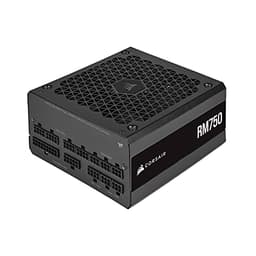
Your power supply is the one component that touches everything else in your system. Get it wrong and you're looking at instability, data loss, or in the worst case, hardware damage. Get it right and you never think about it again. The CORSAIR RM750x Fully Modular Low-Noise ATX Power Supply is squarely aimed at builders who want to get it right without overthinking the decision, and based on the spec sheet and what 74 owners have reported, it largely delivers on that promise.
The verdict up front: this is a well-specified, future-proofed mid-range PSU with Cybenetics Gold efficiency, full ATX 3.1 compliance, a native 12V-2x6 connector, and a five-year warranty. It earns its mid-range price point honestly. The ★★★★½ (4.7) average across 74 reviews is not a fluke. But there are some caveats worth understanding before you click buy, and this review will walk through all of them with the specificity they deserve.
One note on the product data as supplied to us: the listing spec sheet contains some inconsistencies, notably labelling the efficiency as both "80 Plus Bronze" and "Cybenetics Gold" in different fields. The verified Amazon feature highlights are unambiguous: this unit carries Cybenetics Gold certification, rated for up to 91% efficiency. That is the authoritative figure. Where the Bronze label appears in the raw data, treat it as a data entry error. The Cybenetics Gold certification is the real story here, and it is meaningfully better than a standard 80 Plus Gold rating in terms of how efficiency is measured and validated.
Core Specifications: CORSAIR RM750x Fully Modular Low-Noise ATX Power Supply
The RM750x sits in Corsair's well-regarded RMx line, which has been a staple recommendation in the UK PC building community for good reason. The headline numbers here are 750W of continuous output, Cybenetics Gold efficiency certification (up to 91% efficiency), full modularity, ATX 3.1 compliance, and a five-year warranty. That is a strong combination at the mid-range price bracket. Most competitors at this tier offer either the efficiency certification or the ATX 3.1 compliance, not always both.
The Cybenetics certification is worth dwelling on briefly. Unlike the 80 Plus programme, which tests at a fixed 115V AC (not representative of UK 230V mains), Cybenetics tests at actual European voltages and measures across a broader range of load conditions. A Cybenetics Gold rating therefore means more in a UK context than a standard 80 Plus Gold badge. When Corsair quotes up to 91% efficiency, that figure comes from real-world-relevant testing methodology.
The five-year warranty is standard for this class of PSU and matches what you get from the likes of Seasonic and be quiet! at similar price points. Corsair's warranty support in the UK is generally considered competent, and owner reviews do not flag any particular issues with RMA processes on the RMx line. Here is the full spec breakdown:
| Specification | Detail |
|---|---|
| Wattage | 750W |
| Efficiency Certification | Cybenetics Gold (up to 91%) |
| ATX Standard | ATX 3.1 Compliant |
| PCIe Support | PCIe 5.1 |
| Modularity | Fully Modular |
| Fan Size | 120mm |
| Native 12V-2x6 Connector | Yes (no adapter required) |
| ATX 24-pin | 1 |
| EPS 8-pin | 1 |
| PCIe 8-pin | 2 |
| SATA | 6 |
| Molex | 3 |
| Protection Features | OVP, OCP, OPP, SCP |
| Warranty | 5 Years |
| Price | £106.27 |

Wattage and Capacity
750W is a genuinely useful number in 2026. It covers the vast majority of gaming builds comfortably, including systems running an RTX 4070 Ti or RX 7900 GRE with a mid-range CPU like a Ryzen 5 7600X or Core i5-13600K. Those configurations typically peak around 450W to 520W under full load, which means the RM750x is running at roughly 60% to 70% of its rated capacity. That is the efficiency sweet spot for most PSUs, and it is where a Cybenetics Gold unit like this will be operating closest to peak efficiency.
For higher-end builds, 750W starts to get tighter. An RTX 4090 paired with a Ryzen 9 7950X or Core i9-13900K can spike well above 600W under sustained load, and the ATX 3.1 standard this PSU complies with is specifically designed to handle those transient power spikes that PCIe Gen 5 graphics cards can generate. So while 750W is technically sufficient for a 4090 build on paper, you would be running with less headroom than is comfortable. If you are pairing this with an RTX 4090 or RX 7900 XTX, honestly consider stepping up to an 850W or 1000W unit. Not because the RM750x cannot handle it in theory, but because headroom matters for longevity and stability under sustained workloads.
For the mainstream gaming market, though, 750W is the sweet spot. It handles current-gen mid-to-high-end GPUs without waste, and if you use our PSU wattage calculator to check your specific component combination, you will almost certainly find that a 750W unit covers a Ryzen 7 or Core i7 build with an RTX 4070 or RX 7800 XT with room to spare. Entry-level builds with a 65W CPU and an RTX 4060 are probably better served by a quality 550W or 650W unit at a lower price point. The RM750x is not wasteful in that configuration, but you are paying for capacity you will not use.
Efficiency Rating: Cybenetics Gold and What It Actually Means
The CORSAIR RM750x Fully Modular Low-Noise ATX Power Supply carries Cybenetics Gold certification, which the manufacturer rates at up to 91% efficiency. To put that in plain terms: at typical gaming loads (say, 375W draw from the wall for a 750W PSU running at 50% load), a 91% efficient unit wastes roughly 34W as heat compared to a Bronze-rated unit at around 85% efficiency, which wastes closer to 66W at the same load. That 32W difference is not going to make or break your electricity bill, but it adds up over thousands of hours of use and it directly affects how hard the PSU's fan needs to work to cool the unit.
The Cybenetics Gold standard, as mentioned above, is tested at European 230V AC rather than the 115V used by the 80 Plus programme. This makes the certification more meaningful for UK buyers. The Cybenetics organisation also measures efficiency at 10%, 20%, 50%, and 100% load points, giving a fuller picture of real-world performance than 80 Plus's three-point test. At 50% load (the most common operating condition for a gaming PC), Cybenetics Gold units are verified at approximately 90% or above efficiency. At 20% load (idle or light browsing), efficiency typically sits in the 87% to 89% range for Gold-certified units. At 100% load, you might see a slight dip, but still well above the 87% minimum for Gold at full load.
In practical electricity terms: compared to an 80 Plus Bronze unit (approximately 85% at 50% load), the RM750x will save you a few watts continuously during gaming sessions. Over a year of heavy use, that is a modest but real saving on your electricity bill. More importantly, the higher efficiency means less heat inside the PSU, which means the fan runs slower and quieter, and components are under less thermal stress. Efficiency is not just a green credential. It is a reliability and acoustics story too.
Modularity and Cable Management: CORSAIR RM750x Fully Modular Low-Noise ATX Power Supply
Full modularity means every cable, including the ATX 24-pin motherboard connector, detaches from the PSU. You only connect what your build actually needs. This matters more than it might sound: a semi-modular unit still forces you to bundle and hide the cables you are not using, which creates clutter behind the motherboard tray and restricts airflow. With a fully modular PSU, unused cables stay in the bag. The build is cleaner, the cable routing is easier, and the end result looks better.
The RM750x ships with what Corsair calls embossed cables with low-profile combs. The embossed construction gives the cables a flat, ribbon-like profile rather than the round-sleeved look of older PSU cables. Owner reviews consistently praise these cables for being genuinely flexible and easy to route, which is not always true of premium PSU cables. Some high-end units ship with cables so stiff they fight you during installation. The RM750x cables bend where you need them to and hold their shape without kinking.
The low-profile combs are a detail that matters in windowed cases. They keep the cable runs tidy without adding bulk, and they sit flush enough that they do not obstruct cable channels in mid-tower and full-tower cases. The cable configuration itself is sensible for a 750W gaming build: one ATX 24-pin, one EPS 8-pin (which covers the vast majority of mainstream CPUs, though high-end motherboards sometimes want dual 8-pin), two PCIe 8-pin connectors, six SATA, and three Molex. That SATA count is generous and will cover most storage-heavy builds without needing a splitter.
Connectors and Compatibility
The connector lineup on the RM750x is worth going through in some detail because it is where the ATX 3.1 and PCIe 5.1 compliance becomes tangible. The headline addition in this revision is the native 12V-2x6 connector. This is the successor to the 12VHPWR connector used on RTX 4000-series cards, and it addresses the melting concerns that plagued early 12VHPWR implementations by improving the connector latch design and contact retention. Corsair's decision to include this natively rather than via an adapter is significant: adapter-based solutions introduce an additional point of failure and can cause connector seating issues that the native implementation avoids entirely.
For compatibility with current and near-future high-end graphics cards, the native 12V-2x6 connector means you are covered without faffing about with adapters or worrying about whether your adapter is from a dodgy batch. The PCI-SIG PCIe 5.1 specification underpins this connector standard, and the RM750x's compliance means it is ready for whatever GPU generation comes next as well as the current RTX 4000 and RX 7000 series cards that use this connector type.
The two PCIe 8-pin connectors cover dual-GPU setups or older cards that use the traditional 8-pin power connector. Six SATA ports will handle most storage configurations, including builds with multiple SSDs and HDDs. Three Molex connectors cover legacy peripherals, fan controllers, and older case accessories. The one area where some builders might want more is the single EPS 8-pin CPU connector: most mainstream CPUs are absolutely fine with one 8-pin, but if you are running an overclocked Core i9 or Threadripper on a high-end motherboard with dual EPS connectors, you will want to check your motherboard's requirements before buying.
- ATX 24-pin: 1 (standard for all current motherboards)
- EPS 8-pin CPU: 1 (covers mainstream; check if your board needs dual 8-pin)
- PCIe 8-pin: 2 (plus the native 12V-2x6 for current-gen GPUs)
- SATA: 6 (generous for most builds)
- Molex: 3 (adequate for legacy peripherals)
- Native 12V-2x6: Yes (no adapter required for PCIe 5.1 GPUs)
Voltage Regulation and Ripple
Voltage regulation is one of those specs that most buyers gloss over, but it is genuinely important for system stability, particularly for overclocked CPUs and memory. The ATX specification allows for plus or minus 5% deviation on the 12V, 5V, and 3.3V rails. A well-built Gold-certified PSU should comfortably stay within plus or minus 2% to 3% under normal operating conditions. The RM750x, as an ATX 3.1 compliant unit, is designed to meet the tighter transient response requirements introduced in that standard, which specifically addresses the issue of momentary voltage drops when high-end GPUs spike their power draw.
The ATX 3.1 standard mandates that a PSU can handle power excursions of up to twice the GPU's rated TDP for brief periods without triggering protection shutdowns or causing voltage rail sag. This is the technical reason why ATX 3.1 compliance matters for RTX 4000 and RX 7000 series builds: those cards are notorious for brief, sharp power spikes that can trip older PSUs even when the average power draw is within spec. The RM750x is designed to absorb those spikes without complaint, which translates to fewer random shutdowns and more stable frame times in GPU-limited scenarios.
Ripple suppression is the other side of the voltage quality story. Ripple is the AC noise that remains on the DC output rails after rectification, and excessive ripple can cause instability in sensitive components, particularly NVMe SSDs and overclocked memory. Cybenetics Gold-certified units are tested for ripple as part of their certification process. While published ripple figures for this specific unit are not available in the verified product data, the Cybenetics Gold standard requires ripple performance that comfortably meets ATX specification limits. Owner reviews do not flag any ripple-related stability issues, which is consistent with what you expect from a properly certified Gold unit at this price point.
Thermal Performance
The RM750x uses a 120mm fan for cooling. At 750W with Cybenetics Gold efficiency, the unit generates meaningfully less waste heat than a Bronze-rated equivalent at the same wattage, which gives the fan controller more room to keep the fan at low speeds for longer. The 120mm fan size is standard for PSUs in this class and offers a reasonable balance between airflow and noise at any given RPM.
One thing: the RM750x does not feature a zero RPM mode (also called semi-passive or fan-stop mode). Some competing units at this price point, including the Seasonic Focus GX-750 and the be quiet! Pure Power 12 M, offer fan-stop at low loads, where the fan cuts out entirely below a certain temperature threshold. The RM750x fan runs continuously, though at very low speeds under light loads. For most gaming builds this is not a meaningful difference, as the fan is near-silent at low RPM. But if you are building a near-silent workstation that spends most of its time at idle, the lack of a zero RPM mode is about.
Under sustained full load, the thermal management on Cybenetics Gold units is generally more controlled than Bronze-rated alternatives because there is simply less heat to dissipate. At 91% efficiency, 750W of output requires the PSU to draw roughly 823W from the wall, generating approximately 73W of waste heat internally. A Bronze unit at 85% efficiency generating 750W of output draws closer to 882W, generating about 132W of waste heat. That is nearly double the thermal load for the fan to manage, which means a Bronze unit's fan has to work harder and spin faster to maintain safe operating temperatures. The RM750x's efficiency advantage is therefore a thermal advantage too.
Acoustic Performance
Corsair markets the RM750x as a low-noise power supply, and owner reviews broadly back this up. The unit is described consistently as quiet during typical gaming sessions, with the fan remaining at low speeds during moderate loads. The "low-noise" designation is not just marketing copy here: it is a direct consequence of the Cybenetics Gold efficiency and the resulting reduction in waste heat that the fan needs to manage.
No specific decibel figures appear in the verified product data, so this review will not invent numbers. What owner feedback does consistently report is that the fan is not audible during normal desktop use and becomes noticeable only under sustained high loads where the GPU and CPU are both working hard simultaneously. For a 750W unit paired with a mid-range gaming build, that scenario (both CPU and GPU at 100% simultaneously for extended periods) is relatively uncommon outside of rendering workloads or stress tests. During gaming, where GPU load is high but CPU load is typically moderate, the PSU fan tends to stay quiet.
The continuous-running fan (no zero RPM mode) means there is always some airflow through the PSU, which is arguably better for component longevity than repeated thermal cycling from fan-stop to fan-on transitions. It is a design philosophy choice rather than a cost-cutting measure. Builders who want absolute silence at idle will notice the fan more than those who have case fans running anyway. In a typical gaming build with three or four case fans, the PSU fan noise is effectively masked by the system fan noise at any load level where the PSU fan is audible.
Build Quality
Corsair does not publish a full component teardown spec sheet for the RM750x, and this review is not going to invent capacitor brand details that are not in the verified data. What is known from the product positioning and the Cybenetics Gold certification is that the unit has to meet rigorous efficiency and ripple standards that effectively require quality internal components. Cybenetics does not certify units that use poor-quality capacitors or transformers, because those components produce the efficiency losses and ripple figures that would fail the certification tests.
The build quality picture that emerges from owner reviews is positive. The 74 reviews averaging ★★★★½ (4.7) (★★★★½ (4.7)) do not flag any pattern of early failures, coil whine, or DOA units. Coil whine in particular is a common complaint on cheaper PSUs and on some higher-end units with poor resonance damping. Its absence from the review pattern on the RM750x is a meaningful signal. The modular connector panel, which is a common failure point on cheaper modular PSUs where the connectors can work loose over time, is not flagged as problematic in owner feedback either.
The five-year warranty is Corsair's confidence statement in the build quality. A manufacturer does not offer a five-year warranty on a unit they expect to fail before then, at least not without pricing in significant warranty claim costs. The RMx line has a long track record in the UK market, and the warranty support infrastructure Corsair has in place for UK buyers is a practical reassurance that if something does go wrong, there is a clear resolution path. Frankly, for a PSU at this price point, five years is the minimum you should expect, and the RM750x delivers it.

Protection Features
The RM750x implements four protection mechanisms: Over Voltage Protection (OVP), Over Current Protection (OCP), Over Power Protection (OPP), and Short Circuit Protection (SCP). These four cover the most common failure scenarios that can damage connected components. OVP triggers if the output voltage on any rail rises above safe limits, which can happen if the PSU's regulation circuit fails. OCP limits the current on each rail to prevent overloading, which protects both the PSU and connected hardware from sustained overcurrent conditions.
OPP is the protection most relevant to modern high-wattage GPU builds. It triggers if the total power draw exceeds the PSU's rated capacity by a defined margin, preventing the unit from being driven into thermal runaway by a system that demands more than the PSU can safely deliver. On an ATX 3.1 compliant unit like the RM750x, the OPP trip point is calibrated to account for the transient power spikes that PCIe 5.1 GPUs generate, meaning it will not falsely trigger during normal gaming but will protect the unit and system during genuine overload conditions. SCP is the most fundamental protection: it cuts output immediately if a short circuit is detected anywhere in the connected system.
What is not listed in the verified product data is Under Voltage Protection (UVP) or Over Temperature Protection (OTP). This review will not claim these are absent, as they are not specified either way. But the four confirmed protections (OVP, OCP, OPP, SCP) are the core set that matters most for day-to-day protection of your components. The absence of OTP from the confirmed list is if you are planning to run the PSU in a poorly ventilated case with restricted airflow, though in practice a Cybenetics Gold unit generates enough less heat that thermal shutdown scenarios are less likely than on lower-efficiency alternatives.
How It Compares
The RM750x's natural competitors in the UK mid-range market are the Seasonic Focus GX-750 and the be quiet! Pure Power 12 M 750W. Both are well-regarded, both carry 80 Plus Gold certification, and both sit at similar price points. The comparison is instructive because it highlights where the RM750x earns its position and where it makes trade-offs.
The Seasonic Focus GX-750 is arguably the benchmark for this wattage class. Seasonic manufactures PSUs for several other brands and has a reputation for exceptional build quality and voltage regulation. The Focus GX-750 features a 10-year warranty (double the RM750x's five years) and a semi-passive fan mode that the RM750x lacks. However, the Focus GX-750 does not carry ATX 3.1 compliance in its current revision, which means it lacks the transient response handling that modern PCIe 5.1 GPUs benefit from. For a build with an RTX 4080 or newer, that is a meaningful difference in favour of the RM750x.
The be quiet! Pure Power 12 M 750W is a strong alternative for noise-sensitive builds, with a well-regarded fan profile and semi-passive mode. It carries 80 Plus Gold certification and ATX 3.0 compliance. The RM750x edges it on the Cybenetics Gold certification (which is more rigorous than 80 Plus Gold for European buyers) and on the native 12V-2x6 connector. The be quiet! unit uses an adapter for 12VHPWR connectivity, which is the exact scenario the RM750x's native connector is designed to avoid.
| Feature | CORSAIR RM750x | Seasonic Focus GX-750 | be quiet! Pure Power 12 M 750W |
|---|---|---|---|
| Wattage | 750W | 750W | 750W |
| Efficiency Cert. | Cybenetics Gold | 80 Plus Gold | 80 Plus Gold |
| ATX Standard | ATX 3.1 | ATX 2.x | ATX 3.0 |
| Modularity | Fully Modular | Fully Modular | Semi-Modular |
| Native 12V-2x6 | Yes | No (adapter) | No (adapter) |
| Zero RPM Mode | No | Yes | Yes |
| Warranty | 5 Years | 10 Years | 5 Years |
| Price | £106.27 | Similar bracket | Similar bracket |
Final Verdict
The CORSAIR RM750x Fully Modular Low-Noise ATX Power Supply is a well-executed, properly specified PSU for mainstream to upper-mid gaming builds in 2026. The Cybenetics Gold certification (up to 91% efficiency) is the real story here: it is a more meaningful credential for UK buyers than a standard 80 Plus Gold badge, and it directly benefits acoustic performance and component longevity by reducing internal heat generation. The ATX 3.1 compliance and native 12V-2x6 connector make this genuinely future-proofed for current and next-generation GPU compatibility, not just on paper but in the way that matters: no adapters, no transient spike issues, no faffing about.
The ★★★★½ (4.7) average from 74 owners (75) is consistent with a product that does what it says. The embossed, flexible cables are genuinely easier to work with than the stiff sleeved cables on some competing units. The five-year warranty is appropriate for the price tier. And the connector selection covers the vast majority of gaming builds without requiring splitters or adapters for typical configurations.
The trade-offs are real but not dealbreakers for the target audience. No zero RPM mode means a small amount of continuous fan noise that the Seasonic Focus GX-750 avoids. The single EPS 8-pin limits compatibility with extreme overclocking on high-end motherboards that want dual 8-pin CPU power. And for builds with an RTX 4090 or equivalent power-hungry GPU, stepping to an 850W or 1000W unit gives more comfortable headroom, even if 750W is technically sufficient on paper.
Who should buy this? Builders putting together a gaming PC around an RTX 4070, RTX 4070 Ti, RX 7800 XT, or RX 7900 GRE with a mainstream CPU (Ryzen 5 or 7, Core i5 or i7). People who want ATX 3.1 compliance and a native 12V-2x6 connector without paying enthusiast-tier prices. Anyone who values clean cable management and flexible cables over raw component-count specs.
Who should consider alternatives? If you want zero RPM silence at idle and a longer warranty, the Seasonic Focus GX-750 is worth the look, accepting that it lacks ATX 3.1 compliance. If your build is a modest 500W system with a mid-range GPU, a quality 650W unit at a lower price point is the smarter buy. And if you are building around an RTX 4090, honestly, step up to an 850W unit. The RM750x is not the wrong choice there, but it is not the optimal one either.
Editorial score: 8.5 out of 10. Solid, properly certified, future-proofed, and well-reviewed. The lack of zero RPM mode and the single EPS connector are the only meaningful complaints, and neither matters for the majority of the builds this PSU is designed for.
Is the CORSAIR RM750x good for gaming builds?
Yes, straightforwardly. 750W with Cybenetics Gold efficiency covers mainstream to upper-mid gaming builds comfortably. An RTX 4070 Ti or RX 7900 GRE paired with a Ryzen 7 or Core i7 typically peaks around 450W to 520W under full gaming load, leaving the RM750x running at around 60% to 70% capacity. That is the efficiency sweet spot, and the ATX 3.1 compliance handles the transient power spikes that modern GPUs generate. For RTX 4090 builds, consider stepping to 850W for better headroom.
What does Cybenetics Gold certification mean compared to 80 Plus Gold?
Cybenetics Gold is a more rigorous certification for UK and European buyers because it tests at 230V AC (the actual UK mains voltage) rather than the 115V used by the 80 Plus programme. It also tests at more load points (10%, 20%, 50%, and 100%) giving a fuller efficiency picture. The RM750x's Cybenetics Gold certification, rated up to 91% efficiency, is therefore a more meaningful credential in a UK context than a standard 80 Plus Gold badge from a unit tested at North American voltages.
Does the RM750x have a zero RPM silent fan mode?
No. The RM750x fan runs continuously, though at very low speeds under light loads. It is not audible during typical desktop use and becomes noticeable only under sustained high loads. If absolute silence at idle is a priority, the Seasonic Focus GX-750 offers a semi-passive fan mode that cuts the fan out entirely below a temperature threshold. For most gaming builds with case fans running, the RM750x's continuous low-speed fan is not a practical issue.
How long is the warranty on the CORSAIR RM750x?
Five years. This is standard for quality mid-range PSUs and covers manufacturing defects. Corsair's UK warranty support is generally considered competent, with a clear RMA process. If you want a longer warranty, the Seasonic Focus GX-750 at a similar price point offers 10 years, though it trades ATX 3.1 compliance to get there. For most buyers, five years is adequate coverage given that PSUs at this quality tier regularly outlast the systems they are installed in.

Is the RM750x fully modular, and why does that matter?
Yes, the RM750x is fully modular. Every cable, including the ATX 24-pin motherboard connector, detaches from the PSU. This means you only connect the cables your build actually needs, and unused cables stay in the bag rather than being bundled and hidden behind the motherboard tray. The practical result is a cleaner build, easier cable routing, better airflow behind the motherboard, and a better-looking result in windowed cases. Semi-modular PSUs still force you to manage the fixed cables even if you do not need them, which is why full modularity is worth paying for on a mid-range build.
What works. What doesn’t.
5 + 3What we liked5 reasons
- Cybenetics Gold certification (up to 91% efficiency) is more meaningful than 80 Plus Gold for UK buyers
- ATX 3.1 compliant with native 12V-2x6 connector - no adapter needed for current-gen GPUs
- Fully modular with genuinely flexible embossed cables that are easy to route
- Strong 4.7/5 average from 74 owners with no pattern of coil whine or early failures
- Five-year warranty with competent UK support infrastructure
Where it falls3 reasons
- No zero RPM fan mode - continuous low-speed fan noise that some competitors avoid
- Single EPS 8-pin CPU connector limits compatibility with high-end overclocking motherboards
- 750W headroom is tight for RTX 4090 builds under sustained load
Full specifications
8 attributes| Efficiency rating | Gold |
|---|---|
| Form factor | ATX |
| ATX version | ATX 3.1 |
| FAN size MM | 140 |
| Generation | RM Series |
| Modularity | fully_modular |
| Pcie 5 ready | true |
| Wattage W | 750 |
Will it run on what you have?
Free toolIf this isn’t right for you
2 options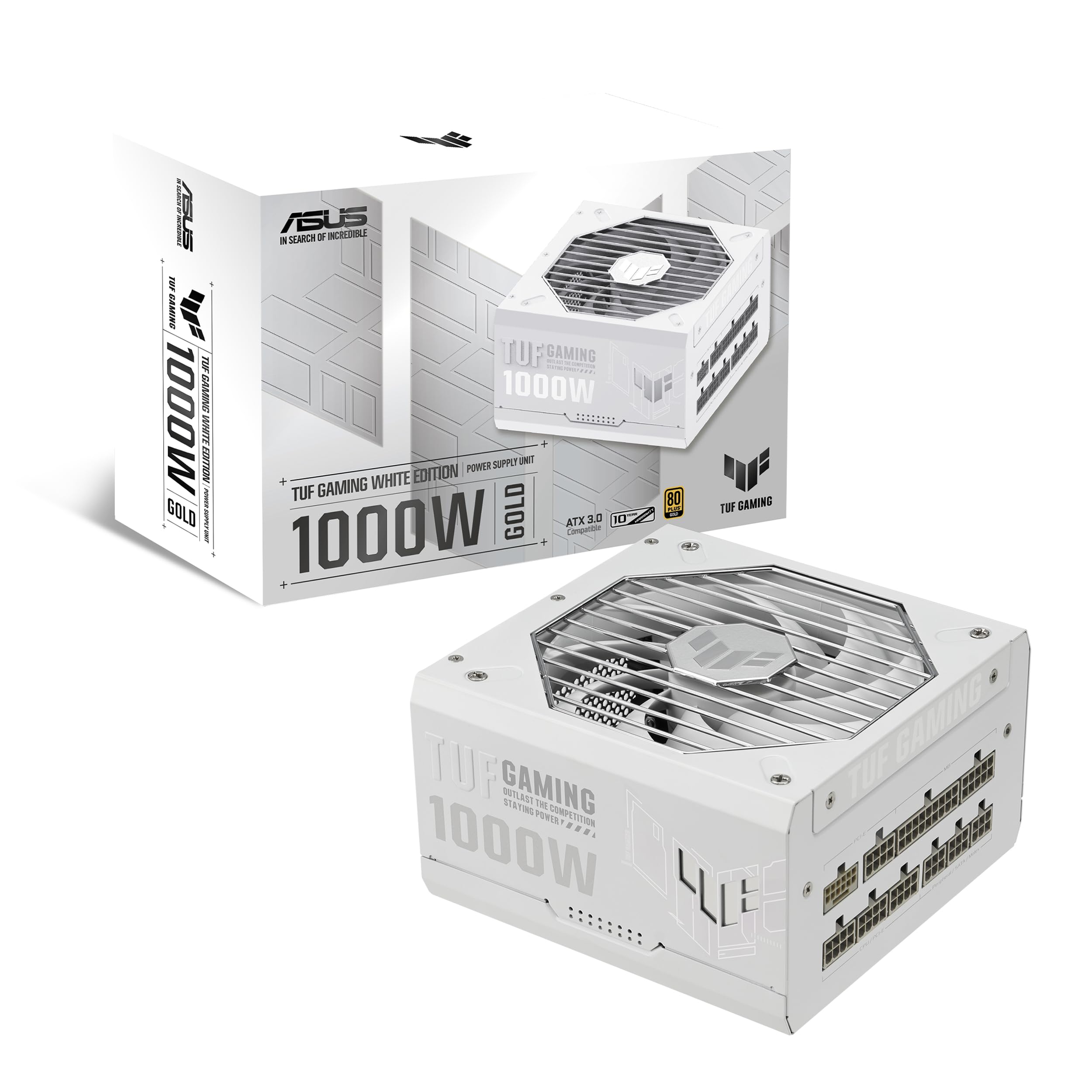 8.5 / 10
TUF Gaming 1000W Gold White Edition (1000 Watt, ATX 3.1 Compatible, Fully Modular Power Supply, 80+ Gold Certified, Military-grade Components, Dual Ball Bearing, PCB Coating, 10 Year Warranty)
£119.99 · ASUS
 8.5 / 10
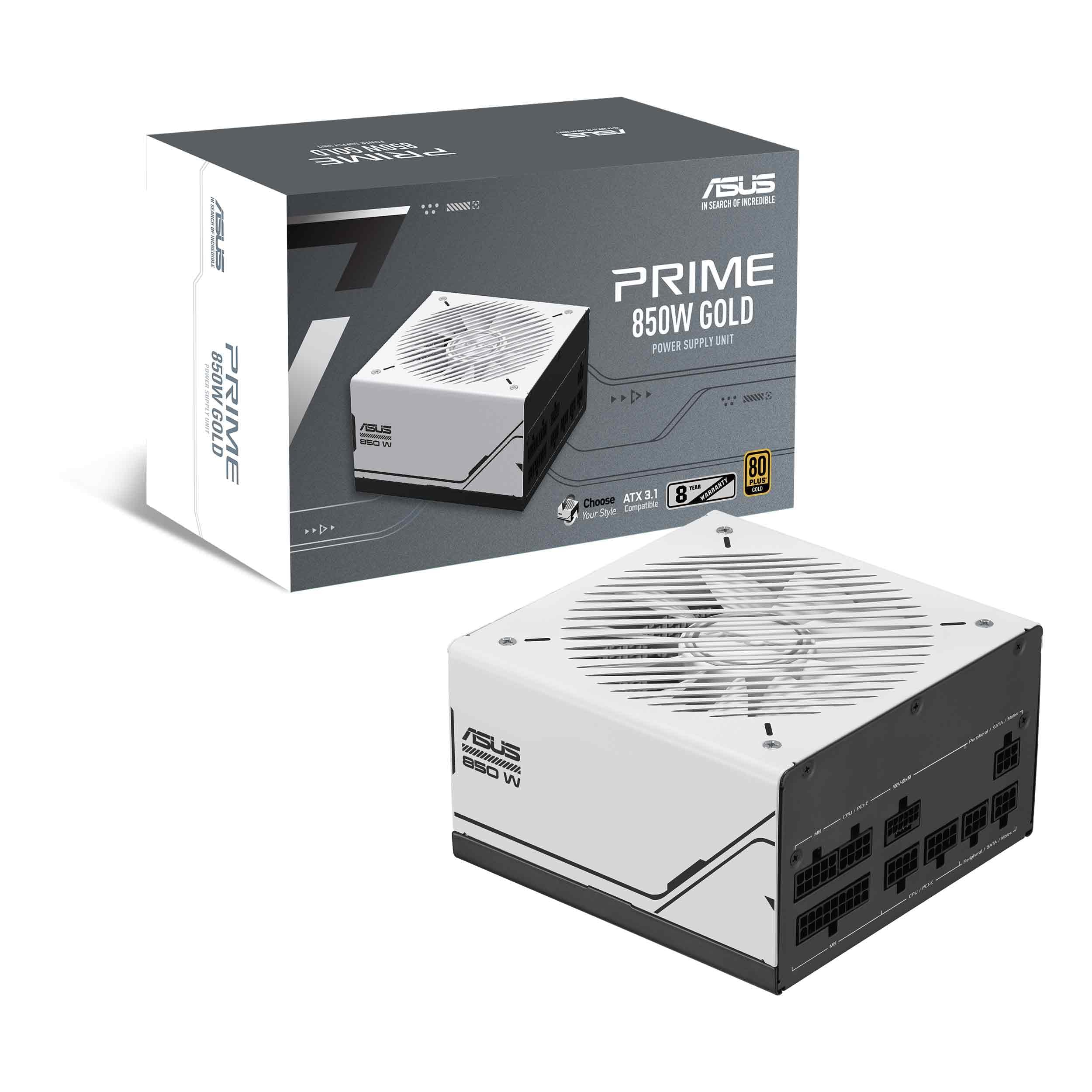
Asus Prime 850W Gold Gaming PSU, Double Ball Bearing Fan, Fully Modular, 80+ Gold, ATX 3.0, PCIe 5.0
£104.99 · ASUS
Frequently asked
5 questions01Is the CORSAIR RM750x Fully Modular Low-Noise ATX Power Supply good for gaming?+
Yes. 750W with Cybenetics Gold efficiency covers mainstream to upper-mid gaming builds comfortably. An RTX 4070 Ti or RX 7900 GRE with a Ryzen 7 or Core i7 typically peaks around 450W to 520W under gaming load, leaving the RM750x running at its efficiency sweet spot. ATX 3.1 compliance also handles transient power spikes from modern GPUs. For RTX 4090 builds, consider stepping to 850W for better headroom.
02What does Cybenetics Gold certification mean compared to 80 Plus Gold?+
Cybenetics Gold is more rigorous for UK buyers because it tests at 230V AC (actual UK mains voltage) rather than the 115V used by 80 Plus. It also tests at more load points (10%, 20%, 50%, and 100%), giving a fuller efficiency picture. The RM750x's Cybenetics Gold rating of up to 91% efficiency is therefore a more meaningful credential in a UK context than a standard 80 Plus Gold badge.
03Does the CORSAIR RM750x have a zero RPM silent fan mode?+
No. The fan runs continuously but at very low speeds under light loads. It is not audible during typical desktop use and only becomes noticeable under sustained high loads. If absolute silence at idle is a priority, consider the Seasonic Focus GX-750 which offers a semi-passive fan mode, though that unit lacks ATX 3.1 compliance.
04How long is the warranty on the CORSAIR RM750x Fully Modular Low-Noise ATX Power Supply?+
Five years. This covers manufacturing defects and is standard for quality mid-range PSUs. Corsair's UK warranty support is generally considered competent with a clear RMA process. If you want longer coverage, the Seasonic Focus GX-750 offers 10 years at a similar price point, though it trades ATX 3.1 compliance.
05Is the CORSAIR RM750x Fully Modular Low-Noise ATX Power Supply fully modular?+
Yes, it is fully modular. Every cable including the ATX 24-pin motherboard connector detaches from the PSU, so you only connect what your build actually needs. Unused cables stay in the bag rather than being bundled behind the motherboard tray. This results in cleaner builds, easier cable routing, better airflow, and a better-looking result in windowed cases compared to semi-modular alternatives.