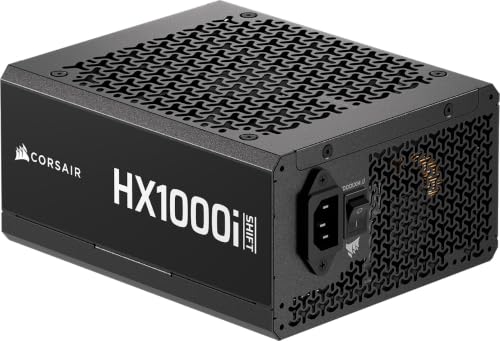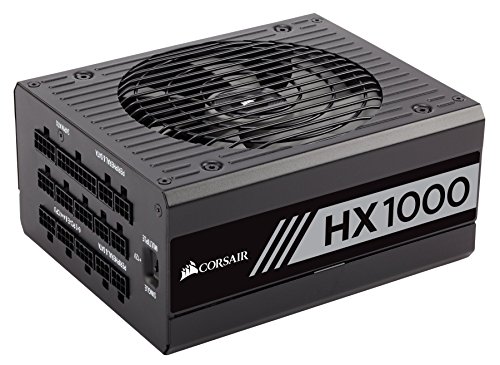
Yes, the Corsair RM850e is a good PSU choice for a mid-to-high-end gaming PC when 850W meets the whole system's requirements. This white 2025 version combines ATX 3.1 support, modular cabling and a native 12V-2x6 graphics cable in a 140mm-long housing. Those are useful features for a white build where space behind the PSU is limited.
The main compromise is the rifle-bearing fan. If your priority is a fluid-dynamic-bearing design and the quietest independently measured operation, compare alternatives before buying. Also skip this model for an SFX-only case: a short ATX supply is still an ATX supply.
This review is for CP-9020293-UK. Older RM850e versions and other colours can appear under similar names, so keep that part number in view when comparing offers.
The white 2025 model at a glance
Corsair's CP-9020293-UK product page names this a fully modular Low-Noise ATX power supply and specifies Cybenetics Gold efficiency. Its Zero RPM claim explains the low-load quiet-power appeal: the PSU fan can stop when conditions allow.
| Detail | Specification |
|---|---|
| Exact model | RM850e (2025), white, CP-9020293-UK |
| Continuous rated output | 850W |
| Standards | ATX 3.1; PCIe 5.1 |
| Efficiency | Cybenetics Gold, as listed by Corsair |
| Modularity | Fully modular |
| Graphics cable | 12V-2x6, rated up to 600W; 650mm nominal length |
| CPU and motherboard cables | 2 x 4+4-pin EPS; 1 x 24-pin ATX |
| Other connectors | 3 x PCIe 6+2-pin total, 6 x SATA, 2 x PATA |
| Dimensions | 140 x 150 x 86mm |
| Fan | 120mm, rifle bearing; Zero RPM mode |
| Capacitor temperature rating | 105°C |
| Warranty | 7 years |

Start with the GPU and CPU together
The 850W rating is continuous output capacity for the system, rather than a constant draw from the socket. An idle PC takes far less power than one running a game or a demanding render. The PSU supplies the changing load, with conversion losses added to the mains consumption.
Check the power-supply recommendation for the exact graphics card, then consider the CPU's configured power limits and the remaining components. Fans, storage, lighting and pumps also draw power. A broad GPU-family recommendation is less useful than the board maker's guidance for the card you actually own.
For many mid-to-high-end builds, 850W is a sensible capacity to investigate. It is not automatically enough for every flagship combination with raised power limits, and a modest system does not need it simply because an upgrade might come one day. A useful plan names the likely next card. If that card would need a much larger supply, this one was never the long-term answer.
ATX 3.1 helps with short power excursions
ATX 3.1 sets out how a supply should ride through the brief power spikes modern graphics cards produce. It is a compatibility standard for short events, so sizing for the sustained load still comes first.
PCIe 5.1 support and the native graphics lead make the RM850e a straightforward match for current cards with the 16-pin socket. Older cards that use 6+2-pin plugs are covered too, since Corsair includes those leads in the box, so there is no reason to add an adapter.
Cybenetics Gold and 80 PLUS Gold are different badges
Cybenetics and 80 PLUS both assess PSU efficiency, but they use different test programmes. The familiar 80 PLUS tiers are tied to efficiency thresholds at defined load points and input-voltage categories. Cybenetics uses a broader load-mapping approach for its efficiency classification and also operates separate noise classifications.
The word Gold alone therefore does not identify the method. This exact RM850e is specified as Cybenetics Gold, and that is the badge to compare.
Efficiency is the proportion of power drawn from the wall that becomes usable DC output. The rest is lost, chiefly as heat. Reducing those losses can cut electricity consumption, particularly during long workloads, but the actual saving depends on the load and hours of use. A badge also says nothing about whether the cables reach the top of your case or how the fan sounds in a quiet room.
Rifle bearings explain the main fan trade-off
The RM850e uses a 120mm rifle-bearing fan. A rifle bearing is a lubricated sleeve-style design with grooves that help circulate the lubricant. It is a common way to balance cost and fan operation in a power supply.
A fluid-dynamic bearing uses a pressurised film of lubricant to support the rotating shaft. Good examples are often chosen for noise-focused designs because the mechanism can reduce mechanical contact and wear. The label alone does not decide which complete PSU is quieter: blade design, speed control, mounting and airflow restriction all matter too.
If you specifically want a fluid-dynamic-bearing fan, this RM850e is not that choice. If you want a practical modular supply for a gaming PC where the GPU and case fans already contribute sound, the rifle bearing is a trade-off to weigh rather than a reason to reject it automatically.
Zero RPM mode helps at suitable low loads by stopping the fan. As demand and internal temperature rise, cooling may require it to run. A lightly used desktop and a sustained gaming session can therefore have different sound profiles even with the same PSU installed.
Plan the wiring before the side panel goes on
The main cable set includes a 24-pin motherboard connection and two 4+4-pin CPU connections. The graphics options include the native 12V-2x6 lead, a 12V-2x6-to-dual-6+2-pin lead and a separate 6+2-pin cable. There are six SATA connectors and two PATA connectors in total.
The native graphics cable is 650mm long, the motherboard cable 610mm and the CPU cables 750mm. Those are useful planning dimensions, especially if the route goes behind the motherboard tray. Leave enough slack to reach the socket without pulling against it, but keep loose cable away from fans.
Count powered hubs as well as drives. Lighting controllers and fan hubs can use SATA power, which reduces the number available for storage. Also check which alternative graphics leads share a PSU-side connection; connector totals are not an instruction to use every possible combination simultaneously.
The 16-pin graphics plug wants to go fully home with a straight run before the first bend, because a lead pulled sideways at the card can work the plug partly loose. Its 600W rating is a ceiling for that one lead, and the whole system still shares 850W.

Why 140mm matters in a crowded basement
At 140 x 150 x 86mm, the RM850e is short for an ATX unit. Many mid-tower cases put a drive cage in the PSU basement, and every millimetre the supply gives back there is room for the modular plugs to leave the housing without a hard bend. A 160mm or 180mm unit in the same case can leave the cables pressed against the cage. Measure from the mounting plate to the cage, then add a few centimetres for plugs.
Short is still ATX, though. An SFX-only case uses a different supply size and mounting arrangement, and the RM850e will not fit one because one dimension is modest.
The white finish is the other reason to choose this version. In a glass-sided white build the supply may sit under a shroud, but the cables usually run through visible cut-outs beside the motherboard, so they are part of the look. Whether the supplied leads match that look is worth confirming from Corsair's product photos before ordering, because the finish is the reason to pick this version.
What the temperature rating and warranty tell you
The exact white 2025 UK listing specifies 105°C-rated capacitors and a seven-year manufacturer warranty. A capacitor temperature rating describes the component's rating, not a target operating temperature for the computer or a prediction of service life.
Seven years of cover is a concrete part of the package. Read the terms for the seller and region, keep the purchase receipt and retain the cable set. The length is useful to compare, while eligibility and the claim process decide how that cover works in practice.
A good purchase for the right white build
Choose this RM850e when the white finish, short ATX housing and supplied cables solve real parts of the build. ATX 3.1 support and the native graphics lead make it a practical option for an appropriately sized modern gaming PC.
If the aim is a very quiet machine under sustained load, spend time on acoustic evidence and the fan design before choosing. If the case needs SFX or the components need more output, move on to the correct category. For the intended 850W ATX job, the feature set and warranty make a clear, defensible buying case.
What the RM850e build gains
- ATX 3.1 and PCIe 5.1 support
- Fully modular cables including 12V-2x6
- 140mm-long ATX housing
- Corsair-listed Cybenetics Gold efficiency and seven-year warranty
- Rifle-bearing fan may not suit buyers prioritising a fluid-dynamic-bearing design
- ATX housing is unsuitable for an SFX-only case
- Six SATA connectors may limit an accessory-heavy build

A good fit for a white 850W build; the fan design is the main trade-off
Yes, the white 2025 Corsair RM850e is a good PSU choice for an appropriately sized mid-to-high-end gaming build. The 140mm housing, modular cables, ATX 3.1 support and 12V-2x6 connection make it practical to build around. Choose it for those features and its seven-year warranty. Skip it for an SFX-only case or when the priority is a fluid-dynamic-bearing fan and the lowest verified noise under load.
What works. What doesn’t.
4 + 3What we liked4 reasons
- ATX 3.1 and PCIe 5.1 support
- Fully modular cables including 12V-2x6
- 140mm-long ATX housing
- Corsair-listed Cybenetics Gold efficiency and seven-year warranty
Where it falls3 reasons
- Rifle-bearing fan may not suit buyers prioritising a fluid-dynamic-bearing design
- ATX housing is unsuitable for an SFX-only case
- Six SATA connectors may limit an accessory-heavy build
Full specifications
9 attributes| Efficiency rating | Gold |
|---|---|
| Form factor | ATX |
| ATX version | ATX 3.1 |
| FAN size MM | 120 |
| Generation | RMe Series |
| Modularity | fully_modular |
| Pcie 5 ready | true |
| Warranty years | 7 |
| Wattage W | 850 |
Will it run on what you have?
Free toolIf this isn’t right for you
2 options

Frequently asked
6 questions01Is the Corsair RM850e a good PSU?+
Yes, for an 850W ATX gaming build that suits its cables and dimensions. The white 2025 version is especially relevant to a white build. Noise-focused buyers should weigh its rifle-bearing fan against independently tested alternatives.
02Is the 2025 white RM850e Cybenetics Gold?+
Yes. Corsair specifies Cybenetics Gold for CP-9020293-UK. Cybenetics and 80 PLUS are different certification programmes.
03What does Low-Noise mean in the product name?+
Corsair uses Low-Noise in the official name and promotes Zero RPM operation at suitable low loads. When the PSU fan stops, it removes that fan as a noise source; it does not describe the sound of a whole PC under load.
04Does it include a 12V-2x6 cable?+
Yes. The supplied cable has a nominal length of 650mm and a rating of up to 600W. The PSU has 850W total output capacity.
05Will it fit a small case?+
The housing is 140 x 150 x 86mm and uses the ATX form factor. Allow extra room for plugs and bends. It does not fit an SFX-only mount simply because its body is short.
06How long is the warranty?+
The stated manufacturer warranty is seven years. Keep the receipt and check the terms for the seller and country of purchase.