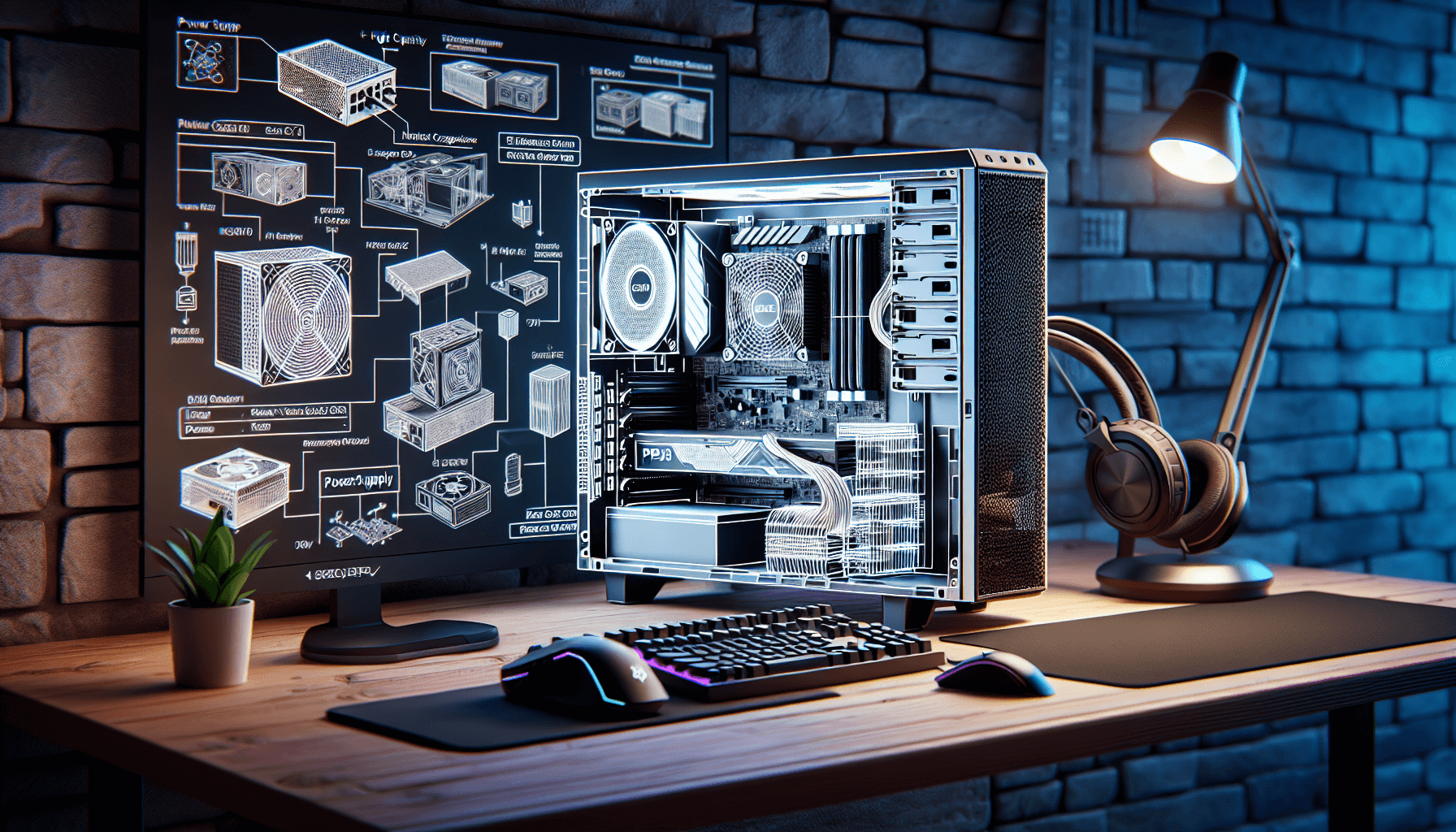
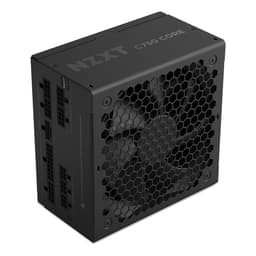
Most people treat a power supply like a smoke alarm: ignore it until something bad happens. That's a mistake, and the NZXT C850 Gold Core is the kind of unit that makes the argument for paying attention. It's an 850W, ATX 3.1 certified, fully modular PSU with 80 Plus Gold and Cybenetics Platinum efficiency credentials, a 12V-2x6 connector ready for the latest GPUs, and a fan that can switch off entirely under light loads. At the upper mid-range price point, it's competing against some genuinely strong alternatives. So the question isn't whether NZXT makes nice-looking kit (they do), it's whether this PSU is actually the right choice when you put the spec sheet next to what else is available for the money.
Short answer: yes, for most mid-to-high-end gaming builds, it earns its place. The dual efficiency certifications, the ATX 3.1 platform, and the near-silent acoustic profile put it ahead of a lot of rivals at this wattage. But there are caveats, and this isn't automatically the right buy for everyone. Read on for the full picture.
The C850 Gold Core sits in NZXT's refreshed Core PSU lineup, which also includes the C750 and C1000 variants. The 850W model is the sweet spot of the range: enough headroom for a current-gen enthusiast build, without the premium you'd pay for the four-figure wattage tier. Owner feedback across ten reviews averages ★★★★½ (4.5), which is a solid signal for a relatively new product. ★★★★½ (4.5)
Core Specifications: NZXT C850 Gold Core at a Glance
The headline numbers are genuinely impressive for this price bracket. You get 850W of continuous output, ATX 3.1 certification (which matters more than it used to, given the power delivery demands of modern GPUs), and a dual-colour 12V-2x6 connector that handles up to 300W to a single GPU safely. The fully modular design means you only cable up what you actually need, and the 135mm fluid dynamic bearing fan with Zero RPM mode keeps things quiet when the system isn't under load.
Efficiency is certified at two levels simultaneously: 80 Plus Gold and Cybenetics Platinum. That combination is unusual and genuinely useful, because the two certification bodies use different methodologies. Having both gives you a more complete picture of real-world efficiency across varying load conditions. The 105-degree-rated capacitors are a spec you'd normally see on higher-end units, and they contribute directly to long-term reliability. The five-year warranty backs that up.
Here's the full spec breakdown:
| Specification | Detail |
|---|---|
| Wattage | 850W continuous |
| Form Factor | ATX 3.1 |
| Efficiency Rating | 80 Plus Gold |
| Secondary Efficiency | Cybenetics Platinum |
| Modularity | Fully modular |
| Fan | 135mm fluid dynamic bearing |
| Zero RPM Mode | Yes |
| Capacitor Rating | 105°C |
| PCIe Connector | 12V-2x6 (dual-colour, 300W) |
| PCIe 5.1 Ready | Yes |
| ATX 24-pin | 1 |
| EPS 8-pin | 1 |
| PCIe 8-pin | 2 |
| SATA | 6 |
| Molex | 3 |
| Protection | OVP, OCP, OPP, SCP |
| Warranty | 5 years |
| Noise Certification | Cybenetics A++ (under 15 dBA) |
| Current Price | £109.99 |

Wattage and Capacity: Is 850W Actually Enough?
850W is a meaningful number in 2026. It's enough for a Ryzen 9 or Core i9 paired with an RTX 5080, with room to spare for drives, fans, and a chunky AIO cooler. It's not enough if you're running dual GPUs or a workstation-class CPU with a 400W TDP, but that's a niche that genuinely needs a kilowatt-plus unit. For a single-GPU gaming or creative workstation build, 850W is the comfortable ceiling where you're never throttling under load and never paying for capacity you don't use.
The ATX 3.1 certification is the part that actually changes the calculation compared to older PSUs. The ATX 3.1 specification, developed by Intel alongside the PCI-SIG for PCIe 5.1 power delivery, requires PSUs to handle transient power spikes of up to twice the rated connector output without tripping protection circuits. Older ATX 2.x units could technically deliver 300W to a GPU but would sometimes shut down during the brief, sharp spikes that modern GPUs produce. ATX 3.1 eliminates that problem by design. So the C850's 850W rating is more usable in practice than an equivalent-rated older unit.
For build planning purposes: entry-level builds with a mid-range GPU and a mainstream CPU typically need 500W to 600W. Midrange gaming rigs with an RTX 4070 class GPU sit comfortably at 650W to 750W. High-end builds with an RTX 5080 or RX 9070 XT need 800W to 850W. The C850 covers that top tier cleanly, and if you're unsure about your specific component combination, run the numbers through our PSU calculator before committing. Headroom matters: running a PSU at 90 percent load continuously is harder on components and efficiency than running it at 60 to 70 percent.
One thing that often gets overlooked is the difference between peak and continuous ratings. The C850's 850W is a continuous output figure, not a peak. Some cheaper PSUs quote peak figures that look impressive but can't sustain that output for more than a few seconds. NZXT's spec here is the real number, which is what you should always be comparing.
Efficiency Rating: What 80 Plus Gold and Cybenetics Platinum Actually Mean
The 80 Plus certification is a US-based testing standard that measures efficiency at 20 percent, 50 percent, and 100 percent load. Gold tier requires at least 87 percent efficiency at 20 percent load, 90 percent at 50 percent load, and 87 percent at full load. In plain terms: for every 100W your components draw, the PSU wastes no more than 10W to 13W as heat. That's genuinely good. Bronze, by comparison, only requires 82 percent at 50 percent load, meaning a Bronze-rated 850W unit wastes roughly 8 percent more power at the same load point.
The Cybenetics Platinum certification is where it gets interesting. Cybenetics uses a broader set of test conditions, including measurements at lower load percentages and with different input voltages that better reflect European mains conditions. Platinum tier from Cybenetics is a high bar, and achieving it alongside 80 Plus Gold means the C850 performs well across a wider range of real-world scenarios than either certification alone would confirm. The C850 and C750 both achieve Cybenetics A++ noise certification (under 15 dBA), which is tied into the same testing process.
So what does this mean for your electricity bill? Honestly, the difference between Gold and Bronze over a typical gaming session isn't enormous in absolute terms. But across a year of daily use, Gold efficiency can save you a meaningful amount depending on your local electricity rate. More practically, a more efficient PSU runs cooler, which means the fan doesn't need to spin as fast, which means less noise. The efficiency isn't just a marketing badge: it has a direct knock-on effect on thermals and acoustics. For a build where you care about noise levels (and if you're buying a PSU with Cybenetics A++ noise certification, you clearly do), Gold-plus efficiency is part of the package, not a separate feature.
The 105-degree-rated capacitors are relevant here too. Higher-quality capacitors maintain their efficiency ratings better over time and under thermal stress. A PSU that was 90 percent efficient on day one and drops to 85 percent after two years of heat cycling isn't delivering the value its certification implies. The 105°C rating suggests NZXT has used components that hold up, which is consistent with the five-year warranty they're prepared to back.
Modularity and Cable Management: Fully Modular Done Properly
Fully modular means every cable, including the ATX 24-pin, detaches from the PSU. That matters for two reasons. First, cable management in a modern case is dramatically easier when you're not wrestling with a bundle of permanently attached cables you don't need. Second, if a cable develops a fault or you upgrade to a case with different routing, you can swap just that cable rather than the whole unit. It's a quality-of-life feature that sounds minor until you've tried to build in a compact case with a semi-modular PSU and a fistful of unused cables going nowhere.
The C850 ships with a cable set that covers the full connector lineup: one ATX 24-pin, one EPS 8-pin for the CPU, two PCIe 8-pin connectors, six SATA connectors, and three Molex connectors. The 12V-2x6 connector for modern GPUs is included, and NZXT's dual-colour design on that cable is a practical touch: the colour coding helps you orient the connector correctly, which matters because inserting a 12V-2x6 incorrectly can cause problems. It's a small detail that shows someone thought about the end user.
Six SATA connectors is a generous count. Most gaming builds use two to four SATA devices at most, so you're covered even if you're running a small NAS-style setup with multiple drives alongside your boot SSD. Three Molex connectors handle older peripherals, fans, and pump controllers. The connector count here is well-matched to a high-end gaming or content creation build without being excessive. Owner reports consistently mention that the cables are a good length for standard ATX cases, with no complaints about reaching distant drive bays in full-tower builds.
Cable quality matters more than most people realise. Cheap flat ribbon cables can cause voltage drop over their length, particularly on the 12V rail. NZXT's cables are sleeved, which helps with routing and airflow, and the connectors feel solid according to owner feedback. No reports of loose-fitting SATA or PCIe connectors, which is the kind of issue that shows up in the reviews of cheaper units fairly quickly.
Connectors and Compatibility: NZXT C850 Gold Core Ready for Modern GPUs
The connector lineup is built around current-generation hardware. The 12V-2x6 connector (sometimes called 12VHPWR or the PCIe 5.1 connector) is the key one for modern NVIDIA and AMD GPUs. It replaces the old dual 8-pin arrangement with a single, safer connector rated for up to 600W, and NZXT's implementation here is rated for 300W output, which covers the RTX 5080 and similar cards comfortably. The dual-colour design on the connector itself is a visual guide to correct insertion: a practical detail that reduces the chance of a misconnected cable causing a melt or a shutdown.
For compatibility with older or mid-range GPUs that don't use the 12V-2x6 connector, the two PCIe 8-pin connectors have you covered. Most GPUs from the last several years use one or two 8-pin connectors, so this covers the vast majority of the installed base. NZXT explicitly confirms compatibility with both AMD and NVIDIA cards using either the 12V-2x6 cable or up to three 8-pin PCIe cables, which gives you flexibility if you're upgrading a GPU mid-build-cycle.
The single EPS 8-pin CPU connector is the one area where some builders might want more. High-end AMD Threadripper or Intel Extreme Edition platforms sometimes call for dual EPS connectors. For mainstream gaming CPUs, one EPS 8-pin is fine. But if you're building a HEDT workstation, check your motherboard's requirements before assuming the C850 covers everything. For the vast majority of gaming and prosumer builds, it's a non-issue.
- ATX 24-pin: 1 (fully modular)
- EPS 8-pin (CPU): 1
- PCIe 8-pin: 2
- 12V-2x6 (PCIe 5.1): 1, rated 300W
- SATA: 6
- Molex: 3
The PCIe 5.1 readiness is a forward-looking feature that matters if you're planning to keep this PSU across multiple GPU generations. The 12V-2x6 connector standard is designed to be the GPU power interface for the foreseeable future, so you're not buying a unit that'll need an adapter cable when the next GPU generation lands.
Voltage Regulation and Ripple: The Numbers Behind the Spec
Voltage regulation is the part of PSU performance that almost nobody talks about until their system starts crashing under load. A PSU that claims 850W but lets its 12V rail sag from 12.0V to 11.4V under full load is delivering worse real-world performance than its wattage rating implies. The ATX specification allows up to 5 percent deviation on the 12V rail, meaning anything between 11.4V and 12.6V is technically compliant. Better PSUs stay within 2 to 3 percent. The C850's Gold efficiency certification and the quality of its capacitor spec suggest tight regulation, though NZXT doesn't publish specific regulation figures on the product page.
Ripple suppression is the other metric. Ripple is the residual AC noise on the DC output rails, and the ATX specification caps it at 120mV on the 12V rail and 50mV on the 3.3V and 5V rails. Units with poor ripple suppression can cause instability in sensitive components, particularly storage devices and memory. The 105°C-rated capacitors in the C850 are relevant here: high-quality capacitors are more effective at filtering ripple, especially as they age. A PSU with cheap capacitors may pass ripple tests when new but degrade noticeably over two to three years of use.
The C850 uses a single-rail 12V architecture, which is the current standard for consumer PSUs. Single-rail designs deliver the full 12V capacity to wherever it's needed without the per-rail current limits that multi-rail designs impose. In practice, this means you're less likely to trip an overcurrent protection circuit on a single rail while other rails are lightly loaded, which is a real-world scenario that multi-rail units can hit in demanding gaming builds. Single-rail is the right call for a gaming PSU at this wattage, and NZXT has made the sensible choice here.
Owner feedback doesn't flag any stability issues or unexpected shutdowns under gaming loads, which is the practical confirmation that voltage regulation and ripple are within acceptable bounds. A PSU with regulation problems shows up in owner reviews pretty quickly, usually as random restarts or BSODs under load. The absence of those reports is a good sign.
Thermal Performance: Running Cool Under Pressure
The 135mm fluid dynamic bearing fan is larger than the 120mm fans you'll find in many competing units at this price. A larger fan can move the same volume of air at lower RPM, which directly reduces noise. The Zero RPM mode takes this further: below a certain thermal threshold, the fan stops entirely. The system runs completely passively until the PSU's internals reach a temperature where active cooling becomes necessary. For light workloads, browsing, office tasks, or even moderate gaming on an efficient GPU, the C850 may run silently for extended periods.
The 105°C capacitor rating means the internal components can tolerate higher sustained temperatures without degrading. This is relevant in two ways. First, it gives the Zero RPM mode more headroom: the PSU can run hotter passively before the fan needs to kick in. Second, it means that when the fan does spin up under heavy load, the components underneath it are rated to handle the thermal environment. Cheap capacitors rated to 85°C in a PSU that regularly sees 70 to 80°C internally are on a fast track to failure. The 105°C spec here is a meaningful quality indicator, not a marketing number.
The Cybenetics efficiency certification process includes thermal testing, and the A++ noise rating (under 15 dBA) is partly a function of how well the PSU manages heat at load. A unit that runs hot needs its fan to spin faster to compensate, which raises noise. The C850's efficiency means less waste heat to begin with, which means the fan stays slower and quieter. It's a virtuous cycle: good efficiency leads to lower thermals, which leads to quieter operation, which leads to better long-term component health. Owner reports confirm the unit runs cool and quiet in typical gaming builds, with no complaints about excessive heat output from the PSU bay.
Acoustic Performance: Genuinely Quiet, Not Just Marketed as Quiet
The Cybenetics A++ noise certification is the credible bit here. Under 15 dBA is effectively inaudible in any normal room environment. For context, a quiet library registers around 30 dBA, and a whispered conversation is roughly 30 to 40 dBA. A PSU certified under 15 dBA isn't just quiet relative to other PSUs: it's below the threshold of human perception in any normal listening environment. The C850 and C750 both achieve this rating, while the C1000 steps down to A+ (15 to 20 dBA), which is still very quiet but audibly different in a silent room.
The Zero RPM mode is what makes this practically useful rather than just a spec sheet claim. During the periods when most systems are actually running, which for a lot of people means browsing, streaming, light gaming, and general use, the fan is off. Completely off. The PSU makes no noise at all. When a demanding game kicks in and the GPU starts pulling serious power, the fan spins up, but the 135mm fan moves enough air at low RPM that it stays well within the certified range under normal gaming loads. Owner reports consistently describe the unit as near-silent, with the fan only becoming noticeable during extended stress-test-level workloads.
If you're building a home studio, a living room PC, or any system where noise is a genuine priority rather than an afterthought, the C850 is a serious option. The combination of a large fan, Zero RPM mode, and an independently verified noise certification makes this one of the quieter PSUs at 850W. Frankly, a lot of PSUs claim to be quiet and are merely inoffensive. This one has the paperwork to back the claim up.
Build Quality: What the Spec Sheet Tells You About the Internals
The 105°C capacitor rating is the most telling internal quality indicator NZXT publishes. Japanese capacitors rated to 105°C are the standard in well-built PSUs; Chinese capacitors rated to 85°C are the shortcut that cheaper units take. NZXT doesn't specify the capacitor brand on the product page, but the 105°C rating is consistent with Japanese-sourced components. The five-year warranty is the practical expression of NZXT's confidence in those internals: manufacturers who use cheap components don't offer long warranties, because they know what's going to fail and when.
The 135mm fluid dynamic bearing fan is a quality choice. Fluid dynamic bearings last longer than sleeve bearings and are quieter than ball bearings, particularly at low RPM. In a component that runs for years and is expected to outlast multiple GPU generations, bearing quality matters. FDB fans are standard in premium PSUs and their presence here is consistent with the overall positioning of the C850.
The fully modular connector design requires quality connectors at both the PSU end and the cable end. Cheap modular connectors can develop resistance over time, causing voltage drop and heat. Owner feedback doesn't flag any connector quality issues, and the cables themselves are described as well-built and properly sleeved. The dual-colour 12V-2x6 connector is a particularly thoughtful detail: it's a physical design feature that reduces the chance of incorrect insertion, which has been a real-world problem with earlier 12VHPWR implementations on other brands' units.
The ATX 3.1 certification process itself involves compliance testing that goes beyond the older ATX 2.x standard. The transient load handling requirements are more demanding, and a PSU that passes ATX 3.1 certification has been through a more rigorous test regime than its predecessors. For a unit that's going to be powering a high-end GPU for five or more years, that certification is a meaningful quality signal.

Protection Features: What's Covered and Why It Matters
The C850 includes four hardware protection circuits: overvoltage protection (OVP), overcurrent protection (OCP), overpower protection (OPP), and short-circuit protection (SCP). These aren't marketing features: they're the hardware safety net between a component failure and a cascade that takes out your entire system. A GPU dying and drawing excessive current, a short circuit from a misconnected cable, or a voltage spike from a mains event can all be stopped at the PSU rather than propagating to the motherboard, CPU, or storage.
OVP trips the PSU if any output rail exceeds its rated voltage by a defined threshold, protecting components from overvoltage damage. OCP limits the current on each rail, preventing a single component from drawing more than its safe maximum. OPP is the total-system equivalent: if the combined power draw exceeds the PSU's rated output by a significant margin, it shuts down rather than trying to deliver power it can't safely provide. SCP is the simplest but most important: any short circuit immediately kills the output, preventing fire or component damage.
What's not listed in the verified spec data is undervoltage protection (UVP) or overtemperature protection (OTP). That doesn't mean they're absent, but NZXT doesn't specifically call them out in the product listing. The four confirmed protections cover the most common failure scenarios. OTP in particular is a useful safety feature in a PSU with Zero RPM mode, since passive operation does mean the internals run warmer during light load. The 105°C capacitor rating provides some buffer here, but it's a spec to be aware of if you're running the unit in a poorly ventilated case.
Five years of warranty coverage is the practical backstop for all of this. Protection circuits reduce the chance of damage, but a five-year warranty means that if something does go wrong, NZXT covers it. For a component that's expected to outlast the rest of the build, that's a meaningful commitment. Cheaper PSUs often come with two or three-year warranties, which tells you something about how long the manufacturer expects them to last.
How It Compares: NZXT C850 Gold Core vs the Competition
The 850W upper mid-range bracket is genuinely competitive. The two most relevant alternatives are the Corsair RM850x and the be quiet! Straight Power 12 850W. Both are well-regarded, both carry Gold efficiency ratings, and both are fully modular. The C850 distinguishes itself primarily on two fronts: the ATX 3.1 certification (which the RM850x's current generation also carries, but which some older Corsair models in this bracket don't) and the Cybenetics Platinum secondary certification, which the be quiet! unit doesn't match.
The Corsair RM850x is probably the C850's closest competitor. It has a strong reputation, a long warranty (ten years on the RM series), and a large ecosystem of compatible cables. The ten-year warranty is the RM850x's biggest advantage over the C850's five years. But the C850 counters with the Cybenetics dual certification and the 12V-2x6 connector implementation, which is arguably better thought-out than Corsair's equivalent. If warranty length is your primary concern, the RM850x wins. If you want the most comprehensive efficiency certification and the quietest verified acoustic profile, the C850 is the better call.
The be quiet! Straight Power 12 850W is the acoustics-first choice in this bracket. be quiet! builds its reputation on noise levels, and the Straight Power 12 is a genuinely quiet unit. But the C850's Cybenetics A++ certification (under 15 dBA) is a harder acoustic standard than be quiet!'s self-reported noise figures, and the Zero RPM mode gives the NZXT unit a practical edge in silent operation during light workloads. The be quiet! unit also carries Gold efficiency but not the Cybenetics Platinum secondary rating. For a build where acoustic performance is the priority, the C850 is the more rigorously certified choice.
| Feature | NZXT C850 Gold Core | Corsair RM850x | be quiet! Straight Power 12 850W |
|---|---|---|---|
| Wattage | 850W | 850W | 850W |
| Efficiency | 80 Plus Gold + Cybenetics Platinum | 80 Plus Gold | 80 Plus Gold |
| ATX Version | ATX 3.1 | ATX 3.0 | ATX 3.0 |
| Modularity | Fully modular | Fully modular | Fully modular |
| Fan | 135mm FDB, Zero RPM | 135mm FDB, Zero RPM | 135mm FDB, Zero RPM |
| Noise Certification | Cybenetics A++ (under 15 dBA) | Not independently certified | Not independently certified |
| 12V-2x6 Connector | Yes (dual-colour, 300W) | Yes | Yes |
| Warranty | 5 years | 10 years | 5 years |
| Price | £109.99 | Check Amazon | Check Amazon |
Final Verdict: Who Should Buy the NZXT C850 Gold Core?
The NZXT C850 Gold Core is a properly well-specified PSU for high-end gaming and prosumer builds in 2026. The ATX 3.1 certification, dual efficiency credentials, Cybenetics A++ acoustic rating, and 105°C capacitors add up to a unit that's built for the current GPU generation and capable of lasting well into the next one. Owner feedback backs this up: ★★★★½ (4.5) across ten reviews, with no significant complaints about noise, stability, or build quality. 10
The five-year warranty is solid, though it's the one area where the Corsair RM850x's ten-year coverage gives a genuine reason to pause. If you're the kind of builder who keeps a PSU across three or four system builds over a decade, the RM850x's longer warranty is a real advantage. But if you're building a current-gen high-end system and want the most comprehensively certified quiet PSU in the 850W bracket, the C850 makes a compelling case at its price point.
Here's the honest caveat: if your build is a midrange gaming rig with an RTX 4070 or RX 7800 XT class GPU, you don't need 850W. The C750 Gold Core, NZXT's own 750W sibling, carries the same ATX 3.1 certification, the same dual efficiency credentials, and the same Cybenetics A++ acoustic rating at a lower price. Don't spend for 850W if 750W covers your build. Use the PSU calculator first.
For the builds that genuinely need 850W, though, the C850 is an easy recommendation. It's quiet, it's efficient by two independent measures, it's ready for current and next-generation GPUs, and the build quality indicators all point in the right direction. The upper mid-range price is justified by what you're getting. This isn't a PSU you'll be replacing in three years.
Is the NZXT C850 Gold Core good for a high-end gaming build?
Yes. 850W with ATX 3.1 certification and a 12V-2x6 connector covers current-gen GPUs including the RTX 5080 comfortably, with enough headroom for a high-TDP CPU, multiple drives, and case fans. It's the right wattage for a genuinely high-end single-GPU build.
What GPU can I pair with an 850W power supply?
An 850W PSU handles essentially any current single-GPU setup. RTX 5080, RX 9070 XT, RTX 4090 (which can spike to around 600W under transient loads): all covered with headroom. The ATX 3.1 certification means the C850 handles those GPU power spikes without tripping protection circuits, which is the practical difference from older ATX 2.x units.
What does 80 Plus Gold efficiency mean in practice?
Gold-rated PSUs achieve at least 90 percent efficiency at 50 percent load. That means for every 100W your components draw, the PSU wastes no more than 10W as heat. Compared to Bronze (82 percent at 50 percent load), Gold runs cooler, quieter, and cheaper to run over a year of daily use. The difference in electricity cost depends on usage hours and local rates, but the thermal and acoustic benefits are consistent regardless.
How long is the warranty on the NZXT C850 Gold Core?
Five years. That's a solid warranty for a consumer PSU and reflects confidence in the component quality. For context, budget PSUs often come with two to three years, while the premium Corsair RM series offers ten. Five years sits comfortably in the quality tier this PSU occupies.
Is the NZXT C850 Gold Core fully modular?
Yes, fully modular. Every cable, including the ATX 24-pin main power connector, detaches from the PSU. This makes cable management significantly easier in modern cases and means you only route the cables you actually need. It also means you can replace individual cables if one develops a fault without replacing the whole unit.

How quiet is the NZXT C850 Gold Core?
Very quiet. The Cybenetics A++ certification confirms noise below 15 dBA, which is effectively inaudible in any normal room. The Zero RPM mode means the fan stops completely during light workloads. Under heavy gaming loads the fan does spin up, but the 135mm fluid dynamic bearing fan moves enough air at low RPM to stay within the certified noise range during typical gaming sessions. Owner reports consistently describe the unit as near-silent.
What works. What doesn’t.
5 + 3What we liked5 reasons
- ATX 3.1 certified with 12V-2x6 connector ready for current-gen GPUs
- Dual efficiency credentials: 80 Plus Gold and Cybenetics Platinum
- Cybenetics A++ noise certification: under 15 dBA, independently verified
- 135mm FDB fan with Zero RPM mode for silent light-load operation
- 105-degree-rated capacitors and five-year warranty signal genuine build quality
Where it falls3 reasons
- Five-year warranty trails the Corsair RM850x's ten-year coverage
- Single EPS 8-pin may not suit HEDT or high-end workstation motherboards
- Overkill for midrange builds where the C750 is the smarter buy
Full specifications
9 attributes| Efficiency rating | Gold |
|---|---|
| Form factor | ATX |
| ATX version | ATX 3.1 |
| FAN size MM | 120 |
| Generation | C750 Gold Core |
| Modularity | fully_modular |
| Pcie 5 ready | true |
| Warranty years | 7 |
| Wattage W | 750 |
Will it run on what you have?
Free toolIf this isn’t right for you
2 options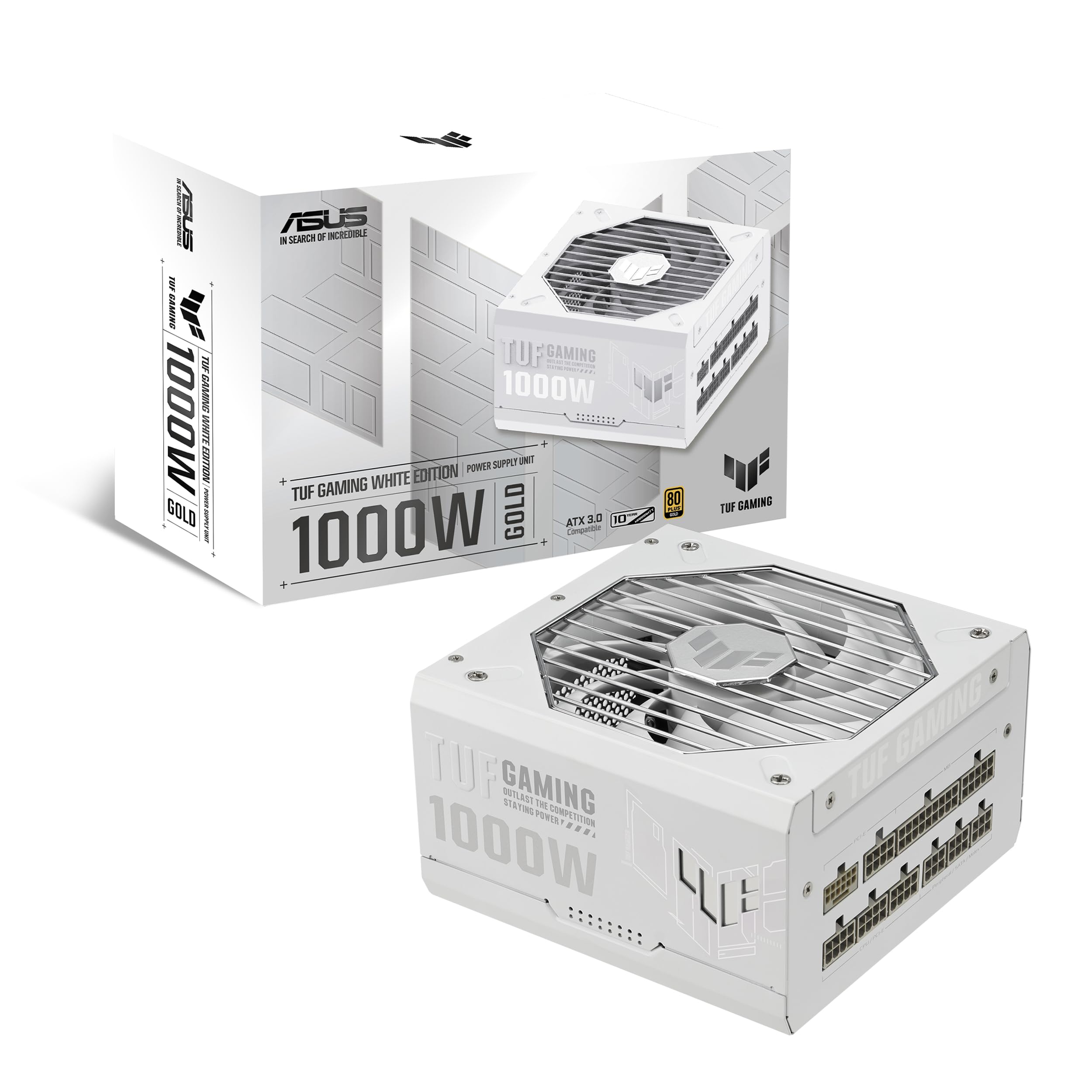 8.5 / 10
TUF Gaming 1000W Gold White Edition (1000 Watt, ATX 3.1 Compatible, Fully Modular Power Supply, 80+ Gold Certified, Military-grade Components, Dual Ball Bearing, PCB Coating, 10 Year Warranty)
£129.99 · ASUS
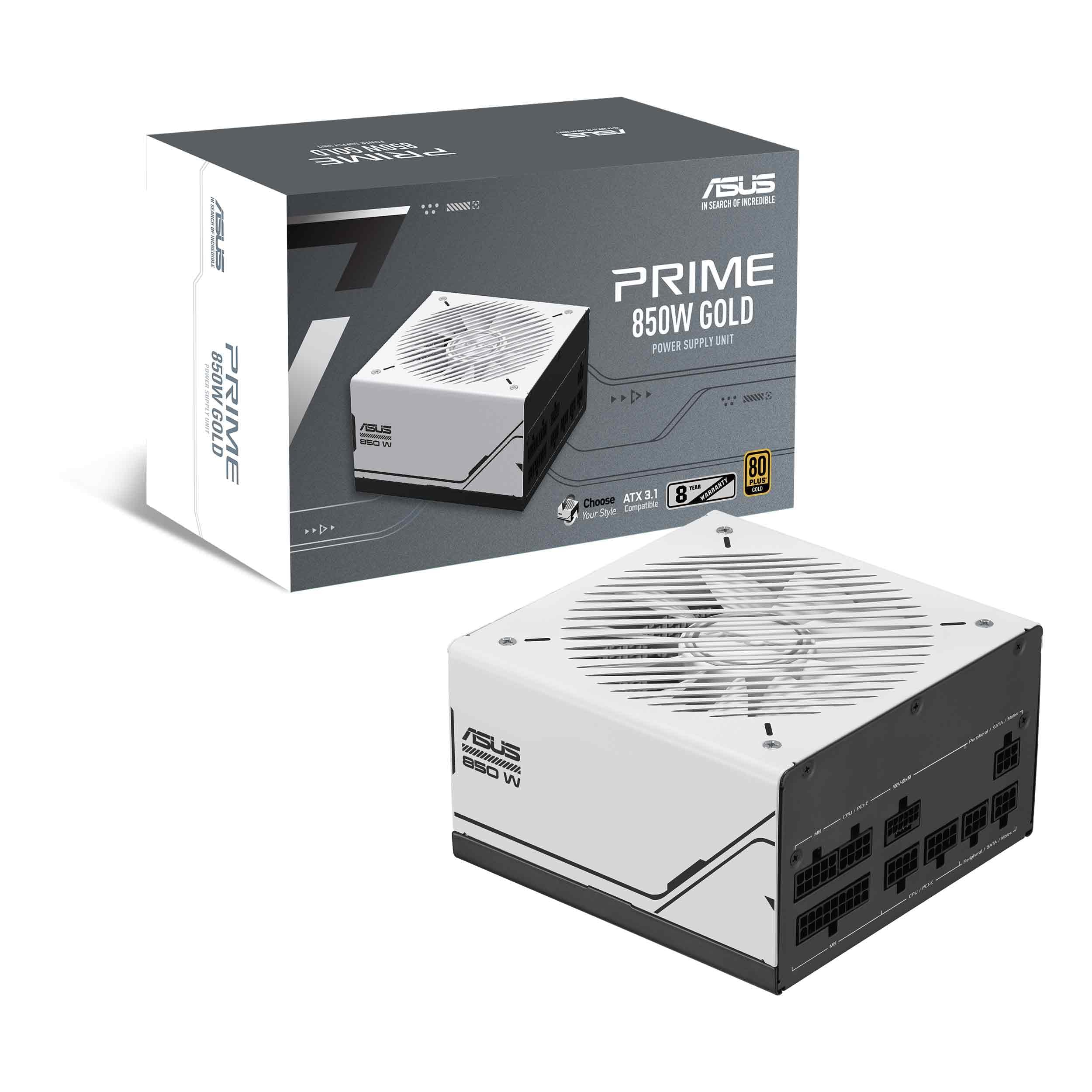 8.5 / 10
Asus Prime 850W Gold Gaming PSU, Double Ball Bearing Fan, Fully Modular, 80+ Gold, ATX 3.0, PCIe 5.0
£104.99 · ASUS
Frequently asked
6 questions01Is the NZXT C850 Gold Core good for a high-end gaming build?+
Yes. 850W with ATX 3.1 certification and a 12V-2x6 connector covers current-gen GPUs including the RTX 5080 comfortably, with enough headroom for a high-TDP CPU, multiple drives, and case fans. The ATX 3.1 certification also means it handles the sharp transient power spikes modern GPUs produce without tripping protection circuits.
02What GPU can I pair with an 850W power supply?+
An 850W PSU handles essentially any current single-GPU setup. RTX 5080, RX 9070 XT, RTX 4090: all covered with headroom. The ATX 3.1 certification on the C850 means it manages GPU power spikes that could trip older ATX 2.x units, making the rated 850W more usable in practice than equivalent older designs.
03What does 80 Plus Gold efficiency mean in practice?+
Gold-rated PSUs achieve at least 90 percent efficiency at 50 percent load. For every 100W your components draw, the PSU wastes no more than 10W as heat. Compared to Bronze (82 percent at 50 percent load), Gold runs cooler, quieter, and costs less to run over a year of daily use. The C850 also carries Cybenetics Platinum certification, which confirms strong efficiency across a broader range of load conditions.
04How long is the warranty on the NZXT C850 Gold Core?+
Five years. That is a solid warranty for a consumer PSU and reflects confidence in the component quality, particularly the 105-degree-rated capacitors. For context, budget PSUs typically offer two to three years, while the premium Corsair RM series offers ten. Five years sits comfortably in the quality tier this PSU occupies.
05Is the NZXT C850 Gold Core fully modular?+
Yes, fully modular. Every cable, including the ATX 24-pin main power connector, detaches from the PSU. This makes cable management significantly easier in modern cases and means you only route the cables you actually need. It also means individual cables can be replaced without swapping the whole unit.
06How quiet is the NZXT C850 Gold Core?+
Very quiet. The Cybenetics A++ certification confirms noise below 15 dBA, which is effectively inaudible in a normal room. The Zero RPM mode means the 135mm fan stops completely during light workloads. Under heavy gaming loads the fan spins up, but it stays within the certified noise range during typical gaming sessions. Owner reports consistently describe the unit as near-silent.