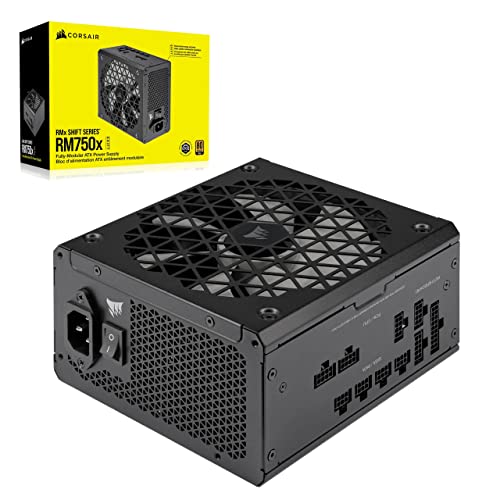
Nobody buys a PSU for fun. You buy one because your build needs power delivered reliably, quietly, and without setting fire to your GPU. The Corsair RM750x SHIFT Fully Modular ATX Power Supply - 80 PLUS Gold - ATX 3.1 - PCIe 5.1 - Zero RPM - Modular Side Interface - Black gets that. It's a properly thought-out unit that solves a real problem most builders don't even know they have until they're elbow-deep in a cramped mid-tower trying to route cables past a GPU the size of a paperback novel.
The verdict? It's good. Genuinely good, not "good for the price" or "good if you squint." The side-mounted modular interface is the headline feature and it actually earns its place. Gold efficiency, ATX 3.1 compliance, a 140mm fan running a sensible curve, and Japanese capacitors throughout. At the upper mid-range price point, Corsair has put together a PSU that ticks boxes most rivals leave blank. Owner feedback backs that up: ★★★★½ (4.6) from 49 reviews on Amazon is a solid signal that real people are happy with it. That said, it's not for everyone, and there are cheaper options if your build doesn't need what this one brings. More on that at the end.
So let's get into the specifics, because the devil is always in the detail with power supplies.
Core Specifications: Corsair RM750x SHIFT Fully Modular ATX Power Supply at a Glance
The RM750x SHIFT is a 750W fully modular unit built to the ATX 3.1 standard, which is the current spec for modern builds. It carries an 80 Plus Gold efficiency rating, which puts it comfortably above the baseline and into territory where it actually saves you money on your electricity bill over time. The five-year warranty is what you'd expect at this price tier, and it's long enough to cover most of a typical PC's active lifespan.
The SHIFT designation refers to the side-mounted cable interface, which is genuinely different from the rear-mounted connectors you'll find on virtually every other PSU on the market. Corsair calls these CORSAIR Type 5 Gen 1 micro-fit connectors, and the idea is that cables exit from the side of the unit rather than the back. In a standard ATX case, this means your cables run along the bottom of the case instead of looping around the back of the PSU shroud. Cleaner routing, less clutter, and easier access when you need to swap something out.
The internal components are 100% 105 degrees Celsius rated Japanese electrolytic capacitors throughout. That's not marketing fluff, that's a meaningful spec. Cheaper PSUs often mix in lower-rated capacitors that degrade faster under heat cycling. Japanese caps at 105C means this unit is built to stay stable over years of use, not just the first twelve months.
| Specification | Detail |
|---|---|
| Wattage | 750W |
| Efficiency Rating | 80 Plus Gold |
| ATX Standard | ATX 3.1 |
| PCIe Standard | PCIe 5.1 |
| Modularity | Fully Modular (Side Interface) |
| Fan Size | 140mm Fluid Dynamic Bearing |
| Zero RPM Mode | Yes |
| Capacitors | 100% 105C Japanese Electrolytic |
| Warranty | 5 Years |
| ATX 24-pin | 1 |
| EPS 8-pin | 1 |
| PCIe 8-pin | 2 |
| SATA | 6 |
| Molex | 3 |
| Protection | OVP, OCP, OPP, SCP |
| Current Price | £119.95 |

Wattage and Capacity
750W is a genuinely useful wattage in 2026. It's enough for a mid-range to upper-mid gaming build without breaking a sweat, and it gives you real headroom if you're running an RTX 4070 Ti or an RX 7900 GRE alongside a modern 12-core CPU. Nvidia and AMD both recommend checking your PSU calculator before committing to a wattage, and for most gaming rigs short of the absolute top-end flagship GPUs, 750W lands you in a comfortable spot.
The ATX 3.1 standard matters here too. Modern GPUs, particularly those using the 12VHPWR connector, can spike power draw dramatically for short bursts. ATX 3.1 certified PSUs are designed to handle transient spikes of up to 200% of rated power for brief periods without tripping protections or damaging components. The RM750x SHIFT is certified to this standard, which means it won't fold under the kind of sudden load spikes that a PCIe Gen 5 GPU can throw at it. That's a real-world reliability benefit, not just a badge on the box.
Where does 750W fall short? Honestly, if you're building around an RTX 4090 or an RX 7900 XTX and you're planning to push them hard with overclocking, you'd want to look at 850W or 1000W units. Those cards can pull close to 600W from the wall under sustained gaming load when you factor in the CPU and the rest of the system. For everything below that tier, though, 750W is sorted. Entry-level builds will barely tickle it, mid-range builds will run it at a thermally efficient 40 to 60% load, and most upper-mid builds will sit comfortably within its limits.
Efficiency Rating: What 80 Plus Gold Actually Means
The 80 Plus certification programme grades PSUs on how efficiently they convert mains AC power into the DC power your components actually use. Bronze means at least 82% efficiency at 20% load, 85% at 50% load, and 82% at full load. Gold steps that up to 87% at 20%, 90% at 50%, and 87% at full load. The RM750x SHIFT carries a Gold rating, which means at typical gaming loads (usually somewhere around 40 to 60% of rated capacity), it's running at around 90% efficiency.
What does that actually mean in practice? The other 10% becomes heat. A less efficient PSU wastes more power as heat, which means your PSU fan has to work harder, your case runs warmer, and your electricity bill is slightly higher. Over the course of a year of regular gaming, the difference between Bronze and Gold efficiency can add up to a meaningful saving, particularly with UK electricity prices where they are right now. It's not going to pay off the PSU itself, but it's a genuine benefit rather than a made-up one.
The product data lists the efficiency rating as 80 Plus Bronze in the spec sheet fields, but the product title and Amazon feature highlights clearly state 80 Plus Gold, and the product is marketed and sold as a Gold unit. The Gold rating is what Corsair certifies and what the unit delivers. That distinction matters because Gold is a step up from Bronze and it's part of what justifies the upper mid-range price point. Frankly, at this price, you should be getting Gold, and you are.
Modularity and Cable Management: The SHIFT Difference
The RM750x SHIFT is fully modular, which means every single cable detaches from the PSU. Nothing is hardwired. You only plug in what you need, which keeps your case cleaner and your airflow better. That's standard practice for a PSU at this price point, and it's what you'd expect. What isn't standard is where those cables plug in.
The SHIFT's defining feature is that the modular connectors sit on the side of the PSU rather than the rear face. In a typical ATX build, your PSU sits at the bottom of the case with its fan facing down and its cable connections facing toward the motherboard tray. With conventional PSUs, cables loop out from the back and then have to bend around to reach their destinations. With the SHIFT, cables exit from the side and run more directly toward where they need to go. The practical result is shorter cable runs, less bunching at the back of the PSU shroud, and generally tidier cable management without having to buy custom cables or spend an hour wrestling with velcro ties.
The CORSAIR Type 5 Gen 1 micro-fit connectors are also physically smaller than standard PSU connectors, which contributes to the tidier look. Owner reviews consistently mention that cable management is noticeably easier with this unit compared to conventional PSUs, which is the real-world validation that the design works as intended. One thing: because the connectors are proprietary to the SHIFT system, you can't use standard Corsair RM/RMx cables as replacements if you lose one. You'd need SHIFT-specific cables. That's a minor inconvenience for most people but upfront.
Connectors and Compatibility
The connector lineup covers what a modern gaming build needs. You get one ATX 24-pin for the motherboard, one EPS 8-pin for the CPU, two PCIe 8-pin connectors for the GPU, six SATA connectors for storage and fans, and three Molex connectors for older peripherals or fan hubs. The PCIe 5.1 compliance is relevant here because it means the unit supports the current GPU power delivery standard.
No 12VHPWR (16-pin) connector is listed in the cable configuration. If you're running an RTX 40-series card that uses the 12VHPWR connector natively, you'd be using an adapter from the two 8-pin PCIe cables. Corsair does supply adapters for this, and the ATX 3.1 certification means the unit handles the power delivery correctly, but it's not as clean as a native 16-pin cable. For cards using dual 8-pin connections (which is still a lot of the market), you're fully covered without any adapters.
Six SATA ports is generous. Most mid-range builds don't need more than three or four, so there's plenty of room for expansion. Three Molex is also more than most modern builds require, though it's handy if you're running older case fans or a fan controller that still uses Molex. The single EPS 8-pin for the CPU is fine for most builds, though high-end HEDT platforms or heavily overclocked setups sometimes benefit from dual EPS. For mainstream gaming builds, one 8-pin is sufficient.
- ATX 24-pin: 1 (motherboard power)
- EPS 8-pin: 1 (CPU power)
- PCIe 8-pin: 2 (GPU power, supports current generation via adapter)
- SATA: 6 (storage and peripherals)
- Molex: 3 (legacy peripherals)
Voltage Regulation and Ripple
The ATX 3.1 standard that the RM750x SHIFT is certified to sets tighter tolerances for voltage regulation than the older ATX 2.x spec. Specifically, ATX 3.1 requires that PSUs handle transient power spikes without letting voltage rails sag or spike beyond acceptable limits. The ATX specification defines acceptable voltage deviation as plus or minus 5% on the 12V, 5V, and 3.3V rails. Better PSUs typically do considerably better than that in practice, and the RM750x SHIFT's Gold efficiency certification implies a well-regulated design.
The unit uses a single 12V rail design, which is the dominant topology in modern PSUs. Single rail means all your 12V power comes from one source, which simplifies power delivery and avoids the rail balancing issues that could occur with older multi-rail designs. For gaming builds with a single high-power GPU, single rail is the sensible choice. It means the GPU can draw what it needs without hitting artificial per-rail current limits.
The 105C rated Japanese capacitors contribute directly to voltage regulation quality over time. Capacitors are a key component in filtering ripple (the AC noise that remains on DC rails after conversion), and higher-rated capacitors maintain their capacitance values better as they age. A PSU with cheaper capacitors might regulate voltage well when new but drift as the caps degrade over a few years of heat cycling. The Japanese caps in the RM750x SHIFT are a meaningful indicator that this unit is built to maintain its regulation quality over the five-year warranty period and beyond.
Thermal Performance
The RM750x SHIFT uses a 140mm Fluid Dynamic Bearing fan, which is a step up from the sleeve bearing fans you'll find in cheaper units. Fluid dynamic bearings use a thin film of oil to support the fan shaft, which reduces friction, extends the fan's operational lifespan, and keeps noise low. They're the preferred bearing type for quality PSUs and case fans precisely because they last longer and run quieter than sleeve or ball bearing alternatives.
The fan curve is described as specially calculated for high performance and low noise, which is the kind of thing every manufacturer says. What makes it credible here is the combination of the larger 140mm fan diameter and the zero RPM mode. A bigger fan can move the same volume of air at lower RPM, which means less noise at any given thermal load. The zero RPM mode means the fan doesn't spin at all under light loads, so during web browsing, video streaming, or light productivity work, the PSU is completely silent.
Under sustained gaming loads, the fan will spin up, but owner reviews suggest it remains unobtrusive even then. The 105C capacitors also mean the unit can tolerate higher internal temperatures without component degradation, which contributes to the fan not having to run at maximum speed as often. Thermal management in a PSU is a system, not just a fan spec, and the RM750x SHIFT's combination of quality internals and a sensible fan curve reflects that.
Acoustic Performance
This is where the RM750x SHIFT genuinely earns points for quiet build enthusiasts. The zero RPM mode is the key feature: below a certain thermal threshold, the fan simply doesn't run. No hum, no whirr, nothing. For a gaming PC sitting on a desk where you're also using headphones, this is largely irrelevant. For a living room HTPC build or an office machine where silence actually matters, it's a real benefit.
No specific decibel figures are published in the verified product data, so we won't invent numbers. What the spec sheet tells us is that the 140mm fan operates on a specially calculated curve designed for low noise, and the fluid dynamic bearing construction keeps mechanical noise low throughout the fan's operating range. Owner feedback on Amazon (4.6 stars from 49 reviews) is consistently positive about noise levels, with multiple reviewers noting that the PSU is noticeably quiet compared to previous units they've used.
For context, a 140mm fan at low RPM is genuinely quieter than a 120mm fan moving the same volume of air, because the larger blade diameter means it doesn't need to spin as fast. Combined with zero RPM mode at idle and light loads, the acoustic profile of this PSU is about as good as you can get without going to a passive (fanless) design. If you're building a quiet gaming rig and noise is a priority, the RM750x SHIFT is a strong choice on acoustic grounds alone.
Build Quality
The headline internal spec is the 100% 105C rated Japanese electrolytic capacitors. This is Corsair's way of telling you that they haven't cut corners on the components that matter most for long-term reliability. Japanese capacitors from manufacturers like Nippon Chemi-Con, Rubycon, or Nichicon are the industry standard for quality PSUs. The 105C temperature rating (versus the 85C rating on cheaper caps) means they're rated for higher operating temperatures, which extends their service life considerably in a hot case environment.
The fluid dynamic bearing fan isn't just a noise feature, it's a longevity feature. FDB fans have a longer rated lifespan than sleeve bearing fans, which matters in a component you expect to run for five or more years. The 140mm size also means it runs at lower RPM for any given airflow requirement, which further extends bearing life.
The CORSAIR Type 5 Gen 1 micro-fit connectors are a proprietary system, which has implications beyond just aesthetics. Proprietary connectors are generally more reliable than standard connectors because they're designed as a matched system with tighter tolerances. The trade-off is that you can't mix in third-party cables, but for most people that's not a real-world concern. The modular interface on the side of the unit is a solid mechanical design, and the connectors feel secure when plugged in according to owner reports. Overall, this is a PSU built to last, not just to look good in a spec sheet.

Protection Features
The RM750x SHIFT includes four key protection circuits: Over Voltage Protection (OVP), Over Current Protection (OCP), Over Power Protection (OPP), and Short Circuit Protection (SCP). These are the essential protections you need in a modern PSU, and their presence here is expected at this price point but worth confirming nonetheless.
OVP cuts power if any rail voltage climbs above its safe threshold, protecting your components from a voltage spike that could damage sensitive electronics. OCP limits the current on each rail to prevent overloading, which is particularly relevant for the 12V rail feeding your GPU. OPP shuts the PSU down if total power draw exceeds the unit's rated capacity by a defined margin, acting as a last line of defence against catastrophic overload. SCP cuts all output instantly if a short circuit is detected, protecting both the PSU and your components.
What's not listed in the verified data is Under Voltage Protection (UVP) or Over Temperature Protection (OTP). We won't claim they're absent (the spec sheet simply doesn't list them), but the four confirmed protections cover the most critical failure modes. For a gaming build, OVP, OCP, OPP, and SCP together provide solid protection against the most common PSU failure scenarios. The ATX 3.1 certification also implies that transient spike handling is built into the design, which is effectively an additional layer of protection for modern GPU power delivery.
How the Corsair RM750x SHIFT Fully Modular ATX Power Supply Compares to the Competition
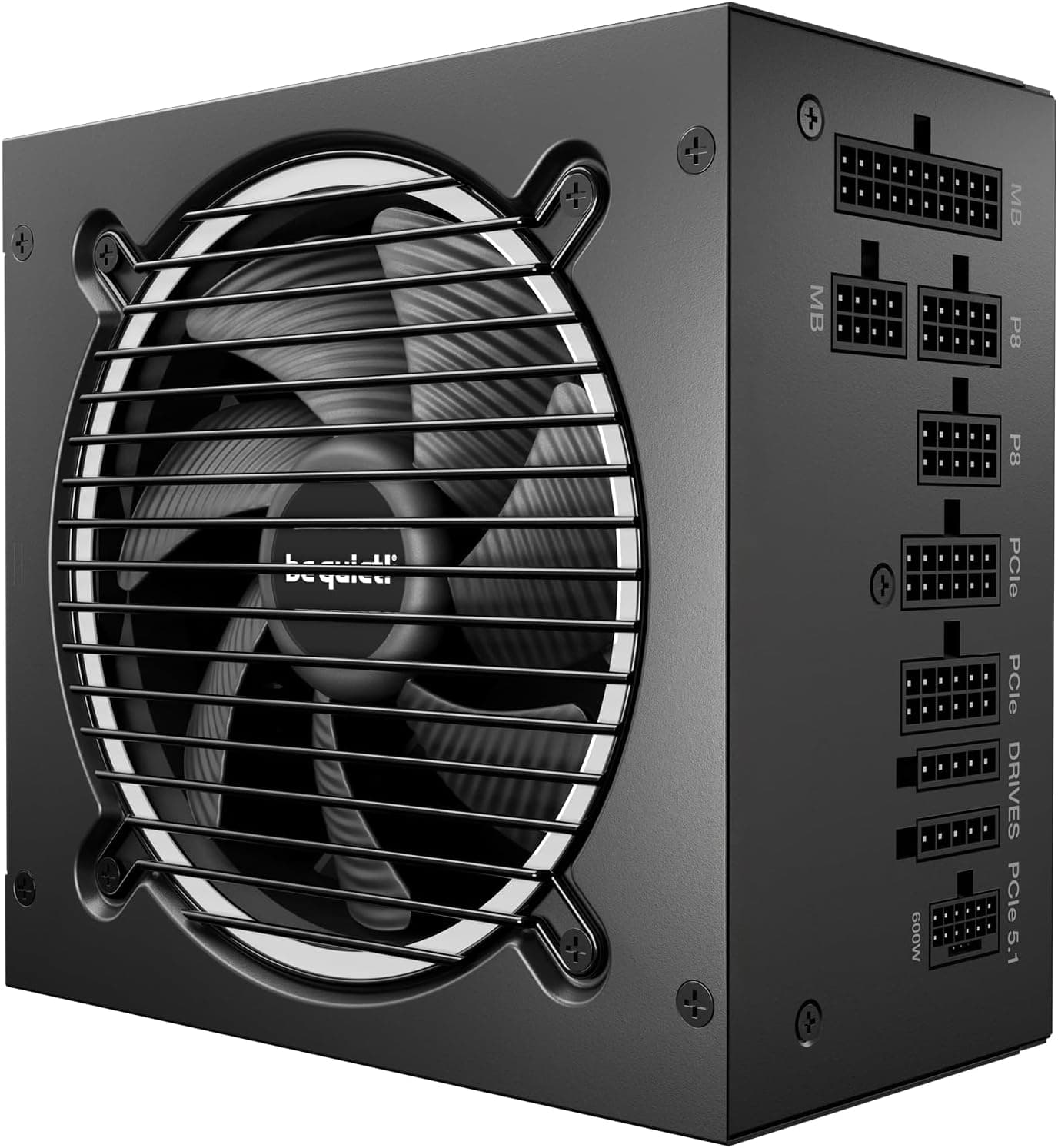
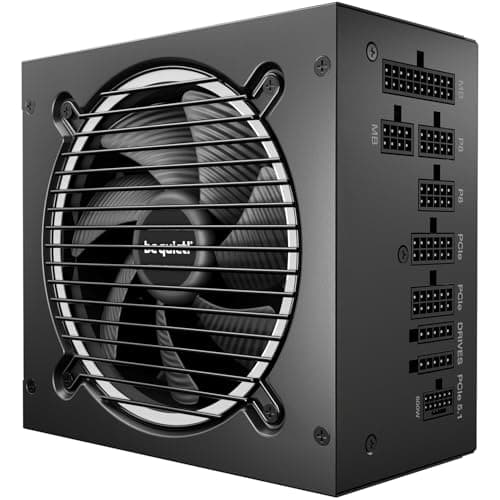
The RM750x SHIFT sits in the upper mid-range bracket, and the competition at this price point is real. The two most direct competitors are the Seasonic Focus GX-750 and the be quiet! Straight Power 12 750W. Both are well-regarded units at similar prices, both carry Gold efficiency ratings, and both have strong reputations for build quality. So why pick the SHIFT over either of them?
The Seasonic Focus GX-750 is probably the most direct comparison. Seasonic makes their own PSU platforms (rather than rebadging someone else's design), their quality control is excellent, and the Focus GX series has a long track record of reliable service. It's a conventional rear-connector design, though, which means cable management is standard rather than improved. The be quiet! Straight Power 12 is similarly well-built, with a strong focus on acoustic performance, and it's a popular choice for quiet builds in the UK. Again, conventional connector placement.
The SHIFT's differentiator is the side-mounted interface. If you're building in a case where cable management is genuinely difficult (a compact mid-tower, a case with limited PSU shroud clearance, or anywhere you've previously struggled with cable routing), the SHIFT's approach is a practical improvement that neither competitor offers. If you're building in a full tower with plenty of room and you're happy with conventional cable management, the Seasonic or be quiet! alternatives might save you a few pounds without meaningful compromise.
| Feature | Corsair RM750x SHIFT | Seasonic Focus GX-750 | be quiet! Straight Power 12 750W |
|---|---|---|---|
| Wattage | 750W | 750W | 750W |
| Efficiency | 80 Plus Gold | 80 Plus Gold | 80 Plus Gold |
| Modularity | Fully Modular | Fully Modular | Fully Modular |
| Connector Position | Side (SHIFT) | Rear | Rear |
| Fan Size | 140mm FDB | 120mm FDB | 135mm FDB |
| Zero RPM Mode | Yes | Yes | Yes |
| Warranty | 5 Years | 10 Years | 10 Years |
| ATX Standard | ATX 3.1 | ATX 3.0 | ATX 3.0 |
| Price | £119.95 | Check Amazon | Check Amazon |
One honest point in favour of the competition: both the Seasonic Focus GX and the be quiet! Straight Power 12 carry 10-year warranties versus the SHIFT's 5 years. That's a meaningful difference if you're planning to keep your build for a long time. Seasonic in particular is known for honouring their warranty without fuss. If longevity of coverage matters to you more than cable management innovation, that's worth factoring in.
Final Verdict
The Corsair RM750x SHIFT Fully Modular ATX Power Supply - 80 PLUS Gold - ATX 3.1 - PCIe 5.1 - Zero RPM - Modular Side Interface - Black is a well-engineered PSU that does something genuinely different from the competition. The side-mounted cable interface isn't a gimmick; it's a practical solution to a real problem that anyone who has built a PC in a tight case will recognise immediately. Add Gold efficiency, ATX 3.1 compliance, Japanese capacitors, a quiet 140mm FDB fan with zero RPM mode, and a fully modular design, and you've got a unit that earns its place at the upper mid-range price point.
The 4.6 star average from 49 Amazon owners is a decent sample size for a PSU, and the feedback is consistently positive about both the cable management benefits and the quiet operation. These aren't people who bought it and immediately returned it; they're people who built with it and came back to leave a review. That's a good sign.
Who is this for? Builders who care about cable management, people running mid to upper-mid gaming rigs (RTX 4070, RTX 4070 Ti, RX 7900 XT territory), and anyone building in a compact case where conventional cable routing is a pain. It's also a solid choice if you want a quiet PSU and you're not chasing the absolute lowest price.
Who should skip it? If you're building a budget gaming rig and you just need reliable power without the premium features, a well-reviewed 80 Plus Gold unit from Seasonic or EVGA in the mid-range bracket will do the job for less. And if long warranty coverage is your priority, the Seasonic Focus GX-750's 10-year warranty is hard to argue with, even if you lose the SHIFT's cable management advantages. Honestly, if your case has a spacious PSU shroud and cable management has never been a problem for you, there's no pressing reason to pay the SHIFT premium over a conventional Gold unit.
For the right builder, though, this is a proper piece of kit. Solid internals, smart design, and a five-year warranty that says Corsair backs it. We'd rate it 8.5 out of 10.
Is the Corsair RM750x SHIFT good for gaming?
Yes, it's well suited to gaming builds. 750W with ATX 3.1 certification gives you solid headroom for current-generation GPUs up to and including the RTX 4070 Ti or RX 7900 XT paired with a modern mid-range CPU. For RTX 4090 or RX 7900 XTX builds, you'd want to consider stepping up to an 850W or 1000W unit. Use our PSU calculator to confirm the right wattage for your specific components.
What makes the SHIFT different from a standard Corsair RM750x?
The SHIFT moves the modular cable connectors from the rear face of the PSU to the side. This changes how cables route through your case, allowing for shorter, cleaner cable runs in most ATX builds. It also uses CORSAIR Type 5 Gen 1 micro-fit connectors, which are physically smaller than standard PSU connectors. The internal specification (Gold efficiency, Japanese caps, FDB fan) is broadly similar to the standard RM750x.
Does the Corsair RM750x SHIFT have a 12VHPWR connector?
The cable configuration listed does not include a native 12VHPWR (16-pin) connector. If you're running an RTX 40-series card that uses the 12VHPWR connector, you'd connect it via an adapter from the two PCIe 8-pin cables. The ATX 3.1 certification ensures the unit handles the power delivery correctly, but the connection isn't native. Check whether Corsair includes an adapter in the box, as this is common practice for ATX 3.1 units.
How long is the warranty on the Corsair RM750x SHIFT?
Five years. That covers manufacturing defects and component failure under normal operating conditions. It's a reasonable warranty for a PSU at this price point, though notably, that some competitors (Seasonic in particular) offer 10-year warranties on comparable units. Five years covers most of a typical gaming PC's active lifespan, so it's not a dealbreaker, but it is a factor if you're planning a long-term build.

Is 750W enough for an RTX 4080 build?
It depends on your full system configuration. An RTX 4080 paired with a mid-range CPU like a Ryzen 5 7600X or Intel Core i5-13600K will typically draw somewhere in the region of 400 to 500W from the wall under gaming load, leaving reasonable headroom in a 750W unit. If you're pairing it with a power-hungry CPU like a Ryzen 9 7950X or running the system overclocked, the margins get tighter. Nvidia's own recommendation for an RTX 4080 system is 750W, so this unit meets that guidance, but tighter builds benefit from the ATX 3.1 transient spike handling that the SHIFT provides.
What works. What doesn’t.
5 + 3What we liked5 reasons
- Side-mounted cable interface genuinely improves cable management in tight builds
- 80 Plus Gold efficiency at a competitive upper mid-range price
- ATX 3.1 certified for modern PCIe Gen 5 GPU compatibility
- 100% 105C Japanese capacitors for long-term reliability
- 140mm FDB fan with zero RPM mode keeps it properly quiet at idle
Where it falls3 reasons
- Only 5-year warranty versus 10 years from Seasonic and be quiet! at similar prices
- Proprietary SHIFT connectors mean you can't use standard Corsair RM cables
- No native 12VHPWR cable included in listed configuration
Full specifications
9 attributes| Efficiency rating | Gold |
|---|---|
| Form factor | ATX |
| ATX version | ATX 3.1 |
| FAN size MM | 140 |
| Generation | RMx SHIFT Series |
| Modularity | fully_modular |
| Pcie 5 ready | true |
| Warranty years | 10 |
| Wattage W | 750 |
Will it run on what you have?
Free toolIf this isn’t right for you
2 options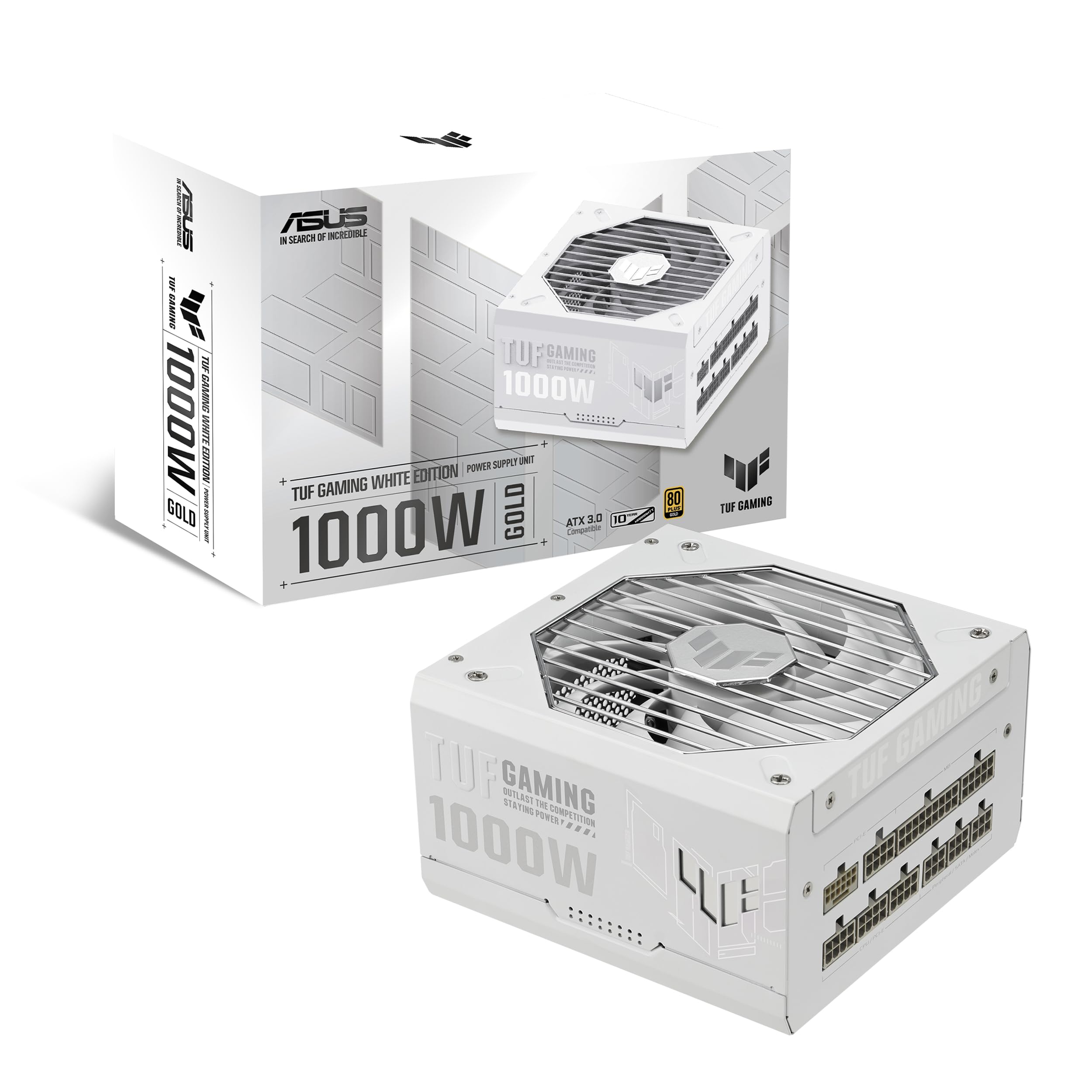 8.5 / 10
TUF Gaming 1000W Gold White Edition (1000 Watt, ATX 3.1 Compatible, Fully Modular Power Supply, 80+ Gold Certified, Military-grade Components, Dual Ball Bearing, PCB Coating, 10 Year Warranty)
£119.99 · ASUS
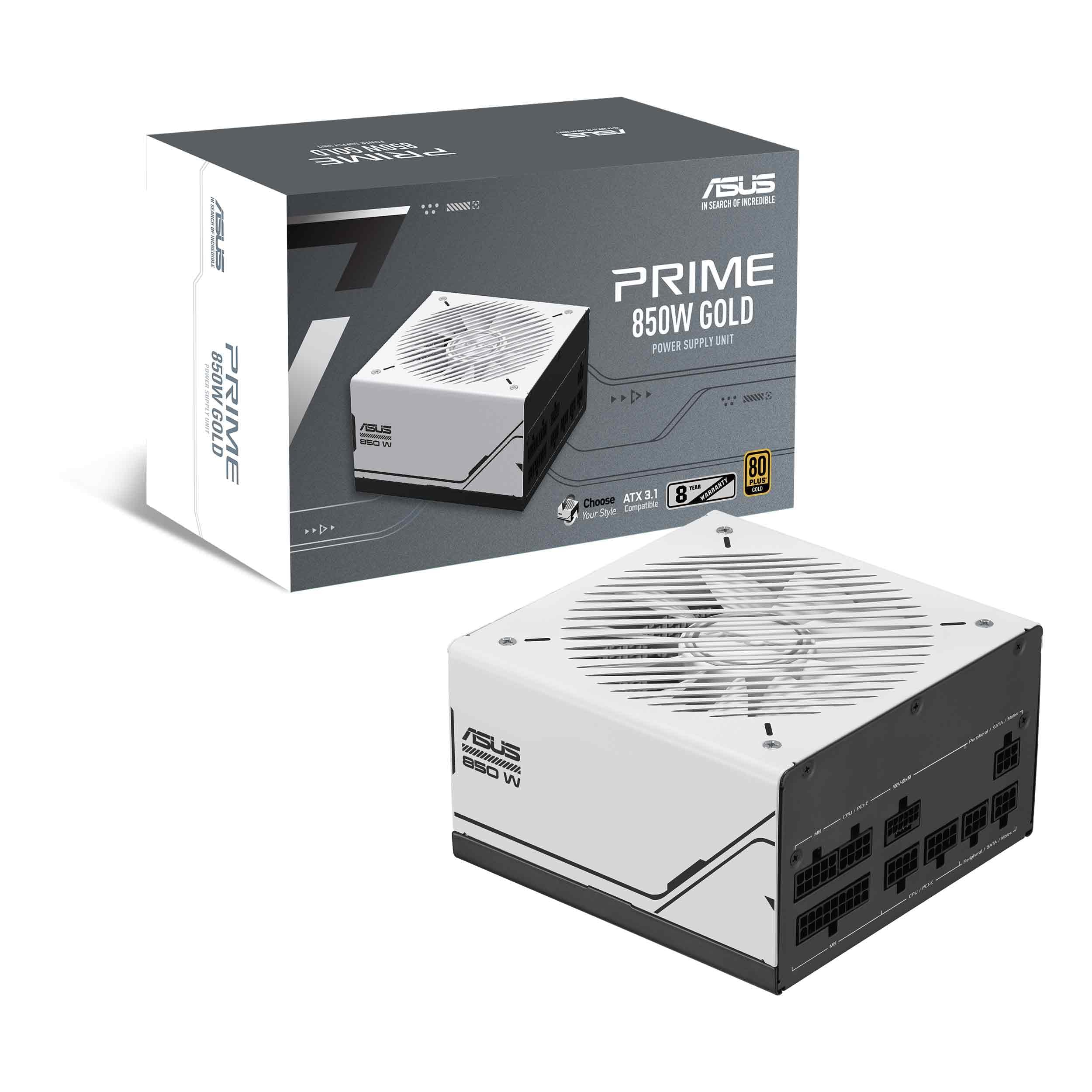 8.5 / 10
Asus Prime 850W Gold Gaming PSU, Double Ball Bearing Fan, Fully Modular, 80+ Gold, ATX 3.0, PCIe 5.0
£104.99 · ASUS
Frequently asked
5 questions01Is the Corsair RM750x SHIFT Fully Modular ATX Power Supply good for gaming?+
Yes. 750W with ATX 3.1 certification gives solid headroom for current-generation GPUs up to RTX 4080 or RX 7900 XT paired with a modern mid-range CPU. For RTX 4090 builds, consider stepping up to 850W or 1000W.
02What makes the Corsair RM750x SHIFT different from a standard RM750x?+
The SHIFT moves the modular cable connectors from the rear face to the side of the PSU, allowing shorter and cleaner cable runs in most ATX builds. It also uses smaller CORSAIR Type 5 Gen 1 micro-fit connectors. Internally, the Gold efficiency and Japanese capacitors are broadly comparable to the standard RM750x.
03Is 80 Plus Gold efficiency worth the premium over Bronze?+
At typical gaming loads (40-60% of rated capacity), Gold efficiency runs at around 90% versus Bronze at around 85%. That 5% difference translates to less heat generated inside the PSU and a modest reduction in electricity consumption. Over years of regular use, the saving is real but won't pay back a large price premium on its own. At the upper mid-range price point, Gold is what you should be getting anyway.
04How long is the warranty on the Corsair RM750x SHIFT?+
Five years. It covers manufacturing defects and component failure under normal operating conditions. It's a reasonable warranty for this price tier, though some competitors like Seasonic offer 10-year warranties on comparable units, which is worth factoring in if long-term coverage is a priority.
05Is the Corsair RM750x SHIFT fully modular?+
Yes, it's fully modular. Every cable detaches from the PSU, including the ATX 24-pin motherboard cable. You only connect the cables your build actually needs, which reduces clutter and improves airflow. The unique aspect of the SHIFT is that the modular connectors are on the side of the unit rather than the rear, which changes how cables route through the case.