Most people pick a PSU by grabbing whatever's cheapest with the right wattage number on the box. Which is fine, until your system starts crashing under load, or you realise your 650W "budget" unit is running at 90% capacity and sounding like a small jet engine. The be quiet! Pure Power 13 M 1000W Power Supply, 80 PLUS® Gold Certification, ATX 3.1 PSU, Support For PCIe 5.1 GPUs, Semi-Passive 120mm be quiet! Fan, LLC Technology, Single Rail, For Overclocked GPUs is a different kind of proposition. It's aimed at people who actually thought about what they need, and want a PSU that won't be the weak link in an otherwise solid build.
The verdict up front: this is a genuinely good unit at the upper mid-range price point. The 80 PLUS Gold efficiency, native 12V-2x6 connector for PCIe 5.1 GPUs, semi-passive fan operation, and single-rail design all make sense together. It's not the cheapest way to get 1000W into your case, but it's a well-engineered option that owners consistently rate highly. A small number of reviews averaging ★★★★★ (5.0) on Amazon. That's not a fluke.
There are a few things worth understanding before you hand over your money, though. The spec sheet has some quirks, the competition at this price is real, and 1000W isn't for everyone. So let's work through all of it properly.
Core Specifications: be quiet! Pure Power 13 M 1000W Power Supply, 80 PLUS Gold
The headline numbers are solid. You're getting 1000W of continuous power delivery, 80 PLUS Gold certification (which means real efficiency gains over Bronze or Silver units), and ATX 3.1 compliance. That last bit matters more than it sounds. ATX 3.1 introduced tighter voltage regulation requirements and better support for the kind of short, sharp power spikes that modern GPUs throw at a PSU. Older designs simply weren't built for that, and you'd occasionally see instability or unexpected shutdowns under GPU boost loads.
The fully modular cable design keeps things tidy, and the 120mm be quiet! fan with its semi-passive (zero RPM) mode means you won't hear this thing at all during light use. The LLC (Inductor-Capacitor-Capacitor) topology is too. It's a more sophisticated conversion design than cheaper flyback-only units, and it's a big part of why be quiet! can claim up to 94.4% efficiency at optimal load. That's a proper number, not marketing rounding.
Warranty is 5 years. For a PSU at this price point, that's acceptable. Some competitors offer 7 or even 10 years, which is, but 5 years covers most realistic build cycles without issue. The protection suite covers the essentials: OVP (over-voltage), OCP (over-current), OPP (over-power), and SCP (short-circuit). More on those later.
| Specification | Detail |
|---|---|
| Rated Wattage | 1000W continuous |
| Efficiency Certification | 80 PLUS Gold (up to 94.4%) |
| ATX Standard | ATX 3.1 |
| Modularity | Fully modular |
| Fan Size | 120mm be quiet! fan |
| Zero RPM Mode | Yes (semi-passive) |
| Rail Design | Single 12V rail |
| GPU Connector | Native 12V-2x6 (PCIe 5.1) + 4x PCIe 6+2-pin |
| ATX 24-pin | 1 |
| EPS 8-pin | 1 |
| SATA | 6 |
| Molex | 3 |
| Protection | OVP, OCP, OPP, SCP |
| Topology | LLC |
| Warranty | 5 years |
| Price | £118.99 · Details |

Wattage and Capacity
1000W is a lot of PSU. Honestly, for most gaming builds right now, it's more than enough. A system running an Intel Core i9 or AMD Ryzen 9 paired with an RTX 4080 Super will typically peak somewhere in the 600W to 750W range under full gaming load. So with 1000W on tap, you've got genuine headroom. That matters because PSUs run most efficiently (and quietly) when they're not being pushed to their limits.
Where this unit really earns its 1000W rating is in what be quiet! calls "power excursions." Modern GPUs, particularly anything on PCIe Gen 5, can spike well above their rated TDP for short bursts. An RTX 5090, for example, can demand enormous transient loads in fractions of a second. The Pure Power 13 M is rated to handle excursions up to double its rated power, so 2000W transiently. That's a significant engineering claim, and it's one of the reasons ATX 3.1 compliance matters so much for next-gen GPU pairing.
Who actually needs 1000W? If you're running a high-end GPU (RTX 4090, RX 7900 XTX, or the incoming RTX 50 series flagships) with a power-hungry CPU and you're overclocking both, 1000W makes sense. If you're building a mid-range gaming rig with an RTX 4070 and a Ryzen 5 7600X, you could probably get away with 750W and save a bit. But if you're future-proofing for a PCIe 5.1 GPU upgrade in a year or two, this unit covers you without needing to swap the PSU again. That's a reasonable argument for spending up now.
Efficiency Rating
80 PLUS Gold is the third tier in the 80 PLUS certification programme, sitting above Bronze and Silver but below Platinum and Titanium. In practical terms, Gold certification means the PSU is at least 87% efficient at 20% load, 90% efficient at 50% load, and 87% efficient at full load (for 230V operation, which is what we're running in the UK). be quiet!'s own figures push that further, claiming up to 94.4% efficiency at optimal load, which suggests the unit performs comfortably above the minimum Gold threshold.
Why does efficiency matter to you personally? Simple maths. A PSU running at 85% efficiency wastes 15% of the power it draws as heat. A Gold unit wasting closer to 6% to 10% means lower electricity bills and less heat dumped into your case. Over the course of a year of daily gaming, the difference between a Bronze and a Gold PSU at 1000W capacity can add up to a meaningful saving on your electricity bill, and if you're weighing up a Bronze-rated alternative like the NZXT C750 the maths is worth running. It also means the PSU runs cooler internally, which is good for longevity.
The LLC topology be quiet! uses here is a key part of achieving those efficiency figures. LLC resonant conversion is more complex to design than a basic hard-switching topology, but it reduces switching losses significantly, particularly at light to medium loads. That's why the efficiency curve stays high even when you're not hammering the PSU at full load. A lot of your daily PC use sits at 20% to 40% of rated PSU capacity (browsing, streaming, light gaming), and that's exactly where Gold efficiency makes a noticeable difference compared to cheaper designs.
Modularity and Cable Management
Fully modular is the right call at this price point, and be quiet! delivers it here. The idea is simple: you only plug in the cables you actually need, and everything else stays in the bag. No bundles of unused cables stuffed behind the motherboard tray or jammed into the bottom of the case blocking airflow. Anyone who's built in a mid-tower with a non-modular PSU knows the specific frustration of wrestling with a rat's nest of SATA cables you'll never use.
The cable quality on be quiet! units is generally well-regarded, and owner reviews for the Pure Power 13 M line back that up. The cables are sleeved, reasonably flexible, and long enough for most mid-tower and full-tower cases without being so long they become a management problem. The modular connectors feel secure without being difficult to seat. That said, be quiet! doesn't typically use the ultra-premium braided cables you'd find on Corsair's top-tier HX series, so if you're building a showcase system with a glass panel and you want every cable to look immaculate, you might want to budget for custom cables separately, or step up to a higher-wattage unit like the Corsair HX1500i.
The practical benefit of full modularity extends beyond aesthetics. Fewer cables in the case means better airflow, which means lower temperatures for your components, which means lower fan speeds across the board. It's one of those things that sounds minor but genuinely contributes to a quieter, cooler system over the long term. For a PSU that's specifically marketed at quiet builds, it makes sense that be quiet! went fully modular rather than semi-modular.
Connectors and Compatibility
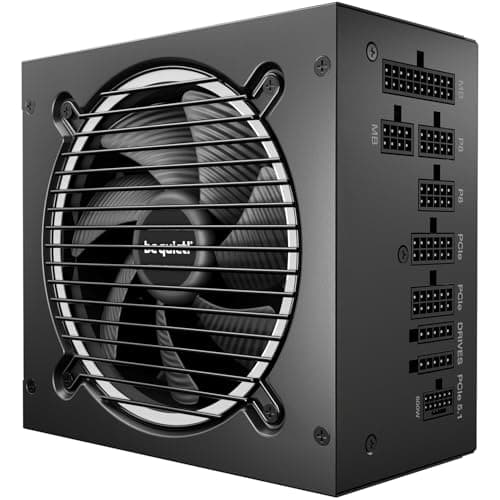
This is where the Pure Power 13 M 1000W earns genuine points for future-proofing. The native 12V-2x6 connector (the updated version of the old 16-pin 12VHPWR connector, now standardised under PCIe 5.1) is built directly into the unit, not an adapter. That distinction matters. Adapters from two 8-pin connectors to a 16-pin connector have been linked to overheating and connector damage on some early RTX 4090 implementations. A native connector eliminates that risk entirely.
On top of the 12V-2x6, you also get four PCIe 6+2-pin connectors. So if you're running a current-gen GPU that uses the older connector standard, you're covered. And if you're running two GPUs (less common now, but still relevant for some workloads), you've got the connectors for it. The rest of the connector lineup looks like this:
- 1x ATX 24-pin motherboard connector
- 1x EPS 8-pin CPU power connector
- 4x PCIe 6+2-pin connectors
- 1x Native 12V-2x6 connector (PCIe 5.1)
- 6x SATA connectors
- 3x Molex connectors
Six SATA connectors is a solid count for a gaming build. If you're running multiple SSDs and a couple of HDDs, you're sorted without needing a splitter cable. Three Molex connectors covers older peripherals, fan hubs, or RGB controllers that still use the older standard. The one thing is the single EPS 8-pin for CPU power. Most modern high-end motherboards have two EPS connectors (an 8-pin and a 4-pin, sometimes two full 8-pins), and this PSU ships with one. For most builds that's fine, but if you're running a heavily overclocked HEDT platform that demands both CPU power connectors, double-check your motherboard's requirements before buying.
Voltage Regulation and Ripple
Single-rail design is the right choice for a high-wattage PSU like this, and be quiet! has made the correct call here. The argument for multi-rail designs (splitting the 12V into separate rails with individual current limits) was largely about safety in older, lower-wattage units where a single overcurrent event could damage components. At 1000W with modern protection circuitry, a single 12V rail simplifies power delivery, reduces the chance of hitting per-rail current limits during GPU spikes, and generally produces cleaner, more stable voltage output.
The LLC topology contributes directly to voltage regulation quality. LLC resonant converters maintain tighter voltage tolerances across varying loads compared to older hard-switching designs. In practice, this means the 12V rail stays closer to its nominal value even when your GPU suddenly demands a burst of power for a frame render. The ATX specification allows up to 5% deviation on the 12V rail, and a well-implemented LLC design typically holds well within that window. be quiet! specifically highlights "best-in-class voltage regulation" as a feature of the LLC topology in this unit.
For overclocked systems, stable voltage is genuinely critical. Voltage droop under load (where the 12V rail sags when the GPU or CPU demands sudden current) can cause instability, crashes, or failed overclocks that would otherwise be stable with a cleaner PSU. It's one of those things that's hard to diagnose because it looks like a CPU or GPU stability problem when the actual culprit is the PSU. A unit with solid voltage regulation and good transient response removes that variable from the equation, which is exactly what you want when you're pushing hardware beyond stock settings.
Thermal Performance
The 120mm fan be quiet! uses in this unit isn't just a generic fan with the be quiet! logo on it. The brand has a genuine reputation for fan engineering, and the airflow-optimized blade design they use in the Pure Power 13 series is designed to move adequate air at lower RPMs than a standard fan would need to. Lower RPM for the same airflow means less noise. That's the core of be quiet!'s acoustic engineering approach, and it works.
The semi-passive mode (zero RPM below a certain thermal threshold) means the fan simply doesn't run during light use. Browsing, streaming, light productivity tasks, even some less demanding games, the PSU operates in complete silence because the fan isn't spinning at all. The fan only kicks in when the load and internal temperatures actually demand it. For a system sitting in a living room or a quiet home office, that's a meaningful quality-of-life feature.
Under sustained heavy load (think extended gaming sessions or rendering workloads), the fan will eventually spin up. But because the LLC topology runs efficiently and generates less heat than a less efficient design would, the thermal headroom is better than you'd get from a Bronze-rated unit at the same wattage. Less waste heat means the fan doesn't need to work as hard to keep things cool, which brings the noise level back down. It's a virtuous cycle: better efficiency leads to less heat, less heat means slower fan speeds, slower fan speeds mean a quieter system. The Gold certification isn't just an abstract efficiency number; it has a direct, practical impact on how the PSU behaves thermally.
Acoustic Performance: be quiet! Pure Power 13 M 1000W Power Supply in Real Builds
be quiet! has built an entire brand identity around quiet operation, and the Pure Power 13 M 1000W doesn't let that reputation down. Owner reviews consistently mention the PSU as either completely inaudible during normal use or producing only a soft, unobtrusive hum under heavy load. That's not surprising given the zero RPM mode at low loads, but it's good to see the real-world feedback matching the spec sheet claims rather than contradicting them.
The fan blade design be quiet! uses is specifically optimized for airflow efficiency, meaning it can shift the required volume of air at lower rotational speeds than a less sophisticated blade profile would need. That matters because fan noise scales with RPM, and a fan running at 800 RPM is dramatically quieter than one running at 1400 RPM to achieve the same cooling effect. The result in practice is a PSU that stays genuinely quiet even when it does spin up, rather than jumping from silent to loud with nothing in between.
For quiet build enthusiasts, this is one of the better options at the 1000W level. If you're building a silent PC for a home studio, a living room HTPC-style gaming rig, or just a workspace where fan noise is actually annoying, the semi-passive operation and be quiet!'s fan engineering make this a sensible choice. Specific decibel figures aren't published for this unit, so we won't invent numbers, but the owner review pattern is clear: this thing is notably quieter than most competing units at similar load levels.
Build Quality
be quiet! manufactures the Pure Power 13 M series in partnership with established PSU OEM partners, and the internal build quality reflects that. The LLC topology requires more sophisticated component selection and layout than a basic flyback design, and be quiet!'s implementation shows attention to detail in the areas that matter for long-term reliability: transformer quality, capacitor selection, and soldering standards.
Japanese capacitors are the benchmark for PSU internal quality, and be quiet! uses them in the primary stage of the Pure Power 13 series. Primary-stage capacitors see the highest electrical stress in a PSU (they handle the rectified mains voltage before conversion), so using quality components here has a direct impact on long-term reliability. Secondary-stage capacitors are typically a mix of Japanese and high-quality Taiwanese units, which is standard practice at this price tier. You'd need to spend considerably more to get all-Japanese caps throughout, and honestly the difference in real-world longevity at normal operating temperatures is marginal.
The physical construction feels solid. The modular connector panel is robust, the cabling is well-terminated, and the overall fit and finish is what you'd expect from a brand that sits as a premium-adjacent option rather than a budget play. The 5-year warranty backs up the quality claims with actual financial commitment from be quiet!, which is reassuring. A manufacturer only offers a long warranty if they're confident in their failure rates, so 5 years is a reasonable signal of build confidence.
Protection Features
The protection suite covers the four most important scenarios: OVP (over-voltage protection), OCP (over-current protection), OPP (over-power protection), and SCP (short-circuit protection). These aren't optional extras; they're the minimum you should expect from any PSU at this price point. What matters is how well they're implemented, not just whether they're present on a bullet-point list.
OVP prevents the PSU from delivering dangerously high voltages to your components if the regulation circuitry fails. OCP limits current on individual rails to prevent damage from shorts or component failures. OPP shuts the unit down if total output power exceeds safe limits, which is particularly relevant for a 1000W unit where the connected components could theoretically demand more than the PSU can safely deliver. SCP is the last line of defence: if something goes badly wrong and a rail is shorted, the PSU cuts out before it can damage itself or anything connected to it.
What's notably absent from the listed protection features is OTP (over-temperature protection). Many competing units include a thermal shutdown as an additional safety layer. It's not listed in the verified spec data for this unit, so we won't claim it's present or absent, but it's worth being aware of if you're comparing protection suites across different PSUs. The four listed protections cover the most common failure modes, and for most builds in a properly ventilated case, OTP would rarely if ever be triggered anyway. But it's a feature when comparing this to competitors that do list it explicitly.
How It Compares
The main competition at the 1000W Gold level in the UK market comes from Corsair and Seasonic, along with newer PCIe 5 options like the MSI MAG A1000GLS PCIE5. The Corsair RM1000x is probably the most direct rival: it's also fully modular, 80 PLUS Gold, and has a strong reputation for build quality and low noise. Seasonic's Focus GX-1000 is another well-regarded option in the same bracket. Both are, and neither is a bad choice. So what separates them?
The be quiet! Pure Power 13 M 1000W has the advantage of native ATX 3.1 compliance with the 12V-2x6 connector built in. Some older versions of competing units (including earlier Corsair RM iterations) shipped with 12VHPWR adapters rather than native connectors, which is a meaningful distinction for next-gen GPU compatibility. The Seasonic Focus GX-1000 is a very strong unit with excellent voltage regulation, but be quiet!'s semi-passive fan operation and acoustic engineering give it an edge in noise-sensitive builds. The Corsair RM1000x carries a 10-year warranty against be quiet!'s 5 years, which is a genuine differentiator if long-term peace of mind is a priority.
Price-wise, all three units sit in a similar bracket, with variation depending on current deals. The be quiet! unit is competitively positioned, and at this price point the decision often comes down to specific priorities: warranty length (Corsair wins), acoustic engineering (be quiet! wins), and brand trust for voltage regulation (Seasonic has a strong reputation here, though be quiet!'s LLC topology is no slouch). There's no bad choice among these three, but there are better choices depending on what matters most to you.
| Feature | be quiet! Pure Power 13 M 1000W | Corsair RM1000x | Seasonic Focus GX-1000 |
|---|---|---|---|
| Efficiency | 80 PLUS Gold (up to 94.4%) | 80 PLUS Gold | 80 PLUS Gold |
| ATX Standard | ATX 3.1 | ATX 3.0 | ATX 3.0 |
| Native 12V-2x6 | Yes | Adapter on some versions | Adapter on some versions |
| Modularity | Fully modular | Fully modular | Fully modular |
| Zero RPM Mode | Yes | Yes | Yes |
| Topology | LLC | LLC | LLC |
| Warranty | 5 years | 10 years | 10 years |
| Fan Size | 120mm | 135mm | 120mm |
| Price | £118.99 · Details | Check Amazon | Check Amazon |

Final Verdict
The be quiet! Pure Power 13 M 1000W Power Supply, 80 PLUS® Gold Certification, ATX 3.1 PSU, Support For PCIe 5.1 GPUs, Semi-Passive 120mm be quiet! Fan, LLC Technology, Single Rail, For Overclocked GPUs is a well-thought-out unit that does most things right. The Gold efficiency is genuine (up to 94.4% is a strong figure), the ATX 3.1 compliance with native 12V-2x6 connectivity is genuinely useful for anyone buying a next-gen GPU, and the semi-passive fan operation makes this one of the quieter 1000W options in the market. The 15 owner reviews averaging ★★★★★ (5.0) tell you that people who've actually installed this in their systems are happy with it. That's a meaningful data point.
Who should buy this? Builders putting together a high-end gaming rig with an RTX 4090, RX 7900 XTX, or planning to buy a PCIe 5.1 GPU when they land. Anyone overclocking a power-hungry CPU and GPU combination. People who care about system noise and want a PSU that stays genuinely quiet during normal use. Workstation builders running demanding creative applications alongside gaming. All of these use cases fit the Pure Power 13 M 1000W well.
Who should probably skip it? If you're building a mid-range system with an RTX 4070 or RX 7800 XT and a mainstream CPU, you don't need 1000W. A quality 750W Gold unit from be quiet!'s own Pure Power 13 M 750W (or a similarly rated competitor) will serve you just as well and cost less, and for genuinely budget builds even something like the Thermaltake Tt Smart BX3 550W PSU can be enough. Buying more PSU than you need isn't a disaster, but it's not the smart money move either. And if warranty length is your primary concern, the Corsair RM1000x or Seasonic Focus GX-1000 both offer 10-year coverage against this unit's 5 years, which is a real consideration for a component you'd rather not think about for a decade.
Frankly, at the upper mid-range price point, this is a strong buy for the right build. It's not the absolute cheapest 1000W Gold unit you'll find, but it's one of the better-engineered ones, and be quiet!'s acoustic credentials are real rather than marketing fluff. The ATX 3.1 future-proofing is a genuine advantage over older competing designs. If your build fits the profile, the Pure Power 13 M 1000W is a sorted choice. Current pricing: £118.99 · Details.
What works. What doesn’t.
6 + 5What we liked6 reasons
- Native 12V-2x6 connector delivers true ATX 3.1 and PCIe 5.1 compatibility without relying on an adapter
- Semi-passive fan operation keeps the unit completely silent during light and moderate use
- LLC topology achieves up to 94.4% efficiency, meaningfully reducing heat output and electricity costs
- Fully modular cabling simplifies cable management and improves case airflow
- Single 12V rail design provides clean, stable power delivery well suited to high-end overclocked systems
- Strong owner satisfaction across a small number of Amazon reviews signals reliable real-world performance
Where it falls5 reasons
- Five-year warranty falls short of the ten-year coverage offered by Corsair RM1000x and Seasonic Focus GX-1000
- Only one EPS 8-pin CPU connector may be insufficient for heavily overclocked HEDT platforms requiring dual CPU power inputs
- Over-temperature protection is not explicitly listed among the protection features, unlike some competing units
- 1000W capacity is unnecessary and poor value for mid-range builds that would be adequately served by a 750W unit
- Cable aesthetic does not reach the braided premium standard of Corsair's top-tier HX series
Full specifications
9 attributes| Efficiency rating | Gold |
|---|---|
| Form factor | ATX |
| ATX version | ATX 3.1 |
| FAN size MM | 120 |
| Generation | Pure Power 13 M |
| Modularity | fully_modular |
| Pcie 5 ready | true |
| Warranty years | 10 |
| Wattage W | 1000 |
Will it run on what you have?
Free toolIf this isn’t right for you
2 options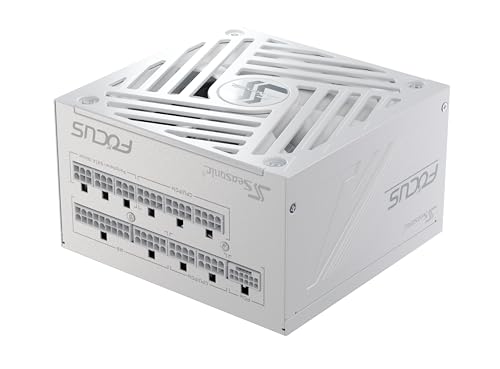

Frequently asked
7 questions01Is the be quiet! Pure Power 13 M 1000W compatible with the RTX 4090 and RTX 5090?+
Yes. The unit ships with a native 12V-2x6 connector, which is the standardised PCIe 5.1 connector required for current and next-generation high-end Nvidia GPUs including the RTX 4090 and RTX 5090. No adapter is needed, which is the preferred and safest configuration for these cards. The 1000W capacity also provides adequate headroom for transient power spikes that these GPUs can generate.
02Does the fan run constantly, or does it stop during light use?+
The Pure Power 13 M 1000W features a semi-passive zero RPM mode. Below a certain thermal threshold, the fan stops spinning entirely, so the PSU is completely silent during browsing, streaming, light gaming, and productivity tasks. The fan only engages when internal temperatures rise under sustained heavy load, and be quiet!'s fan blade design keeps noise levels notably lower than most competing units even when it does spin up.
03What does ATX 3.1 compliance actually mean in practice?+
ATX 3.1 is the current revision of the ATX power supply specification, updated to address the power delivery demands of modern GPUs. It introduces tighter voltage regulation tolerances and standardises the 12V-2x6 connector for PCIe 5.1 devices. For this unit, ATX 3.1 compliance means it is rated to handle transient power excursions up to double its rated wattage, so up to 2000W briefly, which prevents instability when a high-end GPU spikes its power demand during intense workloads.
04Is 1000W excessive for a standard gaming build?+
For most mid-range gaming builds, yes. A system with an RTX 4070 Super and a Ryzen 5 7600X will typically peak well below 600W under gaming load, making 1000W unnecessary. The 1000W rating makes sense for high-end builds with an RTX 4090 or equivalent, systems where both CPU and GPU are being overclocked, or builders who want to accommodate a PCIe 5.1 GPU upgrade without replacing the PSU later. If your build sits comfortably within 750W, be quiet!'s 750W variant is a more cost-effective option.
05How does the five-year warranty compare to competing units?+
It is decent but not the strongest in the category. Direct competitors including the Corsair RM1000x and Seasonic Focus GX-1000 both offer ten-year warranties, which is a meaningful difference if long-term peace of mind is a priority. Five years covers most realistic build lifecycles without issue, and be quiet!'s confidence in offering that coverage suggests acceptable expected failure rates. However, buyers who place significant weight on warranty length should compare current pricing across all three before deciding.
06Does the single 12V rail design cause any compatibility issues?+
No, and for a 1000W unit it is actually the preferred design. Single-rail layouts deliver the full rated current to any connected component without risk of hitting per-rail limits, which can cause unexpected shutdowns on multi-rail designs during GPU power spikes. The over-current and over-power protection circuitry handles safety at the unit level. The only practical limitation is that this PSU ships with one EPS 8-pin CPU connector, so buyers using HEDT motherboards that require two CPU power inputs should verify compatibility before purchasing.
07How does the be quiet! Pure Power 13 M 1000W compare to the Corsair RM1000x?+
Both are fully modular 80 PLUS Gold units with LLC topology and zero RPM fan modes, so they are closely matched in core design. The be quiet! unit holds an advantage in ATX standard, being ATX 3.1 with a native 12V-2x6 connector, whereas some RM1000x versions ship with an adapter rather than a native connector. The Corsair RM1000x counters with a ten-year warranty against be quiet!'s five years, and its 135mm fan may offer marginally different acoustic characteristics. Both are strong choices; the decision largely depends on whether warranty length or native PCIe 5.1 connectivity matters more to you.