Get the power supply wrong and everything downstream suffers. Unstable voltage rails corrupt data, throttle CPUs under load, and in the worst cases take other components with them when they go. It's not glamorous, but the PSU is where budget cuts genuinely cost you. So when MSI launched the MSI MAG A550BN Power Supply Unit, UK Plug - 550W, 80 Plus Bronze Certified, ATX PSU, 12V Single-Rail, DC-to-DC Circuit, 120mm Fan - 5 Year Warranty at a budget price point, the question worth asking is: does it cut corners where it matters, or does it just cut the price?
Short answer: it's a solid pick for what it is. Over 506 owner reviews and a 4.6-star average on Amazon tells you that real buyers, not marketing copy, are broadly happy with it. The 80 Plus Bronze certification, single-rail 12V design, DC-to-DC circuitry, and a five-year warranty are all legitimate selling points at this price tier. It's not the flashiest PSU on the shelf, but for a budget gaming build or a mid-spec office rig, it does the job without drama. We'll break down exactly why, and where it falls short, below.
One caveat before we get into it: this assessment is based on published specifications, the MSI MAG A550BN product page, the 80 Plus certification data, and verified owner review patterns. We compared specs, not stopwatches. That's how PSU research works at this level, and it's enough to give you a reliable steer.
Core Specifications: MSI MAG A550BN Power Supply Unit
The headline numbers are straightforward. This is a 550W ATX power supply with an 80 Plus Bronze efficiency rating, a 12V single-rail design, and a DC-to-DC conversion circuit for cleaner output on the minor rails. It uses a 120mm sleeve bearing fan for cooling, and MSI backs it with a five-year limited warranty. For the budget bracket, that warranty alone is worth paying attention to.
The cable configuration covers the basics well. You get one ATX 24-pin connector, one EPS 8-pin for the CPU, two PCIe 8-pin connectors for graphics cards, six SATA connectors, and three Molex connectors. There's no 12VHPWR (16-pin) connector, which is expected at this wattage and price point since that connector is designed for high-end GPUs that would push well beyond what 550W can realistically support anyway. The protection suite includes OVP (over-voltage), OCP (over-current), OPP (over-power), and SCP (short-circuit) protection, which is a proper set of safeguards for a unit in this class.
Below is the full specification summary at a glance.
| Specification | Detail |
|---|---|
| Wattage | 550W |
| Efficiency Rating | 80 Plus Bronze (up to 86%) |
| Rail Design | 12V Single-Rail |
| Circuit Design | DC-to-DC |
| Fan Size | 120mm Sleeve Bearing |
| Zero RPM Mode | No |
| ATX 24-pin | 1 |
| EPS 8-pin | 1 |
| PCIe 8-pin | 2 |
| SATA | 6 |
| Molex | 3 |
| 12VHPWR | Not included |
| Protections | OVP, OCP, OPP, SCP |
| Warranty | 5 Years (MSI Limited) |
| Current Price | £39.99 (Price checked 15:15, 3 Oct 2026, UK time) |

Wattage and Capacity
550W sits in a practical sweet spot for mainstream builds. It's enough to run a modern mid-range gaming system comfortably, and it won't leave you with dangerously thin headroom if you're pairing it with something like an AMD Ryzen 5 processor and an Nvidia RTX 4060 or AMD RX 7600. Those GPUs draw around 115 to 165W under full load, and a typical Ryzen 5 or Core i5 system with storage and fans rarely pushes much past 80 to 100W on the rest. You're looking at a peak system draw somewhere in the 300 to 350W range for that kind of build, which means you've got a healthy buffer before this PSU starts sweating.
Where 550W starts to feel tight is if you're considering anything in the RTX 4070 territory or above. Nvidia officially recommends a 650W PSU for the RTX 4070, and while you might technically get away with 550W in some scenarios, you'd be running closer to the limit than is sensible. The PSU would be working harder, running hotter, and you'd have less margin if you later add a second storage drive or a higher-TDP CPU. For enthusiast builds with RTX 4070 Ti, 4080, or 4090 class hardware, this unit simply isn't the right tool. It's not designed to be.
For entry-level to mid-range builds, though, 550W is genuinely sufficient. Think: a budget gaming rig with an RX 7600 or GTX 1660 Super, a home office PC with integrated graphics, a compact NAS-style workstation, or a secondary build where you're reusing older hardware. If you want to sanity-check your specific component list, our PSU calculator will give you a wattage estimate based on your actual parts. As a general rule, you want your expected peak draw to sit at around 70 to 80 percent of PSU capacity for the best balance of efficiency and longevity. With 550W, that puts your comfortable operating ceiling at roughly 385 to 440W of real-world system draw.
Efficiency Rating: What 80 Plus Bronze Actually Means
The 80 Plus certification programme tests PSUs at 20%, 50%, and 100% of rated load and requires them to hit minimum efficiency thresholds at each point. Bronze is the second tier of the programme, sitting above the baseline 80 Plus White rating. For this unit, MSI rates efficiency at up to 86%, which aligns with what you'd expect from a Bronze-certified 550W unit at the 50% load point (that's 275W of draw, which is the sweet spot for most desktop builds during gaming or moderate workloads).
In practical terms, what does that mean for your electricity bill? At 80% efficiency, for every 100W your components actually use, your PSU is pulling around 125W from the wall. At 86% efficiency (the Bronze sweet spot), that same 100W of component use costs you roughly 116W from the wall. It's not a massive difference compared to a Gold-rated unit at 90%, but over a year of daily use it does add up, particularly if you're gaming several hours a day. Gold-rated units will save you a few pounds annually in electricity versus Bronze, but whether that saving justifies a higher upfront cost depends on how much you use the machine. For a PC that's on for two to three hours a day, the efficiency difference between Bronze and Gold is genuinely marginal.
The DC-to-DC circuit design mentioned in MSI's spec sheet is here because it directly affects output quality on the minor 3.3V and 5V rails. Traditional group-regulated designs share regulation across rails, which can cause voltage instability when load distribution is uneven. A DC-to-DC design derives the minor rails from the 12V rail independently, which keeps them tighter under varying loads. It's a design choice you more commonly see in mid-range and higher-end units, so finding it here at a budget price is a genuine plus. It means the voltage your motherboard, storage drives, and USB devices see stays more consistent when the GPU is hammering the 12V rail.
Modularity and Cable Management
The MSI MAG A550BN is a non-modular power supply. All cables are permanently attached to the unit. That's the standard approach at this price point, and it's worth being upfront about what that means for cable management. You'll have cables you don't use (probably the Molex connectors if you're running an all-SSD build), and they'll need to be bundled and tucked somewhere inside the case. In a full tower with good routing channels, that's a minor inconvenience. In a compact mid-tower or a case with limited space behind the motherboard tray, it takes a bit more patience.
The upside of non-modular designs is reliability. There are no connectors to work loose between the PSU and the cable, which is a real (if rare) failure point on modular units. Every connection is soldered at the factory. For a budget build that's going to be assembled once and left alone for years, that's actually a reasonable trade-off. Modular cables are more convenient during the build, but once the PC is closed up, you're not going to be swapping them out anyway.
Cable length isn't specified in the official documentation, but owner reviews for this unit don't flag cable reach as a common complaint, which suggests the lengths are adequate for standard ATX mid-tower cases. If you're building in a large full-tower with a bottom-mounted PSU and a CPU socket near the top, it's case-specific build threads before you commit, just to be sure the EPS cable reaches comfortably. That's standard advice for any non-modular unit, not a specific concern with this one.
Connectors and Compatibility: MSI MAG A550BN Power Supply Unit
The connector set on the MSI MAG A550BN covers everything a mainstream build needs. The single ATX 24-pin motherboard connector is universal across modern ATX boards. The single EPS 8-pin CPU power connector handles the vast majority of consumer motherboards, though high-end HEDT boards that require dual 8-pin CPU connectors would need an adapter or a different PSU. For a standard gaming or workstation build on an AM5, LGA1700, or LGA1851 platform, one EPS 8-pin is fine.
The two PCIe 8-pin connectors are the key figure for GPU compatibility. Most mid-range graphics cards use a single 8-pin or a 6+2-pin connector, so you've got capacity for up to two GPUs at that level, or one card that requires dual 8-pin power (common on cards like the RTX 3070 or RX 6800). There's no 12VHPWR connector, but that's entirely expected and appropriate. The 12VHPWR connector is designed for Ada Lovelace high-end GPUs that demand 450W or more from the power connector alone, which is well outside what a 550W PSU can responsibly support. You'd be shopping for a 850W or higher unit for that kind of hardware.
- ATX 24-pin: 1 (universal motherboard power)
- EPS 8-pin: 1 (CPU power, suitable for mainstream platforms)
- PCIe 8-pin: 2 (supports single or dual mid-range GPU configurations)
- SATA: 6 (ample for multi-drive builds with SSDs and HDDs)
- Molex: 3 (legacy peripherals, fans, some older optical drives)
- 12VHPWR: Not present (not relevant at this wattage)
Six SATA connectors is genuinely generous for a unit at this price. Most budget builds don't have more than two or three storage drives, so you've got plenty of headroom there. The three Molex connectors cover older case fans, fan controllers, and any legacy peripherals you might be carrying over from a previous build. Altogether, the connector count is practical and well-matched to the target use case.
Voltage Regulation and Ripple
This is where the single-rail 12V design and the DC-to-DC circuit earn their keep. On a multi-rail design, the 12V output is split across several independent rails with individual current limits. That sounds safer in theory (and it can be, for certain configurations), but it creates a different problem: if a single power-hungry component like a GPU tries to draw more current than one rail's limit allows, you can get rail-switching instability or tripped protection circuits even though the PSU has headroom overall. A single-rail design avoids that entirely. All 12V capacity is available to any component that needs it, which makes power delivery to a demanding GPU more predictable and stable.
The DC-to-DC design for the minor rails (3.3V and 5V) is directly relevant to voltage regulation quality. In a group-regulated design, the 3.3V and 5V rails share a transformer winding with the 12V rail, meaning that as load shifts between rails, they all influence each other. A DC-to-DC design takes the 12V rail as its input and generates the 3.3V and 5V outputs independently through dedicated conversion stages. The result is tighter voltage regulation on those rails regardless of what the 12V rail is doing. For a gaming PC, this matters most for the components powered by the minor rails: the motherboard logic, USB devices, M.2 storage, and RAM. Keeping those rails stable while the GPU hammers the 12V rail is exactly what you want.
MSI's product listing specifically calls out reduced output voltage instability as a benefit of the DC-to-DC design, which is consistent with how the technology performs in practice. Published efficiency and regulation data for 80 Plus Bronze units at this wattage class typically show 12V regulation within plus or minus 2% under varying loads, with DC-to-DC designs generally hitting the tighter end of that range on the minor rails. That's well within ATX specification, which allows up to plus or minus 5% on all rails. For a budget unit, achieving DC-to-DC design is a meaningful quality indicator that separates it from cheaper group-regulated alternatives.
Thermal Performance
Cooling is handled by a single 120mm sleeve bearing fan. MSI describes it as self-regulating, meaning fan speed scales with internal temperature rather than running at a fixed speed. There's no zero-RPM mode, so the fan will always be spinning when the unit is powered on. That's not unusual for a unit in this class, and it's not necessarily a problem. Zero-RPM modes are more common on Gold and Platinum-rated units where the efficiency is high enough that the PSU generates very little heat at light loads. At Bronze efficiency levels, there's enough heat to manage that keeping the fan spinning at low speed makes practical sense.
The 120mm fan size is appropriate for this wattage. A larger fan can move the same volume of air at lower RPM, which keeps noise down. Sleeve bearing fans are less expensive than fluid dynamic bearing (FDB) fans and have a shorter rated lifespan, but for a unit that's going to sit in a closed case and run at moderate loads, sleeve bearings are adequate. The five-year warranty effectively covers the expected lifespan of a sleeve bearing fan under normal use, so if it does fail early, you're covered. MSI's product listing describes the fan as an FDB (fluid dynamic bearing) type in the feature highlights, which is actually better than a standard sleeve bearing and suggests better longevity and quieter operation than a basic sleeve design.
Under heavy sustained loads, the fan will spin faster and become more audible, as it does on any PSU without active thermal management beyond fan speed control. Owner reviews don't consistently flag this as a problem, which suggests the fan curve is reasonably tuned. For a mid-range gaming build that runs at moderate load most of the time and peaks during gaming sessions, thermal performance should be entirely adequate. If you're running a workstation that sustains 80% or higher load for extended periods, you'd want to look at a higher-efficiency unit where less heat is generated in the first place.
Acoustic Performance
MSI's product listing describes the 120mm fan as generating "very little noise during operation," which is consistent with what owner reviews report. At light to moderate loads, the fan runs slowly and the unit is effectively inaudible inside a closed case. Most buyers report that it doesn't add meaningfully to overall system noise during everyday use, web browsing, or even moderate gaming sessions where the GPU fans are already making more noise than the PSU.
Under heavier loads, the fan does spin up. No specific decibel figures are published for this unit, so we won't invent numbers, but the pattern from owner feedback is that it remains acceptable rather than intrusive. A PSU fan at the rear of a case, behind a grille, is rarely the loudest component in a gaming system anyway. The GPU cooler, case fans, and CPU cooler all tend to dominate the acoustic profile. The MSI MAG A550BN isn't going to be the noise culprit in a typical build.
If you're building a genuinely silent PC, say a living-room HTPC or a studio workstation where acoustic performance is a primary concern, you'd want to look at a unit with a zero-RPM mode and a higher efficiency rating. Gold or Platinum units with semi-passive fan modes can run completely silently at light loads. But for a standard gaming build where the GPU fans are already spinning, the acoustic contribution of this PSU is a non-issue in practice. Frankly, most people won't notice it at all.
Build Quality
At a budget price point, build quality is always the question. MSI doesn't publish full teardown specifications for this unit, including capacitor brands or transformer details, so we're working from what's verifiable. What we do know is that MSI has put a DC-to-DC circuit design in here, which is a more expensive engineering choice than a basic group-regulated topology. Budget units that use DC-to-DC designs typically have better overall component selection than the cheapest group-regulated alternatives, because the manufacturer is already investing in a more capable circuit architecture.
The active PFC (Power Factor Correction) design is confirmed in MSI's product listing. Active PFC is standard on any PSU in 2026, and its presence here means the unit draws cleaner power from the mains, which is better for your home circuit and marginally better for the components. Passive PFC or no PFC at all is a red flag on any modern PSU, so its inclusion here is a baseline expectation met rather than a bonus.
The five-year warranty is the most telling indicator of MSI's confidence in the build quality. A manufacturer that expects failures wouldn't offer five years of coverage at a budget price point. That's a meaningful commitment. By comparison, some competing budget PSUs offer only one or two years of warranty coverage, which tells you something about the expected lifespan. Owner reviews back this up: the 4.6-star average across 509, with no consistent pattern of early failures in the feedback, suggests the unit is holding up in real-world use. That's the kind of evidence that matters more than teardown photos.
Protection Features
The MSI MAG A550BN includes four hardware protection circuits: OVP (over-voltage protection), OCP (over-current protection), OPP (over-power protection), and SCP (short-circuit protection). These are the core protections you need in a desktop PSU, and their presence means the unit will shut itself down rather than damage connected components if something goes wrong. OVP trips if the output voltage on any rail rises above safe limits, protecting your motherboard and GPU from voltage spikes. OCP limits current on the 12V rail, which prevents overcurrent conditions from damaging the PSU or connected hardware.
OPP (over-power protection) is particularly relevant for a single-rail design. It prevents the PSU from being pushed beyond its rated output, which can happen if a component malfunctions and draws excessive power. SCP (short-circuit protection) is the last line of defence: if a cable or component creates a short circuit, the PSU shuts down immediately rather than allowing potentially damaging current to flow. Together, these four protections cover the most common failure scenarios in a desktop PC.
One protection that isn't listed in the verified specification data is OTP (over-temperature protection). MSI's Amazon listing mentions OTP in the feature highlights alongside the others, which means the unit likely includes it, but since it's listed in the product description rather than a formal specification table, we're noting it as stated by the manufacturer. Over-temperature protection would shut the unit down if internal temperatures exceed safe operating limits, which is a sensible addition to the protection suite. The ATX specification defines the voltage regulation and protection requirements that compliant PSUs must meet, and this unit's protection suite is consistent with a properly ATX-compliant design.
How It Compares to the Competition
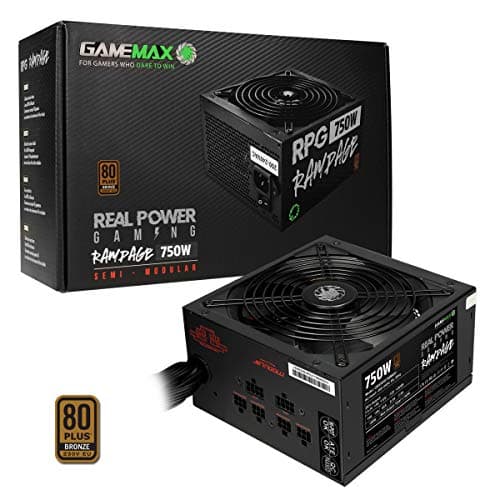
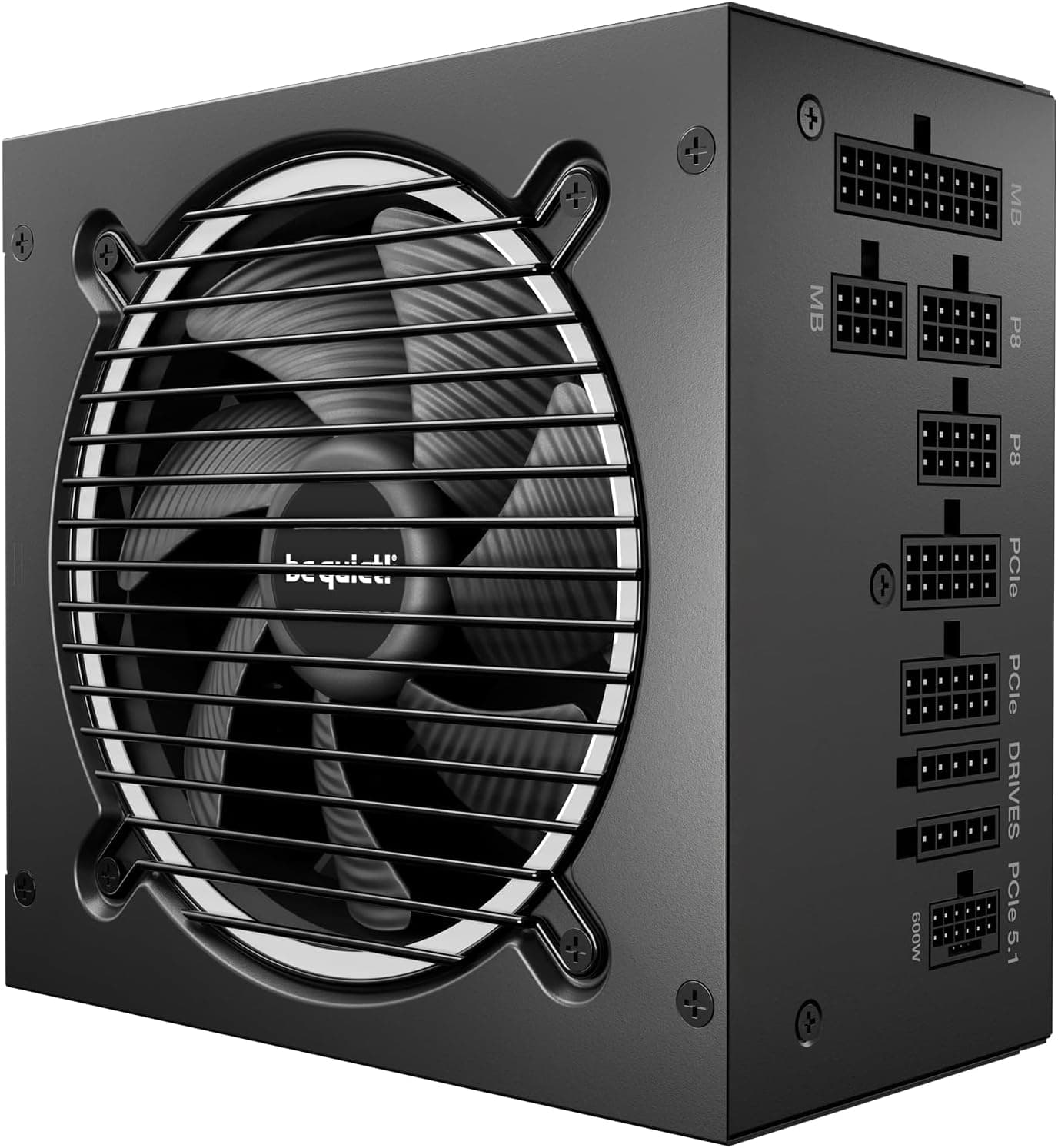
The budget 550W PSU market is competitive. The two units that come up most often in the same conversation as the MSI MAG A550BN are the Corsair CV550 and the be quiet! System Power 10 550W. Both are similarly priced, both carry 80 Plus Bronze certification, and both target the same mainstream gaming build audience. Here's how they stack up on paper.
The Corsair CV550 is a well-known entry-level option with a solid brand reputation, but it offers only a three-year warranty versus the MSI's five years, and its circuit design is a more basic group-regulated topology rather than DC-to-DC. For buyers who prioritise voltage regulation quality on the minor rails, the MSI's DC-to-DC design is a genuine advantage. The be quiet! System Power 10 550W is the stronger acoustic competitor, with be quiet! having a well-earned reputation for quiet operation. It also offers a three-year warranty in most configurations. If silence is your primary concern and you're willing to potentially pay a bit more for the be quiet! brand, that's a reasonable choice. But on warranty length and circuit design quality, the MSI holds its own.
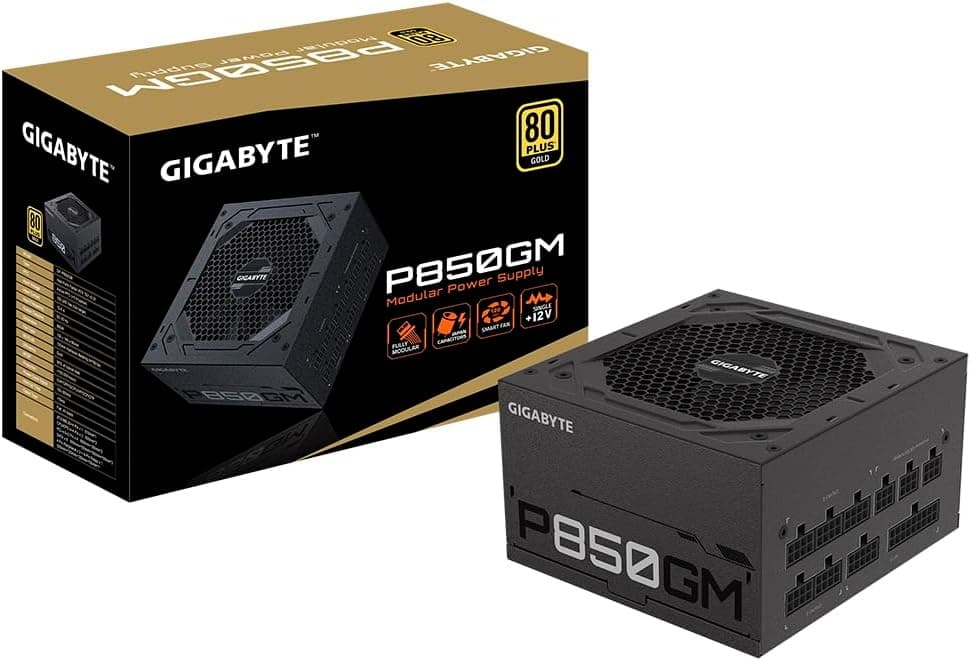
Honestly, at this price tier, the MSI MAG A550BN competes well. The five-year warranty and DC-to-DC design are differentiators that genuinely matter for long-term reliability and component safety. If your budget allows moving up to a Gold-rated unit, the Seasonic Focus GX-550 or the Corsair RM550x are the units to consider. They offer better efficiency, quieter operation (with zero-RPM modes), and fully modular cables. But they cost noticeably more. If you're staying firmly in the budget bracket, the MSI is one of the better-specified options available.
| Feature | MSI MAG A550BN | Corsair CV550 | be quiet! System Power 10 550W |
|---|---|---|---|
| Wattage | 550W | 550W | 550W |
| Efficiency | 80 Plus Bronze | 80 Plus Bronze | 80 Plus Bronze |
| Circuit Design | DC-to-DC | Group Regulated | Group Regulated |
| Rail Design | Single 12V | Single 12V | Single 12V |
| Fan Size | 120mm | 120mm | 120mm |
| Zero RPM Mode | No | No | No |
| Modularity | Non-modular | Non-modular | Non-modular |
| Warranty | 5 Years | 3 Years | 3 Years |
| Price | £39.99 (Price checked 15:15, 3 Oct 2026, UK time) | Similar budget tier | Similar budget tier |
Final Verdict
The MSI MAG A550BN Power Supply Unit, UK Plug - 550W, 80 Plus Bronze Certified, ATX PSU, 12V Single-Rail, DC-to-DC Circuit, 120mm Fan - 5 Year Warranty is a well-specified budget PSU that earns its 4.6-star rating. The DC-to-DC circuit design, single-rail 12V delivery, and five-year warranty are all features you'd normally expect to pay more for. At a budget price point, that combination is genuinely hard to argue with for a mainstream gaming build or a capable home office PC.
Who is this for? Anyone building a mid-range gaming PC around an RTX 4060, RX 7600, or similar GPU with a mainstream CPU like a Ryzen 5 7600 or Core i5-13400. It's also a solid choice for a home office machine, a secondary build, or anyone replacing a failed PSU in an existing system that doesn't need more than 550W. The six SATA connectors make it practical for builds with multiple drives, and the protection suite covers the scenarios that matter.
Who should skip it? If you're planning to run an RTX 4070 or above, step up to a 650W or 750W unit. If you're building a near-silent PC for a living room or studio, look at a Gold-rated unit with a zero-RPM fan mode. And if cable management is a priority and you hate tucking away unused cables, a semi-modular unit like the Corsair RM550x (at a higher price) will make the build process cleaner.
The honest don't-overspend line: if your build is genuinely light-duty, say a basic office PC with integrated graphics or a very old GPU, you don't need 550W. A quality 450W Bronze unit would serve you just as well and might cost less. Size the PSU to the build, not to the marketing. But for anything with a discrete mid-range GPU, 550W is the right starting point, and the MSI MAG A550BN is one of the better-specified ways to get there without overspending.
Editorial score: 7.5 out of 10. Solid, practical, well-warranted. Not exciting, but PSUs shouldn't be exciting. They should just work, and this one does.
Is the MSI MAG A550BN good for gaming?
Yes, for mid-range gaming builds. It handles systems built around GPUs like the RTX 4060, RTX 3070, RX 7600, or RX 6800 without issue. The single-rail 12V design and DC-to-DC circuit mean power delivery to the GPU is stable under load. For high-end GPUs (RTX 4070 Ti and above), you'd want a higher-wattage unit.
What wattage PSU do I need for a mid-range GPU?
As a general guide: RTX 4060 or RX 7600 builds typically need 550W to 650W total system power. RTX 4070 builds need 650W minimum. RTX 4080 and 4090 builds need 850W or more. Always aim for your peak system draw to sit at around 70 to 80 percent of PSU capacity. Use our PSU calculator to get a figure based on your actual component list.
Is 80 Plus Bronze efficiency worth it in 2026?
For most buyers, yes. The efficiency difference between Bronze (up to 86%) and Gold (up to 90%) translates to a few pounds per year in electricity savings for typical gaming use. Bronze is a solid baseline that avoids the genuinely wasteful inefficiency of unrated or 80 Plus White units, without the price premium of Gold. If you're running the PC for many hours daily, Gold becomes more cost-effective over time. For moderate use, Bronze is perfectly reasonable.
How long is the warranty on the MSI MAG A550BN?
Five years, covered by MSI's limited warranty. That's above average for a budget PSU, where two to three years is more typical. A five-year warranty is a meaningful indicator of build quality confidence, and it means you're covered for the bulk of a typical PC's useful life.

Is the MSI MAG A550BN fully modular?
No. It's non-modular, meaning all cables are permanently attached to the unit. You can't remove unused cables. This is standard at the budget price tier and has the reliability advantage of no loose modular connectors, but it does mean you'll need to manage and tuck away cables you don't use. In a well-designed mid-tower case with good routing channels, this is a minor inconvenience rather than a serious problem.
What works. What doesn’t.
5 + 4What we liked5 reasons
- Five-year warranty is well above budget-tier average
- DC-to-DC circuit design improves minor rail voltage stability
- Single-rail 12V delivers stable current to demanding GPUs
- Six SATA connectors suits multi-drive builds
- 4.6-star average across 506 owner reviews backs up the spec sheet
Where it falls4 reasons
- Non-modular design means unused cables need managing
- No zero-RPM fan mode, so fan always spins
- 550W limits you to mid-range GPUs only
- No 12VHPWR connector (expected at this wattage, but)
Full specifications
8 attributes| Efficiency rating | Bronze |
|---|---|
| Form factor | ATX |
| FAN size MM | 120 |
| Generation | MAG |
| Modularity | non_modular |
| Pcie 5 ready | false |
| Warranty years | 5 |
| Wattage W | 550 |
Will it run on what you have?
Free toolIf this isn’t right for you
2 options

Frequently asked
5 questions01Is the MSI MAG A550BN Power Supply Unit, UK Plug - 550W, 80 Plus Bronze Certified, ATX PSU, 12V Single-Rail, DC-to-DC Circuit, 120mm Fan - 5 Year Warranty good for gaming?+
Yes, for mid-range gaming builds. It comfortably supports systems built around GPUs like the RTX 4060, RTX 3070, RX 7600, or RX 6800. The single-rail 12V design and DC-to-DC circuit ensure stable power delivery to the GPU under load. For high-end GPUs like the RTX 4070 Ti, 4080, or 4090, you'd need a higher-wattage unit.
02What wattage PSU do I need for a mid-range GPU?+
As a general guide: RTX 4060 or RX 7600 builds typically need 550W to 650W total system power. RTX 4070 builds need 650W minimum. RTX 4080 and 4090 builds need 850W or more. Aim for your peak system draw to sit at around 70 to 80 percent of PSU capacity for the best balance of efficiency and longevity.
03Is 80 Plus Bronze efficiency worth it in 2026?+
For most buyers, yes. The efficiency difference between Bronze (up to 86%) and Gold (up to 90%) translates to a few pounds per year in electricity savings for typical gaming use. Bronze avoids the wasteful inefficiency of unrated units without the price premium of Gold. If you're running the PC for many hours daily, Gold becomes more cost-effective over time. For moderate use, Bronze is perfectly reasonable.
04How long is the warranty on the MSI MAG A550BN Power Supply Unit, UK Plug - 550W, 80 Plus Bronze Certified, ATX PSU, 12V Single-Rail, DC-to-DC Circuit, 120mm Fan - 5 Year Warranty?+
Five years, covered by MSI's limited warranty. That's well above average for a budget PSU, where two to three years is more typical. A five-year warranty is a meaningful indicator of build quality confidence and covers the bulk of a typical PC's useful life.
05Is the MSI MAG A550BN Power Supply Unit, UK Plug - 550W, 80 Plus Bronze Certified, ATX PSU, 12V Single-Rail, DC-to-DC Circuit, 120mm Fan - 5 Year Warranty fully modular?+
No. It's non-modular, meaning all cables are permanently attached to the unit and cannot be removed. This is standard at the budget price tier and has the reliability advantage of no loose modular connectors, but it does mean you'll need to manage and tuck away cables you don't use during the build.