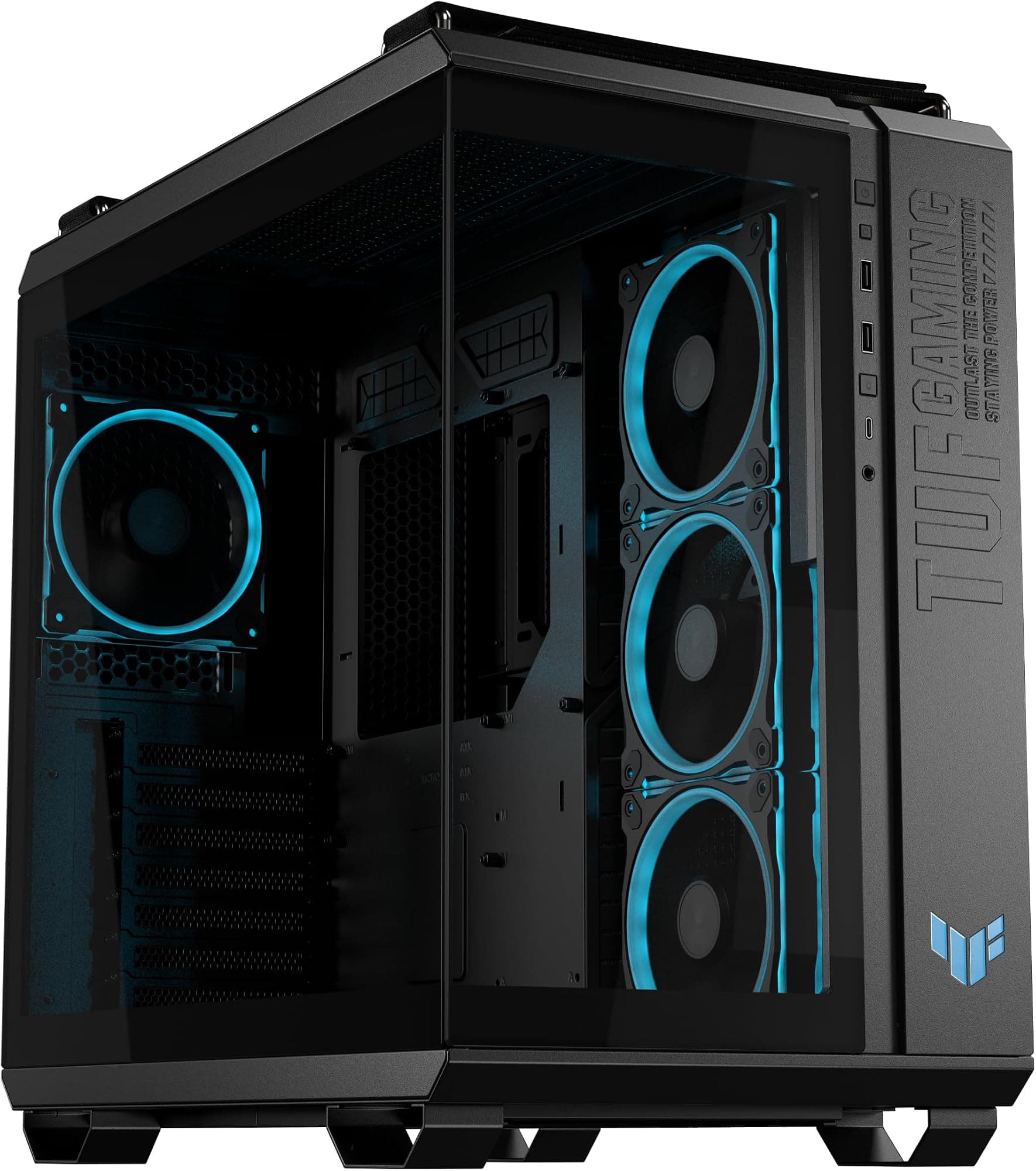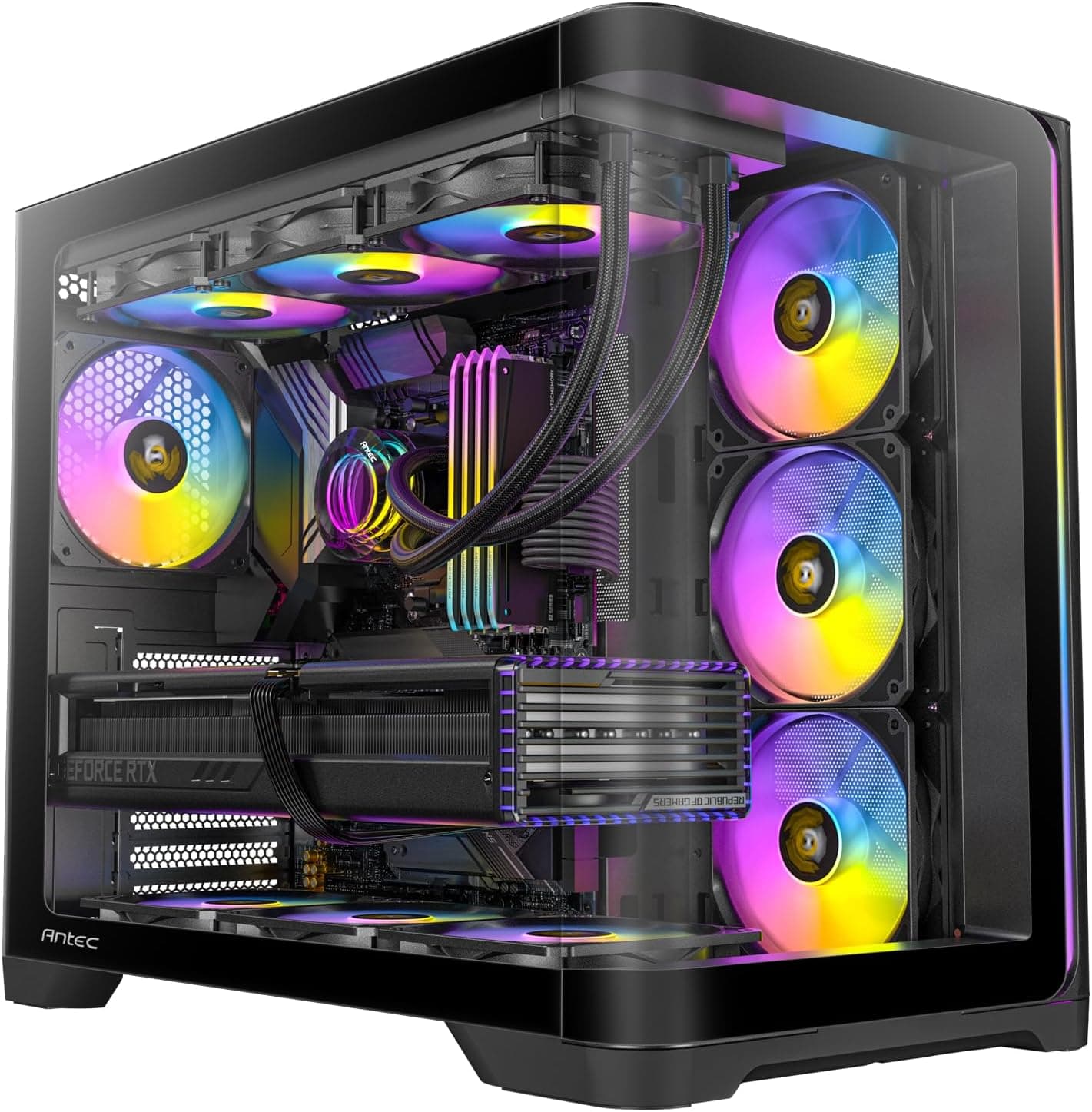
Most PC cases at the budget end of the market make you choose: you either get a glass showcase that throttles your components, or you get decent airflow in something that looks like it belongs in a server room. The Thermaltake View 170 TG ARGB Snow Micro-ATX Case is trying to do both, and at an entry-level price point, that's either impressive or suspicious. Spoiler: it's mostly impressive, with a couple of caveats before you hand over your money.
With 277 owner reviews averaging ★★★★½ (4.6), this isn't some obscure case that three people bought and forgot about. That's a meaningful sample size, and a 4.6 average at this price tier is genuinely hard to argue with. For context, you're looking at a Micro-ATX chassis with dual tempered glass panels (front and side), three 120mm ARGB fans included in the box, and support for up to a 280mm radiator. Compared to the Corsair 4000D Airflow or the NZXT H510, both of which cost noticeably more and only support ATX builds, the View 170 is carving out a specific niche: compact, visually loud, and actually usable for the money.
The Snow colourway (white exterior, white fans) is the version we're focusing on here. It's the kind of case that photographs well for a desk setup, and the ARGB lighting through dual glass panels means your build will actually be visible rather than hidden behind a solid steel wall. Whether that matters to you depends entirely on why you're building. But if you want a small-ish, good-looking case that doesn't demand a premium price and comes with fans already sorted, this deserves a proper look.
Thermaltake View 170 TG ARGB Snow Micro-ATX Case: Core Specifications
The View 170 is built around a Micro-ATX form factor, which puts it firmly in the compact-but-not-tiny category. It's not a small form factor cube, and it's not a hulking full tower. It sits in that sensible middle ground where you get real expansion options without the case dominating your entire desk. The chassis supports Micro-ATX and Mini-ITX motherboards, and Thermaltake has included support for up to a 280mm radiator at the front, which is genuinely useful for anyone considering a liquid cooler in a build this size.
Three 120mm ARGB fans come included in the box, which is one of the stronger value points here. A lot of cases at this price ship with zero fans, or one token fan that you'd replace immediately. Getting three ARGB units out of the box means your airflow and lighting are sorted from day one, assuming you're happy with the fan quality (more on that in the airflow section). The dual tempered glass panels on the front and side are a genuine feature rather than a marketing stretch: you actually get two glass panels, not one glass and one acrylic pretending to be glass.
Storage support is modest but appropriate for a Micro-ATX build: two 3.5-inch drive bays and two 2.5-inch SSD mounts. The front I/O includes USB 3.0 ports and audio jacks, which covers most people's needs. The case ships with a three-year warranty from Thermaltake, which is a solid commitment at this price. Full specs below.
| Specification | Detail |
|---|---|
| Form Factor | Micro-ATX Tower |
| Motherboard Support | Micro-ATX, Mini-ITX |
| Included Fans | 3x 120mm ARGB |
| Max Radiator Support | 280mm (front) |
| GPU Clearance | Up to 330mm |
| CPU Cooler Height | Up to 165mm |
| Drive Bays (3.5") | 2 |
| Drive Bays (2.5") | 2 |
| Front I/O | 2x USB 3.0, HD Audio |
| Panel Material | Dual Tempered Glass (front and side) |
| Expansion Slots | 4 |
| PSU Support | ATX PSU (bottom-mounted) |
| Warranty | 3 Years |
| Colour | Snow (White) |
| Model Number | CA-1Z4-00M6WN-00 |
| Price | £63.48 |

Form Factor and Dimensions
The View 170 is a Micro-ATX tower, which means it's smaller than a standard mid-tower ATX case but bigger than a mini-ITX cube. In practical terms, it'll sit comfortably on most desks without eating up the entire surface. If you're used to full-size mid-towers, this will feel noticeably more compact. If you're coming from a mini-ITX build, it'll feel comparatively spacious inside.
The footprint is compact enough to work on a desk beside a monitor without being obtrusive, and the vertical orientation means it fits under most desks too if you'd rather keep it off the surface. The Snow colourway helps here: white cases tend to read as less visually heavy than black ones, so even with the dual glass panels catching the light, it doesn't feel like it dominates the space. That's partly subjective, obviously, but it's a common observation from owners who've set it up on their desks.
One thing about the form factor: because this is Micro-ATX rather than ATX, you're limited on motherboard size. That's the trade-off for the more compact chassis. If you're planning a high-end ATX build with a large board, this isn't your case. But for a Micro-ATX build, which covers the vast majority of gaming and productivity setups, the dimensions are genuinely well-judged. Not so small that building inside is a nightmare, not so large that you've bought a case bigger than your needs.
Motherboard Compatibility
The View 170 officially supports Micro-ATX and Mini-ITX motherboards. Those are the two form factors you're working with here, and that covers a huge range of builds. Micro-ATX boards from AMD and Intel are plentiful at every price point, and Mini-ITX boards will fit with room to spare. What you cannot do is drop in a standard ATX board: the chassis simply isn't designed for it, and the standoff layout reflects that.
For most people building a gaming PC or a home workstation, Micro-ATX is entirely sufficient. You get four RAM slots, typically two or three PCIe slots, and all the M.2 and SATA connectivity you'd realistically need. The Thermaltake product page confirms the standoff positions are set for Micro-ATX as the primary target, with Mini-ITX as a secondary option. There's no E-ATX support, which is expected given the chassis size.
Something owners mention fairly consistently is that the interior feels well-organised for a Micro-ATX build specifically. The standoff positions are pre-installed in the right spots, which saves the fiddly process of relocating them. That's a small thing, but it's one of those details that makes a build feel smoother. Mini-ITX builders will want to check their specific board dimensions, but standard Mini-ITX should fit without drama. The four expansion slots are appropriate for the form factor: you're not going to need more than that in a Micro-ATX build under normal circumstances.
GPU Clearance
Thermaltake rates the View 170 for GPUs up to 330mm in length. That's a meaningful number. To put it in context, an RTX 4070 Super from most board partners comes in around 285mm to 310mm depending on the cooler design. An RTX 4080 Super from reference or shorter third-party designs sits in the 310mm to 330mm range. So you're covered for most current mid-range and upper-mid-range cards without issue, though you'd want to double-check the exact length of any triple-slot flagship before committing.
The 330mm limit does mean some of the longer triple-fan flagship cards could be tight or incompatible. An RTX 4090 from certain manufacturers runs to 336mm or beyond, which would put you over the limit. If you're building with a 4090, this probably isn't your case anyway given the Micro-ATX form factor, but it's worth being aware of. For anything up to and including an RTX 4080 Super or RX 7900 XT in most configurations, you should be fine.
There's no vertical GPU mount option listed in the specifications, which is a common omission at this price point. If showing off your GPU through the side panel is a priority, you'd need to look at cases that include a riser cable and vertical bracket, which typically adds cost. That said, with the side tempered glass panel giving a clear view of the interior, your GPU will be visible regardless. Owner feedback doesn't flag GPU fitment as a problem area, which is reassuring: a 330mm limit that's accurately stated is far more useful than an inflated number that causes surprises mid-build.
CPU Cooler Clearance
The View 170 supports CPU coolers up to 165mm tall. That's a comfortable clearance for most tower air coolers. The popular Noctua NH-D15 sits at 165mm, which means it fits but only just: you'd want to verify your specific configuration if you're planning to use one. The be quiet! Dark Rock 4 comes in at 159mm, the Deepcool AK620 at 155mm. In practice, anything up to around 160mm fits without stress, and 165mm is achievable but tight depending on the cooler's exact profile.
For AIO liquid cooling, the front panel is where the action is. The case supports up to a 280mm radiator at the front, which means a 240mm or 280mm AIO will mount there. A 280mm AIO is a solid option for mid-range and higher-end builds, offering better cooling performance than a 240mm without requiring the full 360mm that some larger cases accommodate. The top of the case does not support a 360mm radiator, which is one of the trade-offs of the more compact chassis. If 360mm AIO support is non-negotiable for your build, you'll need to look at a larger case.
The rear supports a single 120mm fan or radiator, which is standard. What's is that with three 120mm fans included, you can run all three at the front as intake and use the rear position for an additional exhaust fan if you want to add one later. That's a sensible configuration for positive pressure airflow. Owner reviews don't flag any clearance issues with RAM height when using a front-mounted radiator, which suggests Thermaltake has left enough room between the radiator mounting position and the motherboard area, though tall RAM with large heatspreaders is always against your specific configuration.
Storage Bay Options
Storage options in the View 170 are practical rather than generous. You get two 3.5-inch drive bays for traditional hard drives, and two 2.5-inch mounts for SSDs. For a Micro-ATX build in 2026, that's a reasonable allocation. Most people are running their primary storage on an M.2 NVMe drive mounted directly to the motherboard, so the 2.5-inch bays are there for secondary SSDs or older SATA drives you're carrying over from a previous build.
The 3.5-inch bays are useful if you're running a NAS-style setup or keeping large mechanical drives for media storage. Two bays won't satisfy everyone, but for a gaming PC or productivity workstation where your main storage is M.2, it's more than enough. The drive mounting doesn't appear to be fully tool-free based on the design, which is a minor frustration compared to cases that use rubber-grommeted trays, but it's not unusual at this price point.
One thing that comes up in owner reviews is that the overall interior organisation makes drive placement relatively straightforward. The PSU shroud at the bottom helps tidy things up and keeps the drive bays out of the main visual area, which matters when you've got a glass side panel showing off your build. If you're the kind of builder who runs two M.2 drives on the motherboard and doesn't need any SATA storage at all, the drive bays become almost irrelevant, and the interior feels quite open as a result. That's not a criticism: it's just that the storage expansion isn't the headline feature here.
Cable Management
Cable management in a Micro-ATX case is always a bit more of a challenge than in a full-size mid-tower, simply because there's less room behind the motherboard tray to hide everything. The View 170 addresses this with a PSU shroud at the bottom, which covers the power supply and the bulk of the cable runs from it. That immediately cleans up the lower portion of the build, which is visible through the side glass panel.
The rear panel clearance for cables is reported by owners as adequate rather than generous. You're not going to be routing thick cable extensions through the back with ease, but standard modular PSU cables tuck away without drama. Velcro cable tie points are present, which helps keep things tidy. The general owner consensus is that cable management is manageable with a bit of patience, particularly if you're using a modular or semi-modular PSU that lets you leave unused cables out of the equation entirely.
One practical tip that comes out of the owner feedback: using a modular PSU makes a noticeable difference in this case. The rear channel is workable but not wide, so the fewer cables you're dealing with, the cleaner the result. The 24-pin ATX motherboard cable is always the awkward one in a Micro-ATX build because the routing distance is shorter, but owners don't flag this as a specific problem with the View 170. The PSU shroud doing its job of hiding the bottom section means the visible part of your build through the glass stays clean even if the cable routing behind the tray isn't perfect.
Airflow and Thermal Design
This is where the View 170 gets interesting, and also where you need to be clear-eyed about the trade-offs. The front panel is tempered glass, not mesh. That's a deliberate aesthetic choice, and it does restrict airflow compared to a mesh front panel. Cases like the Fractal Design Meshify C or the Corsair 4000D Airflow use mesh fronts specifically because they allow far more air to enter the case freely. The View 170's glass front means the three included 120mm fans are working against more resistance than they would be in a mesh-front design.
In practice, this means the View 170 is better suited to moderate builds than to high-TDP configurations. If you're running an RTX 4090 and a high-end overclocked CPU, you'd be better served by a mesh-front case with unrestricted intake. But for a mid-range gaming build, the three 120mm ARGB fans pushing air through the front glass panel will keep temperatures acceptable. Owner feedback on thermals is generally positive, with no widespread reports of thermal throttling or unusually high temperatures in typical gaming configurations. The key word is typical: this isn't a case you'd choose for a thermal-performance-first build.
The three included 120mm ARGB fans are the same fans you'd find in Thermaltake's own fan lineup at this tier. They're not premium units, and you wouldn't mistake them for Noctua or be quiet! fans on noise or airflow efficiency. But they're functional, they look good with the ARGB lighting, and they're a genuine inclusion rather than a token gesture. The rear supports one additional 120mm exhaust fan, which you'd need to buy separately if you want it. Running the three front fans as intake and adding a rear exhaust gives you a positive pressure setup that's sensible for keeping dust out and temperatures reasonable. Dust filters are present on the bottom for the PSU intake, which is a basic but necessary feature.
To answer the question that comes up a lot: how many fans fit in the Thermaltake View 170? The front panel accommodates up to three 120mm fans (or a 240mm or 280mm radiator), and the rear accommodates one 120mm fan. So the maximum fan count is four 120mm fans total. The three included fans fill the front positions, leaving the rear open for an additional purchase if you want it.
Front I/O and Connectivity
The front I/O panel on the View 170 gives you two USB 3.0 Type-A ports and a combined HD audio jack (headphone and microphone). That's a functional setup for most users, though the absence of a USB Type-C port is noticeable in 2026. USB Type-C on the front panel has become increasingly standard even on budget cases, and its absence here means you'll be reaching around to the rear I/O of your motherboard whenever you need to plug in a phone or a modern peripheral. It's not a dealbreaker, but it is a genuine gap.
The power button placement is on the top of the case, which is standard for a tower orientation. The reset button is there too, typically smaller and recessed to avoid accidental presses. The ARGB lighting is controlled through the motherboard's ARGB header (5V 3-pin), which means if your motherboard has ARGB support, you can control the fans through your motherboard's software. If it doesn't, Thermaltake typically includes a basic controller, though you'd want to verify this from the listing before assuming.
Owner feedback on the front I/O is mostly neutral: the USB 3.0 ports work as expected, the audio jack is fine for headset use, and the power button has a satisfying click rather than a mushy press. Nobody's particularly excited about the I/O, and nobody's particularly annoyed by it either, which is probably the right outcome for a case at this price. The USB Type-C omission is the one thing that consistently comes up as a wish-list item in reviews, and it's fair criticism. If front USB Type-C is essential for your workflow, factor that in.
Build Quality and Materials
The steel used in the View 170's chassis is typical for the entry price tier: functional, not particularly thick, but not flimsy either. You're not getting the premium feel of a Fractal Design Define 7 or a Lian Li Lancool III, both of which use heavier gauge steel and have a noticeably more solid feel. But for the price, the View 170's construction is appropriate. Panels align reasonably well, and the overall assembly doesn't feel like it's going to rattle apart after a few months.
The dual tempered glass panels are the headline material feature. Both the front and side panels are genuine tempered glass, which answers the question directly: yes, the View 170 is a tempered glass case, and specifically it has two tempered glass panels rather than one. Tempered glass is safer and more scratch-resistant than acrylic, and it gives a cleaner, more premium look. The glass panels are secured by screws rather than a tool-free latch system, which is a minor inconvenience when you need to access the interior frequently during a build. Once everything's installed, it doesn't matter much.
Owner reviews flag a couple of minor quality observations. Some owners mention that the glass panels require a bit of care during installation to avoid fingerprints, which is true of any glass panel case. A few owners note that the included screws are adequate but not particularly high quality, which again is standard at this price. No widespread reports of sharp edges, which is genuinely important: a case that cuts your hands during a build is one of the more annoying experiences in PC building, and it's reassuring that this doesn't seem to be a problem here. The Snow white finish holds up well according to owners, with no reports of yellowing or discolouration, though the sample is relatively recent so long-term durability is harder to assess.
How It Compares
The two most natural comparisons at this price tier are the Cooler Master MasterBox Q500L and the Fractal Design Pop Mini Air. Both are Micro-ATX cases, both sit in a similar price bracket, and both have different philosophies about the airflow versus aesthetics trade-off.
The Cooler Master MasterBox Q500L is the airflow-first option. It uses a mesh front panel and a more utilitarian design, and it'll keep your components cooler in demanding configurations. But it ships with zero fans, looks considerably less exciting, and doesn't have the dual glass panel showcase quality of the View 170. If thermals are your primary concern and aesthetics are secondary, the Q500L makes sense. If you want a build that looks good on a desk and comes with fans included, the View 170 wins that comparison fairly easily.
The Fractal Design Pop Mini Air is a more direct aesthetic competitor. It has a mesh front, better airflow than the View 170, solid build quality, and Fractal's typically excellent cable management design. It generally costs more than the View 170, and it doesn't include any fans in the box. So you're paying more upfront and then spending more on fans. The Pop Mini Air is arguably the better case for a serious build, but the View 170 makes a strong argument on value, especially if you factor in the three included ARGB fans.
| Feature | Thermaltake View 170 | Cooler Master Q500L | Fractal Design Pop Mini Air |
|---|---|---|---|
| Form Factor | Micro-ATX | Micro-ATX | Micro-ATX |
| Included Fans | 3x 120mm ARGB | None | None |
| Front Panel | Tempered Glass | Mesh | Mesh |
| Side Panel | Tempered Glass | Acrylic | Tempered Glass |
| Max GPU Length | 330mm | 360mm | 341mm |
| Max Radiator | 280mm (front) | 240mm (front) | 280mm (front) |
| USB Type-C Front I/O | No | No | Yes (on some variants) |
| Airflow Priority | Moderate (glass front) | High (mesh front) | High (mesh front) |
| Price Tier | Entry | Entry | Mid-range |
| Warranty | 3 Years | 2 Years | 2 Years |
One question that comes up when people are looking at this case is how it relates to the Thermaltake View 270. The View 270 is a larger mid-tower ATX case in the same View series. It ships with three 140mm ARGB fans rather than the 120mm units in the View 170, supports ATX motherboards, and accommodates a 360mm radiator. The fans in the Thermaltake View 270 are Thermaltake's 140mm ARGB units, which move more air than the 120mm fans in the View 170. If you're building on a full ATX board or want 360mm AIO support, the View 270 is the natural step up. But if Micro-ATX is your form factor, the View 170 is the right choice in this series.
Final Verdict
The Thermaltake View 170 TG ARGB Snow Micro-ATX Case is a good case for what it is. It's not trying to be a thermal performance benchmark, and it doesn't pretend to be. It's a compact, visually attractive Micro-ATX chassis with dual tempered glass panels, three ARGB fans included, and a three-year warranty, at an entry-level price. That combination is genuinely hard to fault at this price tier.
The glass front panel is the main concession you're making. If your build involves high-end components that generate serious heat, you'd be better served by a mesh-front case like the Fractal Design Pop Mini Air or the Cooler Master Q500L. The restricted intake from the glass front means the View 170 isn't the right choice for a thermal-performance-first build. But for a mid-range gaming PC or a productivity machine where the build is going to sit on your desk and you want it to look good, this case absolutely delivers.
The 4.6-star average across 291 tells you that the people who bought this are largely happy with it. That's not a manufactured number: it reflects a case that does what it says, arrives without major quality control issues, and looks better in person than the price suggests it should. The included ARGB fans are a genuine value-add rather than a throwaway inclusion, and the dual tempered glass is a proper feature. What's included with the View 170? Three 120mm ARGB fans, the dual tempered glass panels (front and side, both pre-installed), standard mounting hardware, cable ties, and the usual documentation. No fan controller hub is included, so you'll need an ARGB-compatible motherboard header or a separate controller for lighting management.
If you're building a modest gaming rig on a Micro-ATX board and you want something that looks the part without spending mid-range money on the case alone, this is a smart buy. If thermals are your top priority and aesthetics come second, save yourself some frustration and look at a mesh-front alternative instead. You might actually spend less on a case like the Q500L and put the difference toward better fans or a slightly faster GPU. Honesty first: the View 170 earns its recommendation, but only for the right kind of build.
How many fans fit in the Thermaltake View 170?
The View 170 supports up to three 120mm fans at the front (or a 240mm/280mm radiator in that space) and one 120mm fan at the rear. That's a maximum of four 120mm fans total. The case ships with three 120mm ARGB fans pre-positioned at the front, so the only open slot out of the box is the single rear 120mm position.
What is included with the View 170?
The box includes three 120mm ARGB fans, the chassis with both tempered glass panels (front and side) pre-installed, standard motherboard standoffs and screws, cable ties for cable management, and documentation. No fan controller or ARGB hub is included separately, so you'll need an ARGB header on your motherboard (5V 3-pin) to control the lighting, or a standalone ARGB controller purchased separately.
Is the View 170 case tempered glass?
Yes. The Thermaltake View 170 has two tempered glass panels: one on the side (the standard viewing panel showing the interior) and one on the front. Both are genuine tempered glass rather than acrylic. Tempered glass is more scratch-resistant and gives a cleaner look than acrylic, though it does mean the front panel restricts airflow more than a mesh alternative would.
What fans are in the Thermaltake View 270?
The Thermaltake View 270 (the larger ATX sibling in the same series) ships with three 140mm ARGB fans rather than the 120mm units found in the View 170. The 140mm fans move more air at lower RPM, which is generally better for both airflow and noise levels. The View 270 also supports a 360mm radiator and ATX motherboards, making it the step-up option if you need more room or larger cooling support.

Can the View 170 fit a 360mm AIO?
No. The View 170 supports a maximum 280mm radiator at the front panel. A 360mm radiator requires three 120mm fan positions in a row, and the front of the View 170 only accommodates up to 280mm (two 140mm fans or three 120mm fans in a 240mm/280mm configuration). If 360mm AIO support is essential, you'd need to look at a larger case, such as the Thermaltake View 270 or a full-size mid-tower ATX chassis.
What works. What doesn’t.
5 + 3What we liked5 reasons
- Three 120mm ARGB fans included out of the box
- Dual tempered glass panels (front and side) at entry pricing
- 280mm radiator support in a compact Micro-ATX chassis
- Strong owner satisfaction: 4.6 stars from 277 reviews
- Three-year warranty is above average for the price tier
Where it falls3 reasons
- Glass front panel restricts airflow compared to mesh alternatives
- No USB Type-C on the front I/O panel
- Rear cable management space is adequate but not generous
Full specifications
11 attributes| Form factor | Micro-ATX |
|---|---|
| CPU cooler clearance MM | 160 |
| Dimensions MM | 438 x 212 x 377.5 |
| Fans included | 3 |
| GPU clearance MM | 340 |
| MAX FAN count | 8 |
| MAX radiator MM | 280 |
| PSU support | ATX up to 180mm |
| Side panel | dual tempered glass |
| Supported motherboard | Micro-ATX, Mini-ITX |
| Weight KG | 4.65 |
If this isn’t right for you
2 options 8.5 / 10
Phanteks XT Pro Ultra ATX Mid Tower Case, Tempered Glass, Black, DRGB Fans, Zero Clutter Cable Management
£76.99 · Phanteks
 8.5 / 10
be quiet! Pure Base 501 Airflow Black PC case, 2 preinstalled Pure Wings 3 140mm PWM fans, extraordinary air pressure, compact case, vertical graphics card installation, USB 3.2 Gen. 2 Type C
£79.99 · be quiet!
Frequently asked
5 questions01Is the Thermaltake View 170 TG ARGB Snow Micro-ATX Case good for airflow?+
It's moderate rather than excellent. The front panel is tempered glass, which restricts airflow more than a mesh front would. The three included 120mm ARGB fans push air through the front, and the rear supports one additional 120mm exhaust. For mid-range gaming builds, temperatures are reported as acceptable by owners. For high-TDP builds with flagship GPUs and overclocked CPUs, a mesh-front case would be a better choice. There is a dust filter on the PSU intake at the bottom, which is a useful basic feature.
02What's the GPU clearance on the Thermaltake View 170 TG ARGB Snow Micro-ATX Case?+
Thermaltake rates the View 170 for GPUs up to 330mm in length. That covers most current mid-range and upper-mid-range cards, including RTX 4070 Super and RTX 4080 Super variants from most board partners. Very long triple-fan flagship cards, particularly some RTX 4090 designs that exceed 336mm, would not fit. There is no vertical GPU mount option included with the case.
03Can the Thermaltake View 170 TG ARGB Snow Micro-ATX Case fit a 360mm AIO?+
No. The View 170 supports a maximum 280mm radiator at the front panel. That means a 240mm or 280mm AIO will fit, but a 360mm unit will not. The rear supports a single 120mm fan or radiator. If 360mm AIO support is a requirement, the Thermaltake View 270 (the larger ATX sibling) supports 360mm and would be the natural alternative in the same product family.
04Is the Thermaltake View 170 TG ARGB Snow Micro-ATX Case easy to build in?+
Generally yes, according to owner feedback. The Micro-ATX interior is well-organised, standoffs come pre-installed in the correct positions, and the PSU shroud helps keep the lower section tidy. Cable management space behind the motherboard tray is adequate rather than generous, so using a modular PSU is recommended to keep unused cables out of the equation. No widespread reports of sharp edges, which is always a concern with budget cases. The glass panels are screw-secured rather than tool-free, which adds a small amount of friction when accessing the interior during a build.
05What warranty and returns apply to the Thermaltake View 170 TG ARGB Snow Micro-ATX Case?+
Thermaltake provides a three-year warranty on the View 170, which is confirmed in the product listing and is above average for a case at this price tier. In addition, purchases through Amazon UK benefit from Amazon's standard 30-day return window and the A-to-Z Guarantee, which covers you if the item arrives damaged or not as described.