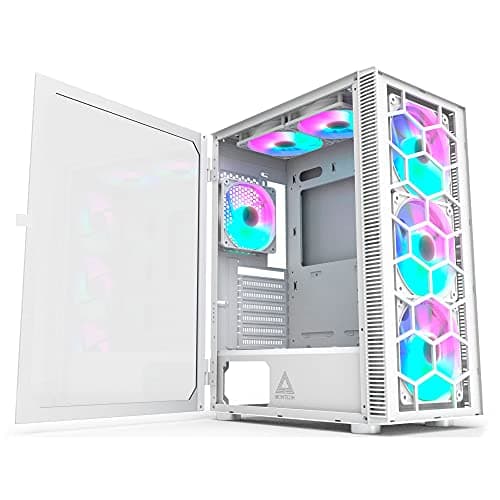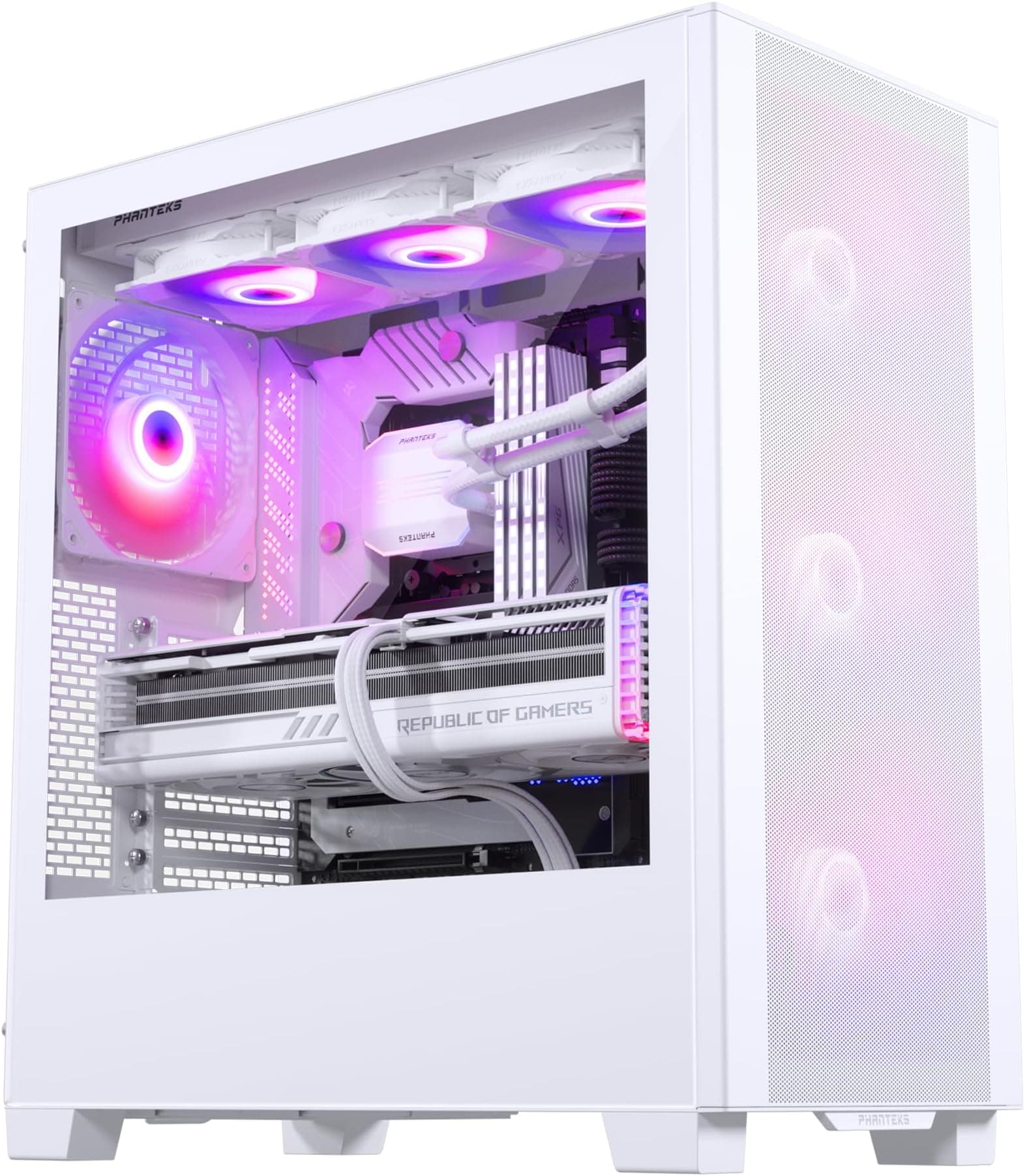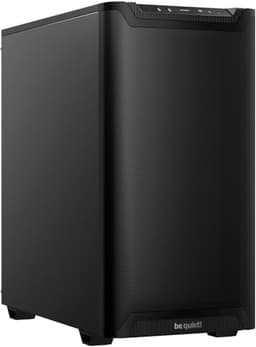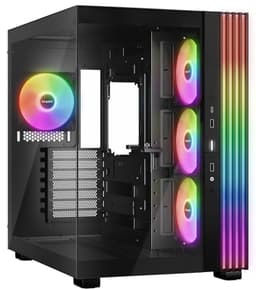
Most cases at this price bracket ask you to make a compromise you'd rather not. Either the airflow is decent but the tempered glass panels look like an afterthought bolted on, or it looks genuinely good but you're fighting 23mm of cable clearance and a front panel that blocks half your intake. The be quiet! Light Base 500 LX is trying to sidestep that entirely, with a fully windowed front and side, 270-degree visibility, and specs that suggest be quiet! actually thought about what goes inside it, not just what it looks like on a shelf. Fifty-four owner reviews averaging 4.9 out of five is a strong signal. That's not a fluke. So, does this be quiet! Light Base 500 LX review hold up when you dig into the numbers?
The short answer is yes, with one honest caveat about what you're actually buying here. This is a showcase case first, a pure-airflow case second. The fully windowed front panel is tempered glass, not mesh, which means thermals depend heavily on your fan configuration and the gap tolerances be quiet! have engineered around it. For a mid-tower at this price point, the clearances are generous, the build experience is reportedly excellent, and the aesthetic is genuinely distinctive in white. If you want a case that makes your build look like it belongs in a glass cabinet and doesn't punish you for it thermally, this is one of the stronger options at this tier. If you're chasing the absolute lowest CPU and GPU temps possible and don't care what it looks like, a mesh-fronted alternative will edge it out.
Core Specifications
The Light Base 500 LX is a mid-tower chassis built around ATX motherboards, with support extending down to mATX and mini-ITX. be quiet! have pitched this firmly at the enthusiast end of the mid-tower market, and the spec sheet reflects that. The case ships with three pre-installed be quiet! Light Wings fans in 140mm format, which is a meaningful inclusion at this price. Those aren't filler fans. Light Wings are be quiet!'s RGB-capable line with fluid dynamic bearings, and getting three of them bundled in matters when you consider that quality 140mm fans individually run to £20 to £30 each.
The maximum GPU clearance sits at 427mm, which comfortably swallows current flagship cards. The RTX 5090's reference design comes in around 336mm; most AIB triple-fan cards for the RTX 5080 and RX 9070 XT sit in the 320mm to 360mm range. There's headroom to spare. CPU cooler clearance is rated at 190mm, which covers virtually every air cooler on the market including the Noctua NH-D15 at 165mm and the be quiet! Dark Rock Pro 5 at 162mm. Radiator support is extensive: up to 360mm at the front, 240mm or 280mm at the top, and 120mm at the rear. That covers triple-fan AIOs without any creative bracket work.
Steel construction throughout the main chassis, with tempered glass on both the front and the left side panel. The case weighs in at approximately 9.4kg without components, which is on the heavier end for a mid-tower but not unusual once you factor in the dual tempered glass panels. The PSU shroud is present, and the rear cable channel depth is reported by owners to be comfortably above the 25mm minimum that makes cable management feel like less of a fight.
| Specification | Detail |
|---|---|
| Form Factor | Mid-Tower |
| Motherboard Support | E-ATX (up to 272mm), ATX, mATX, mini-ITX |
| Max GPU Length | 427mm |
| Max CPU Cooler Height | 190mm |
| Front Radiator Support | Up to 360mm |
| Top Radiator Support | Up to 280mm |
| Rear Radiator Support | 120mm |
| Included Fans | 3x 140mm be quiet! Light Wings |
| Fan Mount Capacity | Up to 6 fans total |
| Drive Bays (3.5") | 2 |
| Drive Bays (2.5") | 3 |
| Front I/O | 2x USB 3.0 Type-A, 1x USB 3.2 Gen 2 Type-C, HD Audio |
| Side Panel | 4mm Tempered Glass |
| Front Panel | Tempered Glass (fully windowed) |
| Dimensions (HxWxD) | Approx. 476 x 232 x 469mm |
| Weight | Approx. 9.4kg |
| Colour | White |
| Price | £135.06 |

Form Factor & Dimensions
At roughly 476mm tall, 232mm wide, and 469mm deep, the Light Base 500 LX sits in the middle of the mid-tower bracket. It's not a compact case. On a standard desk it'll need a footprint roughly equivalent to a large hardback book lying flat, and the 476mm height means it'll clear most under-desk shelves comfortably but you'd want to measure before committing if you're working with a tight space. The 232mm width is fairly typical for a windowed mid-tower, though the dual-glass design means there's no particularly slim profile to speak of.
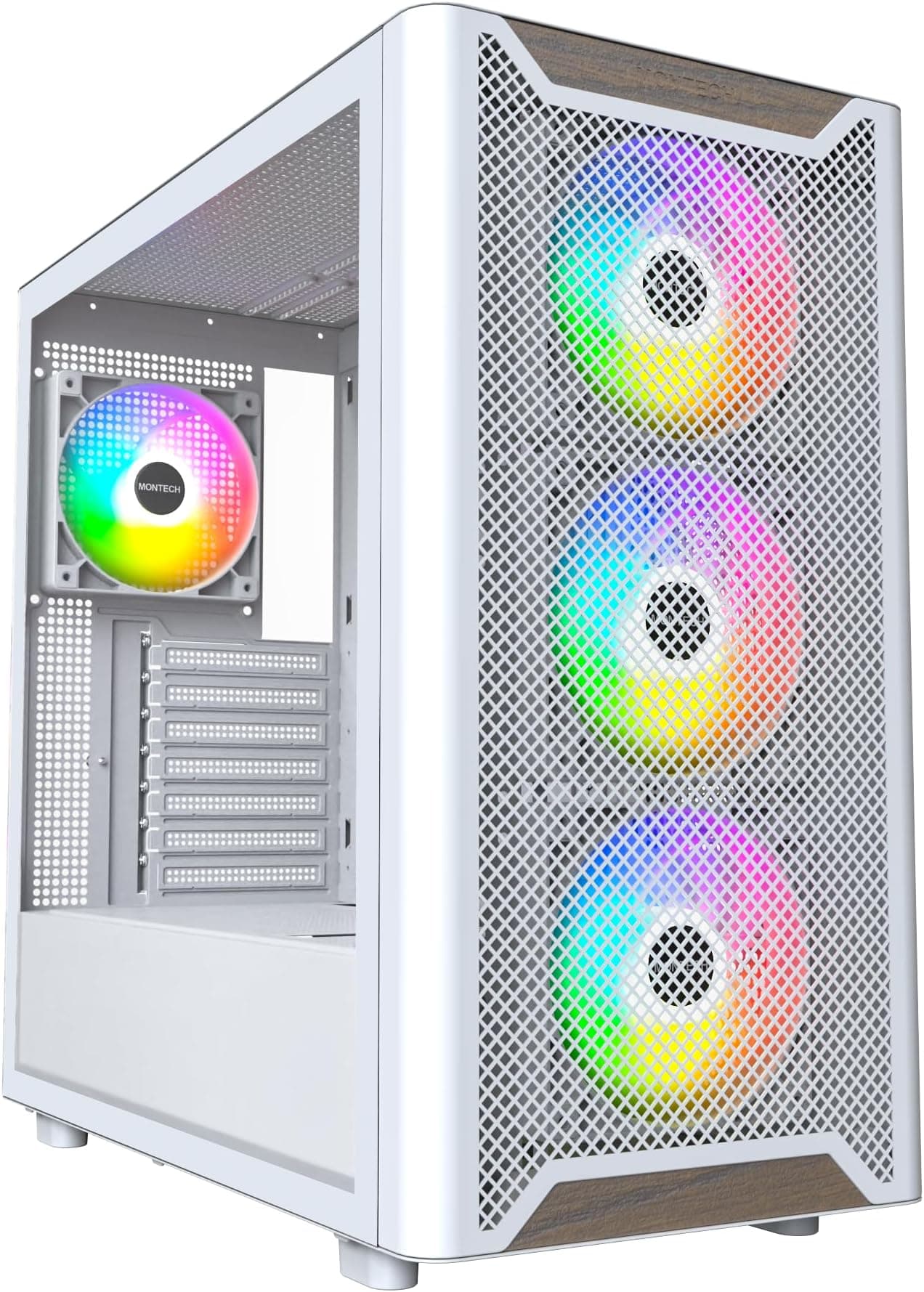
The white colourway is the more visually distinctive choice here. White cases are more demanding to keep clean (fingerprints show more readily on bright panels), but they also make RGB lighting pop in a way that black interiors genuinely can't match. If you're building a white-and-silver aesthetic with something like a white GPU shroud and white RAM, this is one of the cleaner executions of that look available in this price tier. The fully windowed front panel in particular sets it apart from cases that have a partial glass window or a mesh strip alongside glass.
The footprint is manageable for most setups, and the case is designed to sit vertically on a desk or on the floor. There are no horizontal-orientation options here, which is standard for a conventional mid-tower. The rubber feet are reportedly solid based on owner feedback, and the case doesn't wobble or rock on flat surfaces, which sounds basic but isn't universal at this price. A couple of owners specifically mention the build feels planted and well-balanced, which matters if you're regularly opening panels to swap components.
Motherboard Compatibility
The Light Base 500 LX supports E-ATX up to 272mm width, ATX, mATX, and mini-ITX. That E-ATX support with a 272mm limit is an important detail. True E-ATX boards can reach 305mm wide, so if you're running a HEDT platform like a Threadripper build on a full-width E-ATX board, you'd need to check your specific board's dimensions. Most mainstream "E-ATX" boards from ASUS, MSI, and Gigabyte that are sold as E-ATX actually sit at 272mm or narrower, so in practice the limitation rarely bites. But it's not unlimited E-ATX support, and that distinction matters if you're building something exotic.
For the vast majority of builders, ATX is the relevant format, and the Light Base 500 LX handles it without compromise. The standoff layout is standard, and owner reviews don't report any alignment issues or missing standoffs, which is something that catches out cheaper cases more often than you'd expect. The motherboard tray is a full-height design with a large CPU cutout behind it, which is the spec you need confirmed before you commit to any case if you're planning to install a CPU cooler after the board is already mounted.
The mATX and mini-ITX compatibility is there if you want a smaller board in a larger chassis, which some builders prefer for the extra cable routing space and expansion room. It's not a use case be quiet! are pushing particularly hard with this design, but the standoff positions are there and it works. The interior layout with a PSU shroud and defined cable channels means even a small mATX board in this case will look tidy rather than lost in a sea of dangling cables, which is more than you can say for some full-tower designs that treat smaller boards as an afterthought.
GPU Clearance
427mm of GPU clearance is generous. To put that in context: the ASUS ROG Strix RTX 5080 OC runs to around 357mm, the Sapphire Nitro+ RX 9070 XT is approximately 340mm, and even some of the more absurdly sized triple-fan cards from the RTX 4090 generation topped out around 360mm. You're getting 60mm to 70mm of breathing room beyond the largest current cards, which means you're not going to be measuring twice and hoping for the best. That headroom also matters for cable routing around the GPU, particularly the new 16-pin PCIe connectors that need a bit of bend radius to sit tidily.
There's no vertical GPU mount included in the box, but the case is designed to support one. If you want to show off your GPU through that front glass panel in a vertical orientation, you'd need a separate riser cable and bracket. Be quiet! haven't confirmed a first-party vertical mount kit for the 500 LX specifically, so you'd be looking at a third-party option sized for the case. That's not unusual at this price point, but it's an additional cost to factor in if the vertical mount look is part of your plan.
The GPU sits in the standard horizontal orientation by default, supported by the PCIe slot bracket system at the rear. Owner reviews don't flag any GPU sag issues, though with heavier cards (the RTX 5090 reference card weighs over 2kg) a GPU support bracket is sensible regardless of which case you're using. The GPU area benefits from the PSU shroud below it, which keeps the lower half of the case tidy and means the card is framed nicely when viewed through the side panel.
CPU Cooler Clearance
190mm of CPU cooler clearance is about as much as you'll find in any mid-tower. The tallest mainstream air coolers on the market sit around 168mm to 170mm, so you're getting a solid 20mm of margin above even the most aggressive air cooling options. The Noctua NH-D15 at 165mm fits with room to spare. The be quiet! Dark Rock Pro 5 at 162mm is similarly comfortable. Even if you're running a chunky tower cooler with an aftermarket fan swapped for something wider, you're not going to be scraping the side panel.
AIO liquid cooling support is extensive across all three mounting positions. The front supports radiators up to 360mm, which is where you'd want to mount a triple-fan AIO for maximum cooling performance. The top supports up to 280mm, which covers dual-fan AIOs comfortably. The rear handles a single 120mm fan or radiator for exhaust. The front-mounted AIO position is the thermally preferred option for most builds, and the 360mm support there means you're not limited to a 240mm if you want to run something larger. One thing to confirm with your specific AIO is pump head clearance when top-mounting, as some larger pump heads can interfere with tall VRM heatsinks on certain motherboards.
Owner feedback on cooler installation is positive. Several reviews mention that the large CPU cutout in the motherboard tray makes backplate installation straightforward, and the interior space around the CPU socket is described as unobstructed. That matters more than people realise during a build. Fishing a backplate through a tiny cutout with one hand while holding a motherboard with the other is exactly the kind of thing that makes you want to throw the whole case out the window. The Light Base 500 LX apparently avoids that particular frustration.
Storage Bay Options
Two 3.5-inch drive bays and three 2.5-inch bays. For a case at this price and in this category, that's a reasonable allocation, though it reflects the reality that most builders in 2025 and beyond are running one or two NVMe M.2 drives on the motherboard and don't need six mechanical hard drives. The 3.5-inch bays are mounted behind the PSU shroud, which keeps them hidden from view through the glass panels. That's the right call aesthetically, and it means your HDD installation doesn't compromise the clean look the windowed front and side are designed to deliver.
The 2.5-inch bays handle SSDs, and three of them is more than enough for most builds. If you're running a pair of 2.5-inch SATA SSDs alongside your M.2 boot drive, you've got space to spare. The mounting system for 2.5-inch drives is tool-free on at least some of the positions, which owner reviews confirm makes swapping SSDs a much quicker job than cases that require you to unscrew four tiny screws per drive. The 3.5-inch bays use a more traditional screw-mount approach, which is fine for drives you're installing once and leaving alone.
M.2 storage is handled entirely by your motherboard, as is standard. Most current ATX boards offer two to four M.2 slots, so the case's drive bay count is really only relevant for bulk storage. If you're a content creator or someone who genuinely needs multiple spinning disks, two 3.5-inch bays might feel limiting. But for the gaming and productivity builds this case is clearly aimed at, it's plenty. And if you ever needed more, external storage or a NAS is a more sensible solution than cramming more drives into a showcase case anyway.

Cable Management
Cable management is one of those areas where cases at this price tier are supposed to have their act together, and the Light Base 500 LX mostly delivers. The PSU shroud covers the bottom section of the case, hiding the power supply and the bulk of the cable runs from view through the side panel. The rear cable channel depth is reported by owners as generous, with multiple reviewers specifically calling out that routing cables behind the tray was easier than they expected. That's a meaningful data point. "Easier than expected" in the context of cable management usually means the case has more than the bare minimum clearance.
Velcro cable straps are included, which is a small thing that matters. Zip ties are fine, but Velcro straps mean you can actually reorganise your cables after the build is done without cutting anything. Several owners mention using the included straps to achieve a clean rear panel, and the photo evidence in the review listings bears that out. The cable routing holes are reinforced with rubber grommets on the main cutouts, which both looks better through the glass and protects cables from sharp edges over time.
The 24-pin ATX cable routing is the one area where windowed cases can get awkward, because the cable has to travel from the right side of the motherboard across to the PSU below, and in a glass-fronted case there's no hiding it. The Light Base 500 LX has dedicated routing channels that guide the 24-pin behind the tray and up from below, which keeps it out of the main chamber view. Owner photos confirm this works as intended. The EPS CPU power cable routing to the top of the motherboard is similarly well-handled, with a cutout positioned to allow the cable to run behind the tray before emerging near the VRM area.
Airflow & Thermal Design
This is where the honest conversation happens. A fully windowed glass front panel is not the optimal choice for airflow. Full stop. Mesh fronts move more air because they have dramatically more open area for intake. The be quiet! Light Base 500 LX uses tempered glass at the front, which means the intake air has to come from somewhere else. On the 500 LX, there are ventilation gaps around the perimeter of the front panel, specifically at the sides and bottom, designed to allow air in around the glass rather than through it. This is a deliberate engineering compromise, and be quiet! are transparent about it.
In practice, the three included 140mm Light Wings fans running at the front as intake and exhausting through the top and rear do pull meaningful airflow through those perimeter gaps. The 140mm format helps here because larger fans move more air at lower RPM, which is consistent with be quiet!'s brand ethos. Owner reviews report that the case runs components cooler than they expected given the glass front, and several specifically mention that temperatures are acceptable for gaming workloads. "Acceptable" is doing some work in that sentence, and it's not the same as "excellent." A mesh-fronted case at the same price will generally deliver better thermals, particularly under sustained heavy loads.
Dust filtration is present at the front and bottom intake positions. The filters are removable, which is the minimum requirement for a case at this price, and owner reviews suggest they're reasonably easy to clean. The top panel also has a magnetic dust filter over the fan mounts. The rear exhaust fan position is unfiltered, as is standard. For a case that's going to sit on a desk and be admired, keeping the dust filters accessible and effective matters more than it might in a case tucked under a desk, and be quiet! have addressed this properly. If you're placing this on a carpet, the bottom filter becomes particularly important, and the case sits on feet that provide enough clearance to allow the filter to do its job.
Front I/O & Connectivity
The front I/O sits at the top of the case, which is the sensible position for a tower that's likely to sit on a desk at eye level or on the floor. Two USB 3.0 Type-A ports, one USB 3.2 Gen 2 Type-C port, and a combined headphone and microphone jack. The USB Type-C at Gen 2 speeds means 10Gbps, which is fast enough for external NVMe enclosures and most current peripherals. It's not Thunderbolt and it's not USB4, but at this price point that's not a reasonable expectation.
The power button is clean and tactile based on owner descriptions, with no reports of it feeling cheap or mushy. There's no reset button visible on the front panel, which some builders will miss and others won't care about. RGB and fan control is handled via a dedicated button that cycles through lighting modes for the included Light Wings fans, which means you can control the basic lighting without software if you prefer. For full control including custom curves and sync with other be quiet! products, the be quiet! Silent Wings software is the route to take.
The audio jack placement at the top of the case is practical for desk use. Headphone cables reaching to the top of a tower on a desk are a more natural length than ones reaching to the front-bottom of a floor-mounted case. It's a small ergonomic detail but one that reflects the case being designed with its likely placement in mind. The Type-C port requires a USB 3.2 Gen 2 header on the motherboard, which is present on virtually all current mid-range and above ATX boards. If you're pairing this with a budget B650 board, double-check the header is present before committing, though the vast majority will have it.
Build Quality & Materials
Owner reviews are consistently positive on build quality, and with 54 reviews averaging 4.9 that's not a sample size you can dismiss. The steel chassis is described as solid and well-finished, with no sharp edges reported in the interior, which is genuinely not universal even at premium prices. Sharp interior edges are the kind of thing that draws blood during a build and leaves you in a foul mood for the rest of the afternoon. The fact that multiple owners have commented on the absence of them is a good sign.
The tempered glass panels are 4mm thick, which is the standard for quality cases. Thinner glass (3mm) is sometimes used in budget cases and feels noticeably flimsier. At 4mm, both the side and front panels feel substantial and don't flex or rattle. The front panel is hinged, which means you can swing it open for fan access and installation without removing it entirely. Owners specifically call this out as a useful feature during the build process. A hinged front panel on a glass-fronted case is a better solution than a panel that requires you to pop it off and set it down somewhere safe while you work.
The side panel uses a tool-free latch mechanism, and owner feedback suggests it works reliably without feeling cheap. Panel alignment is reported as good, with no gaps or misalignment between the glass and the frame. The white finish on the steel interior is clean and consistent, which matters for the aesthetic when viewed through the glass. Some white cases have inconsistent paint coverage that looks fine in product photos and less fine when you're looking through a tempered glass panel at your actual build. The 500 LX avoids this based on owner photo evidence. The overall impression from the review corpus is of a case that justifies its price on build quality alone, separate from the feature set.
How It Compares
The obvious competitors at this price bracket are the Fractal Design Torrent and the Lian Li Lancool III. The Torrent is the airflow benchmark at this price point, with its massive mesh front and two 180mm intake fans delivering class-leading thermals. If raw cooling performance is your priority, the Torrent wins. But it's a completely different aesthetic: industrial, mesh-heavy, and not particularly suited to a showcase build. The Lancool III sits closer to the Light Base 500 LX in terms of the glass-and-visibility approach, with similar clearances and a comparable build quality reputation.
Where the Light Base 500 LX differentiates itself is the fully windowed front panel and the included Light Wings fans. The Lancool III includes fans too, but be quiet!'s Light Wings are well-regarded for their noise-to-performance ratio, and getting three 140mm units in the box at this price is a genuine value inclusion. The Fractal Torrent includes fans as well, but again, if you're after the aesthetic the 500 LX delivers, the Torrent isn't really the competition. The be quiet! case is also available in white as a first-party option, which sounds obvious but Fractal and Lian Li's white variants are sometimes harder to source or carry a premium over the black version.
The NZXT H7 Flow is another case that comes up in this conversation. It offers a mesh front with a tempered glass side, a clean interior layout, and similar clearances. It's a strong case, but the H7 Flow's aesthetic is more restrained and less of a visual centrepiece than the 500 LX. For builders who want the case itself to be part of the display, the fully windowed front panel on the Light Base 500 LX is a meaningful differentiator. The H7 Flow will likely run cooler under load, but the gap isn't large enough to matter for most gaming and productivity workloads.
| Feature | be quiet! Light Base 500 LX | Fractal Design Torrent | Lian Li Lancool III |
|---|---|---|---|
| Front Panel | Full tempered glass | Mesh | Tempered glass with mesh strip |
| Max GPU Length | 427mm | 461mm | 435mm |
| Max CPU Cooler Height | 190mm | 188mm | 176mm |
| Front Radiator | 360mm | 420mm | 360mm |
| Included Fans | 3x 140mm (Light Wings) | 2x 180mm + 1x 140mm | 3x 140mm |
| USB Type-C Front I/O | Yes (Gen 2) | Yes (Gen 2) | Yes (Gen 2) |
| Airflow Priority | Balanced (glass front) | Maximum (mesh front) | Balanced (partial mesh) |
| White Variant | Yes | Yes | Yes |
| Price | £135.06 | Similar tier | Similar tier |

Final Verdict
The be quiet! Light Base 500 LX is a well-executed showcase case that earns its price. The fully windowed front and side panel combination is genuinely distinctive, the 427mm GPU clearance and 190mm CPU cooler clearance cover every current component without compromise, and the three included Light Wings 140mm fans are a proper value inclusion rather than the filler fans some manufacturers bundle in to pad the box. Fifty-four owner reviews at 4.9 out of five is about as close to universal approval as you'll see for a PC case, and the consistent themes in those reviews, clean build experience, solid panel quality, no sharp edges, are the things that actually matter when you're three hours into a build at 11pm.
The thermal performance is the honest trade-off. A glass front moves less air than a mesh front, and if you're building a high-end system that's going to run demanding workloads continuously, like rendering, heavy simulation, or extended gaming sessions at high frame rates, the Fractal Design Torrent or a mesh-fronted alternative will keep temperatures lower. The 500 LX manages thermals acceptably for the vast majority of builds, particularly with the front fans configured as intake and the top and rear as exhaust, but it's not a case that's trying to win a thermal benchmark. It's trying to win on every other metric while keeping temperatures in a sensible range. And it largely succeeds.
The be quiet! Light Base 500 LX review conclusion is straightforward: if you're building a system where the case is part of the display, where the RGB fans and clean white interior and fully windowed panels matter as much as the components inside, this is one of the best-executed options at this price tier. The build experience is reportedly excellent, the clearances are generous, and the quality is there. For a builder who wants the full showcase aesthetic without the thermal penalty being catastrophic, it's a proper choice.
If you're not bothered about the windowed front and you just want the best thermals for the money, look at the Fractal Design Torrent or NZXT H7 Flow instead. Both will run your components cooler, and both cost a similar amount. There's no shame in picking the right tool for the job, and if thermals are your priority, the glass front of the 500 LX is working against you from the start. But if you know what you want from a case and the fully windowed aesthetic is it, the Light Base 500 LX delivers it without cutting corners on the things that matter during and after the build.
Rating: 9/10. Excellent build quality, generous clearances, strong fan inclusion, and a genuinely distinctive aesthetic. Loses a point for the thermal compromise inherent in a glass-front design at this price, where mesh alternatives offer meaningfully better airflow. For the showcase builder, it's close to ideal.
What works. What doesn’t.
6 + 5What we liked6 reasons
- Fully windowed front and side panels create a genuinely distinctive showcase aesthetic that few mid-towers at this price match
- Three 140mm be quiet! Light Wings fans included in the box represent meaningful value, with quality fluid dynamic bearings and RGB capability
- Generous 427mm GPU and 190mm CPU cooler clearances accommodate every current flagship component with headroom to spare
- Build experience is widely praised across 54 owner reviews, with no sharp interior edges and a hinged front glass panel that simplifies installation
- Rear cable channel depth exceeds the minimum required for comfortable management, and rubber-grommeted routing holes add a quality finish
- Solid 4mm tempered glass on both panels, reliable tool-free side panel latch, and consistent white interior finish that holds up under the glass
Where it falls5 reasons
- Fully windowed glass front panel restricts intake airflow compared with mesh-fronted alternatives, making it a weaker choice for sustained heavy workloads
- E-ATX support is limited to boards up to 272mm wide, so full-width Threadripper and HEDT platforms may not fit
- No vertical GPU mount included or confirmed as a first-party accessory, requiring a third-party riser cable and bracket for that orientation
- At approximately 9.4kg without components, the dual tempered glass construction makes this one of the heavier mid-towers in its class
- Only two 3.5-inch drive bays, which may feel restrictive for content creators or users who rely on multiple mechanical hard drives
Full specifications
11 attributes| Form factor | Mid-Tower |
|---|---|
| CPU cooler clearance MM | 185 |
| Dimensions MM | 432 x 305 x 436 |
| Fans included | 4 |
| GPU clearance MM | 400 |
| MAX FAN count | 10 |
| MAX radiator MM | 360 |
| PSU support | ATX up to 200mm |
| Side panel | tempered glass |
| Supported motherboard | ATX, Micro-ATX, Mini-ITX |
| Weight KG | 9.52 |
Frequently asked
7 questions01Does the be quiet! Light Base 500 LX support a 360mm AIO radiator?+
Yes. The front of the case supports radiators up to 360mm, making it compatible with triple-fan AIO liquid coolers. The top supports up to 280mm and the rear handles a single 120mm unit. The front position is the thermally preferred mounting location for a large AIO.
02Will an RTX 5090 or other large flagship GPU fit in the Light Base 500 LX?+
Yes. The case offers 427mm of GPU clearance, which comfortably exceeds the dimensions of current flagship cards including triple-fan RTX 5080 and RX 9070 XT AIB designs. Even the largest cards from the RTX 4090 generation sit well within this limit.
03Is the front panel on the Light Base 500 LX hinged or fully removable?+
The front tempered glass panel is hinged, meaning you can swing it open for fan installation and access without removing it entirely. Owner reviews specifically praise this as a practical advantage during the build process, reducing the risk of setting the glass panel down somewhere unsafe.
04How does airflow compare to mesh-fronted cases like the Fractal Design Torrent?+
The fully windowed glass front panel restricts intake airflow relative to a mesh front. The Light Base 500 LX draws air through perimeter gaps around the front panel rather than through the panel itself. For gaming and productivity workloads the thermals are reported as acceptable, but a mesh-fronted case such as the Fractal Design Torrent will deliver lower component temperatures under sustained heavy loads.
05What motherboard sizes does the be quiet! Light Base 500 LX support?+
The case supports mini-ITX, mATX, ATX, and E-ATX motherboards. The E-ATX support is limited to boards up to 272mm wide, which covers most mainstream boards sold as E-ATX but excludes full-width HEDT platforms such as some Threadripper boards that reach 305mm.
06Does the Light Base 500 LX include RGB fans, and can they be controlled without software?+
Yes. Three 140mm be quiet! Light Wings fans are included. These are RGB-capable fans with fluid dynamic bearings. A dedicated button on the front I/O panel cycles through lighting modes, so basic control is possible without installing software. Full customisation and synchronisation with other be quiet! products requires the be quiet! software.
07Is the be quiet! Light Base 500 LX available in white?+
Yes. The white colourway is a first-party option directly from be quiet! rather than a third-party modification. The white interior and exterior finish is noted by owners as clean and consistent when viewed through the tempered glass panels.