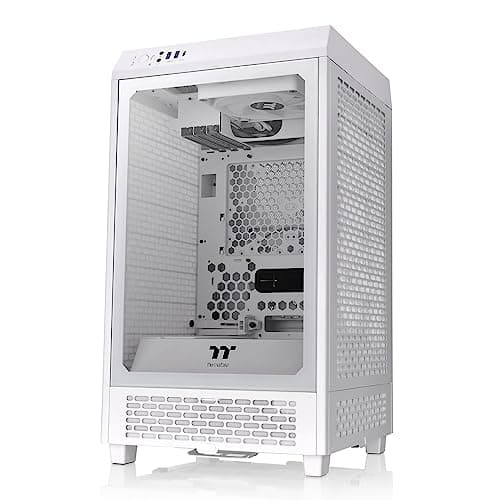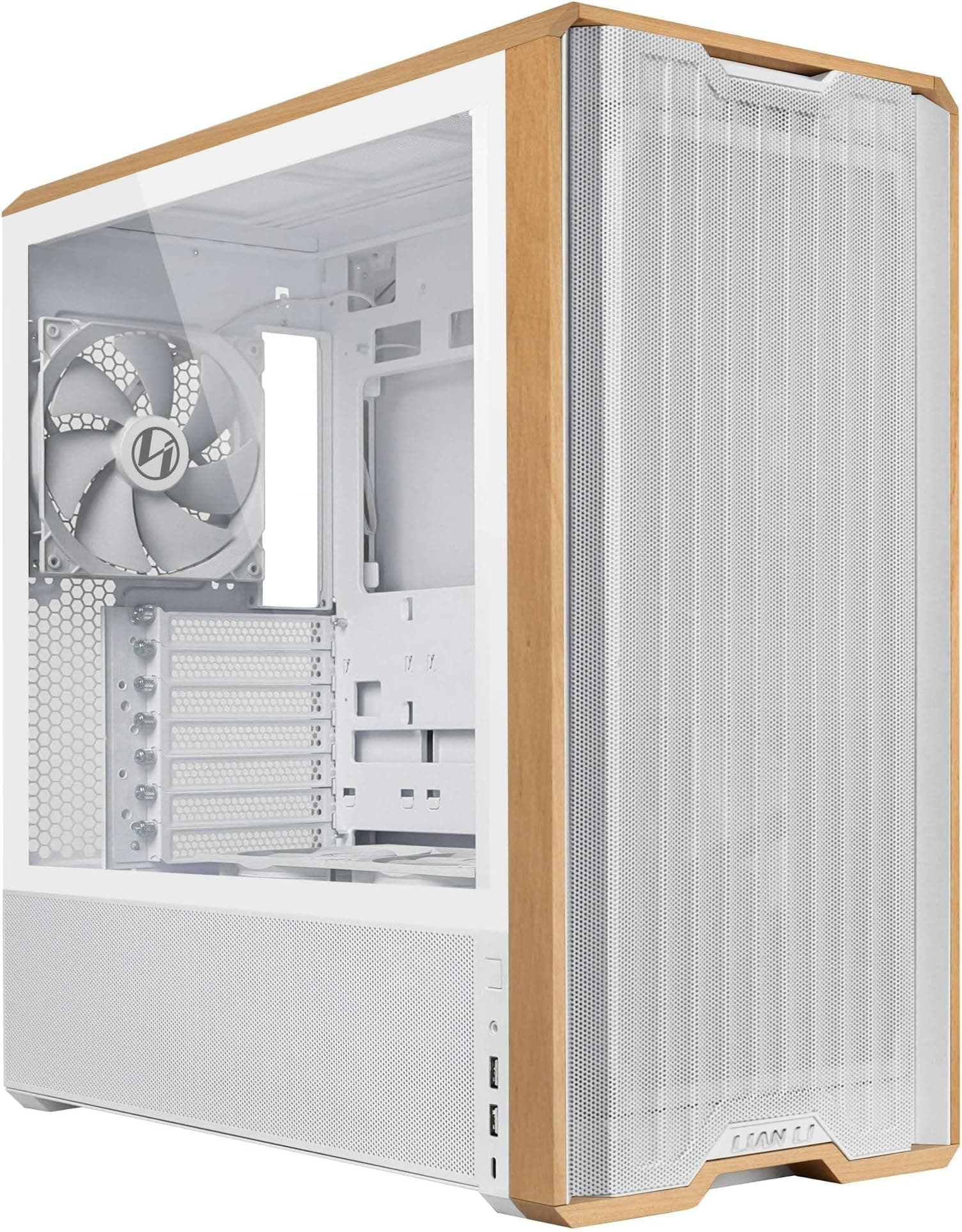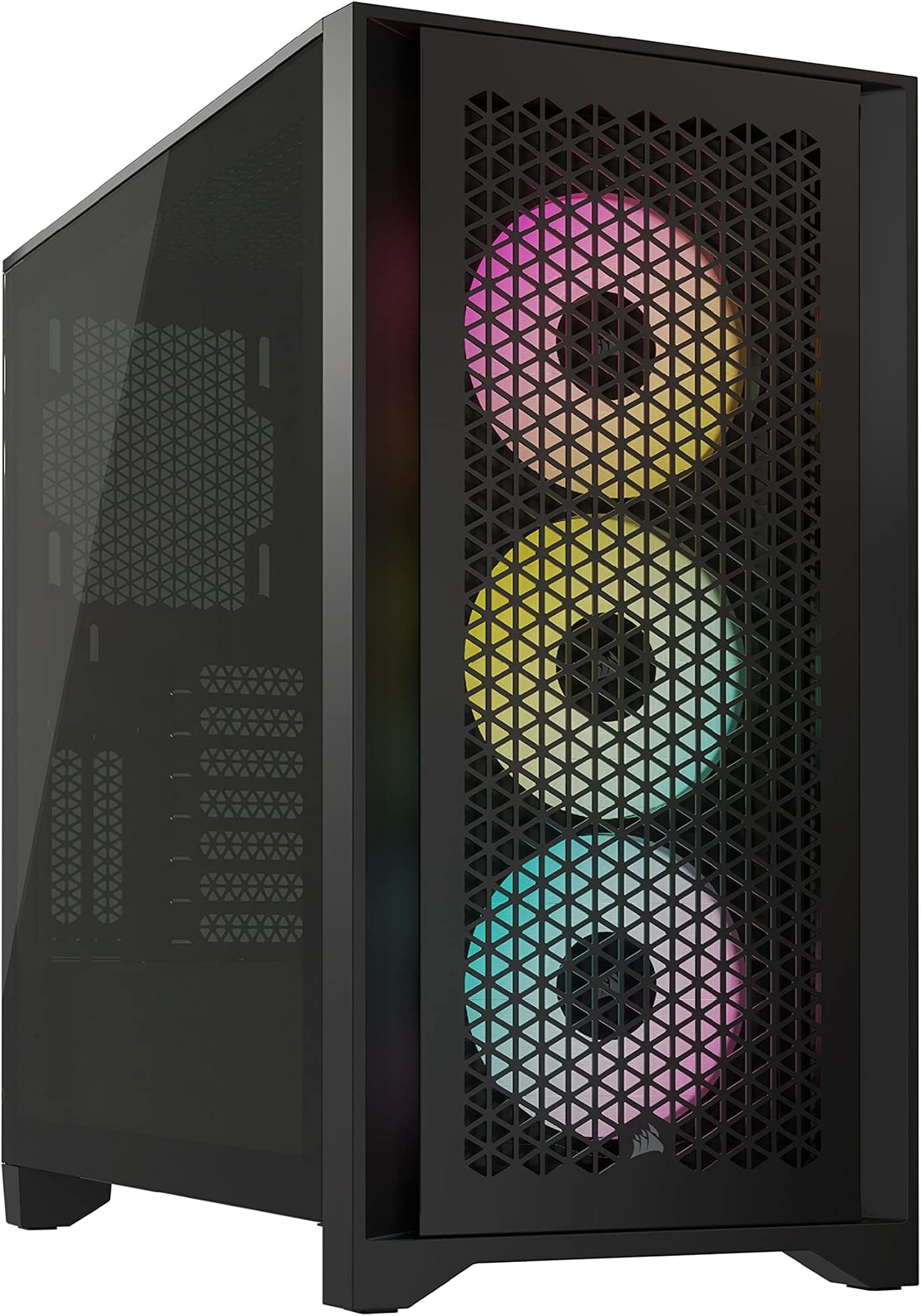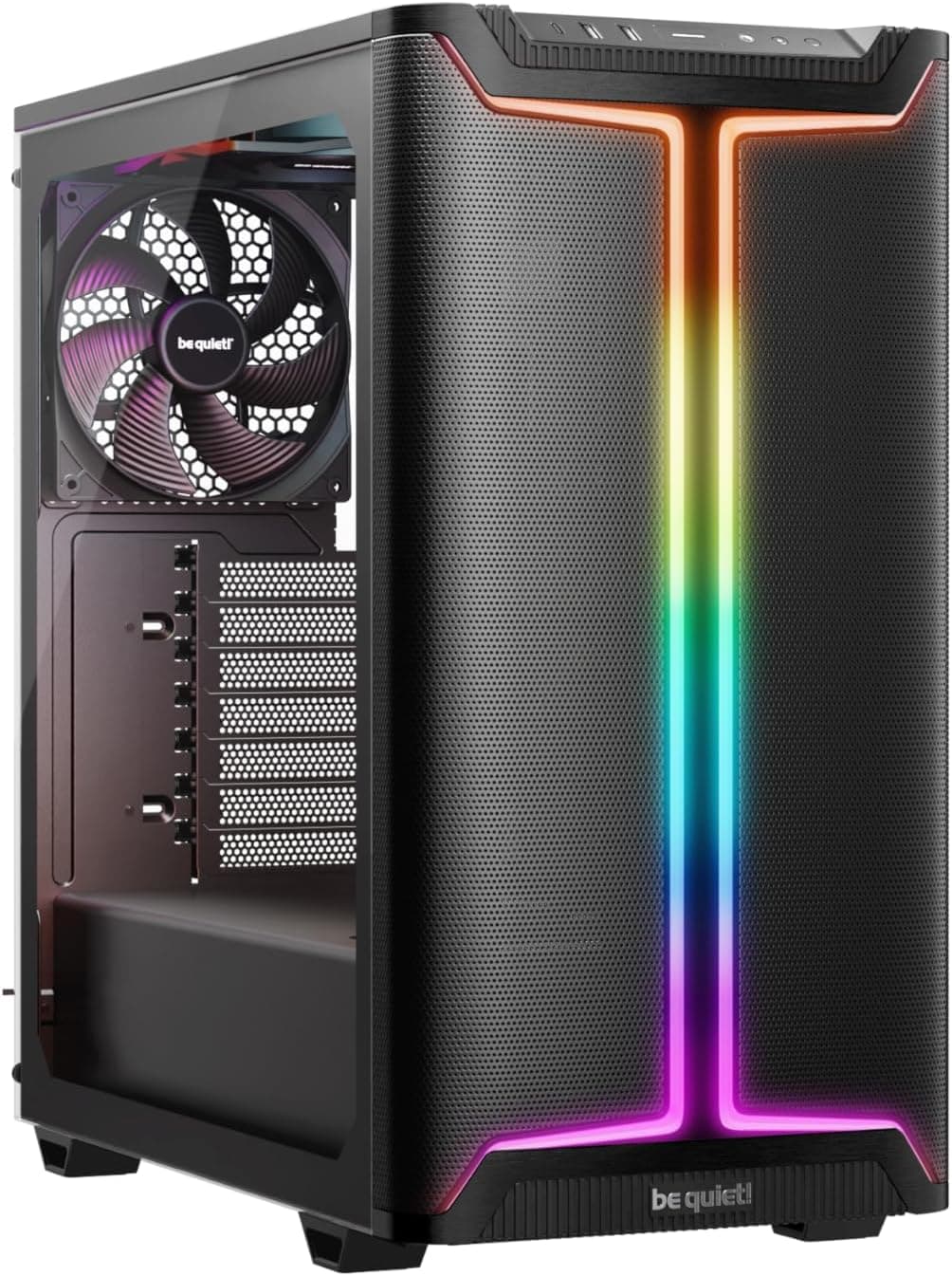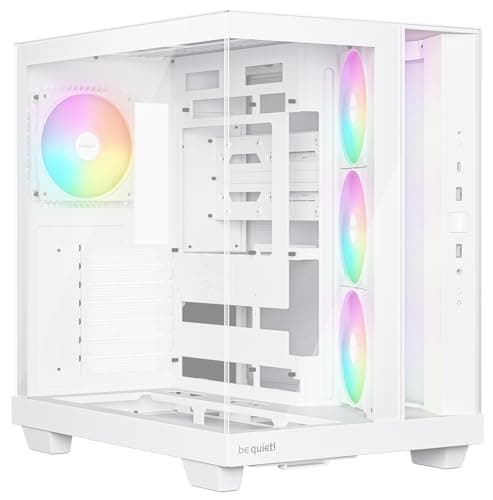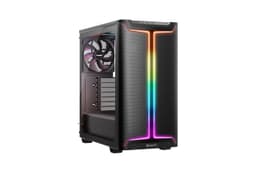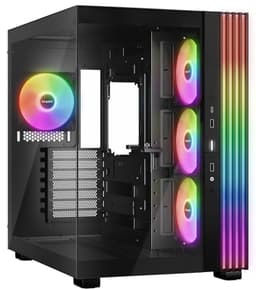
Case marketing is a lie. Every listing shows the same three angles: front panel gleaming, side panel off, RGB glowing in a dark room. What you don't see is whether the cable routing channels are wide enough to stop you swearing at 1am, whether the dust filters actually pull out without dismantling the whole front panel, or whether the tempered glass is thick enough to survive a house move. The be quiet! Light Base 900 DX White PC Case gets photographed beautifully. The question is whether it earns that in the details.
The short answer is yes, mostly. This is a proper enthusiast mid-tower that gets the fundamentals right: generous clearances, a genuinely usable cable management system, and build quality that justifies the enthusiast price tier. The 148 owner reviews averaging ★★★★½ (4.7) aren't an accident. People who build in this case tend to come away pleased. But there are a few things that'll matter depending on your setup, and this article is going to go through them properly rather than just repeating the press release.
The white finish is the obvious talking point, because white cases are still a minority sport and most of them look grey in person or yellow within a year. be quiet! has form here, and the Light Base 900 DX White is built from the same design language as the black variant rather than being a white coat of paint over a different chassis. That matters for panel alignment and finish consistency. Let's get into the specifics.
Core Specifications
The Light Base 900 DX is a full-sized mid-tower, which in be quiet!'s terminology means it's big enough to swallow an E-ATX board and a 420mm radiator without complaint. The chassis is steel with tempered glass on both the front and the side panel, which is where the "fully windowed" in the name comes from. Both panels are 4mm tempered glass, not the 3mm stuff that flexes when you look at it. That's a meaningful difference in rigidity and in how the case sounds when you tap it.
Fan support is extensive. The case accepts up to three 140mm fans across the front, three 120mm or two 140mm on top, and a single 120mm at the rear. be quiet! includes three of their Pure Wings 3 140mm fans pre-installed at the front, which is a better starting position than the single-fan bundles you get from some competitors at this price. The top and rear mounts are empty, so if you're running a top exhaust or a rear exhaust fan you'll need to add those separately. The included fans are decent, not reference-class, but they're quiet and they move air.
The full specification table is below. The GPU clearance and CPU cooler height numbers are the ones most people want first, so they're near the top.
| Specification | Detail |
|---|---|
| Form Factor | Mid-Tower |
| Motherboard Support | E-ATX (up to 272mm wide), ATX, mATX, Mini-ITX |
| Dimensions (H x W x D) | 500mm x 230mm x 490mm |
| GPU Clearance | Up to 369mm (with front radiator installed) |
| CPU Cooler Height | Up to 185mm |
| PSU Clearance | Up to 220mm |
| Front Fans | 3x 140mm (included) or 3x 120mm |
| Top Fans | 3x 120mm or 2x 140mm |
| Rear Fan | 1x 120mm |
| Front Radiator | Up to 420mm |
| Top Radiator | Up to 360mm |
| Rear Radiator | 120mm |
| 2.5" Drive Bays | 4 |
| 3.5" Drive Bays | 2 |
| Front I/O | 2x USB 3.0 Type-A, 1x USB 3.2 Gen 2 Type-C, HD Audio |
| PSU Form Factor | ATX |
| Side Panel | 4mm Tempered Glass |
| Front Panel | 4mm Tempered Glass |
| Weight | Approx. 10.6kg |
| Expansion Slots | 7 + 2 vertical |
| Included Fans | 3x Pure Wings 3 140mm PWM |
| Current Price | £169.99 |

Form Factor and Dimensions
At 500mm tall, 230mm wide, and 490mm deep, the Light Base 900 DX is a proper full-sized mid-tower. It's not going to sit in a tight desk hutch without you noticing it's there. The footprint is comparable to the Fractal Design Torrent or the Lian Li Lancool III, both of which occupy similar real estate. If you're upgrading from a budget mid-tower, expect this to be noticeably larger. That's not a criticism, it's just the cost of the radiator support and drive capacity the case provides.
The 230mm width is on the narrower side for a case with this much internal volume, which is a deliberate choice. be quiet! has kept the external footprint relatively compact while maximising the internal space by pushing the PSU shroud design and the cable routing channels as far back as they'll go. The result is a case that looks slimmer than it is when you're standing in front of it, and that's a genuine design achievement. The white finish amplifies this, making the case look lighter and smaller than the specs suggest.
Desk placement is straightforward. The feet are rubber-padded and provide enough clearance for the bottom dust filter to breathe. There's no PSU bottom intake on this case, so you're not fighting the airflow battle that plagues cases sitting on carpet. The front glass panel does mean you need a few centimetres of clearance on either side for the intake fans to pull air in properly. Shove it flush against a wall and you'll strangle the front fans. Give it five centimetres of breathing room and you're fine.
Motherboard Compatibility
The Light Base 900 DX supports E-ATX motherboards up to 272mm wide, ATX, mATX, and Mini-ITX. The 272mm E-ATX limit covers the vast majority of enthusiast boards including the ASUS ROG Maximus series and Gigabyte's Aorus Extreme lineup. Some ultra-wide E-ATX boards that push past 280mm won't fit, but those are genuinely rare and usually targeted at workstation builds rather than gaming rigs.
The standoff layout is pre-installed for ATX, which is the standard approach. If you're dropping in an mATX or Mini-ITX board, you'll need to move a few standoffs, but the tray is clearly marked and the process is straightforward. Owner reviews don't flag any issues with standoff alignment or thread quality, which is the kind of thing that gets mentioned immediately when it's wrong. The motherboard tray itself has a large CPU backplate cutout, measuring generously enough that most large-format cooler brackets clear without needing to remove the board entirely.
One thing that's actually useful here: the cable routing holes are positioned to work sensibly with both ATX and E-ATX boards. Some cases optimise the routing cutouts for standard ATX and leave E-ATX builders routing cables in odd directions. The 900 DX avoids this by having cutouts on both sides of the main 24-pin area. It's a small thing that makes a real difference when you're trying to get a tidy build on a larger board. The rubber grommets on those cutouts are present and properly fitted, not the loose, falling-out type that budget cases use.
GPU Clearance
The headline GPU clearance figure is 369mm with a front radiator installed, and longer without one. In practice, without a front radiator you're looking at clearance that'll handle anything currently on the market. With a 420mm front radiator fitted, 369mm still covers the RTX 5090 Founders Edition (336mm) and the AMD RX 9070 XT reference card. The cards that'll cause issues are the extended triple-slot AIB designs that push past 360mm, and even then you're talking about a small minority of models.
The case has vertical GPU mounting support via the two additional expansion slots at the back. A vertical GPU riser cable isn't included, which is standard practice at this price point, and you'll need a PCIe 4.0 or PCIe Gen 5 riser cable depending on your board. The vertical mount position looks spectacular through the side glass panel, which is presumably why be quiet! included the option. GPU sag is less of a concern in the vertical position, which is a genuine functional benefit beyond aesthetics.
Owner reviews are positive about the GPU area generally, with a few people specifically calling out how much easier it is to fit large three-slot cards compared to tighter cases they've built in previously. Nobody in the 148 flags GPU clearance as a problem, which is a decent signal. The one thing to check before you buy is whether your specific AIB card has a particularly long power connector that protrudes beyond the PCB, as some cards add a few millimetres that way. The spec clearance covers the card itself; factor in any extra length from your power connector orientation.
CPU Cooler Clearance
185mm CPU cooler clearance is generous. The Noctua NH-D15 sits at 165mm, the be quiet! Dark Rock Pro 5 at 162mm, the DeepCool Assassin IV at 168mm. You've got headroom to spare with any of the current flagship air coolers, including the chunky dual-tower designs that some cases struggle with. The Thermalright Phantom Spirit 120 EVO at 157mm is a non-issue. Even the tallest single-tower coolers on the market sit well within the 185mm limit.
AIO radiator support is excellent. Front mounting supports up to 420mm, which means a 420mm AIO fits natively, and 360mm and 280mm options are obviously fine. The top supports up to 360mm, and the rear handles a 120mm. If you're running a 360mm AIO at the top and a 280mm at the front simultaneously, you're building a very serious cooling loop and the 900 DX will accommodate it. Most people will be running a single AIO, and the front 420mm mount is the natural home for it.
The pump head clearance with tall RAM is the thing that trips people up with top-mounted AIOs in some cases. The 900 DX has enough vertical clearance in the top radiator area that DDR5 modules with tall heatspreaders shouldn't cause problems, but it's always sensible to check your specific RAM height if you're running particularly tall ARGB sticks. Front-mounted AIOs bypass this concern entirely, and the front 420mm mount is where be quiet! clearly intends most people to put their cooling. The three included 140mm fans can be relocated to exhaust duty on top while the AIO handles front intake, which is a clean thermal configuration.
Storage Bay Options
Four 2.5" bays and two 3.5" bays is a reasonable allocation for 2026. The era of needing six 3.5" HDD bays has largely passed for most home builders, and be quiet! has correctly read the room by prioritising 2.5" SSD mounting. The 2.5" trays are tool-free in the sense that the drives clip in without needing to screw them to a bracket first, though you will use screws to secure the tray itself. It's a semi-tool-free approach that's faster than fully screwed mounting without the rattle risk of purely clip-based systems.
The 3.5" bays sit behind the PSU shroud, which keeps them out of the main chamber and helps with airflow. They're accessible without removing the side panel, which is a small but genuinely useful detail if you're swapping drives regularly. The trays themselves are solid and the drives sit without any noticeable flex or movement once installed. Owner reviews don't flag drive mounting as a frustration, which suggests the tolerances are right.
M.2 support is where modern cases live or die, and the 900 DX includes M.2 mounting positions on the motherboard tray itself rather than relying solely on what your motherboard provides. The exact number of additional M.2 slots varies by motherboard, but the tray cutouts mean you can route M.2 cables cleanly without them snaking across the main chamber. For most builds in 2026, the combination of M.2 on the motherboard plus the four 2.5" bays is more than enough. If you're running a NAS-style build with multiple spinning disks, this case isn't optimised for that use case, but then neither is any case with a glass front panel.

Cable Management
This is where the 900 DX earns genuine respect. The rear cable management area has approximately 25mm of clearance between the motherboard tray and the side panel, which is enough to route cables without having to force the panel closed. Budget cases give you 15mm and then you spend twenty minutes wrestling the side panel onto a cable bundle. Premium cases give you 25mm or more and the panel just clicks shut. The 900 DX is in the second category.
Velcro cable tie points are distributed sensibly throughout the rear chamber, not just clustered at one end. The PSU shroud has cable routing holes that align with where your PSU cables actually exit, which sounds obvious but isn't always the case. The 24-pin and EPS cable routing channels are wide enough to handle braided cables and cable combs without requiring you to compress anything. Multiple owner reviews specifically praise the cable management experience, with several people noting it's easier than cases they've paid more for.
The PSU shroud itself is a solid piece of steel rather than a flimsy plastic cover. It hides the PSU and the cable mess beneath it cleanly, and the opening at the front of the shroud is sized to let cables exit without a sharp bend. The included cable tie anchors are metal loops rather than plastic clips, which means they won't snap if you put tension on them. These are the kinds of details that separate a case designed by people who build PCs from one designed by people who look at renders of PCs.
Airflow and Thermal Design
The fully windowed front panel is the most important thermal decision in this case, and it's a trade-off be quiet! has made consciously. Glass fronts restrict airflow compared to mesh fronts. That's physics. The Fractal Torrent with its open mesh front will move more air than the Light Base 900 DX at equivalent fan speeds. If raw thermal headroom is your absolute priority and you're building a workstation with a 350W GPU and a 200W CPU running flat out, a mesh-front case is the better tool.
But most people aren't building that machine. The three included 140mm Pure Wings 3 fans at the front are PWM-controlled and move a reasonable volume of air through the glass panel. The glass has perforations and gaps around the edges that allow intake, and be quiet! has positioned the fans to take advantage of those gaps. Owner reviews report thermal performance that's competitive with other glass-front cases in this category, with temperatures that are sensible rather than alarming. The case is designed to be quiet first, which is what you'd expect from be quiet!, and the thermal performance is good enough to support that goal without throttling a modern high-end system.
Dust filtration covers the front intake and the PSU intake at the bottom. The front filter is magnetic and pulls away cleanly for cleaning, which is one of those features that sounds minor until you've lived with a case that requires a screwdriver to access the filter. The bottom filter slides out from the rear, which means you don't have to move the case to clean it. Both filters are fine mesh rather than the coarse foam that budget cases use. They'll catch dust without significantly impeding airflow, which is the correct balance. There's no top filter, which means if you're running top exhaust fans you'll want to keep an eye on dust accumulation on those fan blades over time.
Front I/O and Connectivity
The front I/O panel sits at the top of the case and gives you two USB 3.0 Type-A ports, one USB 3.2 Gen 2 Type-C port, and a combined headphone/microphone jack. The USB-C port connects via an internal USB 3.2 Gen 2 header on your motherboard, which most current mid-range and high-end boards provide. If you're running an older board without a Gen 2 header, you'll drop to whatever your board supports, so check your motherboard spec sheet before assuming you'll get the full speed.
The power button is a clean circular design that sits flush with the top panel. It doesn't have the mushy travel that some front panel buttons develop after a few months of use. The reset button is smaller and positioned to avoid accidental presses, which is sensible. There's no reset button confusion reported in owner reviews, which suggests the placement works in practice. The power LED is subtle rather than a blinding beacon, fitting the overall aesthetic of a case that's meant to look considered rather than aggressive.
No built-in RGB or fan controller hub on the front I/O, which is a deliberate choice from be quiet!. Their design philosophy is that fans should be controlled by the motherboard's PWM headers rather than a proprietary hub, and the Pure Wings 3 fans that come included are standard 4-pin PWM. This is actually the right call for long-term usability because it means you're not dependent on be quiet!'s software or a hub that might fail. Your BIOS fan curve controls everything directly. If you want ARGB lighting, you'll add it yourself through your components rather than having the case impose a lighting scheme on you.
Build Quality and Materials
The steel used in the Light Base 900 DX is noticeably thicker than what you get in budget and lower mid-range cases. Tapping the side panel or the roof doesn't produce the tinny resonance that thinner steel generates. The chassis feels planted and the panels align properly when closed. Panel alignment is one of those things that's invisible when it's right and infuriating when it's wrong, and be quiet! has got it right here. The white powder coat finish is even and doesn't show fingerprints as aggressively as a gloss white would.
The 4mm tempered glass on both the front and side panels is a genuine differentiator. A lot of cases at this price point use 3mm glass on the side and something thinner or plastic on the front. The 900 DX uses 4mm on both, which means both panels feel substantial when you open or close them. The side panel is hinged rather than sliding, and the hinge mechanism is one of the things a handful of owner reviews mention as feeling solid. A few reviewers note the hinge is stiff initially, which is better than a loose hinge that lets the panel drift open. It'll loosen slightly with use.
Screws and fasteners are the detail that reveals a manufacturer's true attitude to build quality. Cheap cases use screws that strip easily and thumb screws that won't tighten properly. The 900 DX uses captive thumb screws where they matter and proper machine screws where strength is needed. No reports of stripped screws or cross-threading in the owner reviews, which is a clean record across 148 builds. The rubber grommets on the cable routing holes are properly seated and stay in place, a detail that sounds trivial until you've built in a case where they fall out every time you route a cable.
How It Compares
The two most natural comparisons at this price point are the Fractal Design North XL and the Lian Li Lancool 216. The North XL is the one to consider if you want a mesh front and a more architectural aesthetic. It has better raw airflow than the 900 DX because of that mesh front, and the wood-effect trim is genuinely distinctive. But it doesn't include fans, which means your effective cost is higher once you add three decent 140mm fans. The Lancool 216 comes with two 160mm fans and has a strong reputation for airflow, but the build quality of the chassis itself is a step below the 900 DX, and the white version has had some consistency complaints about the finish.
The be quiet! Silent Base 802 is the other obvious internal comparison. It's be quiet!'s more airflow-focused chassis, with a mesh front option and a different aesthetic. If thermal performance matters more to you than the fully windowed look, the 802 is the better tool. The 900 DX is the choice when you want the glass-front aesthetic without compromising too much on thermals, and when the white finish matters to your build.
| Feature | be quiet! Light Base 900 DX White | Fractal Design North XL | Lian Li Lancool 216 |
|---|---|---|---|
| Front Panel | 4mm Tempered Glass | Mesh (with wood trim) | Mesh |
| Side Panel | 4mm Tempered Glass | 3mm Tempered Glass | 3mm Tempered Glass |
| Included Fans | 3x 140mm PWM | None | 2x 160mm ARGB |
| GPU Clearance | 369mm (with front rad) | 461mm | 435mm |
| CPU Cooler Height | 185mm | 185mm | 176mm |
| Front Radiator Max | 420mm | 420mm | 360mm |
| USB-C Front I/O | Yes (Gen 2) | Yes (Gen 2) | Yes (Gen 2) |
| Airflow Priority | Moderate (glass front) | High (mesh front) | High (mesh front) |
| Price Tier | Enthusiast | Enthusiast | Mid-Range |
| White Version Available | Yes | Yes | Yes |
The Lancool 216 is the budget-smart alternative if you're willing to accept slightly lower build quality and a mesh front. It comes in under the 900 DX's price and the included fans are ARGB, which some builders prefer. The trade-off is the chassis itself isn't as solid and the white finish has been inconsistent across production runs. The North XL is the premium alternative if airflow matters more than aesthetics, but factor in the cost of three good 140mm fans before you decide it's cheaper.

Final Verdict
The be quiet! Light Base 900 DX White PC Case is one of the better-executed glass-front mid-towers at this price point. It gets the things that matter most to builders right: cable management space that actually works, clearances that cover current hardware without stress, build quality that feels like money spent rather than money wasted, and a white finish that looks like it'll stay white. The 4.7 average from 148 owners isn't a fluke.
The thermal performance is the honest caveat. Glass fronts restrict airflow and the 900 DX is no exception. If you're building a high-end gaming rig with a power-hungry GPU and an overclocked CPU and you want maximum thermal headroom, a mesh-front case like the Fractal Torrent or the be quiet! Silent Base 802 is a more appropriate tool. The 900 DX will keep a modern high-end system running fine, but it's not the case you reach for when thermals are the only thing that matters.
Who is this for? Builders who want a premium white aesthetic, full glass on front and side, a 420mm radiator mount, and a build experience that doesn't involve wrestling with tight cable channels or misaligned panels. People building white-themed systems where the case is part of the visual statement. Anyone who wants be quiet!'s characteristic attention to detail in a chassis that actually looks good with the side panel on.
Who should skip it? If you're primarily building for maximum airflow and the glass aesthetic isn't important to you, spend the same money on a mesh-front alternative. If you're on a tighter budget and the fully windowed look isn't essential, the be quiet! Pure Base 500DX sits at a lower price point and delivers solid build quality without the premium glass panels. It's the honest recommendation for anyone who doesn't specifically need the 900 DX's headline feature set.
Overall score: 8.5 out of 10. Excellent build, generous clearances, genuinely good cable management, and a white finish that's properly done. The glass-front airflow compromise is real but manageable. At the current price of £169.99, it's competitive with what else is available at this tier, especially once you factor in the three included 140mm fans.
What works. What doesn’t.
5 + 3What we liked5 reasons
- 4mm tempered glass on both front and side panels, noticeably more rigid than competitors
- Three 140mm Pure Wings 3 PWM fans included, a strong starting point
- Generous 25mm rear cable management clearance, panels close without wrestling
- 185mm CPU cooler clearance covers every current flagship air cooler
- 420mm front radiator support and magnetic dust filter that actually pulls out cleanly
Where it falls3 reasons
- Glass front restricts airflow compared to mesh-front alternatives at the same price
- No top dust filter, so top exhaust fans accumulate dust on the blades over time
- Vertical GPU riser cable not included despite vertical mount support being present
Full specifications
11 attributes| Form factor | Full-Tower |
|---|---|
| CPU cooler clearance MM | 190 |
| Dimensions MM | 532 x 327 x 484 |
| Fans included | 1 |
| GPU clearance MM | 495 |
| MAX FAN count | 10 |
| MAX radiator MM | 420 |
| PSU support | ATX up to 225mm |
| Side panel | tempered glass |
| Supported motherboard | E-ATX, XL-ATX, ATX, M-ATX, Mini-ITX |
| Weight KG | 16.8 |
If this isn’t right for you
2 options

Frequently asked
5 questions01Is the be quiet! Light Base 900 DX White PC Case, Fully Windowed Front and Side good for airflow?+
It's decent but not class-leading, and the reason is the glass front panel. Glass restricts airflow compared to mesh, so the 900 DX moves less air than a mesh-front case at equivalent fan speeds. That said, the three included 140mm Pure Wings 3 PWM fans provide a reasonable starting point, and the case supports up to 420mm front radiators and 360mm top radiators for AIO cooling. For most gaming builds and even high-end systems, the thermal performance is adequate. If you're running a 350W GPU and a heavily overclocked CPU simultaneously and want maximum thermal headroom, a mesh-front case is a more appropriate choice. The front and bottom dust filters are magnetic and easy to clean, which helps maintain airflow over time.
02What's the GPU clearance on the be quiet! Light Base 900 DX White PC Case, Fully Windowed Front and Side?+
GPU clearance is up to 369mm with a front radiator installed. Without a front radiator, clearance is greater and covers effectively everything currently available. The 369mm figure with a front rad installed covers the RTX 5090 Founders Edition at 336mm and the vast majority of current AIB cards. Only the longest extended triple-slot designs pushing past 360mm will be tight, and those are a small minority of available cards. The case also supports vertical GPU mounting via two additional expansion slots, though a PCIe riser cable is not included and needs to be purchased separately.
03Can the be quiet! Light Base 900 DX White PC Case, Fully Windowed Front and Side fit a 360mm AIO?+
Yes, easily. The front panel supports radiators up to 420mm, so a 360mm AIO fits with room to spare. The top panel supports up to 360mm as well, giving you flexibility on mounting position. A 280mm AIO at the front or top is also fine. The three included 140mm fans can be relocated to top exhaust duty while the AIO handles front intake, which is a clean thermal configuration. If you're running a 420mm AIO, the front mount is the natural home for it and be quiet! has clearly designed the case with this in mind. Check your specific RAM heatspreader height if you're mounting a radiator at the top, as very tall ARGB sticks can occasionally cause clearance issues with top-mounted radiators in any case.
04Is the be quiet! Light Base 900 DX White PC Case, Fully Windowed Front and Side easy to build in?+
Owner feedback is consistently positive on the build experience. The rear cable management area has approximately 25mm of clearance, which is enough to route cables and close the side panel without forcing it. Velcro tie points are distributed throughout the rear chamber, the PSU shroud cable exits align sensibly with where cables actually come from, and the rubber grommets on the routing holes stay in place rather than falling out. The motherboard tray has a large CPU backplate cutout. The side panel is hinged rather than sliding, and a few owners note it's stiff initially, which is better than a loose hinge. No reports of sharp edges in the 148 owner reviews, which is a clean record.
05What warranty and returns apply to the be quiet! Light Base 900 DX White PC Case, Fully Windowed Front and Side?+
be quiet! products typically carry a manufacturer warranty, but the specific warranty duration for this case is not stated in the verified product listing data. For purchases made through Amazon UK, you're covered by Amazon's standard 30-day returns policy and the A-to-Z Guarantee, which protects you if the item arrives damaged or not as described. For warranty queries beyond the Amazon returns window, contact be quiet! directly through their official support channels.