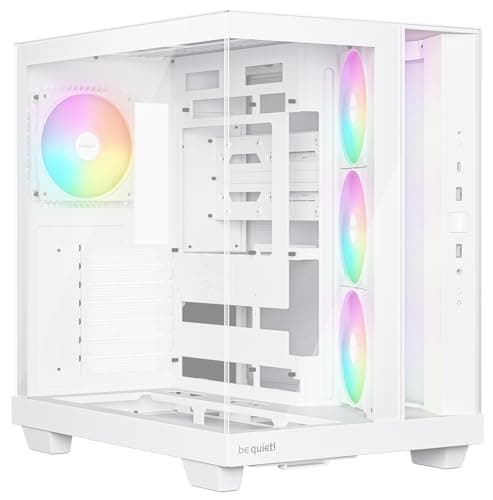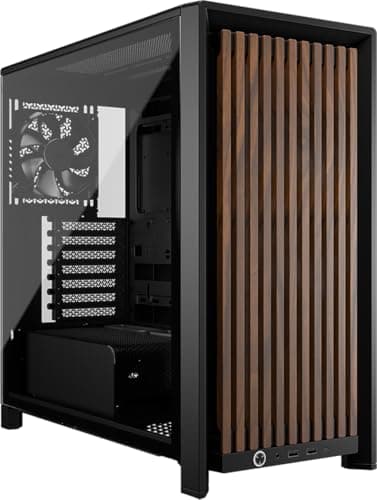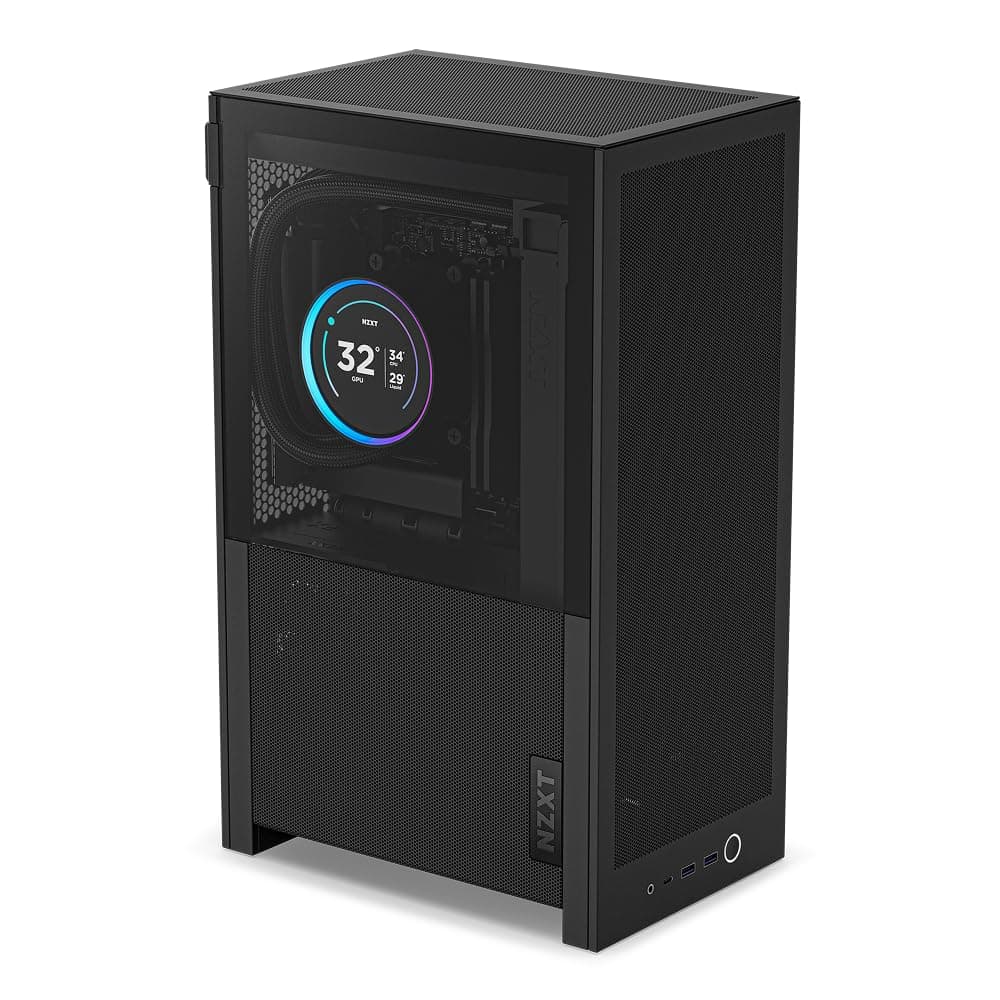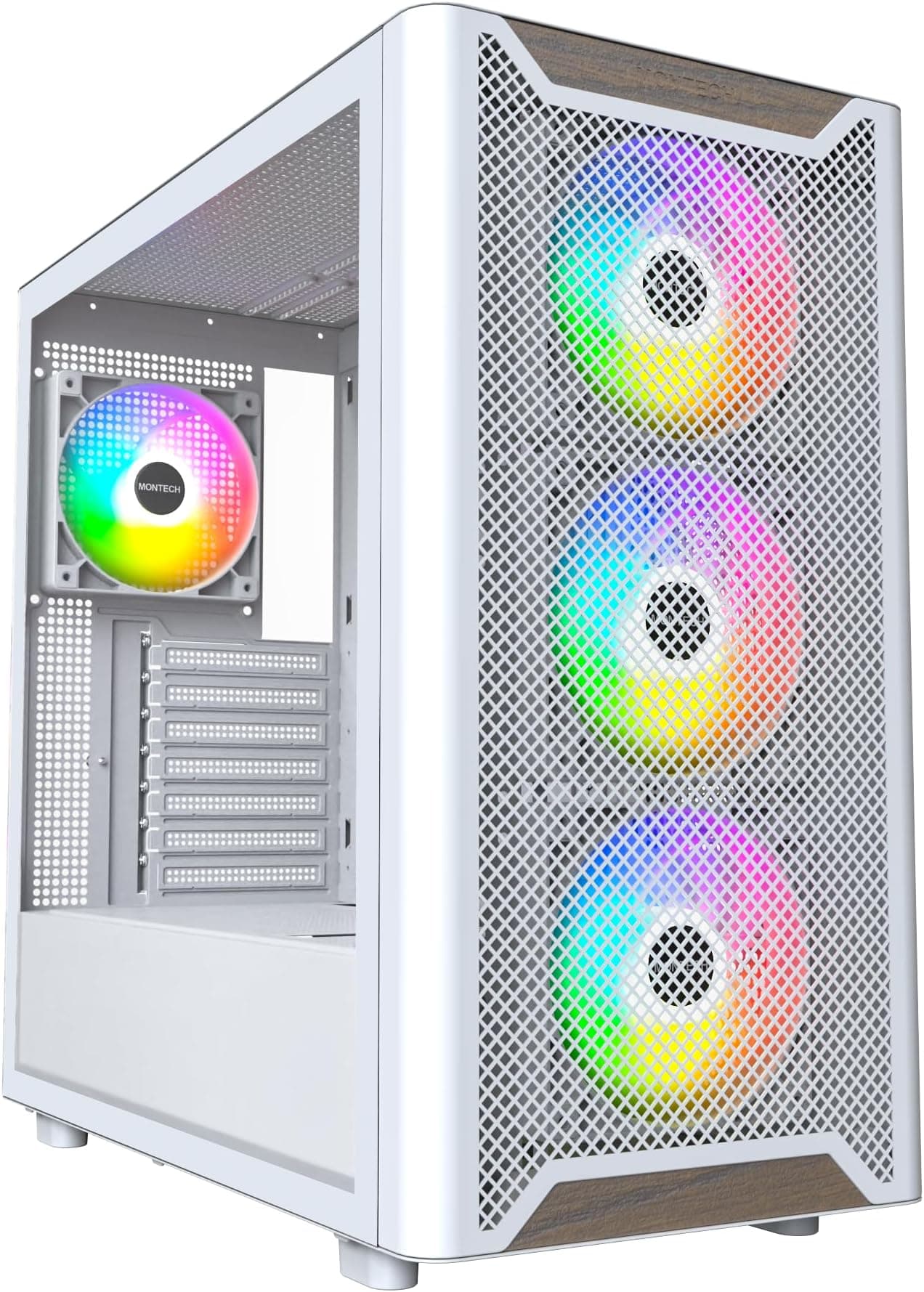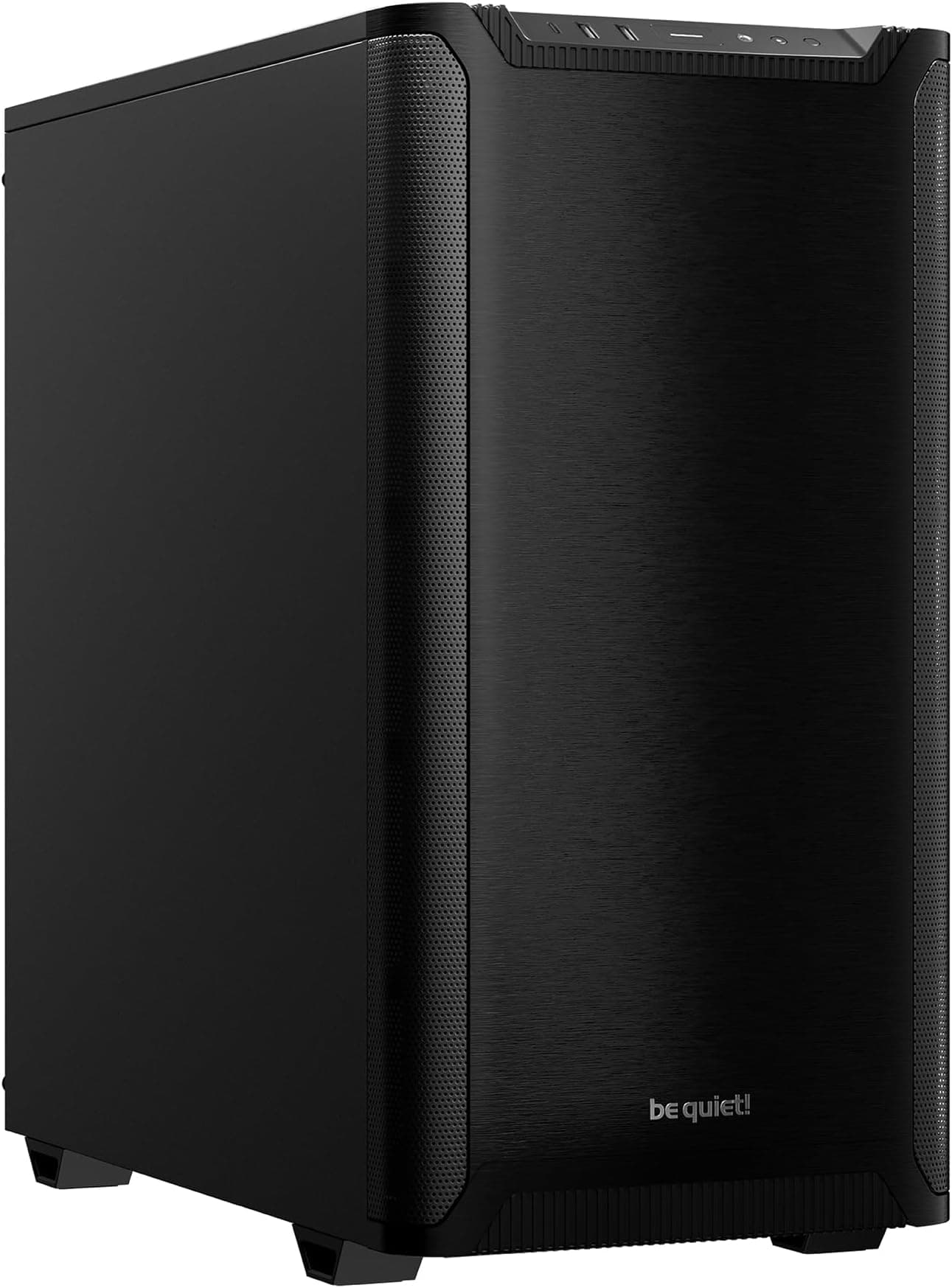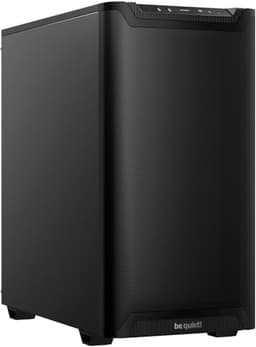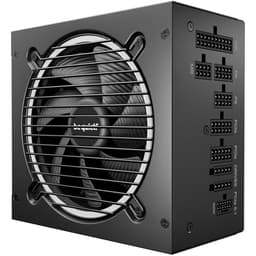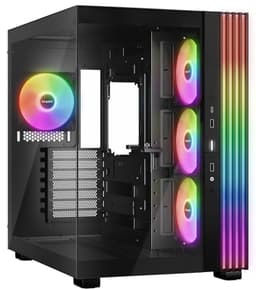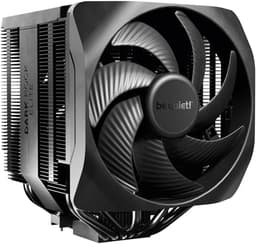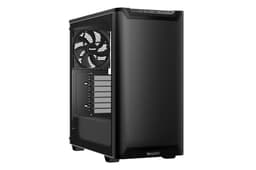
Most PC cases are fine. That's the problem. They're fine until you're knuckle-deep trying to route a 24-pin cable behind a tray with 3mm of clearance, or you've just discovered your 360mm AIO doesn't fit the front because the mesh panel is decorative rather than functional. The be quiet! Pure Base 501 DX sidesteps most of those frustrations in one go, and that's why it's interesting at the mid-range price point.
This is a be quiet! Pure Base 501 DX review grounded in the published specifications, the brand's track record, and the patterns that emerge from 58 owner reviews averaging ★★★★½ (4.5). The short version: this is a proper airflow case with three decent fans already installed, clearances that accommodate modern hardware, and build quality that punches above its price tier. The longer version is below, because the details matter.
be quiet! sits in an interesting spot in the market. The brand is German, has been making quiet cooling products since 2001, and has a reputation that's earned rather than marketed. The Pure Base 501 DX is the airflow-focused variant of their 501 chassis, and the DX designation signals the high-airflow front and top panels rather than the tempered glass aesthetic of the standard model. If you've been burned by a glass-front case that throttled your GPU, this is the corrective.
Core Specifications
The Pure Base 501 DX is a mid-tower ATX chassis. It supports ATX, mATX, and Mini-ITX motherboards, accommodates GPU lengths up to 369mm, and takes CPU coolers up to 185mm tall. Radiator support is generous: up to 360mm at the front, 280mm or 240mm at the top, and 120mm at the rear. Three Pure Wings 3 140mm PWM fans come pre-installed, which is a meaningful inclusion at this price tier rather than the token single fan you get with many competitors.
The chassis is steel construction with a tempered glass side panel on the left and a mesh-and-steel panel on the right for rear cable management access. The front and top panels are high-airflow mesh, which is the whole point of the DX designation. Dust filters cover the front and top intakes, and there's a PSU dust filter at the bottom. The case weighs approximately 7.5kg without hardware, which is solid without being a gym session to move around.
Drive storage runs to two 3.5-inch bays and two 2.5-inch dedicated bays, with additional 2.5-inch mounting options behind the motherboard tray. The PSU shroud is full-length, hiding cabling in the lower chamber. Front I/O includes two USB 3.0 Type-A ports, one USB 3.2 Gen 2 Type-C port, and a combined audio jack. That Type-C port matters: plenty of cases at this price still ship with USB 2.0 headers or skip Type-C entirely.
| Specification | Detail |
|---|---|
| Form Factor | Mid-Tower |
| Motherboard Support | ATX, mATX, Mini-ITX |
| Max GPU Length | 369mm |
| Max CPU Cooler Height | 185mm |
| Front Radiator Support | Up to 360mm |
| Top Radiator Support | Up to 280mm |
| Rear Radiator Support | 120mm |
| Included Fans | 3x Pure Wings 3 140mm PWM |
| 3.5-inch Drive Bays | 2 |
| 2.5-inch Drive Bays | 2 dedicated + additional behind tray |
| Front I/O | 2x USB 3.0 Type-A, 1x USB 3.2 Gen 2 Type-C, audio |
| Side Panel | Tempered Glass (left), Mesh/Steel (right) |
| PSU Shroud | Full-length |
| Weight | ~7.5kg |
| Rating | ★★★★½ (4.5) (60 reviews) |
| Price | £90.98 |

Form Factor and Dimensions
The Pure Base 501 DX is a standard mid-tower, which means it'll sit comfortably on a desk or on the floor next to one without demanding its own postcode. The external footprint is approximately 232mm wide, 464mm tall, and 490mm deep. That depth is on the larger side for a mid-tower, which is actually good news: it's what gives you the 369mm GPU clearance and the front radiator space without the interior feeling cramped.
For desk placement, 232mm wide is manageable. It's not a compact case, but it's not the kind of thing that takes over your workspace either. If you're under-desking it, the mesh top panel means you want reasonable clearance above it rather than shoving it against the underside of a shelf. Airflow cases need room to breathe, and this one is no different. Give it 15cm above the top panel and you're sorted.
The overall silhouette is clean without being boring. The DX aesthetic is more angular than the standard 501, with the mesh front giving it a more purposeful look than the glass-front variant. Some owners mention it photographs better in person than in product images, which is a reasonable observation. The tempered glass side panel is secured with a tool-free latch mechanism, and the panel itself is tinted rather than fully clear, so the interior has a slightly darker, more composed look when the system is off. Whether that matters to you depends on how much you care about RGB aesthetics, which is entirely your business.
Motherboard Compatibility
The 501 DX supports ATX, Micro-ATX, and Mini-ITX motherboards. The standoff layout is pre-installed for ATX, which is the standard approach at this price point. If you're dropping in an mATX board, the extra standoffs are included in the accessory bag and the process is straightforward. Mini-ITX will work but leaves a lot of interior space unused, so this isn't really the case you'd choose for a compact ITX build. It's sized for ATX and that's where it shines.
The motherboard tray has a large CPU cooler cutout, which matters for backplate access when you're fitting an aftermarket cooler or an AIO pump head. Some cheaper cases have small or awkwardly placed cutouts that force you to remove the motherboard to swap coolers. The 501 DX's cutout is generously sized, and owner reviews consistently mention this as a positive during the build process. It's one of those details that separates a case designed by people who build PCs from one designed by people who've seen pictures of PCs.
The I/O shield area is standard, and the rear expansion slots cover seven positions for ATX builds with the standard layout. The slot covers use a removable design rather than the break-off type that ruins your options if you ever want to move a card. That's a basic requirement in 2026, but it's still absent from some budget cases, so it's good to see it done properly here. PCIe slot covers are tool-secured, which is fine for a case at this price.
GPU Clearance
Three hundred and sixty-nine millimetres of GPU clearance is the headline number, and it's a good one. To put that in context: an RTX 5080 Founders Edition sits at around 336mm, and the RTX 5090 FE is approximately 336mm as well. So you've got headroom. Triple-fan aftermarket cards from ASUS, MSI, and Gigabyte tend to run between 300mm and 360mm depending on the model, so you're covered for virtually everything currently on the market.
That 369mm figure assumes no front radiator installed. If you're running a 360mm AIO at the front, GPU clearance will be reduced depending on the radiator and fan thickness. Most 360mm radiators are 30mm thick, and with 25mm fans attached you're looking at 55mm consumed from the front. The case's internal depth accommodates this, but check your specific GPU length against your specific radiator setup before committing. A 340mm GPU with a front 360mm AIO is fine. A 369mm GPU with the same setup might be tight depending on the radiator brand.
There's no vertical GPU mount option included in the box, and be quiet! doesn't list a proprietary riser kit for this chassis. If vertical mounting is important to you, third-party PCIe riser cables exist, but you'll need to check compatibility and clearance from the tempered glass panel yourself. For most builders, the standard horizontal mount is absolutely fine, and the 4.5-star average from 58 owners suggests nobody's particularly upset about the absence of a vertical option at this price.
CPU Cooler Clearance
One hundred and eighty-five millimetres of CPU cooler clearance is more than enough for any air cooler currently on the market. The Noctua NH-D15 sits at 165mm. The be quiet! Dark Rock Pro 5 is 168mm. Even the tallest tower coolers from Thermalright and DeepCool come in under 175mm. So you're not going to have a clearance problem with air cooling here. Full stop.
AIO radiator support is where the 501 DX gets interesting. The front panel takes up to a 360mm radiator, the top takes up to 280mm, and the rear takes a single 120mm. That's a proper spread of options. Front-mounted 360mm AIOs are the enthusiast choice for CPU cooling, and the mesh front panel means you're not fighting restricted airflow through a glass panel to feed that radiator. This is one of the core reasons to choose the DX variant over the glass-front 501.
Top-mounted radiator clearance depends on RAM height. Tall RAM kits (above 45mm) can conflict with top-mounted radiators in some cases, and the 501 DX is no exception to this physics problem. If you're running a 280mm AIO at the top with high-profile RAM, check the clearance before ordering. Standard-height RAM (up to 40mm) is fine. The rear 120mm mount is there for a single-fan AIO if you want a budget liquid cooling option, though most people fitting an AIO in this chassis will use the front or top positions.
Storage Bay Options
Two 3.5-inch drive bays sit in a cage behind the PSU shroud, accessible from the front. They use tool-free mounting for 3.5-inch drives, which is a nice touch. For most modern builds, two spinning drives is plenty, and the cage can be removed if you want to improve airflow in the lower chamber or fit a longer PSU. That flexibility is useful and something you don't always get at this price.
The two dedicated 2.5-inch bays handle SSDs, and there are additional 2.5-inch mounting points behind the motherboard tray for cable management tidiness. Modern builds running NVMe SSDs on the motherboard won't need the 2.5-inch bays at all, but they're there if you're running SATA SSDs or want to keep a secondary drive accessible. The M.2 slots are on your motherboard rather than the case, so that's between you and your board choice.
Overall, the storage situation is sensible for a mid-tower in 2026. You're not going to fill a server rack with it, but two 3.5-inch bays and multiple 2.5-inch options covers the realistic needs of a gaming or workstation build. If you're running a NAS or media server, you'd be looking at a full-tower or dedicated storage chassis anyway, so this isn't a criticism. Owner reviews don't flag storage capacity as a complaint, which tracks with who this case is aimed at.

Cable Management
The full-length PSU shroud is the first thing that makes cable management easier. It hides the PSU itself and the rats' nest of modular cables in the lower chamber, so the visible interior through the tempered glass panel looks clean even if the cable routing behind the tray is imperfect. For builders who aren't going to spend three hours doing a show-quality cable job, this is a genuine quality-of-life feature.
The rear cable management channel has a reported depth of around 20mm to 25mm, which is enough for most cable runs without forcing the right-side panel shut. Multiple cable routing holes with rubber grommets are present, and Velcro straps are included in the accessory pack for bundling cables to the tray. Owner reviews mention the cable routing as straightforward, which is about as good as it gets for a mid-tower at this price. Nobody's complaining about fighting the panel closed, which is the real test.
The 24-pin ATX cable routing hole is positioned well relative to standard ATX motherboard layouts. The CPU power cable routing (the 8-pin or 8+4-pin at the top of the board) has a dedicated routing hole near the top of the tray, which avoids the cable having to loop around the top of the motherboard. This is a detail that some budget cases get wrong, forcing you to run the cable across the front of the board and then back around. The 501 DX handles it properly. Small thing, meaningful in practice.
Airflow and Thermal Design
This is where the DX earns its name. The front panel is a high-airflow mesh design rather than the tempered glass of the standard 501, and the top panel is also mesh with a removable dust filter. The combination means you have proper intake at the front and exhaust at the top without the airflow restrictions that glass-front cases impose. be quiet!'s own product page describes the design as targeting maximum performance through high-airflow intake, and the mesh panels back that claim up structurally.
The three pre-installed fans are Pure Wings 3 140mm PWM units. So, are be quiet! Pure Wings 3 fans good? The short answer is yes, for a bundled fan. The Pure Wings 3 series sits in be quiet!'s entry-to-mid fan lineup, below the Silent Wings and Light Wings ranges. They're rated for quiet operation, use a rifle bearing design for longevity, and are PWM-controlled, meaning your motherboard or fan controller can dial them back when thermals allow. They're not the highest-performance fans money can buy, but they're genuinely better than the generic fans other brands bundle at this price point. Three of them, configured as front intakes and a rear exhaust, give you a solid positive-pressure airflow setup out of the box.
So is three fans good for a gaming PC? For most builds, yes. Two 140mm front intakes and one 140mm rear exhaust is a proven configuration that moves plenty of air through the system. If you're running a high-end GPU that dumps serious heat, or an overclocked CPU with an air cooler rather than an AIO, adding a top exhaust fan is a sensible upgrade. But for a mid-range gaming build with a 360mm AIO at the front and a modern GPU, the stock fan configuration is adequate. The dust filters on the front and top mean you're not constantly cleaning the interior either, which matters more than people admit.
Is ten fans in a PC overkill? Almost certainly. Beyond five or six fans in a mid-tower, you're hitting diminishing returns and potentially creating turbulence rather than directed airflow. The 501 DX's three-fan setup is a sensible starting point, and the additional fan mounts let you add up to two more at the top if you want. That's five total, which is a reasonable upper limit for this chassis size.
Front I/O and Connectivity
The front I/O panel sits at the top of the case, which is the sensible position for a tower that lives on a desk or floor. You get two USB 3.0 Type-A ports, one USB 3.2 Gen 2 Type-C port, a combined headphone and microphone jack, a power button, and a reset button. The Type-C port connects via an internal USB 3.2 Gen 2 header, so your motherboard needs to have that header available. Most modern ATX boards do, but check yours before assuming.
The USB 3.2 Gen 2 Type-C is the standout here. At the mid-range price tier, some cases still ship with a USB 3.2 Gen 1 Type-C or no Type-C at all. Gen 2 gives you 10Gbps throughput, which matters if you're plugging in fast external SSDs or modern peripherals. It's the kind of future-proofing that costs the manufacturer a small amount and saves the user from upgrading the case in two years because the front I/O has become a bottleneck.
The audio jack is a combined TRRS connector, which works with headsets that use a single 3.5mm plug. If you have separate headphone and microphone plugs, you'll need a splitter adapter or use the rear I/O on your motherboard. This is standard practice for modern cases and not specific to the 501 DX. The power button placement at the top-right of the I/O panel is easy to reach without looking, which sounds trivial until you've owned a case where the power button is on the front face at knee height.
Build Quality and Materials
Is be quiet! a premium brand? Honest answer: it's premium-adjacent at the case level. Their fans and PSUs genuinely compete at the top of the market. Their cases sit in the upper-mid tier, which means better-than-average build quality without the boutique pricing of something like Lian Li or Fractal Design's higher-end lines. The Pure Base 501 DX reflects this positioning: the steel is solid, the panels align well, and the finish is consistent. It doesn't feel like a budget case.
The tempered glass side panel is 4mm thick and uses a tool-free latch rather than thumbscrews. Owner reviews are positive about the latch mechanism, with no reports of it feeling flimsy or misaligning after repeated use. The mesh panels on the front and top are secured with magnets on the dust filters, making them easy to remove for cleaning. This is a detail that matters over the lifetime of the case. A dust filter you can't be bothered removing is a dust filter that never gets cleaned.
The steel panels show no sharp edges in owner feedback, which is a meaningful quality signal. Cheap cases frequently have burrs and unfinished edges around cable routing holes and drive bays, and they find your knuckles every time you reach in. The 501 DX's interior is reported as clean and well-finished. The overall construction sits at a level where you're not going to wince when you handle the panels. For a case in this price tier, that's exactly where it should be.
How It Compares
The two most natural competitors at this price are the Fractal Design Pop Air and the Corsair 4000D Airflow. Both are mid-tower airflow cases with mesh fronts, both sit in the same mid-range price bracket, and both have strong owner approval ratings. The comparison is worth making properly.
The Fractal Design Pop Air comes with two 140mm fans included rather than three, and its top panel supports up to a 280mm radiator. The 501 DX's front 360mm radiator support and three-fan inclusion give it an edge for cooling-heavy builds. The Pop Air has a slightly more playful aesthetic with its rounded corners, while the 501 DX is more angular and understated. Build quality on both is solid, but the Pop Air's modular front panel (which can be swapped between mesh and solid) gives it more flexibility if you ever want to change the look.
The Corsair 4000D Airflow is arguably the 501 DX's closest rival. It ships with two 120mm fans rather than three 140mm units, which is a meaningful difference. Larger fans move more air at lower RPM, which translates to less noise at equivalent airflow. The 4000D Airflow has excellent cable management and a strong reputation for build experience, but the 501 DX's fan inclusion and 185mm CPU cooler clearance (versus the 4000D's 170mm) give it a slight edge for high-end hardware. The 4000D Airflow is often marginally cheaper, so if budget is the priority, it's a legitimate alternative.
| Feature | be quiet! Pure Base 501 DX | Fractal Design Pop Air | Corsair 4000D Airflow |
|---|---|---|---|
| Form Factor | Mid-Tower ATX | Mid-Tower ATX | Mid-Tower ATX |
| Included Fans | 3x 140mm PWM | 2x 140mm | 2x 120mm |
| Max GPU Length | 369mm | 467mm | 360mm |
| Max CPU Cooler Height | 185mm | 185mm | 170mm |
| Front Radiator Support | 360mm | 360mm | 360mm |
| Top Radiator Support | 280mm | 280mm | 240mm |
| USB Type-C Front I/O | USB 3.2 Gen 2 | USB 3.2 Gen 2 | USB 3.2 Gen 1 |
| Dust Filters | Front, Top, PSU | Front, PSU | Front, PSU |
| Price Tier | Mid-Range | Mid-Range | Mid-Range |

Final Verdict: be quiet! Pure Base 501 DX Review
The be quiet! Pure Base 501 DX is a well-considered mid-tower that gets the fundamentals right and then adds a few things you don't always see at this price. Three 140mm PWM fans in the box, a USB 3.2 Gen 2 Type-C port on the front, proper dust filters on every intake surface, and 185mm of CPU cooler clearance. The mesh front and top panels mean you're actually getting the airflow the spec sheet promises rather than a decorative grille over a glass panel. And the build quality sits comfortably above what you'd expect for the money.
The 58 owner reviews averaging ★★★★½ (4.5) are consistent with a case that delivers on its promises. The complaints that do appear are minor: a couple of owners mention the cable management isn't quite as spacious as premium cases, and the lack of a vertical GPU mount option will bother a small number of buyers. These are not deal-breakers. They're the expected trade-offs of a mid-range case rather than design failures.
What is the best PC exhaust fan configuration for this case? The stock three-fan setup (two front intakes, one rear exhaust) is a solid baseline. Adding a top exhaust fan if you're running a high-end GPU without an AIO is a sensible upgrade. The Pure Wings 3 fans are good enough to keep as-is unless you're chasing near-silence, in which case be quiet!'s own Silent Wings 4 series is the natural upgrade path without changing the brand ecosystem.
If you don't need the front 360mm radiator support or the three-fan inclusion, the Corsair 4000D Airflow is often available for less and is an excellent case in its own right. It has two fans rather than three and a Gen 1 Type-C rather than Gen 2, but if you're building with a modest cooler and don't care about those differences, it's the smarter spend. The 501 DX earns its price over the 4000D primarily through the fan bundle and the top-tier radiator support, so if neither of those matters to your build, factor that in.
For builders who want a properly airflow-focused mid-tower, three decent fans out of the box, and build quality that doesn't feel like a compromise, the Pure Base 501 DX is a strong pick. It's an 8.5 out of 10 from us: close to excellent, held back only by the absence of a vertical GPU option and the slightly tight cable management compared to the best cases at this price.
What works. What doesn’t.
5 + 3What we liked5 reasons
- Three Pure Wings 3 140mm PWM fans included out of the box
- USB 3.2 Gen 2 Type-C on the front I/O panel
- Front 360mm radiator support with genuine mesh airflow
- 185mm CPU cooler clearance covers every current air cooler
- Dust filters on front, top, and PSU intake
Where it falls3 reasons
- No vertical GPU mount option included
- Rear cable management channel tighter than premium competitors
- Only two 3.5-inch drive bays for storage-heavy builds
Frequently asked
5 questions01Is the be quiet! Pure Base 501 DX good for airflow?+
Yes, genuinely. The DX designation specifically refers to the high-airflow mesh front and top panels, which replace the tempered glass front found on the standard 501. Three Pure Wings 3 140mm PWM fans come pre-installed, configured as two front intakes and one rear exhaust. Dust filters cover the front intake, top panel, and PSU intake at the bottom. The mesh front supports a 360mm radiator without the airflow restrictions you get with glass-front cases. For a mid-range case, the thermal design is properly thought through rather than cosmetic.
02What is the GPU clearance on the be quiet! Pure Base 501 DX?+
The maximum GPU length is 369mm with no front radiator installed. Most current flagship cards, including RTX 5080 and RTX 5090 Founders Edition models, sit around 336mm, so there's comfortable headroom. Large triple-fan aftermarket cards from ASUS, MSI, and Gigabyte typically run between 300mm and 360mm. If you're fitting a front 360mm radiator alongside a long GPU, check your specific radiator and GPU dimensions together, as the combined depth of a 30mm radiator plus 25mm fans will reduce available GPU clearance.
03Can the be quiet! Pure Base 501 DX fit a 360mm AIO?+
Yes. The front panel supports radiators up to 360mm, which is the primary AIO mounting position for this chassis. The top panel supports up to 280mm, and the rear takes a single 120mm. For a 360mm AIO at the front, the mesh panel provides unrestricted airflow to the radiator, which is a genuine advantage over glass-front cases. If you're mounting a 280mm AIO at the top, check your RAM height: tall RAM kits above 45mm can conflict with top-mounted radiators and fans depending on the specific combination.
04Is the be quiet! Pure Base 501 DX easy to build in?+
Owner feedback consistently describes it as straightforward. The large CPU cooler cutout in the motherboard tray allows backplate access without removing the board. Cable routing holes have rubber grommets, Velcro straps are included, and the full-length PSU shroud hides the lower cable runs. The rear cable management channel is around 20mm to 25mm deep, which handles most cable runs without forcing the side panel. The tempered glass panel uses a tool-free latch. No reports of sharp edges in the interior. For a mid-range build, the experience is clean.
05What warranty and returns apply to the be quiet! Pure Base 501 DX?+
be quiet! typically offers a 2-year manufacturer warranty on their cases, though you should verify the current terms on the be quiet! website for your specific purchase. When bought through Amazon UK, the standard 30-day return window applies under Amazon's returns policy, and purchases are covered by the Amazon A-to-Z Guarantee for additional buyer protection. Keep your order confirmation and original packaging during the return window.