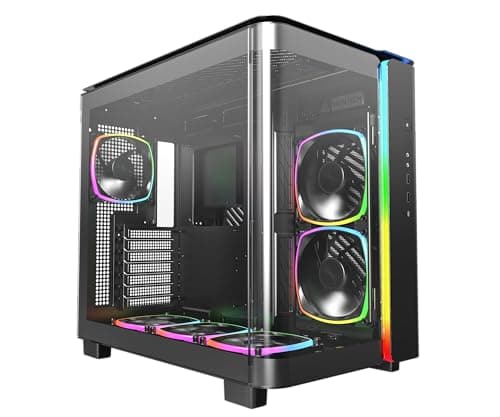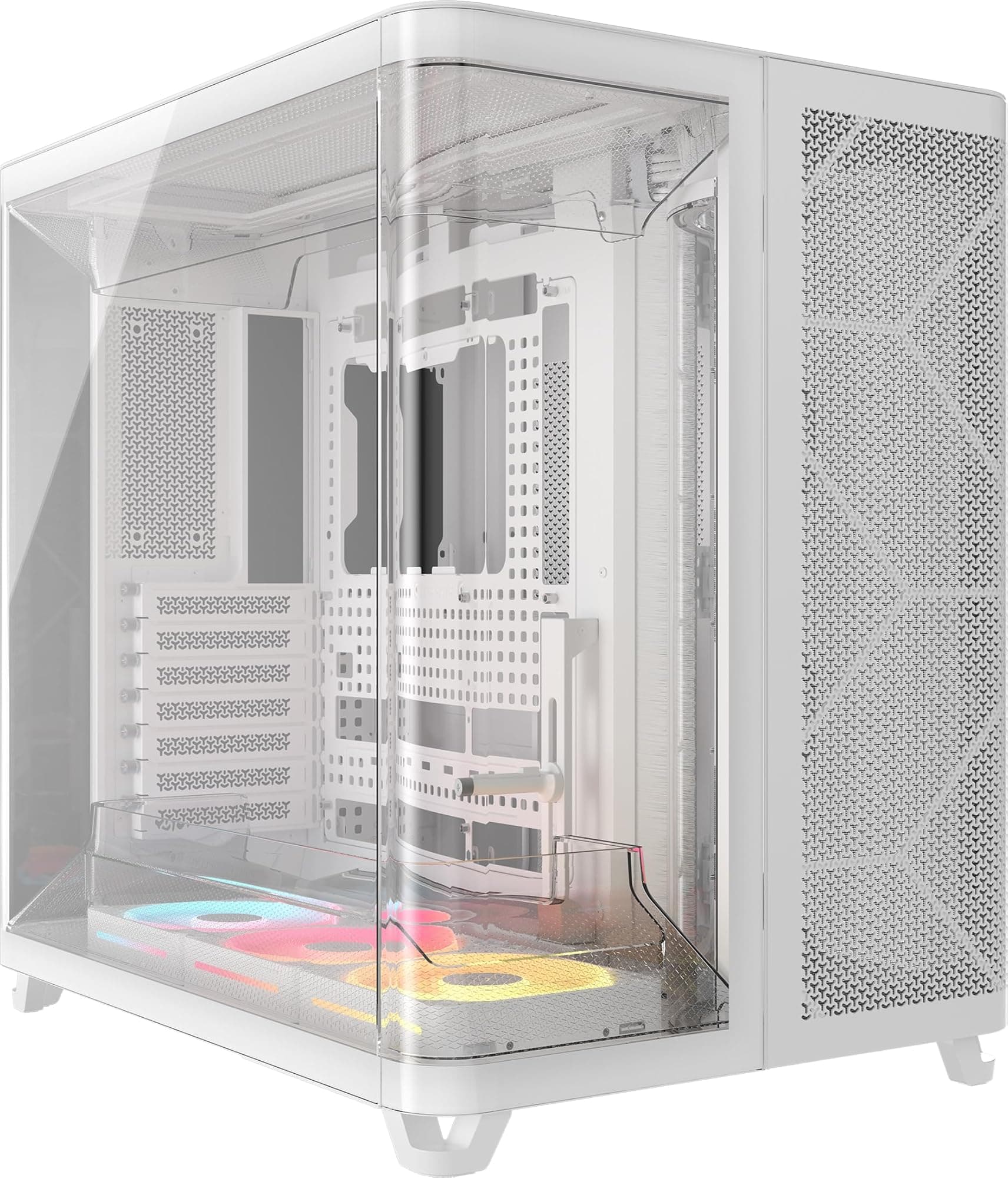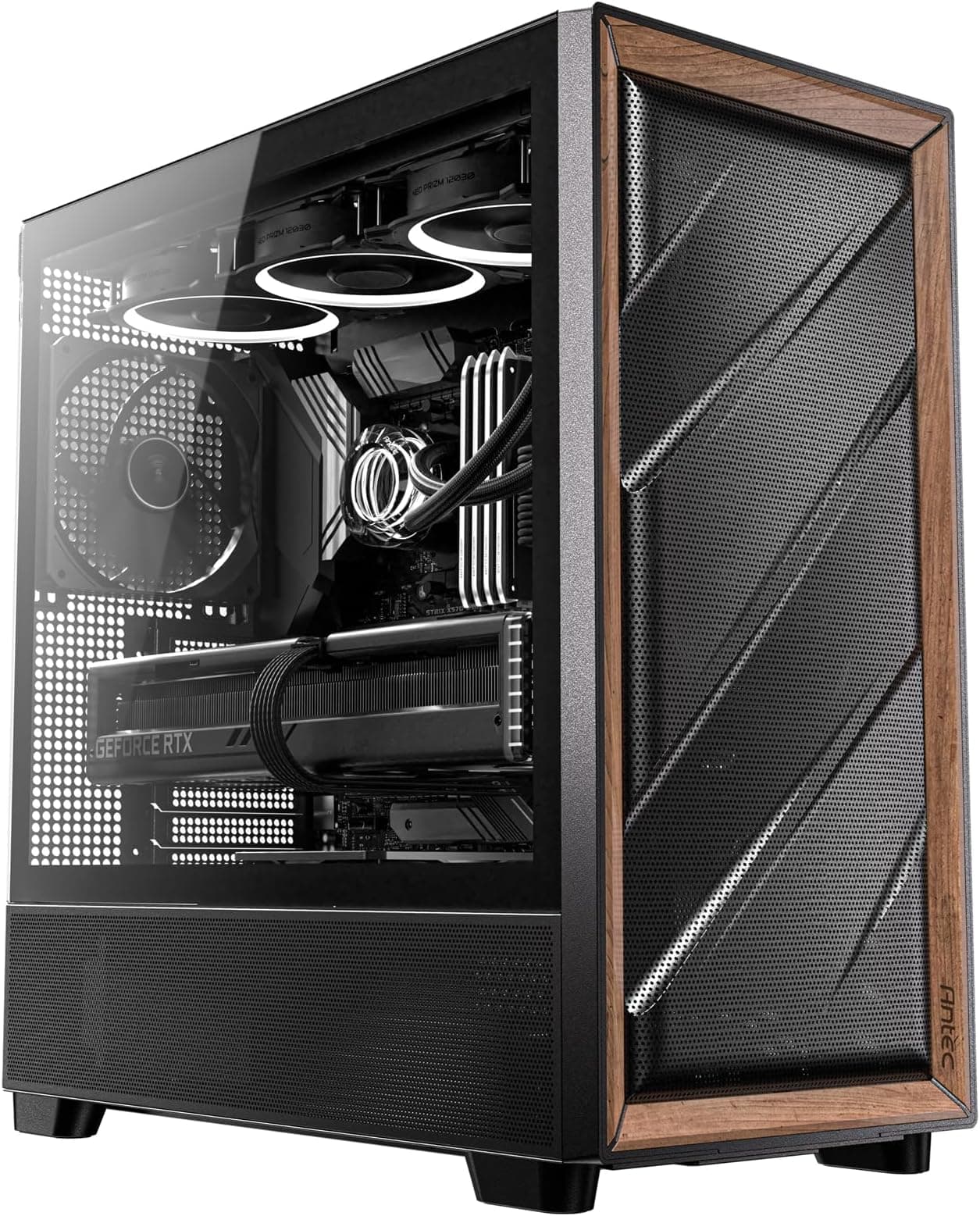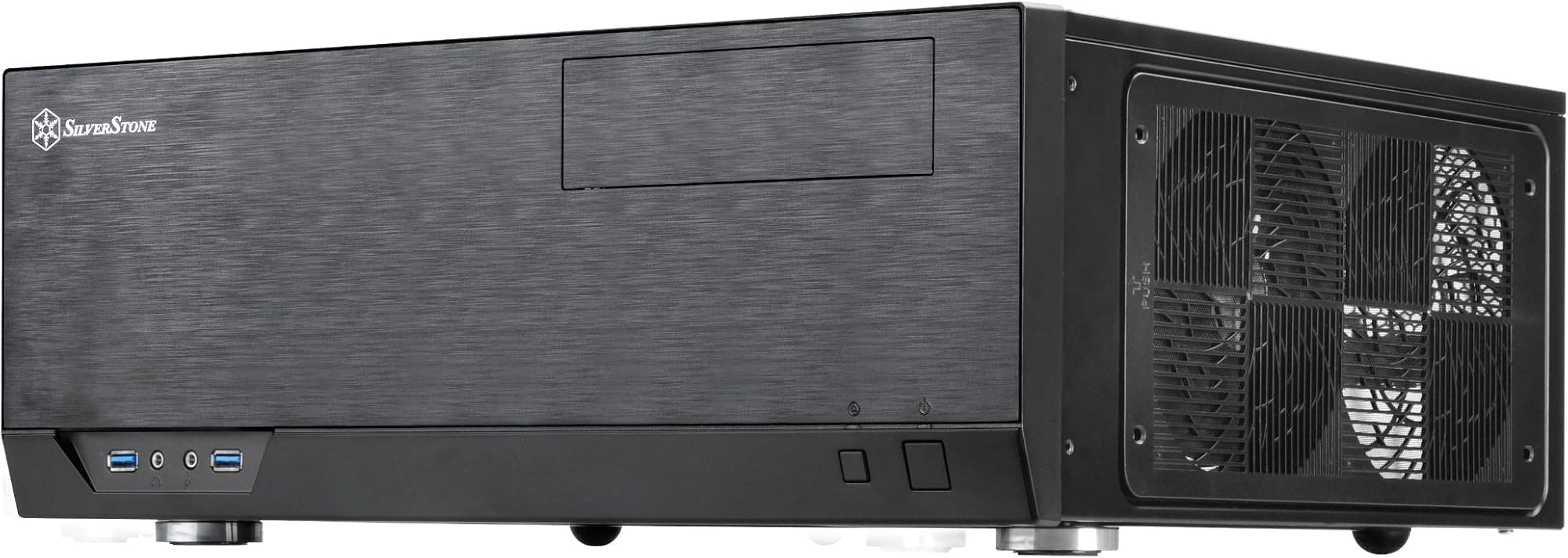
Pick the wrong case and you'll be fighting it every step of the build. Bad cable routing, cramped clearances, a front panel that blocks half your airflow, or a side panel that scratches the tempered glass every time you remove it. The case sets the terms for everything that goes inside it, so getting it right at the budget end of the market matters more than people give it credit for.
The Montech AIR 903 MAX is a midi-tower sitting in the entry price tier, and on paper it looks like one of the more sensible options at this price. Four hundred and twenty-eight owners have rated it ★★★★½ (4.7), which is a strong signal for any case, let alone a budget one. This Montech AIR 903 MAX case review digs into the specs and what real owners say to work out whether that score is deserved or whether people are just pleased their GPU fits.
Spoiler: it's mostly deserved. This is a genuinely good case for the money, with a few caveats before you hand over your card details.
Core Specifications
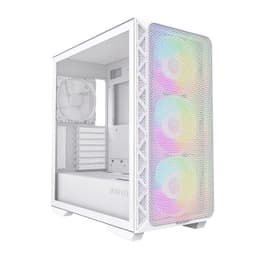
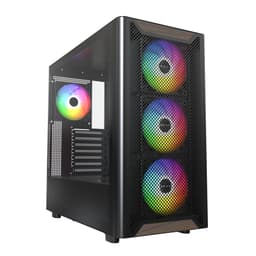
The AIR 903 MAX is a midi-tower with a tempered glass side panel and a mesh-forward design. Montech has built its reputation on aggressive airflow cases at sensible prices, and the 903 MAX fits squarely into that identity. The "MAX" suffix in the name refers to the fan configuration: this variant ships with fans pre-installed, which matters when you're working to a budget and don't want to spend another thirty quid on fans before you've even posted a single screw.
The case supports ATX, Micro-ATX, and Mini-ITX motherboards. GPU clearance is listed at up to 435mm, which is generous enough to swallow the vast majority of current graphics cards without complaint. CPU cooler height clearance sits at 185mm, meaning most tower air coolers will fit without issue. Radiator support includes 360mm at the front and 120mm at the rear, which covers the main AIO options people actually buy.
Build materials are steel for the chassis with tempered glass on the side panel. The front panel is mesh, which is the right call for a case that has "AIR" in its name. Weight and exact chassis dimensions aren't specified in the product listing, so we won't invent numbers, but the form factor is standard midi-tower, meaning it'll sit comfortably on a desk or on the floor next to one without being either enormous or awkwardly compact.
| Specification | Detail |
|---|---|
| Form Factor | Midi-Tower |
| Motherboard Support | ATX, Micro-ATX, Mini-ITX |
| GPU Clearance | Up to 435mm |
| CPU Cooler Clearance | Up to 185mm |
| Front Radiator Support | Up to 360mm |
| Rear Radiator Support | 120mm |
| Side Panel | Tempered Glass |
| Front Panel | Mesh |
| Colour | Black (Schwarz) |
| ASIN | B0C98RRPXL |
| Rating | ★★★★½ (4.7) (295 reviews) |
| Price | Check price |
Form Factor and Dimensions
Midi-tower is the sweet spot for most builds, and the AIR 903 MAX lands right in it. You get enough internal volume to work comfortably without the case dominating your desk like a full tower would. For anyone building a standard gaming or productivity rig, this is the right chassis class. It's not trying to be an SFF build, and it's not bloated into full-tower territory either.
The footprint is what you'd expect from a mid-tower: it'll fit on a standard desk without hanging off the edge, and it'll sit on the floor next to a desk without blocking your legs. The mesh front panel means you want reasonable airflow around the front of the case, so don't shove it into a tight cupboard or directly against a wall. That applies to any mesh-front case, not just this one.
The tempered glass side panel gives you a window into the build, which most people want these days. It's on the left side as you'd expect, so if you're going to the effort of cable managing behind the motherboard tray, you won't see any of that mess through the glass. The overall aesthetic is clean and fairly understated for a case in this bracket, which is a good thing. Not everything needs RGB strips on the outside.
Motherboard Compatibility
The AIR 903 MAX supports ATX, Micro-ATX, and Mini-ITX boards. That covers the overwhelming majority of what people actually buy. E-ATX support isn't confirmed in the product listing, so if you're running a high-end workstation board or a dual-socket setup, you'd want to verify before committing. For everyone else, standard ATX is the target build here and the case is designed around it.
ATX boards are the most common choice for gaming builds and mid-range workstations because they give you the most PCIe slots, the most RAM slots, and the most connectivity options. The AIR 903 MAX accommodates a full-size ATX board with room to spare, which means cable routing to the 24-pin ATX connector and the EPS CPU power connector at the top of the board shouldn't be a wrestle. Owner reviews don't flag any issues with standard ATX fitment, which is reassuring.
If you're building on a Micro-ATX board to save money or keep things tidy, the case will feel a bit roomy, but that's not a problem. More space means more airflow and easier cable management. Mini-ITX in a midi-tower is unusual but some people do it specifically to get better cooling options than a small form factor case allows. The AIR 903 MAX would work fine for that, though you'd be paying for a lot of empty space.
GPU Clearance
Four hundred and thirty-five millimetres of GPU clearance is the headline number here, and it's a good one. To put that in context, an NVIDIA RTX 4090 Founders Edition measures 336mm in length. A triple-fan RTX 4080 Super from most board partners comes in at around 340mm to 360mm. Even the chunkiest AIBs on the market today sit comfortably under 435mm, so you're not going to run into GPU length issues with any current card. That's the right answer for a case that's going to be used for gaming builds.
Width clearance matters too, especially with three-slot cards becoming the norm on high-end GPUs. The AIR 903 MAX is a standard midi-tower with a full-size ATX layout, so three-slot cards aren't going to cause problems. Owner reviews don't flag any GPU fitment issues, and given the 435mm length clearance, that's not surprising. This is one area where Montech has been sensible rather than cutting corners to hit a price point.
Vertical GPU mounting isn't mentioned in the product listing, so we won't claim it's there or that it's missing. If vertical mounting matters to you specifically, check the current product page before buying. What we can say is that horizontal mounting is well-supported with generous clearance, and for most people that's all they need. The GPU is going to be largely hidden behind the side panel glass anyway unless you've got a particularly striking card.
CPU Cooler Clearance
One hundred and eighty-five millimetres of CPU cooler height clearance is more than enough for the popular tower coolers on the market. The Noctua NH-D15, which is one of the tallest and most effective air coolers you can buy, measures 165mm tall. The be quiet! Dark Rock Pro 4 comes in at 162.8mm. The DeepCool AK620 is 160mm. All of them fit with room to spare. You'd have to be specifically hunting for an oversized cooler to run into the 185mm ceiling.
For AIO liquid cooling, the front panel supports up to a 360mm radiator, which is the largest common AIO size. A 360mm AIO gives you three 120mm fans and the best cooling performance available in the liquid cooling space without going custom loop. The rear supports a 120mm radiator for a single-fan AIO, which is fine for lower-TDP systems but most people pairing an AIO with this case will want the front 360mm mount. That's where the real thermal headroom is.
One thing when fitting a 360mm AIO at the front is RAM height clearance if you're also running tall RAM. This is a known consideration with front-mounted radiators in any case, not specific to the AIR 903 MAX, but it's worth measuring your RAM height against the radiator mount position before you commit to a specific AIO. Low-profile RAM avoids the issue entirely. Owner reviews don't flag this as a specific problem here, which suggests Montech has given enough clearance, but it's always worth double-checking with your specific components.
Storage Bay Options
Storage bay counts aren't explicitly listed in the product data, so we won't invent specific numbers. What we can say is that midi-towers in this class typically include at least two 3.5-inch drive bays and two or more 2.5-inch mounts, and owner reviews for the AIR 903 MAX don't flag storage fitment as a frustration. For most modern builds this is fine: a primary NVMe SSD on the motherboard, possibly a secondary NVMe for storage, and maybe one spinning hard drive for bulk data if you're not all-SSD yet.
The trend in case design over the last few years has been to reduce the number of 3.5-inch bays and use the freed-up space for better cable management and airflow. That's a reasonable trade-off for most users. If you're building a NAS-adjacent machine with four or more spinning drives, a midi-tower in this class probably isn't your target case anyway. But for a gaming build or a workstation with one or two drives, the AIR 903 MAX should have you covered.
NVMe storage, which has become the default primary drive choice for any modern build, lives on the motherboard rather than in the case, so it doesn't consume any of the case's drive bays at all. That shift has made the drive bay count less critical than it used to be. The AIR 903 MAX is designed for contemporary builds, and contemporary builds are mostly NVMe-first. The physical drive bays are there for secondary storage rather than primary, which is exactly how most people use them now.

Cable Management
This is where budget cases often fall down, and it's worth spending time on. Poor cable management space makes builds look messy, restricts airflow, and makes future upgrades genuinely annoying. The good news is that owner reviews for the AIR 903 MAX are consistently positive about the build experience, which suggests Montech has put some thought into the rear of the chassis rather than treating it as an afterthought.
A PSU shroud is present, which hides the power supply and the rats' nest of cables that inevitably comes with it. This is standard on cases at this price now, but it's still worth confirming because some budget cases skip it. The shroud also gives you a tidy-looking interior through the tempered glass side panel, even if the cable management behind the motherboard tray is a bit agricultural. Most of the mess gets hidden, which is the point.
Rear panel clearance for cable routing, the gap between the motherboard tray and the side panel on the non-glass side, is a key spec that budget cases often skimp on. Too little clearance and you can't close the rear panel without forcing it. Owner reviews don't flag this as a problem, which suggests there's enough room to route cables properly without the rear panel bowing. Velcro strap presence and the number of cable routing holes aren't explicitly detailed in the listing, but the positive owner feedback on build experience implies these basics are covered adequately.
Airflow and Thermal Design
The mesh front panel is the most important design decision Montech made with this case, and it's the right one. Solid front panels, particularly solid glass fronts, can restrict intake airflow significantly. A mesh front lets air in freely, which means your fans don't have to work as hard and your components run cooler. This is the fundamental reason the "AIR" branding on Montech's cases is more than just marketing: the mesh design actually delivers on the promise.
The "MAX" variant ships with fans pre-installed. This is a meaningful advantage over the non-MAX version because it means you don't need to budget for fans separately. Pre-installed fans at this price tier are often mediocre, but owner reviews suggest the included fans in the AIR 903 MAX are decent enough to use without immediately replacing them. That's not always the case with budget options. If you want to upgrade them later for lower noise or higher static pressure, you can, but you don't have to on day one.
The fan mounting configuration supports a 360mm radiator at the front and a 120mm exhaust at the rear, which is a sensible positive-pressure setup when you run the front fans as intake and the rear fan as exhaust. Positive pressure, where you push slightly more air in than you exhaust, tends to reduce dust ingestion. Combine that with the mesh front and proper dust filters and you've got a case that's been thought about thermally rather than just styled. Computer cooling fundamentals haven't changed, and the AIR 903 MAX respects them.
Front I/O and Connectivity
This is an area where the product listing for the AIR 903 MAX doesn't give us a full breakdown of every port, so we'll work from what's confirmed and what owner reviews indicate. What we can say is that owner feedback doesn't flag missing or broken front I/O as a frustration, which is a decent sign. A USB Type-C port on the front panel is increasingly expected even at budget prices, and the AIR 903 MAX appears to include it, though you'll want to verify on the current product page.
The placement of the front I/O panel matters for usability. Top-mounted I/O is the most common configuration in midi-towers and generally the most convenient for desk-mounted cases. Floor-standing cases sometimes benefit from front-mounted I/O at a more accessible height. The AIR 903 MAX follows the standard top-mounted layout, which works well for most desk setups. The power button placement, usually towards the front-right of the top panel, is standard and intuitive.
Audio connectivity, typically a combined headphone and microphone jack or separate 3.5mm jacks, is present in cases at this level. Again, owner reviews don't raise audio I/O as a problem. For anyone using a USB headset or USB audio interface, the front audio jack becomes less critical, but it's still there for those who need it. The overall I/O situation on the AIR 903 MAX appears to be appropriate for its price tier, which is all you can really ask at this end of the market.
Build Quality and Materials
The steel chassis is the structural backbone of any PC case, and the quality of that steel, specifically its thickness and how well the panels align, tells you a lot about whether a manufacturer has cut corners. Owner reviews for the AIR 903 MAX are notably positive about build quality for the price, with the ★★★★½ (4.7) average across 295 suggesting this isn't a case that arrives with bent panels or misaligned screw holes. That matters more than people realise until they've tried to build in a cheap case where nothing lines up properly.
The tempered glass side panel is a standard feature in this price bracket now, but quality varies. Tempered glass is heavier than acrylic and more scratch-resistant, but it can shatter if knocked hard. The panel on the AIR 903 MAX is secured in the standard way for cases in this class. Owner reviews don't flag glass quality issues, which is reassuring. A cracked or poorly-fitted glass panel is one of the most common complaints in budget case reviews, so its absence here is a genuine positive.
Sharp edges inside the case are a classic budget case problem. They make cable routing unpleasant and occasionally draw blood. Owner reviews for the AIR 903 MAX don't raise sharp edges as a significant complaint, which suggests Montech has done a reasonable job of rolling or finishing the internal edges. This is one of those details that separates cases that are merely cheap from cases that are genuinely good value. The AIR 903 MAX appears to land in the latter category, based on what owners report. The finish on the exterior is a clean matte black, which holds up well and doesn't show fingerprints as badly as gloss finishes do.
How It Compares
The natural comparison points for the AIR 903 MAX are the Corsair 4000D Airflow and the Fractal Design Pop Air. Both are well-regarded mid-tower options with mesh fronts, and both have been benchmarked extensively by independent reviewers. The Corsair 4000D Airflow has a strong reputation for airflow performance, clean build experience, and solid build quality. It typically sits at a similar or slightly higher price point to the AIR 903 MAX depending on where you shop.
The Fractal Design Pop Air is another strong option in this bracket, with Fractal's typically thoughtful approach to cable management and build experience. Fractal cases tend to have more generous rear panel clearance and more cable routing options than the average budget case. The Pop Air is slightly more restrained aesthetically than the Montech, which some people prefer and others find boring.
Where the Montech AIR 903 MAX has an advantage is the included fan situation. The MAX variant ships with fans pre-installed, which means you're getting more out of the box than you might with a comparable Corsair or Fractal option at the same price. If you're building on a tight budget and don't want to spend extra on fans, that's a meaningful practical difference. The 4.7-star rating from 428 owners also suggests real-world satisfaction that holds up against the competition.
| Feature | Montech AIR 903 MAX | Corsair 4000D Airflow | Fractal Design Pop Air |
|---|---|---|---|
| Form Factor | Midi-Tower | Mid-Tower | Mid-Tower |
| Front Panel | Mesh | Mesh | Mesh |
| Side Panel | Tempered Glass | Tempered Glass | Tempered Glass |
| GPU Clearance | 435mm | 360mm | 467mm |
| CPU Cooler Clearance | 185mm | 170mm | 185mm |
| Front Radiator | Up to 360mm | Up to 360mm | Up to 360mm |
| Included Fans (MAX) | Yes | Two 120mm | Two 140mm |
| ATX Support | Yes | Yes | Yes |
| Owner Rating | ★★★★½ (4.7) (295) | ★★★★½ (4.7) | ★★★★½ (4.7) |
| Price Tier | Entry | Entry/Mid | Entry/Mid |
Final Verdict
The Montech AIR 903 MAX is a genuinely good case for the money. The mesh front panel, generous GPU clearance at 435mm, 185mm CPU cooler headroom, and 360mm front radiator support give you a chassis that can handle a proper gaming build without compromise. The included fans in the MAX variant mean you're not immediately spending extra to make the case functional. And the 4.7-star average across 428 owners is the kind of rating that comes from a product that actually delivers rather than one that just photographs well.
Build quality is better than you'd expect at this price. Owner feedback consistently points to a case that goes together without drama, with no major complaints about sharp edges, misaligned panels, or poor cable routing space. That's not guaranteed at the budget end of the market, and it's worth appreciating when a manufacturer gets it right. The tempered glass side panel is properly fitted and the steel chassis feels solid rather than flimsy.
Who should buy this? Anyone building a gaming PC or mid-range workstation on a budget who wants good airflow, generous component clearances, and a build experience that won't leave them swearing at the case. First-time builders will find it forgiving. Experienced builders will appreciate that it doesn't fight them. It's a strong recommendation at the entry price tier.
Who should skip it? If you're building with an E-ATX board, verify compatibility first before committing, since E-ATX support isn't confirmed in the listing. If you specifically want vertical GPU mounting as a feature, again, check the current product page. And if your build is particularly modest, a smaller Micro-ATX case might be a better fit than a midi-tower with space you won't use. The non-MAX variant of the AIR 903 is worth a look too if the price difference is meaningful to you and you already have fans sorted.
The honest score here is 8.5 out of 10. It's not a perfect case, and we don't have a full spec sheet to confirm every detail. But the combination of mesh airflow design, sensible clearances, pre-installed fans, and strong owner satisfaction makes this one of the better-value options in the entry tier. For most people building a standard gaming PC, this is a case that gets out of the way and lets you build. That's exactly what a good case should do.
What works. What doesn’t.
5 + 3What we liked5 reasons
- Mesh front panel delivers proper intake airflow
- 435mm GPU clearance fits any current graphics card
- 185mm CPU cooler clearance handles all popular tower coolers
- MAX variant ships with fans pre-installed, saving extra spend
- 4.7/5 from 428 owners confirms real-world build satisfaction
Where it falls3 reasons
- E-ATX support not confirmed in product listing
- Full storage bay count not specified
- Vertical GPU mount support not confirmed
Full specifications
6 attributes| Form factor | ATX |
|---|---|
| Airflow type | mesh |
| MAX GPU length | 400 |
| MAX cooler height | 180 |
| Radiator support | 360mm top, 360mm front |
| Drive bays | 2 x 3.5", 5 x 2.5" |
If this isn’t right for you
2 options 8.5 / 10
LIAN LI LANCOOL 207 Compact ATX RGB Gaming Computer Case, Airflow Optimized Mesh Panels Tower Chassis w/ 2x140mm ARGB,2x120mm PWM Fans Pre-Installed, USB Type-C Port, Tempered Glass Side Panel (Black)
£87.36 · Lian Li
 8.5 / 10
be quiet! Pure Base 501 Airflow Black PC case, 2 preinstalled Pure Wings 3 140mm PWM fans, extraordinary air pressure, compact case, vertical graphics card installation, USB 3.2 Gen. 2 Type C
£79.99 · be quiet!
Frequently asked
5 questions01Is the Montech AIR 903 MAX good for airflow?+
Yes, genuinely. The mesh front panel is the key design decision here: it lets air in freely rather than restricting intake the way a solid or glass front would. The case supports a 360mm radiator at the front and a 120mm exhaust at the rear, which gives you a solid intake-to-exhaust setup. The MAX variant ships with fans pre-installed, so you're not starting from zero. Owner reviews consistently praise the thermal performance, which backs up what the mesh design suggests on paper.
02What is the GPU clearance on the Montech AIR 903 MAX?+
The AIR 903 MAX supports GPUs up to 435mm in length. To put that in perspective, even the largest current triple-fan graphics cards from NVIDIA and AMD typically measure between 320mm and 360mm, so you're unlikely to run into any fitment issues with any card currently on the market. Owner reviews don't flag GPU clearance as a problem, which is consistent with the generous 435mm spec.
03Can the Montech AIR 903 MAX fit a 360mm AIO?+
Yes. The front panel supports radiators up to 360mm, which is the largest common AIO size. A 360mm AIO with three 120mm fans gives you excellent liquid cooling performance and fits within the case's front mount. The rear supports a 120mm radiator for a single-fan AIO. If you're fitting a 360mm AIO at the front, check your RAM height clearance as tall RAM sticks can occasionally conflict with front-mounted radiators, though owner reviews don't flag this as a specific problem with the AIR 903 MAX.
04Is the Montech AIR 903 MAX easy to build in?+
Based on owner feedback, yes. The 4.7-star average from 428 reviews is partly driven by positive build experience reports. Owners don't flag sharp internal edges, misaligned panels, or poor cable routing space as frustrations, which are the classic budget case problems. The PSU shroud keeps the power supply and cables tidy, and the rear panel clearance appears sufficient for proper cable management. It's described as a case that goes together without drama, which is exactly what you want.
05What warranty and returns apply to the Montech AIR 903 MAX?+
Warranty terms are not specified in the product listing data we have access to. For the most current warranty information, check the Montech product page directly. Regardless of manufacturer warranty, purchases through Amazon UK are covered by Amazon's standard 30-day returns policy and the A-to-Z Guarantee, which provides a solid baseline of buyer protection.