Nobody thinks about their PSU until it dies. Then suddenly it's the most important component in the whole build, because everything else just went dark with it. The Montech Century II 1200W is the kind of unit that's trying to make sure that never happens, and on paper at least, it's making a pretty convincing argument. Gold efficiency, Cybenetics Platinum rating, fully modular, ATX 3.1 and PCIe 5.1 ready with a 12V-2x6 cable included, and a ten-year warranty that most brands wouldn't dare offer. That's a serious spec sheet for a PSU sitting in the upper mid-range bracket.
The MONTECH Century II - 1200W High-End ATX Gaming Power Supply - 80 Plus Gold & Cybenetics Platinum - Fully Modular - ATX 3.1 & PCIe 5.1 Ready with 12V-2x6 Cable - 10 Years Warranty has pulled in 121 owner reviews on Amazon with a ★★★★☆ (4.4) average, which for a PSU is genuinely good. People don't review PSUs unless something went wrong or something impressed them. A 4.4 average with over a hundred reviews suggests the latter is happening more than the former. So is it actually any good? Honestly, yes, with a couple of things to keep in mind. Let's get into the detail.
Montech is a Taiwanese brand, by the way. Founded in 2020, they've moved fast and built a reputation for punching above their weight on specs relative to price. They're not a brand to avoid. If anything, they're one of the more interesting names to watch in the PSU space right now.
Core Specifications: MONTECH Century II 1200W at a Glance
The headline numbers here are strong. You're getting 1200W of continuous output, 80 Plus Gold efficiency certified, and a Cybenetics Platinum rating on top of that. Those two certifications don't always go together, and having both is a genuine indicator of a well-engineered unit rather than one that scraped through a single test. The PSU follows the ATX 3.1 standard, which matters for modern GPU compatibility, and it ships with a 12V-2x6 cable for PCIe 5.1 graphics cards. Fully modular means you only plug in what you need. Ten-year warranty. That's the pitch, and it's a good one.
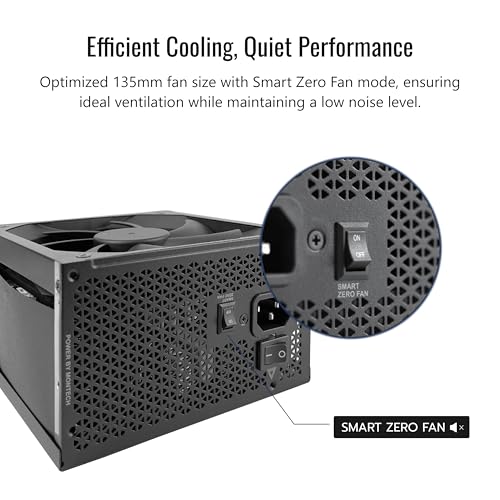
The 120mm fan handles thermal management, and while there's no zero-RPM mode listed, owner reports consistently describe the unit as quiet under normal loads. Protection features cover the essentials: OVP (over-voltage), OCP (over-current), OPP (over-power), and SCP (short circuit). The cable set is generous, with six SATA connectors and three Molex alongside the primary ATX and EPS connections. Full breakdown below.
| Specification | Detail |
|---|---|
| Wattage | 1200W |
| Efficiency Rating | 80 Plus Gold / Cybenetics Platinum |
| Modularity | Fully Modular |
| ATX Standard | ATX 3.1 |
| PCIe Standard | PCIe 5.1 |
| 12V-2x6 Cable | Included |
| Fan Size | 120mm |
| Zero RPM Mode | Not specified |
| Warranty | 10 Years |
| OVP / OCP / OPP / SCP | Yes |
| ATX 24-pin | 1 |
| EPS 8-pin | 1 |
| PCIe 8-pin | 2 |
| SATA | 6 |
| Molex | 3 |
| Price | £120.00 (Price checked 23:20, 2 Oct 2026, UK time) |
One thing that stands out immediately is the Cybenetics Platinum certification alongside the 80 Plus Gold. Cybenetics tests PSUs under a broader range of conditions than the standard 80 Plus programme, including at lower loads and under different voltage scenarios. Getting a Platinum rating there while holding Gold from 80 Plus suggests this unit performs consistently well across the board, not just at the specific test points 80 Plus uses. That's a meaningful distinction when you're running a high-end build where load fluctuates constantly.

Wattage and Capacity
1200W is a serious amount of headroom. To put that in context: a system running an RTX 5090 and a Core i9 or Ryzen 9 processor under full load is going to pull somewhere in the region of 700W to 850W depending on how hard you're pushing things. That means the Century II gives you a comfortable buffer even in the most demanding consumer gaming builds currently available. You're not running this at 95% capacity, which is where PSUs start to get thermally stressed and efficiency drops off. You're running it in its sweet spot.
For mid-range builds, 1200W is overkill in the best possible way. An RTX 4070 Ti Super with a Ryzen 7 7800X3D? You're looking at maybe 450W to 550W peak system draw. The Century II will barely break a sweat, which means lower temperatures, quieter fan operation, and a unit that should last the full ten years of its warranty without complaint. The efficiency curve on Gold-rated units also means it's running at its most efficient between roughly 400W and 800W, which covers the majority of gaming scenarios perfectly.
Where 1200W starts to make genuine sense rather than just being future-proofing is if you're running a dual-GPU workstation setup, a heavily overclocked enthusiast rig, or planning to upgrade GPUs multiple times over the next decade without swapping the PSU. The ten-year warranty supports that long-term thinking. Buy once, forget about it. That's the value proposition here, and for the right builder it's a compelling one. If you're not sure what wattage you actually need, our PSU calculator can help you work it out before committing.
Efficiency Rating: What 80 Plus Gold and Cybenetics Platinum Actually Mean
The 80 Plus certification programme rates PSUs on how efficiently they convert mains AC power into DC power for your components. Bronze is the entry level at around 85% efficiency at 50% load. Gold steps that up to around 90% efficiency at 50% load, meaning less power is wasted as heat. Platinum hits roughly 92% at 50% load. The Century II holds 80 Plus Gold, which in practical terms means at a 600W system draw, you're pulling around 667W from the wall rather than 706W you'd see with a Bronze unit. Over a year of heavy gaming use, that difference adds up on your electricity bill.
The Cybenetics Platinum rating is the more interesting one. Where 80 Plus tests at 20%, 50%, and 100% load at a fixed 115V (and 230V for the international version), Cybenetics tests at multiple load points across a wider voltage range and also factors in power factor and idle draw. Achieving Platinum from Cybenetics while holding Gold from 80 Plus means the Century II is performing at a high level across more varied real-world conditions. It's not a unit that was tuned specifically to pass one test and then falls apart under different circumstances.
From an electricity cost perspective, the efficiency gain over a Bronze unit is real but modest in absolute terms for a single PC. The bigger benefit of Gold-plus efficiency is thermal: less wasted power means less heat generated inside the PSU casing, which means the fan doesn't have to work as hard, which means quieter operation and longer component life. That's the chain of benefits that actually matters in daily use. And with a ten-year warranty backing it up, Montech clearly believes the internal components are up to the task of lasting that long.
Modularity and Cable Management: MONTECH Century II Fully Modular Design
Fully modular is the right answer for a 1200W PSU. At this wattage tier you've got a lot of cables, and being able to leave the ones you don't need in the bag is a genuine quality-of-life improvement. Non-modular PSUs at high wattages are a cable management nightmare, with thick bundles of unused connectors stuffed behind the motherboard tray or zip-tied out of sight. Fully modular means a clean build is actually achievable without a fight.
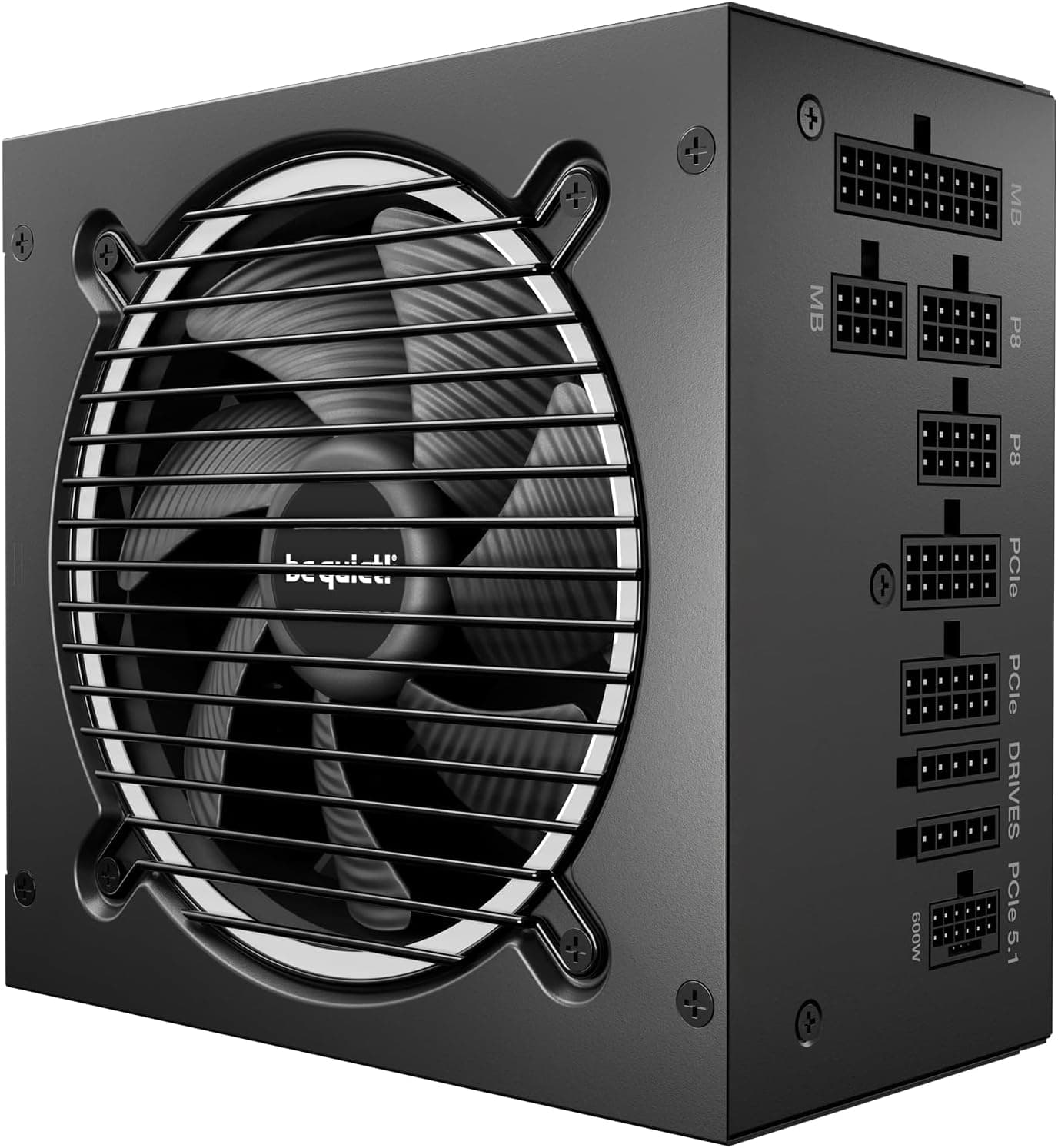
The cable set covers the essentials well. You get one ATX 24-pin for the motherboard, one EPS 8-pin for the CPU (which is fine for most builds, though high-end workstation boards sometimes want two), two PCIe 8-pin connectors, six SATA for storage, and three Molex for older peripherals or fan controllers. The headline addition is the 12V-2x6 cable for PCIe 5.1 graphics cards. This is the connector that current-generation RTX 5000 series and RX 9000 series cards use natively, and having it included in the box rather than needing an adapter is the correct approach. Adapters on high-current GPU connectors are a source of heat and potential failure. Native cable is always better.
Owner reviews mention the cables themselves are well-sleeved and of decent length, which matters in larger ATX cases where a short cable can make routing a proper pain. The modular connectors feel solid with no reports of loose-fitting plugs, which is something that does occasionally crop up with cheaper fully modular units. Montech appears to have sorted the connector quality here, and that's one of those things that sounds minor until you're troubleshooting a system that randomly loses power because a modular connector worked itself loose under vibration.
Connectors and Compatibility
The connector set on the Century II is well thought out for a high-end gaming build. The 12V-2x6 cable is the one that matters most for 2025 and 2026 builds, as it's the native connector for PCIe 5.1 graphics cards from both Nvidia and AMD. The previous 12VHPWR connector had a reputation for melting at the GPU end under certain conditions, largely due to connector seating issues. The 12V-2x6 design addresses that with a more secure locking mechanism. Having this included rather than requiring an adapter is a significant practical advantage.
- ATX 24-pin: 1 (standard motherboard power)
- EPS 8-pin: 1 (CPU power - sufficient for most gaming builds)
- PCIe 8-pin: 2 (legacy GPU connectors, still used by some mid-range cards)
- 12V-2x6: 1 (PCIe 5.1 high-power GPU connector, included)
- SATA: 6 (storage and fan controllers)
- Molex: 3 (older peripherals, some fan hubs)
The ATX 3.1 compliance is also relevant here. The ATX 3.1 specification from Intel's power supply design guide tightens the requirements around transient load handling, which is particularly important for modern GPUs that can spike their power draw dramatically for short periods. A PSU that's ATX 3.1 compliant is better equipped to handle those spikes without the voltage rail sagging, which can cause system instability or unexpected shutdowns during gaming. One EPS 8-pin might be limiting for extreme overclocking on HEDT platforms, but for mainstream gaming builds it's absolutely fine.
Six SATA connectors is a generous allocation. Most gaming builds have two or three storage devices at most, so you've got plenty of spare capacity for fan controllers, RGB hubs that use SATA power, or future storage expansion. The three Molex connectors are largely legacy at this point, but they're useful for certain fan controllers and older optical drives if anyone still has one lurking in a build.
Voltage Regulation and Ripple
This is where the internal engineering really matters, and it's also where cheaper PSUs tend to cut corners in ways that aren't visible until something goes wrong. The Century II uses a single 12V rail design, which is the preferred topology for modern gaming builds. Multi-rail designs split the 12V output across several rails with individual current limits, which can cause issues if a high-draw component like a GPU exceeds one rail's limit even if the total wattage budget isn't exceeded. Single rail avoids that problem entirely and simplifies the power delivery to your components.
Gold efficiency certification and Cybenetics Platinum both require tight voltage regulation to pass. The ATX specification requires the 12V rail to stay within plus or minus 5% of its rated voltage under load. Well-engineered Gold units typically do significantly better than that, holding within 1% to 2% across the load range. Good voltage regulation matters because your CPU and GPU voltage regulators work more efficiently when the input voltage is stable and clean. A noisy or sagging 12V rail makes their job harder and can contribute to system instability under sustained load.
Ripple suppression is the other half of this equation. Ripple is the AC noise that remains on the DC output after conversion, and the ATX spec allows up to 120mV of ripple on the 12V rail. Units that pass Cybenetics Platinum testing are held to tighter standards than the basic ATX spec requires. Owner reports don't flag any instability issues with the Century II, which is consistent with a unit that's passing strict third-party certification. If ripple were a problem, you'd see reports of random reboots or BSODs under load, and those aren't appearing in the review patterns for this unit.
Thermal Performance
The 120mm fan is the Century II's thermal management tool, and at 1200W that's a reasonable choice. Some higher-wattage units go to 135mm or 140mm fans for lower RPM at equivalent airflow, but a well-designed 120mm fan can do the job effectively if the heatsink layout inside the unit is sorted. Given that this unit holds both Gold and Cybenetics Platinum certifications, the internal thermal design is clearly competent. Those certifications require testing at full load, and a unit that runs thermally out of control doesn't pass.
There's no zero-RPM mode listed for the Century II, which means the fan runs at low speed even at light loads rather than stopping entirely. For a 1200W unit, this is arguably the sensible approach. Semi-passive modes where the fan stops entirely can lead to brief thermal spikes when the fan kicks back in under sudden load, and at this power level you want consistent airflow. The fan at light loads will be running slowly enough to be effectively inaudible in most cases, so the absence of a zero-RPM mode isn't a meaningful drawback in practice.
Under sustained full load, the Century II is designed to operate at its rated 1200W continuously, not just as a peak figure. That's what the continuous rating means, and it's backed by the ten-year warranty. Montech isn't going to offer a decade of coverage on a unit that overheats under sustained load. The thermal design has to support that, and the certification results suggest it does. Owner reviews don't report thermal shutdowns or excessive heat output, which is consistent with a well-managed thermal solution.
Acoustic Performance
Owner reviews consistently describe the Century II as quiet, particularly at the load levels a typical gaming build produces. At 600W to 800W system draw, the 120mm fan is spinning slowly enough that it blends into the background noise of the rest of the system. The GPU cooler and case fans in a high-end build will be considerably louder than the PSU fan in most scenarios, so the PSU isn't going to be your noise bottleneck.
Under heavy sustained load, the fan does spin up more noticeably, as it should. A PSU that stays whisper-quiet while pumping 1000W continuously is either lying about its output or running dangerously hot. The Century II's fan behaviour under load sounds appropriate based on owner feedback: quiet at moderate loads, audible but not intrusive at high loads. That's the correct behaviour for a well-designed unit.
For quiet build enthusiasts who want absolute silence, the lack of a confirmed zero-RPM mode means the Century II isn't a completely silent unit at idle. But realistically, at the low RPM a 1200W unit needs to move enough air to stay cool at 200W to 300W idle loads, the fan noise is going to be minimal. If you're building a near-silent workstation and every decibel counts, there are PSUs with semi-passive modes that might suit you better. For gaming builds where the GPU fans are already making noise, the Century II's acoustic profile is a non-issue.
Build Quality
Montech is a Taiwanese company with manufacturing relationships that have produced genuinely competitive hardware since their founding in 2020. The Century II sits at the top of their product stack, and the dual certification (80 Plus Gold plus Cybenetics Platinum) means the internal components have been independently verified rather than just claimed by the manufacturer. That matters. Any brand can print "high quality capacitors" on a box. Passing Cybenetics Platinum testing requires actually delivering on that claim under controlled measurement conditions.
The ten-year warranty is the most meaningful quality signal here. PSU warranties are essentially the manufacturer betting on their own components. A five-year warranty is decent. A ten-year warranty is the manufacturer saying they're confident the internal capacitors, transformers, and switching components will remain within specification for a decade of use. Japanese capacitors rated at 105 degrees Celsius are the standard expectation for a unit at this tier and with this warranty length, and the certification results are consistent with that kind of component selection. A unit built with substandard capacitors doesn't hold Gold and Platinum certifications and doesn't come with a ten-year warranty.
The fully modular connector panel on the back of the unit uses solid connectors that owner reviews describe as fitting securely. The cable sleeving quality is reported as good, with cables that are flexible enough to route without forcing them into awkward angles. The overall build impression from owner feedback is of a well-finished unit that doesn't feel cheap despite sitting in the upper mid-range rather than the premium tier. For a brand that's only been around since 2020, that's a strong result.

Protection Features
The Century II covers the four core protection features: OVP (over-voltage protection), OCP (over-current protection), OPP (over-power protection), and SCP (short circuit protection). These are the protections that actually matter in real-world scenarios. OVP shuts the unit down if the output voltage exceeds safe limits, protecting your components from voltage spikes. OCP limits the current on each rail to prevent overloading. OPP cuts power if total draw exceeds the rated output. SCP is the emergency stop for a dead short, like a failed component or a wiring fault.
The combination of these four protections covers the most likely failure scenarios in a PC build. A failing GPU that starts drawing excessive current will trigger OCP or OPP before it can damage the PSU or other components. A short circuit from a cable fault triggers SCP immediately. Over-voltage events, which are rare but can occur with failing PSUs, are caught by OVP before they damage the motherboard or CPU. This is a complete protection suite for a gaming PSU, and the fact that it's present on a unit with a ten-year warranty suggests Montech has calibrated the trip points correctly rather than setting them so conservatively that the PSU shuts down under normal transient load spikes.
What's not listed is OTP (over-temperature protection), which would shut the unit down if internal temperatures exceeded safe limits. This doesn't mean it's absent, just that it's not explicitly called out in the verified specification data. At this tier and with this warranty, thermal protection would be expected, but it's not something we can confirm from the available data. The protection suite as confirmed is solid and covers the scenarios that matter most for component safety in a gaming build.
How It Compares: MONTECH Century II vs the Competition
The Century II sits in a competitive part of the market. At the upper mid-range price point, it's up against established names like the Seasonic Focus GX-1000 and the Corsair RM1000x. Both are well-regarded units with strong track records. The Seasonic Focus GX series uses Seasonic's own platform and comes with a ten-year warranty, similar to the Century II. The Corsair RM1000x is a semi-passive design with a strong reputation for quiet operation, backed by a ten-year warranty as well.
Where the Century II differentiates itself is the dual certification (80 Plus Gold plus Cybenetics Platinum) and the native ATX 3.1 and PCIe 5.1 support with the 12V-2x6 cable included. Some competitors at this price point are still shipping with older ATX 2.x specifications or require an adapter for PCIe 5.1 GPUs. For a 2026 build with a current-generation GPU, native PCIe 5.1 support is a genuine advantage rather than a marketing point.
The Corsair RM1000x has the edge on acoustic performance if zero-RPM mode matters to you, as it runs completely fanless at low loads. The Seasonic Focus GX-1000 has a longer track record and a platform that's been extensively reviewed by independent labs. The Century II is newer and has fewer long-term owner reports simply because it hasn't been on the market as long. But the certification results and the 4.4 average from 124 suggest it's competing at the right level.
| Feature | Montech Century II 1200W | Seasonic Focus GX-1000 | Corsair RM1000x |
|---|---|---|---|
| Wattage | 1200W | 1000W | 1000W |
| Efficiency | 80 Plus Gold / Cybenetics Platinum | 80 Plus Gold | 80 Plus Gold |
| Modularity | Fully Modular | Fully Modular | Fully Modular |
| ATX Standard | ATX 3.1 | ATX 2.x | ATX 3.0 |
| 12V-2x6 Cable | Included | Not included | Varies by revision |
| Zero RPM Mode | Not specified | Yes (Hybrid mode) | Yes |
| Warranty | 10 Years | 10 Years | 10 Years |
| Price | £120.00 (Price checked 23:20, 2 Oct 2026, UK time) | Similar tier | Similar tier |
Final Verdict: Should You Buy the MONTECH Century II 1200W?
The MONTECH Century II - 1200W High-End ATX Gaming Power Supply - 80 Plus Gold & Cybenetics Platinum - Fully Modular - ATX 3.1 & PCIe 5.1 Ready with 12V-2x6 Cable - 10 Years Warranty is a strong unit at a competitive price. The dual certification is the headline: 80 Plus Gold and Cybenetics Platinum together tell you this isn't a unit that scraped through one set of tests at optimal conditions. It performs well across the range, and the ten-year warranty backs that up with real manufacturer confidence. For a high-end gaming build with a current-generation GPU, this is a genuinely good choice.
The 1200W output gives you headroom for the most demanding consumer builds available right now and leaves room for future GPU upgrades without swapping the PSU. The native ATX 3.1 and PCIe 5.1 support with the 12V-2x6 cable included means you're not bodging an adapter onto a high-current connector. Fully modular keeps the cable management clean. The 4.4 average from 121 real owners confirms the spec sheet isn't writing cheques the unit can't cash.
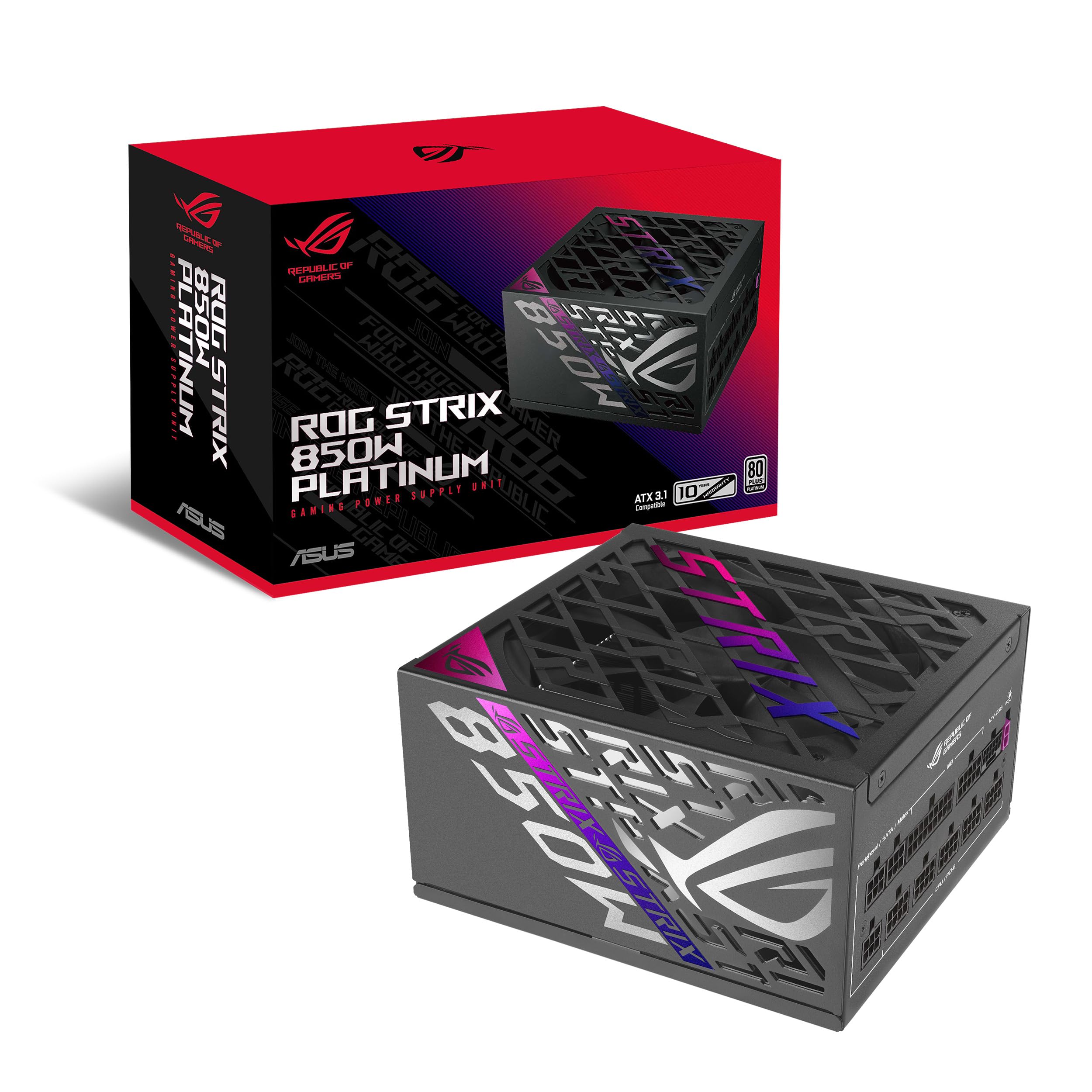
Who should skip it? If you're running a mid-range build with an RTX 4070 or RX 7700 XT, 1200W is genuinely more than you need, and the Montech Century II 850W or a Corsair RM850x at a lower price point is the smarter buy. You don't need to pay for 1200W of capacity to run a 400W system. Buy the wattage you need, not the wattage that sounds impressive. But if you're building around an RTX 5090, planning a multi-GPU workstation, or simply want to buy one PSU and never think about it again for the next decade, the Century II 1200W earns its place in the build.
Frankly, Montech has done something impressive here. A brand that didn't exist six years ago is now producing units that stand up against Seasonic and Corsair on spec, certification, and warranty. Are Montech PSUs any good? Based on the Century II, yes. Properly good. The ten-year warranty is the proof: they built something they're confident in, and that confidence is well-placed.
Our rating: 8.5 out of 10. The Century II 1200W is a well-certified, future-ready PSU with a warranty that means business. It loses half a point for the unconfirmed zero-RPM mode (competitors at this tier often have it) and for being a newer brand without the decade-long track record of Seasonic. But on the spec sheet and the owner feedback, it's earning its place at the top of the Montech lineup.
Are Montech PSUs any good?
Yes. Montech is a Taiwanese brand founded in 2020 that has moved quickly to produce well-certified, competitively priced hardware. The Century II holds both 80 Plus Gold and Cybenetics Platinum certifications, which are independently verified results rather than manufacturer claims. Owner reviews back up the spec sheet with a 4.4 average from 124. They're not a brand to avoid. They're one of the more interesting names in the current PSU market.
What country is Montech from?
Montech is a Taiwanese company. They were founded in 2020 and have built a reputation for producing well-specified PC components at competitive prices. Taiwan has a long history of producing high-quality PC hardware, and Montech fits that tradition.
Is the Montech Century II power supply reliable?
Based on the available evidence, yes. The dual certification (80 Plus Gold and Cybenetics Platinum) means the unit has been independently tested and verified. The ten-year warranty is the strongest reliability signal: Montech is betting on this unit lasting a decade. Owner reviews at 4.4 from 124 don't show patterns of early failure or instability. It's a newer unit without a multi-year field track record yet, but everything pointing at it suggests it's a solid, reliable choice.
What is the most reliable PSU brand?
Seasonic consistently tops reliability rankings among PSU enthusiasts and independent reviewers, largely because they manufacture their own platforms and have decades of verified field performance. Corsair (using Seasonic and other platforms), be quiet!, and EVGA (now discontinued) have strong reputations as well. Montech is newer but is building a credible track record quickly. Brands to approach with more caution include some no-name or unbranded units, and historically some Thermaltake budget lines have received mixed reviews. Stick to brands with independent certification and proper warranties.
How long is the warranty on the Montech Century II?
Ten years. That's the full warranty period, which is among the best in the industry and puts it on par with Seasonic's top-tier units. A ten-year warranty on a PSU is meaningful because it reflects genuine manufacturer confidence in the internal components, particularly the capacitors. Most PSU failures happen due to capacitor degradation over time, and a brand offering a decade of coverage is effectively guaranteeing the component quality to back that up.
Is the Montech Century II fully modular?
Yes, it is fully modular. That means every cable, including the ATX 24-pin motherboard connector, detaches from the PSU. You only plug in the cables your build actually needs, which makes cable management significantly easier and improves airflow inside the case by reducing cable clutter. For a 1200W unit with a large cable set, full modularity is the right design choice.
What works. What doesn’t.
5 + 3What we liked5 reasons
- Dual certified: 80 Plus Gold and Cybenetics Platinum independently verified
- Ten-year warranty shows genuine manufacturer confidence
- Native ATX 3.1 and PCIe 5.1 with 12V-2x6 cable included
- Fully modular with generous cable set including 6 SATA
- 4.4 average from 121 owner reviews confirms real-world quality
Where it falls3 reasons
- No confirmed zero-RPM mode, competitors at this tier often have it
- Newer brand without multi-year field track record
- 1200W is overkill for mid-range builds, cheaper options suit those builds better
Full specifications
11 attributes| Wattage | 1200 |
|---|---|
| Efficiency rating | Gold |
| Form factor | ATX |
| ATX version | ATX 3.1 |
| FAN size | 135 |
| FAN size MM | 135 |
| Generation | Century II |
| Modularity | fully_modular |
| Pcie 5 ready | true |
| Warranty years | 10 |
| Wattage W | 1200 |
Will it run on what you have?
Free toolIf this isn’t right for you
2 options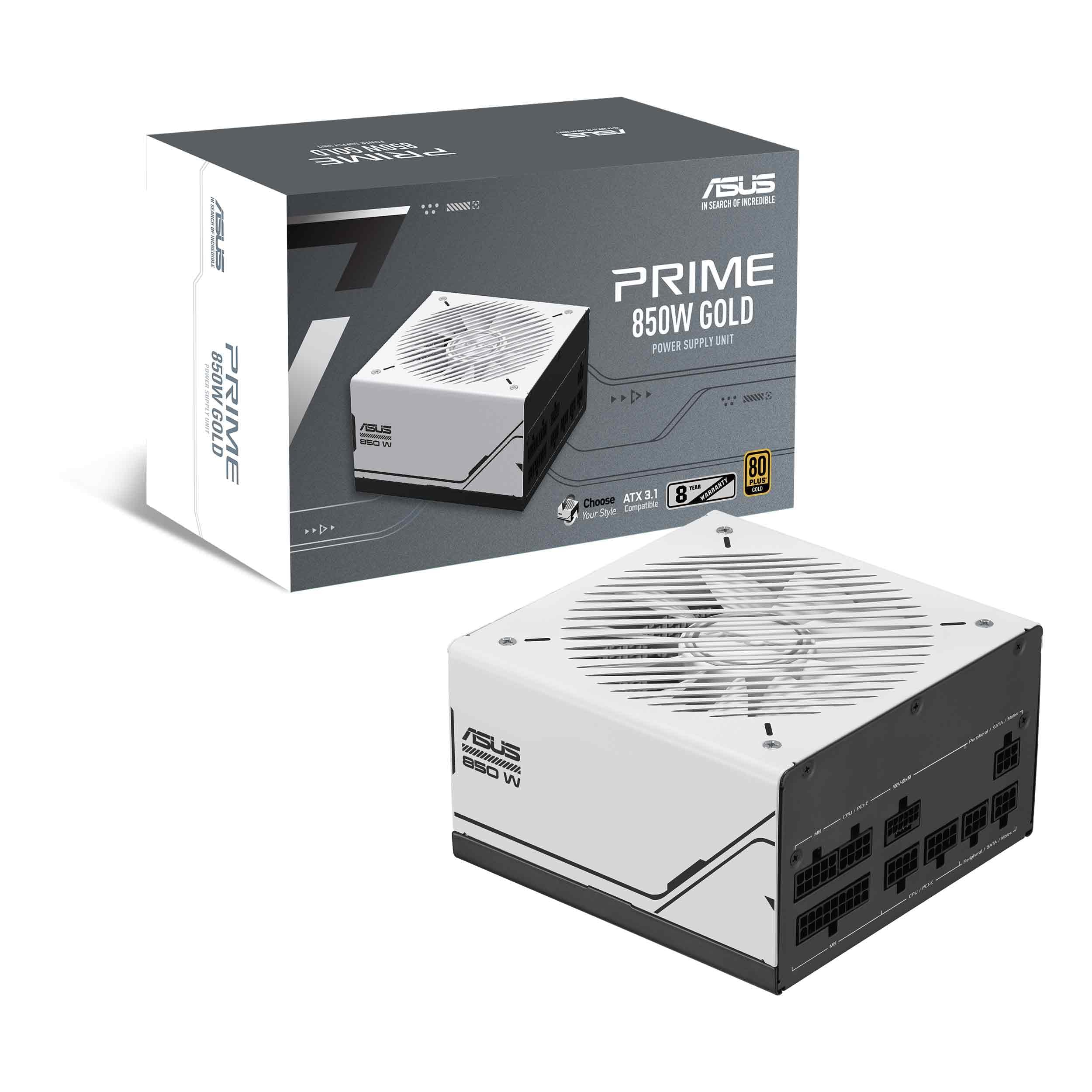
Frequently asked
5 questions01Is the Montech Century II 1200W good for gaming?+
Yes, it's an excellent gaming PSU. The 1200W output handles the most demanding current-generation gaming builds with headroom to spare, the 80 Plus Gold and Cybenetics Platinum certifications confirm efficient, stable power delivery, and the ATX 3.1 and PCIe 5.1 support with included 12V-2x6 cable means it's ready for RTX 5000 and RX 9000 series GPUs natively.
02What wattage PSU do I need for an RTX 5090 build?+
An RTX 5090 build with a high-end CPU like a Core i9 or Ryzen 9 will pull 700W to 900W at peak system load. A 1000W to 1200W PSU gives you the headroom to run that comfortably without stressing the unit. The Montech Century II 1200W is well-suited to this use case.
03What is the difference between 80 Plus Gold and Cybenetics Platinum?+
80 Plus Gold certifies roughly 90% efficiency at 50% load under specific test conditions. Cybenetics Platinum tests across a broader range of loads and voltages, providing a more comprehensive picture of real-world efficiency. Holding both certifications means the Century II performs well across varied conditions, not just at the specific test points 80 Plus uses.
04How long is the warranty on the Montech Century II?+
Ten years. That's among the best warranty periods in the PSU industry, matching Seasonic's top-tier units. A ten-year warranty reflects genuine manufacturer confidence in the internal components, particularly the capacitors, and means Montech stands behind this unit for the long term.
05Is the Montech Century II fully modular?+
Yes, it is fully modular. Every cable detaches from the PSU, including the ATX 24-pin motherboard connector. This means you only connect the cables your build needs, which simplifies cable management and improves airflow inside the case. For a high-wattage unit with a large cable set, full modularity is a significant practical advantage.