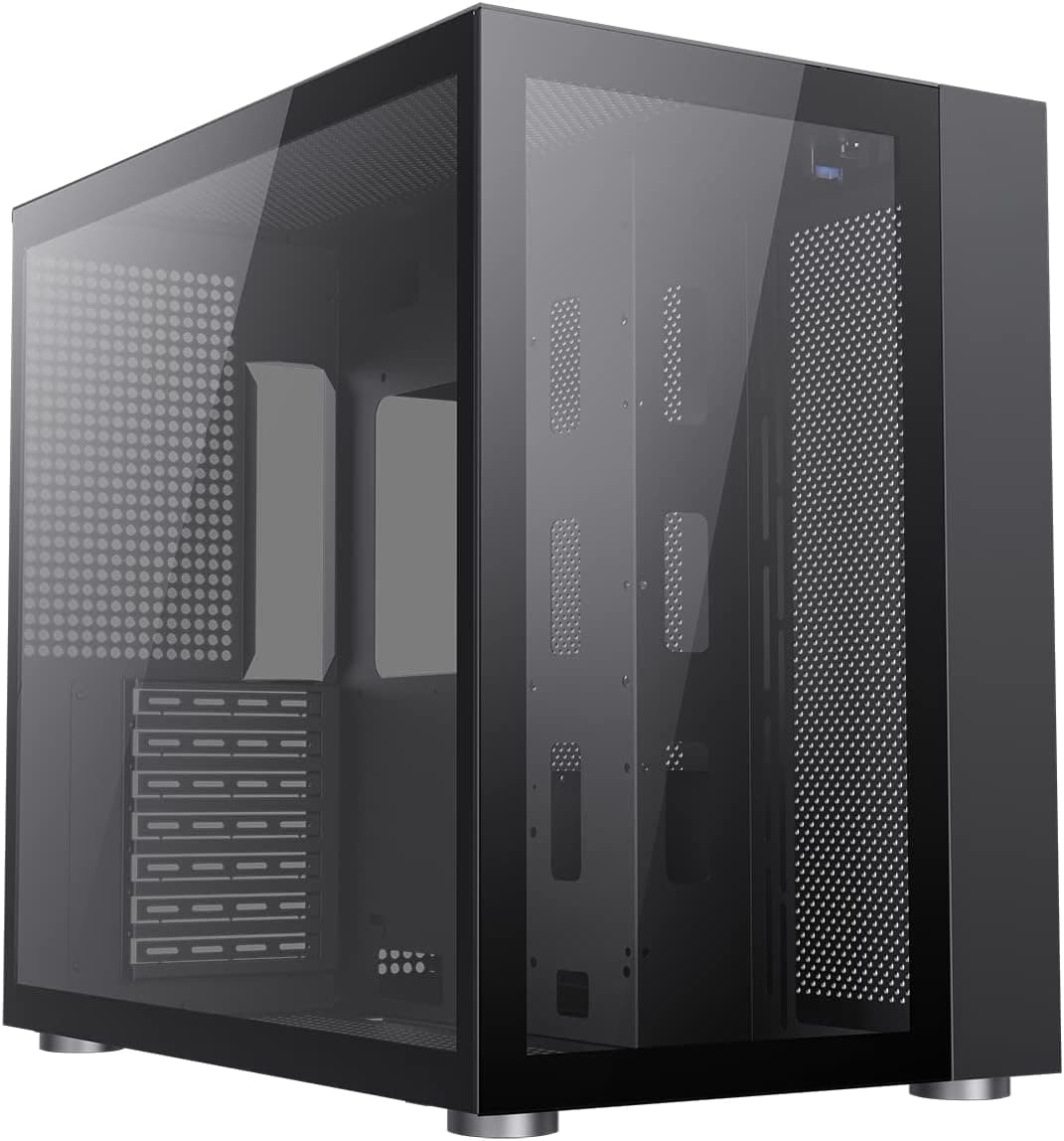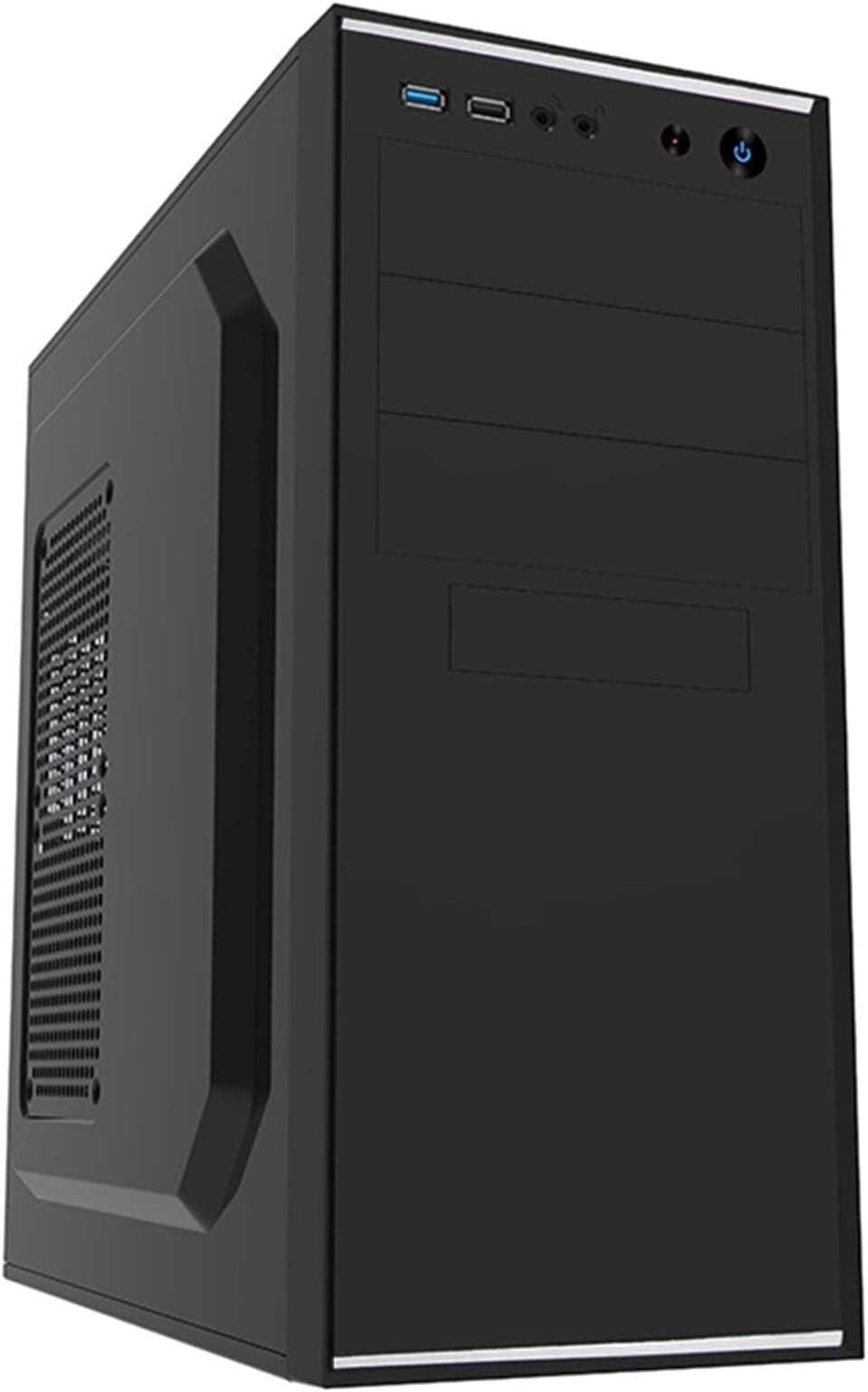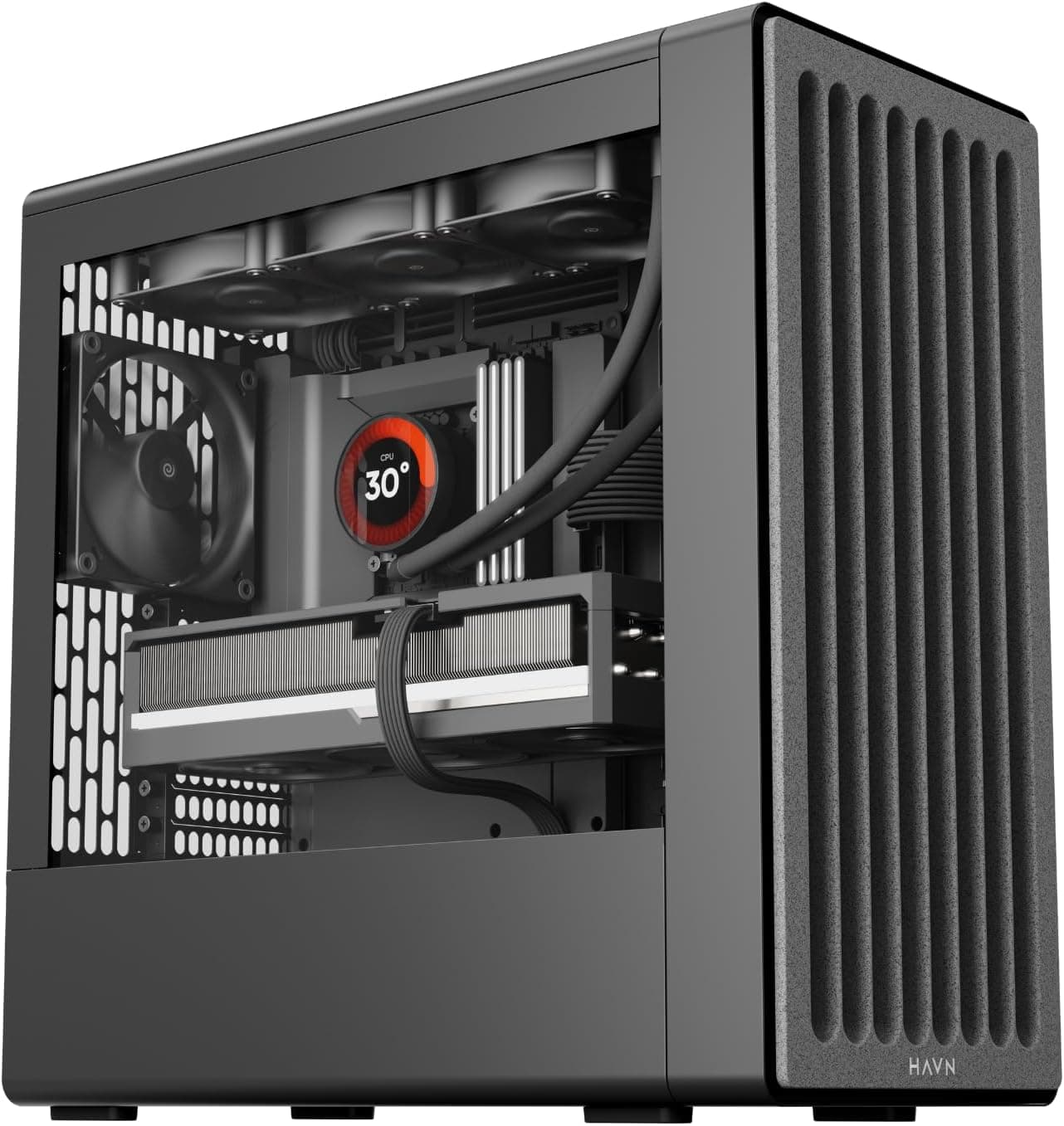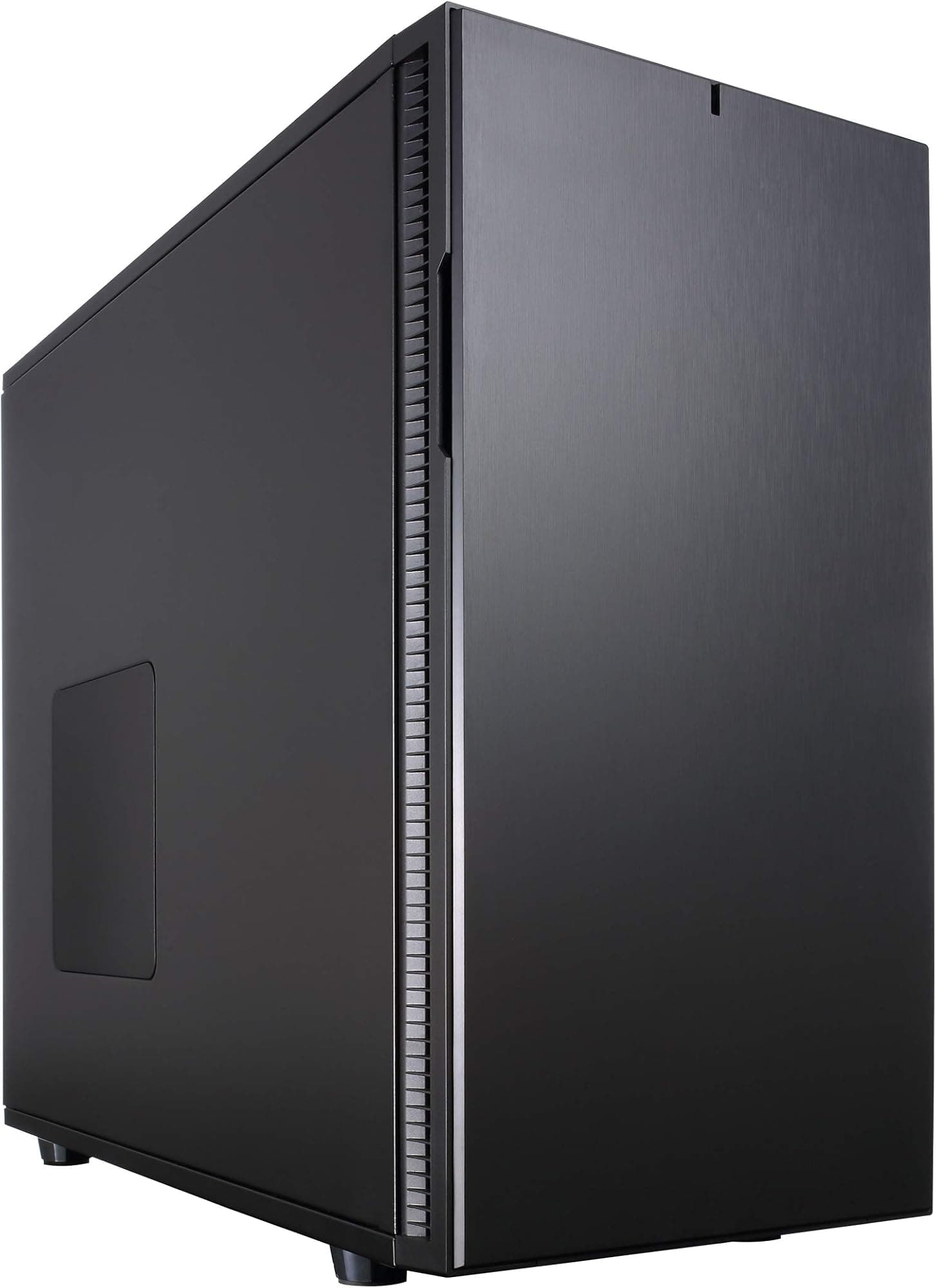
Pick the wrong case and you'll spend an evening discovering that your 320mm GPU won't clear the drive cage, your 165mm tower cooler is 5mm too tall, or your 360mm radiator simply has nowhere to go. These aren't abstract concerns. They're the exact reasons people end up boxing hardware back up and paying return postage. So before anything else: does the Fractal Design Focus G actually have the clearances and the internal layout to support a real build? The short answer is yes, mostly, with a couple of caveats before you click buy.
This is a budget mid-tower that punches noticeably above its price tier. The Fractal Design Focus G case review verdict is straightforward: it's a well-thought-out chassis from a brand that genuinely cares about build experience, sold at a price where most competitors are cutting corners on steel thickness or shipping you a single 80mm exhaust fan. Over 4,110 owners have rated it ★★★★½ (4.5), and that's not a fluke. There are trade-offs (the acrylic side panel, no USB Type-C on the front I/O), but for what it costs, this case is hard to argue with.
Core Specifications
The Focus G is a standard ATX mid-tower built around a steel chassis with a tinted acrylic side window. It measures 450mm tall, 210mm wide, and 395mm deep, which puts it in comfortable mid-tower territory without being unnecessarily chunky. Weight comes in at around 5.8kg, which is about what you'd expect from a steel-primary build at this price. There's no aluminium trim or tempered glass here, but the steel is decent enough that the chassis doesn't flex in a way that makes you nervous.
Fan support is where the spec sheet gets interesting for a budget case. The front panel takes up to three 120mm fans or two 140mm fans. The top supports two 120mm or two 140mm fans. The rear gets a single 120mm fan position. Out of the box, Fractal ships two of their own 120mm white LED fans pre-installed at the front, which is a genuinely useful inclusion rather than a token gesture. Those fans are quiet, they move reasonable air, and they don't sound like a hair dryer at 1200 RPM.
Radiator support covers up to 240mm at the front and 120mm at the rear. The top doesn't officially support radiators in Fractal's own documentation, which is a limitation if you're planning a 240mm top-mounted AIO. Storage-wise, you get two 3.5-inch drive bays and two 2.5-inch dedicated mounts, plus the option to use the 3.5-inch bays for 2.5-inch drives with adapters. It's not the most expansive storage layout, but it's adequate for a modern build that leans on NVMe for primary storage.
| Specification | Detail |
|---|---|
| Form Factor | ATX Mid-Tower |
| Dimensions (H x W x D) | 450 x 210 x 395mm |
| Motherboard Support | ATX, Micro-ATX, Mini-ITX |
| Max GPU Length | 310mm (with HDD cage) / 450mm (cage removed) |
| Max CPU Cooler Height | 170mm |
| Front Fan Support | 3x 120mm or 2x 140mm |
| Top Fan Support | 2x 120mm or 2x 140mm |
| Rear Fan Support | 1x 120mm |
| Front Radiator Support | Up to 240mm |
| Rear Radiator Support | Up to 120mm |
| Drive Bays (3.5") | 2 |
| Drive Bays (2.5") | 2 dedicated |
| Included Fans | 2x 120mm Fractal Design Silent LL White LED |
| Front I/O | 2x USB 3.0, HD audio in/out |
| Side Panel | Tinted acrylic window |
| PSU Form Factor | ATX |
| Weight | ~5.8kg |
| Price | £64.40 |

Form Factor and Dimensions
At 450 x 210 x 395mm, the Focus G sits in a sensible mid-tower footprint that'll fit on most standard desks without dominating them. It's not a compact case by any stretch, but it's also not one of those enormous full-towers that requires its own dedicated floor space. The 210mm width is on the slimmer side for a mid-tower, which actually helps on tighter desks, though it does mean internal spacing is a touch tighter than you'd get in something wider like the Corsair 4000D.
The front panel design deserves a mention because it's one of the more practically minded choices Fractal made here. Rather than a solid plastic slab or a mesh-only front that looks industrial, the Focus G uses a ventilated front panel with a honeycomb-style mesh area that allows decent airflow through to those front intake fans. It's not as open as a pure mesh front (the kind you see on cases like the Meshify C), but it's meaningfully better than the sealed plastic fronts that plagued budget cases for years. Owners consistently note that temperatures are reasonable given the price point, which is the real-world confirmation that the front intake design is doing its job.
The case sits on four rubber-footed legs that provide a few millimetres of ground clearance. This matters if you're placing it on a carpet, since a case sitting flush on carpet will starve a bottom-mounted PSU of intake air. The Focus G doesn't have a bottom-mounted fan option anyway, but the feet still help with general airflow and stability. The overall footprint is conventional enough that cable management behind the motherboard tray won't feel impossibly cramped, and the case doesn't have any weird angles or asymmetric design choices that make positioning difficult.
Motherboard Compatibility
The Focus G supports ATX, Micro-ATX, and Mini-ITX motherboards. It does not support E-ATX, which isn't a surprise at this price point and with these internal dimensions. If you're running a standard ATX board (the most common choice for a mid-range build), the standoff layout is conventional and the motherboard tray is pre-installed with the standard nine standoffs for ATX. Fractal includes additional standoffs in the accessory bag for mATX and ITX configurations, which is the kind of small detail that makes a build feel less annoying.
The cutout behind the CPU socket area is a proper large circular cutout rather than a tiny slot, which means you can mount and remove most tower coolers without pulling the motherboard out. That's not guaranteed on budget cases, and it's a genuine quality-of-life feature. The cutout is large enough for the backplate mounting hardware on most popular coolers including the Noctua NH-D15 family and the be quiet! Dark Rock series, based on what owners have reported when fitting these coolers in the Focus G.
For Mini-ITX builds, the Focus G is functional but arguably oversized. You'd be paying for a lot of empty space. A smaller case would make more sense if ITX is your form factor of choice. But for ATX and mATX, this case is properly sorted. The standoff positions are clearly labelled on the tray, the brass standoffs that come in the box are the right thread pitch, and nothing about the motherboard installation process should cause any grief. Owners rarely flag fitment issues, which tells you the tolerances are where they need to be.
GPU Clearance
This is where the Focus G Fractal Design Focus G case review gets a bit nuanced. With the HDD cage installed, maximum GPU length is 310mm. Remove the cage entirely and that jumps to 450mm, which is more than enough for any current consumer GPU. In practice, most people running this case will want to keep at least one HDD cage for storage, which means the effective limit is 310mm for a typical build. That's fine for the vast majority of cards including the RTX 4070, RX 7800 XT, and most mainstream options, but it's worth measuring your specific card before assuming it fits.
The RTX 4080 Super in its reference and most AIB variants runs around 336mm, which would require cage removal. The RTX 4090 in its larger AIB forms can hit 360mm or beyond, and those cards are simply too long with the cage in. If you're building around a high-end card with a triple-fan cooler, plan for cage removal and make sure your storage strategy is NVMe-first. Realistically, if you're dropping serious money on an RTX 4090, you're probably not shopping for a budget mid-tower anyway, so this limitation is mostly academic.
There's no vertical GPU mount option on the Focus G, which is consistent with its price tier. Vertical mounting requires a PCIe riser cable and a case designed to accommodate the bracket, and budget cases rarely include either. Owners haven't flagged this as a missing feature in any significant volume, which suggests the people buying this case aren't particularly bothered. Width clearance between the GPU and the side panel window is adequate, with no reports of cards fouling the acrylic panel even with chunkier triple-fan designs that sit tall.
CPU Cooler Clearance
A 170mm maximum CPU cooler height is genuinely good for a budget mid-tower. That clears the Noctua NH-D15 (165mm), the be quiet! Dark Rock Pro 4 (162.8mm), the DeepCool AK620 (160mm), and essentially every popular tower cooler on the market without any drama. You'd have to be reaching for something unusually tall to run into the ceiling here. The Noctua NH-D15S, for example, is 160mm and fits with 10mm to spare. That headroom matters because some cases advertise 160mm clearance and then the motherboard's VRM heatsink or RAM clearance eats into that.
AIO radiator support is solid at the front (up to 240mm) and rear (120mm), but the top panel doesn't officially support radiators. This is a meaningful limitation if you're planning a 240mm or 360mm top-mounted AIO, which is a popular configuration. Some owners have reported fitting a 240mm radiator at the top with a bit of creative mounting, but that's not officially supported and clearance with RAM can become an issue depending on your RAM height. If top-mounted AIO is your plan, the Focus G isn't the right chassis for it.
For a front-mounted 240mm AIO, the Focus G works well. The front fan positions accommodate a 240mm radiator, and the included fans can be replaced with the radiator fans without any structural issues. Owners running 240mm AIOs at the front report good results, with CPU temperatures behaving as you'd expect from a properly ventilated front intake. The 120mm rear position works for smaller AIOs or as a dedicated exhaust mount. Overall, the cooler clearance situation is one of the Focus G's stronger points, and Fractal's official product page confirms these figures.
Storage Bay Options
Two 3.5-inch bays and two dedicated 2.5-inch mounts is a modest but honest storage layout for 2026. The reality is that most modern builds run an NVMe SSD on the motherboard for the primary drive, and the 3.5-inch bays are there for secondary spinning storage or additional SSDs. The two 2.5-inch mounts are positioned behind the motherboard tray, which keeps the interior looking clean but does mean you can't really show off your SSDs through the side window. Not that you'd particularly want to.
The HDD cage is removable, which is the key flexibility point here. Pull it out and you gain that extra GPU clearance mentioned earlier, plus the interior opens up considerably. For a pure NVMe build with no spinning drives, removing the cage makes sense and the result is a noticeably less cluttered interior. The 2.5-inch mounts behind the tray remain accessible regardless of whether the cage is in or out, so you're not losing SSD capacity by removing it.
Tool-free drive mounting is partially implemented. The 3.5-inch bays use a rail system that's tool-free once the rails are attached to the drive (and attaching the rails requires a screwdriver). The 2.5-inch mounts are screw-fixed. This is standard for the price tier and nobody's going to be swapping drives frequently enough for it to matter, but it's the tool-free claims are a bit optimistic. Owners don't flag this as a frustration, which suggests the mounting process is straightforward even if it's not genuinely screwless.

Cable Management
Cable management in the Focus G is better than the price suggests, and this is one of the areas where Fractal's design experience shows. There's a proper PSU shroud that hides the power supply and the rats' nest of cables that inevitably comes with it. The shroud has a cutout that lets cables route cleanly up to the motherboard without being visible through the side window. For a budget case, this is a genuinely nice touch and owners frequently mention it as a reason the build looks cleaner than expected.
Behind the motherboard tray, cable management space is around 15mm to 20mm depending on where you measure. That's workable but not generous. Thicker cable bundles (like a fully modular PSU's 24-pin ATX cable) will require some persuasion to get the side panel closed. Fractal includes a few cable tie points moulded into the chassis, plus a couple of Velcro straps in the accessory bag, which helps considerably. The routing holes are rubber-grommeted, which is a detail you don't always see at this price.
The main 24-pin ATX cable routing runs along the right side of the motherboard tray, and there's a dedicated routing channel for it. The CPU power cable (typically 8-pin EPS) routes up the right side as well, and the channel is positioned to reach the top-left of most ATX motherboards without the cable being stretched. Owners with longer EPS cables report no issues, and those with shorter cables on budget PSUs have occasionally mentioned needing to route creatively. If your PSU's EPS cable is under 500mm, double-check it'll reach before committing. Overall, the cable management situation is genuinely above average for a budget mid-tower.
Airflow and Thermal Design
The Focus G's airflow story starts with the front panel. It's not a full mesh front, but it has a ventilated design that allows meaningful airflow through to the two included 120mm intake fans. The included fans are Fractal's own Silent LL series, which are quiet at their rated speed and move a reasonable volume of air for 120mm fans. They're not going to outperform a high-static-pressure fan designed for radiator use, but as case intake fans for general airflow, they're a proper step above the generic fans many budget cases include.
The thermal configuration out of the box is two front intakes and no rear exhaust fan included (the rear position is empty). This means you'll want to add a 120mm exhaust fan at the rear fairly promptly if you're building anything with a discrete GPU. The positive pressure setup from the two front fans alone will move some air, but without a dedicated exhaust, you're relying on the rear PCIe slot gaps and other openings to let hot air escape, which isn't ideal. A cheap 120mm fan in the rear position sorts this immediately. Owners who add a rear exhaust report noticeably better GPU temperatures, which isn't surprising.
The top panel has ventilation slots that double as passive exhaust points, and there's a basic dust filter on the top that's removable for cleaning. The bottom of the case has a dust filter for the PSU intake, which is magnetic and slides out from the front. Practical, easy to clean, and exactly what you want. The front panel also has a dust filter, though owners note it's a bit fiddly to remove compared to the magnetic bottom filter. None of this is class-leading dust filtration, but it's meaningfully better than cases that ship with no filters at all. For the price, the airflow design is sensible and the included fans are a genuine asset rather than a liability.
Front I/O and Connectivity
The front I/O on the Focus G gives you two USB 3.0 Type-A ports and a combined HD audio jack (headphone and microphone). The power button is a clean, firm press with a satisfying click, and the reset button is smaller and recessed enough that you won't accidentally hit it. The USB 3.0 ports connect via a standard internal USB 3.0 header, which every modern ATX motherboard has. So far, so standard.
What's missing is a USB Type-C port. In 2026, that's a real omission. The Focus G was designed around 2017 and the front I/O reflects that era. Most competitors at this price point now include at least one USB Type-C port on the front panel, and the absence here is noticeable if you're regularly plugging in a phone, a controller, or an external SSD via Type-C. It's not a dealbreaker for everyone, but it's the kind of thing that'll quietly irritate you every time you reach for the front of the case.
The I/O placement is on the top of the case, angled slightly forward, which is the sensible position for a floor-standing or desk-top case. Reaching to the back of a top panel to plug in a USB drive is annoying; the Focus G avoids this by putting the ports where you can actually see them. The audio jack is a single combined port rather than separate headphone and microphone jacks, which is fine for headsets but means you'll need a splitter if you're using separate headphones and a standalone microphone. Again, this is a 2017-era design choice rather than a cost-cutting measure.
Build Quality and Materials
The steel used in the Focus G is mid-weight for a budget case. It's not the thin, flexy stuff you get in the cheapest chassis where panels rattle when you tap them, but it's not the heavy-gauge steel of a premium case either. The chassis itself is rigid enough that the case doesn't twist when you pick it up from one corner, which is a basic but meaningful quality check. The side panels align properly with the chassis without gaps or misalignment, which owners consistently confirm. Panel fitment issues are rare in the owner review set, and that's a good sign for manufacturing consistency.
The side window is acrylic rather than tempered glass. This is the most common criticism in owner reviews, and it's a fair one. Acrylic scratches more easily than glass, it can yellow over time with UV exposure, and it doesn't have the premium feel of a thick glass panel. But it's also lighter and cheaper to produce, which is part of why the Focus G hits its price point. If the window is important to you and you want glass, you'll need to spend more, either on this case in a different variant or on a competitor like the Corsair 4000D Airflow. If you're the type who doesn't particularly care about the window, the acrylic is fine in practice.
The panel removal mechanism uses thumbscrews at the rear, which is conventional and reliable. No tool-free latch system here, but thumbscrews are genuinely easy to use and don't wear out the way plastic latches can. The front panel clips on and pops off for filter access, and owners note it's a secure fit that doesn't rattle during use. Sharp edges are largely absent from the interior, which is a more important quality indicator than it sounds. Budget cases sometimes have stamped metal edges that'll catch your hand during a build. The Focus G's interior edges are rolled or finished well enough that multiple owners specifically mention not cutting themselves, which is exactly the kind of mundane detail that matters when you're routing cables at 11pm.
How It Compares
The two most natural comparisons for the Focus G in the budget mid-tower space are the Corsair 4000D and the be quiet! Pure Base 500. The 4000D is the more modern chassis with a better front I/O (including USB Type-C), a tempered glass side panel, and a more open front mesh design. It's also more expensive. If your budget stretches to the 4000D, it's the better long-term buy, particularly because the front I/O will age better. But if the Focus G's price tier is genuinely your ceiling, the 4000D isn't a fair comparison.
The be quiet! Pure Base 500 is a closer price competitor. It has better sound dampening (be quiet! builds noise reduction into almost everything they make), a tempered glass side panel option, and a similarly sensible internal layout. The Pure Base 500 is arguably the better choice for a quiet build where acoustics matter more than airflow. The Focus G, by contrast, prioritises airflow over noise, and the included fans reflect that. If you're building a gaming PC and you want temperatures kept down without spending extra on aftermarket fans, the Focus G has the edge. If you're building a workstation or an HTPC where silence is the priority, look at the Pure Base 500.
Within Fractal's own lineup, the Meshify C is the obvious upgrade. It has a true mesh front panel that significantly improves airflow, tempered glass, and a more refined interior layout with better cable management space. It costs more, but if airflow is your primary concern and the budget allows it, the Meshify C is where Fractal's design really shines. The Focus G is the sensible entry point into the Fractal ecosystem, and it's a good one, but the Meshify C is the case Fractal enthusiasts tend to recommend when someone has a bit more to spend.
| Feature | Fractal Design Focus G | Corsair 4000D | be quiet! Pure Base 500 |
|---|---|---|---|
| Price Tier | Budget | Mid-range | Budget / Mid-range |
| Side Panel | Tinted acrylic | Tempered glass | Tempered glass (variant) |
| Front I/O | 2x USB 3.0, audio | 1x USB 3.1 Type-C, 2x USB 3.0, audio | 1x USB 3.1 Type-C, 2x USB 3.0, audio |
| Max GPU Length | 310mm (cage in) / 450mm | 360mm | 369mm |
| Max CPU Cooler Height | 170mm | 170mm | 190mm |
| Included Fans | 2x 120mm LED | 0 | 1x 140mm (front) |
| Front Panel Type | Ventilated plastic | Open mesh | Solid with side vents |
| Radiator Support (Front) | Up to 240mm | Up to 360mm | Up to 360mm |
| Sound Dampening | None | Minimal | Yes (foam panels) |

Final Verdict: Fractal Design Focus G Case Review
The Fractal Design Focus G is a genuinely good budget mid-tower. That 4.5-star average across over 4,000 owners isn't inflated by people who've never built a PC before; the reviews are specific, they mention clearances and cable routing and fan noise, and they're consistently positive about the things that matter. Fractal's design sensibility, even at this price tier, produces a case that's pleasant to build in, reasonably quiet, and thermally competent with a simple fan upgrade at the rear.
The limitations are real but predictable for the price. No USB Type-C on the front I/O is the one that'll sting most over time. The acrylic side panel is a downgrade from tempered glass. Front radiator support tops out at 240mm. The front panel mesh isn't as open as a dedicated airflow case. None of these are surprising for a budget chassis, and none of them make the Focus G a bad buy. They just define what kind of build it suits best: a straightforward gaming or productivity rig with a mainstream GPU, a tower air cooler or 240mm AIO, and a builder who wants the process to go smoothly without spending a fortune on the case.
If you're building something modest and you want a case that won't fight you at every step, the Focus G is a smart pick. If you're pairing it with a high-end GPU that's pushing 330mm or longer, plan to remove the HDD cage. If you're planning a 360mm AIO, look elsewhere. And if your budget stretches a bit further and airflow is the priority, Fractal's own Meshify C is the honest next step up. But at its price tier, the Focus G does what it promises, and that's more than most of its competition manages.
Score: 8 out of 10. Strong for the money, honest about its limitations, and built by a brand that actually thinks about the person doing the build.
What works. What doesn’t.
5 + 4What we liked5 reasons
- 170mm CPU cooler clearance clears every popular tower cooler including the NH-D15
- Two decent 120mm LED fans included out of the box
- PSU shroud and rubber-grommeted cable routing holes for a tidy build
- Removable HDD cage extends GPU clearance to 450mm
- Magnetic bottom dust filter and front filter included
Where it falls4 reasons
- No USB Type-C on front I/O, which feels dated
- Acrylic side panel scratches more easily than tempered glass
- Front radiator support limited to 240mm, no top radiator support
- No rear exhaust fan included, you'll want to add one
Full specifications
11 attributes| Form factor | Mid-Tower |
|---|---|
| CPU cooler clearance MM | 165 |
| Dimensions MM | 205 x 444 x 464 |
| Fans included | 2 |
| GPU clearance MM | 380 |
| MAX FAN count | 6 |
| MAX radiator MM | 280 |
| PSU support | ATX up to 230mm |
| Side panel | acrylic window |
| Supported motherboard | ATX, Micro-ATX, Mini-ITX |
| Weight KG | 4.5 |
If this isn’t right for you
2 options 8.5 / 10
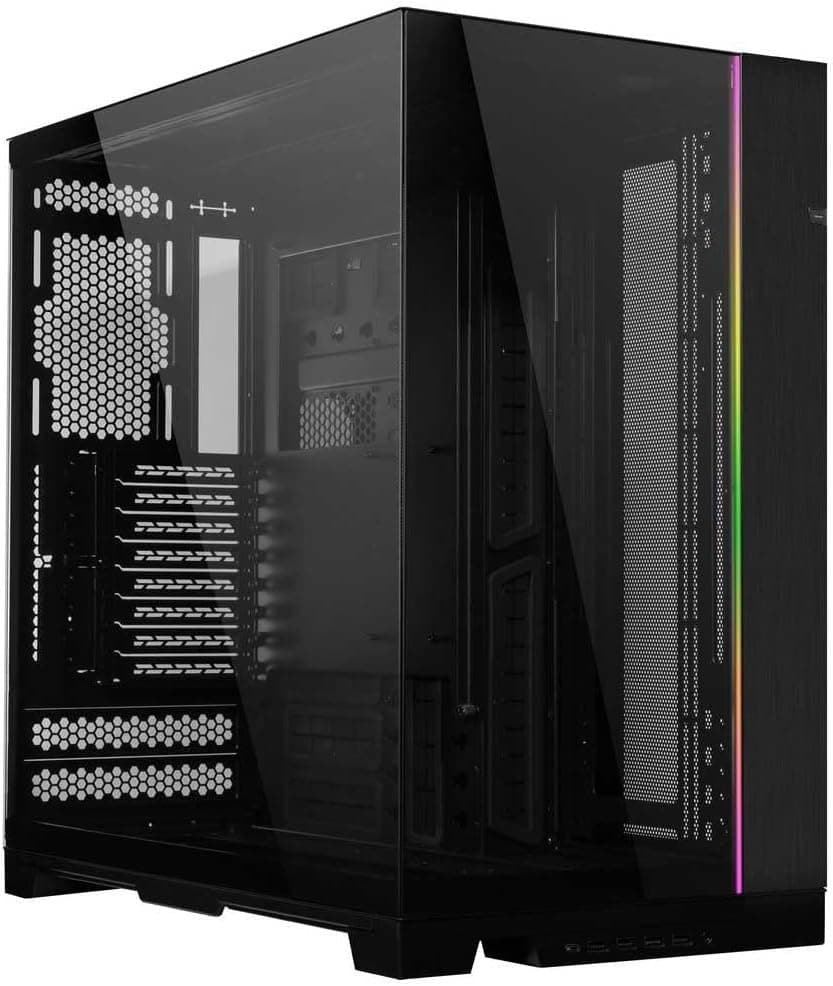
Lian Li Lancool 207 Mid-Tower Case | Premium ATX/mATX Gaming PC Case | Tempered Glass | Optimal Airflow Black Case
£74.99 · Lian Li
 8.5 / 10
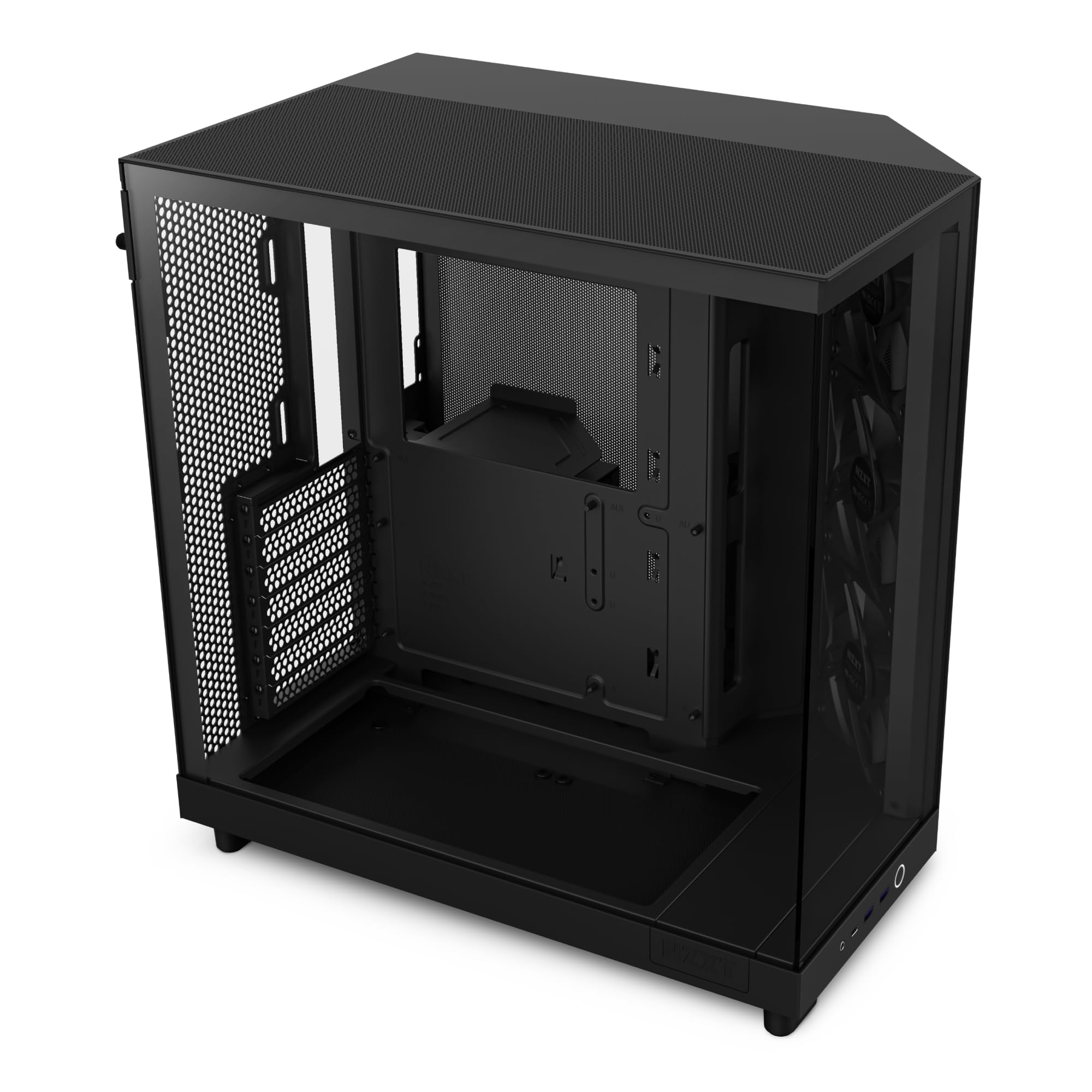
NZXT H6 Flow | CC-H61FB-01 | Compact Dual-Chamber Mid-Tower Airflow Case | Panoramic Glass Panels | High-Performance Airflow Panels | Includes 3 x 120mm Fans | Cable Management | Black
£59.99 · NZXT
Frequently asked
5 questions01Is the Fractal Design Focus G - Mid Tower Computer Case - ATX - High Airflow - 2x Fractal Design Silent LL Series 120mm White LED Fans Included - USB 3.0 - Window Side Panel - Black good for airflow?+
It's decent for a budget case, but not class-leading. The ventilated front panel allows airflow through to the two included 120mm Fractal Design Silent LL fans, which are quiet and move reasonable air. The main limitation is that no rear exhaust fan is included, so you'll want to add a 120mm fan at the rear fairly quickly. With a front intake pair and a rear exhaust, temperatures are reported as solid by owners for mainstream GPU and CPU combinations. The front panel isn't a full open mesh like the Meshify C or Corsair 4000D Airflow, so if maximum airflow is the priority, those cases have an edge.
02What's the GPU clearance on the Fractal Design Focus G - Mid Tower Computer Case - ATX - High Airflow - 2x Fractal Design Silent LL Series 120mm White LED Fans Included - USB 3.0 - Window Side Panel - Black?+
With the HDD cage installed, maximum GPU length is 310mm. Remove the HDD cage entirely and that extends to 450mm, which covers every current consumer GPU. In practice, most mainstream cards including the RTX 4070, RX 7800 XT, and similar fit comfortably with the cage in. Larger triple-fan cards like the RTX 4080 Super (around 336mm in most AIB variants) will require cage removal. If you're planning a high-end build with a long triple-fan GPU, plan your storage around NVMe rather than spinning drives so you can remove the cage without losing capacity.
03Can the Fractal Design Focus G - Mid Tower Computer Case - ATX - High Airflow - 2x Fractal Design Silent LL Series 120mm White LED Fans Included - USB 3.0 - Window Side Panel - Black fit a 360mm AIO?+
No, not officially. The front panel supports up to a 240mm radiator, and the rear supports a 120mm radiator. The top panel does not officially support radiators in Fractal's own documentation, and clearance with RAM can be an issue even if you attempt to mount one there. If a 360mm AIO is part of your build plan, the Focus G is the wrong chassis. Look at the Fractal Design Meshify C, the Corsair 4000D, or the be quiet! Pure Base 500DX, all of which support 360mm front-mounted radiators.
04Is the Fractal Design Focus G - Mid Tower Computer Case - ATX - High Airflow - 2x Fractal Design Silent LL Series 120mm White LED Fans Included - USB 3.0 - Window Side Panel - Black easy to build in?+
Yes, genuinely so. The large CPU socket cutout in the motherboard tray means you can install most tower coolers without removing the board. The rubber-grommeted cable routing holes and PSU shroud make cable management tidier than the price suggests. Rear cable clearance is around 15 to 20mm, which is workable for most builds though thick cable bundles will require some patience. Owners consistently report that the interior edges are smooth and the panel alignment is good, which are the two things that make a budget build feel either cheap or competent. Sharp edges are not a reported issue here.
05What warranty and returns apply to the Fractal Design Focus G - Mid Tower Computer Case - ATX - High Airflow - 2x Fractal Design Silent LL Series 120mm White LED Fans Included - USB 3.0 - Window Side Panel - Black?+
Specific warranty terms for this product are not confirmed in the available product data. When purchasing through Amazon UK, you're covered by Amazon's standard 30-day returns policy and the A-to-Z Guarantee, which protects your purchase if items arrive damaged or not as described. For warranty queries beyond the standard returns window, contact Fractal Design directly through their official support channels or check the documentation included with the case.