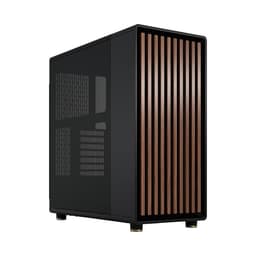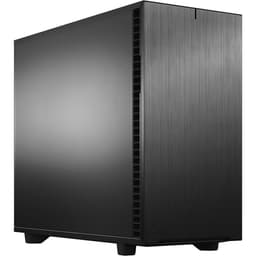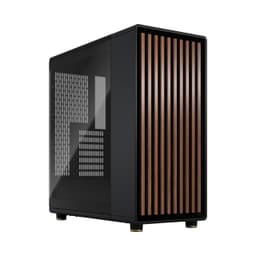
Your case is the one component you'll stare at for years, and it sets the rules for everything else in your build. Get the clearances wrong and your 360mm AIO won't fit. Buy something with a solid front panel and you're throttling your GPU before it's even had a chance. The Fractal Design Focus 2 RGB sits right in the entry tier of the market, where the competition is brutal and the gap between a decent buy and a waste of money is genuinely small. So does it clear the bar?
Based on the spec sheet, Fractal Design's own published details, and the pattern across 85 owner reviews averaging ★★★★½ (4.6), the short answer is yes. This is a well-thought-out mid-tower that gets the fundamentals right: mesh front for proper airflow, generous GPU clearance, two included 140mm RGB fans, and a build experience that owners consistently describe as straightforward. It's not perfect, and there are a couple of things before you hand over your money. But as an entry-level case? It's a proper contender.
This Fractal Design Focus 2 RGB review covers everything that actually matters: clearances, airflow, build quality, cable management, and how it stacks up against the obvious alternatives at this price point. No fluff, just what the specs and real-world owner feedback tell us.
Core Specifications
The Focus 2 is a mid-tower ATX case. It supports ATX, Micro-ATX, and Mini-ITX motherboards, which covers the vast majority of builds. Dimensions come in at 453mm tall, 210mm wide, and 464mm deep. That's a fairly standard footprint, not especially wide, which matters if you're tight on desk or shelf space. The case weighs around 7.3kg without components, which is reasonable for a steel chassis with a tempered glass side panel.
Fan support is generous for this price. You get three 120mm or two 140mm mounts at the front, two 120mm or one 140mm at the top, and one 120mm at the rear. The case ships with two 140mm Aspect RGB fans pre-installed at the front. Radiator support is equally solid: up to 360mm at the front, 240mm at the top, and 120mm at the rear. GPU clearance is rated at 467mm, CPU cooler height clearance is 169mm, and PSU length support goes up to 250mm. There's a PSU shroud included, which keeps the bottom of the case looking tidy.
Storage-wise, you get two 3.5-inch drive bays and two dedicated 2.5-inch mounts, with additional 2.5-inch mounting positions on the drive cage itself. Front I/O includes two USB 3.0 Type-A ports, one USB 3.2 Gen 2 Type-C port, and a combined audio jack. The tempered glass side panel is the clear tint version, so you actually get a proper view of your components rather than the slightly smoky look on some variants. The price, as it stands today, is £65.09.
| Specification | Detail |
|---|---|
| Form Factor | Mid-Tower ATX |
| Motherboard Support | ATX, Micro-ATX, Mini-ITX |
| Dimensions (H x W x D) | 453 x 210 x 464mm |
| Weight | 7.3kg |
| Front Panel | Mesh |
| Side Panel | Tempered Glass (Clear Tint) |
| Included Fans | 2x 140mm Aspect RGB (front) |
| Fan Mounts | Front: 3x 120mm / 2x 140mm | Top: 2x 120mm / 1x 140mm | Rear: 1x 120mm |
| Radiator Support | Front: up to 360mm | Top: up to 240mm | Rear: 120mm |
| GPU Clearance | 467mm |
| CPU Cooler Height | 169mm |
| PSU Length | Up to 250mm |
| Drive Bays (3.5") | 2 |
| Drive Bays (2.5") | 2 dedicated + additional on cage |
| Front I/O | 2x USB 3.0 Type-A, 1x USB 3.2 Gen 2 Type-C, Audio |
| Current Price | £65.09 |

Form Factor and Dimensions
The Focus 2 is a mid-tower, which is the right call for most people building a gaming or workstation PC. At 210mm wide, it's actually on the slimmer side for an ATX mid-tower. Some competing cases push 230mm or even 240mm wide, which can be a problem if you're working with a narrow desk setup or an IKEA Kallax shelf (and yes, that's a real consideration for a lot of people). The 464mm depth is fairly typical and shouldn't cause issues on most standard desks.
The 453mm height is also sensible. It's tall enough to accommodate large air coolers up to 169mm, and it doesn't feel absurdly oversized sitting next to a monitor. A few owners have noted that it fits neatly under a desk without the top I/O or power button getting obscured, which is a small but practical point. If you're going on a desk rather than under it, the proportions look balanced. The mesh front gives it a clean, purposeful look rather than the aggressive gamer aesthetic you get from some competitors at this price.
One thing: the 210mm width means the rear cable management space is tighter than you'd get in a wider case. It's workable, but if you're planning an especially cable-heavy build with multiple HDDs and a modular PSU with lots of thick cables, you might find it a squeeze. For a typical gaming build with one GPU, one or two drives, and a mid-range PSU, it's absolutely fine. The slim profile is a net positive for most people.
Motherboard Compatibility
The Focus 2 supports ATX, Micro-ATX, and Mini-ITX. No E-ATX support, which is fine at this price point. E-ATX boards are typically the territory of high-end workstation or enthusiast builds, and if you're spending that kind of money on a motherboard, you'd want a case with more headroom anyway. For the vast majority of gaming builds, ATX is the sweet spot, and the Focus 2 handles it without issue.
Fractal Design has a solid reputation for getting the standoff layout right and the motherboard tray alignment accurate. Owner reviews don't flag any issues with misaligned I/O shields or standoffs in the wrong positions, which might sound like a low bar but is genuinely something that trips up cheaper cases. The motherboard tray itself is a standard fixed design, so no tool-free sliding tray, but at this price that's expected. You'll need a screwdriver, which you should have anyway.
If you're building with a Micro-ATX board, the case will feel slightly cavernous, but that's not necessarily a bad thing. More room around a smaller board means easier cable routing and better airflow. Mini-ITX in a mid-tower is a bit overkill unless you're planning future upgrades or just prefer the build experience of a larger chassis. The ATX fit is clearly what this case is designed around, and that's where it's most at home.
GPU Clearance
467mm of GPU clearance is genuinely impressive for an entry-level case. To put that in context, an NVIDIA RTX 4090 Founders Edition is around 336mm long. Even the beefiest triple-fan AIB variants of current flagship cards rarely exceed 360mm. So you've got substantial headroom here, and even if GPU lengths creep up in future generations, the Focus 2 should stay relevant for a while.
There's no vertical GPU mount option in the standard configuration, which is a shame but not unusual at this price. Vertical mounting tends to require a riser cable and specific bracket support, and most cases only offer it as an optional extra or in higher-tier versions. If showing off your GPU through the side panel in a vertical orientation is a priority, you'd need to look elsewhere or factor in the cost of a third-party bracket. For most people though, horizontal mounting is fine and the clear tint tempered glass still gives you a good view of your card.
One practical point: if you're installing a 360mm front radiator, the GPU clearance figure will reduce because the radiator and its fans eat into the interior depth. Fractal Design doesn't publish an exact reduced clearance figure for this config, but owner feedback suggests that a standard-length GPU (up to around 300mm) still fits comfortably alongside a front 360mm rad. If you're planning a full custom loop or a particularly long GPU, measure carefully before committing. For most gaming builds, though, the clearance is a non-issue.
CPU Cooler Clearance
169mm of CPU cooler height clearance covers pretty much every tower air cooler on the market. The Noctua NH-D15, widely considered the best air cooler available, comes in at 165mm. The be quiet! Dark Rock Pro 4 is 162.8mm. The popular Thermalright Peerless Assassin 120 SE is around 155mm. So you're not being squeezed here, and the vast majority of high-performance air coolers will fit without any clearance anxiety.
For AIO liquid cooling, the Focus 2 supports a 360mm radiator at the front, a 240mm at the top, and a 120mm at the rear. The front 360mm mount is the headline feature for water cooling enthusiasts. A 280mm AIO also fits at the front (two 140mm fans), which lines up nicely with the included fan positions. Top-mounted 240mm AIOs are well supported too, though you'll want to check RAM height clearance if you're running particularly tall memory sticks. Owner reviews don't flag major RAM clearance issues with standard-height memory.
The rear 120mm mount is purely for exhaust, either a fan or a small 120mm AIO if you're doing something unconventional. Most builds will use it for a single 120mm exhaust fan. The pump-head mounting space on the CPU area is standard and shouldn't cause problems with any mainstream AIO on the market. Overall, the cooling support in the Focus 2 is one of its genuine strengths, punching above what you'd typically expect at the entry price tier.
Storage Bay Options
Two 3.5-inch bays and two dedicated 2.5-inch mounts. For a gaming build in 2026, that's adequate but not generous. If you're planning to run two or three mechanical hard drives alongside your SSDs, you might find yourself wishing for more. But honestly, most gaming builds these days are running one NVMe SSD on the motherboard, maybe a secondary 2.5-inch SATA SSD, and potentially one spinning disk for mass storage. The Focus 2 covers that configuration comfortably.
The 3.5-inch drive cage sits behind the PSU shroud, which keeps things tidy. Drives mount with screws rather than tool-free trays, which is a minor inconvenience but not a dealbreaker. The 2.5-inch mounts are positioned on the back of the motherboard tray and on the drive cage itself, which is a sensible layout. It keeps your SSDs accessible without cluttering the main chamber.
If your build is NVMe-first, which most modern gaming builds should be given how cheap M.2 SSDs have become, then the storage bay situation is perfectly fine. The motherboard handles your primary and secondary NVMe drives, and you've got the SATA bays for anything else. The 3.5-inch cage is also removable if you want to improve airflow or simply don't need the spinning disk space, which is a thoughtful touch that several owners specifically mention appreciating. Flexibility like that matters when your build plans might change over time.

Cable Management
Cable management in the Focus 2 is genuinely decent for an entry-level case. The PSU shroud covers the bottom section neatly, hiding your power supply and the inevitable tangle of unused modular cables. Behind the motherboard tray, there are multiple cable routing channels with cutouts positioned sensibly for 24-pin ATX power, CPU power, and GPU cables. Velcro straps are included, which is a detail that cheaper cases often skip and then you're hunting for cable ties at 11pm during a build.
The rear panel clearance is around 20mm to 25mm, which is workable but tight if you're using a non-modular PSU. Owner reviews are broadly positive about cable management, with several noting that the end result looks clean through the tempered glass. A few mention that the 24-pin routing can be a bit stiff to route neatly if your PSU cable is particularly thick or rigid, but that's a common complaint across cases at this price point and not specific to the Focus 2.
The PSU shroud has a cutout for routing cables from the PSU into the main chamber, and there's a rubber-grommeted pass-through at the top right of the motherboard tray for the CPU power cable. These are the kinds of small design decisions that separate a frustrating build from a smooth one. Fractal Design has clearly thought about where cables actually need to go, rather than just adding a shroud for aesthetics and calling it done. If you're building with a fully modular PSU, you'll have an easier time, but even a semi-modular setup should come out looking respectable.
Airflow and Thermal Design
The mesh front panel is the single most important thing about the Focus 2's thermal design, and it's the reason this case exists as a product. Fractal Design's own higher-end cases like the Meshify 2 built their reputation on exactly this kind of open-mesh approach, and the Focus 2 brings that philosophy down to the entry tier. A mesh front means air can actually get to your intake fans without fighting through a solid panel. The physics here aren't complicated: more airflow in means cooler components.
The two included 140mm Aspect RGB fans are positioned as front intakes. They're not the highest-performance fans on the market, but they're a reasonable starting point. At 140mm they move more air at lower RPM than 120mm fans, which generally means quieter operation at equivalent airflow. Owner reviews suggest the included fans are decent but not spectacular, with a few noting they swapped them out for Noctua or be quiet! fans in noise-sensitive builds. For a budget build or someone who doesn't want to spend more on fans, they're absolutely usable out of the box.
The standard airflow configuration would be two 140mm front intakes and one 120mm rear exhaust, which gives you positive pressure inside the case. Positive pressure is generally good: it means air is pushed out through gaps rather than sucked in, which reduces dust ingestion. There's a dust filter on the front mesh and a magnetic filter on the top panel. The bottom also has a filter for the PSU intake. Three dust filters is solid for this price bracket. Some competing cases at similar money skip the top filter entirely, which becomes annoying after a few months when you're cleaning out the top fan area by hand.
Front I/O and Connectivity
The front I/O is positioned on the top of the case, which is the sensible place for it on a mid-tower. You get two USB 3.0 Type-A ports, one USB 3.2 Gen 2 Type-C port, a 3.5mm combined audio jack, and the power button. No reset button, which is a minor omission but one that most people never miss in day-to-day use. The power button has a clean, understated design that matches the overall aesthetic of the case.
The USB Type-C port is a genuine highlight. At the entry price tier, a lot of cases still ship with USB 3.0 Type-A only, or include a Type-C port that runs at slower USB 3.1 Gen 1 speeds. The Focus 2's Type-C runs at USB 3.2 Gen 2, which means 10Gbps throughput. That's fast enough for an external NVMe enclosure, a high-speed hub, or any modern peripheral. Your motherboard will need a USB 3.2 Gen 2 Type-C header to take advantage of it, which most modern ATX boards have. your specific board before assuming it'll work at full speed.
The combined audio jack handles both headphone and microphone in a single 3.5mm connection, which is the standard approach for cases. If you're using a dedicated sound card or USB audio interface, it's irrelevant. For everyone else, it works fine. The HD Audio header on the motherboard side of things is what determines audio quality here, not the case itself. Overall, the I/O selection is genuinely good for an entry-level case, and the Type-C port in particular is something you'd usually pay more for.
Build Quality and Materials
The Focus 2 is built from steel with a tempered glass side panel. The steel feels solid without being exceptional, which is about right for the price. Owner reviews are largely positive about build quality, with the word "sturdy" appearing frequently. A small number of reviews mention that the top panel has a little flex when pressed, but this is cosmetic rather than structural and doesn't affect the build. The panels align well and the overall finish is consistent, which isn't guaranteed at entry-level pricing.
The tempered glass side panel is the clear tint version, giving you a genuinely transparent view of your components. It's held in place with thumbscrews rather than a tool-free hinge or latch system, which means you'll need to unscrew it every time you need access. A few owners mention this as a minor frustration compared to cases with swing-out panels. But tempered glass on a hinge at this price point is rare, and thumbscrews are at least quick to deal with once you get used to it. The glass itself is a reasonable thickness and doesn't feel flimsy.
Sharp edges are one of the things that can make or break a build experience, and the Focus 2 comes out reasonably well here. Owner reviews don't flag any consistent sharp edge complaints, which is a good sign. Cheaper cases often have rough edges around cable routing cutouts or on the drive cage, and these are the kinds of things that draw blood during a build. Fractal Design's quality control at this tier is noticeably better than some of the no-name competition. The included screws are standard quality, nothing special but nothing that strips easily either. The overall impression is a case that's been designed by people who've actually thought about the build process.
How It Compares
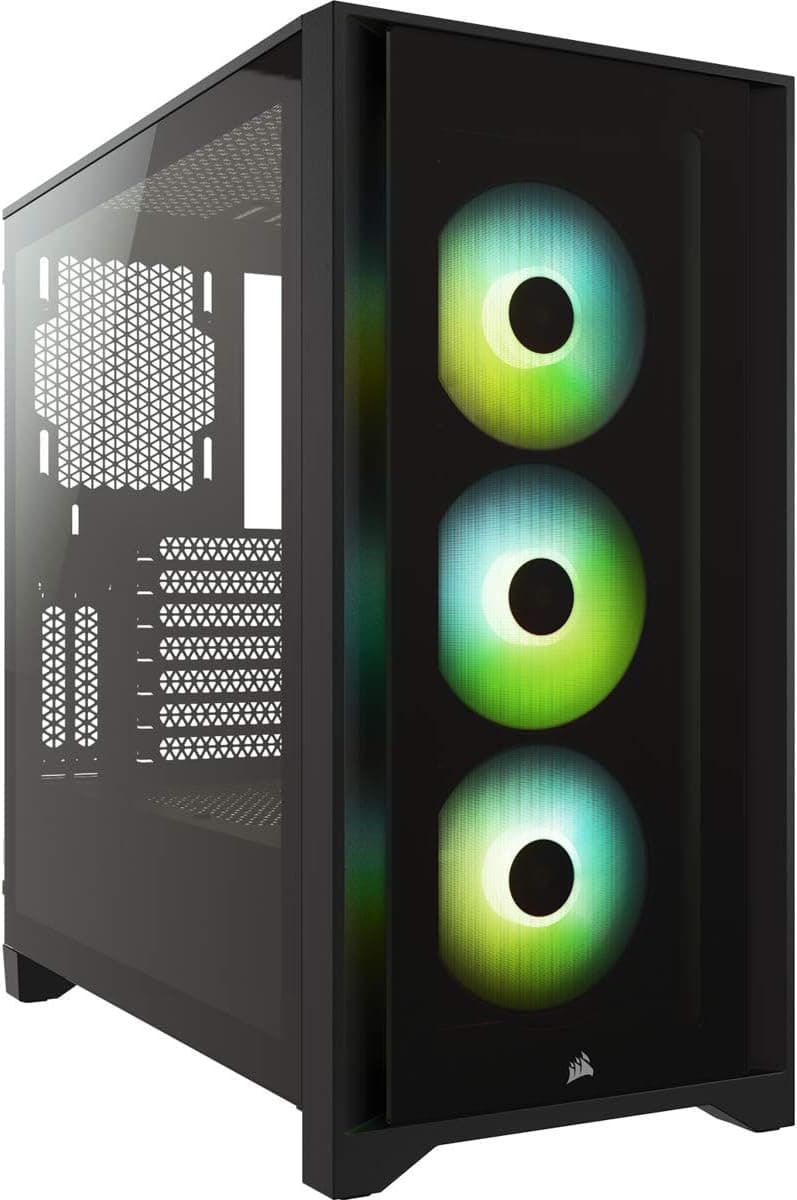
The two obvious competitors at this price point are the Corsair 4000D Airflow and the NZXT H510 Flow. The 4000D Airflow is probably the Focus 2's most direct rival: both have mesh fronts, both target the entry-to-mid tier, and both have strong owner feedback. The 4000D Airflow is generally slightly wider at 230mm, which gives more rear cable management space but takes up more desk real estate. It also typically comes in slightly higher in price. The Focus 2 has the edge on included fans (two 140mm RGB vs the 4000D's two 120mm non-RGB), and the Type-C port on the Focus 2 runs at the faster 10Gbps spec.
The NZXT H510 Flow is a different beast. It has a partially mesh front rather than a fully open mesh, which restricts airflow compared to both the Focus 2 and the 4000D Airflow. It's a better-looking case by most people's standards, but if thermals matter to you, the fully mesh front of the Focus 2 wins. The H510 Flow also lacks the storage flexibility of the Focus 2 and typically comes with only one included fan. Where the H510 Flow wins is in the cable management system, which NZXT has refined over multiple generations and is genuinely excellent. But for airflow-focused builds, the Focus 2 is the stronger choice.
Against both competitors, the Focus 2 holds its own well. The 467mm GPU clearance beats both the 4000D Airflow (360mm) and the H510 Flow (381mm) by a meaningful margin. The front 360mm radiator support matches the 4000D and beats the H510 Flow's 280mm front limit. At its current entry-tier price, the Focus 2 represents genuinely strong value, particularly given the included 140mm RGB fans and the USB 3.2 Gen 2 Type-C port.
| Feature | Fractal Design Focus 2 RGB | Corsair 4000D Airflow | NZXT H510 Flow |
|---|---|---|---|
| Front Panel | Full mesh | Full mesh | Partial mesh |
| GPU Clearance | 467mm | 360mm | 381mm |
| CPU Cooler Height | 169mm | 170mm | 165mm |
| Max Front Radiator | 360mm | 360mm | 280mm |
| Included Fans | 2x 140mm RGB | 2x 120mm non-RGB | 1x 120mm non-RGB |
| USB Type-C Front I/O | USB 3.2 Gen 2 (10Gbps) | USB 3.1 Gen 1 (5Gbps) | USB 3.2 Gen 2 (10Gbps) |
| 3.5" Drive Bays | 2 | 2 | 2 |
| Dust Filters | Front, top, bottom | Front, bottom | Front, bottom |
| Width | 210mm | 230mm | 210mm |
| Price Tier | Entry | Entry-Mid | Entry-Mid |

Final Verdict
The Fractal Design Focus 2 RGB earns its 4.6-star average. It's an entry-level case that doesn't feel like one. The mesh front is the right call, the GPU clearance is class-leading at 467mm, the 360mm front radiator support is genuinely useful, and the included 140mm RGB fans are a better bundle than most competitors offer. The USB 3.2 Gen 2 Type-C port is a detail that matters and that you'd usually pay more to get. Fractal Design has clearly applied lessons from their higher-end Meshify and Define lines to make this a case that's easy to recommend without caveats.
The weaknesses are real but minor. The 210mm width means rear cable management is tighter than a wider case. Thumbscrew panel access is less convenient than a hinged design. The included fans are decent but not exceptional, and enthusiasts will probably swap them out. There's no vertical GPU mount option. None of these are dealbreakers, and most of them are things you'd accept in a case costing significantly more.
Who is this for? Anyone building a gaming PC on a budget who wants proper airflow, generous clearances, and a clean finish without spending mid-range money. It's particularly good for builds with long GPUs or large AIO coolers, where the clearance headroom pays dividends. First-time builders will appreciate the sensible layout and the fact that owner reviews don't flag any nasty surprises during the build process.
Who should think twice? If cable management is your obsession and you want every wire routed with surgical precision, the NZXT H510 Flow's cable management system is more refined. If you want a vertical GPU mount out of the box, look elsewhere. And if you genuinely don't care about RGB and want to save a few quid, the non-RGB version of the Focus 2 exists and is. It's the same case without the light show, and the money saved can go toward a better fan or a larger SSD.
Our editorial score is 8.5 out of 10. Strongly recommended at the entry price tier. Current pricing is £65.09, and at that level it's one of the better-value cases you can buy right now.
What works. What doesn’t.
5 + 3What we liked5 reasons
- 467mm GPU clearance is class-leading at this price
- Full mesh front delivers proper unrestricted airflow
- Includes two 140mm RGB fans, better than most rivals bundle
- USB 3.2 Gen 2 Type-C front I/O runs at full 10Gbps
- Three dust filters including top and bottom coverage
Where it falls3 reasons
- 210mm width makes rear cable management tighter than wider rivals
- Thumbscrew side panel access, no hinged or tool-free option
- No vertical GPU mount support in standard configuration
Full specifications
11 attributes| Form factor | Mid-Tower |
|---|---|
| CPU cooler clearance MM | 170 |
| Dimensions MM | 472 x 215 x 451 |
| Fans included | 2 |
| GPU clearance MM | 405 |
| MAX FAN count | 6 |
| MAX radiator MM | 360 |
| PSU support | ATX up to 250mm (175mm recommended) |
| Side panel | tempered glass |
| Supported motherboard | ATX, Micro-ATX, Mini-ITX |
| Weight KG | 6.4 |
Frequently asked
5 questions01Is the Fractal Design Focus 2 RGB Black - Tempered Glass Clear Tint - Mesh front good for airflow?+
Yes, and it's one of the case's strongest points. The full mesh front panel allows unrestricted air intake, which is a significant advantage over cases with solid or partially solid fronts. Two 140mm Aspect RGB fans are included as front intakes from the factory, and the case supports up to three 120mm or two 140mm fans at the front for additional airflow if needed. There are dust filters on the front mesh, top panel, and bottom PSU area, which helps keep dust ingestion manageable. Overall thermal performance should be strong for the price, and owner feedback consistently reflects this.
02What is the GPU clearance on the Fractal Design Focus 2 RGB?+
The Focus 2 supports GPUs up to 467mm in length, which is genuinely generous for an entry-level case. For context, even the largest triple-fan AIB variants of current flagship cards like the RTX 4090 typically measure around 340mm to 360mm, so you have substantial headroom. If you install a 360mm front radiator, available clearance will reduce somewhat, but owner feedback suggests standard-length GPUs up to around 300mm still fit comfortably alongside a front rad. There is no vertical GPU mount option in the standard configuration.
03Can the Fractal Design Focus 2 RGB fit a 360mm AIO?+
Yes. The Focus 2 supports a 360mm radiator at the front, a 240mm radiator at the top, and a 120mm at the rear. The front 360mm mount is the headline option for water cooling builds and works with standard 120mm fan spacing. A 280mm AIO also fits at the front using the two 140mm fan positions. For top-mounted 240mm AIOs, check your RAM height clearance if you are using particularly tall memory modules, though owner reviews do not flag this as a common problem with standard-height RAM. The rear 120mm position is best used for a single exhaust fan in most builds.
04Is the Fractal Design Focus 2 RGB easy to build in?+
Owner feedback is broadly positive about the build experience. The motherboard tray layout is sensible, cable routing cutouts are positioned logically for 24-pin ATX, CPU power, and GPU cables, and Velcro cable management straps are included. The PSU shroud keeps the bottom of the case tidy. The main limitation is the 210mm chassis width, which means rear cable management space is around 20mm to 25mm and can feel tight with thick non-modular PSU cables. Using a fully modular PSU helps significantly. Owner reviews do not flag consistent sharp edge issues, and the overall build experience is described as straightforward by most who have built in it.
05What warranty and returns apply to the Fractal Design Focus 2 RGB?+
Fractal Design's standard warranty terms should be checked directly on their website for the most current information. When purchased through Amazon UK, the case is covered by Amazon's standard 30-day return policy and the Amazon A-to-Z Guarantee, which provides protection if the item arrives damaged or not as described. For warranty claims beyond the return window, contact Fractal Design's customer support directly.