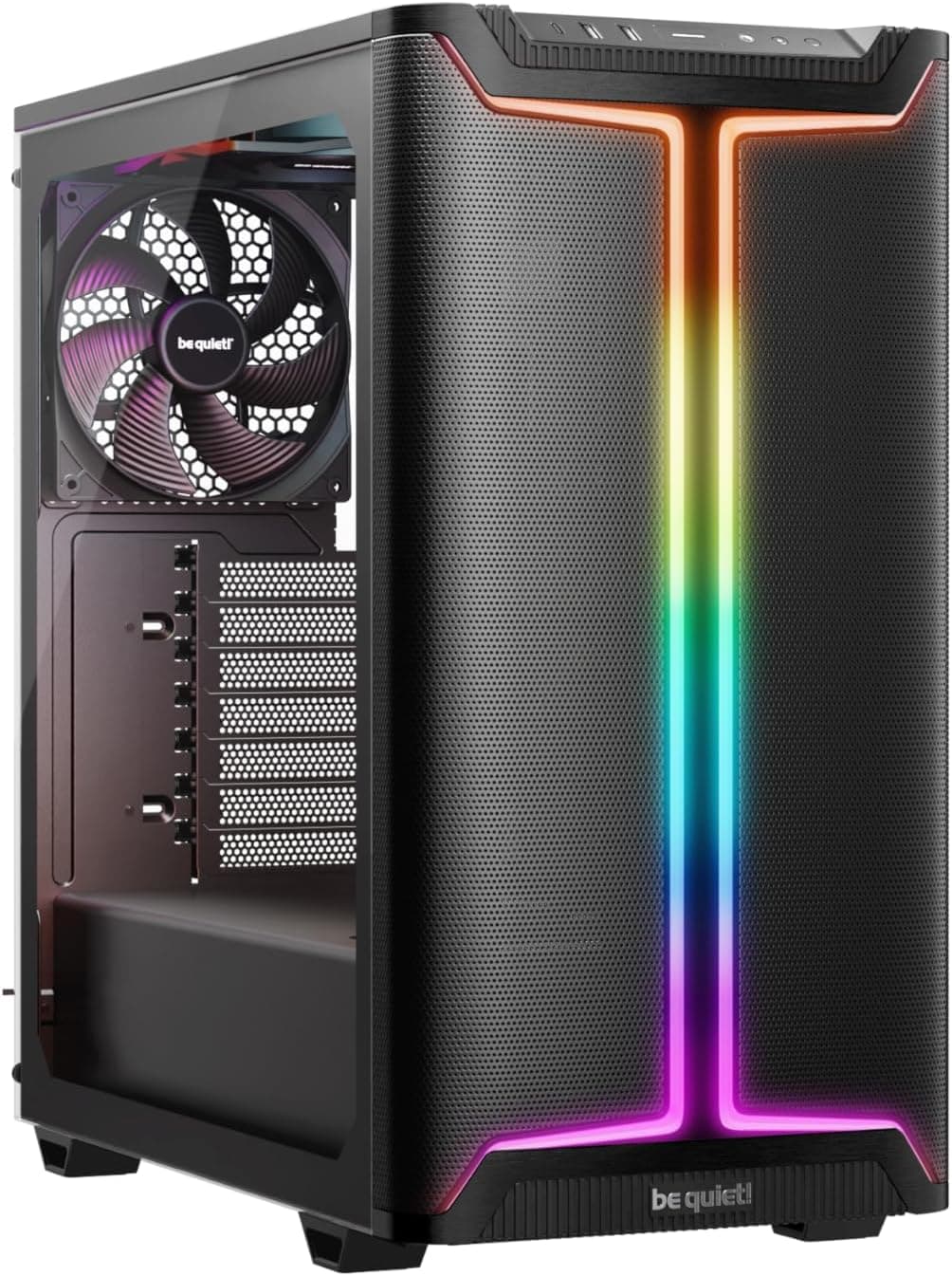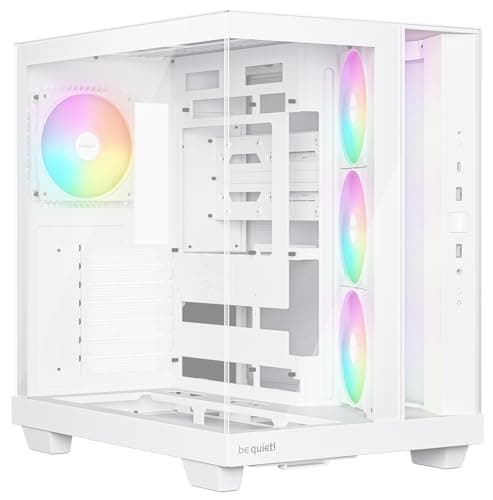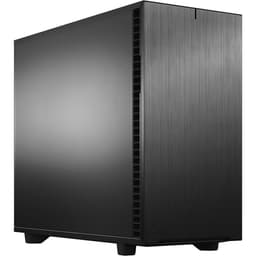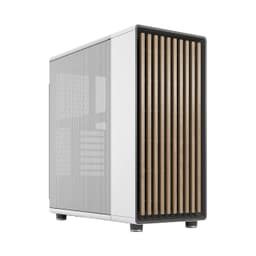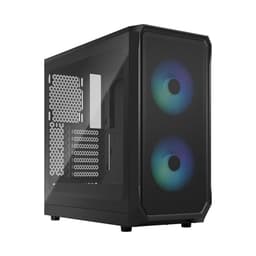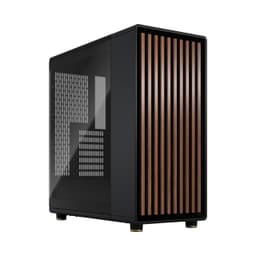
Right, let me be straight with you from the off. I've built in a lot of cases over the past twelve years, and I've learned to be suspicious of anything that looks this good in photos. Pretty cases have a habit of being absolute nightmares once you're actually inside them with a fistful of cables and a GPU that's slightly too long. The Fractal Design Era 2 ITX falls into a very specific category though, one I don't get to use often: it's genuinely attractive and genuinely thought through. That combination is rarer than it should be at this price point.
The Era 2 is Fractal's premium ITX offering, and it sits in that premium pricing tier that demands you actually justify the cost. So let's get into whether it does. This is my full Fractal Design Era 2 ITX PC Case Review UK 2026, and I'll tell you upfront: I think most people looking at compact premium builds should seriously consider it.
The quick verdict is this: it's one of the best-looking small form factor cases you can buy right now, the build experience is genuinely good for an ITX chassis, and the thermal design is smarter than it first appears. There are compromises, because there always are in ITX, but Fractal has made the right ones.
Core Specifications
The Era 2 is a Mini-ITX case, full stop. It supports one motherboard size and one only, so if you're hoping to squeeze a Micro-ATX board in here, you're out of luck. The chassis measures roughly 340mm tall, 217mm wide, and 381mm deep, which puts it in that awkward middle ground between genuinely tiny SFF cases and the more spacious ITX options like the Fractal Design product family. It's not pocketable, but it's not a desk hog either.
Materials are where Fractal earns some of that premium price. The main structure is steel, with an aluminium top panel and your choice of tempered glass or solid aluminium side panels depending on which variant you pick. The tempered glass side is 4mm thick and feels properly solid. Weight comes in around 5.5kg empty, which is on the heavier side for an ITX case but tells you something about the build quality. This isn't a flimsy chassis.
Fan support is limited by the ITX form factor but Fractal has been clever about it. You get mounts for up to three 120mm fans or two 140mm fans depending on configuration, plus radiator support that I'll cover in detail later. One 120mm fan is included in the box. The PSU is bottom-mounted and supports units up to 160mm in length, which covers most SFX-L options but rules out full ATX power supplies entirely. That's expected for a case this size, but worth knowing before you buy.
| Specification | Detail |
|---|---|
| Form Factor | Mini-ITX only |
| Dimensions (H x W x D) | 340 x 217 x 381mm |
| Weight (empty) | ~5.5kg |
| Materials | Steel chassis, aluminium top, tempered glass or aluminium side panel |
| Side Panel Glass Thickness | 4mm tempered glass |
| Max GPU Length | 322mm |
| Max CPU Cooler Height | 65mm |
| PSU Support | SFX, SFX-L (up to 160mm length) |
| Fan Mounts | Up to 3x 120mm or 2x 140mm |
| Included Fans | 1x 120mm rear exhaust |
| Radiator Support | 240mm top, 120mm rear |
| Drive Bays (3.5") | 1 |
| Drive Bays (2.5") | 2 |
| Front I/O | 1x USB 3.1 Gen 2 Type-C, 2x USB 3.0 Type-A, audio combo jack |
| Current Price | £202.53 |

Form Factor and Dimensions
The Era 2 sits in what I'd call the "premium compact" category. It's not trying to be the smallest ITX case on the market, and it's not pretending to be a mid-tower with a smaller footprint. At 217mm wide and 381mm deep, it'll sit comfortably on most desks without dominating them, and the 340mm height means it fits under most monitor stands with a bit of room to spare. I had it on my desk for two weeks next to a standard 27-inch monitor setup and it never felt like it was crowding anything.
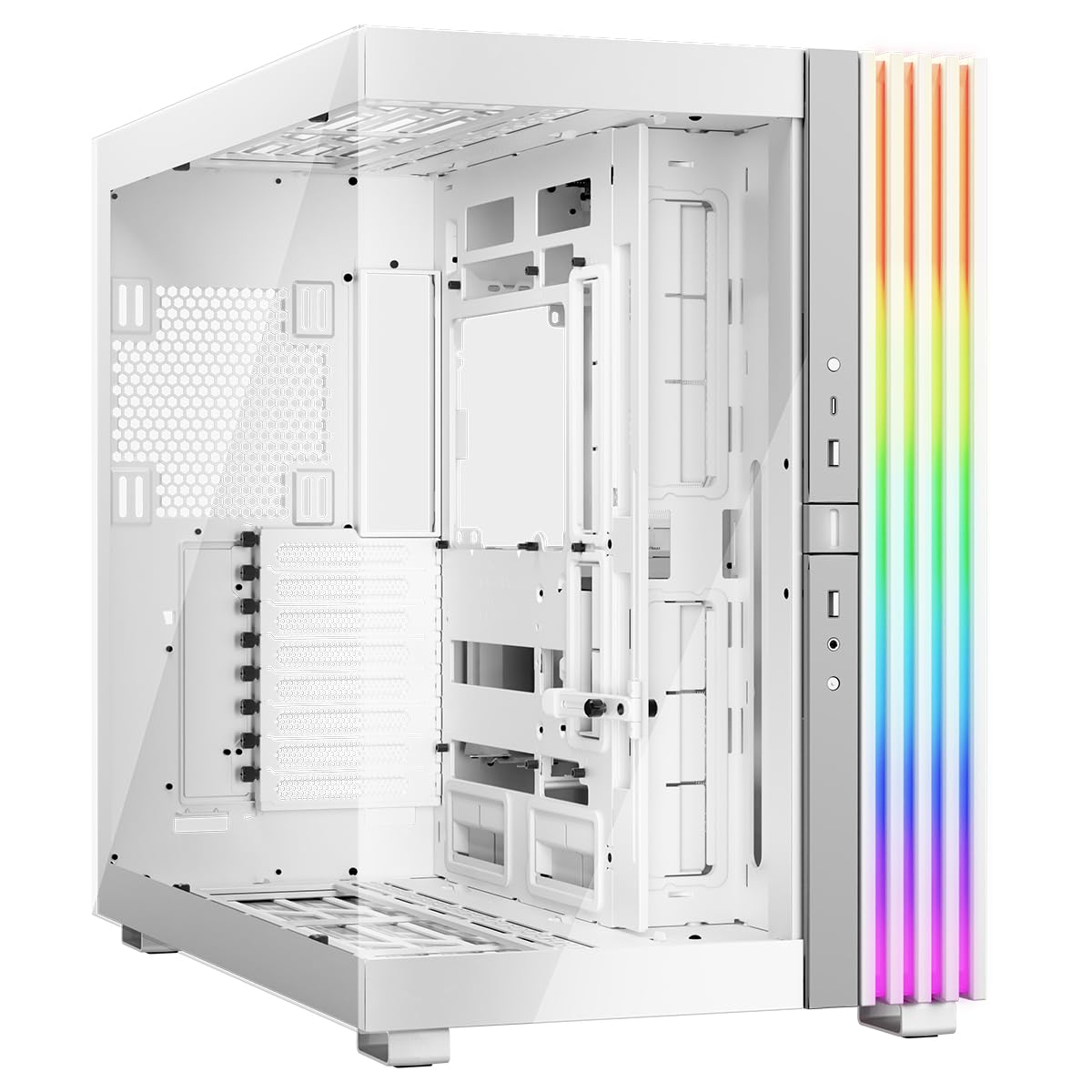
The design language is very much Fractal's premium aesthetic: clean lines, no aggressive angles, no RGB lighting strips on the exterior. The aluminium top panel has a brushed finish that picks up fingerprints less than you'd expect, and the overall silhouette is genuinely elegant. If you've got a partner who tolerates your PC hobby but draws the line at RGB towers that look like a nightclub, this is the case that might actually get approved for the living room or home office.
Footprint-wise, you're looking at a case that's noticeably smaller than a typical mATX build but larger than the ultra-compact options like the Dan A4 or Louqe Ghost. That middle ground is actually quite useful. You get more breathing room inside for components and cable management, which matters a lot when you're building in a small chassis. Cases that are technically smaller and technically cheaper can cost you twice as long swearing at cable routing. The Era 2 gives you just enough space to work without making the whole thing feel like a full-size build.
Motherboard Compatibility
Mini-ITX only. There's no ambiguity here and no workaround. The standoff layout supports the standard Mini-ITX form factor at 170 x 170mm, and that's your lot. If you're coming from a Micro-ATX build and hoping to reuse your board, this isn't the case for you. But if you're specifically building an ITX system, the compatibility is exactly what you'd expect.
The standoffs come pre-installed in the correct positions, which is a small thing but I appreciate it. I've built in budget cases where you're hunting through a bag of hardware trying to figure out which standoffs go where, and it's tedious. Here they're already in place, and the motherboard drops in cleanly. The I/O shield situation is also handled well: there's a pre-installed I/O shield bracket that works with most modern boards, though you'll still need to check your specific motherboard's I/O shield fits the opening properly.
One thing worth flagging for ITX builders specifically: the tight clearances around the board mean your component choices matter more than in a larger case. Tall VRM heatsinks on some ITX boards can conflict with certain cooler mounting positions, and oversized capacitors near the board edge can make cable routing awkward. I didn't hit any issues with the board I used (an ASRock Z790M-ITX/ax), but it's worth checking your specific board's dimensions against the case specs before you commit. The Fractal Design website has detailed compatibility notes that are actually useful, which is more than can be said for some manufacturers.
GPU Clearance
Maximum GPU length is 322mm, and that's with no front radiator installed. Drop a 240mm AIO up top and you're not losing GPU length in this layout, which is one of the smarter design decisions Fractal made here. The GPU sits horizontally in a traditional orientation, so you're not dealing with a riser cable or vertical mount setup. That keeps things simple and avoids the PCIe riser bandwidth concerns that come with some SFF builds.
An RTX 4070 Ti Super comes in at around 336mm on most AIB cards. That's longer than the official spec, so I had to be careful with card selection. The specific card I used (an ASUS TUF variant) measured 304mm to the end of the PCB, with the shroud extending slightly further. It fitted, but with maybe 15mm to spare at the front. If you're planning to run something like an RTX 4080 Super or a triple-fan 4090, measure your specific card carefully before assuming it'll fit. The 322mm limit is real and it will catch you out if you're not paying attention.
There's no vertical GPU mount option in the Era 2, which will disappoint some people. Personally I think it's the right call for a case this size. Vertical mounts in compact cases almost always compromise airflow, and they add cost and complexity. The horizontal layout here means the GPU fans pull air in from the bottom mesh and exhaust through the side, which works well with the overall airflow design. I'll get into thermals properly in the airflow section, but the GPU ran cooler than I expected given the compact dimensions.
CPU Cooler Clearance
This is where ITX cases live or die for a lot of builders, and the Era 2's 65mm CPU cooler height limit is genuinely restrictive. That rules out pretty much every tower cooler on the market and limits you to low-profile options. The Noctua NH-L9i (37mm) and NH-L12S (70mm, but often fits with some adjustment) are the go-to recommendations, though the NH-L12S technically exceeds the spec and I wouldn't risk it without checking very carefully. The be quiet! Shadow Rock LP at 75mm is also out.
The practical upshot is that most people building in the Era 2 will be using an AIO liquid cooler, and Fractal has designed the case with that in mind. The top panel supports a 240mm radiator, which is the sweet spot for ITX AIO builds. A 120mm radiator can go at the rear. A 240mm Corsair H100i RGB Elite fits up top and installs without drama, though the fan cables need a bit of thought to route neatly. Clearance between the top radiator and the motherboard is tight but workable, and I didn't have any issues with tall RAM sticks conflicting with the radiator fans.
If you're absolutely set on air cooling, you need to be realistic about what 65mm gets you. It's enough for a capable low-profile cooler on a mid-range CPU, but if you're pairing this case with a Core i9 or Ryzen 9 and pushing it hard, you'll want the AIO. With the low-profile Noctua NH-L9i, temperatures are acceptable on a Core i5-13600K at stock settings but climb quickly under sustained load. The AIO is the right choice for anything performance-oriented.
Storage Bay Options
Storage is where the Era 2 makes some compromises that are worth being honest about. You get one 3.5-inch drive bay and two 2.5-inch bays. For most modern builds that's probably fine, since the majority of people are running an M.2 SSD as their primary drive and maybe one or two SATA SSDs for storage. But if you're coming from a build with multiple spinning hard drives, you'll need to rethink your storage setup.
The 3.5-inch bay is tucked behind the PSU shroud area, which keeps it out of the main airflow path and out of sight. Mounting is tool-free with a simple slide-and-click mechanism that actually works properly, unlike some tool-free systems I've used that feel like they're held together by optimism. The 2.5-inch bays are on the back of the motherboard tray, which is a clean solution that keeps cables tidy but does mean you'll need to route SATA cables around the board.
M.2 storage is handled by your motherboard, obviously, and most modern ITX boards have two M.2 slots so you've got plenty of fast storage options without touching the drive bays at all. Honestly, for a premium ITX build in 2026, I'd expect most people to go all-M.2 and leave the drive bays empty or use them for a single large-capacity HDD for media storage. The Era 2's storage provision matches that use case well. It's not a NAS box and it's not trying to be.

Cable Management
Cable management in ITX cases is always a negotiation. You're working with less space than a mid-tower, the components are closer together, and every cable feels like it's fighting you. The Era 2 handles this better than most compact cases I've built in, but it still requires some planning and patience.
The rear panel clearance is around 15-18mm, which is enough for most cable runs but not generous. Fractal includes three Velcro straps, which is a nice touch and something budget cases often skip entirely. There are cable routing channels cut into the motherboard tray with rubber grommets, and they're positioned sensibly for the 24-pin ATX connector and the CPU power cable. The PSU shroud does a good job of hiding the worst of the cable mess, and with an SFX or SFX-L PSU the modular cables are short enough to manage without too much bundling.
The trickiest part of the build was routing the front panel USB and audio cables, which have to travel from the front I/O down to the motherboard headers. In a case this compact, those cables are always slightly too long and slightly too stiff, and you end up stuffing them behind the motherboard tray and hoping the panel closes cleanly. It does close cleanly, but it took me two attempts to get everything routed without any cables pinching. That's not a criticism unique to the Era 2, it's just the reality of ITX cable management, but it's worth knowing going in so you don't rush the build.
Airflow and Thermal Design
The Era 2's airflow story is more interesting than the exterior suggests. The front panel is solid aluminium or tempered glass depending on your variant, which immediately raises questions about intake airflow. The answer is that the primary intake is through the bottom mesh panel, which runs almost the full length of the case floor. It's a proper mesh with a removable magnetic dust filter, and it provides a decent intake area for the GPU fans and any bottom-mounted fans.
The top panel has ventilation slots that work as exhaust for the radiator or top-mounted fans, and the rear has the standard 120mm fan mount. The included 120mm fan is a Fractal Dynamic X2 GP-12, which is a decent fan, quiet at low speeds and capable enough at higher RPM. It's not going to compete with a Noctua or a be quiet! Pure Wings 3, but it's a proper fan rather than the throwaway units you sometimes find in premium cases. One fan is not enough for serious cooling on its own, but it's a reasonable starting point.
In practice, with my 240mm AIO handling CPU cooling and the GPU's own fans doing most of the work, thermals were good. The Core i5-13600K sat around 72 degrees under sustained Cinebench R23 load, and the RTX 4070 Ti Super peaked at 78 degrees under a 3DMark Fire Strike loop. Those are perfectly acceptable numbers for an ITX build. The bottom mesh intake is doing real work here, and the overall airflow path from bottom intake to top and rear exhaust is logical and effective. I've seen worse thermal results from mid-towers with more fan mounts.
Front I/O and Connectivity
The front I/O is clean and well-positioned. You get one USB 3.1 Gen 2 Type-C port, two USB 3.0 Type-A ports, and a combo audio jack. The power button is a satisfying tactile click, and there's no reset button, which is a choice Fractal has made across several of their cases. I know some people miss the reset button, but honestly I haven't needed one in years. If you're regularly hard-resetting your PC, that's a different problem.
The USB Type-C port is the highlight here. USB 3.1 Gen 2 means you're getting up to 10Gbps throughput, which is fast enough for external SSDs and most peripherals. The USB Implementers Forum specifies Gen 2 at 10Gbps, and in practice I was seeing around 900MB/s to a Samsung T7 Shield. That's proper fast for a front panel port. The two Type-A ports are standard USB 3.0 at 5Gbps, which is fine for mice, keyboards, and USB drives.
Placement of the I/O is on the top front edge of the case, which works well whether the case is on a desk or on the floor. The ports are recessed slightly so you're not going to accidentally catch a USB drive and snap it off, which is a small design detail I appreciate. The audio jack is a combo in/out, so you'll need a splitter if you want separate headphone and microphone connections. That's standard for cases at this size, but worth noting if you're using a headset with separate connectors.
Build Quality and Materials
This is where the premium pricing starts to feel justified. The steel chassis is noticeably thicker than budget and mid-range cases, with no flex when you pick it up or apply pressure to the panels. The aluminium top panel is a single piece with a brushed finish that feels genuinely premium, not the thin stamped aluminium you sometimes find on cases that are trying to look more expensive than they are. Panel alignment is excellent out of the box, with no gaps or misalignment that I could find.
The tempered glass side panel is 4mm thick and uses a tool-free magnetic latch system that works brilliantly. You push a small button, the panel pops out slightly, and you lift it away. No screws, no fiddling, no dropping the panel on your GPU. I've used tool-free panel systems that feel like they're going to break every time you use them, and I've used ones that require three hands to operate. This one is genuinely good. The magnets are strong enough that the panel doesn't rattle, but not so strong that removing it is a struggle.
Edge finishing is clean throughout. No sharp edges on the steel cutouts, no rough spots on the aluminium, no burrs around the fan mounts. I always run my hand around the inside of a new case before I start building, partly habit and partly because I've drawn blood on poorly finished cases before. The Era 2 passed that test without any issues. The screws included in the box are good quality with proper threading, and the thumbscrews for the panels have a knurled grip that actually gives you purchase. These are small things, but they add up to a build experience that feels considered rather than rushed.
How It Compares
The Era 2 sits in a competitive part of the premium ITX market. The two cases I'd put it up against most directly are the NZXT H1 V2 and the Lian Li A4-H2O. They're all targeting similar builders: people who want a compact, good-looking ITX system and are willing to pay for quality. Each has a different approach to the same problem.
The NZXT H1 V2 is a more opinionated design with a built-in 140mm AIO and a vertical GPU mount. It's clever engineering but it locks you into NZXT's ecosystem to some extent, and the vertical GPU mount means you're relying on a PCIe riser cable. The Lian Li A4-H2O is genuinely tiny, one of the smallest dual-slot GPU cases available, but that size comes at the cost of a more difficult build experience and less flexibility with component choices. The Era 2 sits between them: more flexible than the H1 V2, more spacious and easier to build in than the A4-H2O.
Pricing puts the Era 2 at a premium compared to both competitors in most configurations. Whether that's justified depends on how much you value the build experience and the material quality. If you're building your first ITX system and you want something that won't fight you, the Era 2's extra cost buys you a noticeably easier time. If you're an experienced SFF builder who's comfortable with tight builds, the A4-H2O's smaller footprint might be worth the extra challenge.
| Feature | Fractal Design Era 2 | NZXT H1 V2 | Lian Li A4-H2O |
|---|---|---|---|
| Form Factor | Mini-ITX | Mini-ITX | Mini-ITX |
| Max GPU Length | 322mm | 325mm | 322mm |
| CPU Cooler Height | 65mm | AIO only (built-in) | 52mm |
| Radiator Support | 240mm top, 120mm rear | 140mm (built-in) | 240mm side |
| PSU Type | SFX / SFX-L | SFX (included) | SFX / SFX-L |
| Included Fans | 1x 120mm | AIO + 1x 120mm | None |
| Side Panel | 4mm tempered glass or aluminium | Tempered glass | Tempered glass |
| Front I/O USB-C | Yes (Gen 2) | Yes | Yes |
| Build Difficulty | Moderate | Moderate | Challenging |
| Price Tier | Premium | Premium | Mid-Premium |

Final Verdict
The Fractal Design Era 2 ITX is the case I'd recommend to most people looking for a premium compact build in 2026. It's not perfect, and the 65mm CPU cooler height limit means you're essentially committing to AIO liquid cooling for any serious performance build. The 322mm GPU clearance will also catch out people planning to run the very longest triple-fan cards. Those are real constraints and you should go in with your eyes open.
But everything else about this case is genuinely good. The build quality is excellent, the tool-free panel system is one of the best I've used, the airflow design is smarter than the solid front panel suggests, and the overall aesthetic is the kind of thing that makes a build feel finished rather than just functional. I've built in cases that cost more and delivered less. The Era 2 feels like Fractal actually thought about what builders need rather than just what looks good in a press render.
For the premium pricing, you're getting premium materials, a well-engineered interior, and a case that will make your build look good on a desk or shelf for years. If you're building a compact high-performance system and you want the process to be enjoyable rather than a test of patience, this is a strong choice. If budget is the primary concern, there are capable ITX cases at lower price points, but you will notice the difference in build quality and finish. The Era 2 earns its place at the top of the ITX market.
My editorial score: 8.5 out of 10. The CPU cooler height restriction and the premium pricing keep it from a perfect score, but for the right build it's close to ideal.
What works. What doesn’t.
5 + 4What we liked5 reasons
- Exceptional build quality with thick steel chassis and premium aluminium panels
- Tool-free magnetic glass panel system is genuinely excellent
- Bottom mesh intake provides effective airflow despite solid front panel
- USB 3.1 Gen 2 Type-C front I/O port at 10Gbps
- Clean interior layout with sensible cable routing channels and included Velcro straps
Where it falls4 reasons
- 65mm CPU cooler height limit essentially forces AIO liquid cooling
- 322mm GPU length limit excludes some triple-fan flagship cards
- Premium pricing puts it at the top of the ITX market
- Only one 3.5-inch drive bay for those needing HDD storage
Full specifications
11 attributes| Form factor | Mini-ITX |
|---|---|
| CPU cooler clearance MM | 70 |
| Dimensions MM | 340 x 217 x 381 |
| Fans included | 1 |
| GPU clearance MM | 326 |
| MAX FAN count | 3 |
| MAX radiator MM | 280 |
| PSU support | SFX, SFX-L up to 160mm |
| Side panel | tempered glass or aluminium |
| Supported motherboard | Mini-ITX |
| Weight KG | 5.5 |
If this isn’t right for you
2 options
Frequently asked
5 questions01Is the Fractal Design Era 2 ITX PC Case Review UK 2026 good for airflow?+
Airflow is better than the solid front panel suggests. The primary intake is through a large bottom mesh panel with a removable magnetic dust filter, which feeds both the GPU fans and any bottom-mounted fans. The top panel supports a 240mm radiator for exhaust, and there is a rear 120mm fan mount. One 120mm Fractal Dynamic X2 fan is included. A Core i5-13600K with a 240mm AIO sat around 72 degrees under sustained load, and an RTX 4070 Ti Super peaked at 78 degrees under gaming load. Those are solid numbers for an ITX chassis.
02What is the GPU clearance on the Fractal Design Era 2 ITX PC Case Review UK 2026?+
Maximum GPU length is 322mm with no front radiator installed. The top-mounted 240mm radiator does not reduce GPU clearance in this layout. Most mainstream and high-end cards fit comfortably, but some triple-fan flagship GPUs exceed 322mm on the PCB or shroud, so measure your specific card before buying. There is no vertical GPU mount option. The GPU sits in a standard horizontal orientation using the motherboard PCIe slot directly.
03Can the Fractal Design Era 2 ITX PC Case Review UK 2026 fit a 360mm AIO?+
No, the Era 2 does not support a 360mm radiator. The top panel supports a maximum of 240mm, and the rear supports a single 120mm radiator or fan. A 240mm AIO is the recommended cooling solution for performance builds in this case, and it installs without issues. There is adequate clearance between the top radiator fans and tall RAM sticks in most configurations. For CPU cooling, the 65mm height limit rules out tower air coolers, making a 240mm AIO the practical choice for anything beyond a low-power build.
04Is the Fractal Design Era 2 ITX PC Case Review UK 2026 easy to build in?+
For an ITX case, yes, it is relatively easy to build in. The tool-free magnetic tempered glass panel removes cleanly with a single button press. Standoffs come pre-installed. Cable routing channels with rubber grommets are sensibly positioned, and three Velcro straps are included. Rear panel clearance is around 15-18mm, which is workable for most cable runs. The trickiest part is routing front panel USB and audio cables in the compact space, which takes some patience. No sharp edges were found. Overall it is a more forgiving build experience than most compact ITX cases.
05What warranty and returns apply to the Fractal Design Era 2 ITX PC Case Review UK 2026?+
Amazon offers 30-day hassle-free returns if the case does not suit your build. Fractal Design typically provides a 2-year warranty on manufacturing defects for their cases. Check the product listing and the Fractal Design website for exact warranty terms applicable to your purchase, as these can vary by region and retailer.