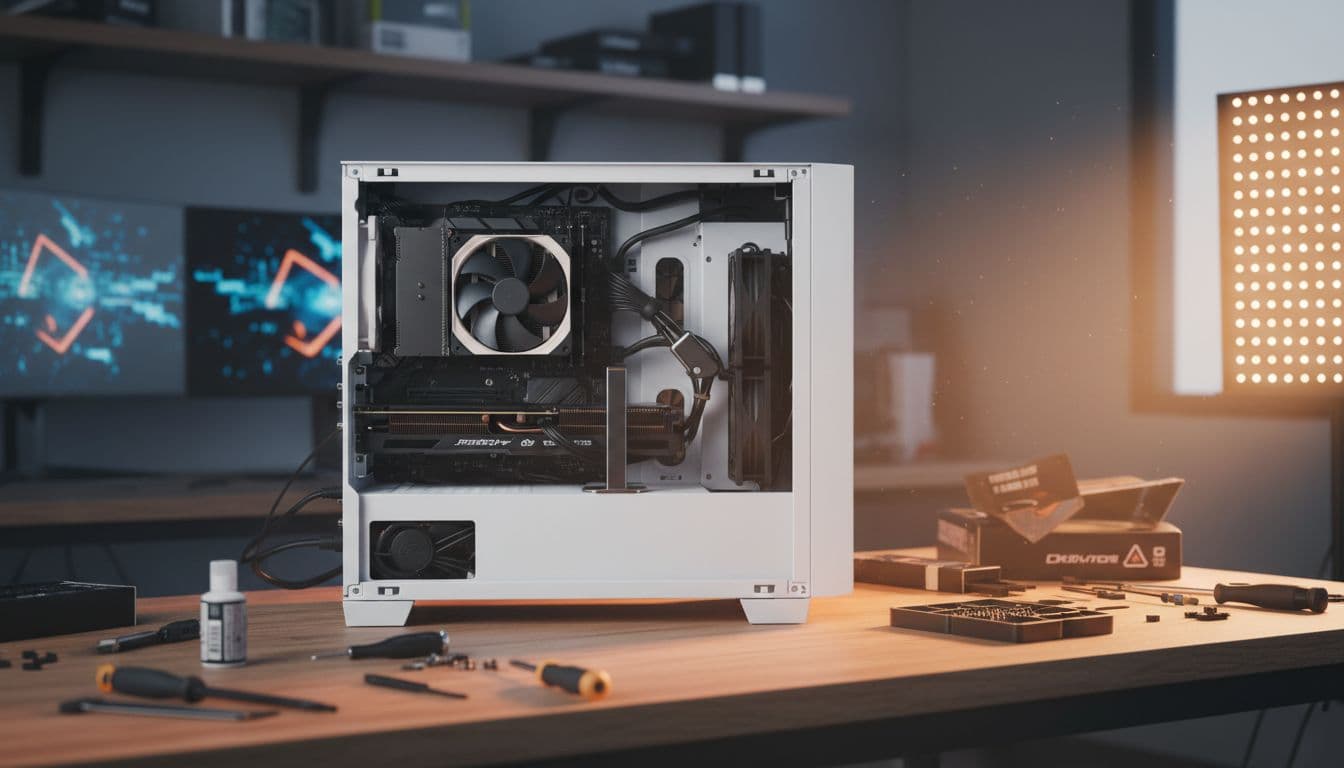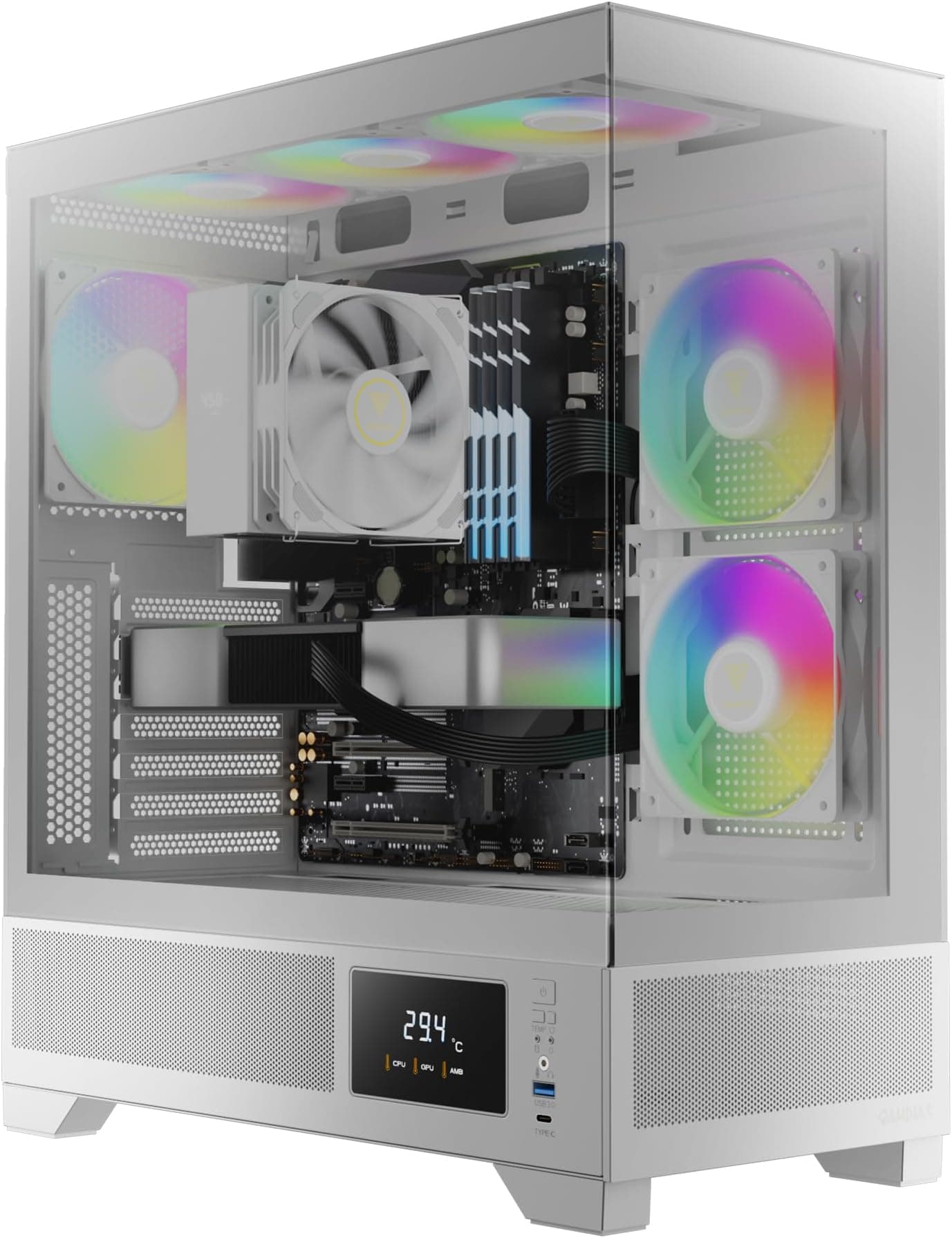
Mesh panels versus tempered glass isn't just an aesthetic argument. It's a thermal one, and the temperature gap between the two approaches under a full gaming load can be genuinely significant. The NZXT H7 Flow exists specifically to make that argument for mesh, and at its entry-tier price point, it does a surprisingly convincing job of it. With 761 owner reviews averaging ★★★★½ (4.7), the crowd has already voted. But crowd wisdom and your specific build requirements don't always align, so let's get into the detail.
The short version: this is a well-thought-out mid-tower that prioritises airflow without sacrificing the clean NZXT aesthetic, and it builds nicely for the money. The longer version involves a few caveats around included fans, some minor owner-reported gripes about panel stiffness, and a comparison against the Fractal Design Pop Air and Corsair 4000D Airflow that's worth reading before you click buy. Here's the full picture.
Core Specifications
The H7 Flow is a mid-tower ATX case built around a perforated mesh front panel, which is the whole point of the "Flow" designation in NZXT's lineup. The chassis measures 464mm tall, 215mm wide, and 480mm deep. That's a proper mid-tower footprint, not one of those cases that claims to be mid-tower but is actually closer to a small form factor in practice. There's real room inside here for large components, long radiators, and chunky air coolers without things getting claustrophobic.
Fan support is generous. You get three 120mm fan mounts at the front (or two 140mm), three 120mm at the top (or two 140mm), and one 120mm at the rear. That's up to seven fans total if you go all-in, which is more than most builds will ever need. NZXT includes three 120mm fans in the box, two at the front and one at the rear, which gives you a working positive-pressure airflow setup straight away. They're not the highest-spec fans you'll ever see, but they're functional and quiet enough at moderate speeds.
Materials are steel for the chassis, with a tempered glass side panel on the left and the perforated mesh front. The PSU shroud is present and properly covers the bottom chamber. Weight comes in around 8.6kg, which is about right for a case this size. There's dust filtration on the front mesh, the top, and the PSU intake at the bottom, which is a detail that matters more than people give it credit for when you're cleaning the thing six months down the line.
| Specification | Detail |
|---|---|
| Form Factor | Mid-Tower ATX |
| Dimensions (H x W x D) | 464mm x 215mm x 480mm |
| Motherboard Support | ATX, mATX, Mini-ITX |
| Max GPU Length | 400mm |
| Max CPU Cooler Height | 185mm |
| Front Fan Support | 3x 120mm or 2x 140mm |
| Top Fan Support | 3x 120mm or 2x 140mm |
| Rear Fan Support | 1x 120mm |
| Front Radiator Support | Up to 360mm |
| Top Radiator Support | Up to 360mm |
| Rear Radiator Support | 120mm |
| Included Fans | 3x 120mm (2 front, 1 rear) |
| Drive Bays (3.5") | 2 |
| Drive Bays (2.5") | 4 |
| PSU Shroud | Yes |
| Front I/O | 1x USB-C, 2x USB-A 3.2 Gen 1, HD Audio |
| Weight | ~8.6kg |
| Colour | White |
| Price | £64.97 |
Form Factor and Dimensions
At 464mm tall and 480mm deep, the H7 Flow sits comfortably in the mainstream mid-tower category. It's not trying to be compact, and it's not bloated into full-tower territory either. On a standard desk, it'll fit without drama. The 215mm width is fairly typical for the class, so if you've owned a mid-tower before, you already know roughly how much desk space you're giving up.
The footprint is honest. Some cases in this bracket advertise mid-tower dimensions but then turn out to be awkward to position because of front-panel protrusions or bottom-mounted PSU vents that require clearance underneath. The H7 Flow's bottom PSU intake has a removable dust filter that slides out from the front, which means you don't need to lift the case or faff about to clean it. That's a small thing, but it's the kind of small thing that makes a case pleasant to live with over the years rather than just pleasant to build in once.
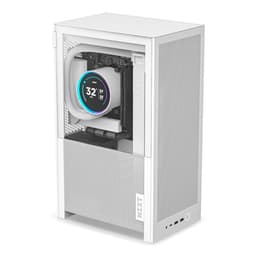
The white colourway is clean and well executed from what owners report. The finish is consistent across the panels, and the tempered glass side panel shows off the interior nicely. If you're building a white-themed system, this is one of the better-looking options in the entry price tier. The aesthetic doesn't feel cheap, which matters when the case is sitting on your desk rather than hidden under it. A few owners have noted the white finish shows fingerprints more readily than darker variants, which is if you're the sort of person who touches their case constantly (you know who you are).
Motherboard Compatibility
The H7 Flow supports ATX, Micro-ATX, and Mini-ITX motherboards. It does not support E-ATX, which is if you're planning a high-end workstation build with a larger board. For the vast majority of gaming and productivity builds, ATX is the sweet spot anyway, and the H7 Flow's interior is sized around it properly. The standoff layout is standard, and owners report no issues with alignment or fitment across the supported form factors.
With a Micro-ATX board installed, you'll have noticeably more cable management room behind the motherboard tray and a bit more breathing space around the front fans. Some builders prefer this intentionally, running a smaller board in a mid-tower for the extra thermal headroom and easier cable routing. The H7 Flow accommodates that approach well because the interior isn't so tightly designed around full ATX that a smaller board looks lost in there.
Mini-ITX is supported too, though it's a bit of an odd choice to put a small form factor board in a case this size. It works, and if you're repurposing a board or planning to upgrade later, it's fine. But if you're specifically building Mini-ITX, there are better-suited cases that will serve you more efficiently. The H7 Flow is really at its best with a full ATX board filling the tray properly. That's what the interior proportions are designed around, and that's where it looks and functions at its peak.
GPU Clearance
NZXT rates the H7 Flow at 400mm of GPU clearance, which is excellent. To put that in practical terms, a GeForce RTX 4090 Founders Edition measures around 336mm in length. Even the longest aftermarket triple-fan cards from ASUS, MSI, and Gigabyte typically cap out around 360mm to 370mm. So you're not going to find a modern GPU that doesn't fit here, barring some genuinely extreme custom cooler design.
That 400mm clearance is measured without a front radiator installed. If you're running a 360mm AIO at the front, you'll lose some of that clearance depending on the radiator and fan thickness. In practice, most front-mounted 360mm radiators with 25mm fans will still leave you with enough room for a standard triple-fan GPU, but it's the specific dimensions of your radiator and GPU combination before assuming everything will clear. Owners haven't flagged this as a problem in the review pool, which suggests NZXT has left enough margin for typical configurations.
There's no native vertical GPU mount included in the box, which is a common omission at this price tier. If you want to show off your graphics card vertically, you'd need a third-party riser cable and bracket, and you'd need to check compatibility with the specific PCIe riser you choose. Honestly, at this price point, not including a vertical mount is fine. The cases that do include them at entry-tier pricing often include ones that are fiddly or poorly positioned anyway. The standard horizontal mount here is solid and problem-free.
CPU Cooler Clearance
185mm of CPU cooler clearance is the headline number, and that's generous. The Noctua NH-D15, which is one of the tallest and most popular air coolers on the market, measures 165mm. The be quiet! Dark Rock Pro 5 sits at 162mm. You'd have to go looking for something genuinely oversized to push past 185mm, so virtually every tower cooler you'd realistically want to use will fit without issue. There's a comfortable margin here rather than a tight squeeze.
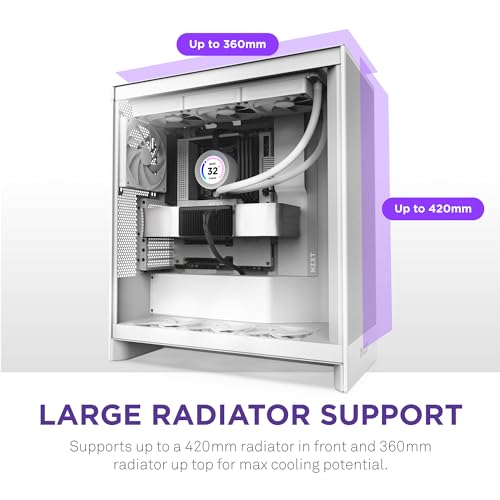
For AIO liquid cooling, the front supports radiators up to 360mm (three 120mm fans or two 140mm fans), the top supports up to 360mm as well, and the rear takes a single 120mm. That's a proper range of mounting options. Front mounting is generally preferred for intake, pulling cool air in through the radiator before it reaches the CPU and GPU. Top mounting works well as exhaust. The H7 Flow gives you the flexibility to do either, or both if you're running dual AIOs (which is a niche use case, but it's supported).
One thing from owner feedback: a small number of builders have noted that RAM clearance with a top-mounted 360mm radiator can be tighter than expected, depending on the specific radiator thickness and fan combination. If you're planning a top 360mm AIO with tall RAM heatspreaders, double-check the clearance figures for your specific components. Standard-height RAM is fine. It's only the more extreme heatspreader designs that might cause a headache, and even then it's a minority of owner reports rather than a widespread complaint.
Storage Bay Options
The H7 Flow offers two 3.5-inch drive bays and four 2.5-inch bays. That's a reasonable allocation for a modern build. Most people aren't running banks of mechanical hard drives anymore, and two 3.5-inch bays covers a typical setup of one or two storage HDDs alongside your NVMe SSDs on the motherboard. The 2.5-inch bays handle SATA SSDs if you need them, which is increasingly rare but still relevant for builders migrating older drives into a new system.
The drive mounting in the H7 Flow is tool-free for 2.5-inch drives, which is a nice touch. The 3.5-inch bays use a tray system that requires screws, which is standard practice for mechanical drives where vibration isolation matters. Owners haven't reported any issues with drive fitment or tray quality, and the bays are positioned in the lower section of the case behind the PSU shroud, keeping them out of the main airflow path and out of sight behind the glass panel.
If you're a storage-heavy user running multiple large HDDs, two 3.5-inch bays might feel limiting. But for the target audience of this case, which is primarily gamers and enthusiasts running NVMe storage with perhaps one or two large capacity drives for game libraries or media, it's more than enough. And frankly, if you need six hard drives, you probably need a different class of case entirely. The H7 Flow is built for modern builds, not NAS-adjacent storage arrays.

Cable Management
This is where the H7 Flow earns genuine praise from owners. The rear cable management space is reported as genuinely usable, which isn't something you can say about every case in this price bracket. There's around 20mm to 25mm of clearance behind the motherboard tray, which is enough to route a 24-pin ATX cable, CPU power cables, and SATA power leads without having to force the rear panel shut. That matters a lot when you're trying to get a clean build.
NZXT includes Velcro cable ties, which are the right choice over zip ties for anyone who expects to change components in the future. The routing channels are sensibly positioned with cutouts near the top for the 24-pin and EPS cables, and the PSU shroud does proper duty hiding the bottom chamber clutter. Owners consistently mention that the finished build looks clean through the tempered glass, which is a direct result of the cable routing design working as intended.
The PSU shroud itself is solid and well-fitted. It doesn't rattle, it doesn't flex excessively, and it covers the PSU and drive bay area properly. A few owners have mentioned that routing the GPU power cables can be a bit awkward depending on the PSU cable length and the GPU position, but this is a common challenge in mid-towers with PSU shrouds rather than an H7 Flow-specific complaint. The solution is usually to use shorter modular cables or to route the cables through the cutout on the right side of the shroud, which works cleanly.
Airflow and Thermal Design
The mesh front panel is the defining feature of the H7 Flow versus the standard H7 Elite, which uses a solid glass front. The perforated mesh allows significantly more air to pass through to the front fans, and this is not a trivial difference. Cases with solid glass or solid steel fronts create a restriction that forces the front fans to work harder for less airflow, and the thermal penalty under sustained load is measurable. NZXT's own product lineup acknowledges this by offering both variants at different price points, with the Flow positioned as the thermally superior option.
The included three 120mm fans are adequate for a standard gaming build. They're not silent at full speed, but at the moderate speeds a typical system will run them at, they're inoffensive. If you're building a system with a high-TDP GPU and a demanding CPU, you'll probably want to add a third front fan or upgrade to higher-performance 140mm fans at the front to maximise the airflow potential of that mesh panel. The front supports either three 120mm or two 140mm fans, and 140mm fans generally move more air at lower noise levels, so that's a worthwhile upgrade path for noise-conscious builders.
Dust filtration covers all the main intake points: the front mesh, the top, and the PSU intake at the bottom. The front filter is part of the mesh panel assembly. The top filter is a magnetic panel that lifts off easily for cleaning, which is genuinely convenient. Owners report that the filtration is effective enough to keep the interior clean over time without requiring constant maintenance. The mesh front does mean the filter is more exposed to dust than a solid-fronted case, so monthly cleaning is more realistic than quarterly, but that's the thermal trade-off and most enthusiasts accept it readily.
Front I/O and Connectivity
The front I/O sits at the top of the case and includes one USB-C port (USB 3.2 Gen 2, 10Gbps), two USB-A ports (USB 3.2 Gen 1, 5Gbps), and a combined headphone and microphone jack. The power button is also up top, which is a sensible position for a tower that'll sit on a desk or floor. The layout is clean and uncluttered, which fits the overall NZXT design ethos.
The USB-C port requires a USB 3.2 Gen 2 Type-C header on the motherboard, which is present on most modern mid-range and high-end boards but if you're pairing this with an older or budget motherboard. It's a 10Gbps connection, which is fast enough for external SSDs and high-speed peripherals. The two USB-A ports are 5Gbps each, covering standard peripherals, controllers, and the sort of USB drives most people use day-to-day.
There's no card reader, no RGB lighting controller button on the front panel, and no fan speed control switch. That's fine. NZXT's approach is to handle fan and lighting control through their CAM software if you're using NZXT ecosystem components, or through your motherboard's fan control headers otherwise. The three included fans connect directly to motherboard headers, so you're in control of the fan curve through your BIOS or fan control software without needing a proprietary hub. Some builders prefer this simplicity; others miss having a physical control. It's a reasonable design choice either way.
Build Quality and Materials
The H7 Flow uses steel for the main chassis, and it's a decent gauge for the price tier. It's not going to flex alarmingly when you pick it up, and the panel alignment is reported as good by the majority of owners. A small number of reviews mention that the tempered glass side panel can feel slightly stiff to remove initially, requiring a firm push on the release mechanism. This seems to loosen up with use, and it's a minor complaint rather than a structural problem, but it's before you panic that your panel is stuck.
The tempered glass itself is 4mm thick, which is standard for the category. It's attached with a single thumb screw at the rear and hinges at the front, making it easy to swing open for access. Owners report no issues with the glass quality, no distortion, and no cracking during normal use. The white painted steel panels show the finish consistently, and the overall impression from owner feedback is that the case looks and feels more expensive than its entry-tier price suggests.
Sharp edges are something to watch for in steel cases, and the H7 Flow gets a reasonably clean bill of health here. The majority of owners report no sharp edges during the build process, which is not universal in this price bracket. A few reports mention the front mesh panel edges being slightly rough, but this is a minority experience rather than a consistent complaint. The standoffs are pre-installed and correctly positioned for ATX, which saves time and removes one potential source of frustration during a first build. Overall, the build quality is solid for the money, and the owner review score of 4.7 across 783 reflects that honestly.
How It Compares
The two most direct competitors to the NZXT H7 Flow at this price tier are the Fractal Design Pop Air and the Corsair 4000D Airflow. All three are mesh-fronted mid-towers aimed at the same audience: builders who want good airflow, a clean build experience, and a case that looks decent through a glass panel without spending premium money.
The Fractal Design Pop Air is slightly more flexible on storage, with more drive bay options, and Fractal's build quality reputation is strong. But the Pop Air's interior layout is arguably less refined for cable management than the H7 Flow, and the NZXT case edges ahead on the front I/O with a USB-C port that matches or beats what Fractal offers at a comparable price. The Corsair 4000D Airflow is a perennial favourite and genuinely excellent, with a very spacious interior and strong airflow. It includes two fans rather than three, though, and the interior layout is slightly less intuitive for first-time builders than the H7 Flow's more guided approach.
Where the H7 Flow wins outright is the combination of three included fans, a 400mm GPU clearance, dual 360mm radiator support, and a front USB-C port at the entry price tier. That's a strong package. Where it loses slightly is maximum GPU length compared to some competitors (the 4000D supports up to 360mm standard, but some other cases go further), and the lack of E-ATX support if that matters to you. For the target buyer, none of that is likely to be a dealbreaker.
| Feature | NZXT H7 Flow | Fractal Design Pop Air | Corsair 4000D Airflow |
|---|---|---|---|
| Form Factor | Mid-Tower ATX | Mid-Tower ATX | Mid-Tower ATX |
| Max GPU Length | 400mm | 405mm | 360mm (standard) |
| Max CPU Cooler Height | 185mm | 185mm | 170mm |
| Included Fans | 3x 120mm | 2x 140mm | 2x 120mm |
| Front Radiator Support | 360mm | 360mm | 360mm |
| Top Radiator Support | 360mm | 360mm | 360mm |
| Front I/O USB-C | Yes (10Gbps) | Yes | Yes |
| E-ATX Support | No | No | No |
| PSU Shroud | Yes | Yes | Yes |
| Price Tier | Entry | Entry | Entry |

Final Verdict
The NZXT H7 Flow is a genuinely good entry-tier mid-tower that delivers on its core promise. The mesh front actually works, the build experience is cleaner than most competitors at this price, and three included fans means you're not immediately spending extra money on fans before you've even installed a single component. The 400mm GPU clearance and dual 360mm radiator support give you room to grow without needing to upgrade the case when you upgrade your hardware.
Owner feedback at ★★★★½ (4.7) across 783 is about as strong a signal as you'll get in this category. The complaints that do surface, the occasionally stiff glass panel, the minor front mesh edge roughness on some units, are real but minor. They don't change the fundamental picture of a case that builds well, looks good, and keeps temperatures in check thanks to proper mesh airflow rather than the compromised ventilation you get from a glass-fronted alternative.
The honest caveat: if you're building a budget system and genuinely don't care about airflow optimisation or aesthetics, the NZXT H5 Flow is a smaller, cheaper sibling that covers the basics for less money. It's worth a look if your GPU and cooler fit within its tighter clearances. But if you're spending real money on components and want a case that won't become a thermal bottleneck, the H7 Flow is the right choice at this price tier. It's not the flashiest thing on the market, but it's sorted where it counts.
Our rating: 8.5 out of 10. Strong value, proper airflow, and a build experience that won't make you regret your choices halfway through installing your motherboard. That's more than you can say for a lot of cases at this price.
What works. What doesn’t.
5 + 3What we liked5 reasons
- Mesh front panel delivers genuine airflow benefit over glass-fronted alternatives
- Three 120mm fans included in the box, a strong value add at this price tier
- 400mm GPU clearance handles even the longest modern triple-fan cards
- Dual 360mm radiator support front and top for serious cooling flexibility
- Clean cable management with good rear clearance and included Velcro ties
Where it falls3 reasons
- Tempered glass side panel can feel stiff to remove initially on some units
- No E-ATX motherboard support
- Included 120mm fans are functional but not exceptional; enthusiasts will likely upgrade them
Full specifications
11 attributes| Form factor | Mid-Tower |
|---|---|
| CPU cooler clearance MM | 185 |
| Dimensions MM | 544 x 244 x 468 |
| Fans included | 3 |
| GPU clearance MM | 410 |
| MAX FAN count | 10 |
| MAX radiator MM | 420 |
| PSU support | ATX up to 200mm |
| Side panel | tempered glass |
| Supported motherboard | E-ATX (up to 277mm), ATX, Micro-ATX, Mini-ITX |
| Weight KG | 11.13 |
Frequently asked
5 questions01Is the NZXT H7 Flow - Mid-Tower ATX Airflow PC Case - White good for airflow?+
Yes, and it's specifically designed to be. The perforated mesh front panel is the key difference between the H7 Flow and NZXT's glass-fronted H7 Elite. Mesh allows significantly more air to reach the front fans than a solid glass panel does, and under sustained gaming or rendering loads the thermal difference is meaningful. The case supports up to three 120mm or two 140mm fans at the front, three 120mm or two 140mm at the top, and one 120mm at the rear. Three 120mm fans are included in the box. Dust filters cover the front, top, and PSU intake. It's a properly thought-out airflow setup for the price.
02What's the GPU clearance on the NZXT H7 Flow - Mid-Tower ATX Airflow PC Case - White?+
NZXT rates GPU clearance at 400mm, which is generous. The RTX 4090 Founders Edition is around 336mm, and even the longest aftermarket triple-fan cards from major brands typically measure 360mm to 370mm. You're unlikely to find a current consumer GPU that won't fit. Note that clearance may be reduced slightly if you install a front radiator, depending on the radiator and fan thickness combination. Owners haven't flagged GPU fitment as a problem in the review pool, suggesting NZXT has left adequate margin for typical configurations.
03Can the NZXT H7 Flow - Mid-Tower ATX Airflow PC Case - White fit a 360mm AIO?+
Yes. The H7 Flow supports 360mm radiators at both the front and the top, making it well-suited for high-end AIO cooling. Front mounting pulls cool air through the radiator before it reaches the CPU and GPU, which is generally the preferred approach for thermal performance. Top mounting works well as exhaust. If you're planning a top-mounted 360mm AIO, check your RAM heatspreader height, as a small number of owners have noted tighter clearance with very tall RAM heatspreaders combined with thick radiators. Standard-height RAM is not an issue.
04Is the NZXT H7 Flow - Mid-Tower ATX Airflow PC Case - White easy to build in?+
Owner feedback consistently rates the build experience positively. The rear cable management space is around 20mm to 25mm, enough to route ATX power, CPU power, and SATA cables without forcing the panel shut. Velcro cable ties are included. The PSU shroud covers the bottom chamber cleanly. Standoffs come pre-installed for ATX. The tempered glass side panel can feel slightly stiff to remove on some units initially, but this is a minor and commonly reported issue that eases with use. Overall, it's a well-organised interior that makes for a clean finished build.
05What warranty and returns apply to the NZXT H7 Flow - Mid-Tower ATX Airflow PC Case - White?+
NZXT typically offers a two-year limited warranty on their cases, but you should verify the specific terms for your purchase on the NZXT website. If you're buying through Amazon, you're also covered by Amazon's standard 30-day return window and the A-to-Z Guarantee, which provides a solid safety net if the product arrives damaged or not as described.