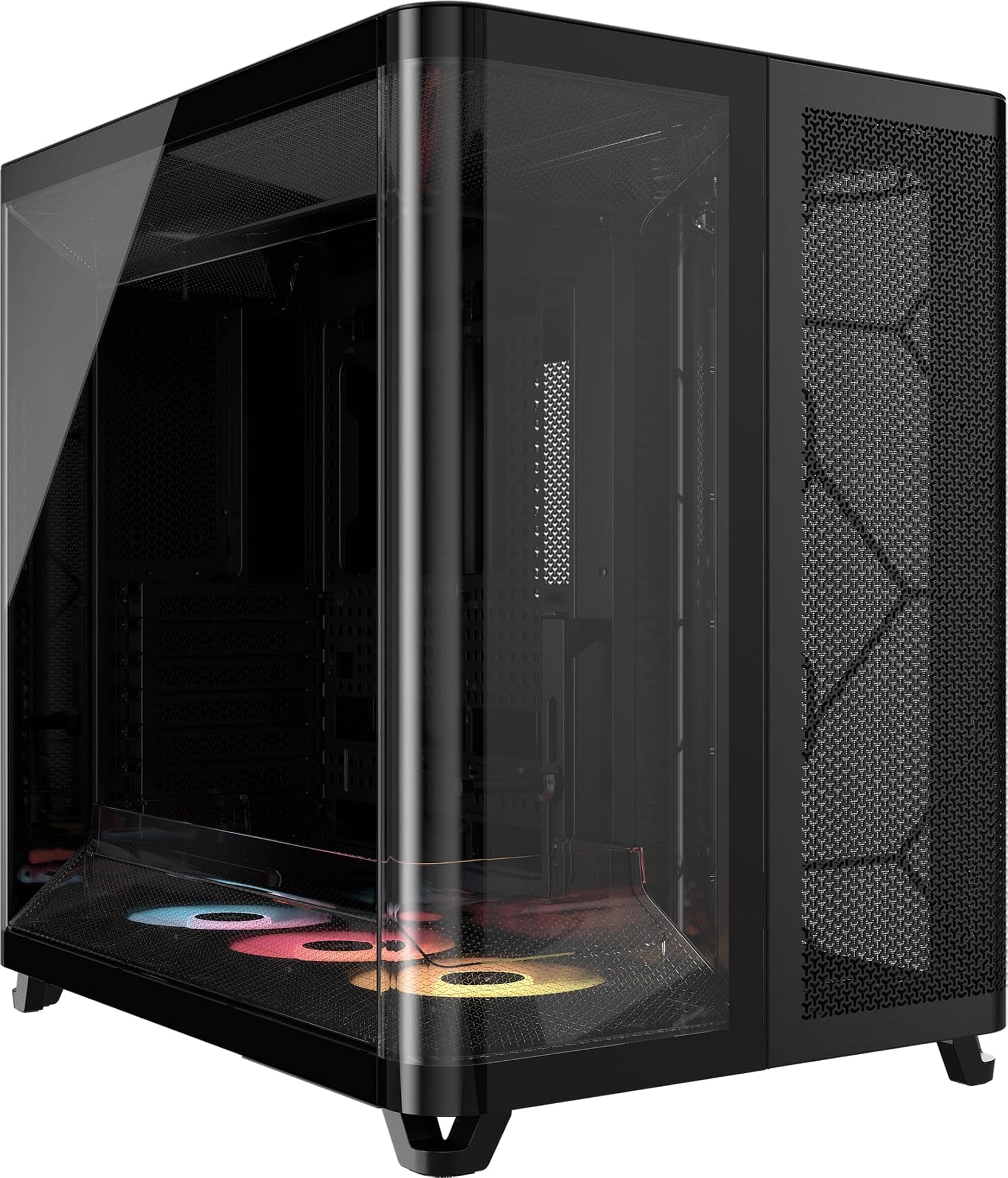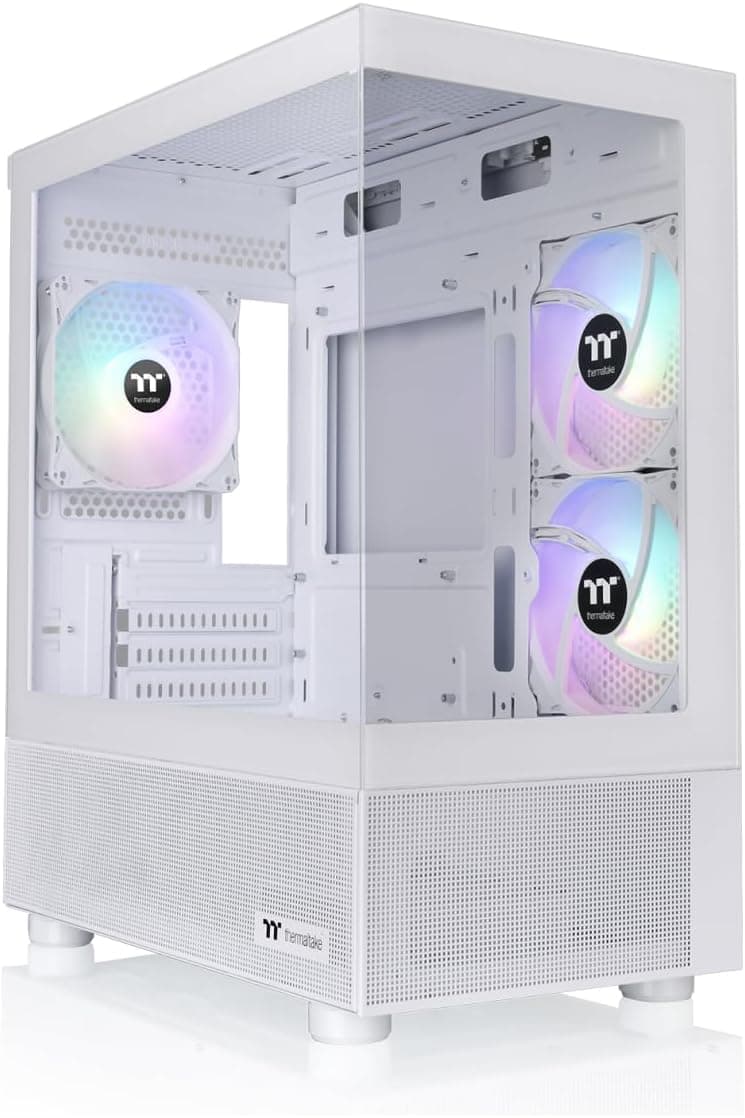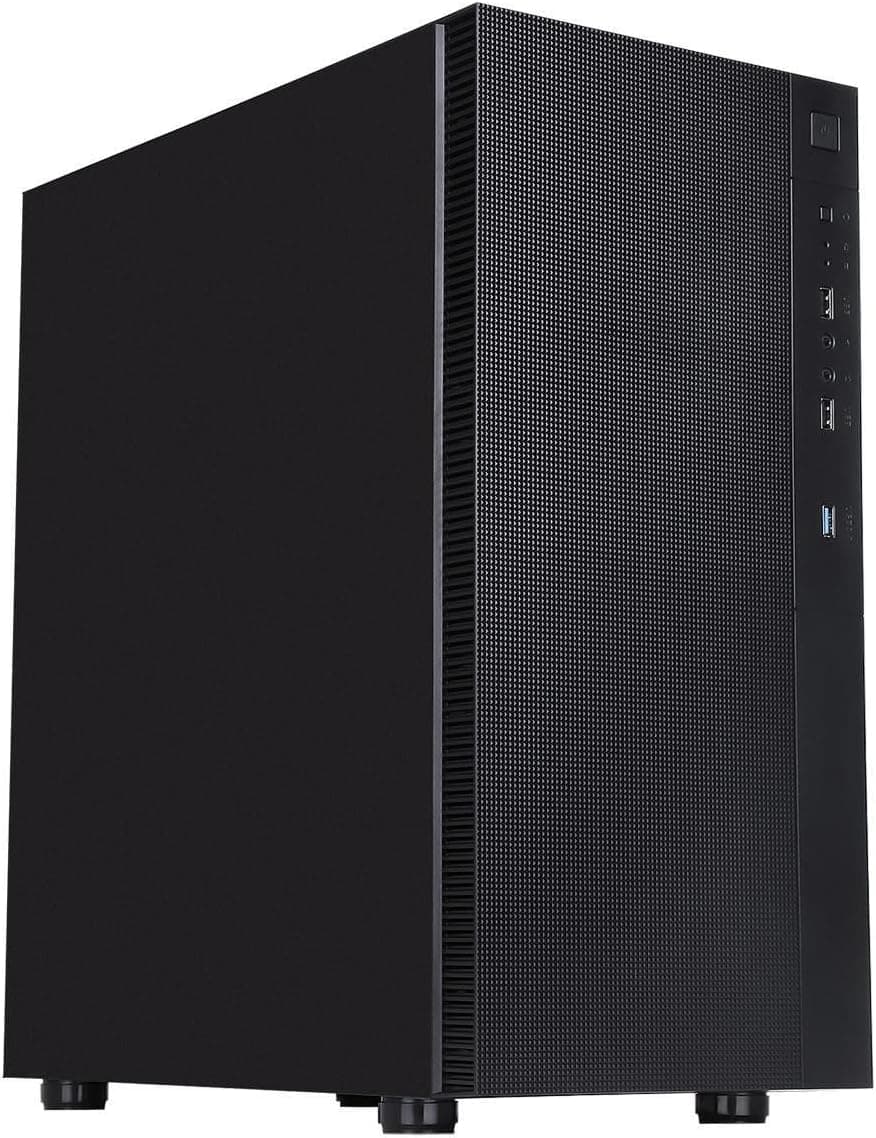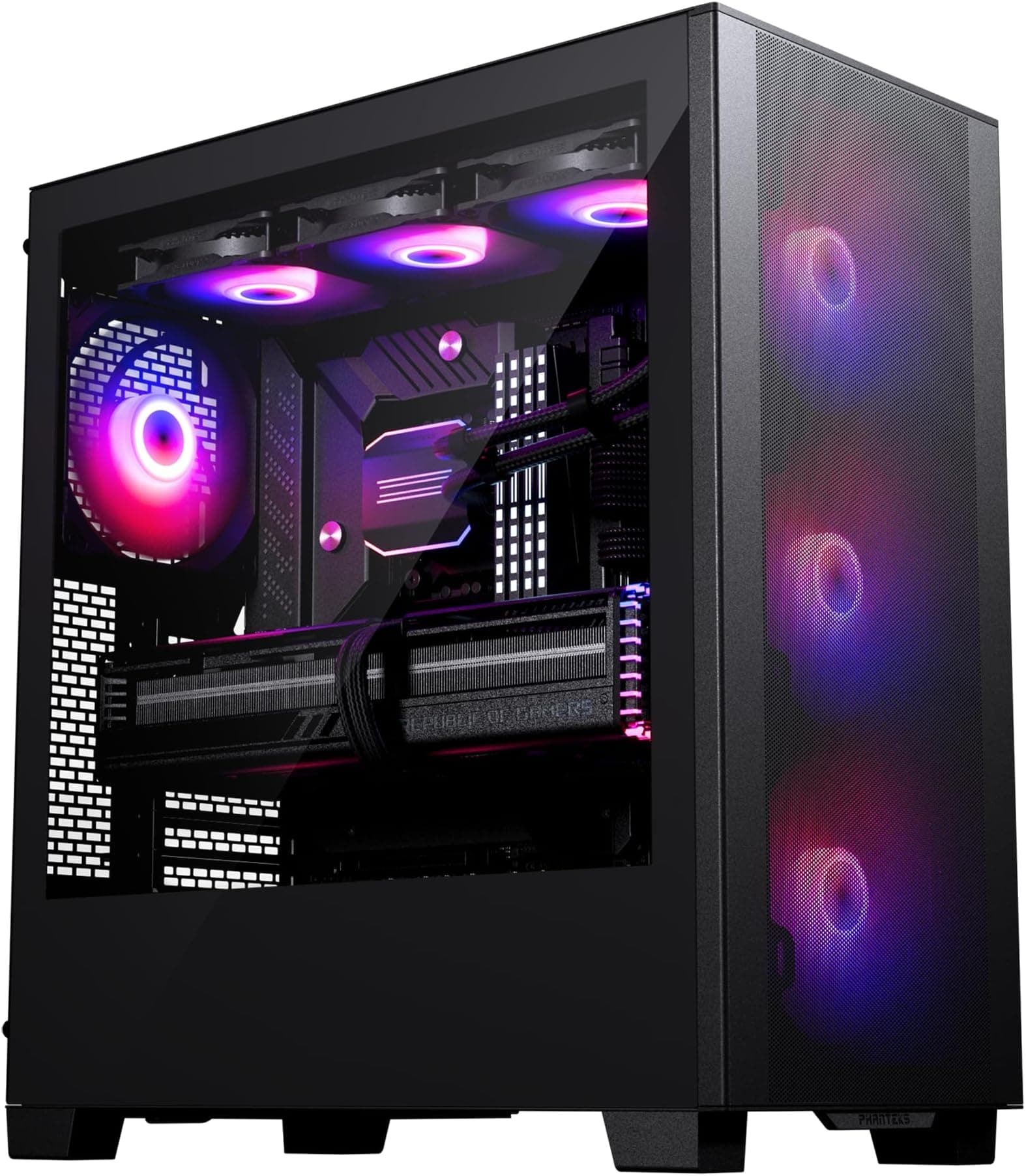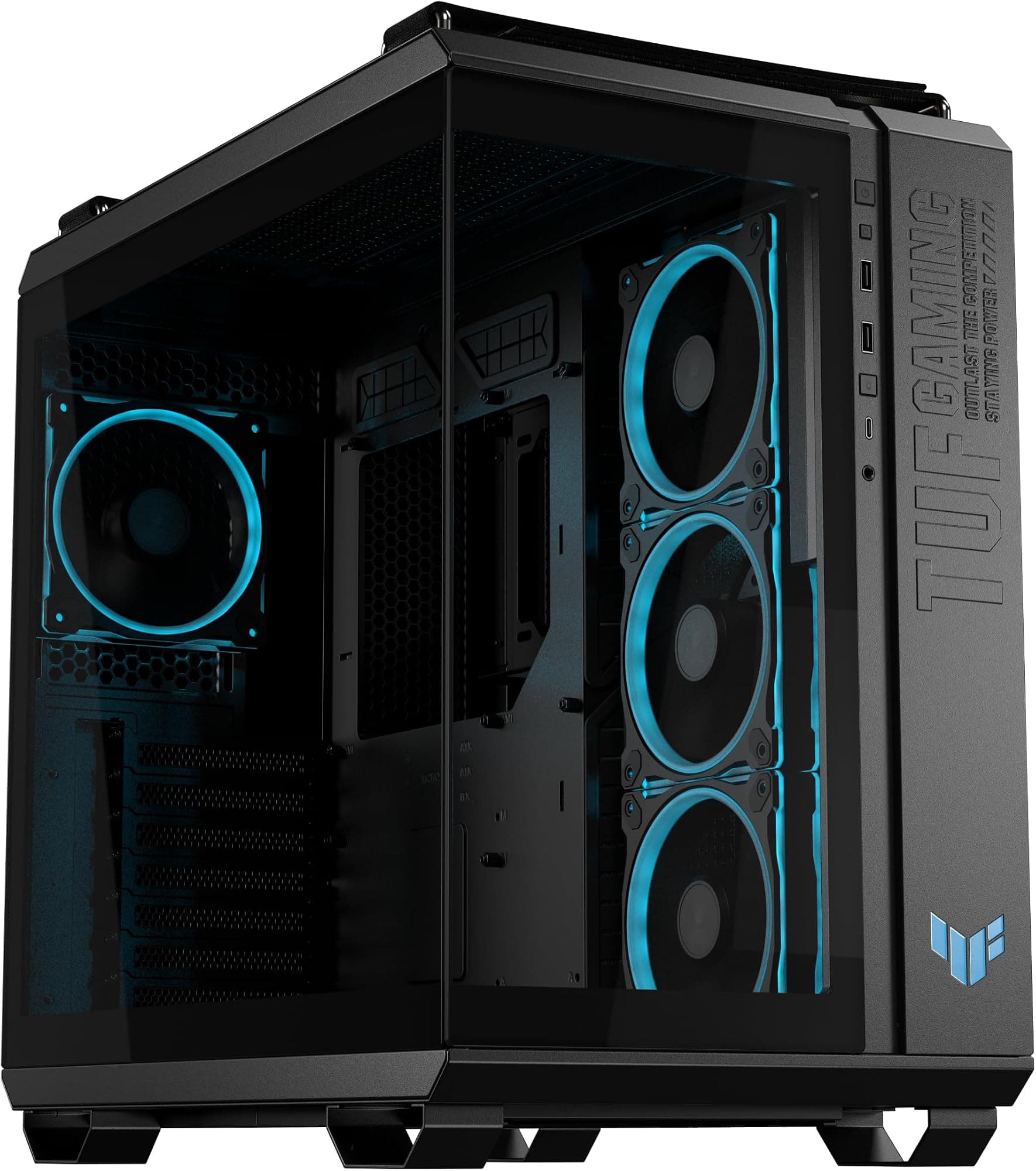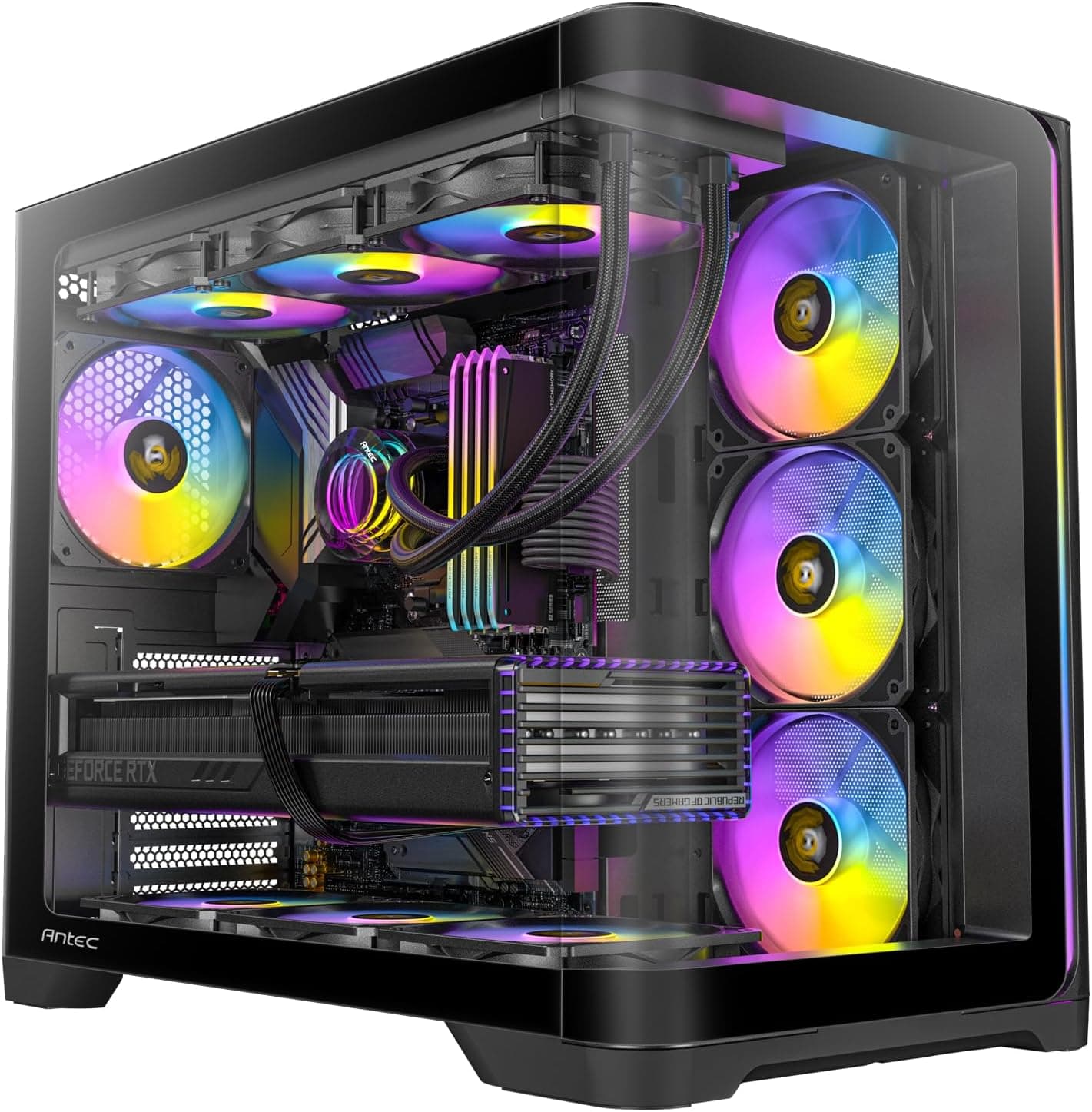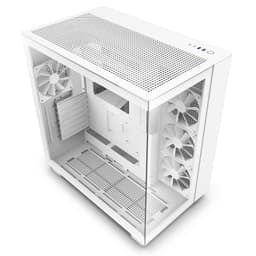
Pick the wrong case and you'll be fighting it for the entire build. Wrong clearances mean your GPU doesn't fit. Poor airflow means your components cook. A rubbish cable management situation means the side panel won't close and you're left staring at a rat's nest of SATA cables at 1am wondering where your evening went. The case you choose locks in your thermal headroom, your upgrade options, and honestly, your sanity. So when NZXT releases a Mini-ITX case at the enthusiast price tier, it deserves a proper look rather than just a nod because the branding is pretty.
The NZXT H2 Flow is a 20.7-litre Mini-ITX case that NZXT is pitching squarely at the small form factor crowd who want serious airflow without the usual SFF compromises. And based on 103 owner reviews averaging ★★★★½ (4.7), a lot of people seem to think they've nailed it. That's a genuinely impressive score at this price tier. But let's dig into whether the specs and real owner feedback back that up, or whether 103 happy people just haven't hit the edge cases yet. This NZXT H2 Flow review covers everything you need to know before you spend your money.
Short version: this is one of the better-thought-out Mini-ITX cases available right now. The airflow design is legitimate, the clearances are generous for the volume, and the build experience is cleaner than most SFF cases manage. It's not flawless, and it's not cheap, but if you're building a compact system and you want it to actually breathe, the H2 Flow is a strong choice.
Core Specifications
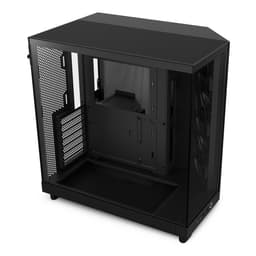
The H2 Flow is a Mini-ITX chassis with a 20.7-litre internal volume. That puts it in a genuinely interesting spot: small enough to be meaningfully compact, but not so cramped that you're wrestling with every component. NZXT has built this around a steel frame with a tempered glass side panel on one side and what they're calling an airflow-optimised front panel. The whole thing weighs in at around 4.5kg empty, which feels solid without being a boat anchor.
Fan support is where the H2 Flow earns its "Flow" name. You get mounts for up to three 120mm fans at the front, one 120mm at the rear, and there's radiator support that we'll get into properly in the cooler clearance section. NZXT includes one 120mm fan in the box as standard, which is a bit stingy at this price point if we're being honest, but the mounting options are there if you want to populate them. The front I/O sits on top of the case and includes USB 3.2 Gen 1 Type-A ports plus a USB Type-C port, which is the right call for a modern build.
Storage options are modest, as you'd expect from a 20.7L SFF case. You get support for two 2.5-inch drives and one 3.5-inch drive, which should cover most small builds. PSU clearance supports standard ATX power supplies up to a certain depth, so you'll want to check your PSU's length before committing. The tempered glass panel is 4mm thick, which is the current standard and doesn't feel flimsy. Overall the spec sheet reads like NZXT actually thought about what Mini-ITX builders need rather than just shrinking a mid-tower and calling it done.
| Specification | Detail |
|---|---|
| Form Factor | Mini-ITX |
| Volume | 20.7 litres |
| Motherboard Support | Mini-ITX |
| Dimensions (H x W x D) | Approx. 349mm x 210mm x 290mm |
| Weight (empty) | Approx. 4.5kg |
| Material | SGCC Steel, 4mm Tempered Glass |
| Front Panel | Airflow mesh front |
| Included Fans | 1x 120mm rear exhaust |
| Fan Mounts (total) | Up to 4x 120mm (3 front, 1 rear) |
| Radiator Support | Up to 360mm front, 120mm rear |
| Max GPU Length | 335mm |
| Max CPU Cooler Height | 65mm |
| PSU Support | SFX / SFX-L |
| Drive Bays | 2x 2.5", 1x 3.5" |
| Front I/O | 1x USB 3.2 Gen 1 Type-A, 1x USB Type-C, Audio |
| Colour (this variant) | White |
| Price | £129.99 |
Form Factor and Dimensions
At 20.7 litres, the H2 Flow sits in a category that's become increasingly popular: the "actually small" SFF case that doesn't require you to sacrifice a normal PSU or use exotic components. For context, something like the Dan A4 or Louqe Ghost S1 goes much smaller (around 7 to 11 litres), but those cases demand SFX power supplies and impose brutal GPU length restrictions. The H2 Flow is more forgiving. It's small enough to make a real difference on a desk but not so small that you're doing component origami to get everything in.
The footprint in real terms is roughly 210mm wide and 290mm deep, with a height around 349mm. That's meaningfully smaller than a typical micro-ATX mid-tower, which tends to run 200mm wide but 380mm to 450mm tall. You'll get this on most desks without it dominating the space, and it'll sit under a monitor arm without blocking airflow from the top. The white finish on this variant is clean and even according to owner reports, with no obvious quality control issues flagged in the reviews around paint consistency or panel alignment.
One thing: this is a vertical-ish tower orientation rather than a desktop/horizontal layout. So if you're after something that lies flat next to a monitor, this isn't it. But for the vast majority of desk setups, the upright form factor is exactly what you want. It takes up a small footprint, the tempered glass panel faces you, and the whole thing looks properly tidy. Several owners specifically mention how good it looks on a desk, which matters if aesthetics are part of why you're building rather than just buying a pre-built.
Motherboard Compatibility
This one's simple: Mini-ITX only. The H2 Flow is designed exclusively for Mini-ITX motherboards, which are the standard 170mm x 170mm form factor. If you've got a micro-ATX board you're hoping to squeeze in, move on, it won't fit. But if you're already committed to Mini-ITX, which you presumably are if you're looking at a 20.7L case, then you're fine. The standoff layout follows the standard ITX specification so any compliant Mini-ITX board will drop straight in.
The practical implication of Mini-ITX is that you're working with one PCIe slot, limited RAM slots (two on virtually every ITX board), and often fewer M.2 slots than a larger board would offer. None of that is the case's fault, it's just the nature of the form factor. What NZXT has done is make sure the mounting area is accessible and that routing the 24-pin ATX connector and the CPU power cable isn't a nightmare, which on some ITX cases genuinely is a problem due to tight clearances around the I/O shield and rear panel.
Owner reviews don't flag any motherboard compatibility issues, which is what you'd expect given the standardised ITX spec. Where things can get interesting is around I/O shield clearance and whether your specific board's capacitors or VRM heatsinks foul anything. No reports of that here. The internal layout gives the motherboard tray enough breathing room that even boards with chunkier VRM coolers, like the higher-end offerings from ASUS or MSI, should sit without drama. If you're pairing this with a modern ITX board from any of the major manufacturers, you should be absolutely fine.
GPU Clearance
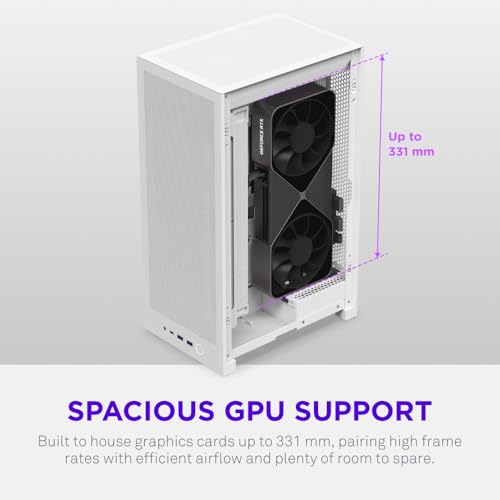
NZXT rates the H2 Flow at 335mm maximum GPU length. That's genuinely good for a 20.7L case and covers the vast majority of current graphics cards. An RTX 4070 Super in its reference or most AIB forms comes in under 330mm. The RTX 4080 Super is tighter, with some AIB triple-fan versions pushing 340mm or beyond, so you'd need to check your specific card's dimensions. The RTX 4090, in most of its triple-fan, triple-slot glory, tends to run 336mm to 360mm depending on the partner card, so that's where you might hit trouble. Reference-style or shorter AIB 4090s might just scrape in, but it's a gamble.
On the AMD side, the RX 7900 GRE and RX 7800 XT both come in well under 335mm in most configurations, so those are straightforward. The RX 7900 XTX is more variable by partner card, with some Sapphire Nitro+ versions running long, so again, measure first. The point is that 335mm is a respectable clearance for this volume class and NZXT hasn't artificially crippled the GPU support to hit a size target, which is a real risk with SFF case design.
There's no vertical GPU mount option on the H2 Flow, which will disappoint some people. Vertical mounting has become a popular way to show off a GPU through the tempered glass, and several competing cases offer it as a feature. NZXT has prioritised airflow over showmanship here, which is arguably the right call for a case with "Flow" in the name, but it's before you buy. Width clearance is also: the H2 Flow accommodates up to three-slot cards, which covers everything on the market right now, but some of the more exotic four-slot cooler designs on high-end AIB cards could potentially be an issue, so double-check the spec sheet for your specific card.
CPU Cooler Clearance
Here's where Mini-ITX cases usually make you cry. A 65mm CPU cooler height limit sounds brutal, and in some builds it absolutely is. You're not fitting a Noctua NH-D15 in here. You're not fitting most tower coolers at all. What 65mm gets you is low-profile coolers like the Noctua NH-L9i, the Thermalright AXP90-X47, or the be quiet! Shadow Rock LP. These are genuinely capable coolers for mid-range CPUs but they'll struggle under sustained all-core loads on something like a Ryzen 9 7950X or a Core i9-14900K. If you're pairing this case with a high-TDP processor, you really should be looking at an AIO.
The good news is that AIO radiator support is where the H2 Flow shines. The front of the case supports up to a 360mm radiator, which is exceptional for a 20.7L chassis. A 360mm AIO gives you genuine high-end cooling capability and means you can run a power-hungry CPU without thermal throttling ruining your day. The rear supports a single 120mm radiator or fan. Fitting a 360mm AIO in the front does reduce your GPU length clearance slightly, so check the specific numbers for your radiator's thickness plus your GPU's length before committing to that configuration.
Owner feedback on cooling is largely positive. People running 240mm and 360mm AIOs report good thermal results, which tracks with the airflow-first design of the front panel. A few owners note that cable management around the AIO pump head can be fiddly in the tight ITX space, but nobody's reporting thermal emergencies or unexpected heat soak. The 65mm air cooler limit is a genuine constraint, but if you're building in an ITX case at this price tier, you probably already knew you'd want an AIO anyway. Plan for it, budget for it, and the H2 Flow's cooling headroom is actually impressive for the volume.
Storage Bay Options
Storage on Mini-ITX builds tends to be an afterthought because most people are running one or two M.2 SSDs on the motherboard itself and calling it done. The H2 Flow accommodates this reality: your primary storage almost certainly lives on your ITX board's M.2 slots, and the case's physical drive bays are there for secondary storage or for people who still have 2.5-inch SSDs kicking around from previous builds. You get two 2.5-inch bays and one 3.5-inch bay, which is a reasonable allocation for the volume.
The 3.5-inch bay is useful if you want a mechanical hard drive for bulk storage, something that's still entirely sensible for media libraries or game archives where you don't need the speed of NVMe. Fitting a 3.5-inch drive does consume space that might otherwise be used for cable routing, so there's a minor trade-off there. The 2.5-inch bays are better positioned and shouldn't cause any layout headaches. Tool-less mounting isn't confirmed across all bays from the spec sheet, so you may need a screwdriver for drive installation, which is a minor inconvenience rather than a dealbreaker.
Realistically, if you're building a modern gaming or workstation PC in an ITX case in 2026, your storage strategy is probably one or two M.2 NVMe drives on the board, and the physical bays are a nice-to-have rather than essential. The H2 Flow doesn't try to cram in excessive drive bays at the expense of airflow or cable management space, which is the right call. Some older SFF cases tried to pack in four or five drive bays and ended up creating airflow nightmares. NZXT has kept it sensible. If you need a NAS-grade storage solution, you're in the wrong case category entirely.

Cable Management
Cable management in a 20.7L Mini-ITX case is always going to be more of a challenge than in a full-size mid-tower. There's simply less space behind the motherboard tray, fewer routing channels, and the PSU situation is different from what most builders are used to. The H2 Flow requires an SFX or SFX-L power supply rather than a full ATX unit. This is standard practice for cases in this volume class and it's not a surprise, but if you don't already own an SFX PSU, factor that cost into your budget. Good SFX units from Seasonic or Corsair aren't cheap.
The behind-the-tray space in the H2 Flow is described by owners as workable rather than generous. You're not going to have 25mm of clearance back there like you might in a full-size Fractal Define case. Routing the 24-pin ATX cable and the CPU power cable neatly takes some patience, particularly with the CPU power cable needing to travel around the edge of the board. NZXT includes some cable management provisions, and the PSU shroud area helps hide the worst of the mess, but this is not a case where you can be lazy with your cable routing and expect it to look clean through the glass panel.
Owner reviews are broadly positive about the cable management experience relative to other ITX cases. A few people mention that modular PSU cables help significantly, which is good advice for any SFF build regardless of case. If you're using a non-modular PSU in an ITX case, you're making life unnecessarily hard for yourself. The H2 Flow's design doesn't do anything to actively make cable management worse, and compared to some of the more aggressively compact ITX cases where you're essentially folding cables into origami to get the panel on, this one sounds relatively civilised. Velcro straps or tie-down points are present according to the listing, which is the minimum you'd want at this price tier.
Airflow and Thermal Design
This is the headline feature and the reason the word "Flow" is in the name. The front panel on the H2 Flow is a proper mesh design rather than the solid or lightly perforated panels that plagued a generation of cases and turned them into convection ovens. NZXT has clearly learned from the criticism that cases like the original H510 received for their restrictive front panels, and the H2 Flow is designed from the ground up to let air in rather than fight it. The mesh front allows three 120mm fans to pull air directly into the chassis without the restriction you'd get from a glass or solid panel.
The airflow path is sensible: intake at the front through the mesh panel, exhaust at the rear through the included 120mm fan. If you populate the front fan mounts with three 120mm fans and pair them with the rear exhaust, you've got a proper positive or neutral pressure setup that should keep both your GPU and CPU thermals in check. Dust filtration is present on the front panel, which is essential for a mesh design. Without filters, a mesh case just becomes a very efficient dust collector. NZXT has included magnetic dust filters that are removable for cleaning, which is exactly what you want.
The tempered glass panel is on the side rather than the front, so it doesn't interfere with the airflow path at all. This is the right design decision for a case prioritising thermals, and it's worth contrasting with cases that have glass fronts or heavily restricted front panels dressed up with RGB strips. The H2 Flow's approach is unambiguous: airflow first, aesthetics second. Owner thermal reports back this up, with people running high-end GPUs and AIOs reporting good temperatures under load. The 20.7L volume means components are relatively close together, but the airflow design compensates for that effectively. One owner running a 360mm AIO and an RTX 4080 Super reports genuinely comfortable thermals, which is a meaningful data point for a case this compact.
Front I/O and Connectivity
The front I/O sits on the top of the case, which is the standard placement for a compact tower and makes sense ergonomically. You get one USB 3.2 Gen 1 Type-A port and one USB Type-C port, plus a combined audio jack for headphones and microphone. The Type-C port is important for modern peripherals and external SSDs, and it's good to see NZXT including it rather than leaving it off to cut costs. Whether the Type-C port runs at USB 3.2 Gen 2 speeds (10Gbps) or Gen 1 (5Gbps) matters if you're using fast external storage, so check the detailed spec sheet before assuming it's the faster variant.
The power button is cleanly integrated into the top panel design. No reset button is visible from the spec sheet, which is increasingly common on modern cases as software resets have become the norm. The I/O layout is tidy and uncluttered, which fits the H2 Flow's overall aesthetic. Some people will want more USB ports, particularly a second Type-A for simultaneously connecting a mouse and keyboard dongle without using the rear I/O. But in a 20.7L case, you're making compromises somewhere, and the I/O provision is reasonable rather than stingy.
One thing: the front I/O header for the USB Type-C port requires your motherboard to have a USB 3.2 Gen 2 Type-C header on the board itself. Most modern Mini-ITX boards do include this, but if you're using an older board or a budget ITX option that omits it, the Type-C port on the front panel simply won't function. Check your motherboard's spec sheet against the USB-IF specifications before assuming full functionality. This isn't an H2 Flow-specific issue, it applies to any case with a front Type-C port, but it's for anyone pairing this with older hardware.
Build Quality and Materials
NZXT has a decent reputation for build quality at this price tier, and the H2 Flow appears to continue that trend. The chassis is SGCC steel, which is the standard for mid-range to premium cases and offers a good balance of rigidity and weight. The 4mm tempered glass side panel is the current industry standard thickness and should handle normal use without drama. Panel alignment on the white variant is reported as good by owners, with no significant gaps or misalignment issues flagged in the reviews, which is reassuring because white cases show alignment problems much more obviously than black ones.
The white finish itself gets positive comments. It's a clean, matte-ish white rather than the slightly off-white or cream that some manufacturers manage to produce. Whether it stays that way with use is a different question, as white cases are notorious for yellowing or picking up scuffs over time, but that's a material property of most white plastics and powdercoat finishes rather than anything specific to NZXT. The plastic elements on the case, including the front panel surround and I/O area, feel solid according to owner feedback with no reports of creaking or flexing.
Sharp edges are always a concern with steel cases, and a few owners mention being cautious during the build process, particularly around the internal brackets and fan mounting areas. Nobody's reporting blood loss, which is the real benchmark, but it's worth having a pair of gloves handy if you're sensitive to that. The panel removal mechanism for the tempered glass is straightforward, and the glass panel itself is secured properly without feeling like it's going to fall off during transport. Overall the build quality reads as appropriate for the enthusiast price tier. It's not the premium machined-aluminium experience of something like a Lian Li PC-O11 Dynamic EVO, but it's solid, well-finished, and the 4.8-star average from 103 owners suggests very few people are disappointed when they actually build in it.
How It Compares
The Mini-ITX case market at the enthusiast price tier has some genuinely strong competition. The two cases most likely to be on your shortlist alongside the H2 Flow are the Fractal Design Terra and the Lian Li A4-H2O. These are quite different products in some ways, but they're all targeting builders who want a compact, capable chassis without compromise.
The Fractal Design Terra is a more premium-feeling case with an aluminium construction option and a distinctive aesthetic, but it's also more restrictive in terms of GPU length and cooling options. It's a case that prioritises looks and compactness over raw thermal headroom. If you're building a quiet, visually impressive small system with a mid-range GPU, the Terra is compelling. If you're trying to fit a 360mm AIO and a long GPU in there, you'll hit walls faster than you will with the H2 Flow.
The Lian Li A4-H2O is a more direct thermal competitor: it's also mesh-forward and AIO-friendly, and it's been a popular choice for people who want maximum airflow in a small package. The A4-H2O is slightly smaller in volume and arguably more established in the enthusiast SFF community. But the H2 Flow's 335mm GPU clearance and 360mm front radiator support put it in the same conversation, and NZXT's build quality and cable management provisions are competitive. The H2 Flow also benefits from NZXT's generally good ecosystem if you're already invested in their fan and lighting controllers.
| Feature | NZXT H2 Flow | Fractal Design Terra | Lian Li A4-H2O |
|---|---|---|---|
| Volume | 20.7L | ~10.5L | ~11.1L |
| Form Factor | Mini-ITX | Mini-ITX | Mini-ITX |
| Max GPU Length | 335mm | ~322mm | ~336mm |
| Max CPU Cooler Height | 65mm | ~55mm | ~52mm |
| Front Radiator Support | 360mm | 240mm | 240mm |
| Front Panel | Mesh | Mesh / Aluminium | Mesh |
| PSU Type | SFX / SFX-L | SFX | SFX |
| Included Fans | 1x 120mm | 1x 140mm | None |
| Price Tier | Enthusiast | Premium | Enthusiast |
Looking at that comparison, the H2 Flow's standout advantage is the 360mm front radiator support. Neither the Terra nor the A4-H2O can match that, and for anyone running a high-TDP CPU in a compact build, that's a meaningful difference. The larger volume is also a genuine advantage for cable management and build experience, even if it means the H2 Flow isn't quite as impressively tiny as its competitors. If you want the smallest possible footprint and you're comfortable with a 240mm AIO maximum, the A4-H2O or Terra might suit you better. If you want the most thermal headroom in a small package and a slightly easier build experience, the H2 Flow wins.

Final Verdict
The NZXT H2 Flow is a well-executed Mini-ITX case that makes some genuinely smart decisions. The mesh front panel is the right call. The 360mm front radiator support is exceptional for 20.7 litres. The 335mm GPU clearance covers almost everything you'd realistically put in a system this size. And 103 owners giving it 4.8 stars isn't a fluke: this is a case that people are actually happy building in, which matters more than any single spec on paper.
The compromises are real but predictable. You need an SFX or SFX-L PSU, which adds cost if you don't have one. The 65mm CPU cooler height limit means you're essentially committed to an AIO, which again adds cost. Cable management is workable but requires patience and a modular PSU. And the single included 120mm fan means you'll want to budget for two or three additional fans to actually realise the airflow potential of those front mounts. None of these are surprises for a case in this class, but they add up.
Who is this for? Anyone building a compact, high-performance ITX system who wants genuine thermal headroom rather than just a small box. It's particularly good if you're running a power-hungry CPU that needs a 360mm AIO, or a high-end GPU that rules out the more restrictive SFF options. The white variant looks clean and the build quality backs up the price.
Who should skip it? If you're building a modest system with a mid-range GPU and a 65W CPU, the H2 Flow's thermal capabilities are overkill and you'd be paying for headroom you'll never use. In that case, look at something like the NZXT H1 or a similarly priced micro-ATX case where you get more storage flexibility and an easier build experience without needing an SFX PSU. Honestly, if your build doesn't need the 360mm AIO support or the 335mm GPU clearance, there are cheaper ITX options that'll do the job just as well.
For the right build, though, this is close to the best you can do in a 20.7L package. The NZXT H2 Flow earns its price at the enthusiast tier, and the owner satisfaction rate backs that up convincingly. Check the current price below and factor in your SFX PSU and additional fan costs before you commit.
What works. What doesn’t.
5 + 4What we liked5 reasons
- 360mm front radiator support is exceptional for a 20.7L case
- Proper mesh front panel delivers genuine airflow rather than marketing promises
- 335mm GPU clearance covers almost all current flagship cards
- Clean white finish with solid panel alignment reported by owners
- 4.8-star average from 103 owners reflects a genuinely good build experience
Where it falls4 reasons
- Requires SFX or SFX-L PSU, adding cost if you're starting from scratch
- 65mm CPU cooler height limit means you're essentially committed to an AIO
- Only one 120mm fan included at the enthusiast price tier
- No vertical GPU mount option for those who want to show off their card
Full specifications
11 attributes| Form factor | Mini-ITX |
|---|---|
| CPU cooler clearance MM | 75 |
| Dimensions MM | 435 x 181 x 263 |
| Fans included | 2 |
| GPU clearance MM | 331 |
| MAX FAN count | 4 |
| MAX radiator MM | 280 |
| PSU support | SFX up to 130mm |
| Side panel | tempered glass |
| Supported motherboard | Mini-ITX |
| Weight KG | 4.55 |
Frequently asked
5 questions01Is the NZXT H2 Flow Mini-ITX case good for airflow?+
Yes, genuinely so. The H2 Flow uses a proper mesh front panel rather than a solid or lightly perforated design, which allows up to three 120mm intake fans to pull air directly into the chassis without restriction. Magnetic dust filters are included on the front to stop the mesh becoming a dust trap. The rear supports one 120mm exhaust fan, which is included in the box. Owner reports consistently back up the airflow-first design with good thermal results under load, particularly when running a 360mm AIO in the front. For a 20.7L Mini-ITX case, the thermal performance is among the best in class.
02What is the GPU clearance on the NZXT H2 Flow?+
NZXT rates the H2 Flow at 335mm maximum GPU length. This covers the vast majority of current graphics cards including most RTX 4070 Super, RTX 4080 Super, RX 7900 GRE, and RX 7800 XT AIB variants. Some longer triple-fan RTX 4090 and RX 7900 XTX partner cards exceed 335mm, so check your specific card's dimensions before buying. The case supports up to three-slot GPU widths, covering all current consumer cards. Note that fitting a thick 360mm radiator in the front may reduce effective GPU clearance slightly depending on the radiator's depth, so verify your specific AIO and GPU combination.
03Can the NZXT H2 Flow fit a 360mm AIO?+
Yes, and this is one of the H2 Flow's headline features. The front of the case supports up to a 360mm radiator, which is exceptional for a 20.7L Mini-ITX chassis. Most competing cases in this volume class top out at 240mm front radiator support. The rear supports a 120mm radiator or fan. When fitting a 360mm AIO in the front, be aware that the radiator's thickness will reduce the available GPU length clearance, so check that your specific AIO and GPU combination fits within the remaining space. A 240mm AIO in the front is a more relaxed fit if you want maximum GPU length flexibility.
04Is the NZXT H2 Flow easy to build in?+
Relative to other Mini-ITX cases, yes. Owner reviews consistently report a positive build experience, particularly around panel access and the general layout. The main challenges are inherent to the SFF form factor rather than specific to the H2 Flow: you'll need an SFX or SFX-L PSU, the 65mm CPU cooler height limit means planning around an AIO, and cable routing behind the motherboard tray requires patience and ideally a modular PSU. A few owners mention being careful around internal brackets during the build, but no significant sharp edge complaints. Compared to more aggressively compact ITX cases, the H2 Flow's 20.7L volume gives you noticeably more room to work.
05What warranty and returns apply to the NZXT H2 Flow?+
NZXT's standard warranty terms apply to the H2 Flow. For specific warranty duration and coverage details, check the NZXT website directly as warranty terms can vary by region. If you purchase through Amazon UK, you're also covered by Amazon's standard 30-day return policy and the A-to-Z Guarantee, which provides a solid safety net if the case arrives damaged or isn't as described.