Budget cases have a habit of looking fine in product photos and then making you regret every penny once you're actually trying to route a 24-pin through a gap that's clearly designed by someone who has never routed a 24-pin. The NZXT H3 Flow is sitting at the budget end of the market, and that price point always raises the same questions: where did they cut corners, and are those corners the ones you actually care about? Going through the specs, the NZXT product page, and the 697 owner reviews that have landed it a ★★★★½ (4.6), the picture is clearer than you might expect for a case at this price.
Short version: this is a genuinely decent Micro-ATX case for the money. It does airflow properly, it has enough cable management to keep things tidy, and it doesn't feel like a punishment to build in. There are compromises, and we'll get into them, but for a compact budget build this is one of the smarter choices on the market right now. If you're putting together a small-footprint PC and you don't want to spend big, the H3 Flow deserves serious consideration.
That said, "decent for the money" doesn't mean "perfect for everyone." There are a few things the spec sheet reveals that you should know before clicking buy, and the owner feedback throws up one or two recurring niggles. So let's go through it properly.
Core Specifications
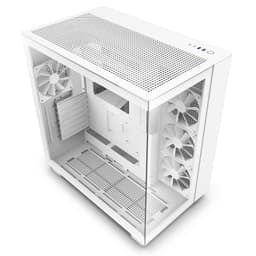
The H3 Flow is a Micro-ATX mid-tower. It supports mATX and Mini-ITX motherboards, which is the full range for a case this size. Dimensions come in at approximately 387mm tall, 210mm wide, and 368mm deep, so it's compact without being a squeeze. The steel construction is what you'd expect at this price tier, and the front panel is mesh, which matters a great deal for a case that has "Flow" in the name. NZXT isn't just using the word as marketing; the perforated front actually lets air in.
Fan support is three 120mm positions at the front, one 120mm at the rear, and two 120mm at the top. The case ships with one 120mm fan included at the rear, which is the minimum viable configuration. You'll want to add at least two front intakes to get proper positive pressure going, and at budget prices that's easy enough to sort. Radiator support is up to 240mm at the front and 120mm at the rear, which is reasonable for a Micro-ATX chassis. No 360mm support here, which is expected given the form factor.
Storage is two 2.5-inch drive bays and one 3.5-inch bay, which is lean but honest for a case this size. PSU clearance is up to 180mm, which covers the vast majority of standard ATX power supplies. Weight is around 4.5kg without components, which is light enough that this isn't going to be a nightmare to move around. The tempered glass side panel is the right-hand panel, giving you a view of the motherboard side. It's a proper swing-open design on some NZXT cases, but owner reports on the H3 specifically suggest a thumbscrew removal rather than a hinge, which is fine at this price.
| Specification | Detail |
|---|---|
| Form Factor Support | Micro-ATX, Mini-ITX |
| Dimensions (approx.) | 387mm H x 210mm W x 368mm D |
| Front Panel | Mesh (perforated steel) |
| Side Panel | Tempered glass (right side) |
| Fan Mounts | Front: 3x 120mm, Top: 2x 120mm, Rear: 1x 120mm |
| Included Fans | 1x 120mm rear exhaust |
| Radiator Support | Front: up to 240mm, Rear: 120mm |
| Max GPU Length | 365mm |
| Max CPU Cooler Height | 165mm |
| Drive Bays | 2x 2.5-inch, 1x 3.5-inch |
| PSU Clearance | Up to 180mm |
| Front I/O | 1x USB 3.2 Gen 1 Type-A, 1x USB 3.2 Gen 1 Type-C, HD Audio |
| Weight | Approx. 4.5kg |
| Colour | White |
| Current Price | £44.99 |

Form Factor and Dimensions
The H3 Flow is a compact mid-tower. That's the category, and it's worth being precise about what that means in practice. At roughly 210mm wide, this is noticeably narrower than a full ATX mid-tower, which typically runs 220mm to 240mm. That slim profile is the whole point of a Micro-ATX chassis: you get a proper desktop build without the case dominating your desk. For anyone working with limited space, that 30mm or so of width difference is actually meaningful.
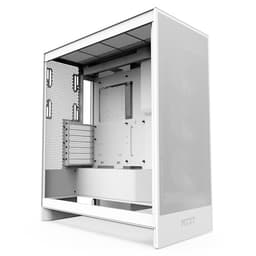
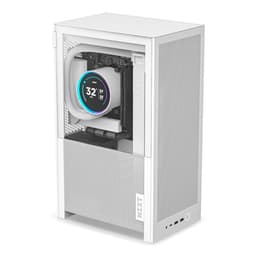
The footprint on a desk is modest. 210mm wide by 368mm deep means it takes up roughly the same floor space as a large hardback book. Height at 387mm is tall enough to stand on a desk without blocking a monitor, or it'll sit comfortably on the floor beside a desk if you prefer. The white finish on this version is clean and neutral, which will suit most setups. NZXT's white tends to be a proper matte white rather than the slightly grey-white you get on cheaper cases, and owner photos back that up.
One thing: because this is a Micro-ATX case, it is genuinely compact. If you're coming from a full ATX mid-tower, the interior will feel tighter than you're used to. That's not a flaw, it's the nature of the form factor. But if you're planning to stuff this with a large GPU, a 240mm AIO, and a pile of storage drives, you'll need to be realistic about what fits and what doesn't. The spec sheet is clear about the limits, and we'll get into the specific clearances in the sections below.
Motherboard Compatibility
The H3 Flow officially supports Micro-ATX and Mini-ITX motherboards. That's it. No full ATX support, which is the expected trade-off for a compact chassis. If you're planning a Micro-ATX build, you're fine. If you're hoping to squeeze a full-size ATX board in here, this isn't your case. The standoff layout is designed around the mATX standard, and the interior dimensions simply don't accommodate the larger footprint of an ATX board.
Micro-ATX is actually a solid choice for most builds that don't need a huge number of PCIe slots or extensive VRM phases. You still get four RAM slots on most mATX boards, multiple M.2 slots, and typically two to three PCIe slots, which is more than enough for a GPU, a wireless card, and maybe a capture card. The mATX form factor has been around long enough that the board selection is mature and well-priced, so you're not limiting yourself badly by going this route.
Mini-ITX boards will also fit, obviously, since ITX is smaller than mATX. The standoffs will need to be in the right positions, and NZXT cases typically come with the standoffs pre-installed for the supported form factors, which is a small but appreciated touch. Owner reports don't flag any issues with standoff alignment, which is actually one of the more common complaints on cheaper cases where the pre-installed standoffs are in the wrong positions and you end up shorting your board. Not a problem here, according to the feedback.
GPU Clearance
Maximum GPU length is 365mm. That's a solid number for a Micro-ATX case and it covers the vast majority of current graphics cards without any drama. To put that in perspective: an RTX 4080 Super reference card is around 336mm, an RTX 4090 Founders Edition is 336mm, and most aftermarket triple-fan cards from the likes of ASUS, MSI, and Gigabyte sit in the 320mm to 360mm range. So you're not going to hit the wall with most current-gen cards, though you should always double-check your specific card's length before buying.
Where it gets a bit more nuanced is GPU width. Modern triple-fan cards are getting wider as well as longer, and in a compact case the clearance between the GPU and the front intake fans (or a front radiator, if you've fitted one) matters. If you're running a 240mm radiator at the front, that will eat into the available GPU length somewhat, so check NZXT's compatibility guidance for your specific combination. With no front radiator and just fans, the 365mm clearance is the figure to work with.
There's no vertical GPU mount option on the H3 Flow, which is fair enough at this price point. Vertical GPU brackets are either expensive add-ons or they require a riser cable that costs almost as much as the case itself. Not having it isn't a dealbreaker for most people, and it keeps the cost down. The standard horizontal mounting is perfectly solid and will hold even heavy triple-fan cards without issue, based on what owners report. No flexing, no sag complaints in the feedback.
CPU Cooler Clearance
CPU cooler height clearance is 165mm. That's generous for a Micro-ATX case and covers pretty much every tower cooler on the market short of the absolute tallest behemoths. The Noctua NH-D15, which is one of the biggest air coolers you'd realistically put in a compact build, comes in at 165mm, so it technically fits but it'll be tight. Most popular coolers like the be quiet! Dark Rock 4 (163mm), Noctua NH-U12S (158mm), and the Thermalright Peerless Assassin 120 (155mm) all have comfortable clearance.
AIO radiator support is 240mm at the front and 120mm at the rear. There's also top mounting support for up to 240mm. So you've got options: a 240mm AIO at the front as intake, a 240mm at the top as exhaust, or a 120mm at the rear. What you can't do is a 360mm AIO, which is a genuine limitation but an expected one given the case dimensions. If you're committed to a 360mm loop, this isn't the right case. For everyone else, a 240mm AIO is perfectly capable of handling any modern CPU, including the power-hungry AMD Ryzen 9 and Intel Core Ultra parts.
One thing to check if you're going with a 240mm front radiator: RAM clearance. In compact cases, a front-mounted radiator combined with tall RAM sticks can create fitment issues depending on the exact pump-head design of your AIO. NZXT's own CAM ecosystem works well with their Kraken series, and the H3 Flow is designed with NZXT AIOs in mind, so compatibility there should be smooth. Third-party AIOs will generally be fine too, but it's the specific dimensions of your pump head before committing.
Storage Bay Options
Storage is where the H3 Flow shows its budget credentials most clearly. You get two 2.5-inch bays and one 3.5-inch bay. That's it. For a modern build this is actually fine, because most people are running an M.2 SSD on the motherboard as their primary drive and maybe one 2.5-inch SATA SSD for secondary storage. The 3.5-inch bay is there for a mechanical hard drive if you need bulk storage, which some people still do for media libraries and backups.
What you don't get is a lot of expansion room if you're someone who hoards storage. If you want four drives plus an M.2, this case will make that difficult. The drive cage positioning is fairly standard, tucked behind the PSU shroud area, and owner reports suggest the mounting is straightforward. There's no tool-free tray system for the 3.5-inch bay on the H3 Flow based on the spec data, which is a minor inconvenience rather than a serious problem. You'll need a screwdriver, but you only do that once.
The 2.5-inch bays are more accessible and the mounting is clean. NZXT tends to use a slide-and-click or thumbscrew approach on their cases, and the owner feedback doesn't flag any issues with drive mounting being fiddly. If your build is primarily M.2 based with one or two SATA drives, the H3 Flow's storage provision is perfectly adequate. If you're building a NAS-adjacent machine or a media server, you'll want a different case entirely, something with a proper drive cage that supports four or more 3.5-inch drives.

Cable Management
This is where a lot of budget cases fall apart, and the H3 Flow does better than you might expect. The rear cable management area has a reported clearance of around 20mm to 25mm, which is enough to route cables without the back panel bowing out when you try to close it. That's a real issue on cheaper cases where the rear gap is barely 15mm and you end up in a wrestling match with the panel every time you want to close it. Owner feedback specifically mentions the cable management as a positive, which is a good sign.
There's a PSU shroud that covers the bottom of the case, hiding the PSU and most of the cable mess from the main chamber view. This is standard on most cases now but it's worth confirming it's here, because some ultra-budget cases skip it entirely and leave your PSU cables on full display. The shroud on the H3 Flow isn't a full-length cover, but it does the job of hiding the bulk of the wiring. Combined with the tempered glass side panel, the end result can look genuinely tidy if you take the time to route things properly.
Velcro cable ties are included, which is a detail that sounds minor but actually makes a real difference when you're trying to bundle cables neatly. The cable routing holes are grommeted on NZXT cases, which helps with a clean look and prevents cables from rattling against bare metal edges. The number of routing holes is appropriate for the form factor. You won't have the same flexibility as a full ATX case, but everything you need to route a tidy build is there. Several owners specifically mention how clean their builds look in the H3 Flow, which suggests the routing options work in practice, not just on paper.
Airflow and Thermal Design
The "Flow" suffix in the name is doing real work here. The front panel is a mesh design with a perforated pattern that provides genuinely good airflow restriction compared to solid or glass front panels. NZXT has been moving toward proper mesh fronts on their mainstream cases, and the H3 Flow is a good example of getting it right at a budget price. A mesh front means your intake fans can actually pull air in without fighting a solid panel, which directly translates to lower component temperatures.
The included fan is a single 120mm unit at the rear acting as exhaust. That's the baseline, and it's not enough for a warm system on its own. The recommended configuration is two or three 120mm fans at the front as intakes and the single rear fan as exhaust, giving you positive pressure with filtered intake. The front, top, and rear all have dust filters, which is important for keeping the inside clean over time. Dust filters that are actually removable and washable are worth their weight in gold for long-term maintenance, and NZXT's filters are generally easy to pull out and rinse.
Owner thermal reports are positive. People are running mid-range to high-end CPUs and GPUs in the H3 Flow and getting temperatures they're happy with, provided they've added front intake fans. The mesh front makes enough of a difference that even two budget 120mm fans at the front will transform the thermals compared to a glass-front case. If you're running a particularly hot GPU or an overclocked CPU, you'll want to populate all the fan mounts, but for a standard gaming build with a mid-range GPU, two front intakes and the included rear exhaust should keep things comfortable. The principles of positive pressure cooling are well established, and the H3 Flow's layout supports them properly.
Front I/O and Connectivity
Front I/O on the H3 Flow is one USB 3.2 Gen 1 Type-A port, one USB 3.2 Gen 1 Type-C port, and a combined HD Audio jack. The USB 3.2 Gen 1 standard delivers up to 5Gbps, which is fine for connecting peripherals, charging devices, and transferring files at reasonable speeds. The Type-C port is particularly useful for modern devices, and having it on the front panel rather than having to reach around to the back of the case is genuinely convenient for day-to-day use.
What you don't get is a USB 3.2 Gen 2 Type-C port capable of 10Gbps or higher. At this price tier, that's not surprising, but notably, if you're regularly transferring large files to external NVMe drives. For most users, the 5Gbps Type-C is perfectly adequate. The HD Audio connection is a single combo jack rather than separate headphone and microphone ports, which is increasingly common on compact cases. If you use a headset with a single 3.5mm plug, you're fine. If you use separate headphones and a microphone with individual 3.5mm connectors, you'll need a splitter or you'll use the rear panel jacks instead.
The power button placement and the overall front I/O layout is clean and minimal, which is very much NZXT's design language. There's no RGB button, no fan speed controller, and no unnecessary clutter on the front panel. The power button is tactile and responsive according to owner reports, with no complaints about it feeling cheap or mushy. The reset button is there but small and recessed, which is the right call since accidental resets are annoying. The overall front panel aesthetic matches the clean white exterior well.
Build Quality and Materials
At this price point, you're getting steel construction rather than aluminium, and that's fine. The steel gauge is what you'd expect from a budget case, not as thick as you'd find on a premium chassis, but solid enough that the panels don't flex alarmingly when you press on them. Owner reports on build quality are generally positive, with the main feedback being that the case feels more substantial than the price suggests. That's a common theme in the H3 Flow reviews, and it reflects reasonably well on NZXT's manufacturing quality control.
Sharp edges are the classic budget case problem, and the H3 Flow largely avoids it. NZXT's edge rolling and finishing is better than most at this price, and the owner feedback doesn't flag sharp edges as a recurring issue. A few isolated reports mention minor sharpness in certain areas, but it's not a pattern. The tempered glass side panel is a proper piece of glass rather than acrylic, which means it won't scratch as easily and it has a nicer look. The thickness of the glass isn't specified precisely in the available data, but owner reports suggest it feels solid and doesn't rattle.
Panel alignment is good across the board based on owner feedback. Panels that don't sit flush or that have visible gaps are a tell-tale sign of poor quality control, and the H3 Flow doesn't seem to have that problem. The white finish is consistent and doesn't show fingerprints as badly as gloss white would. The internal finish is also white, which helps with the clean aesthetic when you're looking through the glass panel. NZXT's build quality reputation is generally solid, and the H3 Flow appears to maintain that even at the budget price tier. A ★★★★½ (4.6) from nearly 700 owners doesn't happen if the build quality is genuinely poor.
How It Compares
The two obvious competitors to the NZXT H3 Flow in the budget Micro-ATX space are the Fractal Design Pop Mini Air and the Corsair 3500X Micro. The Pop Mini Air is Fractal's entry-level compact case, known for solid build quality and sensible airflow. The Corsair 3500X Micro is Corsair's take on the budget mATX market, with a mesh front and a focus on value. All three are targeting broadly the same buyer, so the differences are in the details.
Fractal's Pop Mini Air has a slight edge in build quality feel, with thicker steel and better panel rigidity. It also offers more storage expansion, which matters if you're running multiple drives. But it's typically priced a bit higher than the H3 Flow, and the airflow performance is comparable. The Corsair 3500X Micro ships with more fans included, which is a meaningful advantage if you're trying to keep the total build cost down. However, some owners find the Corsair's cable management routing less intuitive than NZXT's approach, and the internal layout is slightly less refined.
The H3 Flow's strongest argument is the combination of NZXT's design sensibility, a proper mesh front, and the competitive budget pricing. NZXT's cases tend to be easier to build in than the spec sheet alone suggests, because the internal layout is thought through in a way that cheaper cases often aren't. The 4.6 rating from 697 owners is the most honest data point available, and it puts the H3 Flow ahead of several competitors in terms of owner satisfaction at this price tier.
| Feature | NZXT H3 Flow | Fractal Pop Mini Air | Corsair 3500X Micro |
|---|---|---|---|
| Form Factor | Micro-ATX / Mini-ITX | Micro-ATX / Mini-ITX | Micro-ATX / Mini-ITX |
| Front Panel | Mesh | Mesh | Mesh |
| Included Fans | 1x 120mm | 2x 120mm | 2x 120mm |
| Max GPU Length | 365mm | 341mm | 360mm |
| Max CPU Cooler Height | 165mm | 170mm | 170mm |
| Front USB-C | Yes (Gen 1) | Yes (Gen 2) | Yes (Gen 1) |
| Drive Bays (3.5" / 2.5") | 1 / 2 | 2 / 2 | 2 / 2 |
| Price Tier | Budget | Budget/Mid | Budget |
| Owner Rating | ★★★★½ (4.6) (701) | ★★★★½ (4.6) | ★★★★½ (4.6) |

Final Verdict
The NZXT H3 Flow is a well-executed budget Micro-ATX case that earns its 4.6-star rating. The mesh front is the headline feature and it genuinely matters: you're getting real airflow rather than a glass panel that looks good in photos but throttles your intake fans. The build quality is better than the price suggests, the cable management is sorted, and the internal layout is sensible. NZXT has clearly applied their design experience from pricier cases to the H3 Flow, and it shows.
The compromises are real but honest. One included fan is the minimum, and you'll need to budget for at least two more front intakes to get the airflow working properly. Storage expansion is limited to one 3.5-inch and two 2.5-inch bays, so if you're a storage hoarder, look elsewhere. The front USB-C is Gen 1 rather than Gen 2, which is fine for most use cases but. None of these are dealbreakers, they're just the trade-offs you accept at this price tier.
Who should buy this? Anyone building a compact gaming PC or workstation on a budget who wants a case that won't make the build process miserable. First-time builders in particular will appreciate the clean layout and the lack of sharp edges. It's also a solid choice for a secondary or living room PC where desk space is limited. The white version specifically suits clean, minimal aesthetics well.
Who should skip it? If you need to run three or more hard drives, this isn't the case. If you want a 360mm AIO, this isn't the case. If you're planning a full ATX motherboard, this definitely isn't the case. And if you're already spending significantly more on your components, it might be worth stepping up to the NZXT H5 Flow or a similarly priced Fractal North or Define 7 Compact, which offer more expansion and refinement for a bit more money. The H3 Flow is the right tool for a specific job, and it does that job well.
Overall, we'd score this an 8 out of 10 for what it is. It's not trying to be a premium case and it doesn't pretend to be. It's a practical, well-designed compact case at a budget price, and it delivers on that promise more reliably than most of its direct competition. If the price you see on the listing is in the budget tier range, it represents genuinely good value for a Micro-ATX build.
What works. What doesn’t.
5 + 4What we liked5 reasons
- Proper mesh front panel for genuine airflow, not just aesthetics
- 365mm GPU clearance fits most current-gen cards comfortably
- Cable management is better than the price suggests, with grommeted routing holes and Velcro ties included
- Clean NZXT internal layout makes for a straightforward build experience
- Strong owner satisfaction at 4.6/5 from nearly 700 reviews
Where it falls4 reasons
- Only one fan included; you'll need to buy at least two more for proper airflow
- Limited storage: just one 3.5-inch and two 2.5-inch bays
- No 360mm radiator support at the front
- Front USB-C is Gen 1 (5Gbps) rather than the faster Gen 2
Full specifications
11 attributes| Form factor | Mid-Tower |
|---|---|
| CPU cooler clearance MM | 170 |
| Dimensions MM | 225 x 389 x 400 |
| Fans included | 1 |
| GPU clearance MM | 377 |
| MAX FAN count | 7 |
| MAX radiator MM | 280 |
| PSU support | ATX up to 185mm |
| Side panel | tempered glass |
| Supported motherboard | Micro-ATX, Mini-ITX |
| Weight KG | 4.8 |
Frequently asked
5 questions01Is the NZXT H3 Flow - Micro-ATX Airflow PC Case - White good for airflow?+
Yes, genuinely. The mesh front panel is the key feature here, allowing front intake fans to pull air in without fighting a solid or glass panel. The case supports three 120mm fans at the front, two at the top, and one at the rear, giving you plenty of mounting positions to set up proper positive pressure cooling. Dust filters are fitted at the front, top, and rear. The one catch is that only a single 120mm rear exhaust fan is included, so you'll want to add at least two front intake fans to get the full benefit of the mesh front. With those added, owner thermal reports are consistently positive.
02What's the GPU clearance on the NZXT H3 Flow - Micro-ATX Airflow PC Case - White?+
Maximum GPU length is 365mm, which covers the vast majority of current-generation graphics cards including most triple-fan aftermarket models. An RTX 4090 Founders Edition at 336mm fits with room to spare, as do most RTX 4080 and RX 7900 series cards. If you're fitting a 240mm front radiator at the same time, the effective GPU clearance will be reduced, so check NZXT's compatibility guidance for your specific combination. There is no vertical GPU mount option on the H3 Flow.
03Can the NZXT H3 Flow - Micro-ATX Airflow PC Case - White fit a 360mm AIO?+
No. The H3 Flow supports a maximum 240mm radiator at the front and top, and a 120mm at the rear. A 360mm AIO will not fit in this case. If you need 360mm liquid cooling support, you'll need to look at a larger chassis. For most builds, a 240mm AIO is more than capable of handling modern CPUs including high-end AMD Ryzen and Intel Core Ultra processors, and the front 240mm position is the ideal mounting location in this case.
04Is the NZXT H3 Flow - Micro-ATX Airflow PC Case - White easy to build in?+
Owner feedback consistently rates the build experience positively. The internal layout is clean and logical, cable routing holes are grommeted, and the rear cable management area has enough clearance to route cables without the back panel becoming a battle. Velcro cable ties are included. NZXT's design approach tends to produce cases that are more intuitive to build in than the price suggests, and the H3 Flow follows that pattern. Sharp edges are not a recurring complaint in the owner reviews, which is a meaningful positive for a budget case. The tempered glass side panel removes via thumbscrews for access.
05What warranty and returns apply to the NZXT H3 Flow - Micro-ATX Airflow PC Case - White?+
NZXT typically offers a two-year limited warranty on their cases, but you should verify the specific warranty terms on the NZXT website or the product listing at time of purchase, as terms can vary by region. When purchased through Amazon UK, the standard 30-day return window applies, and Amazon's A-to-Z Guarantee provides additional buyer protection. If you receive a unit with a manufacturing defect, contacting NZXT's support directly is the recommended route for warranty claims.