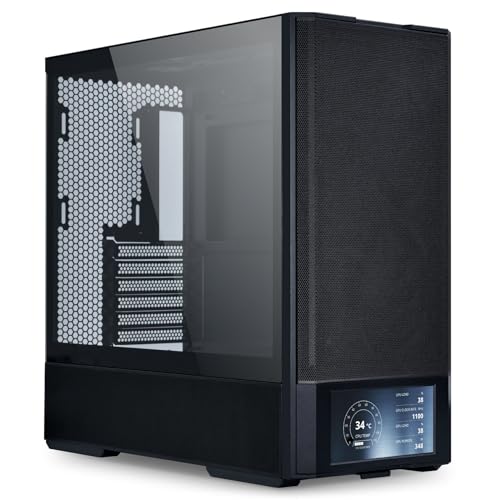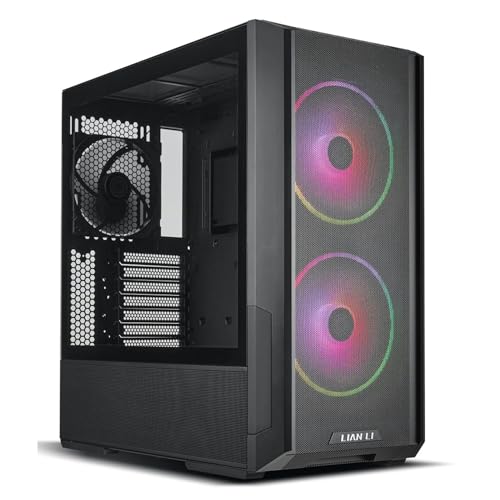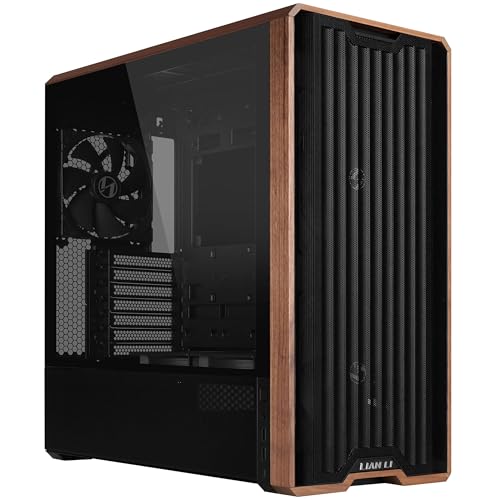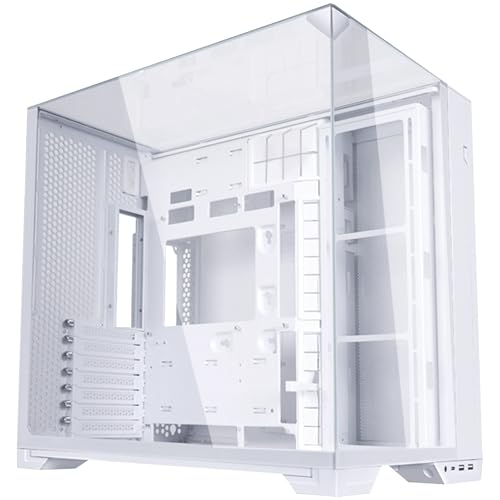
Most PC cases at the premium end of the market fall into one of two camps: pretty glass boxes that cook your components, or airflow-first designs that look like they were styled by someone who hates aesthetics. The Lian Li O11D EVO XL doesn't really fit either description, and that's the point. This is a full tower built around the O11 Dynamic formula that's been popular for years, stretched out to accommodate E-ATX boards and triple-360mm radiator setups for the kind of high-end water-cooled builds that genuinely need the space. The question isn't whether it looks good. It does. The question is whether the practical side matches the premium price.
Short answer: yes, mostly. This is a genuinely well-sorted case for large, complex builds. The clearances are generous, the build experience is better than most at this size, and over a hundred owners rating it positively don't lie. There are a couple of things that'll annoy you, and I'll get to those. But if you're planning an E-ATX or large ATX water-cooled build and you want something that won't fight you every step of the way, the O11D EVO XL is one of the most sensible choices at this price point. Here's why.
Core Specifications
The O11D EVO XL is a proper full tower. Not "full tower" in the marketing sense where they mean a tall mid-tower. We're talking 577mm tall, 310mm wide, and 470mm deep. It weighs around 15kg before you put anything in it, which tells you something about the steel and aluminium construction. The chassis supports E-ATX, ATX, Micro-ATX, and Mini-ITX motherboards, which is the full range. GPU clearance sits at 446mm, CPU cooler height at 167mm for air coolers, and the case supports radiators up to 420mm on the side, 360mm on the top, and 360mm on the bottom. That's a lot of radiator real estate.
Fan support is equally generous. You're looking at up to 10 fan positions across the side, top, and bottom panels. The case ships with no fans included, which at this price is a legitimate gripe and something several owners mention. You're buying a shell, essentially, and then you're buying fans on top. Lian Li's position is that enthusiasts building at this level will want specific fans anyway, but it still stings when you've just spent a significant chunk of money and the thing arrives with no airflow whatsoever.
Storage is handled by two 3.5-inch drive bays and four 2.5-inch drive positions, with an additional two 2.5-inch slots on the back panel. That's not class-leading for a full tower, but honestly, most people building in a case like this are running NVMe SSDs on the motherboard and maybe one or two 2.5-inch drives. The PSU clearance is 220mm, which covers virtually every ATX power supply on the market. The front I/O sits at the top and includes USB 3.0 Type-A, USB 3.1 Gen 2 Type-C, and a combined audio jack.
| Specification | Detail |
|---|---|
| Form Factor Support | E-ATX, ATX, Micro-ATX, Mini-ITX |
| Dimensions (H x W x D) | 577mm x 310mm x 470mm |
| Weight | Approx. 15kg |
| GPU Clearance | 446mm |
| CPU Cooler Height (Air) | 167mm |
| Radiator Support (Side) | Up to 420mm |
| Radiator Support (Top) | Up to 360mm |
| Radiator Support (Bottom) | Up to 360mm |
| Max Fan Positions | 10 |
| Included Fans | None |
| 3.5" Drive Bays | 2 |
| 2.5" Drive Bays | 6 (4 internal + 2 rear) |
| PSU Clearance | 220mm |
| Front I/O | USB 3.0 Type-A, USB 3.1 Gen 2 Type-C, Audio |
| Materials | Steel, Aluminium, Tempered Glass |
| Price | £195.95 · Details |

Form Factor and Dimensions
At 577mm tall and 470mm deep, this is not a case you put on a standard desk unless you've got room. It belongs on the floor, or on a very large desk with nothing else on it. The footprint is bigger than most mid-towers by a meaningful margin, and the weight means once it's in position with a full build inside, it's staying there. That's not a complaint, exactly. It's just something to know before you order.
The dual-chamber design that Lian Li has used across the O11 range is present here in its fullest form. The main chamber holds the motherboard, GPU, and cooling hardware. The secondary chamber behind the motherboard tray is where the PSU lives, along with cable management and drive mounting. This layout is genuinely useful for keeping the visible side of the build clean, and it's one of the reasons the O11 series has been popular with builders who care about aesthetics as well as performance. The glass side panel shows off the main chamber; the back panel hides the mess.
The case is wide enough to feel spacious when you're working in it. Owner reviews consistently mention this. One owner described it as "finally having room to actually think" compared to mid-towers they'd used before. That's the real value of going full tower for a complex build. You're not fighting clearances, you're not bending cables at stupid angles, and you're not wondering whether your hands will physically fit to tighten that last standoff. The O11D EVO XL gives you room, and that room makes the build process noticeably less frustrating.
Motherboard Compatibility
E-ATX support is the headline here and it's genuine. The O11D EVO XL handles E-ATX boards up to 310mm wide, which covers the vast majority of E-ATX motherboards currently on the market, including the larger HEDT (high-end desktop) boards built around platforms like AMD's Threadripper or Intel's Xeon workstation chipsets. The standoff layout is pre-installed for ATX, with additional positions clearly marked for other form factors. Several owners building on E-ATX confirm the fit is clean without needing to hunt for extra standoffs.
ATX is obviously the sweet spot for most people reading this. Standard ATX boards drop straight in, the I/O shield area aligns properly, and the motherboard tray has enough clearance around the edges for cable routing without the board blocking anything important. Micro-ATX and Mini-ITX are supported too, though building a small-form-factor board in a full tower is a choice that will raise eyebrows. It works, it just looks a bit lonely.
One thing: because the O11D EVO XL uses a dual-chamber layout, the PSU is mounted at the bottom rear of the secondary chamber rather than the traditional top or bottom of the main chamber. This means the 24-pin ATX cable run from the PSU to the motherboard is a bit longer than you'd need in a conventional case. Budget for longer cables or check your PSU cable lengths before you order. A few owners flagged this as a mild surprise, not a dealbreaker. Cable extensions are cheap and widely available, so it's more of a planning note than a genuine problem.
GPU Clearance
446mm of GPU clearance is, to be blunt, more than you will ever need with any current consumer graphics card. The RTX 5090, which is the longest flagship card Nvidia currently makes, comes in at around 336mm for most AIB designs. AMD's RX 9070 XT is shorter still. So even with a triple-slot, triple-fan monster of a GPU, you've got over 100mm of headroom. That's not just comfortable. That's "you could fit a small country in there" comfortable.
Vertical GPU mounting is supported with the right riser cable, which isn't included but is a straightforward addition. Lian Li sells a compatible PCIe riser cable separately, and third-party options work fine too. Vertical mounting in this case makes sense given the tempered glass side panel. If you're spending money on a premium GPU with a nice shroud design, showing it off vertically is a legitimate choice. Just make sure you get a PCIe 4.0 or 5.0 rated riser cable to avoid any bandwidth bottlenecks, especially if you're running a current-gen platform.
The GPU support bracket situation is handled cleanly. There are built-in GPU support options to stop sag on heavy triple-fan cards, which matters more than people realise when you've got a 1.5kg graphics card hanging off a single PCIe slot. Owner feedback on this is positive. Nobody's reported sag issues with even the largest current-gen cards, and the support options don't require you to buy additional accessories. That's a small but genuinely thoughtful detail.
CPU Cooler Clearance
167mm of CPU cooler clearance covers the overwhelming majority of tower air coolers on the market. The Noctua NH-D15 (which is one of the tallest popular air coolers at 165mm) fits with 2mm to spare. The be quiet! Dark Rock Pro 5 at 163mm has a bit more room. If you're running something exotic that exceeds 167mm, you're in niche territory and you probably already know it. For everyone else, this is a non-issue.
Where the O11D EVO XL really shines is AIO radiator support. The side panel (which faces the tempered glass) supports radiators up to 420mm, meaning a 420mm AIO fits there. The top supports up to 360mm, and the bottom supports up to 360mm as well. That means you could, in theory, run a 420mm AIO on the side plus a 360mm on the top for a custom loop or dual-radiator setup. In practice, most builders will run a single large AIO, but the flexibility is there for serious water-cooling builds.
The pump and reservoir mounting options for custom loops are also well thought out. There are multiple positions for reservoir mounting within the main chamber, and the overall internal layout gives you enough room to route tubing without it looking like spaghetti. Custom loop builders in the owner reviews are among the most enthusiastic voices, with several specifically calling out the internal space as one of the main reasons they chose this case over alternatives. One owner running a full custom loop with dual 360mm radiators described the build as "the cleanest I've ever managed." That's the kind of feedback that means something.
Storage Bay Options
Two 3.5-inch bays and six 2.5-inch positions is adequate rather than impressive for a full tower. If you're running a NAS-style setup with multiple spinning hard drives, this isn't the right case. But for a high-end gaming or workstation build where your storage is mostly M.2 NVMe on the motherboard, two 3.5-inch bays for backup or overflow storage and a handful of 2.5-inch slots for SSDs is perfectly reasonable.
The drive mounting itself is tool-free for the 3.5-inch bays, which is a nice touch. The trays slide in and lock without needing a screwdriver, and they're sturdy enough that they don't rattle around once installed. The 2.5-inch positions require screws, which is standard across most cases at this level. The rear-panel 2.5-inch mounts are useful for hiding drives behind the motherboard tray where they won't clutter the main chamber view.
NVMe storage is where most builders at this level will focus, and the O11D EVO XL doesn't need to do anything special there. Your M.2 slots are on the motherboard, not the case. But notably, that the internal layout doesn't obstruct access to the motherboard's M.2 slots once everything's installed, which isn't always the case (no pun intended) with dual-chamber designs where the secondary chamber can sometimes make accessing the back of the motherboard tray awkward. Here, the panel access is clean enough that swapping an M.2 drive after the initial build isn't a nightmare.

Cable Management
This is where the O11D EVO XL earns its premium positioning. The dual-chamber layout means all your PSU cables, drive cables, and fan headers live behind the motherboard tray, completely hidden from the glass panel view. The cable routing channels are wide enough for thick PSU cable bundles, and there are Velcro tie points throughout the secondary chamber to keep things tidy. The rear panel clearance (the gap between the motherboard tray and the back panel) is around 25mm, which is enough for even a full modular PSU cable bundle without the panel bowing out.
The PSU shroud in the secondary chamber keeps the power supply itself hidden and provides a clean base for routing cables up toward the motherboard. Several owners specifically mention that cable management in the O11D EVO XL is noticeably easier than in previous cases they've used, particularly for large E-ATX builds where the cable runs are longer and there's more to organise. The grommetted cable pass-throughs are positioned sensibly, meaning you're not routing cables at weird angles to reach the connectors on the board.
One honest note: the no-fans-included situation affects cable management planning too. When you add up to 10 fans, each with their own power and potentially RGB headers, cable management gets complex fast. The case provides enough routing options to handle it, but you'll want to plan your fan header strategy before you start. A fan hub or PWM splitter is almost certainly going to be part of your build, and where you mount that hub matters for keeping things tidy. Owner reviews from builders running six or more fans all mention that the space is there to manage it cleanly, but it takes some thought upfront.
Airflow and Thermal Design
The O11D EVO XL uses a side-intake, top-exhaust, and bottom-intake configuration as its primary airflow path. The side panel (the non-glass side) is a mesh panel with a dust filter, allowing fans mounted to the side to pull cool air directly into the main chamber. The top panel supports exhaust fans or a top-mounted radiator. The bottom can take intake fans feeding the GPU area. This is a well-understood layout that works, and the O11 series has a solid track record for thermal performance when set up properly.
The tempered glass front panel is the one genuine thermal compromise here. Unlike some competitors that have moved to mesh fronts, the O11D EVO XL keeps glass on the front face. This means your primary intake is from the side and bottom rather than the front. In a case with good side mesh coverage, this isn't a disaster, and the O11 formula has proven over multiple generations that it works. But it does mean you're more dependent on getting your fan configuration right. Positive pressure (more intake than exhaust) tends to work best in this layout, and most owners running six to eight fans report temperatures that are entirely respectable for high-end hardware.
The dust filter situation is good. There are filters on the bottom intake and the side mesh panel, and they're removable for cleaning without needing to disassemble the case. This is the kind of practical detail that matters over the lifetime of a build. A case that's easy to maintain stays cleaner and performs better long-term. The top panel can be configured with or without a dust filter depending on whether you're using it for exhaust or a radiator, and the options are included in the box. Owner reviews don't flag dust management as a problem, which is the best thing you can say about it.
Front I/O and Connectivity
The front I/O panel sits at the top of the case, which is standard for a full tower that's going to live on the floor. You get one USB 3.0 Type-A port, one USB 3.1 Gen 2 Type-C port, a combined headphone/microphone jack, a power button, and a reset button. The Type-C port requires a USB 3.1 Gen 2 header on your motherboard, which most current ATX and E-ATX boards have. If yours doesn't, the port won't work, so your motherboard spec sheet before assuming.
The port selection is functional but not exceptional. One Type-A and one Type-C is on the lean side for a full tower at this price. Some competitors offer two or three Type-A ports plus Type-C, which is more useful in practice when you're plugging in USB drives, controllers, or other peripherals during a build or regular use. It's not a dealbreaker, but a couple of owners do mention wishing there was another Type-A port. Given that this case is aimed at high-end builds where the builder has probably also got a USB hub somewhere, it's a manageable limitation.
The power button has a clean, solid feel according to owner feedback. No wobble, no cheap plasticky click. The reset button is smaller and recessed slightly, which is sensible design. You don't want to accidentally hit reset when you're reaching for the power button in the dark. The combined audio jack works fine for headsets, though anyone using a dedicated audio interface or DAC won't be touching it. The I/O panel overall does what it needs to do without embarrassing itself, even if it's not the most generous setup in its class.
Build Quality and Materials
Lian Li's build quality has always been one of their strongest selling points, and the O11D EVO XL doesn't let that down. The steel chassis is solid, with no flex when you're working inside it. The aluminium accents feel premium rather than decorative. Panel alignment is tight from the factory, with no gaps or misaligned edges reported in the owner reviews. At this price, that's expected, but it's still worth confirming that the expectation is met.
The tempered glass panels (there are two, on the front and the side) are thick and clear. No distortion, no visible imperfections in the glass itself. The panels attach with thumbscrews rather than a tool-free latch system, which is a minor point but. A few owners mention that the glass panels feel very secure once installed, with no vibration or rattling even with high fan speeds. The tempered glass is the kind that shatters into small, relatively safe pieces if it breaks (as opposed to large shards), which is standard for cases at this level and a BSI-recognised safety standard for toughened glass products.
The overall finish quality is high. The black anodised aluminium and powder-coated steel hold up well, and owner photos shared in reviews show builds that still look clean after extended use. Sharp edges are essentially absent, which matters when you're reaching into the case to route cables. The screw quality is decent too. Nothing strips easily, the thumbscrews have enough grip to tighten properly by hand, and the standoffs are pre-installed to the right positions for ATX. Lian Li clearly treats the build experience as part of the product, and it shows.
How It Compares
The obvious competition for the O11D EVO XL is the Corsair 7000D Airflow and the Fractal Design Torrent XL. Both are full towers in the same premium bracket, both support E-ATX, and both have strong reputations. The 7000D Airflow goes harder on the front mesh airflow approach, with three 140mm fans included out of the box. The Torrent XL leans into its massive front mesh and included fans for maximum airflow. Against these two, the O11D EVO XL's no-fans-included situation looks worse on paper, but the build quality and internal layout hold their own.
Where the O11D EVO XL genuinely pulls ahead is the dual-chamber design and the cable management experience. The Corsair 7000D Airflow has a decent cable management setup but it's a more conventional single-chamber layout. The Fractal Torrent XL is similarly conventional. For builders who care about the finished look of their build and want the PSU and cables properly hidden, the O11D EVO XL's approach is cleaner. Custom loop builders in particular tend to prefer the O11 layout for exactly this reason.
The Corsair 7000D Airflow's included fans give it a meaningful advantage out of the box if you're budget-conscious about the total build cost. The Fractal Torrent XL's front mesh airflow is measurably better for pure thermal performance in a traditional fan-only setup, based on Fractal's own published specifications and the broader reputation the Torrent series has built. But if you're water-cooling anyway, which is the target audience for the O11D EVO XL, the front airflow advantage matters less.
| Feature | Lian Li O11D EVO XL | Corsair 7000D Airflow | Fractal Design Torrent XL |
|---|---|---|---|
| Form Factor | Full Tower | Full Tower | Full Tower |
| E-ATX Support | Yes | Yes | Yes |
| GPU Clearance | 446mm | 420mm | 467mm |
| CPU Cooler Height | 167mm | 190mm | 188mm |
| Max Radiator (Side) | 420mm | 420mm | 420mm |
| Included Fans | None | 3x 140mm | 2x 180mm + 1x 140mm |
| Dual-Chamber Layout | Yes | No | No |
| Front Panel | Tempered Glass | Mesh | Mesh |
| Drive Bays (3.5") | 2 | 6 | 2 |
| Price Tier | Premium | Premium | Premium |
The comparison table makes the trade-offs clear. The Corsair wins on included fans and drive bay count. The Fractal wins on CPU cooler height clearance (190mm versus 167mm, which matters if you're running something like a Thermalright Phantom Spirit 120 SE at 170mm) and front airflow. The Lian Li wins on the dual-chamber layout, cable management, and the overall aesthetic finish. There's no single right answer. It depends on whether you're water-cooling, how much you care about cable management aesthetics, and whether you want fans bundled in.

Final Verdict
The Lian Li O11D EVO XL is a genuinely good full tower case for large, complex builds. It's not trying to be the best at every single thing. The glass front means it's not the airflow king in a pure fan-only configuration. The drive bay count won't satisfy anyone building a storage server. And yes, no included fans at this price is a bit cheeky. But for what it actually is, which is a premium dual-chamber full tower designed for E-ATX water-cooled builds with serious cable management ambitions, it delivers well.
The positive overall rating across over a hundred reviews isn't a fluke. Owners building high-end gaming rigs, workstations, and custom water-cooled systems consistently report a positive experience. The internal space is genuinely generous, the build quality is solid throughout, and the dual-chamber layout makes a real difference to how the finished build looks and how much of a headache cable management is. Lian Li has been refining this formula across multiple O11 generations, and the EVO XL represents the fullest expression of it.
Who should skip it? If you're building a mid-range ATX system with a standard air cooler and a 240mm AIO, this is overkill. Physically and financially. The standard O11D EVO (not the XL) is a smarter buy for ATX builds. It's smaller, cheaper, and still has the dual-chamber layout and cable management benefits. You don't need the XL unless you're actually using E-ATX, a 420mm AIO, or a custom loop with multiple radiators. If that's you, the XL makes sense. If it's not, save yourself some money and some floor space.
For the target audience, though, this is a strong recommendation. The build experience is better than most at this size, the clearances are generous enough to future-proof your hardware choices, and the finished result looks the part. At its current asking price, it sits in line with the Corsair 7000D Airflow and Fractal Torrent XL, so you're choosing between philosophies rather than price points. If the dual-chamber layout and clean aesthetics matter to you, the O11D EVO XL is the one to go for. Rating: 8.5 out of 10.
What works. What doesn’t.
6 + 6What we liked6 reasons
- Dual-chamber layout keeps PSU and cables completely hidden from the tempered glass view, making finished builds look genuinely clean
- Radiator support is exceptional, with positions for a 420mm on the side, 360mm on the top, and 360mm on the bottom for serious water-cooling setups
- 446mm GPU clearance handles every current consumer graphics card with well over 100mm of headroom to spare
- Build quality throughout is excellent, with solid steel, quality aluminium accents, tight panel alignment, and no sharp edges
- Internal space is generous enough that working inside the case is noticeably less frustrating than in most mid-towers or conventional full towers
- Built-in GPU sag support handles even heavy triple-fan cards without needing additional accessories
Where it falls6 reasons
- No fans are included at a premium price point, meaning your total build cost is higher than it initially appears
- The tempered glass front panel limits front-facing airflow, making thermal performance more dependent on correct fan configuration than mesh-front competitors
- Front I/O is limited to one USB 3.0 Type-A and one Type-C port, which is lean for a full tower in this price bracket
- The dual-chamber PSU placement means the 24-pin ATX cable run is longer than in conventional cases, requiring planning or cable extensions
- Drive bay count of two 3.5-inch positions is not suited to anyone wanting multiple spinning hard drives in a storage-heavy build
- The case is large and heavy, at roughly 15kg empty, so placement and desk space need to be considered before ordering
Full specifications
11 attributes| Form factor | Full-Tower |
|---|---|
| CPU cooler clearance MM | 167 |
| Dimensions MM | 522 x 304 x 531.9 |
| Fans included | 0 |
| GPU clearance MM | 460 |
| MAX FAN count | 12 |
| MAX radiator MM | 420 |
| PSU support | ATX up to 220mm |
| Side panel | tempered glass |
| Supported motherboard | E-ATX (under 280mm), ATX, Micro-ATX, Mini-ITX |
| Weight KG | 17.7 |
Got a motherboard yet?
4 reviewsThe maker lists ATX, Micro-ATX and Mini-ITX boards for this case. These ATX boards fit it.
Frequently asked
7 questions01Does the Lian Li O11D EVO XL include any fans?+
No. The O11D EVO XL ships with no fans included. You will need to purchase fans separately, which is a common point of criticism given the premium price. Lian Li's position is that enthusiast builders at this level will have specific fan preferences, but the additional cost is worth factoring into your total build budget before purchasing.
02What is the largest radiator the O11D EVO XL can accommodate?+
The side panel supports radiators up to 420mm, the top supports up to 360mm, and the bottom also supports up to 360mm. In theory, you could run a 420mm radiator on the side alongside a 360mm on the top simultaneously, which makes this case genuinely suitable for ambitious custom water-cooling loops with multiple radiators.
03Will a full-size E-ATX motherboard fit properly in the O11D EVO XL?+
Yes. The case supports E-ATX motherboards up to 310mm wide, which covers the large majority of E-ATX boards on the market including those built for AMD Threadripper and Intel Xeon workstation platforms. Standoffs for ATX are pre-installed, with additional positions clearly marked for E-ATX. Owners building on E-ATX boards confirm the fit is clean without needing additional hardware.
04How does the dual-chamber layout affect cable management?+
The dual-chamber design places the PSU and all cable routing behind the motherboard tray, completely out of sight from the tempered glass side panel. This makes the visible side of the build look clean with minimal effort. The secondary chamber has wide cable routing channels, Velcro tie points, and approximately 25mm of rear panel clearance for cable bundles. The one planning note is that the PSU position means the 24-pin ATX cable run is longer than in conventional cases, so checking your PSU cable lengths or budgeting for extensions is worthwhile.
05How does the O11D EVO XL compare to the Corsair 7000D Airflow for thermal performance?+
The Corsair 7000D Airflow has a mesh front panel and includes three 140mm fans, giving it an advantage in a traditional fan-only airflow configuration. The O11D EVO XL uses a glass front panel, so primary intake comes from the side mesh and bottom rather than the front, making fan configuration more important. However, if you are water-cooling, the front airflow difference matters less, and the O11D EVO XL's dual-chamber layout and cable management experience are meaningfully better. For pure air-cooled builds, the 7000D Airflow is the stronger thermal performer out of the box.
06Is vertical GPU mounting possible in the Lian Li O11D EVO XL?+
Yes, vertical GPU mounting is supported, though the required PCIe riser cable is not included. Lian Li sells a compatible riser cable separately, and compatible third-party options are also available. If you are mounting a current-generation GPU vertically, use a PCIe 4.0 or 5.0 rated riser cable to avoid any potential bandwidth limitations. The tempered glass side panel makes vertical mounting a visually appealing choice for showcasing a premium GPU shroud design.
07Is the O11D EVO XL worth buying over the standard O11D EVO for an ATX build?+
Generally no. The XL is designed for E-ATX motherboards, 420mm AIOs, and custom loops with multiple radiators. If you are building a standard ATX system with a 240mm or 360mm AIO and no plans for E-ATX, the standard O11D EVO offers the same dual-chamber layout and cable management benefits in a smaller, lighter, and less expensive package. The XL is genuinely worthwhile when you are using the additional space it provides.