Your motherboard choice matters more than most people realise until something goes wrong. Get it wrong and you're watching your Ryzen 9000 series chip throttle itself into mediocrity because the VRM is cooking under sustained load, or you're fighting a BIOS that treats you like a criminal for wanting to enable XMP. Get it right and you basically forget the board exists, which is exactly what you want. The ASUS PRIME B850-PLUS WIFI sits at the budget end of the new B850 platform, and that immediately raises a question worth asking: is ASUS cutting the right corners here, or the wrong ones?
B850 is AMD's newest mid-range chipset, sitting above B650 and beneath X870, and it brings some useful upgrades over its predecessor. The PRIME B850-PLUS WIFI is ASUS's entry point into that platform, aimed squarely at people building a Ryzen 7000, 8000, or 9000 series system who don't want to spend X870 money but still want Wi-Fi 6E, decent storage options, and a board that won't embarrass itself in two years. On paper, that sounds like a sensible proposition. In practice, there are a few things worth understanding before you hand over your money.
It's rated ★★★★☆ (4.2) from 46 Amazon ratings. What follows is a thorough look at what this board actually offers, where it makes sense, and who it's really for.
Core Specifications
The ASUS PRIME B850-PLUS WIFI is an ATX form factor board built around AMD's B850 chipset, using the AM5 socket. That means it's compatible with AMD's current Ryzen 7000, 8000, and 9000 series processors, which is exactly where you want to be if you're building or upgrading right now. ATX is the standard full-size format, so it'll fit any mid-tower or full-tower case without issue. No compromises on layout or slot spacing that you sometimes get with Micro-ATX builds.
Networking comes in strong for this price bracket. You're getting Wi-Fi 6E via the 802.11ax standard alongside Realtek 2.5Gb Ethernet, which means wired connectivity that's noticeably faster than the old gigabit standard that still haunts cheaper boards. The Aura Sync RGB implementation here gives you three addressable Gen 2 headers. Whether you care about RGB is entirely your business, but it's there and it's proper addressable RGB rather than the static-colour rubbish some budget boards ship with.
The board features a 6-layer PCB, which is worth flagging because some budget boards cut this to 4 layers and you feel it in signal integrity and thermal performance over time. VRM and M.2 heatsinks are included, as is a passive PCH heatsink, plus hybrid fan headers that work with ASUS's Fan Xpert 2+ software. The full specifications are in the table below.
| Specification | Detail |
|---|---|
| Socket | AM5 |
| Chipset | AMD B850 |
| Form Factor | ATX |
| CPU Compatibility | AMD Ryzen 9000, 8000, 7000 Series |
| Wi-Fi | Wi-Fi 6E (802.11ax) |
| Ethernet | Realtek 2.5Gb |
| PCB Layers | 6-layer |
| RGB | Aura Sync, 3x addressable Gen 2 headers |
| VRM | 8+2+1 phase, discrete MOSFETs, up to 170W CPU |
| Memory | 4x DDR5 DIMM, up to 256GB, 8000+ MT/s (OC), EXPO |
| M.2 | 3 slots: PCIe 5.0 x4, PCIe 4.0 x4, PCIe 4.0 x2 |
| SATA | 4x SATA 6Gb/s |
| Expansion | 1x PCIe 5.0 x16, 1x PCIe 4.0 x16 (x4), 2x PCIe 3.0 x16 (x1) |
| Rear USB | 8 (1x USB-C 10Gbps, 3x USB-A 10Gbps, 2x USB-A 5Gbps, 2x USB 2.0) |
| Bluetooth | 5.3 |
| Warranty | 3 years (ASUS UK) |
| VRM Heatsink | Yes |
| M.2 Heatsink | Yes |
| PCH Heatsink | Yes |
| Current Price | £124.99 |

Socket and CPU Compatibility
AM5 is AMD's current platform and it's going to be around for a while. AMD has been pretty good historically about sticking with socket platforms longer than Intel, and the company has committed to AM5 longevity. That matters when you're buying a budget board, because you want to know you can drop in a faster chip in two or three years without replacing the motherboard. The ASUS PRIME B850-PLUS WIFI supports Ryzen 7000, 8000, and 9000 series processors, which covers everything from the current-generation Ryzen 9000 chips all the way back to the original Ryzen 7000 launch lineup.
AM5 uses an LGA-style socket rather than the PGA design AMD used on AM4. That means the pins are on the motherboard rather than the CPU, which is a change worth knowing about if you're coming from an older AMD build. It also means you need to be careful when seating the processor, though in practice it's not difficult. The socket itself is well-proven at this point, with multiple generations of chips having shipped on it.
One thing to keep in mind with any B850 board and the newest Ryzen 9000 chips: if you're buying a board that's been sitting in a warehouse, you might need to update the BIOS before it'll recognise the latest processors. This board has a rear BIOS FlashBack button, which lets you update the firmware from a USB stick without a CPU or memory installed, so you don't need an older Ryzen 7000 processor to hand for the initial boot. This is standard advice for any AM5 board purchase, not a specific criticism of this one.
Chipset Features
B850 is AMD's mid-range chipset for the AM5 platform. B650 already supports PCIe Gen 5 M.2 storage; the difference that matters on this board is that Gen 5 also reaches the primary GPU slot. With both the graphics slot and the first M.2 slot at Gen 5, this board is ready for the fastest NVMe drives currently on the market and the next generation of graphics cards. That's not nothing on a budget board.
Overclocking isn't a reason to pay more either. For most people building a gaming or productivity system, heavy manual overclocking is irrelevant. You'll enable EXPO on your DDR5 kit, maybe nudge the CPU's power limits slightly, and that's as far as most builders ever go.
What B850 does deliver is a solid lane count for connectivity. You're getting enough PCIe lanes to run a GPU at full bandwidth, multiple M.2 slots at meaningful speeds, and USB connectivity that doesn't feel like it was designed in 2018. The chipset-level features here are genuinely competitive for the price bracket, and B850 as a platform feels like the sweet spot for most AM5 builds right now. X870 costs significantly more and the real-world benefits are marginal for anyone who isn't running multiple high-speed storage devices simultaneously.
VRM and Power Delivery
This is where budget boards often let themselves down. The ASUS PRIME B850-PLUS WIFI includes a VRM heatsink, which is a basic requirement that some truly cut-price boards still manage to skip. The board also uses alloy inductors and what ASUS describes as durable capacitors, which is marketing language but at least suggests they're not using the cheapest components available. The 6-layer PCB also helps here, as it provides better thermal dissipation and power delivery traces than a 4-layer design.
ASUS quotes an 8+2+1 phase power design with discrete MOSFETs, and rates the board for CPUs up to 170W. This is a budget-bracket board designed for Ryzen 7000 through 9000 series chips, and ASUS has positioned it for "demanding AI applications" in their marketing. Whether that's genuine or aspirational is debatable, but it does suggest they've at least thought about sustained load scenarios rather than just gaming peaks.
Practically speaking, if you're pairing this with a Ryzen 5 or Ryzen 7 chip, the VRM should be absolutely fine. A Ryzen 9 9950X running a sustained Cinebench loop is a different conversation, and if you're buying that chip you should be looking at a mid-range or premium board rather than the budget bracket.
Memory Support
AM5 is DDR5 only. There's no DDR4 compatibility on this platform, which was a deliberate choice by AMD when they launched AM5. If you're coming from an older build and hoping to reuse your DDR4 kit, that's not happening here. DDR5 prices have come down considerably since AM5 launched, though, so this isn't the barrier it once was.
The board has four DDR5 slots, takes up to 256GB and supports EXPO profiles, which is AMD's equivalent of Intel's XMP. Enabling EXPO in the BIOS is how you actually get your memory running at its rated speed rather than the base DDR5 frequency. This is important to know because DDR5 kits are often sold at speeds like 6000 MT/s or 6400 MT/s, but without enabling EXPO they'll boot at a much slower default. It's a one-click operation in the BIOS but you do have to do it.
For DDR5 on AM5, the sweet spot for gaming and general use is generally considered to be around 6000 MT/s, which hits the ideal memory controller ratio for Ryzen chips. Faster kits exist and can be enabled, though stability at very high speeds depends on the quality of your specific memory kit and the board's memory controller tolerance. The dual-channel configuration is standard here, and you'll want to populate two slots in the correct configuration (typically slots A2 and B2 if you're using two sticks) to get dual-channel bandwidth. Check the manual before you seat your RAM.
Storage Options
Storage is well covered on the PRIME B850-PLUS WIFI. The board includes M.2 heatsinks, which is exactly what you want given that modern NVMe drives can get quite warm under sustained load. Thermal throttling on an M.2 drive is a real thing and a heatsink helps prevent it.
The platform supports PCIe Gen 5 M.2, which means you can run the current generation of fastest NVMe drives. There are three M.2 slots: the first runs at PCIe 5.0 x4 with a Ryzen 7000 or 9000 chip, the second at PCIe 4.0 x4 and the third at PCIe 4.0 x2. Gen 5 NVMe drives are hitting sequential read speeds that would have seemed absurd a few years ago. Whether you actually need those speeds for gaming is debatable (you mostly don't), but for content creation, large file transfers, or running virtual machines, it's useful. The primary M.2 slot running at Gen 5 bandwidth gives this board meaningful longevity for storage upgrades.
SATA ports are also present for traditional 2.5-inch SSDs or hard drives, which matters if you're migrating from an older build and want to carry over existing storage. There are four SATA 6Gb/s ports. RAID support is available through the AMD chipset for those who need it, though most home builders won't touch it. The overall storage story here is genuinely good for a budget board.
Expansion Slots and PCIe
The primary x16 slot runs at PCIe Gen 5 bandwidth with Ryzen 7000 and 9000 chips (Ryzen 8000 drops it to Gen 4), which is the important number. Your GPU connects here, and Gen 5 x16 provides more than enough bandwidth for any current graphics card. Even the fastest current GPUs don't saturate PCIe Gen 4 x16 in practice, so Gen 5 here is future-proofing rather than a current necessity. But it's nice to have, and it means this board won't be a bottleneck when next-generation GPUs arrive.
The primary slot features metal reinforcement, which ASUS calls SafeSlot. Reinforced PCIe slots matter more than people think. A heavy GPU, particularly one with a large triple-fan cooler, puts real mechanical stress on that slot over time. Boards that skip reinforcement can develop intermittent connection issues after a year or two of the GPU flexing under its own weight. It's a small thing but it's the kind of detail that separates boards that last from boards that cause mysterious problems down the line.
Additional PCIe slots for expansion cards (capture cards, sound cards, additional networking) are present: one PCIe 4.0 x16 slot running at x4 and two PCIe 3.0 x16 slots running at x1, and using either of the PCIe 3.0 slots disables SATA ports 1 and 2. For most builds, the primary x16 slot is all that matters.
Connectivity and Rear I/O
The rear I/O panel is where you feel the difference between budget and mid-range boards most acutely. Budget boards often skimp on USB port counts, but this one has eight on the rear: one USB-C and three USB-A at 10Gbps, two USB-A at 5Gbps and two USB 2.0.
The Wi-Fi antenna connectors will be on the rear panel, as is standard. The Realtek 2.5Gb Ethernet port is there too. Beyond that, there are three audio jacks for the Realtek 7.1 audio, plus DisplayPort and HDMI outputs for Ryzen chips with integrated graphics. The internal headers matter too, particularly for front-panel USB connectivity: there's a 5Gbps USB-C header, a 5Gbps header for two USB-A ports and three USB 2.0 headers.
One feature worth looking for on any AM5 board is a BIOS Flashback button or Clear CMOS button on the rear I/O. These are quality-of-life features that save you from opening the case when something goes wrong with a BIOS update or an unstable overclock. This board has the BIOS FlashBack button on the rear; Clear CMOS is a header on the board rather than a rear button. Given that B850 is a relatively new platform with ongoing BIOS development, having Flashback within easy reach is useful rather than just a nice-to-have.

Wi-Fi and Networking
This is genuinely one of the stronger selling points of the PRIME B850-PLUS WIFI, and it's right there in the name. Wi-Fi 6E via the 802.11ax standard is meaningful. The 6E designation means it can operate on the 6GHz band in addition to the 2.4GHz and 5GHz bands that regular Wi-Fi 6 uses. The 6GHz band is less congested, particularly in flats and dense urban environments where the 5GHz spectrum is absolutely rammed with neighbouring networks. If you're in a flat in any major UK city, you'll notice the difference.
The Realtek 2.5Gb Ethernet is the other piece of this. Standard gigabit Ethernet has been the baseline for so long that people forget 2.5Gb is a real upgrade, particularly if you have a NAS, a router that supports 2.5Gb, or you're regularly moving large files across your local network. For gaming, the difference between 1Gb and 2.5Gb is essentially zero, but for anything involving bulk data transfer it adds up. Realtek's 2.5Gb controllers have a solid reputation and driver support is well established at this point.
Bluetooth comes bundled with the Wi-Fi card as standard on boards like this, which handles wireless peripherals, headsets, and controllers. It's Bluetooth 5.3. For a budget board to include Wi-Fi 6E and 2.5Gb Ethernet as standard rather than as a paid upgrade is good value.
BIOS and Overclocking
ASUS's UEFI BIOS is laid out sensibly. The EZ Mode gives you a quick overview of your system status and lets you do basic things like enable EXPO without digging through menus. Advanced Mode is where you actually live, and it's laid out logically enough that you can find what you're looking for without wanting to throw your keyboard across the room.
Fan curve control is something I care about a lot, and the board's seven 4-pin fan headers work with ASUS's Fan Xpert 2+ software. You can set proper temperature curves for each header rather than just picking from presets, which means you can actually tune your cooling to be quiet under light load and ramp up properly under sustained load. This is the kind of feature that makes a real difference to daily use and it's present here.
On overclocking, most people keep it simple. Enable EXPO, maybe adjust the CPU's power limits slightly if you want to squeeze a bit more performance out of a Ryzen 7 or 9 chip, and you're done. The board's 6-layer PCB and alloy inductors suggest ASUS has at least thought about power delivery quality, which matters more for stability than raw phase count numbers.
Build Quality and Aesthetics
The 6-layer PCB is worth coming back to because it's a genuine build quality indicator rather than marketing fluff. Budget boards that cut to 4 layers save money but compromise on signal integrity, thermal performance, and long-term reliability. ASUS has kept 6 layers here, which suggests they've drawn the line at component quality rather than PCB construction. That's the right call.
The heatsink coverage is comprehensive for this price point. VRM heatsink, M.2 heatsink, and PCH heatsink all present and accounted for. The alloy inductors and durable capacitors mentioned in the spec sheet are standard ASUS language.
Aesthetically, the three addressable Gen 2 RGB headers work with Aura Sync, which means the board plays nicely with ASUS's broader RGB ecosystem, so if you have Aura-compatible RAM, coolers, or case fans, everything can be synchronised through ASUS's software. If you don't care about RGB, the lighting can be turned off entirely through the BIOS or software.
Value Analysis
At £124.99, the PRIME B850-PLUS WIFI sits firmly in the budget motherboard bracket. The inclusion of Wi-Fi 6E and 2.5Gb Ethernet as standard features rather than paid upgrades is significant.
The PCIe Gen 5 graphics slot is the other big value argument. If you're planning to keep this system for four or five years and upgrade your GPU along the way, that matters.
Where the value calculation gets more complicated is if you're comparing against discounted B650 boards that have been on the market longer and are now available at lower prices. A B650 board with a similar feature set might cost noticeably less right now simply because it's been available longer and retailers are clearing stock. If you don't need a Gen 5 graphics slot, a discounted B650 board might actually serve you better on pure value terms. But if you're building for the long term and want the current-generation platform, the PRIME B850-PLUS WIFI makes a strong case for itself in the budget bracket.
Pros and Cons
- Wi-Fi 6E and 2.5Gb Ethernet as standard at a budget price point
- PCIe Gen 5 support for GPU and M.2 storage future-proofing
- 6-layer PCB rather than the 4-layer construction some budget boards use
- Full heatsink coverage including VRM, M.2, and PCH
- Aura Sync RGB with three addressable Gen 2 headers
- AM5 platform longevity with Ryzen 7000, 8000, and 9000 support
- Small review pool means long-term reliability is still being established
- Aura Sync software is bloated
- B650 alternatives may offer better immediate value if a Gen 5 graphics slot isn't a priority
Final Verdict
The ASUS PRIME B850-PLUS WIFI is a genuinely solid budget AM5 board that gets the important things right. The 6-layer PCB, proper heatsink coverage, Wi-Fi 6E, and 2.5Gb Ethernet at this price point represent real value rather than marketing padding. It's not a board that's going to embarrass you in a year or two, which is the actual test for anything in the budget bracket.
Who should buy this? Someone building a Ryzen 5 or Ryzen 7 system on the AM5 platform who wants current-generation connectivity, PCIe Gen 5 future-proofing without spending mid-range board money. It's a particularly good fit if Wi-Fi is important to you. It's also a good choice if you're building a system you plan to keep for a few years and want to be able to drop in a faster Ryzen 9000 chip down the line without changing the board.
Who should skip it? If you genuinely don't care about Wi-Fi and you're on a tight budget, a discounted B650 board might serve you better on pure cost terms. For the mainstream builder who wants a current-generation AM5 board that just works, the PRIME B850-PLUS WIFI is a smart choice. 8 out of 10.
Not Right For You?
If the PRIME B850-PLUS WIFI doesn't quite fit your requirements, here are a few directions worth considering.
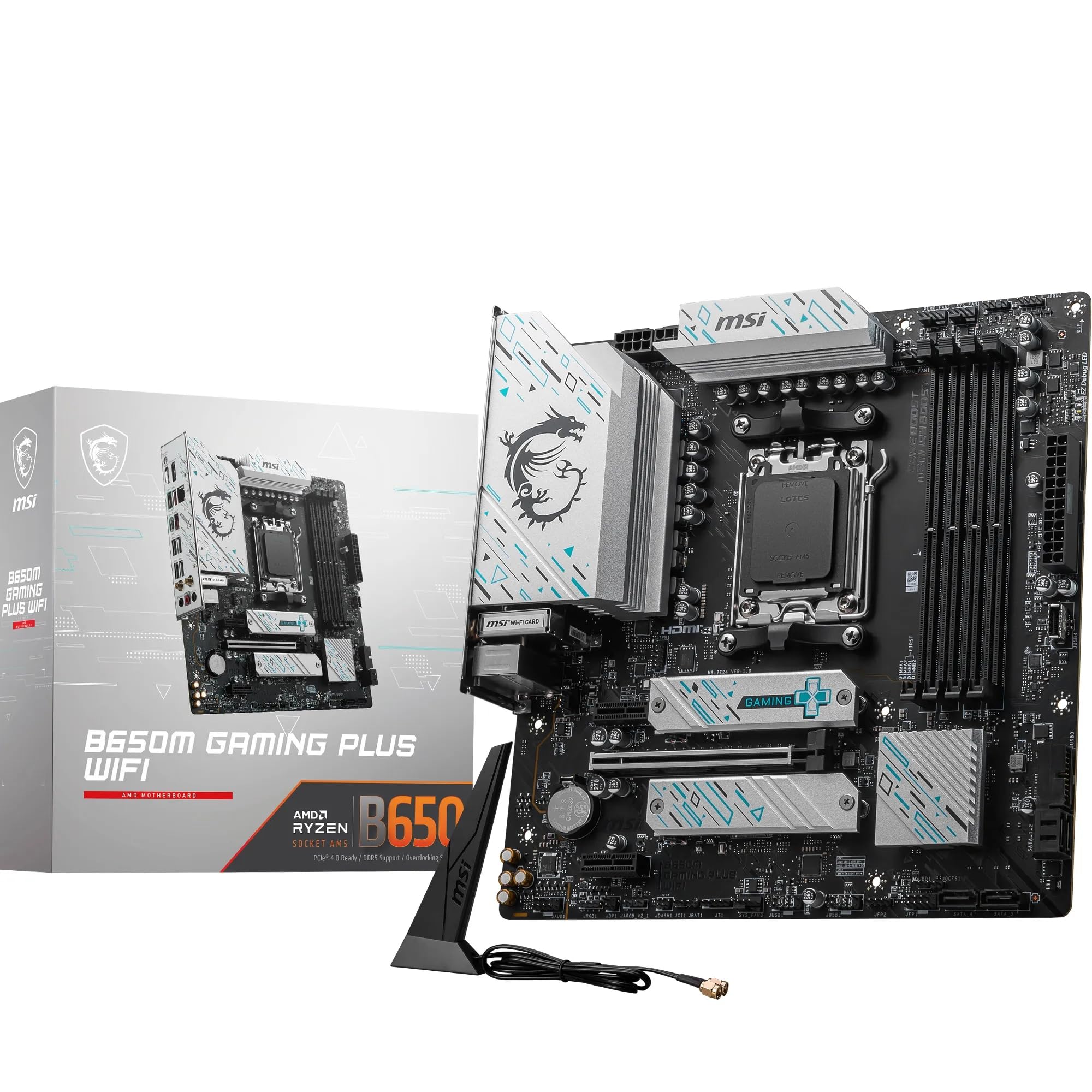
If you want to save money and don't need a PCIe Gen 5 graphics slot, look at ASUS's own PRIME B650-PLUS WIFI (which still has Gen 5 M.2 support) or similar B650 boards from MSI and Gigabyte. They've been on the market long enough that prices have dropped, and for a build that's going to run a mid-range GPU and a standard NVMe drive, B650 is perfectly adequate. The platform is proven and BIOS maturity is excellent at this point.
If you want more overclocking headroom or you're pairing with a top-end Ryzen 9 chip, look at the ASUS TUF GAMING B850-PLUS WIFI or step up to an X870 board. The TUF series sits above PRIME in ASUS's lineup and typically offers a more substantial VRM.
And if you're considering Intel instead of AMD, the equivalent platform would be Intel's Z890 or B860 on the LGA1851 socket. Different ecosystem, different trade-offs, but worth knowing about if you're still at the platform decision stage rather than committed to AM5.

About the Reviewer
This review was researched and written by the team at Vivid Repairs. We cover PC components with a focus on what actually matters for real-world builds: reliability, value, and whether something will still be working properly in five years. We research boards thoroughly using manufacturer specifications and platform-level knowledge. We haven't benched this board ourselves, but we know what the specs mean and we say it straight.
Affiliate disclosure: This article contains affiliate links. If you purchase through these links, we may earn a small commission at no extra cost to you. This does not influence our editorial positions.
What works. What doesn’t.
6 + 3What we liked6 reasons
- Wi-Fi 6E and 2.5Gb Ethernet included as standard at a budget price point
- PCIe Gen 5 support for both the primary GPU slot and M.2 storage provides meaningful future-proofing
- 6-layer PCB construction rather than the 4-layer design that some budget boards use, improving signal integrity and thermal performance
- Full heatsink coverage across VRM, M.2, and PCH
- Seven 4-pin fan headers with Fan Xpert 2+ per-header temperature curves
- AM5 platform longevity means the board can accept future Ryzen chip upgrades without replacement
Where it falls3 reasons
- Aura Sync software is bloated
- Small owner review pool at launch means long-term reliability data is still limited
- Discounted B650 boards may offer better immediate value for builders who have no use for a PCIe Gen 5 graphics slot
Full specifications
12 attributes| Socket | AM5 |
|---|---|
| Chipset | B850 |
| Form factor | ATX |
| Bios flashback | true |
| M2 slots | 3 |
| MAX RAM | 256GB |
| MAX RAM GB | 192 |
| Network | 2.5GbE + Wi-Fi 6E |
| Pcie 5 slots | 1 |
| Pcie slots | 1x PCIe 5.0 x16 |
| RAM slots | 4 |
| RAM type | DDR5 |
If this isn’t right for you
2 options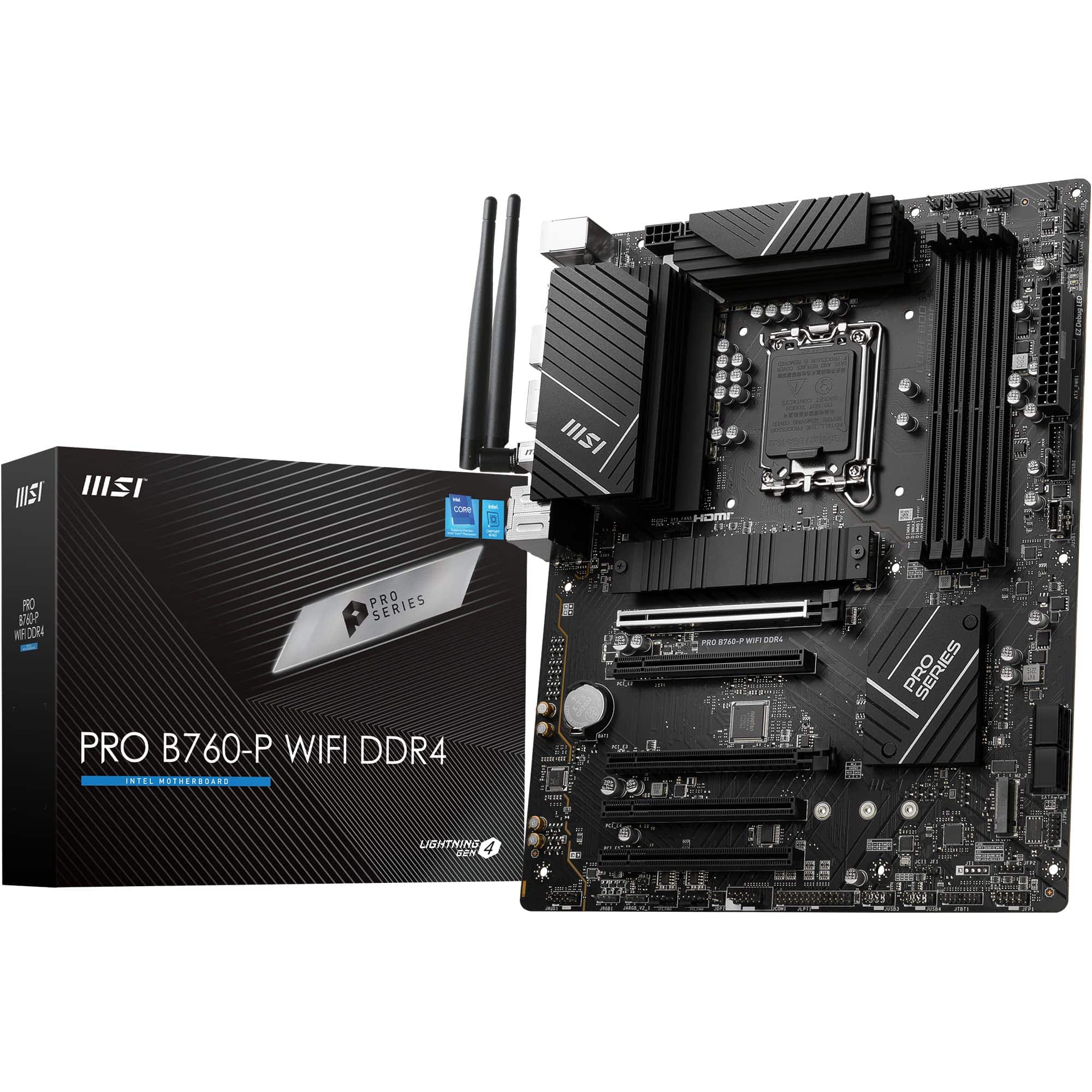
Frequently asked
7 questions01Is the ASUS PRIME B850-PLUS WIFI compatible with Ryzen 9000 series processors?+
Yes. The board supports AMD Ryzen 7000, 8000, and 9000 series processors on the AM5 socket. If the board has been sitting in stock for some time, it may require a BIOS update before recognising the latest Ryzen 9000 chips. The board has a BIOS FlashBack button, which updates the firmware from a USB stick without a CPU or memory installed.
02Does the ASUS PRIME B850-PLUS WIFI support DDR4 memory?+
No. AM5 is a DDR5-only platform, and the PRIME B850-PLUS WIFI does not accept DDR4 modules. If you are migrating from an older build, your existing DDR4 kit cannot be reused. DDR5 prices have fallen considerably since AM5 launched, so the cost difference is less significant than it once was.
03What is EXPO and do I need to enable it?+
EXPO is AMD's memory profile standard, equivalent to Intel's XMP. DDR5 kits rated at speeds such as 6000 MT/s or 6400 MT/s will boot at a lower default frequency unless EXPO is enabled in the BIOS. Enabling it is a straightforward one-click operation in the BIOS settings, but you do need to do it manually after the first boot to run your memory at its advertised speed.
04Is Wi-Fi 6E noticeably better than Wi-Fi 6 for everyday use?+
In many environments, yes. Wi-Fi 6E adds access to the 6GHz band, which is significantly less congested than the 2.4GHz and 5GHz bands used by standard Wi-Fi 6. In flats or dense urban areas where neighbouring networks crowd the 5GHz spectrum, connecting to the 6GHz band can produce more consistent speeds and lower latency. The benefit is most obvious in crowded wireless environments rather than in isolated rural settings.
05Can I use a PCIe Gen 5 NVMe drive in this board?+
Yes. The PRIME B850-PLUS WIFI supports PCIe Gen 5 M.2 storage in its first M.2 slot with a Ryzen 7000 or 9000 processor. Gen 5 NVMe drives offer substantially higher sequential read and write speeds than Gen 4 options. For gaming the practical difference is modest, but for content creation, large file transfers, or running virtual machines, the extra bandwidth is genuinely useful.
06How does the PRIME B850-PLUS WIFI compare to a B650 board for a mid-range build?+
For a build centred on a mid-range GPU and a standard NVMe drive, a discounted B650 board may offer better immediate value, as B650 boards have been available longer and prices have dropped. B650 boards already support PCIe Gen 5 M.2 storage, so the key advantage here is the PCIe Gen 5 graphics slot, which matters if you want to future-proof for next-generation graphics cards. If that doesn't apply to your planned build, B650 deserves a place in the comparison.
07Is the ASUS PRIME B850-PLUS WIFI suitable for a Ryzen 9 chip under heavy workload?+
It is a budget-bracket board with an 8+2+1 phase power design using discrete MOSFETs, rated for CPUs up to 170W. For sustained all-core workloads on a Ryzen 9 chip such as the 9950X, a board with a heavier VRM is the safer choice. For Ryzen 5 or Ryzen 7 builds, the power delivery on this board is unlikely to be a limiting factor.