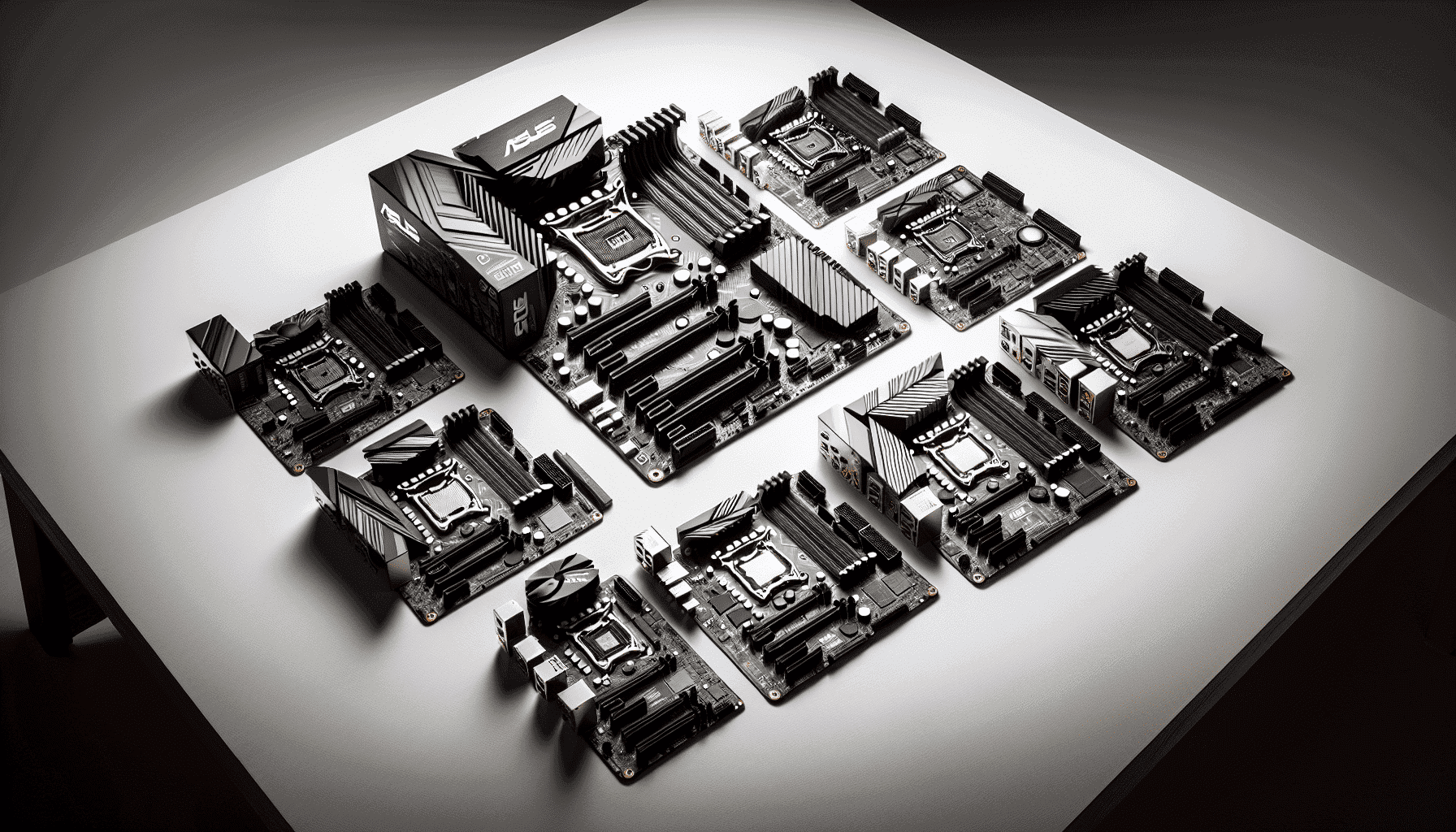
Picking a motherboard is one of those decisions that feels boring until you get it wrong. You've sorted your CPU, you've agonised over GPU pricing, and now you're staring at a sea of black PCBs wondering which one is actually worth your money and which one is going to give you grief six months down the line. The ROG STRIX B550-A GAMING is ASUS's attempt to sit right in that sweet spot: proper ROG branding, ATX form factor, and a feature list that punches noticeably above what you'd expect from a board in the budget bracket.
What makes this one interesting is the part number. The ASUS WAVE ROG STRIX B550-A GAMING (model 90MB15J0-M0EAY0) isn't the cheapest B550 you can buy, but it's clearly aimed at builders who want something that feels premium without crossing into the territory where you're paying for features you'll never use. Over 2,291 owners have rated it at ★★★★½ (4.6), which is genuinely impressive for a motherboard. People return boards when they're unhappy. A 4.5 average across that many reviews tells you something real.
So is it actually good, or is it just pretty? Here's what the specs, the feature sheet, and real owner feedback tell us.
Core Specifications
The ROG STRIX B550-A GAMING sits on AMD's AM4 socket and uses the B550 chipset, which means it's designed primarily for Ryzen 3000 and Ryzen 5000 series processors. It's a full ATX board, so you're getting the standard 305mm x 244mm footprint. That matters if you're planning a compact build, but for anyone with a mid-tower or full-tower case, it'll drop straight in without fuss.
Memory configuration is four DDR4 slots supporting up to 128GB, with XMP support for overclocked kits. Storage is handled by dual M.2 slots, both of which are genuinely useful rather than the one-good-one-terrible arrangement you sometimes see on cheaper boards. Rear I/O includes USB 3.2 Gen 2 Type-C, HDMI 2.1, and DisplayPort 1.2 for anyone running a Ryzen APU, plus Intel 2.5Gb Ethernet via ASUS LANGuard protection. The full breakdown is below.
One thing worth flagging before we go further: this board is listed on ASUS's own product pages as supporting PCIe 4.0 readiness, dual M.2, and the USB 3.2 Gen 2 Type-C port. Those aren't marketing inventions; they're real features that put this above most boards in the budget tier.
| Specification | Detail |
|---|---|
| Model Number | 90MB15J0-M0EAY0 |
| Socket | AM4 |
| Chipset | AMD B550 |
| Form Factor | ATX |
| Memory Slots | 4 x DDR4 (up to 128GB) |
| M.2 Slots | 2 (PCIe 4.0 ready) |
| PCIe | PCIe 4.0 ready |
| USB (Rear) | USB 3.2 Gen 2 Type-C |
| Video Output | HDMI 2.1, DisplayPort 1.2 |
| Ethernet | Intel 2.5Gb with ASUS LANGuard |
| Power Connector | ProCool (teamed power stages) |
| Price | £119.99 |

Socket and CPU Compatibility
The AM4 socket is one of AMD's great gifts to the PC building community. AMD kept AM4 alive from 2017 through to the Ryzen 5000 series in 2020 and beyond, meaning there's a genuinely massive range of CPUs that work on this platform. On the B550, you're looking at native support for Ryzen 3000 (Matisse) and Ryzen 5000 (Vermeer, Cezanne) series chips. Some boards also support Ryzen 4000G APUs, though that varies by manufacturer and BIOS version.
If you're pairing this with a Ryzen 5 5600X, a 5700X, or going all-in with a 5800X3D, this board handles all of them without complaint. The 5800X3D in particular has become something of a cult favourite for gaming, and B550 boards like this one are the natural home for it. You're not going to be held back by the platform here. The AM4 socket uses a standard mounting pattern that's compatible with the vast majority of coolers on the market, including older AM3 coolers with the right bracket.
Worth noting: if you're buying a brand new Ryzen 5000 chip and the board has been sitting in a warehouse for a while, you might need a BIOS update before it'll POST. ASUS does include a BIOS Flashback feature on some boards, but you'll want to check whether this specific board has that before assuming you can update without a compatible CPU to hand. Most retailers will have updated stock by now, but it's not a bad idea to ask. Older Ryzen 1000 and 2000 series CPUs are not supported on B550, which is a chipset limitation rather than anything ASUS-specific.
Chipset Features
The AMD B550 chipset occupies the middle tier of AMD's AM4 lineup, sitting above the budget A520 and below the enthusiast X570. The headline difference versus X570 is that B550 gives you PCIe 4.0 on the primary x16 slot and the first M.2 slot (when used with a compatible Ryzen 5000 or 3000 CPU), while the secondary lanes run at PCIe 3.0. That's a sensible compromise. Most people buying this board aren't going to need PCIe 4.0 on every slot simultaneously.
In terms of overclocking, B550 supports CPU overclocking on unlocked Ryzen processors (anything with an X suffix, plus the non-X chips with some BIOS fiddling). It also supports memory overclocking via XMP profiles, which is how most people will actually use it. What B550 doesn't give you is the full chipset-level PCIe 4.0 bandwidth that X570 offers for multi-GPU or high-end storage setups. But honestly, unless you're running a professional workstation with multiple NVMe drives and a capture card, you're not going to notice that difference.
SATA support on B550 gives you six ports for traditional hard drives or SATA SSDs, which is plenty for most builds. USB connectivity from the chipset includes a mix of USB 3.2 Gen 1 and Gen 2 headers for front-panel connections, plus the rear I/O ports. The chipset doesn't have the active cooling fan that X570 required, which means no fan noise and one fewer thing to fail over time. That's a genuine practical advantage of B550 over its older sibling.
VRM and Power Delivery
This is where I always get a bit evangelical, because VRM quality is the thing that separates a board that'll happily run your CPU at full tilt for five years from one that'll throttle under sustained load or, in the worst case, cook itself. The ROG STRIX B550-A GAMING uses what ASUS calls teamed power stages with a ProCool power connector and high-quality alloy chokes and durable capacitors. That's not just marketing copy; teamed power stages mean the board is using a configuration where multiple MOSFETs share the load per phase, which improves thermal performance and efficiency under load.
The ProCool connector is ASUS's reinforced CPU power connector design, which uses full metal contact pins rather than the hollow pins found on budget boards. Under sustained high-current loads, those hollow pins can actually cause connection issues and voltage drops. It's a small detail but it matters, particularly if you're running a power-hungry chip like the Ryzen 9 5900X or pushing a 5800X3D hard in long gaming sessions. ASUS has been fitting ProCool to their ROG and TUF boards for a while now and it's genuinely one of those features that justifies the slight premium over the absolute cheapest B550 options.
The alloy chokes are worth a mention too. Cheaper boards use ferrite chokes which can saturate under load and generate a whine (coil whine is real and it's annoying). Alloy chokes have higher saturation current and run cooler. Combined with the solid capacitors, this is a power delivery setup that's been designed to last, not just to pass the spec sheet. For a Ryzen 5 or Ryzen 7 build, this VRM is more than adequate. Even for a Ryzen 9 5900X, the board should handle it without thermal throttling, though you'd want decent airflow in your case regardless.
Memory Support
Four DDR4 slots, up to 128GB total, with XMP support for overclocked kits. That's the headline, and for most builds it's all you need to know. In practice, you'll probably be running either 16GB (2 x 8GB) or 32GB (2 x 16GB) in dual-channel configuration, and the board will handle both without any drama. Ryzen CPUs are famously sensitive to memory speed, with the sweet spot generally sitting around DDR4-3600 for most Ryzen 5000 chips due to the relationship between memory frequency and the Infinity Fabric clock.
XMP (Intel's Extreme Memory Profile standard, which AMD supports via its own EXPO/DOCP implementation) lets you enable your kit's rated speed with a single BIOS toggle. In practice this works well on this board, with owners reporting successful XMP enabling at rated speeds without needing to manually tune timings. That said, if you're pushing very fast kits (DDR4-4000 and above), you may need to do some manual tweaking. That's a Ryzen platform quirk rather than a board-specific issue, and it affects every B550 board equally.
The maximum 128GB capacity is overkill for gaming but genuinely useful if you're doing video editing, 3D rendering, or running virtual machines alongside your gaming. Four slots also means you have room to expand later if you start with a 16GB kit. One thing to be aware of: running all four slots populated can sometimes require dropping memory speeds slightly compared to two-slot configurations, again due to Ryzen's memory controller characteristics. Start with two sticks in the recommended A2/B2 slots and you'll be fine.
Storage Options
Dual M.2 slots is the feature that genuinely makes this board stand out in its price bracket. One of those slots runs at PCIe 4.0 speeds (when paired with a compatible Ryzen 5000 CPU and a PCIe 4.0 NVMe drive), which means you can take full advantage of drives like the Samsung 980 Pro or WD Black SN850X. The second M.2 slot runs at PCIe 3.0, which is still fast enough for an OS drive or secondary game storage. Having two M.2 slots means you can ditch SATA SSDs entirely if you want a clean build with no cables cluttering the case.
Both M.2 slots support NVMe drives, and at least one supports SATA M.2 drives as well, which is handy if you've got an older SATA M.2 SSD you want to carry over from a previous build. Six SATA ports round out the storage options for anyone who still has a stack of hard drives for bulk storage or older SATA SSDs. RAID support is available through the chipset for SATA arrays, which is useful for NAS-adjacent builds or anyone who wants redundancy on their storage.
The M.2 heatsinks (ASUS fits covers on the ROG STRIX boards) are worth having if you're running a PCIe 4.0 drive, which can get genuinely hot under sustained sequential writes. Thermal throttling on NVMe drives is a real thing and a heatsink makes a noticeable difference to sustained performance. It's one of those details that separates a properly designed board from something that's just been thrown together to hit a price point. ASUS gets this right on the STRIX line.
Expansion Slots and PCIe
The primary x16 slot runs at PCIe 4.0 when used with a Ryzen 5000 or 3000 series CPU, which means your GPU gets the full bandwidth of the latest interface standard. In practice, most current GPUs don't saturate PCIe 3.0 x16, let alone PCIe 4.0 x16, but having PCIe 4.0 here future-proofs the board for upcoming GPU generations. The slot itself is reinforced with ASUS's SafeSlot design, which adds a metal shield around the slot to prevent the GPU from physically ripping the slot off the PCB if you're clumsy during installation or if a heavy GPU sags over time.
Beyond the primary GPU slot, there are additional PCIe slots for expansion cards like capture cards, sound cards, or networking adapters. The secondary PCIe lanes run at PCIe 3.0 via the chipset, which is perfectly adequate for anything you'd realistically put in those slots. Capture cards, for example, don't need anywhere near the bandwidth of a GPU, so PCIe 3.0 x1 or x4 is more than sufficient. Lane sharing between M.2 and PCIe slots is something to be aware of; populating certain combinations of slots can disable others, but ASUS documents this clearly in the manual.
The slot layout is sensibly spaced, with enough room between the primary GPU slot and the first secondary slot to accommodate most dual-slot and even triple-slot graphics cards without blocking all the secondary slots. If you're running a particularly chunky GPU (and in 2026, most of them are), you'll probably lose the first secondary slot to the card's cooler, but that's true of virtually every ATX board on the market. The physical build quality of the slots themselves feels solid, with no flex or looseness when inserting cards.
Connectivity and Rear I/O
The rear I/O is where the ROG STRIX B550-A GAMING genuinely earns its place above budget B550 boards. USB 3.2 Gen 2 Type-C is present, which is the 10Gbps single-lane standard. That's fast enough for external SSDs, modern peripherals, and pretty much anything you'd realistically plug into the back of a desktop. Having Type-C on the rear I/O is something that cheaper boards skip entirely, and it's increasingly the connector you actually want for external storage and newer devices.
Video output comes via HDMI 2.1 and DisplayPort 1.2. These are only relevant if you're using a Ryzen APU (like the Ryzen 5 5600G) or a future CPU with integrated graphics. If you've got a discrete GPU, you'll be using the GPU's own outputs instead. But having HDMI 2.1 specifically is a nice touch; HDMI 2.1 supports up to 48Gbps bandwidth, meaning it can handle 4K 120Hz or 8K 60Hz if you ever need it for an APU build. DisplayPort 1.2 is the older standard, supporting up to 4K 60Hz, which covers most monitor setups without issue.
The full rear I/O also includes standard audio jacks for analogue audio output, which is handled by ASUS's SupremeFX audio implementation (a Realtek codec with ASUS's own capacitors and signal isolation). For most people, this is perfectly good. Audiophiles running high-impedance headphones might want a DAC/amp, but for gaming headsets and standard speakers, the onboard audio is genuinely decent. The I/O shield is pre-installed on the board, which sounds like a small thing but saves a surprising amount of frustration during builds.
WiFi and Networking
The ROG STRIX B550-A GAMING uses Intel's 2.5Gb Ethernet controller, protected by ASUS LANGuard. The Intel controller is the right choice here. Realtek's cheaper Ethernet chips have a patchy reputation for driver stability and latency spikes, and Intel's NICs have consistently been the more reliable option in owner feedback across multiple boards and generations. For gaming, a stable low-latency connection matters more than raw throughput, and Intel 2.5Gb delivers on both fronts.
ASUS LANGuard is their surge protection and ESD (electrostatic discharge) protection circuit around the Ethernet port. It's designed to prevent damage from lightning strikes or electrical spikes travelling through your network cable. Whether you think that's a realistic risk depends on your setup, but it's a feature that costs ASUS something to include and they've included it anyway. That's a decent signal about build quality priorities. The 2.5Gb speed means you can actually saturate a modern NAS or take advantage of multi-gig internet connections if your router supports it.
WiFi is not listed in the verified specifications for this board. The model number 90MB15J0-M0EAY0 appears to be the non-WiFi variant of the ROG STRIX B550-A GAMING. If wireless connectivity is important to your build, you'll need to either add a PCIe WiFi card or use a USB WiFi adapter. This is worth checking before you buy. The ROG STRIX B550-F GAMING (WiFi) is ASUS's version with built-in wireless if that's a dealbreaker for you. For most desktop builds with a cable run to a router, the absence of WiFi isn't a problem.
BIOS and Overclocking
ASUS's UEFI BIOS is, genuinely, one of the better ones in the industry. I say that as someone who finds most BIOS interfaces somewhere between frustrating and actively hostile to normal humans. ASUS splits theirs into an EZ Mode for quick setup and an Advanced Mode for people who want to get into the details, and both modes are actually usable. EZ Mode shows you CPU temperature, fan speeds, memory configuration, and boot order in a clean layout. Advanced Mode gives you access to full overclocking controls, fan curve customisation per header, and all the memory timing settings you'd ever need.
For overclocking, B550 supports full CPU overclocking on unlocked Ryzen chips. You can push memory speeds via DOCP (ASUS's name for XMP on AMD platforms), manually tune primary and secondary timings, and adjust CPU voltage. The board's VRM setup is capable enough to handle modest overclocks on Ryzen 5 and Ryzen 7 chips. Going beyond the stock boost clocks on a Ryzen 9 5950X might push the VRM harder than ideal, but for anything up to and including a 5800X or 5800X3D, you've got plenty of headroom. Fan curve control is genuinely flexible, with per-header curves and temperature source selection, which means you can dial in a quiet build without sacrificing cooling performance under load.
Owner feedback on BIOS stability is broadly positive, with the main complaints being the occasional need to re-enable XMP after a CMOS clear and the standard Ryzen AGESA update cycle that comes with any AM4 board. ASUS has been good about releasing BIOS updates for the B550 platform, and the board has received multiple updates since launch to improve compatibility and stability. The BIOS Flashback feature (if present on this model) would let you update without a compatible CPU, which is useful if you're buying a Ryzen 5000 chip and the board's factory BIOS predates it. Check the ASUS support page for the latest BIOS version before you build.
Build Quality and Aesthetics
This is a ROG STRIX board, so aesthetics are part of the package. The B550-A GAMING has a predominantly black PCB with silver and dark grey accents, a clean look that works in windowed cases without being garish. There's RGB lighting built in, with ASUS's Aura Sync ecosystem handling the control. The RGB is tasteful by gaming motherboard standards; it's not going to look like a nightclub inside your case, but it's there if you want it and it syncs with other Aura-compatible components. If you hate RGB, you can turn it off entirely in the BIOS or via the Armoury Crate software.
The physical build quality is noticeably better than budget B550 boards. The heatsinks on the VRM area feel substantial and are properly mounted with screws rather than push-pins, which matters for long-term thermal performance. The M.2 heatsinks (for the NVMe slots) are included and again use screw mounting. The PCB itself has a premium finish, and the component placement is sensible, with the 24-pin ATX connector and CPU power connectors in the expected locations for easy cable routing. The pre-installed I/O shield is a quality-of-life feature that more boards should include.
SafeSlot on the primary PCIe x16 slot is a practical feature rather than a marketing one. Modern GPUs are heavy. The RTX 4080 and RX 7900 XTX are both cards that put real mechanical stress on the PCIe slot, and a reinforced slot is genuinely less likely to crack the PCB over time. The overall impression is of a board that's been designed to last, with components and construction choices that prioritise longevity over cost-cutting. For a board in the budget bracket, that's not something you can take for granted.
How It Compares
The obvious competitors at this price point are the MSI MAG B550 TOMAHAWK and the Gigabyte B550 AORUS PRO. Both are well-regarded B550 boards with strong reputations, and both sit in roughly the same price bracket. The TOMAHAWK has been the go-to recommendation for budget-conscious Ryzen builds for a while, largely because of its strong VRM and no-nonsense approach. The AORUS PRO sits slightly higher and offers more features in some areas.
The ROG STRIX B550-A GAMING differentiates itself primarily through the Intel 2.5Gb Ethernet (versus 1Gb on some competitors), the USB 3.2 Gen 2 Type-C rear port, and the HDMI 2.1 output. The TOMAHAWK uses a 2.5Gb Realtek controller rather than Intel, which is a meaningful difference for anyone who's had driver issues with Realtek NICs. The STRIX board's ROG branding also comes with ASUS's software ecosystem and the generally positive reputation of their BIOS team.
| Feature | ROG STRIX B550-A GAMING | MSI MAG B550 TOMAHAWK | Gigabyte B550 AORUS PRO |
|---|---|---|---|
| Socket | AM4 | AM4 | AM4 |
| Chipset | B550 | B550 | B550 |
| M.2 Slots | 2 | 2 | 3 |
| PCIe 4.0 | Yes (x16 + M.2) | Yes (x16 + M.2) | Yes (x16 + M.2) |
| Ethernet | Intel 2.5Gb | Realtek 2.5Gb | Intel 2.5Gb |
| USB Type-C (Rear) | USB 3.2 Gen 2 | Not specified | USB 3.2 Gen 2 |
| HDMI Output | HDMI 2.1 | HDMI 2.1 | HDMI 2.1 |
| DisplayPort | DP 1.2 | DP 1.2 | DP 1.2 |
| WiFi | No (this variant) | No | No |
| RGB | Yes (Aura Sync) | Yes (Mystic Light) | Yes (RGB Fusion) |
Where the AORUS PRO has a clear advantage is the third M.2 slot, which is useful if you're planning a storage-heavy build. But at similar price points, the Intel Ethernet on the STRIX board and the general quality of ASUS's BIOS make it a genuinely competitive choice. The TOMAHAWK is a simpler, more utilitarian board that some builders prefer precisely because it doesn't try to be anything other than a solid foundation. The STRIX B550-A GAMING is for the builder who wants that foundation but also wants the extras.
What Buyers Actually Say
With 2,384 at a 4.5 average, this board has a proper track record. The praise that comes up most consistently is around build quality and BIOS usability. Owners regularly mention that the BIOS is approachable for first-time builders while still having the depth that experienced builders want. That's a genuinely hard balance to strike and it's something ASUS has clearly invested in. The pre-installed I/O shield gets mentioned surprisingly often in positive reviews, which tells you how much builders have been burned by boards that don't include it.
The Intel 2.5Gb Ethernet is specifically called out by multiple owners as a reason they chose this board over competitors. People who've had Realtek NIC headaches in the past clearly notice and appreciate the Intel controller. XMP enabling is reported as straightforward, with most owners getting their memory kits running at rated speeds without manual intervention. The RGB implementation via Aura Sync is praised for its reliability compared to some competitors' software, which is faint praise given how often RGB software is a disaster, but it's genuine praise nonetheless.
The complaints are relatively minor. Some owners mention that Armoury Crate (ASUS's system management software) is bloated and installs more than you asked for, which is fair. A small number of owners report BIOS update complications, though this is common across all motherboard brands and the B550 platform specifically has had multiple AGESA updates over its lifetime. A handful of DOA reports exist, but at this review count that's statistically inevitable and Amazon's returns process handles it. Nothing in the complaint patterns suggests a systematic hardware fault or a design problem.
Value Analysis
At £119.99, this board sits right at the top of the budget bracket, and the honest question is whether the premium over the cheapest B550 options is justified. The answer is yes, but with some nuance. The Intel 2.5Gb Ethernet alone is worth something if you care about network reliability. The USB 3.2 Gen 2 Type-C rear port is a feature that mid-range boards charge extra for. HDMI 2.1 versus HDMI 2.0 matters if you're running an APU. The ProCool connector and alloy chokes are tangible quality improvements over budget VRM implementations.
The comparison to look at is the step up to mid-range boards in the £150 to £180 bracket. At that level, you start getting WiFi built in, potentially more M.2 slots, and sometimes stronger VRMs for Ryzen 9 overclocking. If you're pairing this with a Ryzen 5 5600X or 5700X and don't need WiFi, the ROG STRIX B550-A GAMING gives you everything you need without paying for features you won't use. If you're going Ryzen 9 5900X and want to push it hard, stepping up to a higher-tier board is worth considering.
The 4.5-star average across 2,384 is the real value indicator here. Motherboards get returned when they cause problems. A board that 2,291 people have bought and rated at 4.5 is doing something right. In the budget bracket, that kind of social proof carries real weight, because the budget tier is where you find the most variable quality. This board is consistently good, and consistently good at this price point is exactly what most builders need.
Final Verdict
The ASUS WAVE ROG STRIX B550-A GAMING is a proper board. Not a flashy board, not a board trying to be something it isn't, but a genuinely well-built, well-specified ATX motherboard for AMD Ryzen builds that delivers more than its price tier suggests. The Intel 2.5Gb Ethernet, USB 3.2 Gen 2 Type-C, HDMI 2.1, dual M.2 with PCIe 4.0, and the quality VRM implementation with ProCool and alloy chokes add up to a feature set that sits comfortably above most budget competition.
The BIOS is good. The build quality is good. The owner feedback across 2,384 is good. There's no single area where this board disappoints, which is rarer than it should be at this price point. The lack of WiFi is the main thing to check before buying, and if that's a dealbreaker, ASUS's own ROG STRIX B550-F GAMING (WiFi) is the obvious alternative. For everyone else, particularly builders pairing this with a Ryzen 5 5600X, 5700X, or even a 5800X3D for a gaming-focused build, this is a board you can buy with confidence and expect to still be running reliably five years from now.
Editorial score: 8.5 out of 10. Recommended for Ryzen 5000 builds in the budget to mid-range bracket where WiFi isn't required.
Full Specifications
| Specification | Detail |
|---|---|
| Part Number | 90MB15J0-M0EAY0 |
| Socket | AM4 |
| Chipset | AMD B550 |
| Form Factor | ATX |
| Memory Type | DDR4 |
| Memory Slots | 4 |
| Max Memory | 128GB |
| M.2 Slots | 2 (PCIe 4.0 ready) |
| PCIe Standard | PCIe 4.0 ready |
| USB Rear (Type-C) | USB 3.2 Gen 2 |
| Video Output | HDMI 2.1, DisplayPort 1.2 |
| Ethernet | Intel 2.5Gb with ASUS LANGuard |
| Power Delivery | Teamed power stages, ProCool connector, alloy chokes |
| Audio | SupremeFX (Realtek codec) |
| RGB | Aura Sync |
| WiFi | Not included (this variant) |
| Current Price | £119.99 |
| Rating | ★★★★½ (4.6) (2,384 reviews) |

Not Right For You?
If you need built-in WiFi, the ASUS ROG STRIX B550-F GAMING (WiFi) is the natural step up. It adds Intel WiFi 6 and Bluetooth while keeping the same solid foundation. Expect to pay a bit more, but if a cable run to your router isn't practical, it's the right choice.
If you're on a tighter budget and don't need 2.5Gb Ethernet or USB 3.2 Gen 2 Type-C, the MSI MAG B550 TOMAHAWK is a strong alternative with a well-deserved reputation for reliability. It's a simpler board that does the basics very well and has been a community favourite for a reason.
If you're planning a Ryzen 9 build with serious overclocking ambitions, stepping up to an X570 board or a higher-tier B550 with a beefier VRM is worth the extra investment. The ROG STRIX B550-A GAMING is more than capable for Ryzen 5 and Ryzen 7 chips, but if you're pushing a 5950X at full tilt, you want more VRM headroom than the budget bracket provides.
What works. What doesn’t.
5 + 3What we liked5 reasons
- Intel 2.5Gb Ethernet beats Realtek alternatives at this price point
- USB 3.2 Gen 2 Type-C on rear I/O is rare in the budget bracket
- Dual M.2 with PCIe 4.0 on primary slot
- ProCool connector and alloy chokes show genuine build quality investment
- ASUS BIOS is among the best in the industry for usability
Where it falls3 reasons
- No WiFi on this variant; needs add-in card for wireless
- Armoury Crate software is bloated
- Price sits at the top of the budget bracket, close to mid-range alternatives with more features
Full specifications
12 attributes| Socket | AM4 |
|---|---|
| Chipset | B550 |
| Form factor | ATX |
| Bios flashback | true |
| M2 slots | 2 |
| MAX RAM | 128GB |
| MAX RAM GB | 128 |
| Network | 2.5GbE |
| Pcie 5 slots | 0 |
| Pcie slots | 1x PCIe 4.0 x16 |
| RAM slots | 4 |
| RAM type | DDR4 |
If this isn’t right for you
2 options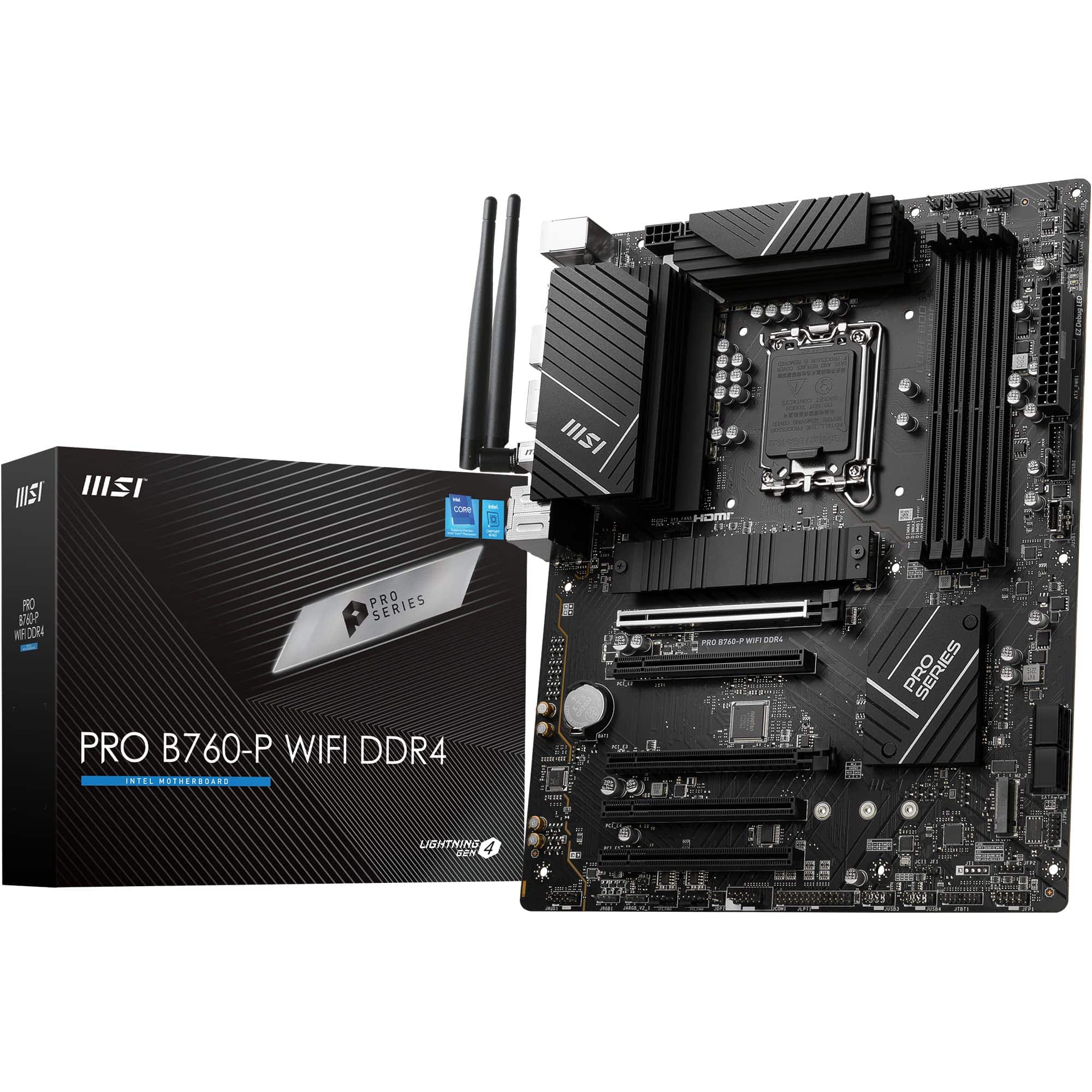 8.5 / 10
MSI PRO B760-P WIFI DDR4 Motherboard, ATX - Supports Intel 14th, 13th & 12th Gen Core Processors, LGA 1700 - DDR4 Memory Boost 5333+MHz/OC, PCIe 4.0 x16 Slots, M.2 Gen4 Slots, 2.5G LAN, Wi-Fi 6E
£129.95 · MSI
 8.5 / 10
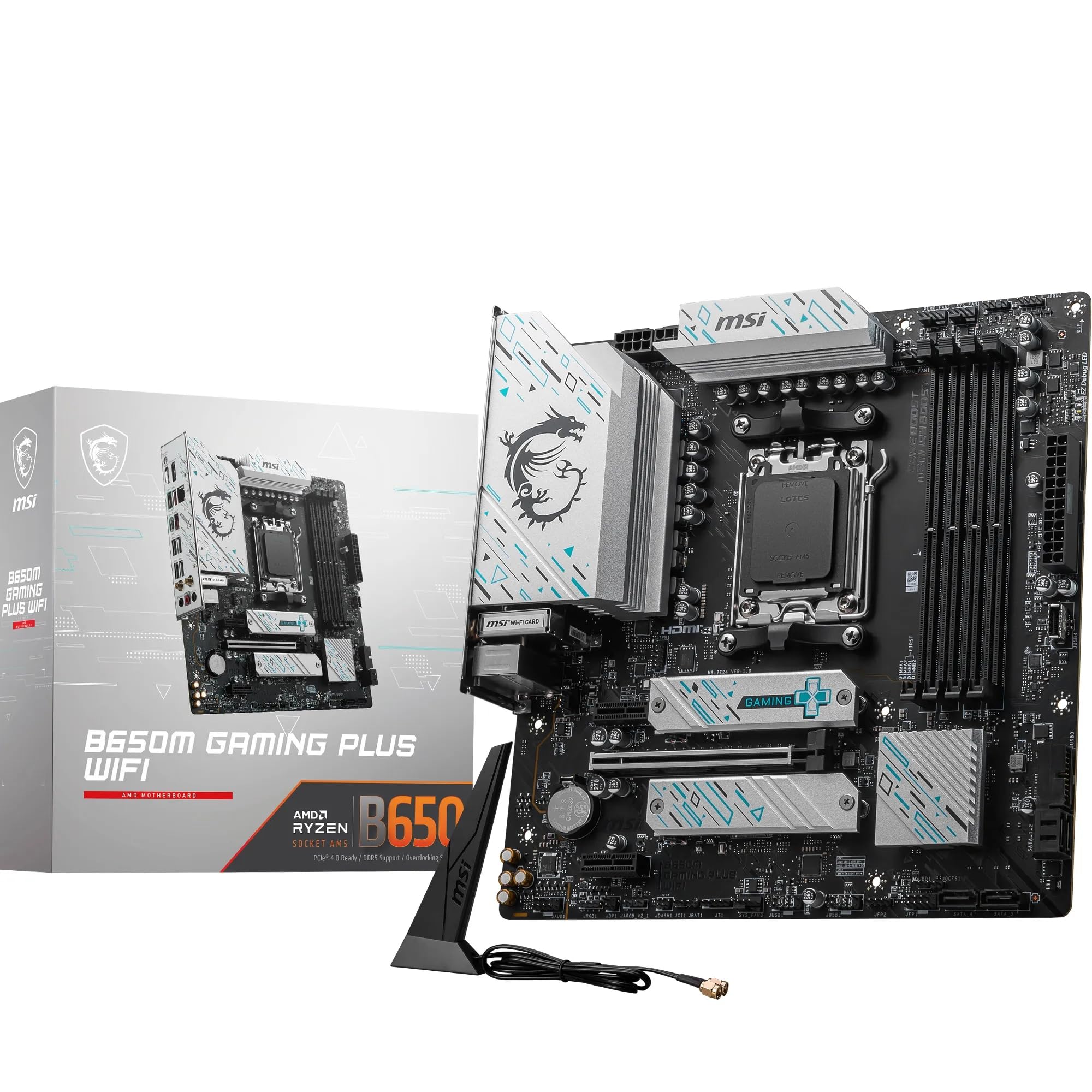
MSI B650M GAMING PLUS WIFI Motherboard, mATX - Supports AMD Ryzen 9000/8000 / 7000 Series Processors, AM5 - DDR5 Memory Boost 7800+ MHz/OC, PCIe 4.0 x16, M.2 Gen4, Wi-Fi 6E
£147.96 · MSI
Frequently asked
5 questions01Is the ASUS WAVE ROG STRIX B550-A GAMING overkill for just gaming?+
Not really. The Intel 2.5Gb Ethernet, USB 3.2 Gen 2 Type-C, and dual M.2 with PCIe 4.0 are all features you'll actually use in a gaming build. You're not paying for workstation-grade overkill here. If anything, it's well-matched to a gaming-focused Ryzen 5000 build, particularly with a Ryzen 5 5600X or 5800X3D.
02Will my existing CPU cooler work with the ASUS WAVE ROG STRIX B550-A GAMING?+
If your cooler supports AM4 mounting, yes. The B550-A GAMING uses the standard AM4 socket and backplate, which is compatible with the vast majority of coolers on the market, including many older coolers with AM4 adapter brackets. Check your cooler's compatibility list if it's more than a few years old.
03What happens if the ASUS WAVE ROG STRIX B550-A GAMING doesn't work with my components?+
Amazon's standard 30-day return window covers you for most compatibility issues. If the board is DOA or incompatible, you can return it straightforwardly. ASUS also provides a 3-year warranty on their motherboards for manufacturing defects. Amazon's A-to-Z guarantee adds another layer of protection if something goes wrong with the transaction itself.
04Is there a cheaper motherboard I should consider instead?+
The MSI MAG B550 TOMAHAWK is the main alternative to consider if you want to save some money. It's a solid board with a strong reputation, though it uses a Realtek 2.5Gb NIC rather than Intel. If you don't specifically need Intel Ethernet or USB 3.2 Gen 2 Type-C, the TOMAHAWK is a worthy alternative. For an absolute budget build, the MSI B550M PRO-VDH WiFi is worth a look, though it's a Micro-ATX board with fewer expansion options.
05What warranty and returns apply to the ASUS WAVE ROG STRIX B550-A GAMING?+
Amazon offers 30-day returns on most items, and ASUS typically provides a 3-year manufacturer warranty on their motherboards. You're also covered by Amazon's A-to-Z guarantee for any transaction issues. ASUS's UK support can be reached through their website for warranty claims after the Amazon return window closes.