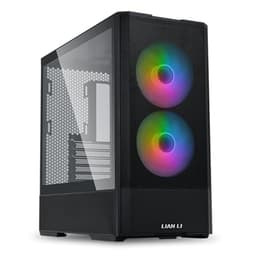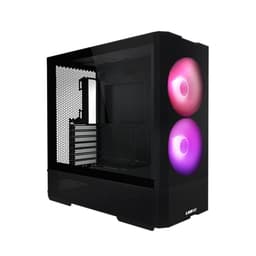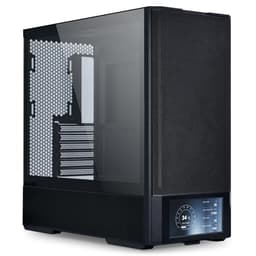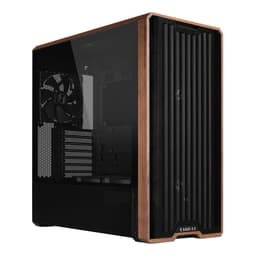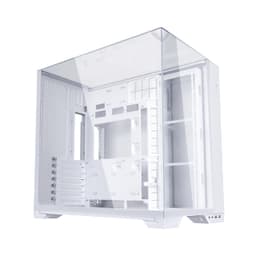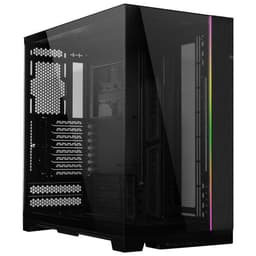
Your case choice matters more than most people admit. Get it wrong and you're fighting the thing every step of the way: a GPU that won't quite seat because the clearance is 5mm too tight, a PSU shroud that turns cable management into origami, or a front panel that's basically a solid plastic wall slowly cooking your components. The Lian Li LANCOOL 216 RGB arrives with a mesh front, two included 160mm ARGB fans, and a spec sheet that genuinely looks like someone sat down and thought about what builders actually need. So does the real-world ownership experience back that up?
Short answer: yes, mostly. This is a properly thought-out mid-tower that earns its 4.7-star average from 1,196 owners. Airflow is excellent, the build experience is clean, and the clearances are generous enough to handle modern hardware without fuss. It's not flawless, and there are a couple of design decisions that'll mildly irritate you, but at mid-range pricing it's one of the stronger options in its bracket. If you're shopping for a Lian Li LANCOOL 216 RGB case review UK buyers can actually use, here's the full picture.
Core Specifications
The LANCOOL 216 is a mid-tower chassis built around an ATX footprint, measuring 470mm tall, 215mm wide, and 459mm deep. It's not a compact case by any stretch, but it's not a desk-dominating monster either. The weight comes in at around 8.5kg without hardware, which is solidly mid-range for a steel and tempered glass construction. Lian Li uses 0.8mm SPCC steel for the chassis, which is fairly standard at this price point, though the panels feel reasonably solid in owner reports rather than flimsy.
Fan support is where things get interesting. The front panel takes up to three 120mm or two 140mm fans, the top supports three 120mm or two 140mm, and the rear has a single 120mm mount. The case ships with two 160mm ARGB fans pre-installed at the front, which is a slightly unusual choice. Lian Li makes their own 160mm fans specifically for the LANCOOL series, and they're designed to move more air than a pair of 140mm units while fitting the same mounting holes. It's a clever bit of engineering, though it does mean if you want to add more of the same spec fans, you're buying Lian Li's own units rather than picking up generic 140mm replacements.
Radiator support is solid across the board. The front accepts up to a 360mm AIO, the top takes up to 360mm as well, and the rear fits a 120mm. That's proper flexibility for cooling configurations, and it's one reason builders with high-end CPUs gravitate toward this case. Drive storage is handled by two 3.5-inch bays and two 2.5-inch dedicated mounts, which is enough for most modern builds though not generous by older standards. The tempered glass side panel is 4mm thick, which is reassuringly chunky.
| Specification | Detail |
|---|---|
| Form Factor | Mid-Tower |
| Supported Motherboards | E-ATX (up to 272mm), ATX, mATX, Mini-ITX |
| Dimensions (H x W x D) | 470 x 215 x 459mm |
| Weight | ~8.5kg |
| Steel Thickness | 0.8mm SPCC |
| Tempered Glass | 4mm side panel |
| Included Fans | 2x 160mm ARGB (front) |
| Fan Support (Front) | 3x 120mm or 2x 140mm (or 2x 160mm) |
| Fan Support (Top) | 3x 120mm or 2x 140mm |
| Fan Support (Rear) | 1x 120mm |
| Max GPU Length | 383mm (standard), up to 435mm with HDD cage removed |
| Max CPU Cooler Height | 176mm |
| Front Radiator Support | Up to 360mm |
| Top Radiator Support | Up to 360mm |
| Rear Radiator Support | 120mm |
| 3.5" Drive Bays | 2 |
| 2.5" Drive Bays | 2 dedicated |
| Front I/O | 2x USB 3.0 Type-A, 1x USB 3.2 Gen 2 Type-C, HD Audio |
| PSU Support | ATX (up to 220mm) |

Form Factor and Dimensions
At 470mm tall and 459mm deep, the LANCOOL 216 sits comfortably in the mainstream mid-tower category. It's not trying to be a compact SFF build, and it's not bloated to full-tower territory either. The 215mm width is on the slimmer side for a case with this much internal volume, which is actually a good thing for desk space. You're getting a lot of case without it sprawling across your workspace. Most standard desks and PC towers will accommodate this without drama.
The footprint is worth thinking about if you're planning to put this on the floor rather than a desk. The bottom panel sits on four rubber feet that are decently sized, which helps with vibration isolation and keeps the case stable on carpet or hard floors. Owners don't flag any wobble issues in their feedback, which suggests Lian Li got the foot placement right. The tempered glass panel is hinged on the left side, swinging open rather than sliding off, and that's either brilliant or slightly annoying depending on your desk setup and how much clearance you have on the right-hand side of your case.
The front mesh panel is removable for cleaning, which sounds like a small thing but genuinely matters over the life of a build. Dust accumulation on a restricted front panel is one of the main reasons cases develop thermal issues over time, and a panel you can actually pull off and rinse under a tap beats one that requires a hoover attachment and a prayer. The overall aesthetic is clean and modern without being garish. The black finish on this version is matte rather than shiny, which means fingerprints aren't the catastrophe they are on some cases.
Motherboard Compatibility
The LANCOOL 216 supports E-ATX boards up to 272mm wide, which covers the vast majority of E-ATX options on the market. Full-size ATX is obviously fine, as are Micro-ATX and Mini-ITX boards. The standoff layout is pre-installed for ATX, which is standard practice, and owners report the motherboard tray is properly aligned without needing to fight it. That matters more than it sounds because a tray that's even slightly off makes standoff alignment a frustrating exercise in creative swearing.
The E-ATX support is specifically because it's not universal at this price point. Some mid-range cases nominally support E-ATX but only up to 264mm or 265mm, which cuts out certain high-end HEDT boards. The 272mm clearance here is more accommodating. If you're running a standard ATX gaming board, obviously this is a non-issue, but it's good to know the case has headroom if you ever want to upgrade to a larger platform.
The cutout behind the motherboard tray for CPU cooler backplate access is large enough to be genuinely useful. Owner reviews consistently mention this as a positive. There's nothing more tedious than realising you need to pull your entire motherboard out to swap a cooler because the cutout is too small, and Lian Li clearly thought about this. The tray itself has multiple cable routing holes with rubber grommets, which keeps things looking tidy once you've finished routing. The grommets are present on all the main openings, which isn't always the case at this price.
GPU Clearance
Maximum GPU length is 383mm with the hard drive cage in place, rising to 435mm if you remove it entirely. To put that in perspective, an Nvidia RTX 4090 Founders Edition measures 336mm, so it fits with room to spare. Even the longer third-party 4090 cards from ASUS, MSI, and Gigabyte, which can stretch to 360mm and beyond, will fit without needing to remove the cage. You'd only be removing the HDD cage if you were running something genuinely enormous, and at that point you probably know what you're doing, though low-profile cards like the RTX 5060 LP BRK have far more flexible case options.
Width clearance matters too, and picking the right case for your graphics card matters, the LANCOOL 216 handles triple-slot cards without issue. Modern high-end GPUs are chunky things, and some cases technically have the length clearance but then you find the card is pressing against the PSU shroud or a drive bay bracket in an uncomfortable way. Owner reports don't flag this as a problem here, which suggests the internal proportions are sensible rather than just the headline spec being technically correct.
There's no vertical GPU mount included in the box, which is a minor point but if that's something you want. Vertical mounting requires a PCIe riser cable and a bracket, neither of which Lian Li includes. The case does support vertical mounting as an option with third-party hardware, but you're buying extra bits to make it happen. At this price point that's not unusual, and most people building in this case aren't prioritising the GPU-on-display aesthetic over airflow anyway. Vertical mounting typically hurts GPU temperatures by restricting airflow between the card and the side panel, so you're not missing much functionally.
CPU Cooler Clearance
CPU cooler height clearance is 176mm, which is generous. The Noctua NH-D15 measures 165mm, so it fits. The be quiet! Dark Rock Pro 4 is 162.8mm. The Thermalright Peerless Assassin 120 SE, which has become one of the most popular budget-to-mid coolers around, is 155mm. Basically, if you're running any mainstream tower cooler, you're fine. You'd have to be buying something genuinely exotic to hit the ceiling here.
AIO support is where the LANCOOL 216 really flexes. A 360mm radiator fits in the front, a 360mm fits in the top, and a 120mm fits at the rear. Front-mounted 360mm AIOs are the most common configuration for high-end CPU cooling, and the case handles this without drama. Top-mounted 360mm is also supported, though you'll want to check RAM clearance depending on your specific AIO radiator and fan combination. Some top-mount configurations can be tight with tall RAM sticks, and this is against your specific components before committing.
Owner feedback on AIO installations is broadly positive. The front mounting area in particular gets praised for being straightforward to work with, and the cable routing options mean you can keep the AIO pump cables and fan headers tidy rather than having them trail across the motherboard. The rear 120mm mount is useful for a single-fan exhaust AIO or just as a dedicated exhaust point when you're running a front or top AIO for the CPU. Lian Li's official product page confirms the radiator compatibility specs, and owner experience aligns with what's advertised, which is always reassuring.
Storage Bay Options
Two 3.5-inch bays and two dedicated 2.5-inch mounts. That's the storage situation in full. For a lot of modern builds this is perfectly adequate: one or two HDDs for mass storage, SSDs either on the motherboard as M.2 drives or on the 2.5-inch mounts. But if you're migrating from an older build with four or five HDDs and you want to keep them all, this case is going to feel cramped. It's a reflection of where the market has gone rather than a specific failing of the LANCOOL 216, but it's worth being honest about.
The 3.5-inch drive trays are tool-free for hard drive installation, which is a nice touch. You slide the drive in and the tray holds it with rubber-mounted pins that also help with vibration damping. SSDs on the 2.5-inch mounts do require screws, which is slightly less elegant but perfectly functional. The drive cage is positioned behind the PSU shroud, keeping it out of the main airflow path and out of sight through the tempered glass panel. Aesthetically that's the right call, and it doesn't compromise airflow to the GPU or front intake.
M.2 storage is handled by your motherboard rather than the case, which is standard. Most modern ATX boards have two to four M.2 slots anyway, so the limited 2.5-inch count matters less than it would have done five years ago. If you're building a clean, modern system with an NVMe boot drive and maybe one or two HDDs for bulk storage, the LANCOOL 216's bay count is completely fine. Just go in with eyes open if you're planning a NAS-adjacent setup with lots of spinning disks.

Cable Management
The rear panel cable management space is around 25mm to 30mm depending on where you measure, which is enough to route cables without it becoming a compression exercise. Owner reports generally describe the cable routing as clean and manageable, which is the key test. Velcro straps are included, and the routing holes with rubber grommets are positioned sensibly relative to where your motherboard connectors actually land. This sounds basic but plenty of cases get it wrong by putting routing holes in positions that require cables to double back on themselves.
The PSU shroud covers the bottom of the case and hides the power supply and most of the cable mess, which is standard for a case at this price and above. The shroud has a cutout for the PSU fan, and the bottom of the case has a removable dust filter beneath it. PSU installation is straightforward with the unit sliding in from the rear, and the 220mm maximum PSU length accommodates most full-size ATX power supplies without issue. Modular PSUs are obviously easier to work with here given the shroud, and if you're buying a new PSU to go with this case, a modular or semi-modular unit will make your life noticeably easier.
The 24-pin ATX cable routing is handled by a dedicated channel on the right side of the motherboard tray, and the CPU power cable routing through the top of the tray is accessible enough that it's not a fight. The GPU power cables route from the PSU through the shroud cutout and up to the card, which is standard. A few owners mention that cable management takes a bit of patience to get looking really clean, which is true of most cases at this price, but the hardware to do it well is all there. Nobody's reporting having to force rear panels closed over cable bulges, which is the real test.
Airflow and Thermal Design
This is where the LANCOOL 216 makes its strongest argument. The front panel is a proper mesh design, not a token perforated strip with a mostly solid surround. Air can actually get in. The two included 160mm ARGB fans push a meaningful volume of air through that front mesh and into the case. Lian Li's 160mm fans are an interesting choice: they're designed to offer better airflow than 140mm units while fitting in the same mounting space, and the physics of a larger fan diameter at lower RPM generally means lower noise for equivalent airflow. Owner feedback on the included fans is positive, with most people describing them as quiet at typical operating speeds.
The thermal design follows the standard positive pressure or balanced pressure approach depending on how you configure it. With the two front intake fans and a rear exhaust, you're running positive pressure, which tends to keep dust out of unfiltered gaps. Adding a top exhaust fan or fans shifts you toward balanced or slightly negative pressure. The dust filters on the front and bottom are removable and washable, which matters for long-term maintenance. A case with good airflow but inaccessible dust filters is going to have degraded thermal performance within six months of use. The LANCOOL 216 makes filter maintenance easy enough that you'll actually do it.
Owner reports on temperatures are consistently good. People running mid-to-high-end builds with RTX 4070 and 4080 class GPUs report comfortable operating temperatures, and those running the case with front-mounted 360mm AIOs for their CPUs report exactly the kind of thermal headroom you'd expect from a proper mesh front with two fans pulling air through it. The case does not have a solid glass front pretending to be an airflow design. It's genuinely built around moving air, and that shows in the ownership experience. For anyone who's spent time in a case with a beautiful but thermally restrictive front panel, the LANCOOL 216's approach will feel like a breath of fresh air. Literally.
Front I/O and Connectivity
The front I/O sits at the top of the case and includes two USB 3.0 Type-A ports, one USB 3.2 Gen 2 Type-C port, and a combined headphone and microphone jack. The power button is large and tactile, and there's a reset button alongside it. The USB Type-C port connects internally via a USB 3.2 Gen 2 header, which means you'll need a motherboard with that header to use it at full speed. Most modern ATX boards include this, but it matters if you're pairing this with an older board.
The USB 3.2 Gen 2 Type-C spec means 10Gbps transfer speeds, which is fast enough for external SSDs and modern peripherals. This is better than the USB 3.2 Gen 1 Type-C you find on some competing cases at similar prices. The two Type-A ports are USB 3.0, which is standard and perfectly adequate for keyboards, mice, USB drives, and most peripherals. The positioning at the top of the case is convenient for desktop use and slightly less convenient if the case is on the floor, but that's a universal problem with top-mounted I/O rather than a specific LANCOOL 216 issue.
The ARGB controller hub is here because it's part of the I/O ecosystem. The case includes an integrated ARGB hub that connects to your motherboard's ARGB header, letting you control the included fans and any additional ARGB components through your motherboard's software. Lian Li has implemented this cleanly enough that owner reports don't flag the kind of RGB sync issues that plague some cheaper cases. If you want to run the lighting without motherboard control, there's a button on the I/O panel to cycle through preset modes. It's a sensible setup that covers both use cases.
Build Quality and Materials
The 0.8mm SPCC steel chassis is standard for the price bracket. It's not going to feel as substantial as the 1mm steel you find in premium cases from Fractal Design's Define series or some of Lian Li's own higher-end offerings, but it's not flimsy either. Owner reports describe the case as feeling solid during the build process, with panels that align properly and don't require persuasion. Panel alignment is one of those things that sounds minor but is genuinely telling about manufacturing quality control, and the LANCOOL 216 scores well here.
The 4mm tempered glass side panel is attached via a hinged mechanism rather than thumb screws, which is either a quality-of-life improvement or a mild annoyance depending on your perspective. The hinge means you swing the panel open rather than lifting it off, which is convenient when you're mid-build and don't want to put the panel down somewhere. A handful of owners mention the hinge feels slightly stiff initially, which is actually preferable to a loose hinge that lets the panel rattle. It reportedly loosens slightly with use. The magnetic closure at the front of the panel keeps it shut securely without any flex or rattle during normal use.
Sharp edges are the enemy of a good build experience, and this is an area where cheaper cases frequently cut corners (sometimes literally). Owner feedback on the LANCOOL 216 is reassuring here: most people don't report sharp edges on the internal metalwork or panel edges. That's not nothing. A case where you finish a build with intact hands is doing something right. The finish on the black version is consistent and matte, the plastic components feel appropriately solid rather than hollow, and the included screws are the right type and quantity. These are small things individually, but together they paint a picture of a product that was actually thought through rather than just speced out on paper.
How It Compares
The obvious competition at this price point includes the Fractal Design Meshify 2 Compact and the Corsair 4000D Airflow. Both are well-regarded mid-towers with strong airflow credentials, and both have been around long enough to have substantial owner feedback bases. The LANCOOL 216 sits in interesting territory relative to both.
Against the Corsair 4000D Airflow, the LANCOOL 216 has the edge in included fans. The 4000D ships with two 120mm fans versus the LANCOOL 216's two 160mm units, and the 160mm fans move meaningfully more air. The 4000D is a slightly more compact case with a smaller footprint, which some people will prefer for desk space reasons. The 4000D's cable management is excellent, arguably the best in class at its price, but the LANCOOL 216 is no slouch in this department either. GPU clearance is similar between the two. The LANCOOL 216 wins on included cooling hardware and loses slightly on compactness.
The Fractal Design Meshify 2 Compact is a more premium-feeling case with slightly thicker steel and Fractal's characteristically excellent build quality. It's also typically priced higher than the LANCOOL 216, which changes the value calculation. The Meshify 2 Compact has a slightly more restricted front mesh compared to the LANCOOL 216's fully open design, which does show up in airflow benchmarks published by outlets like Gamers Nexus. If pure thermal performance is the priority, the LANCOOL 216's more aggressive mesh design has an advantage. If you value the Fractal build quality premium and are happy to pay for it, the Meshify 2 Compact is a valid choice.
| Feature | Lian Li LANCOOL 216 RGB | Corsair 4000D Airflow | Fractal Design Meshify 2 Compact |
|---|---|---|---|
| Form Factor | Mid-Tower | Mid-Tower | Mid-Tower |
| Included Fans | 2x 160mm ARGB | 2x 120mm | 2x 140mm |
| Max GPU Length | 383mm (435mm no HDD cage) | 360mm | 341mm |
| Max CPU Cooler Height | 176mm | 170mm | 169mm |
| Front Radiator | Up to 360mm | Up to 360mm | Up to 280mm |
| Top Radiator | Up to 360mm | Up to 360mm | Up to 240mm |
| USB Type-C Front I/O | USB 3.2 Gen 2 | USB 3.1 Gen 1 | USB 3.1 Gen 2 |
| Tempered Glass | 4mm hinged | 4mm hinged | 3mm |
| Price Tier | Mid-range | Mid-range | Mid to upper-mid |

Final Verdict
The Lian Li LANCOOL 216 RGB is a genuinely good mid-tower case. Not good-for-the-price, not good-with-caveats. Just good. The airflow design is proper rather than performative, the included 160mm ARGB fans are better than the generic 120mm units most competitors bundle in, and the clearances are generous enough that you can build with current high-end hardware without hitting arbitrary limits. A 4.7-star average from nearly 1,200 owners isn't a fluke, and reading through the feedback, the praise is consistent and specific rather than vague enthusiasm.
The Lian Li LANCOOL 216 RGB case review UK picture looks like this: it's aimed squarely at builders who want strong airflow, a clean aesthetic, and a build experience that doesn't fight them. If you're pairing a mid-to-high-end GPU with a decent CPU cooler or AIO, this case will serve you well. The 176mm CPU cooler clearance means you're not restricted to compact coolers, the 383mm GPU clearance handles everything short of the most extreme triple-fan monsters, and the 360mm front radiator support means your AIO options are wide open.
Who should think twice? If you're building a budget system and the case is a significant chunk of your total spend, the LANCOOL 216 is arguably more case than you need. The Fractal Design Pop Air or even an older Corsair 4000D can be found for less and will still do the job. The LANCOOL 216 earns its mid-range position through the quality of its included fans and the thoughtfulness of its design, but if those things don't matter to you, you can save some money. Similarly, if you need more than two 3.5-inch HDD bays, look elsewhere because this case won't satisfy a heavy storage build.
But for the target audience? This is a strong buy. Genuinely strong. The combination of real mesh airflow, proper fan hardware in the box, sensible cable management provisions, and a build experience that owners consistently describe as pleasant puts this ahead of most of the competition at its price. The LANCOOL 216 represents Lian Li doing what they do well: taking the lessons from their more expensive cases and applying them where it counts at a price that doesn't require you to justify the purchase to yourself for a week. Score: 8.5 out of 10.
What works. What doesn’t.
5 + 3What we liked5 reasons
- Proper mesh front with two included 160mm ARGB fans that actually move air
- Generous clearances: 176mm CPU cooler height, 383mm GPU length, 360mm front radiator support
- USB 3.2 Gen 2 Type-C on the front I/O panel
- Hinged 4mm tempered glass side panel with clean magnetic closure
- Strong owner satisfaction: 4.7 stars from nearly 1,200 reviews
Where it falls3 reasons
- Only two 3.5-inch HDD bays, limiting for heavy storage builds
- Extra 160mm fans require Lian Li-specific units rather than generic replacements
- No vertical GPU mount included
Full specifications
10 attributes| Form factor | Mid-Tower |
|---|---|
| CPU cooler clearance MM | 181 |
| Dimensions MM | 480.9 x 235 x 491.7 |
| Fans included | 3 |
| GPU clearance MM | 392 |
| MAX FAN count | 11 |
| MAX radiator MM | 360 |
| PSU support | ATX up to 220mm |
| Side panel | tempered glass |
| Supported motherboard | E-ATX (under 280mm), ATX, Micro-ATX, Mini-ITX |
Frequently asked
5 questions01Is the Lian Li LANCOOL 216 RGB Mid-Tower PC Case, Black - High Airflow Design with ARGB Fans good for airflow?+
Yes, genuinely so. The LANCOOL 216 has a full mesh front panel rather than a partially open design, and it ships with two 160mm ARGB fans pre-installed as front intakes. These 160mm fans are designed to move more air than standard 140mm units at comparable noise levels. The top panel supports up to three 120mm or two 140mm fans for exhaust, and the rear has a single 120mm mount. Dust filters are fitted at the front and bottom and are removable for cleaning. Owner feedback on thermals is consistently positive, with builders running high-end GPUs and CPUs reporting comfortable operating temperatures.
02What's the GPU clearance on the Lian Li LANCOOL 216 RGB Mid-Tower PC Case, Black - High Airflow Design with ARGB Fans?+
Maximum GPU length is 383mm with the hard drive cage installed, rising to 435mm if you remove the HDD cage entirely. This is enough to fit essentially all current consumer GPUs, including long triple-fan cards from ASUS, MSI, and Gigabyte. The Nvidia RTX 4090 Founders Edition at 336mm fits with significant room to spare. Width clearance accommodates triple-slot cards without issue. If you're running a front-mounted radiator, check the specific radiator depth against the 383mm figure, as a thick 360mm radiator with fans will reduce effective GPU clearance.
03Can the Lian Li LANCOOL 216 RGB Mid-Tower PC Case, Black - High Airflow Design with ARGB Fans fit a 360mm AIO?+
Yes, and in two locations. The front panel supports up to a 360mm radiator, and the top panel also supports up to 360mm. The rear supports a 120mm radiator. Front-mounted 360mm AIOs are the most common configuration and work well here, with the full mesh front providing good airflow through the radiator. Top-mounted 360mm installations are supported but against your specific RAM height, as tall memory sticks can sometimes conflict with radiator fan clearance depending on the specific AIO model. The rear 120mm mount is useful as a dedicated exhaust point when running a front or top AIO.
04Is the Lian Li LANCOOL 216 RGB Mid-Tower PC Case, Black - High Airflow Design with ARGB Fans easy to build in?+
Owner feedback says yes, broadly. The cable management provisions are solid, with rubber-grommeted routing holes positioned sensibly relative to motherboard connectors, a PSU shroud hiding the power supply and bulk cable runs, and Velcro straps included. The rear panel clearance of around 25 to 30mm is sufficient to route cables without forcing the panel closed. The CPU cooler backplate cutout is large enough to be genuinely useful for cooler swaps without pulling the motherboard. The hinged tempered glass panel swings open rather than lifting off. Sharp edges are not a common complaint in owner reviews, which is always a good sign.
05What warranty and returns apply to the Lian Li LANCOOL 216 RGB Mid-Tower PC Case, Black - High Airflow Design with ARGB Fans?+
Lian Li's specific warranty terms for the LANCOOL 216 are not listed in the product data available to us. For purchases made through Amazon UK, the standard Amazon 30-day return window applies, and all Amazon marketplace purchases are covered by the Amazon A-to-Z Guarantee. For warranty queries beyond the return window, we'd recommend contacting Lian Li directly through their official support channels or checking the documentation included with the case.