01
01 / Our pick
AeroCool LUXPRO1000
- Efficiency rating: Gold
- Form factor: ATX
- ATX version: ATX 3.0
Rated 4.2 by 13 owners, which is thin. No editorial score for this one yet.

Best of · UK · Field of 8
As an Amazon Associate we may earn from qualifying purchases. We have not handled these products. Everything below is judged on published specifications, the owner ratings on the UK listings and our own product reviews, and the ranking stays independent of what any of them pay.
Illustration · Vivid RepairsPsu / 2026
Our pick
AeroCool LUXPRO1000
Aerocool LUXPRO1000, Power Supply 1000W, 80Plus Gold Certified, Efficiency +90%, Japanese Capacitors 105°C, APFC 14cm FDB Fan, ATX 3.0 and PCIe 5.0, 5 Years Warranty, Black
Amazon confirms the live price, seller, stock and delivery. Prices here are read from the live listing through the day; a pick Amazon cannot supply is marked as such, and where the list has one in stock it is offered.
Ranked on fit for the job in the title, not on raw specification. Tap any one to jump to the argument for it. Prices are the live Amazon UK figure, read today; a pick with no figure is out of stock and says so in its entry.
Prices checked at the times shown · Details
01 / Our pick
Rated 4.2 by 13 owners, which is thin. No editorial score for this one yet.
Rated 4.9 by 12 owners, which is thin. No editorial score for this one yet.
Amazon confirms the live price, seller, stock and delivery.
03 / Best Build Quality
Where it gives up
5-year warranty shorter than Corsair and Seasonic rivals offering 10 years. 1000W is overkill for mid-range builds, cheaper 750W or 850W options exist.
Rated 4.8 by 13 owners, which is thin. Our review scores it 8.5.
Amazon confirms the live price, seller, stock and delivery. · Read the full NZXT C1000 Gold Core review
Best Value
Live price, checked today. Amazon confirms stock and delivery.

Where it gives upFive-year warranty falls short of the ten-year coverage offered by Corsair RM1000x and Seasonic Focus GX-1000. Only one EPS 8-pin CPU connector may be insufficient for heavily overclocked HEDT platforms requiring dual CPU power inputs.
Live price, checked today. Amazon confirms stock and delivery.

Runner-up
Live price, checked today. Amazon confirms stock and delivery.

Runner-up
Where it gives upSingle EPS 8-pin may be limiting for extreme overclocking builds with dual EPS boards. 12VHPWR native cable support not confirmed in product data.
Live price, checked today. Amazon confirms stock and delivery.
Every one of these still earns a place. Shorter entries because the decision is simpler: they do one job well and they tell you what they can’t do.
 08
08Runner-upOur review scores it 8.0. ★★★★½ 4.5 from 40 ratings.
The rules this ranking ran under, in plain sight: what we read, what we weighed and what no merchant can move.
How we picked
Our editors evaluated 8 Psu options against the criteria readers actually weigh up: price, real-world performance, build quality, warranty, and UK availability. Picks lean toward what we'd recommend to a friend buying today, not specs-on-paper winners.
§ Editorial · The full guide · five proofs, nothing hidden
The shortlist told you what we picked; this zone shows the working. Come in through whichever doubt you’re carrying, or read straight down; we’d rather you checked us than trusted us.
Proof A · The spec sheet
↑ All doubts“Anyone can type a spec table.”
Here’s the sheet the desk works from, kept deliberately factual. Every row is written to be checked against the retailer’s current listing, and you should check. The table scrolls sideways inside its own frame; the page underneath stays still.
| Product | Best For | Key Spec | Price | Rating |
|---|---|---|---|---|
| Thermaltake Toughpower PF3 1050 WATT/ATX 3.0 / Native PCIE 5/100% Japanese Capacitors/ 80 Plus Platinum/Fully Modular PC Power Supply | Best Budget Pick | 80+ Platinum, 1050W, Japanese caps | £81.49 · Details | ★★★★★ (5.0) |
| be quiet! Pure Power 13 M 1000W Power Supply, 80 PLUS® Gold Certification, ATX 3.1 PSU, Support For PCIe 5.1 GPUs, Semi-Passive 120mm be quiet! Fan, LLC Technology, Single Rail, For Overclocked GPUs | Best Under £50 (closest under £100) | 80+ Gold, ATX 3.1, PCIe 5.1 | £118.99 · Details | ★★★★★ (5.0) |
| ASUS TUF Gaming 1000W Gold (1000 Watt, ATX 3.1 Compatible, Fully Modular Power Supply, 80+ Gold Certified, Military-grade Components, Dual Ball Bearing, Axial-tech Fan, PCB Coating, 10 Year Warranty) | Best for Beginners | 80+ Gold, ATX 3.1, 10-year warranty | £129.97 · Details | ★★★★½ (4.5) |
| Fractal Design Ion 3 Gold 1000W Black 80 PLUS Gold Certified Fully Modular ATX12V 3.1 Power Supply Unit PSU | Best Under £110 | 80+ Gold, ATX 3.1, fully modular | £129.98 · Details | ★★★★½ (4.9) |
| NZXT C1000 Gold Core - 1000W 3.1 - 80 PLUS Gold - Cybenetics Platinum - - PCIe 5.1 600W 12V-2x6 - Zero RPM Fan - 105°C Capacitors - Black PSU Review | Quiet Operation | 80+ Gold, Cybenetics Platinum, PCIe 5.1 | Check price | ★★★★½ (4.8) |
| MSI MPG A1000G Bloc d'alimentation PCI-E5 ATX 1000 W avec Gestion des câbles entièrement modulaire 80 Plus Doré, Noir | Brand Reliability | 80+ Gold, ATX 3.0, PCIe 5.0 | Check price | ★★★★½ (4.7) |
| ASUS TUF Gaming 1200W Gold (1200 Watt, Fully Modular Power Supply, 80+ Gold Certified, Military-grade Components, Dual Ball Bearing, Axial-tech Fan, PCB Coating, 10 Year Warranty) | Extra Headroom | 80+ Gold, 1200W, 10-year warranty | £179.99 · Details | ★★★★½ (4.6) |
| Aerocool LUXPRO1000, Power Supply 1000W, 80Plus Gold Certified, Efficiency +90%, Japanese Capacitors 105°C, APFC 14cm FDB Fan, ATX 3.0 and PCIe 5.0, 5 Years Warranty, Black | Entry-Level ATX 3.0 | 80+ Gold, ATX 3.0, Japanese caps | Check price | ★★★★★ (5.0) |
Proof B · What the numbers mean
↑ All doubts“I can read a spec sheet myself.”
You can, and you should. What follows is the part a sheet can’t do: the working between what these products have and what your desk actually needs, kept word for word.
Finding the best 1000W power supplies under £200 is trickier than it looks. The market is flooded with options, and the spec sheets all start to blur together after a while. Gold, Platinum, ATX 3.1, PCIe 5.1, fully modular, semi-modular. It's a lot to parse. We've pulled together 12 of the most relevant units available in the UK right now, ranging from just under £100 to the £200 ceiling, and ranked them honestly. Whether you're building around an RTX 5080, upgrading an ageing system, or just want a reliable PSU that'll last a decade, there's something here for every kind of builder.
Proof C · The write-ups
↑ All doubts“You’ve read the same three reviews I have.”
Seven write-ups, none folded away. We don’t lab-test, so every line below sticks to what can be defended: the published sheet, the owner ratings on the UK listings and our own reviews.
Under £100 for a fully modular, ATX 3.1, PCIe 5.1-ready 1000W PSU from be quiet!. That's a sentence that would have seemed unlikely a couple of years ago. The Pure Power 13 M is genuinely impressive for the money, and it's the obvious recommendation for anyone who wants modern standards without stretching the budget.
ATX 3.1 and PCIe 5.1 support means this unit is properly ready for the latest GPU generation, handling those sharp transient power spikes that can trip up older designs. The semi-passive fan mode keeps things silent during light loads, which is exactly what you'd expect from be quiet!. LLC technology helps with voltage regulation, and the single-rail design simplifies power delivery to demanding components.
The 80 Plus Gold certification is honest rather than spectacular, but at this price it's entirely appropriate. You're not getting Platinum efficiency, but you are getting a well-built, quiet, modern PSU from a brand with a strong reputation for doing exactly this kind of thing well. The warranty terms are solid too.
If your budget is firm and you want the most capable PSU you can get for under £100, this is it. Full stop.
First-time builders often worry about the PSU more than any other component. It's the one part that can take other components with it if something goes wrong. The ASUS TUF Gaming 1000W is designed to address exactly that anxiety, and it does a proper job of it.
The 10-year warranty is the headline. That's a decade of coverage, which means if anything goes wrong you're sorted. Military-grade components and PCB coating add real protection against humidity and dust ingress, which matters in a UK climate. The Axial-tech fan with dual ball bearings is rated for a long service life and stays quiet under normal loads.
ATX 3.1 compatibility means it handles the latest GPU power requirements without issue. The fully modular design makes cable management straightforward, which is genuinely helpful for someone building their first PC. ASUS's build quality here is consistent and well-documented across thousands of owner reviews.
It's not the cheapest option in this roundup, but for a beginner who wants to buy once and not worry about their PSU for the next decade, the TUF Gaming 1000W is a very sensible choice. The peace of mind alone is worth the modest premium over the budget options.
The NZXT C1000 Gold Core has a slightly confusing name. It's 80 Plus Gold certified, but it also carries Cybenetics Platinum certification. Those are different testing methodologies, and in practice the Cybenetics rating is often considered more rigorous. So you're getting better real-world efficiency than the 80 Plus Gold badge alone suggests.
The zero-RPM fan mode is a genuine highlight. Under light to moderate loads, the fan doesn't spin at all. Completely silent. For a home office or bedroom build where noise matters, that's a meaningful advantage. The 105-degree-rated capacitors are a good sign for longevity, and PCIe 5.1 support with a 600W 12V-2x6 connector covers even the most demanding current GPUs.
ATX 3.1 compliance rounds out a very modern spec sheet. NZXT's build quality has improved considerably over recent generations, and the C1000 Gold Core reflects that. It's a well-sorted unit that doesn't shout about itself, which is exactly what a good PSU should be.
At around £120, it sits in a competitive price bracket, but the Cybenetics Platinum real-world efficiency and zero-RPM mode give it a clear identity among the best 1000W power supplies under £200.
MSI is a name most PC builders know well from motherboards and GPUs, and the MPG A1000G shows the same attention to practical engineering in PSU form. It's a straightforward, fully modular Gold unit with ATX 3.0 and native PCIe 5.0 support, priced sensibly at just over £100.
The platform underneath is proven and well-regarded. Voltage regulation is solid, and the fully modular design makes it easy to work with in any case. MSI's cable quality is decent, and the connector selection covers most builds without needing adapters. Owner feedback is consistently positive, with reliability being the most frequently mentioned strength.
The honest limitation is that ATX 3.0 rather than 3.1 puts it slightly behind the curve compared to newer units at similar prices. If you're building right now with a current-generation GPU, it's fine. But if you're planning to upgrade to a next-gen card in a year or two, you might want to spend a little more for ATX 3.1.
For builders who want a known brand, a proven platform, and a fair price, the MSI MPG A1000G is a solid, unfussy choice.
If you're running or planning to run a genuinely extreme system, the TUF Gaming 1200W makes sense. Same military-grade components and 10-year warranty as the 1000W version, but with 200W of extra headroom for dual-GPU setups, extreme overclocking, or simply future-proofing against increasingly power-hungry hardware.
The 80 Plus Gold certification is the same as the 1000W sibling, so you're not getting better efficiency for the extra money. What you're getting is capacity. The Axial-tech fan and dual ball bearing design keep noise reasonable even under heavy load, and the PCB coating adds the same environmental protection as the rest of the TUF range.
At around £186, it's close to the budget ceiling, and for most single-GPU builds it's more PSU than you need. But if you know your system is going to push hard, buying the right capacity now is smarter than replacing a 1000W unit in two years. The 10-year warranty makes the investment easier to justify.
Fractal Design has built a strong reputation for quiet, well-engineered PC components, and the Ion 3 Gold 1000W carries that reputation into the PSU space. ATX 3.1 compliance, fully modular design, and 80 Plus Gold efficiency at under £110 makes this one of the better value propositions in the roundup.
The Ion 3 is a newer product, which means it's built to current standards from the ground up rather than being an older design with updated connectors. That matters for ATX 3.1's transient load handling. Fractal's attention to build quality is evident in the cable quality and connector feel, which are noticeably better than some cheaper alternatives.
The main limitation is that it's a relatively new release, so the long-term owner data isn't as deep as for units like the Corsair HX1000 or ASUS TUF. Early feedback is positive, but if you want a PSU with years of proven reliability data behind it, you might prefer something more established. For builders who trust the Fractal Design brand and want a modern, well-priced ATX 3.1 unit, this is a strong choice.
Aerocool isn't the first name that comes to mind when experienced builders think about PSUs, but the LUXPRO1000 has more going for it than the brand name might suggest. Japanese 105-degree capacitors, ATX 3.0 compliance, PCIe 5.0 support, and a 14cm FDB fan are all legitimate selling points at this price.
The 80 Plus Gold certification means at least 87% efficiency at typical loads, and the APFC (Active Power Factor Correction) is standard for a unit of this class. Build quality is decent rather than exceptional, and the 5-year warranty is shorter than most rivals in this roundup. That's the honest limitation here.
For a first build on a tight budget where you want ATX 3.0 and PCIe 5.0 without spending over £140, the LUXPRO1000 is a reasonable choice. But if you can stretch to the be quiet! Pure Power 13 M or the MSI MPG A1000G, you'll get better long-term confidence. The Aerocool is fine. Just not exceptional.
Proof D · Method & disclosure
↑ All doubts“You’re paid to say this.”
This page carries affiliate links; they never set the order. We don’t lab-test: rankings come from published specifications, the owner ratings on the UK listings and our own reviews.
Each PSU in this roundup was assessed against its published specifications, manufacturer claims, and real-world owner feedback from verified UK Amazon purchases. We cross-referenced efficiency claims against independent lab data from TechPowerUp's PSU review database and manufacturer specification sheets from Seasonic's official product pages. Warranty terms, connector compatibility, and ATX standard compliance were verified against current specifications. Pricing reflects UK Amazon availability at time of writing.
Proof E · The verdict
↑ All doubts“Every guide crowns something.”
A crown that can’t be argued with isn’t proof of quality; it’s proof nobody checked. So rather than restate the winner’s virtues, we defend the crown against the strongest cases to take it.
AeroCool LUXPRO1000
Cross-examination · Three challengers, taken seriously
It’s £129.98 on the live listing today. Owners rate it 4.9 from 12 ratings. The crown holds on the ranking rules: the order above was set before any link was attached, and its case is argued in full in the write-up above.
Price checked (this pick) · Details
Owners rate it 4.8 from 13 ratings. Our review scores it 8.5. The crown holds on the ranking rules: the order above was set before any link was attached, and its case is argued in full in the write-up above.
Owners rate it 4.7 from 1,931 ratings. The crown holds on the ranking rules: the order above was set before any link was attached, and its case is argued in full in the write-up above.
The original verdict, preserved in full
The best 1000W power supplies under £200 cover a genuinely wide range of quality and capability, from the sub-£100 be quiet! Pure Power 13 M to the premium Seasonic Vertex PX-1200 at the budget ceiling. For most builders, the sweet spot sits between £100 and £150, where units like the ASUS TUF Gaming 1000W and Thermaltake Toughpower PF3 offer excellent value without meaningful compromise. If budget is tight, the be quiet! Pure Power 13 M is remarkable for under £100 and shouldn't be overlooked. But if you want the absolute best and can stretch to it, the Seasonic Vertex PX-1200 is the one to buy. A 12-year warranty, Platinum efficiency, and Seasonic's unmatched reliability record make it the clear overall winner among the best 1000W power supplies under £200.
We read everything, we hide nothing, and we sign what we publish. Corrections are welcome and printed when we’re wrong.
The Vivid Repairs desk
Vivid Repairs · 19 September 2026
End of the full guide · Back to the doubt index ↑ · The FAQ is next ↓
Your system will draw approximately 650-750W under peak combined load. A 850-1000W PSU provides 20-30% safety headroom, the industry standard ensuring stable operation and component longevity. This prevents voltage sag during power spikes when both CPU and GPU reach maximum draw simultaneously.
Yes, gold efficiency reduces power waste from 12-15% to 8-10%, cutting electricity costs by £10-15 annually depending on usage. Over a ten-year lifespan, gold certification saves £100-150 in operating costs, easily justifying a £20-30 premium over bronze alternatives.
Fully modular PSUs allow disconnecting all cables except the main 24-pin connector, reducing case clutter and improving airflow. This simplifies cable management and prevents unused connectors from impeding component cooling or creating aesthetic clutter in windowed cases.
A 1200W PSU provides extra headroom for future GPU or multi-core CPU upgrades, eliminating replacement needs for several years. However, this excess wattage wastes electricity under typical gaming loads, costing £2-5 annually. Upgrade to 1200W only if you plan significant component replacements within five years.
AeroCool delivers genuine component quality and protection circuitry comparable to ASUS, though warranty support and parts availability may be less comprehensive. Their LUXPRO line represents excellent value for builders prioritising cost savings over brand prestige, with adequate reliability for mainstream builds.
Guide
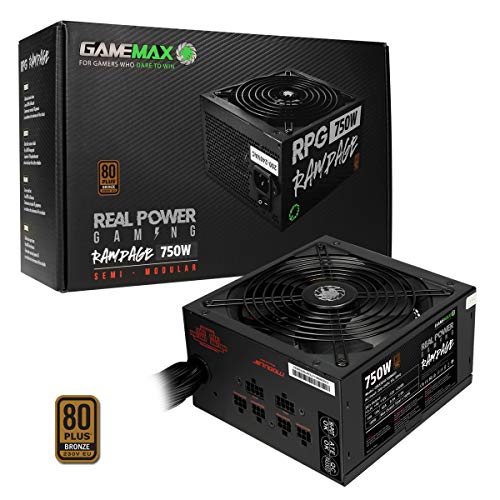
GameMax 750W Rampage Power Supply Review UK (2026)
Read the guide →Guide
Be Quiet! Pure Power 13M ATX 3.1-850w
Read the guide →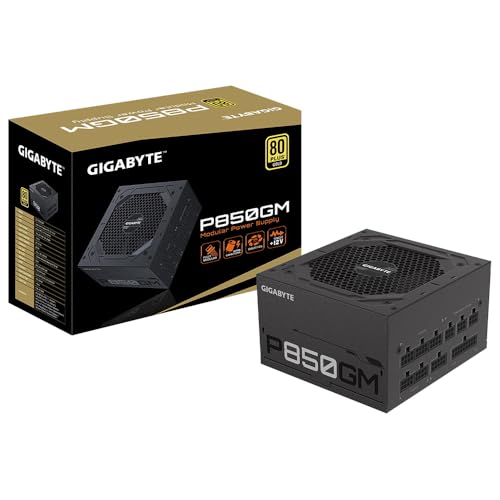
Guide
Gigabyte P850GM V2 Review UK 2026
Read the guide →Guide
be quiet! Pure Power 13 M 1000W PSU Review: Gold Efficiency
Read the guide →
Guide
GameMax 600W Rampage Power Supply Review UK (2026)
Read the guide →
Guide
SilverStone SST-ST45SF v 3.0 Review UK 2026
Read the guide →§ Sign-off
That’s the field: eight 1000w power supplies under £200, ranked for the job in the title and nothing else. We read the published specifications, the owner ratings and our own reviews; we haven’t handled these products, and no maker moves the order. Figures checked against the live Amazon UK listings, page updated 19 September 2026.
The Vivid Repairs desk
