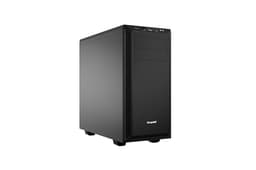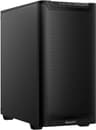
The case is the one component that touches everything else in your build, and it's also the one people consistently underestimate until they're swearing at a misaligned standoff at midnight. Get it wrong and you're fighting the chassis for every step of the build. Get it right and the whole thing goes together almost pleasantly. The be quiet! Pure Base 501 Airflow PC case review is what we're here to sort out today, because this case has been generating a lot of quiet buzz (sorry) in the entry tier, and the 4.7-star average across 116 owners is genuinely hard to ignore at this price point.
So here's the short version: this is a very good case for the money. It punches above its price tier in airflow design, the included fans are actually decent rather than the usual bin-fodder, and the vertical GPU mount option is a feature you normally pay considerably more to get. Compared to the Corsair 4000D Airflow and the Fractal Design Pop Air, which sit in similar territory, the Pure Base 501 Airflow holds its own on ventilation and edges ahead on fan quality out of the box. It's not flawless, and I'll get into where it falls short, but if you're building a mid-range gaming PC and you don't want to immediately throw the stock fans in the bin, this deserves serious consideration.
be quiet! have been refining their Pure Base line for years, and the 501 Airflow feels like the version where they finally got the balance right between their traditional noise-focused tuning and the airflow demands of modern high-TDP components. Two preinstalled Pure Wings 3 140mm PWM fans, a mesh-heavy front panel, and support for vertical GPU mounting in what is genuinely a compact mid-tower footprint. That's a lot to unpack, so let's get into it properly.
Core Specifications
The Pure Base 501 Airflow is a mid-tower case built around ATX and smaller motherboard standards. According to be quiet!'s official product page, the case measures 232mm wide, 462mm tall, and 428mm deep, which puts it in compact mid-tower territory rather than the sprawling full-size chassis that dominated a decade ago. It weighs in at around 6.5kg without any components, which is solid without being ridiculous to move around.
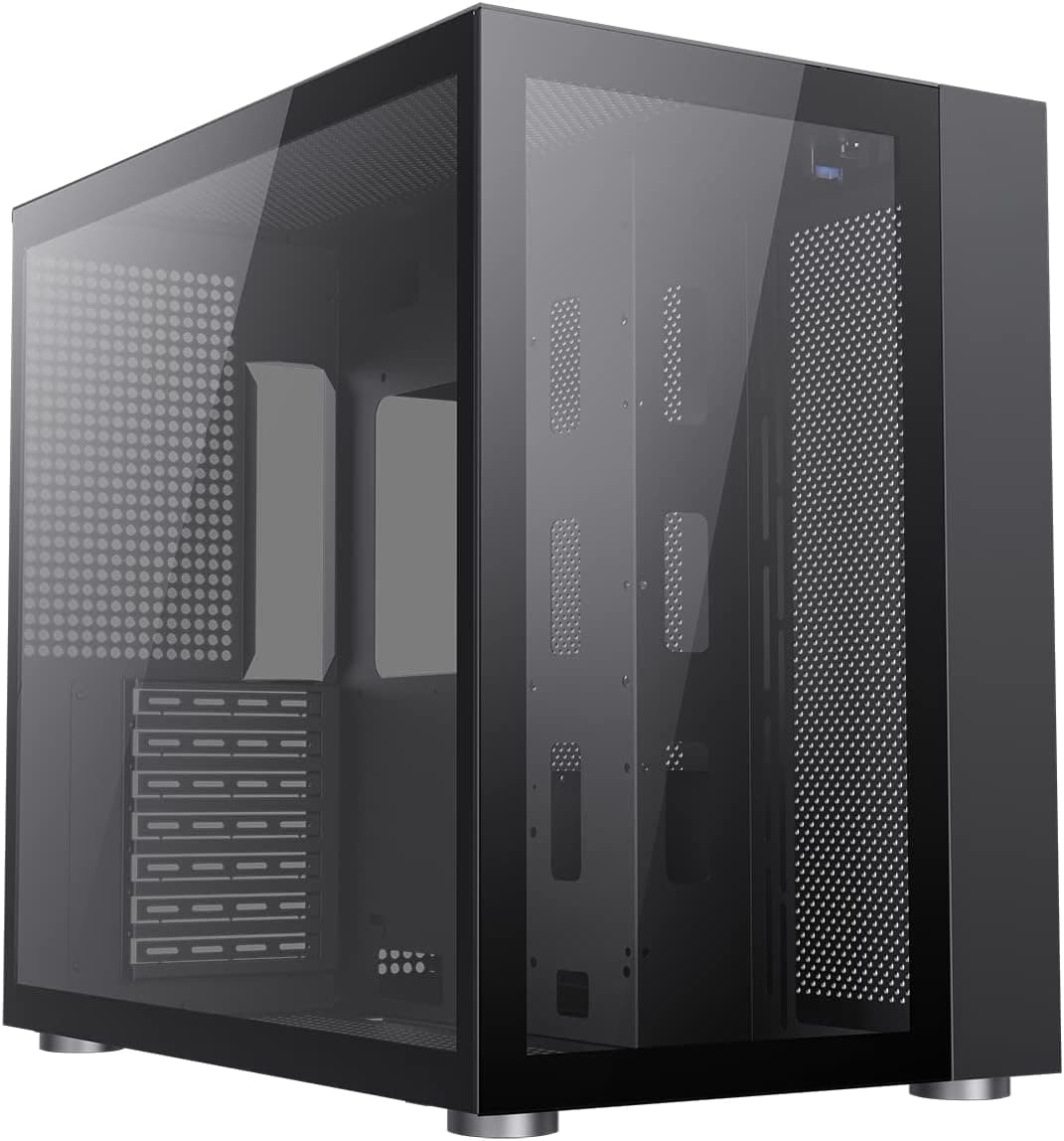
The chassis is built from 0.7mm steel throughout, which is standard for this price tier. You're not getting the chunkier 0.8mm or 1.0mm steel of premium cases, but 0.7mm is adequate and the owner feedback doesn't flag any obvious flex issues with the panels. The side panel is tempered glass on the left, which is expected in 2026, and a solid steel panel on the right for cable management access. The front panel is where the airflow story starts, and it's a proper mesh design rather than the pseudo-mesh some manufacturers use to make a solid panel look ventilated.
Fan support is extensive for a case at this price. The front can take up to three 120mm or three 140mm fans, the top supports up to two 120mm or two 140mm, and the rear has a single 120mm or 140mm mount. That's a maximum of six fans if you go all in, and two of those slots are already filled with the included Pure Wings 3 140mm units. Radiator support follows the same logic: 360mm or 280mm at the front, 240mm at the top, and 120mm at the rear. That's genuinely flexible for a compact mid-tower.
| Specification | Detail |
|---|---|
| Form Factor | Mid-Tower |
| Dimensions (W x H x D) | 232mm x 462mm x 428mm |
| Weight | ~6.5kg |
| Motherboard Support | ATX, mATX, Mini-ITX |
| Front Fan Support | 3x 120mm or 3x 140mm |
| Top Fan Support | 2x 120mm or 2x 140mm |
| Rear Fan Support | 1x 120mm or 1x 140mm |
| Included Fans | 2x Pure Wings 3 140mm PWM |
| Front Radiator Support | Up to 360mm |
| Top Radiator Support | Up to 240mm |
| Rear Radiator Support | 120mm |
| Max GPU Length | 369mm (standard) / 331mm (vertical) |
| Max CPU Cooler Height | 170mm |
| Drive Bays (3.5") | 2x |
| Drive Bays (2.5") | 3x |
| Front I/O | USB 3.2 Gen 2 Type-C, 2x USB 3.0 Type-A, HD Audio |
| Steel Thickness | 0.7mm |
| PCIe Slots | 7 (+ 1 vertical) |
| PSU Support | ATX (up to 225mm) |
| Current Price | £79.99 |

Form Factor and Dimensions
At 232mm wide, 462mm tall, and 428mm deep, the Pure Base 501 Airflow sits firmly in compact mid-tower territory. For context, a standard ATX mid-tower tends to run somewhere between 200mm and 250mm wide, so this is towards the slimmer end without being a squeeze. It'll sit comfortably on most desks without dominating the space, and it's not going to cause problems if you're working under a desk either, since 462mm tall is modest by modern standards.
The compact footprint is one of the things owners specifically call out as a positive. Several reviews mention being surprised by how much fits inside given the external dimensions, which is a sign of good internal layout design rather than just a big box. That said, compact does have trade-offs. PSU clearance is rated to 225mm, which rules out some of the longer modular units if you're coming from a premium PSU with an extended cable set. your PSU length before committing.
The overall silhouette is clean and understated, which is very on-brand for be quiet!. There's no aggressive angular styling, no RGB light strips cut into the exterior, and no gratuitous plastic accents. Some people will find that boring. Others will find it a relief. If you want something that looks professional on a desk rather than like it's trying to win a LAN party aesthetic contest, the 501 Airflow delivers. The tempered glass side panel gives you the view of your components without the case itself demanding attention.
Motherboard Compatibility
The Pure Base 501 Airflow supports ATX, Micro-ATX, and Mini-ITX motherboards. No E-ATX support, which isn't a surprise given the compact mid-tower dimensions, and honestly E-ATX is a niche standard that most builders never need. If you're running a standard ATX board, whether that's a Z890, B850, or X870, you're fine. The standoff layout is conventional and the mounting holes are pre-installed in the standard ATX positions.
The internal width matters here because it determines how much room you have between the motherboard and the side panel glass. The 501 Airflow gives you a reasonable amount of breathing room for tall RAM kits and large CPU coolers without the glass pressing against anything. Owner feedback doesn't surface any complaints about clearance between the side panel and installed components, which is a good sign since that's one of the more common frustrations in compact cases.
For Micro-ATX and Mini-ITX builds, the case is arguably slightly oversized, but that's not necessarily a bad thing. More internal volume means easier cable routing and better airflow around smaller boards. If you're planning a mATX build and want room to breathe, the 501 Airflow is a comfortable fit rather than a tight one. The standoff positions are clearly marked, which several owners mention as a small but appreciated detail when you're setting up a smaller board in a larger chassis.
GPU Clearance
This is where the 501 Airflow gets interesting. In standard horizontal orientation, the case supports GPUs up to 369mm long. That covers pretty much every current flagship card, including the RTX 5090, which sits at around 336mm in Founders Edition form, and the RX 9070 XT reference design. You're not going to find a GPU that won't fit in horizontal orientation unless you're buying something truly exotic with a triple-slot triple-fan cooler from an AIB partner that's gone overboard.
The vertical GPU mount is the headline feature here. be quiet! have included vertical GPU mounting support, which lets you show off that graphics card through the tempered glass side panel rather than having it face away. In vertical mode, the maximum GPU length drops to 331mm, which still accommodates most cards but does rule out some of the longer AIB designs. You'll also need a vertical GPU riser cable to make this work, and that's a separate purchase. The case doesn't include one. That's a minor frustration given that the feature is being marketed fairly prominently, but it's not unusual at this price tier.
A few owners have noted that getting the vertical mount angle right takes a bit of patience. The GPU needs to sit at the right distance from the glass to look good and maintain airflow, and there's some trial and error involved. But the structure to do it is there, and at this price point having the option at all is genuinely unusual. If vertical mounting matters to you and you don't want to pay premium case prices to get it, the 501 Airflow is one of very few options in this tier that supports it natively.
CPU Cooler Clearance
The Pure Base 501 Airflow supports CPU air coolers up to 170mm tall. That's a healthy clearance. The Noctua NH-D15, long considered the benchmark for high-end air cooling, stands at 165mm, so it fits with 5mm to spare. The be quiet! Dark Rock Pro 5 (naturally) fits without issue. Basically any tower cooler you'd realistically consider for a mid-range build is going to be fine here.
For AIO liquid cooling, the options are good. Front mounting supports up to 360mm radiators, which means a 360mm AIO fits with room for the pump head and tubing routing. The top supports 240mm, and the rear takes 120mm. The 360mm front mount is the main event, and notably, that with a 360mm radiator installed at the front, GPU clearance does reduce slightly depending on the radiator thickness and fan combination. Most standard 25mm thick radiators with 25mm fans will leave enough room for a 369mm GPU, but if you're stacking a thick radiator with thick fans, do the maths before you order.
Owner reviews are positive about AIO installation in general. The cable routing channels near the top of the case make managing the pump head cables and tubing reasonably straightforward, and the front mounting points are accessible without having to remove the motherboard tray. A couple of owners building with 280mm AIOs at the top mention that tall RAM with large heatspreaders can occasionally be tight, so if you're running high-profile DDR5 with oversized heatsinks, check the RAM height against the radiator clearance before you buy.
Storage Bay Options
Storage options in the 501 Airflow are adequate for most modern builds. You get two 3.5-inch drive bays for mechanical hard drives or large-capacity SSDs, and three 2.5-inch bays for standard SSDs. In practice, most builders in 2026 are running one or two NVMe M.2 drives on the motherboard and maybe a single 2.5-inch SSD for mass storage, so five drive bays total is more than enough for the majority of builds this case is aimed at.
The drive mounting mechanism gets a mention in owner reviews as being straightforward. The 3.5-inch bays use a tool-free tray system where the drives slide in and secure with rubber-dampened mounting points, which is a nice touch for vibration isolation on spinning drives. The 2.5-inch mounts are screw-secured, which is fine, and they're positioned behind the motherboard tray to keep the main chamber clean. Tool-free for the big drives, screws for the small ones. That's a sensible split.
What the case doesn't have is a huge array of drive bays, but that's a deliberate design choice rather than an oversight. Fewer bays means a cleaner interior layout and better airflow paths through the case. If you're building a NAS or a workstation that needs six or eight hard drives, this isn't the right chassis. But for a gaming build or a general-purpose desktop, the storage provision is perfectly matched to what you actually need.

Cable Management
The cable management situation in the 501 Airflow is one of its stronger points, especially considering the compact dimensions. The rear chamber depth is around 20mm to 25mm, which gives you enough space to bundle cables without the side panel fighting you when you try to close it. There are multiple cable routing channels with rubber grommets, and Velcro straps are included, which is a detail that cheaper cases often skip entirely. Velcro straps sound trivial but they make a real difference to how tidy the build ends up looking.
The PSU shroud covers the bottom of the main chamber and hides the power supply and the bulk of the cable runs. This is standard on most cases now but be quiet! have done it properly here, with a full-length shroud that genuinely conceals the PSU rather than a token cover that leaves half the cables visible. The ATX 24-pin cable routing point is positioned sensibly relative to where a standard ATX motherboard connector sits, so you're not fighting an awkward cable run across the board.
Several owners specifically mention that the cable management is better than they expected for the price. One recurring comment is that the routing channels are wide enough for thick modular cable sets, which is not always the case in compact mid-towers where the channels can be too narrow for anything other than flat ribbon cables. The grommets are rubber rather than hard plastic, which means they don't shred cables over time. Small detail, but the kind of thing that tells you a designer actually thought about the build experience rather than just ticking a box.
Airflow and Thermal Design
This is the core of the 501 Airflow's pitch, and it's where the case earns its name. The front panel is a proper open mesh design that allows high airflow intake without the restriction you get from solid or pseudo-mesh panels. be quiet! describe this as delivering "extraordinary air pressure," which is marketing language, but the underlying design does support genuinely good airflow. The mesh coverage is extensive rather than decorative, and there's a removable dust filter behind it, which is essential for long-term maintenance.
The two included Pure Wings 3 140mm PWM fans are mounted at the front as intake. The Pure Wings 3 series represents a meaningful step up from the generic fans you typically find bundled with cases at this price. They're rated for quiet operation while maintaining decent airflow, and the PWM control means your motherboard or fan controller can ramp them up under load and back down at idle. Owners consistently praise the fans as genuinely good rather than placeholders you'd immediately replace, which is a real differentiator versus the competition.
The exhaust situation is where you need to add your own hardware. There's no rear fan included, so you're relying on the two front intakes and whatever you mount at the rear or top. In practice, most builders add a single 120mm or 140mm exhaust fan at the rear, which gives you a solid positive pressure intake-biased configuration. Positive pressure is actually a sensible default because it reduces dust ingestion through unfiltered gaps, but you do need to add that rear fan yourself. A few owners mention this as a minor gripe, specifically that the case markets itself on airflow but ships without a rear exhaust. Fair point. Budget for an extra fan.
Front I/O and Connectivity
The front I/O panel on the 501 Airflow is positioned at the top of the case, which is the sensible location for a case that sits on a desk. You get a USB 3.2 Gen 2 Type-C port, which is the headline feature here, two USB 3.0 Type-A ports, and a combined headphone/microphone jack. The USB 3.2 Gen 2 Type-C is the USB-IF's 10Gbps standard, which means fast data transfers and compatibility with modern peripherals and storage devices that use Type-C.
Having a USB-C front port is genuinely useful in 2026 and it's still not universal in this price tier. If you're regularly plugging in phones, external SSDs, or other USB-C devices, having the port on the front of the case rather than reaching around to the back is a quality-of-life improvement that you notice every single day. The two Type-A ports handle everything else, and the audio jack is standard HD Audio compatible.
There's no RGB controller hub or fan hub built into the front I/O panel, which keeps things simple. If you want RGB lighting or need to manage more than two or three fans, you'll need a separate controller or a motherboard with enough headers. For a case that leans into quiet, clean aesthetics rather than light shows, the absence of a built-in RGB hub feels appropriate. The power button and reset button are both present and clearly positioned, and owner feedback doesn't flag any issues with button feel or reliability.
Build Quality and Materials
The 0.7mm steel construction is honest for this price tier. It's not the premium feel of a Fractal Design Define 7 or a be quiet! Silent Base 802, but it's not flimsy either. The main chassis feels solid when you handle it, panels align properly, and the screws are the right size rather than the undersized cross-head screws that strip on the first build that some cheaper cases use. Owner reviews are consistent on this: the build quality feels like you're getting more than you paid for.
The tempered glass side panel attaches with thumbscrews, which is standard. A few owners mention the glass panel feels slightly thinner than on premium cases, but nobody reports it cracking or flexing during normal use. The steel right-side panel for cable management access fits flush and doesn't rattle, which is because rattling side panels are a common complaint on budget cases and it's completely absent from the 501 Airflow's review set.
Sharp edges are one of the things that separate a properly designed case from a budget one, and the 501 Airflow comes out well here. Owner feedback specifically mentions the absence of sharp metal edges on the motherboard tray and drive bay areas, which is a sign that be quiet! have finished the metal properly rather than leaving raw cuts. The dust filters are removable for cleaning, which sounds obvious but plenty of cases make this more difficult than it needs to be. Overall, the build quality impression from owner feedback is that this is a case built by people who've actually thought about what it's like to put a PC together inside it.
How It Compares
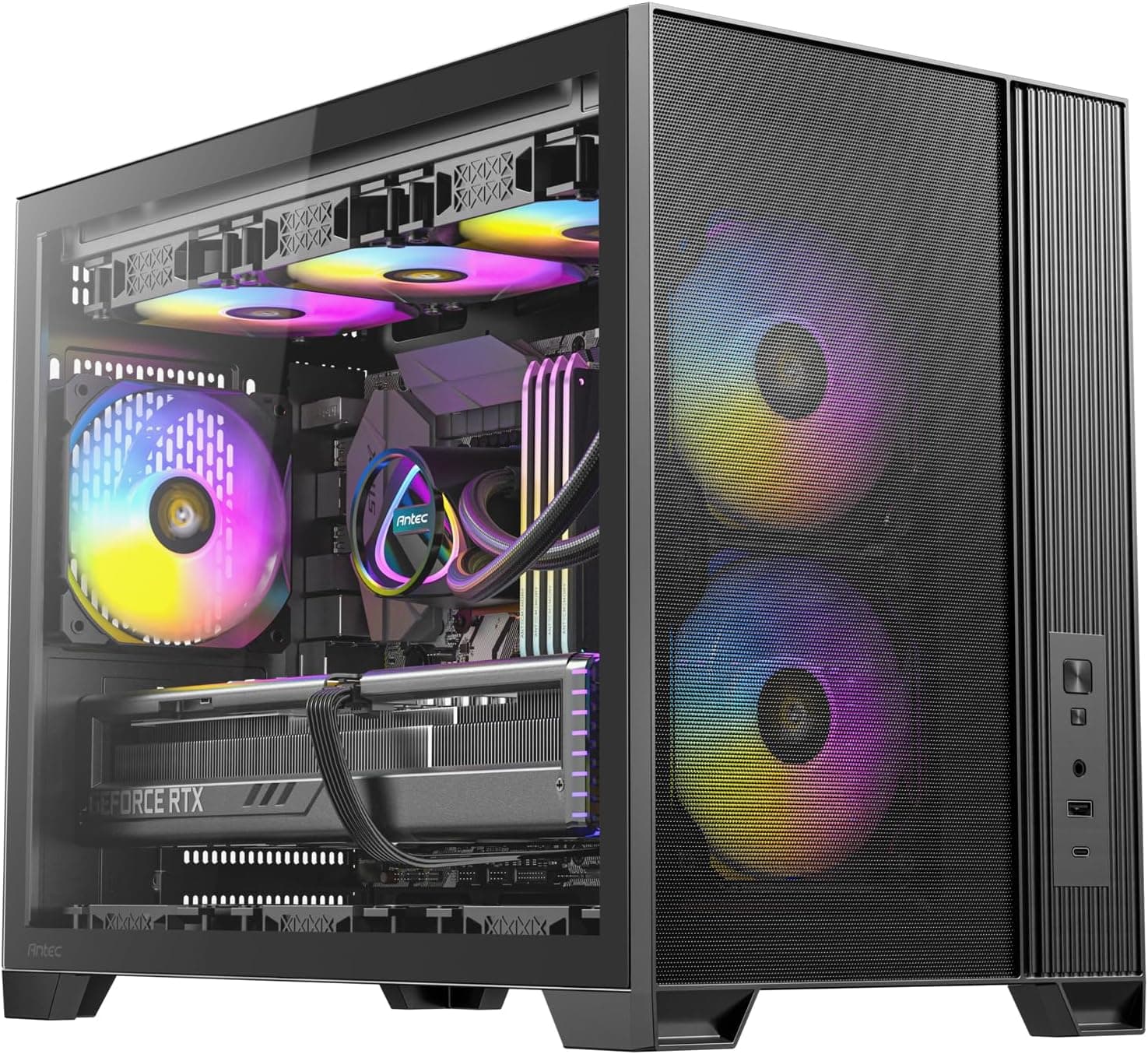
The two obvious competitors at this price point are the Corsair 4000D Airflow and the Fractal Design Pop Air. Both are well-regarded mid-towers with mesh front panels and strong reputations, so the comparison is meaningful rather than arbitrary.
Against the Corsair 4000D Airflow, the Pure Base 501 Airflow wins on included fan quality. The 4000D ships with two 120mm fans, and while they're adequate, the Pure Wings 3 140mm units in the 501 Airflow move more air at lower noise levels. The 4000D has a slight edge on internal volume and is a bit more forgiving for very long PSUs, but the 501 Airflow counters with the vertical GPU mount option, which the 4000D doesn't support natively at this price. The 4000D's front I/O is broadly similar, though the USB-C implementation varies by SKU.
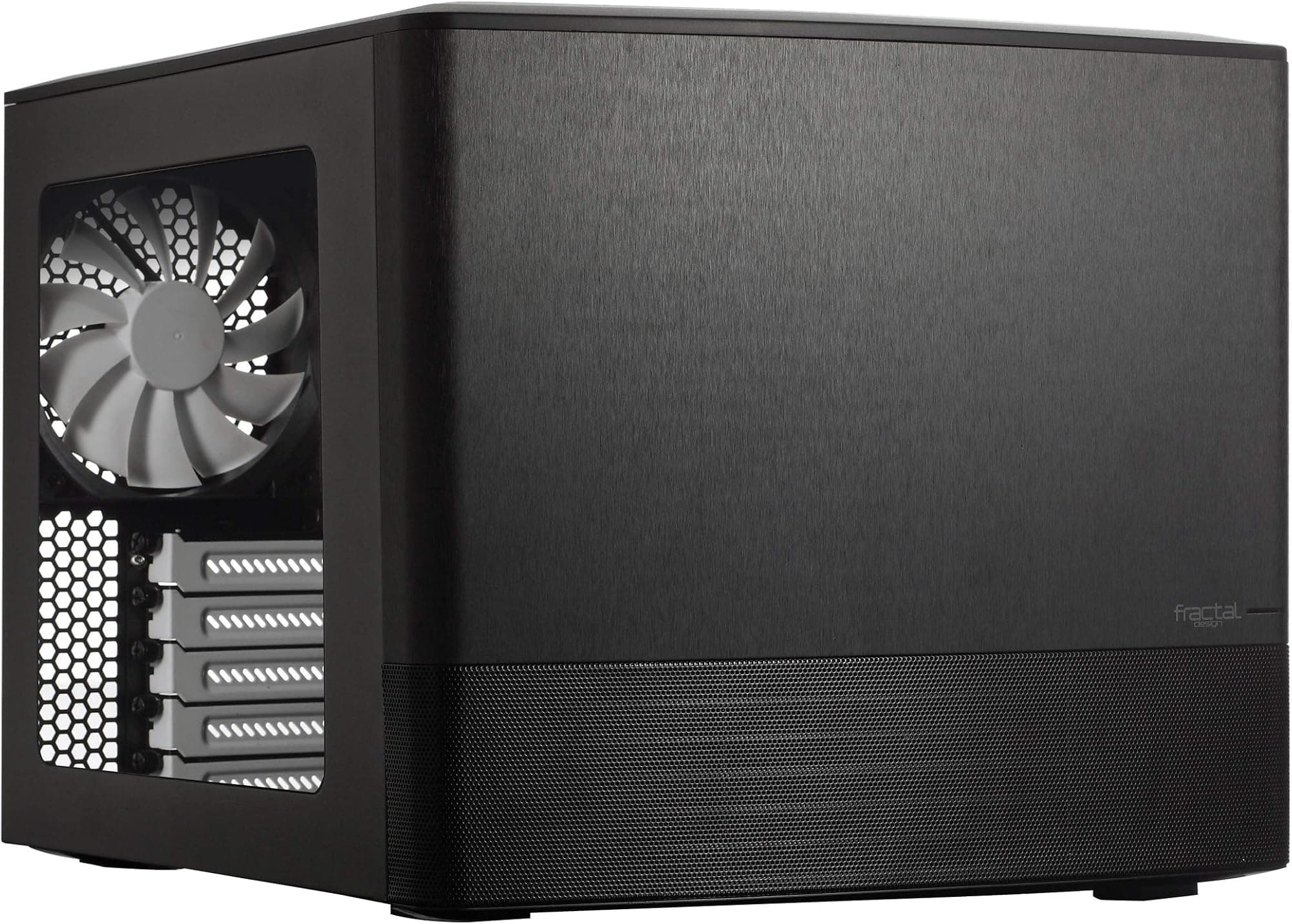
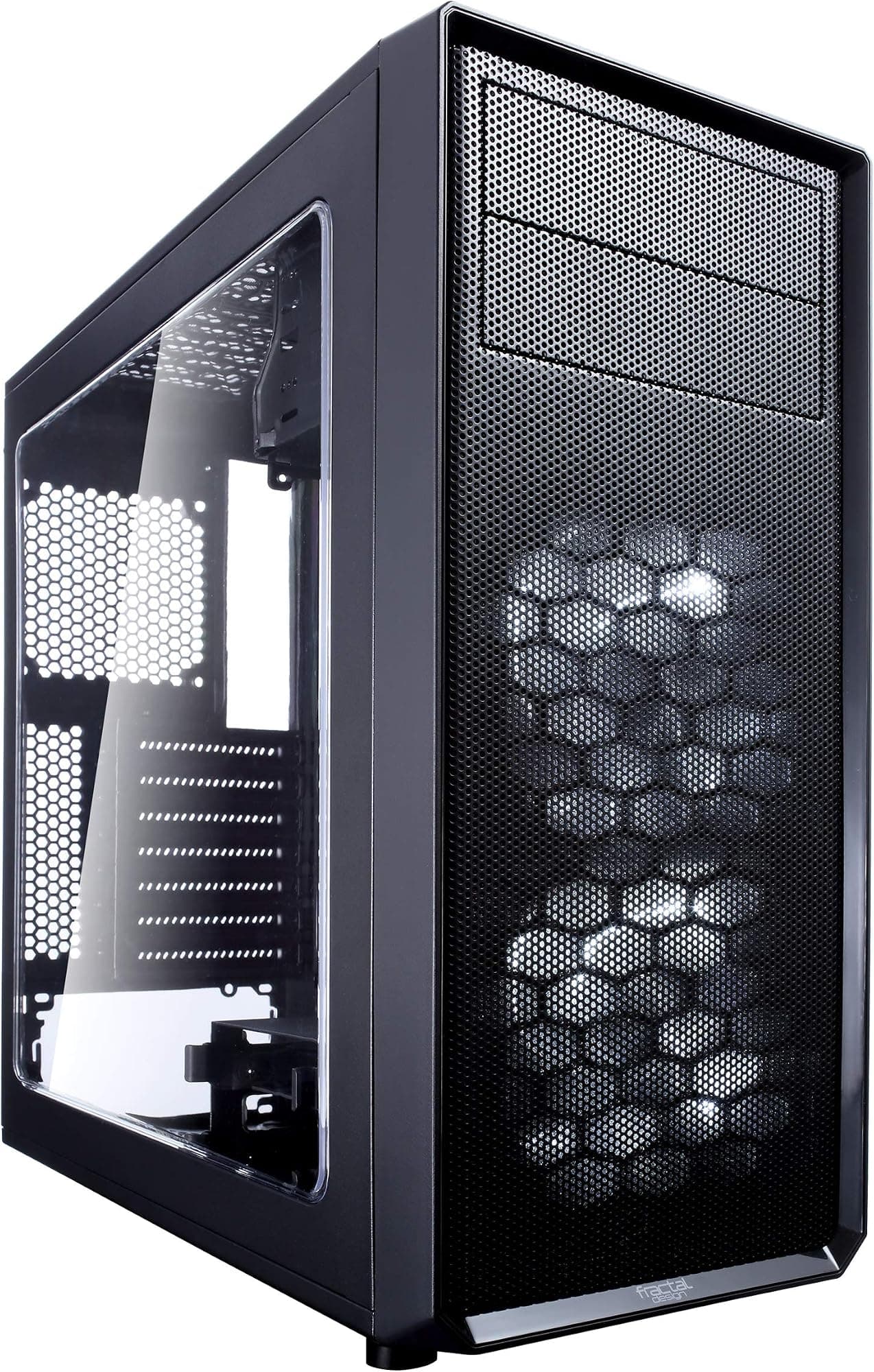
Against the Fractal Design Pop Air, it's closer. The Pop Air is a genuinely excellent case with good airflow and a clean build experience, and Fractal's build quality is consistently strong. The Pop Air supports slightly taller CPU coolers (175mm versus 170mm) and has a marginally larger internal footprint. But the 501 Airflow's included fans are better than the Pop Air's stock fans, and the vertical GPU support again tilts things in be quiet!'s favour for builders who want that option. The Pop Air's front I/O is similar, with USB-C present on the standard SKU.
| Feature | be quiet! Pure Base 501 Airflow | Corsair 4000D Airflow | Fractal Design Pop Air |
|---|---|---|---|
| Form Factor | Compact Mid-Tower | Mid-Tower | Mid-Tower |
| Included Fans | 2x 140mm PWM (Pure Wings 3) | 2x 120mm | 2x 140mm |
| Max GPU Length | 369mm (331mm vertical) | 360mm | 467mm |
| Max CPU Cooler | 170mm | 170mm | 175mm |
| Front Radiator | 360mm | 360mm | 360mm |
| Vertical GPU Mount | Yes (riser cable sold separately) | No | No |
| USB-C Front I/O | USB 3.2 Gen 2 | USB 3.1 Gen 1 | USB 3.2 Gen 2 |
| Drive Bays (3.5") | 2 | 2 | 2 |
| Drive Bays (2.5") | 3 | 2 | 4 |
| PSU Max Length | 225mm | 225mm | 250mm |
| Owner Rating | ★★★★½ (4.7) (156) | ★★★★½ (4.7) | ★★★★½ (4.7) |
| Price Tier | Entry | Entry | Entry |

Final Verdict
The be quiet! Pure Base 501 Airflow PC case review conclusion is pretty straightforward: this is one of the better cases you can buy at entry-tier pricing, and the 4.7-star average from 116 owners backs that up rather than contradicting it. The combination of a proper mesh front, genuinely good included fans, vertical GPU mount support, and USB 3.2 Gen 2 Type-C front I/O is a strong package that most competitors at this price can't fully match.
The things to be aware of before buying: you'll need to budget for a rear exhaust fan because the case doesn't include one, and if you want to use the vertical GPU mount you'll need a PCIe riser cable on top of that. Neither is expensive, but they're not free either. The PSU clearance of 225mm is slightly limiting if you have a long modular PSU, and E-ATX motherboards are a non-starter. These are real limitations, not invented ones, and they matter for specific build scenarios.
Who is this for? Builders putting together a mid-range gaming PC around an ATX or mATX board who want good airflow, a clean aesthetic, and quality fans without having to immediately upgrade the stock hardware. If you're pairing this with something like a Ryzen 7 or Core Ultra 5 and a mid-to-high-end GPU, the thermal headroom is there and the build experience is solid. The vertical GPU mount makes it particularly appealing for anyone who wants to show off an RTX 5070 or RX 9070 through the glass without paying case prices that rival the GPU itself.
Who should skip it? If you genuinely need E-ATX support, look elsewhere. If you have a 250mm-plus PSU, the Fractal Pop Air gives you more clearance. And if you're building a truly budget system where every pound counts, be quiet!'s own Pure Base 500 (non-Airflow) can sometimes be found cheaper and is a decent step down if the vertical GPU mount and USB-C aren't priorities for you. Honest answer: not everyone needs the 501 Airflow's feature set, and there's no shame in buying the simpler sibling if your build doesn't demand it.
As a complete package though, the Pure Base 501 Airflow earns an 8.5 out of 10. The missing rear fan and the riser cable omission knock it down from a higher score, but everything else about this case is well thought out and well executed. At entry-tier pricing, with 116 owners averaging 4.7 stars, it's hard to argue with.
What works. What doesn’t.
5 + 4What we liked5 reasons
- Pure Wings 3 140mm PWM fans are genuinely good, not bin-fodder
- Proper mesh front panel with removable dust filter
- Vertical GPU mount support at entry-tier pricing
- USB 3.2 Gen 2 Type-C front I/O
- Clean cable management with included Velcro straps and rubber grommets
Where it falls4 reasons
- No rear exhaust fan included despite airflow focus
- Vertical GPU mount requires a separate riser cable purchase
- PSU clearance limited to 225mm, rules out some longer modular units
- No E-ATX support
Full specifications
11 attributes| Form factor | Mid-Tower |
|---|---|
| CPU cooler clearance MM | 178 |
| Dimensions MM | 450 x 231 x 463 |
| Fans included | 2 |
| GPU clearance MM | 368 |
| MAX FAN count | 9 |
| MAX radiator MM | 360 |
| PSU support | ATX up to 250mm |
| Side panel | solid steel |
| Supported motherboard | ATX, Micro-ATX, Mini-ITX |
| Weight KG | 6.78 |
If this isn’t right for you
2 options 8.5 / 10
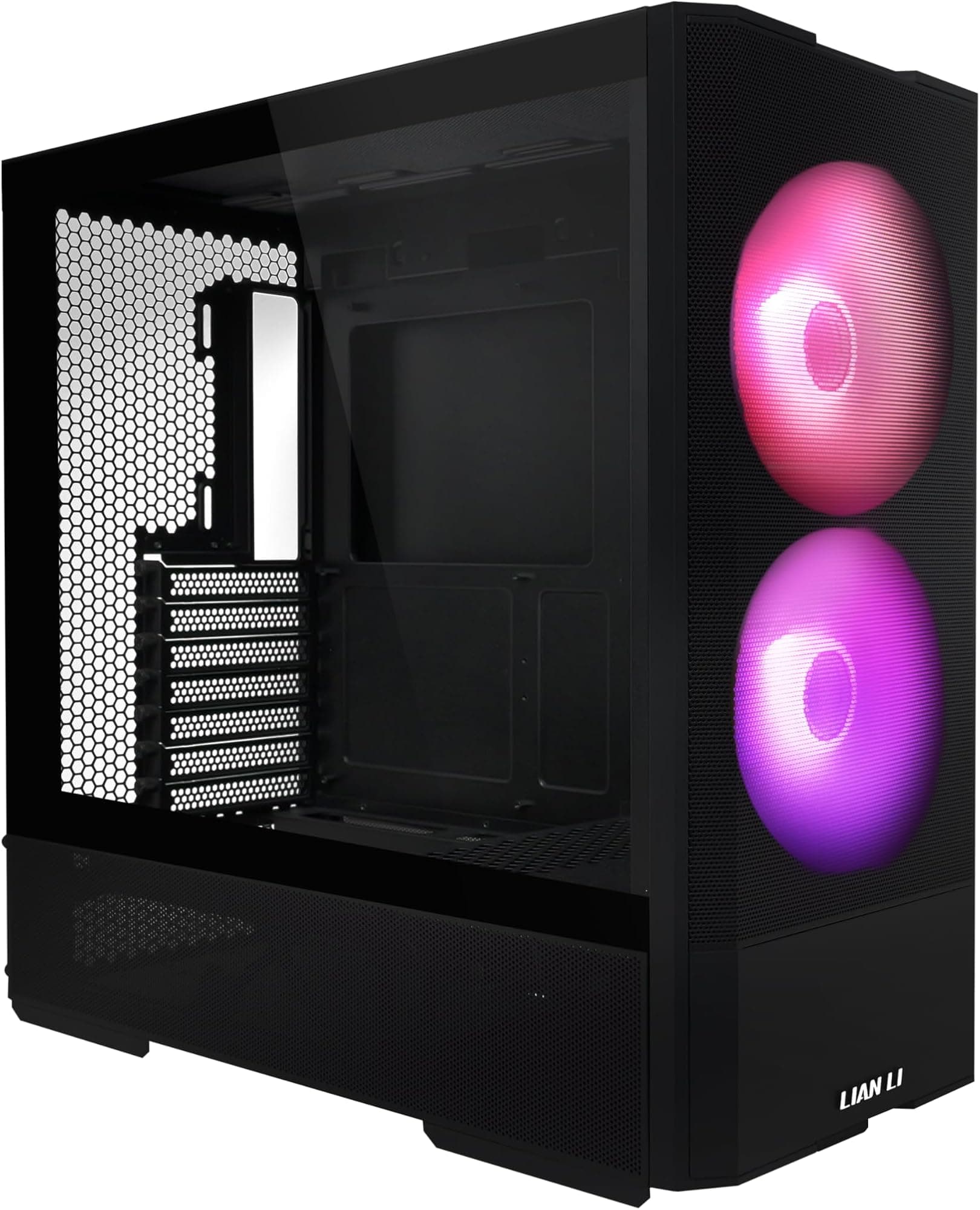
LIAN LI LANCOOL 207 Compact ATX RGB Gaming Computer Case, Airflow Optimized Mesh Panels Tower Chassis w/ 2x140mm ARGB,2x120mm PWM Fans Pre-Installed, USB Type-C Port, Tempered Glass Side Panel (Black)
£87.36 · Lian Li
 8.5 / 10
Lian Li Lancool 207 Mid-Tower Case | Premium ATX/mATX Gaming PC Case | Tempered Glass | Optimal Airflow Black Case
£74.99 · Lian Li
Frequently asked
5 questions01Is the be quiet! Pure Base 501 Airflow Black PC case good for airflow?+
Yes, genuinely. The front panel is a proper open mesh design rather than the pseudo-mesh some manufacturers use, and there's a removable dust filter behind it. Two Pure Wings 3 140mm PWM fans are preinstalled as front intakes, and these are notably better than the generic fans bundled with most cases at this price. The case supports up to three 140mm fans at the front, two at the top, and one at the rear, giving you plenty of expansion room. The one caveat is that no rear exhaust fan is included, so you'll want to add one for a balanced airflow configuration.
02What is the GPU clearance on the be quiet! Pure Base 501 Airflow?+
In standard horizontal orientation, the Pure Base 501 Airflow supports GPUs up to 369mm long, which covers virtually every current flagship card including the RTX 5090 Founders Edition at around 336mm and the RX 9070 XT reference design. In vertical mounting mode, the maximum GPU length reduces to 331mm, which still fits most cards but rules out some of the longer AIB triple-fan designs. Note that vertical mounting requires a separate PCIe riser cable that is not included with the case.
03Can the be quiet! Pure Base 501 Airflow fit a 360mm AIO?+
Yes. The front panel supports radiators up to 360mm, making it compatible with 360mm AIO coolers. The top supports up to 240mm and the rear takes 120mm. With a 360mm radiator installed at the front using standard 25mm thick fans, there should still be adequate GPU clearance for most cards. If you are stacking a thick radiator with oversized fans, check the combined depth against the GPU length spec before buying. A 280mm AIO at the top is also an option, though owners with tall RAM heatspreaders report it can be tight in that configuration.
04Is the be quiet! Pure Base 501 Airflow easy to build in?+
Owner feedback is consistently positive on the build experience. Cable management is a highlight, with multiple rubber-grommeted routing channels, a full-length PSU shroud, and Velcro straps included. The rear chamber offers around 20mm to 25mm of depth for cable runs, which is enough for most modular cable sets. Drive mounting uses a tool-free tray system for 3.5-inch drives with rubber vibration dampening. Owners specifically note the absence of sharp metal edges on the motherboard tray and drive bay areas, which is a real differentiator from cheaper cases. The main frustration reported is that the vertical GPU mount requires a separately purchased riser cable.
05What warranty and returns apply to the be quiet! Pure Base 501 Airflow?+
be quiet! typically covers their cases with a 2-year manufacturer warranty, but we recommend checking the current warranty terms directly on the be quiet! website for the most accurate information. If you purchase through Amazon UK, you also benefit from Amazon's standard 30-day return window and the A-to-Z Guarantee, which provides additional buyer protection if there are any issues with the product on arrival.