Choosing a PC case isn't really about mesh versus glass, or budget versus premium. The actual question is simpler and more brutal: does this thing make building a PC easier, or does it make you want to throw a screwdriver across the room? Clearances, airflow paths, cable routing space, fan mount positions. These are the numbers that decide whether your build goes together cleanly or turns into a three-hour argument with a steel box.
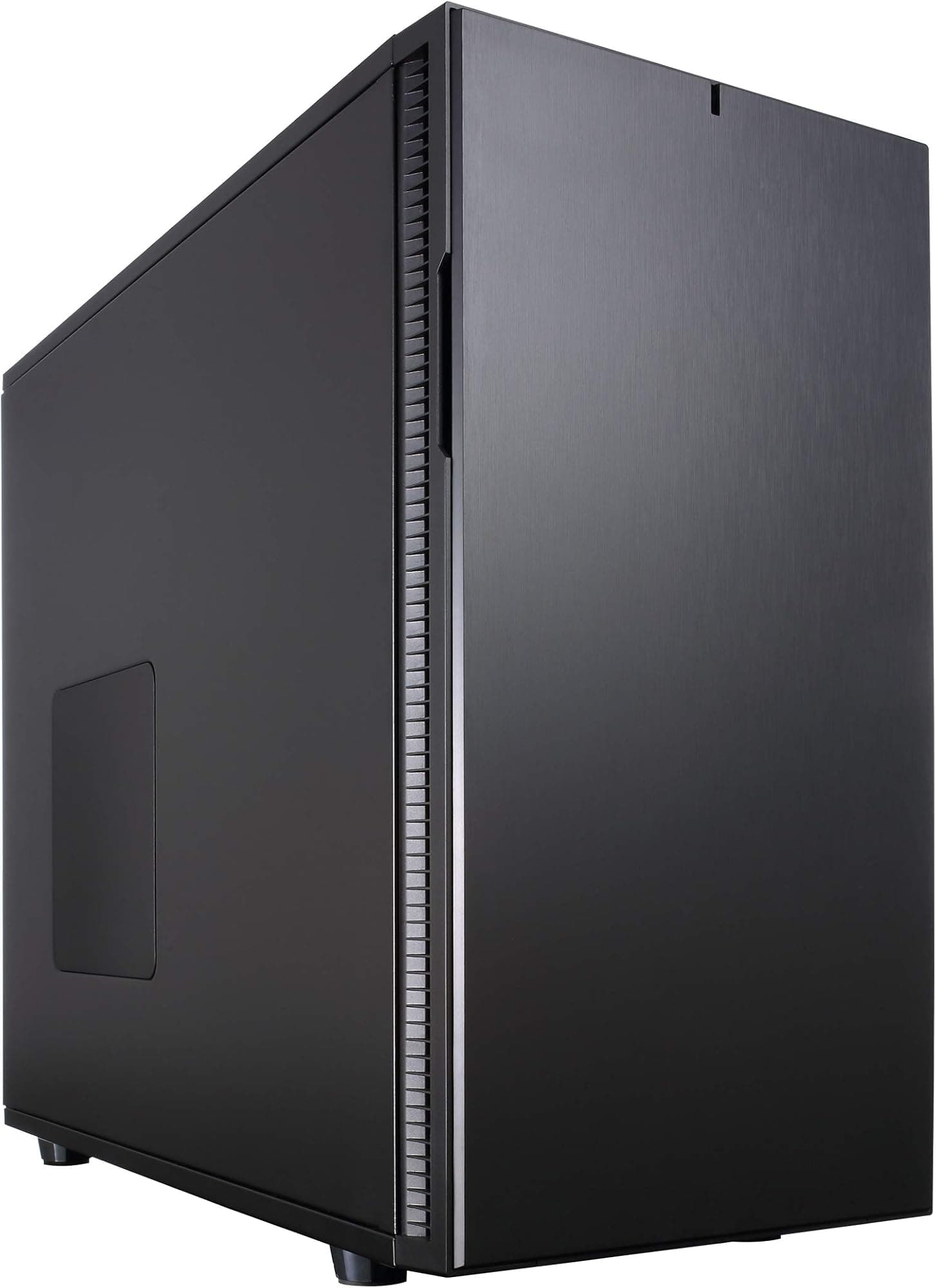
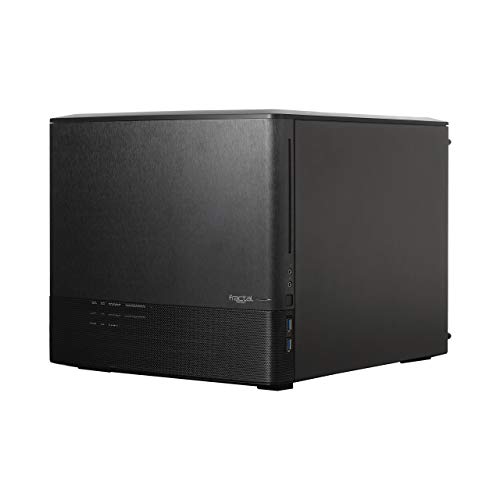
The Fractal Design Node 804 answers that question in an unusual way. It's a cube-style mATX case, which already puts it in a niche most builders overlook, and it solves a specific set of frustrations that compact builds usually suffer from. Tight GPU clearance, nowhere to hide cables, fans crammed into corners. The Node 804 sidesteps most of those problems with a dual-chamber layout that physically separates the PSU and storage from the motherboard compartment. That's the headline. And with 656 owner reviews averaging ★★★★½ (4.7), the people who actually built in it largely agree it works. This is the Fractal Design Node 804 review UK breakdown you need before you commit.
The verdict, up front: this is a genuinely clever compact case for anyone who wants mATX performance in a smaller footprint without sacrificing drive capacity or thermals. It's not perfect, the front I/O is dated, and the cube form factor won't suit every desk. But for NAS-adjacent builds, home server rigs, or just a tidy mATX workstation that doesn't need a full mid-tower's worth of space, the Node 804 is hard to argue with at its mid-range price point.
Core Specifications
The Node 804 is built around a dual-chamber steel chassis. The main chamber houses the motherboard, CPU cooler, GPU, and front-mounted fans. The secondary chamber sits behind a dividing wall and takes the PSU, hard drives, and optical drive if you're still running one. That physical separation is the whole design philosophy in one sentence: keep heat sources away from storage, keep cables out of the main airflow path.
Fan support is generous for a case this size. The front panel takes up to three 120mm fans or two 140mm fans. The top panel supports two 120mm or two 140mm fans. The rear gets one 120mm exhaust position. Fractal ships the Node 804 with three of their own Silent Series R2 120mm fans included, two front intakes and one rear exhaust, which is a decent starting point. The Fractal Design Silent Series R2 fans are rated at around 1000 RPM at full speed, so they're genuinely quiet rather than just marketed as quiet.
Radiator support covers 240mm at the front and 240mm on top, which we'll dig into in the cooler section. The case takes mATX motherboards up to 244mm x 244mm. Weight comes in at around 6.5kg empty, which is solid for a cube-style chassis. Steel throughout, no aluminium accent panels, no tempered glass on the main side (the window is acrylic). The specs table below has everything laid out.
| Specification | Detail |
|---|---|
| Form Factor | Cube / mATX |
| Motherboard Support | mATX (up to 244 x 244mm) |
| Dimensions (H x W x D) | 342 x 377 x 397mm |
| Weight | ~6.5kg |
| Max GPU Length | 310mm (with HDD cage), 350mm (cage removed) |
| Max CPU Cooler Height | 161mm |
| Front Fan Support | 3x 120mm or 2x 140mm |
| Top Fan Support | 2x 120mm or 2x 140mm |
| Rear Fan Support | 1x 120mm |
| Radiator Support (Front) | Up to 240mm |
| Radiator Support (Top) | Up to 240mm |
| Included Fans | 3x Fractal Design Silent R2 120mm |
| 3.5" Drive Bays | Up to 8 (with optional cages) |
| 2.5" Drive Bays | 2 (dedicated) + 3.5" bays adaptable |
| Front I/O | 2x USB 3.0, HD Audio |
| PSU Support | ATX PSU (secondary chamber) |
| Side Panel | Acrylic window (main chamber side) |
| Steel Thickness | 0.8mm |
| Current Price | £97.99 |
| Owner Rating | ★★★★½ (4.7) (677 reviews) |
Form Factor and Dimensions
The Node 804 is a cube. Not a squat mid-tower, not a HTPC slab. An actual cube-shaped chassis, 342mm tall, 377mm wide, 397mm deep. That's meaningfully smaller than a standard mid-tower in height and width, while being roughly comparable in depth. On a desk it sits low and wide, which some people love and some people find odd because they're used to towers standing upright beside their monitors.
The footprint is around 377 x 397mm on the desk surface, so you need roughly 40cm of width and 40cm of depth to place it comfortably. Under a desk it works fine. On a desk beside a monitor it depends entirely on how much lateral space you have. It's not going to win any awards for being compact in the traditional sense, but the dual-chamber design means that footprint is doing a lot more work than a standard mATX mid-tower of similar dimensions. You're getting PSU, storage, and motherboard all in that cube, separated cleanly.
One thing: the cube shape means the case sits horizontally dominant rather than vertically. If you're used to a tower standing tall beside your desk, the Node 804 feels squat. Some owners specifically bought it for this reason, it's less visually imposing and fits under monitor stands or on shelving more easily. Others find the proportions a bit odd. Neither reaction is wrong, it's just a different design language. The build quality of the steel chassis means it doesn't feel flimsy despite the unusual shape, the panels are solid and the overall structure is rigid.
Motherboard Compatibility
The Node 804 supports mATX motherboards only, up to 244mm x 244mm. That's the standard mATX footprint, so any board sold as mATX will fit. Mini-ITX boards will also work, though you'd be underusing the case somewhat. Full ATX is not supported, which is the whole point. This is a case designed around the mATX form factor as a deliberate choice, not as a compromise.
The standoff layout is standard mATX, so installation is straightforward. Owner reviews don't flag any unusual fitment issues with the motherboard tray, which is a good sign. What some owners do mention is that the dual-chamber layout means the motherboard sits in a compartment that feels slightly more enclosed than a typical mid-tower, particularly on the PSU side where the dividing wall runs. Cable routing from the PSU chamber to the motherboard chamber goes through a series of grommeted cutouts in the dividing wall, which keeps things tidy but does require some planning when routing your 24-pin and EPS cables.
The tray itself is fairly standard, no tool-free standoff system or anything fancy, just conventional brass standoffs. That's fine at this price point. The important thing is that the tray is properly positioned and the standoff holes are clean, and owner reports confirm they are. No stripped standoffs, no misaligned holes. Fractal's manufacturing quality is consistent enough that this isn't a worry here.
GPU Clearance
This is where the Node 804 gets interesting and slightly complicated. Maximum GPU length with the hard drive cage in place is 310mm. Remove the HDD cage from the main chamber and that opens up to 350mm. In practice, most mid-range GPUs sit well under 310mm, so for a typical gaming or workstation build the cage removal isn't necessary. But if you're planning to drop in a longer flagship card, you need to check your specific card's length against that 310mm figure before buying.
To put some numbers on it: a reference-length RTX 4070 comes in at around 240mm to 285mm depending on the AIB partner, comfortably within the 310mm limit. Something like a triple-slot, triple-fan RTX 4080 Super from ASUS or MSI can push 336mm or more, which means cage removal is required. The 350mm maximum with cage removed is generous enough for most current cards, but double-check your specific card's length. Manufacturers list this in their product specs, so it takes thirty seconds to verify.
There's no vertical GPU mount option on the Node 804. Given its age and design philosophy, that's not surprising, it predates the current trend for vertical GPU mounting in consumer cases. If showing off your graphics card through a window is important to you, the acrylic side panel does give a view into the main chamber, but the GPU sits in the conventional horizontal orientation. Some owners have noted that longer GPUs can make cable management in the main chamber tighter, particularly the PCIe power cables, so factor that in if you're running a power-hungry card with multiple 8-pin connectors.
CPU Cooler Clearance
CPU cooler height clearance is 161mm. That's actually quite good for a cube case. It comfortably accommodates most popular air coolers: a Noctua NH-D15 is 165mm, so just over the limit, but the NH-U12S at 158mm fits fine. The be quiet! Dark Rock 4 is 168mm, so that's out. The Noctua NH-U14S is 165mm, also just over. Basically, you're looking at single-tower coolers up to around 155 to 158mm as a safe target, with some slim dual-tower options also fitting if they come in under 161mm.
For water cooling, the front panel takes a 240mm radiator and the top takes another 240mm radiator. You can't fit a 360mm AIO in this case. That's a genuine limitation. If your build plan revolves around a 360mm AIO for a high-TDP CPU, the Node 804 isn't the right chassis. But a 240mm AIO at the front or top works fine, and several owners have reported running dual 240mm radiators simultaneously for CPU and GPU loop setups, which is impressive flexibility for a case this size.
Radiator thickness clearance is too. With a 240mm radiator at the front, you need to check that the fans and rad combined don't intrude too far into the main chamber and foul the GPU. Owner feedback suggests this is manageable with slim radiators (30mm or less), but thick 45mm radiators can create clearance issues with longer GPUs. Plan your component list as a whole rather than picking parts independently and hoping they fit. The Node 804 rewards a bit of pre-build homework.
Storage Bay Options
This is where the Node 804 genuinely stands apart from most compact cases. The secondary chamber, the PSU side, is built around a modular drive cage system. The default configuration supports up to six 3.5" hard drives in two removable cages of three bays each. Remove one cage and you free up space. Remove both and you've got a very open secondary chamber. Add the optional drive cages back in and you can push to eight 3.5" drives total, which is extraordinary for a case this size.
For 2.5" SSDs there are two dedicated mounting points, plus the 3.5" bays can be adapted for 2.5" drives with appropriate brackets. If you're building a NAS or a media server that needs serious storage capacity, the Node 804 is one of the few compact cases that can actually deliver it. Most mATX cases in this price range offer two or three 3.5" bays at best. Eight is a completely different proposition.
The drive cages in the secondary chamber are tool-free for the most part, drives slide in and secure with thumbscrews. Owner reviews are broadly positive about the drive mounting experience, though a few note that the cages can feel a bit plasticky compared to the steel chassis. That's a minor complaint. The bigger point is that the storage capacity here is the Node 804's strongest differentiator. If you don't need it, the case is still good. If you do need it, there's basically nothing else at this price point that competes.

Cable Management
The dual-chamber design does most of the heavy lifting for cable management. Because the PSU lives in the secondary chamber, the main ATX power cable and EPS cable route through grommeted cutouts in the dividing wall. This keeps the main chamber significantly cleaner than a conventional single-chamber layout. The big messy cables, the 24-pin, the EPS, the SATA runs to the drives, all of that lives behind the divider rather than draped across the motherboard.
Behind the motherboard tray there's a reasonable amount of space for routing, though it's not as generous as a modern mid-tower with a dedicated cable management zone. Owners report that with some patience the rear panel closes cleanly. A few mention it's a tight fit if you're running lots of SATA cables through to the storage chamber, so plan your routing before you start rather than stuffing cables in at the end. Velcro tie points are present, though not as numerous as you'd find in a more recent design.
The PSU mounts in the secondary chamber on a tray, and the PSU cables then route through to where they're needed. This is actually quite elegant in practice because you can do all your PSU cable management in the secondary chamber before closing it up, then route the finished cables through the grommets. It's a bit like having a modular PSU bay built into the case design itself. Owner feedback consistently praises this aspect of the build experience, and it's one of the reasons the 4.7 star average holds up even on a case that's been around long enough to have accumulated genuine long-term feedback.
Airflow and Thermal Design
The front panel on the Node 804 is a mesh design with a dust filter behind it, which means intake airflow isn't being choked by a solid panel. That's the right call for a case that's trying to balance quiet operation with decent thermals. The three included Silent R2 120mm fans (two front intake, one rear exhaust) set up a basic positive pressure airflow path through the main chamber. Positive pressure, more intake than exhaust, means dust gets pushed out of gaps rather than pulled in, which keeps the interior cleaner over time.
The top panel also supports fans for additional exhaust, which is useful if you're running a hot CPU or GPU and want to increase airflow. With two 120mm or 140mm fans on top exhausting and two 120mm fans at the front intaking, you've got a solid four-fan setup that should handle most mid-range components without thermal throttling. The secondary chamber has its own airflow considerations since it houses the PSU, which has its own fan, and the hard drives. The design keeps heat from the PSU and drives away from the CPU and GPU, which is the whole point of the dual-chamber approach.
The Silent R2 fans included with the case are genuinely quiet at their rated speeds. They're not the highest-airflow fans Fractal makes, but for a case positioned around quiet operation they're appropriate. If you're building a workstation that needs to run silently in an office, the included fans are a reasonable starting point. For a gaming rig where you're pushing a hot GPU hard, you might want to add higher-airflow fans at the front and consider the top exhaust positions. The dust filters on the front and top panels are removable for cleaning, which owners appreciate. Nobody wants a case where cleaning the filters requires dismantling the build.
Front I/O and Connectivity
The front I/O is the Node 804's most obvious weakness in 2026. You get two USB 3.0 Type-A ports and a combined HD Audio jack. That's it. No USB Type-C. No additional USB ports. The USB 3.0 standard was cutting-edge when this case launched, but it's showing its age now. Most modern motherboards have a USB Type-C header, and most people expect at least one Type-C port on the front panel of a case in this price range.
The power button and reset button are on the top of the case, which makes sense for a cube-format chassis. They're reasonably tactile according to owner reports, no complaints about mushy buttons or finicky power switches. The power LED and HDD activity LED are also present. The front I/O panel itself is positioned at the top front edge of the case, which is accessible whether the case is on a desk or on the floor.
If USB Type-C front panel connectivity is a requirement for your build, the Node 804 doesn't have it. Full stop. This is a genuine limitation for a 2026 build, where Type-C devices are everywhere. It's the single biggest reason to hesitate on this case if you're building new. The rest of the I/O is functional, the HD Audio header works with modern motherboards, the USB 3.0 ports are fast enough for most peripherals, but the absence of Type-C is a real gap. Worth factoring into your decision alongside the case's genuine strengths.
Build Quality and Materials
The Node 804 is built from 0.8mm steel throughout. That's standard for the mid-range segment and it's enough to feel solid without being heavy. The panels don't flex noticeably when you press on them, the chassis doesn't creak or rattle when moved, and the overall construction quality is consistent with what Fractal Design delivers across their lineup. No sharp edges reported by owners, which is because sharp edges inside a case are genuinely unpleasant to discover mid-build.
The side panel with the acrylic window is worth discussing specifically. It's not tempered glass. Acrylic scratches more easily and can develop micro-scratches over time that make the window look cloudy. On a case this age, that's understandable, tempered glass side panels weren't universal at launch. But if you're comparing against more recent cases in the same price bracket, many now offer proper tempered glass. The acrylic window does the job of letting you see the main chamber, it's just not as premium-feeling as glass.
Panel removal and installation is straightforward. The side panels use thumbscrews, no tool-free latch system, but the thumbscrews are properly captive so you won't lose them inside the case. The secondary chamber panel comes off separately from the main chamber panel, which is actually convenient during a build since you can work on the storage side without removing the main window. Owner reviews consistently mention build quality as a positive, with several long-term owners (this case has been around long enough to have owners reporting multi-year use) noting the chassis has held up well. That's a meaningful data point.
How It Compares
The obvious comparison for the Node 804 is the Fractal Design Meshify C mATX, which is a more conventional mATX mid-tower with better front panel airflow and a tempered glass side panel. The Meshify C mATX is a more recent design, has USB Type-C on the front panel in some configurations, and suits builders who want a traditional tower layout. But it maxes out at four 3.5" drive bays and doesn't have the dual-chamber layout. If storage capacity is the priority, the Node 804 wins that comparison convincingly.
The Silverstone SG13 is a popular mITX cube alternative, smaller footprint but significantly less storage capacity and tighter clearances throughout. It's cheaper but it's a different use case entirely. The Node 804 isn't really competing with mITX cases, it's competing with mATX mid-towers while offering a fundamentally different approach to internal layout.
The Cooler Master MasterBox Q300L is another compact mATX option, typically cheaper than the Node 804, with decent airflow but far fewer drive bays and no dual-chamber design. For a pure gaming build where storage capacity isn't a priority, the Q300L is as a more budget-friendly alternative. But for any build where you need multiple hard drives alongside your system components, the Node 804's layout is in a different category.
| Feature | Fractal Design Node 804 | Fractal Design Meshify C mATX | Cooler Master MasterBox Q300L |
|---|---|---|---|
| Form Factor | Cube / mATX | Mid-Tower / mATX | Mini-Tower / mATX |
| Max GPU Length | 310mm (cage in) / 350mm (cage out) | 315mm | 360mm |
| Max CPU Cooler Height | 161mm | 170mm | 157mm |
| 3.5" Drive Bays | Up to 8 | 2 to 4 | 2 |
| Included Fans | 3x 120mm | 1x 120mm | 1x 120mm |
| Front Radiator Support | 240mm | 240mm | 240mm |
| USB Type-C Front Panel | No | Yes (newer revisions) | No |
| Side Panel | Acrylic window | Tempered glass | Acrylic window |
| Dual Chamber | Yes | No | No |
| Price Tier | Mid-range | Mid-range | Budget to mid-range |

Final Verdict: Fractal Design Node 804 Review UK
The Node 804 is a case with a very clear purpose, and it delivers on that purpose well. The dual-chamber layout genuinely works. Keeping the PSU and storage separate from the CPU, GPU, and motherboard isn't just a neat idea on paper, it results in a cleaner main chamber, better airflow where it matters, and a build process that's more logical than most compact cases manage. The eight 3.5" drive bay capacity is extraordinary for a case this size, and the three included Silent R2 fans are a proper bonus rather than throwaway inclusions.
The weaknesses are real though. No USB Type-C on the front panel is a genuine problem for a 2026 build. The 360mm AIO limitation rules out some high-TDP CPU cooling setups. The acrylic window is fine but it's not glass. And the 310mm GPU clearance with the drive cage installed means you need to check your specific card before buying. None of these are dealbreakers in isolation, but they stack up if several of them matter to you.
Who should buy this? Anyone building a compact mATX workstation, home server, or NAS-hybrid system where storage capacity is a genuine requirement. Photographers, video editors, or anyone running a Plex server who needs multiple spinning drives in a smaller chassis than a full mid-tower. Builders who want the dual-chamber layout for cleanliness and thermal separation. People who value quiet operation and appreciate that the included fans are actually decent.
Who should skip it? Pure gaming builds where you don't need more than two or three drives and you want a front-panel USB Type-C port. Anyone planning a 360mm AIO. Builders who want tempered glass rather than acrylic. If your build is a straightforward gaming rig with an NVMe SSD and nothing else, a more recent mATX mid-tower like the Meshify C mATX gives you a more modern feature set at a similar price point, with tempered glass and Type-C front panel. The Node 804's strengths are wasted on a build that doesn't need them.
The 4.7 star average across 677 is earned. This isn't a case that people are rating highly because it looks nice in photos. It's a case that solves specific problems really well, and the people who bought it for those reasons are happy with it. For the right build, it's a strong choice at mid-range pricing. For a generic gaming build in 2026, there are more current alternatives first.
What works. What doesn’t.
5 + 4What we liked5 reasons
- Dual-chamber layout keeps PSU and storage genuinely separate from main components
- Up to 8x 3.5" drive bays, extraordinary for a compact case
- Three Silent R2 120mm fans included, actually decent quality
- 161mm CPU cooler clearance is generous for a cube chassis
- Mesh front panel with dust filter for clean intake airflow
Where it falls4 reasons
- No USB Type-C on the front panel, a real gap for 2026 builds
- No 360mm AIO support, 240mm maximum front and top
- Acrylic window rather than tempered glass
- 310mm GPU limit with drive cage installed requires pre-build card length check
Full specifications
11 attributes| Form factor | Micro-ATX |
|---|---|
| CPU cooler clearance MM | 160 |
| Dimensions MM | 344 x 307 x 389 |
| Fans included | 3 |
| GPU clearance MM | 320 |
| MAX FAN count | 10 |
| MAX radiator MM | 280 |
| PSU support | ATX up to 260mm |
| Side panel | acrylic window |
| Supported motherboard | Micro-ATX, Mini-ITX |
| Weight KG | 6 |
Frequently asked
5 questions01Is the Fractal Design Node 804 good for airflow?+
Yes, reasonably so. The front panel is a mesh design with a removable dust filter, which means intake airflow isn't being choked by a solid panel. Fractal includes three Silent R2 120mm fans (two front intake, one rear exhaust) that set up a positive pressure airflow path through the main chamber. The top panel supports two additional 120mm or 140mm fans for extra exhaust capacity. The dual-chamber design also helps by keeping PSU and hard drive heat physically separated from the CPU and GPU compartment, which is a genuine thermal benefit over single-chamber designs. For quiet workstation use the included fans are appropriate. For a high-TDP gaming build you might want to add higher-airflow fans at the front and use the top exhaust positions.
02What is the GPU clearance on the Fractal Design Node 804?+
Maximum GPU length is 310mm with the hard drive cage installed in the main chamber, and 350mm if you remove the cage. Most mid-range GPUs sit well under 310mm, so cage removal isn't necessary for typical builds. Longer flagship cards from AIB partners (triple-fan designs pushing 330mm or more) will require cage removal to fit. Always check your specific card's length against the 310mm figure before buying. There is no vertical GPU mount option on the Node 804.
03Can the Fractal Design Node 804 fit a 360mm AIO?+
No. The Node 804 supports a maximum 240mm radiator at the front and a maximum 240mm radiator at the top. A 360mm AIO will not fit. If your build requires a 360mm AIO for a high-TDP CPU, the Node 804 is not the right case. For 240mm AIOs the case works well, and several owners have reported running dual 240mm radiators simultaneously for CPU and GPU loop setups. With a 240mm front radiator, check that your specific radiator's thickness (ideally 30mm or less) doesn't create clearance issues with your GPU.
04Is the Fractal Design Node 804 easy to build in?+
Generally yes, with some caveats. The dual-chamber layout is the biggest build experience advantage: PSU and storage cables route through grommeted cutouts in the dividing wall, keeping the main motherboard chamber significantly cleaner than a single-chamber design. Owner reviews consistently praise this aspect. The drive cages in the secondary chamber are largely tool-free. Behind the motherboard tray there is reasonable cable routing space, though it can get tight if you're running many SATA cables to the storage chamber. No sharp edges are reported by owners. The main complexity is planning your cable routing through the dividing wall cutouts before you start, rather than figuring it out mid-build.
05What warranty and returns apply to the Fractal Design Node 804?+
Specific warranty terms for the Node 804 are not confirmed in the product listing data available to us. For purchases through Amazon UK, you are covered by Amazon's standard 30-day return policy and the Amazon A-to-Z Guarantee, which protects your purchase if there are issues with condition or delivery. For manufacturer warranty queries, contact Fractal Design directly through their official website. Always retain your purchase receipt and packaging for any warranty or returns process.