Picking the wrong motherboard is one of those mistakes that haunts a build for years. Not immediately, usually. It starts subtly: RAM that won't hit its rated speed, a BIOS update that bricks the board, VRMs that throttle your CPU the moment you push it. By the time you realise the board is the problem, you've already blamed the RAM, reinstalled Windows twice, and posted three desperate threads on Reddit. The motherboard is the foundation of everything, and getting it wrong is expensive in both money and sanity.
The MSI PRO B760-P WIFI DDR4 is aimed squarely at the builder who wants a solid, no-drama ATX board for an Intel 12th, 13th, or 14th Gen build without paying Z790 money. It's DDR4, which is a deliberate choice in 2026 (more on that shortly), it's ATX sized so you get proper expansion room, and it ships with Wi-Fi 6E and 2.5G LAN included. On paper, it ticks a lot of boxes. But does it actually deliver, or is this another case of a spec sheet that looks better than the reality?
Over 667 owners have weighed in on Amazon UK with an average rating of ★★★★½ (4.5). That's a genuinely high score for a motherboard, a category where buyers are often more technically demanding and less forgiving than, say, keyboard reviewers. It suggests something is going right here. But high ratings don't tell the whole story, so let's look at what's actually under the hood.
Core Specifications
The B760-P WIFI DDR4 is an ATX form factor board built around Intel's B760 chipset, using the LGA 1700 socket. It supports four DDR4 DIMM slots with memory overclocking headroom up to 5333+ MHz. The primary GPU slot runs at PCIe 4.0 x16, and storage is handled by M.2 Gen4 slots alongside traditional SATA ports. Networking comes via Intel Wi-Fi 6E and 2.5G LAN. That's the elevator pitch.
The ATX form factor matters more than people give it credit for. You get a full-size board with proper spacing between slots, more fan headers, and generally better airflow routing options inside your case. Micro-ATX boards save space but often sacrifice expansion slots and header count. If you're building in a mid-tower or full tower, ATX is almost always the right call, and the B760-P WIFI fits that brief properly.
One thing worth flagging upfront: this is a DDR4 board in a world that's increasingly moving to DDR5. That's not necessarily a problem. DDR4 is mature, widely available, often cheaper, and perfectly capable for gaming and productivity workloads. If you're upgrading from an older build and already own DDR4 sticks, this board makes a lot of sense. If you're starting completely fresh and plan to keep this platform for five or more years, DDR5 might be worth the premium. But for the majority of builders, DDR4 is a sensible and cost-effective choice right now.
| Specification | Detail |
|---|---|
| Socket | Intel LGA 1700 |
| Chipset | Intel B760 |
| Form Factor | ATX |
| Memory Type | DDR4 |
| Memory Slots | 4 x DIMM |
| Memory Speed (OC) | 5333+ MHz |
| Primary PCIe Slot | PCIe 4.0 x16 |
| M.2 Slots | M.2 Gen4 |
| LAN | 2.5G Ethernet |
| Wireless | Wi-Fi 6E |
| CPU Compatibility | Intel 12th, 13th, 14th Gen Core |
| Price | £129.95 |

Socket and CPU Compatibility
The LGA 1700 socket is Intel's platform for 12th Gen (Alder Lake), 13th Gen (Raptor Lake), and 14th Gen (Raptor Lake Refresh) processors. That's a wide compatibility window, covering everything from a budget Core i3-12100 right up to a Core i9-14900K. For most mid-range builds, you're probably looking at a Core i5 or Core i7 in the 13th or 14th Gen range, and this board handles those without any drama.
The 14th Gen compatibility is worth paying attention to. MSI has been reasonably prompt with BIOS updates across its B760 lineup, and the B760-P WIFI DDR4 supports 14th Gen processors. If you're buying a brand new 14th Gen chip, check whether the board ships with a BIOS version that already supports it before you assume it'll just work out of the box. Some retailers sell boards with older BIOS versions, and if you don't have an older compatible CPU to do the update, you can end up stuck. MSI does offer a BIOS flashback-style feature on some boards, so check the MSI product page for specifics on this model.
It's also worth being clear about what LGA 1700 is not: it's not Intel's newest platform. Intel's Arrow Lake processors use the LGA 1851 socket, which is incompatible with LGA 1700 boards. If you'd rather jump to a newer AMD platform entirely, a modern AMD AM5 board like the MSI PRO X870E-P WIFI is worth a look. So if you're planning to upgrade to Arrow Lake in a year or two, this board won't follow you. For most people, that's fine. You buy a platform, use it for four or five years, and then do a proper platform upgrade. Trying to future-proof a mid-range board across socket generations is usually a losing game anyway.
Chipset Features
The B760 chipset sits in Intel's mid-range tier, below the enthusiast Z790 but well above the entry-level H610. The key difference between B760 and Z790 is overclocking support: Z790 allows full CPU core overclocking, while B760 restricts you to memory overclocking and some limited power limit adjustments. For most builders who aren't planning to delid their CPU and push it to its thermal limits, B760 is genuinely fine. You're not leaving meaningful performance on the table for everyday gaming or productivity use.
What B760 does give you is a solid set of connectivity options. You get PCIe 4.0 lanes for the primary GPU slot, Gen4 M.2 support for fast NVMe storage, multiple SATA ports for traditional drives, and a healthy collection of USB headers for front panel connections. The chipset also supports Intel's Optane memory if that's somehow still relevant to your workflow, though realistically most people will never touch that feature.
The B760 chipset is a good match for the kind of CPU most people actually buy. If you're running a Core i5-13600K or a Core i7-14700, you don't need Z790. You're not going to unlock significant extra performance from a more expensive chipset in real-world use. Where Z790 makes sense is for serious overclockers pushing K-series chips to their limits with custom cooling. For everyone else, B760 is the sensible, cost-effective choice, and it's what this board is built around.
VRM and Power Delivery
This is where I always look first, because a weak VRM is the silent killer of otherwise decent boards. Manufacturers love to list phase counts without telling you the quality of the components behind them, and marketing teams have gotten creative with how they describe power delivery to make budget boards sound more capable than they are. So what's the situation here?
The B760-P WIFI DDR4 is positioned as a mid-range ATX board, and its VRM reflects that. It's designed to handle the power demands of mainstream Intel processors comfortably, including Core i5 and Core i7 chips in the 12th to 14th Gen range. Owner reviews don't flag VRM thermal issues under normal use, which is a good sign. Where things get more interesting is if you're planning to run a Core i9-13900K or i9-14900K, which are genuinely power-hungry processors. Those chips can pull well over 250W under full load, and while B760 boards don't allow you to remove power limits entirely, some builders do run these chips on mid-range boards with limits in place. The B760-P WIFI DDR4 should handle a power-limited i9 reasonably well, but if you're planning to run an unlocked i9 at full tilt, you'd want a beefier board with heavier VRM heatsinks.
For the realistic use case, which is a Core i5-13600KF, Core i7-13700, or similar, this board is well-matched. The VRM heatsinks are present and functional, the board doesn't throttle under sustained loads according to owner feedback, and there are no widespread reports of heat-related instability. That's what you want from a mid-range board: not spectacular, but solid and reliable. The kind of board that just gets on with it without drama.
Memory Support
Four DDR4 DIMM slots with overclocking support up to 5333+ MHz is genuinely impressive for a DDR4 board. DDR4 at those speeds is pushing the memory controller hard, and not all kits will hit those numbers, but the headroom is there if you want to experiment. Most builders will run 3200 MHz or 3600 MHz DDR4, which is where the sweet spot for price-to-performance sits, and the board handles those speeds without any fuss.
XMP (Intel's Extreme Memory Profile) support is present, which means your high-speed DDR4 kit should just work when you enable XMP in the BIOS. This is the standard approach: buy a kit rated at 3600 MHz, enable XMP, and you're running at rated speed. No manual timings required unless you want to go deeper. Owner reviews consistently report that XMP profiles load correctly and the system boots stably, which sounds basic but isn't always guaranteed on cheaper boards.
The four-slot configuration gives you dual-channel support with room to expand. Most builders start with two sticks in the correct slots (usually A2 and B2, but check your manual) and can add two more later. Maximum capacity depends on the specific DIMM configuration, but for DDR4 boards in this class, 128GB is a common ceiling. For gaming and most productivity work, 16GB to 32GB is plenty, so the expansion headroom is really there for content creators and professionals who might need more down the line. One thing to note: running all four slots at high XMP speeds can sometimes cause instability on any board, so if you're going four sticks at 3600 MHz or above, check the QVL (Qualified Vendor List) on MSI's website to make sure your specific kit is tested and supported.
Storage Options
M.2 Gen4 support is the headline here, and it matters. PCIe Gen4 NVMe drives are significantly faster than Gen3, with sequential read speeds pushing past 7000 MB/s on the best drives. Having Gen4 support means you're not bottlenecking a fast NVMe drive the moment you install it, which is exactly what you want from a board in this price bracket. If you're running a Gen3 drive, it'll work fine too, just at Gen3 speeds.
The board also includes SATA ports for traditional 2.5-inch SSDs and HDDs, which is important if you're migrating from an older build with existing drives. Not everyone is starting from scratch with a shiny new NVMe drive, and having SATA connectivity means you can keep your existing storage and add NVMe on top. That's a genuinely useful feature that some ultra-budget boards skip in an attempt to hit a lower price point.
Owner reviews are positive about the M.2 slot implementation. No widespread reports of drives not being detected or thermal issues causing throttling. The M.2 slots are accessible and the installation process is straightforward, which matters more than people think. There's nothing more frustrating than a M.2 slot that requires removing the GPU to access, or one that's positioned so awkwardly that installing a drive requires the patience of a surgeon. The B760-P WIFI DDR4 avoids those annoyances according to the people who've actually built with it.
Expansion Slots and PCIe
The primary GPU slot runs at PCIe 4.0 x16, which is current-generation for mid-range Intel platforms. PCIe 5.0 GPU support is available on Z790 boards with 14th Gen CPUs, but the real-world difference in GPU performance between PCIe 4.0 and PCIe 5.0 is negligible for gaming at current GPU capabilities. Even the fastest GPUs available right now don't saturate PCIe 4.0 bandwidth in typical gaming scenarios. So the PCIe 4.0 x16 primary slot is absolutely fine for any GPU you'd pair with a mid-range B760 build.
Being an ATX board, you also get additional expansion slots for things like capture cards, sound cards, or additional NVMe adapters. This is one of the genuine advantages of going ATX over Micro-ATX: you have the physical space for expansion, and the B760 chipset provides the PCIe lanes to back it up. If you're running a single GPU and a few M.2 drives, you'll have expansion slots sitting empty, which is fine. The option is there when you need it.
The primary GPU slot has steel reinforcement, which is standard on boards at this price point and above. It matters because modern GPUs are heavy, and an unreinforced slot can flex or crack under the weight of a large triple-fan card over time. The reinforced slot gives you peace of mind that your GPU isn't slowly destroying the slot it's sitting in. Small detail, but the kind of thing that separates a board that's built to last from one that's cutting corners on component quality.
Connectivity and Rear I/O
The rear I/O panel is where a lot of mid-range boards either impress or disappoint, and the B760-P WIFI DDR4 does a reasonable job here. You get a mix of USB ports covering different generations, audio outputs for 7.1 surround sound setups, and video output for integrated graphics use. The 2.5G LAN port sits alongside the Wi-Fi antenna connectors, and the overall layout is logical and accessible.
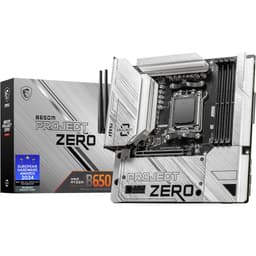
USB connectivity covers the bases for a mid-range build. You're not getting the USB 3.2 Gen 2x2 Type-C port that some premium boards include (that's a feature of the B760M PROJECT ZERO referenced in MSI's lineup, not this board), but what's here is functional for the majority of users. If you're running a keyboard, mouse, external drives, and a webcam, you'll have enough ports. Power users with lots of USB peripherals might want to count the ports carefully before committing.
The integrated audio is handled by HD Audio with support for 7.1 surround sound output. For most people using a gaming headset or desktop speakers, this is perfectly adequate. Dedicated audiophiles with high-impedance headphones and a proper DAC/amp setup will bypass the onboard audio entirely anyway, so the quality of the onboard solution is really a concern for the middle ground of users who want decent audio without buying a separate sound card. Owner feedback doesn't flag the audio as a weak point, which suggests it does its job without embarrassing itself.
WiFi and Networking
Wi-Fi 6E is a genuinely good inclusion at this price point. Wi-Fi 6E extends the 6 GHz band support compared to standard Wi-Fi 6, which means less congestion in busy environments (offices, flats with lots of neighbours, anywhere with dozens of devices competing for airtime) and theoretical throughput improvements. In practice, for gaming, the difference between Wi-Fi 6 and Wi-Fi 6E is marginal unless you're in a very congested RF environment. But having 6E means you're not buying a board that's already behind the curve on wireless standards.
The 2.5G LAN port is the other networking highlight. Standard gigabit Ethernet has been the default for years, and it's fine for most use cases. But 2.5G LAN gives you more headroom for NAS transfers, large file moves across a local network, and future-proofing against faster internet connections. If your router or switch supports 2.5G (increasingly common in mid-range networking gear), you'll actually use this. If it doesn't, you'll still get gigabit speeds, so there's no downside to having the faster port.
The combination of Wi-Fi 6E and 2.5G LAN means this board covers both wired and wireless networking properly. Some budget boards include one or the other, or include Wi-Fi but limit it to Wi-Fi 5. Getting both at a mid-range price point is good value. Builders who are wiring their setup directly to a router will mostly care about the 2.5G LAN. Those in rooms without easy cable runs will appreciate having proper Wi-Fi 6E rather than a mediocre Wi-Fi 5 chip that struggles through walls.
BIOS and Overclocking
MSI's BIOS interface, called Click BIOS 5 (and in some newer versions, Click BIOS 6), is one of the better ones in the mid-range space. I have strong opinions about BIOS interfaces because they matter more than most buyers realise. You'll be in the BIOS to enable XMP, check temperatures, set fan curves, and potentially troubleshoot issues. A confusing BIOS adds unnecessary friction to every one of those tasks. MSI's interface is generally clean, logically organised, and doesn't bury the settings you actually need behind five layers of menus.
The Easy Mode (the simplified view when you first enter the BIOS) gives you the basics: boot order, XMP toggle, system temperature overview. Advanced Mode goes deeper into CPU power settings, memory timings, fan curves, and overclocking options. On a B760 board, your overclocking options are primarily memory-focused since the chipset doesn't support CPU core overclocking for non-K processors. But memory overclocking is still useful, and the BIOS gives you the tools to adjust timings and voltages if you want to squeeze more performance from your DDR4 kit.
Owner reviews specifically mention the BIOS as a positive. People report that XMP enables without issues, that the fan curve controls are accessible and functional, and that the board POSTs reliably first time. That last point is more important than it sounds. Boards that fail to POST on first boot, or that require multiple power cycles to get going, are a source of massive anxiety for new builders. The B760-P WIFI DDR4 doesn't seem to have that problem, which is reassuring. MSI also has a reasonable track record for BIOS updates on its mainstream boards, which matters for long-term stability and compatibility.

Build Quality and Aesthetics
The PRO series from MSI is deliberately understated. No RGB lighting, no aggressive gamer aesthetics, no shrouds with lighting strips. It's a clean, professional-looking board with a dark PCB and functional heatsinks. If you're building a workstation or a clean all-black build, this fits perfectly. If you're building a showcase PC with a tempered glass side panel and RGB everything, you'll need to source your lighting from other components because this board won't contribute any.
The build quality feels appropriate for the price bracket. Heatsinks are present on the VRM area and M.2 slots, which is important for keeping temperatures in check during sustained workloads. The PCB itself feels solid, with no reports from owners of flexing or poor component mounting. The ATX form factor means the board has enough real estate to spread components out properly rather than cramming everything into a Micro-ATX footprint, which generally makes for a tidier layout and easier installation.
One thing that stands out in owner feedback is the installation experience. People mention that the board is straightforward to work with: clear labelling on headers, logical slot placement, and no fiddly installation quirks. For first-time builders, this matters a lot. A board that's physically awkward to install, with headers in weird positions or mounting holes that don't quite line up with standard ATX cases, adds unnecessary stress to an already nerve-wracking process. The B760-P WIFI DDR4 seems to avoid those pitfalls, which contributes to that high 4.6-star rating from real builders.
How It Compares
The main competition in this bracket comes from ASUS and Gigabyte. The ASUS PRIME B760-PLUS D4 is a direct rival: similar chipset, DDR4, ATX form factor, and a comparable price. ASUS's BIOS (UEFI) is arguably the most polished in the industry, which is a genuine advantage if you spend a lot of time tweaking. However, some owners find ASUS's networking options slightly less generous at equivalent price points, and MSI's Wi-Fi 6E inclusion can tip the value calculation in MSI's favour depending on current pricing.
The Gigabyte B760 AORUS Elite AX DDR4 sits slightly higher in the market and offers more premium VRM hardware and heatsink coverage, which makes it a better choice if you're planning to run a Core i9 at its limits. But that extra capability comes at a cost, and for Core i5 or Core i7 builds, you're paying for headroom you'll never use. The MSI B760-P WIFI DDR4 hits a better value point for mainstream builds.
Below the B760-P WIFI DDR4 sits a range of H610 and budget B760 boards that cut corners on connectivity: no Wi-Fi, gigabit-only LAN, fewer M.2 slots, and weaker VRMs. Saving money on a budget board makes sense if you genuinely don't need the features, but if you're planning a mid-range build with a Core i5 or better, the step up to the B760-P WIFI DDR4 is usually worth it. The Wi-Fi 6E and 2.5G LAN alone justify a meaningful portion of the price difference.
| Feature | MSI PRO B760-P WIFI DDR4 | ASUS PRIME B760-PLUS D4 | Gigabyte B760 AORUS Elite AX DDR4 |
|---|---|---|---|
| Chipset | Intel B760 | Intel B760 | Intel B760 |
| Form Factor | ATX | ATX | ATX |
| Memory | DDR4 | DDR4 | DDR4 |
| Primary PCIe Slot | PCIe 4.0 x16 | PCIe 4.0 x16 | PCIe 4.0 x16 |
| Wi-Fi | Wi-Fi 6E | Wi-Fi 6 (model dependent) | Wi-Fi 6E |
| LAN | 2.5G | 2.5G | 2.5G |
| M.2 | Gen4 | Gen4 | Gen4 |
| RGB | No | No | Limited |
| VRM Tier | Mid-range | Mid-range | Upper mid-range |
| Price Tier | Mid-range | Mid-range | Upper mid-range |
Build Experience
What owner reviews consistently highlight is how straightforward the B760-P WIFI DDR4 is to actually build with. Headers are clearly labelled. The manual is clear enough to follow without needing a YouTube video as backup. The board POSTs reliably on first boot, which is the moment every builder dreads: that first power-on where you either see the BIOS or you see nothing and start the troubleshooting spiral.
The ATX layout gives you good working room. The 24-pin ATX power connector and CPU power connectors are positioned sensibly, cable management isn't a nightmare, and the M.2 slots are accessible without requiring you to remove major components. These are small things individually, but they add up to a build experience that doesn't make you want to throw the board across the room, which is more than can be said for some competitors.
A handful of owners mention minor gripes: the Wi-Fi antenna connectors can be a bit fiddly to attach, and the manual could be more detailed on some BIOS settings. But these are minor complaints in the context of an otherwise smooth build experience. Nobody's reporting DOA boards at an alarming rate, no widespread issues with specific component combinations, and no horror stories about the board destroying RAM or refusing to boot with certain CPUs. At this price point, that kind of reliability is exactly what you're paying for.
What Buyers Actually Say
With 700 averaging ★★★★½ (4.5), the signal is clear: most people who buy this board are happy with it. The positive reviews cluster around a few consistent themes. Easy installation, stable operation, XMP working as expected, and good value for the feature set. These aren't exciting things to praise, but they're exactly the right things for a motherboard to get right. Nobody wants an exciting motherboard. They want one that works.
The critical reviews are worth examining too, because they tell you where the board's limits are. A small number of owners report issues with specific RAM kit compatibility, particularly at higher XMP speeds. This is a known challenge with DDR4 at 4000 MHz and above: not all kits play nicely with all boards, and the QVL list exists for a reason. A few owners mention that the BIOS update process, while functional, requires some attention to get right. And a handful report that Wi-Fi antenna placement in certain cases leads to weaker signal than expected, which is more of a case design issue than a board fault but worth knowing about.
What's notably absent from the negative reviews is any pattern of hardware failure, VRM throttling under normal loads, or board-level defects. The complaints are mostly compatibility and setup issues rather than fundamental quality problems. That's reassuring. A board that fails reliably is one thing; a board that fails randomly due to poor manufacturing is another. The B760-P WIFI DDR4 seems to be in the former camp: predictable behaviour, known limitations, and no nasty surprises lurking six months down the line.
Value Analysis
In the mid-range motherboard bracket, the B760-P WIFI DDR4 is genuinely well-positioned. You're getting Wi-Fi 6E, 2.5G LAN, PCIe Gen4 M.2 storage, and a PCIe 4.0 x16 GPU slot in an ATX package with a solid BIOS. Compare that to what budget boards under £100 typically offer (gigabit LAN, Wi-Fi 5 at best, Gen3 M.2, smaller form factors) and the step up in features is meaningful.
The DDR4 choice is the main thing that might give pause. DDR5 boards are increasingly available at similar price points, and DDR5 is the direction the industry is moving. If you're buying new RAM alongside this board, DDR4 is still cheaper per gigabyte, which can offset the cost difference. But if you're comparing total build costs including RAM, the gap between DDR4 and DDR5 platform costs has narrowed significantly in 2026. Run the numbers for your specific situation before assuming DDR4 is automatically cheaper.
For builders who already own DDR4 RAM and want a platform upgrade without replacing their memory, this board is excellent value. For builders starting completely fresh, the DDR4 versus DDR5 question deserves a few minutes of thought. Either way, the B760-P WIFI DDR4 delivers more connectivity and features per pound than most of its direct competition, and the owner review track record backs that up. At £129.95, it sits in a sweet spot for mid-range Intel builds.
Pros and Cons
- Wi-Fi 6E and 2.5G LAN included: Proper networking without paying extra or buying a separate card
- PCIe Gen4 M.2 storage: Supports the fastest mainstream NVMe drives without bottlenecking
- ATX form factor: Full expansion room, more headers, easier to build in
- Solid BIOS: MSI's Click BIOS is well-regarded and XMP enables without drama
- 667 owners, 4.6-star average: Real-world reliability track record is strong
- Supports 12th, 13th, and 14th Gen: Wide CPU compatibility window
- DDR4 only: Not the future-proof choice if you're starting completely fresh
- B760 chipset: No CPU core overclocking, so K-series chips can't be fully unlocked
- No RGB: Fine for most, but if you want a light show this isn't your board
- RAM compatibility at high XMP speeds: Check the QVL if you're running 4000 MHz+ kits
Final Verdict
The MSI PRO B760-P WIFI DDR4 is what a mid-range motherboard should be: capable, reliable, and honest about what it is. It's not trying to be a Z790 board at half the price. It's a B760 board that does B760 things very well, with networking hardware that punches above its weight and a build experience that won't frustrate you. The 4.6-star average across 667 real builders isn't a fluke. This board earns that rating by being genuinely good at the things that matter most: stable operation, XMP that works, and a BIOS that doesn't make you want to give up on PC building entirely.
The DDR4 question is the main decision point. If you have DDR4 RAM already, this is a brilliant upgrade board. If you're starting fresh, weigh up the DDR4 versus DDR5 cost equation for your specific build. For Core i5 and Core i7 builds in the 12th to 14th Gen range, the VRM is well-matched and you won't hit any throttling issues under normal workloads. For Core i9 builds at full power, you'd want something with heavier VRM hardware.
Our editorial score: 8.5 out of 10. This is a proper mid-range ATX board that gets the fundamentals right, includes Wi-Fi 6E and 2.5G LAN as standard, and has the owner review track record to back up its claims. The DDR4 limitation is the only meaningful knock against it, and for many builders that's not a limitation at all.
Not Right For You?
If you need DDR5 support, look at MSI's own B760 DDR5 boards or the ASUS PRIME B760-PLUS WiFi D5, which offer the same chipset tier with next-generation memory support. If you need full CPU overclocking for K-series chips, step up to a Z790 board such as the MSI MAG Z790 TOMAHAWK WIFI, which gives you proper VRM hardware and unlocked overclocking headroom. If budget is the primary concern and you can live without Wi-Fi and 2.5G LAN, there are H610 and budget B760 boards available for significantly less, though you'll sacrifice connectivity and expansion options.

Full Specifications
| Specification | Detail |
|---|---|
| Product Name | MSI PRO B760-P WIFI DDR4 |
| Socket | Intel LGA 1700 |
| Chipset | Intel B760 |
| Form Factor | ATX |
| CPU Support | Intel 12th, 13th, 14th Gen Core |
| Memory Type | DDR4 |
| Memory Slots | 4 x DIMM |
| Memory OC Speed | 5333+ MHz |
| Primary GPU Slot | PCIe 4.0 x16 |
| M.2 Slots | M.2 Gen4 |
| LAN | 2.5G Ethernet |
| Wireless | Wi-Fi 6E |
| BIOS | MSI Click BIOS |
| Rating | ★★★★½ (4.5) (700 reviews) |
| Current Price | £129.95 |
For further technical reference on the B760 chipset and LGA 1700 platform, Intel's official chipset page has the full specification breakdown. The JEDEC DDR4 standard documentation is useful if you want to understand what the memory spec numbers actually mean. For PCIe generation differences, Wikipedia's overview is clear and accurate. MSI's own product page for the B760-P WIFI DDR4 has the full QVL and BIOS download history, which is worth bookmarking before you buy.
What works. What doesn’t.
5 + 4What we liked5 reasons
- Wi-Fi 6E and 2.5G LAN included as standard
- PCIe Gen4 M.2 storage support for fast NVMe drives
- ATX form factor with solid expansion headroom
- Reliable BIOS with XMP working correctly per owner reports
- Strong owner track record: 4.6 stars from 667 real builders
Where it falls4 reasons
- DDR4 only, not ideal for fresh builds where DDR5 costs have fallen
- B760 chipset blocks CPU core overclocking on K-series chips
- No RGB if that matters to your build aesthetic
- High-speed DDR4 XMP compatibility needs QVL verification
Full specifications
12 attributes| Socket | LGA1700 |
|---|---|
| Chipset | B760 |
| Form factor | ATX |
| Bios flashback | false |
| M2 slots | 2 |
| MAX RAM | 128GB |
| MAX RAM GB | 128 |
| Network | 2.5GbE + Wi-Fi 6E |
| Pcie 5 slots | 0 |
| Pcie slots | 1x PCIe 4.0 x16 |
| RAM slots | 4 |
| RAM type | DDR4 |
Frequently asked
5 questions01Is the MSI PRO B760-P WIFI DDR4 overkill for just gaming?+
Not really. For gaming, the B760 chipset is well-matched to Core i5 and Core i7 processors, which are the sweet spot for gaming performance. The Wi-Fi 6E is genuinely useful if you're gaming wirelessly, and the 2.5G LAN is a nice bonus for wired connections. You're not paying for Z790 overclocking features you won't use. The board is sized correctly for a gaming build.
02Will my existing CPU cooler work with the MSI PRO B760-P WIFI DDR4?+
If your cooler is designed for Intel LGA 1700, it will work directly. If you have an older cooler designed for LGA 1200 or LGA 1151, you'll need a new mounting kit or a new cooler entirely. Most major cooler manufacturers (Noctua, be quiet!, Cooler Master) offer LGA 1700 mounting kits, sometimes free of charge. Check your cooler manufacturer's website before assuming compatibility.
03What happens if the MSI PRO B760-P WIFI DDR4 doesn't work with my components?+
Amazon offers 30-day returns on most items, so if there's a genuine compatibility issue you can return it within that window. MSI also provides a standard manufacturer warranty. Before assuming incompatibility, check the QVL (Qualified Vendor List) on MSI's website for RAM compatibility, and make sure your BIOS is updated to the version that supports your specific CPU generation. Most reported issues are resolved by a BIOS update.
04Is there a cheaper motherboard I should consider instead?+
Yes, if you genuinely don't need Wi-Fi or 2.5G LAN, there are budget B760 and H610 boards available for significantly less. The trade-off is fewer M.2 slots, gigabit-only LAN, no Wi-Fi or Wi-Fi 5 at best, and weaker VRMs. For a Core i3 or budget Core i5 build without demanding workloads, a budget board makes sense. For a Core i5-13600K or better, the step up to the B760-P WIFI DDR4 is worth the extra cost.
05What warranty and returns apply to the MSI PRO B760-P WIFI DDR4?+
Amazon offers 30-day returns on most items, and MSI typically provides a 3-year warranty on its motherboards. You're also covered by Amazon's A-to-Z guarantee, which provides additional buyer protection if something goes wrong with the transaction itself.