
Prebuilt PCs get a bad reputation, and honestly, a lot of the time they deserve it. Manufacturers love to bury the interesting stuff under a glossy photo and a vague "up to" claim, leaving you to squint at a spec table wondering whether the PSU is actually decent or whether it's the kind that'll take your GPU down with it when it dies. So rather than glossing over the parts that actually matter, this lumina ryzen 5500gt no os review is going to go through the spec sheet properly, compare it against what you'd spend building something similar yourself, and tell you straight whether Stormforce Gaming has put together something worth your money or not.
The Lumina is a budget-tier prebuilt, sitting at the more accessible end of the market. It's built around AMD's Ryzen 5 5500GT, which is a chip with integrated Radeon graphics baked in. That's the whole point of this machine. No discrete GPU, no separate graphics card to worry about. It's aimed squarely at people who need a capable desktop for everyday computing, light creative work, or genuinely light gaming, and who don't want to faff around building one themselves. Whether that trade-off makes sense at this price point is exactly what we're here to figure out.
There are no owner reviews to lean on for this one yet, so the analysis here is grounded purely in the spec sheet, what we know about the components involved, and how this kind of build compares to the alternatives. Sometimes that's actually more useful anyway. Owner reviews tend to be "it arrived, it works, five stars" or "it made a noise, one star." Let's do better than that.
Core Specifications
The headline components are pretty much what you'd expect from a budget prebuilt in this tier. You get the AMD Ryzen 5 5500GT, which is one of AMD's more interesting recent releases because it combines a proper six-core Zen 3 CPU with integrated Radeon graphics capable of actual gaming. Not great gaming, but gaming. That's paired with 8GB of DDR4 RAM and a 1TB NVMe SSD, which is a reasonable starting point. The machine runs on a 350W PSU and comes housed in the Cougar MX360 case. No operating system is included, so you'll need to sort Windows separately or go the Linux route.
The A520 motherboard is worth flagging here. A520 is AMD's entry-level chipset for the AM4 platform. It's not flashy. It doesn't support CPU overclocking, and it has fewer USB ports and PCIe lanes than the B550 or X570 boards. But for a machine like this, where you're not overclocking anything and you just want a stable daily driver, it's fine. Stormforce Gaming has kept costs down in the right places and in some of the wrong ones, which we'll get to. The 350W PSU is something to pay attention to, and we'll talk about that properly in the upgrade section.
One thing to be clear about: this is a no-frills build. There's no discrete GPU in the box. The Ryzen 5 5500GT handles all the graphics through its integrated Radeon 660M graphics. If you're expecting to run demanding AAA titles at high settings, this isn't the machine. But if you're comparing it to, say, an Intel Core i3 box with UHD 630 graphics, the 5500GT is genuinely in a different league on the integrated graphics front. More on that in the gaming section.
| Specification | Detail |
|---|---|
| CPU | AMD Ryzen 5 5500GT |
| GPU | Integrated Radeon (AMD Radeon 660M) |
| RAM | 8GB DDR4 |
| Storage | 1TB NVMe SSD |
| Motherboard | A520 |
| PSU | 350W |
| Case | Cougar MX360 |
| Operating System | No OS |
| Price | Check price |
CPU and Performance
The AMD Ryzen 5 5500GT is a six-core, twelve-thread processor built on AMD's Zen 3 architecture. It's a 65W TDP chip, which means it doesn't need exotic cooling and won't be pulling massive amounts of power from that 350W PSU. AMD's Zen 3 is still genuinely competitive for everyday tasks. Web browsing, Office applications, video calls, photo editing, light video work. The 5500GT handles all of that without breaking a sweat, and the twelve threads mean it can juggle multiple applications at once without things grinding to a halt the way older quad-core budget chips used to.
What makes the 5500GT specifically interesting compared to the plain Ryzen 5 5500 is the "GT" suffix. That tells you it has the Radeon 660M integrated graphics, which is based on AMD's RDNA 2 architecture. This is the same graphics architecture that powered the PlayStation 5 and Xbox Series X, which gives you some context for how capable it is relative to older integrated graphics solutions. Intel's UHD Graphics 730, which you'd typically find in competing budget prebuilts at this price, isn't in the same conversation. The 5500GT's iGPU is meaningfully faster, and for a machine with no discrete GPU, that gap matters.
For productivity workloads, Zen 3's single-core performance is strong. Stormforce Gaming is using this chip for a reason. It punches above its weight in single-threaded tasks, which is what most everyday software actually cares about. Things like browser performance, application launch times, and general desktop responsiveness all benefit from good single-core speed. The 5500GT delivers that. And because it's a 65W chip on AM4, it's also a mature, well-understood platform with stable driver support. No nasty surprises there.
GPU and Gaming Performance
Right, so this is the section where expectations need to be set clearly. The Lumina has no discrete graphics card. All visual output comes from the Radeon 660M integrated into the 5500GT. That means you're working with shared system memory rather than dedicated VRAM, and the GPU performance ceiling is much lower than even a budget discrete card like a Radeon RX 6500 XT. If you're thinking about running Cyberpunk 2077 at 1080p high settings, stop. That's not what this machine is for.
What the Radeon 660M is actually good at is older and less demanding titles. Games like Minecraft, Fortnite at lower settings, League of Legends, Counter-Strike 2 at reduced quality, and most indie titles will run reasonably well at 1080p. The RDNA 2 architecture gives the 660M proper hardware ray tracing support, though you wouldn't want to actually enable it given the performance headroom available. It also supports AMD's FidelityFX Super Resolution (FSR), which can help push frame rates higher in supported titles by rendering at a lower resolution and upscaling. That's a genuinely useful feature on an iGPU.
The honest answer is that this machine is not a gaming PC in the traditional sense. It's a general-purpose desktop that can do some light gaming on the side. If gaming is your primary use case, you'd want to either spend more on a machine with a discrete GPU or treat this as a starting point and add a graphics card later (more on that in the upgrade section). But for someone who plays casually, streams games from a console, or just wants to run a few less demanding titles occasionally, the 5500GT's integrated graphics are meaningfully better than what you'd get from most other budget prebuilts at this price. That distinction is worth something.
Memory and Storage
Eight gigabytes of DDR4 is the spec here, and in 2025 that's the bare minimum you'd want in any desktop. It's enough for everyday use, but if you're the kind of person who has twenty Chrome tabs open, Spotify running, and a Word document in the background, you'll feel it. The machine will work, but you'll occasionally notice the system reaching for memory it doesn't quite have. The good news is that DDR4 is cheap, and assuming the A520 board has at least one free DIMM slot (which is typical for this type of build), upgrading to 16GB is a straightforward job that doesn't cost much.
There's also something specific to be aware of with integrated graphics and shared memory. The Radeon 660M doesn't have its own dedicated VRAM pool. It carves out a portion of your system RAM for graphics work. With only 8GB total, that shared memory situation becomes a real constraint when you're doing anything graphically demanding. Bumping to 16GB would give both the CPU and the iGPU more breathing room, and it's probably the single most impactful upgrade you could make to this machine out of the box. Worth budgeting for if you're serious about getting the most from it.
The storage situation is better. A 1TB NVMe SSD is a solid inclusion at this price point. NVMe drives are significantly faster than traditional SATA SSDs for sequential read and write speeds, and the difference in everyday use is noticeable. Boot times are quick, applications load fast, and file transfers don't feel like you're watching paint dry. Stormforce Gaming hasn't specified the exact NVMe drive model, so we can't comment on whether it's a high-end unit or a budget tier drive, but the form factor alone is a meaningful step up from the 2.5-inch SATA SSDs or, worse, spinning hard drives that sometimes turn up in budget prebuilts. A 1TB capacity is also genuinely usable. You're not going to fill it immediately.
Cooling Solution
Stormforce Gaming hasn't specified the exact CPU cooler included with the Lumina, which is fairly typical for prebuilt listings at this price. What we can work from is the 65W TDP of the Ryzen 5 5500GT, which is a well-behaved chip thermally. It doesn't generate a huge amount of heat under normal loads, and AMD's stock cooler (which is what most prebuilts at this tier use) is adequate for keeping it in check during everyday tasks. The stock Wraith Stealth cooler that ships with many 65W Ryzen chips is functional if not exciting.
The Cougar MX360 case is worth looking at here because case airflow directly affects how well the whole system breathes. The MX360 is a mid-tower with support for multiple fans, which is a better foundation than some of the cramped mini-ITX or micro-ATX cases that cheaper prebuilts sometimes use. Whether Stormforce Gaming has populated all the fan mounts or just shipped it with the minimum required is unknown from the spec sheet, but the chassis itself gives good options. A machine like this, without a power-hungry discrete GPU, shouldn't have serious thermal problems under typical use.
Under sustained CPU load, the 5500GT's Zen 3 cores will generate more heat than during idle or light use, and that's where cooler quality starts to matter. For video encoding, long gaming sessions, or leaving something like a browser-based game running for hours, you'd want adequate airflow. The 350W PSU also generates its own heat inside the case. Given the component choices, the thermal situation should be manageable, but it's worth keeping the case in a well-ventilated spot rather than stuffed inside a cupboard. That applies to any desktop, really.
Case and Build Quality
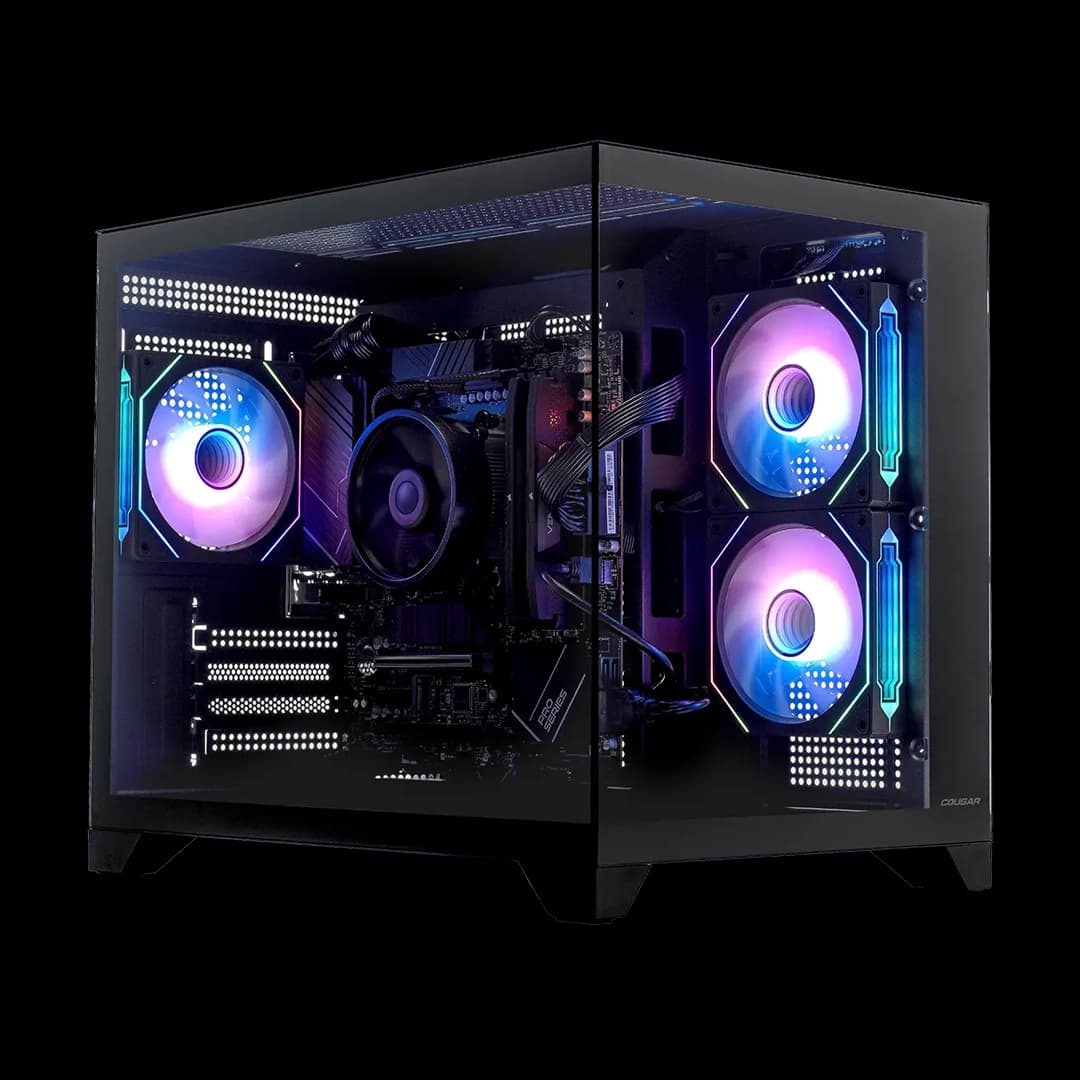
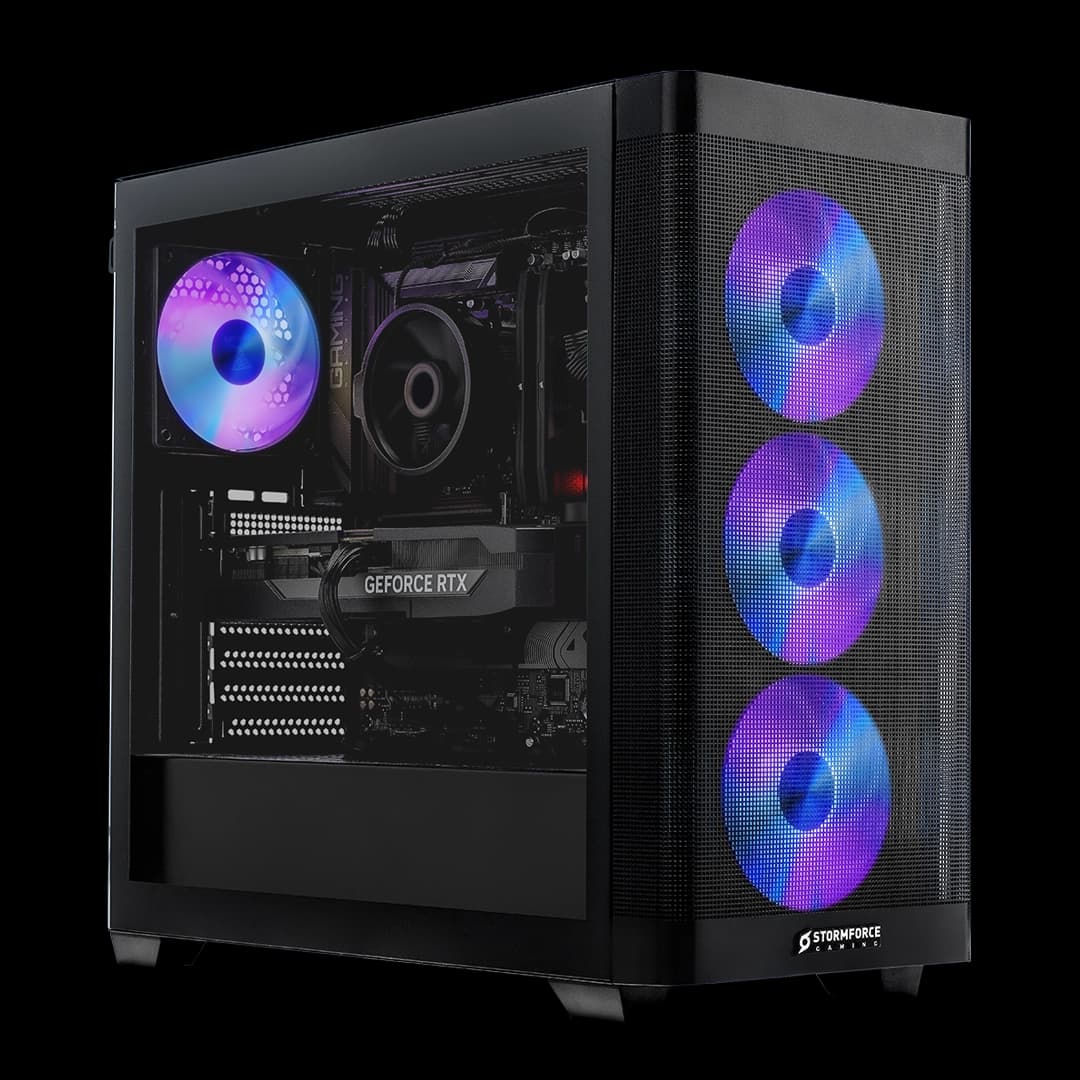
The Cougar MX360 is a recognisable mid-tower case in the budget-to-mid segment, and it's a decent choice for a build like this. Cougar has been making cases for long enough to know what they're doing with airflow design and panel fitment. The MX360 has a mesh front panel design on some variants, which aids airflow compared to solid front panels that restrict intake. The "RGB Shadow" variant shown in the product imagery suggests there's some RGB lighting involved, which will please some buyers and be completely irrelevant to others.
Build quality on Stormforce Gaming's prebuilts is generally competent. They're not a fly-by-night operation assembling machines in a garden shed. They're a UK-based system integrator with a track record, and the builds tend to be put together properly rather than thrown in a box. Cable management in prebuilts at this price range is rarely beautiful, but functional is what matters. Cables that are properly routed and secured won't restrict airflow or come loose over time. Whether the Lumina hits that bar specifically we can't say from the spec sheet alone, but it's a fair expectation from an established builder.
The steel chassis of the MX360 is solid enough for a desktop that's going to sit on a desk or under it and not be moved much. It's not a premium aluminium build, but nobody buying a budget prebuilt expects that. The side panels on the MX360 can include a tempered glass option depending on the variant, which lets you see the internals. Given there's no discrete GPU or elaborate cooling to show off, it's more of a nice-to-have than a selling point. What matters more is that the case gives the components room to breathe and makes upgrading later reasonably straightforward.
Connectivity and Ports
Stormforce Gaming's spec listing for the Lumina doesn't break down the specific port configuration in detail, so we're working from what the A520 platform and the Cougar MX360 case typically offer rather than confirmed specifics. The A520 chipset from AMD supports USB 3.2 Gen 1 on the rear panel, along with a mix of USB 2.0 ports. You'd typically expect HDMI and DisplayPort video outputs from the rear I/O given the integrated graphics, which is important since there's no discrete GPU providing its own outputs. The Ryzen 5 5500GT supports display output through the motherboard's rear video connectors.
The Cougar MX360 case typically provides front-panel USB connectivity, usually a mix of USB 3.0 and USB 2.0 ports, along with a 3.5mm audio jack for headphones and microphone. For a desktop in this category, that's a reasonable front-panel setup. Whether there's a USB-C port on the front panel isn't confirmed in the spec sheet, and we won't invent one. If that's important to you, it's worth checking directly with Stormforce Gaming before purchasing.
Network connectivity on A520 boards typically includes a Gigabit Ethernet port, which is fine for wired connections. Whether the Lumina includes a Wi-Fi card is not specified in the verified data, so we can't confirm wireless connectivity. Again, worth checking with Stormforce Gaming if you're planning to connect wirelessly. A Gigabit wired connection is more than fast enough for gaming, streaming, and general use, and it's the more stable option anyway. If you're in a situation where running a cable isn't practical, a USB Wi-Fi adapter is a cheap solution that doesn't require opening the case.
Pre-installed Software and OS
This is one of the more unusual aspects of the Lumina. It ships with no operating system, which Stormforce Gaming lists explicitly in the spec table. That's not a mistake or an oversight. It's a deliberate choice that keeps the price down and gives buyers flexibility. You're not paying for a Windows licence you didn't want, and you're not stuck with a specific version of Windows that might not suit your needs. But it does mean you need to sort your own OS before you can use the machine.
If you're planning to run Windows, you'll need to purchase a licence separately and create a bootable USB installer using Microsoft's Media Creation Tool. Windows 11 Home is the obvious choice for most buyers, and it's compatible with the Ryzen 5 5500GT. The chip is on Microsoft's supported hardware list for Windows 11, so there are no compatibility headaches there. Alternatively, if you're comfortable with Linux, this machine is a perfectly capable Linux desktop. Ubuntu, Fedora, or Linux Mint would all run well on this hardware, and AMD's Linux driver support for both the CPU and the integrated Radeon graphics has improved considerably over recent years.
The no-OS approach also means there's zero bloatware. No trial antivirus software, no manufacturer utilities you'll never use, no pre-installed apps eating your storage from day one. Whatever you install is exactly what you chose to install. For people who know what they're doing, that's actually a nice starting point. For people who just want to plug in and go, it adds a step that might feel daunting. If you've never installed an OS before, there are plenty of straightforward guides, and it's genuinely not as scary as it sounds. But factor in the cost of a Windows licence when you're comparing the overall price against alternatives that include it.
Upgrade Potential
This is where the lumina ryzen 5500gt no os review gets genuinely interesting, because the upgrade story here is a mixed bag. The AM4 platform is mature and well-supported. If you wanted to drop in a faster CPU at some point, the A520 board limits your options since it doesn't support overclocking and has a more restricted CPU compatibility list than B550 or X570 boards. But you could still swap in a Ryzen 5 5600 or even a Ryzen 7 5700X if the board's BIOS supports it, which would give you a meaningful performance bump without changing anything else.
RAM is the easiest and most impactful upgrade. As mentioned earlier, going from 8GB to 16GB DDR4 is cheap and will make a noticeable difference, particularly for integrated graphics performance. The A520 board almost certainly has two DIMM slots, and if the machine ships with a single 8GB stick (which is common in prebuilts at this tier), you could add another 8GB stick to run in dual-channel mode. Dual-channel memory makes a meaningful difference to integrated graphics performance specifically, because the iGPU benefits significantly from the increased memory bandwidth. If the machine ships with two 4GB sticks in dual-channel already, you'd need to replace both to upgrade, which is slightly less convenient but still straightforward.
The big question for a lot of buyers will be: can I add a discrete GPU later? Technically, yes. The A520 board has a PCIe x16 slot for a graphics card. But the 350W PSU is the real constraint. A budget discrete GPU like the Radeon RX 6600 or GeForce RTX 4060 typically needs 120W to 160W under load, and with the CPU and other components also drawing power, a 350W PSU is cutting it fine. You'd likely want to replace the PSU at the same time as adding a GPU, which adds cost and complexity. It's doable, but it's not quite as simple as just slotting in a graphics card and calling it done. Worth planning for if GPU expansion is on your roadmap.
How It Compares
The honest comparison for the Lumina isn't really against other prebuilts. It's against building something similar yourself. On AM4, the components here (Ryzen 5 5500GT, 8GB DDR4, 1TB NVMe, A520 board, a budget case and PSU) would cost you a similar amount to source individually, and that's before you factor in the time to build it and the peace of mind of having it assembled and tested by someone else. For buyers who aren't confident builders, the convenience premium on a prebuilt like this is actually quite small at this price tier. That's a point in the Lumina's favour.
Against other prebuilts in the same budget category, the 5500GT's integrated graphics is the differentiator. Most budget prebuilts at this price use Intel chips with UHD 730 or UHD 770 integrated graphics, which are noticeably weaker for any kind of gaming or GPU-accelerated workload. The Radeon 660M in the 5500GT is based on RDNA 2, which is a generational step ahead of Intel's current integrated graphics offerings in terms of gaming capability. If you're comparing prebuilts at this price point and gaming is even a minor consideration, the AMD option pulls ahead.
The no-OS decision is a genuine differentiator too. Prebuilts that include Windows in the price are effectively charging you for a licence you might not want or might already have. If you have an old Windows licence from a previous machine, or you're happy on Linux, the Lumina's no-OS approach saves you money. If you need to buy Windows fresh, factor that cost in and the comparison against OS-included rivals gets closer. It's not a deal-breaker either way, just something to be aware of when you're doing the maths.
| Feature | Lumina Ryzen 5500GT | Typical Intel Budget Prebuilt | Self-Build AM4 Equivalent |
|---|---|---|---|
| CPU | AMD Ryzen 5 5500GT (6-core, Zen 3) | Intel Core i3/i5 (4 to 6 core, varies) | AMD Ryzen 5 5500GT or similar |
| Integrated Graphics | Radeon 660M (RDNA 2) | Intel UHD 730/770 | Radeon 660M (RDNA 2) |
| RAM | 8GB DDR4 | 8GB DDR4 | 8GB to 16GB DDR4 (your choice) |
| Storage | 1TB NVMe SSD | 256GB to 512GB SSD (often SATA) | 1TB NVMe (your choice) |
| OS | No OS | Windows 11 Home (typically) | No OS (add separately) |
| PSU | 350W | 300W to 400W (varies) | Your choice (recommend 450W+) |
| Assembly | Pre-assembled | Pre-assembled | DIY |
| iGPU Gaming Capability | Good for light gaming | Limited | Good for light gaming |
Final Verdict
So, is the Stormforce Gaming Lumina Ryzen 5500GT worth buying? The answer is a qualified yes, with a clear picture of who it's actually for. If you need a capable everyday desktop, you're not a serious gamer, and you either have a Windows licence already or you're comfortable going the Linux route, this is a solid option at the budget end of the market. The Ryzen 5 5500GT is genuinely a good chip for the money, the 1TB NVMe SSD is a better storage solution than many rivals offer at this price, and the Cougar MX360 is a respectable case that gives you room to grow.
The caveats are real though. Eight gigabytes of RAM is tight in 2025, and you should budget to upgrade that fairly soon after purchase. The 350W PSU limits your future GPU options without a PSU swap. And the no-OS situation adds cost if you need Windows. None of these are dealbreakers, but they're things to go in with your eyes open about. The A520 motherboard is functional but not the most capable platform for future upgrades, so if you're planning to turn this into a gaming machine down the line, you might be better served by spending a bit more upfront on a machine with a B550 board and a discrete GPU.
For the right buyer, though, this is a genuinely sensible purchase. The lumina ryzen 5500gt no os review conclusion is this: it's a good budget desktop with better-than-average integrated graphics, built on a mature and reliable platform, from a UK system integrator with a track record. The price (check the current figure below) puts it in a competitive spot where the value proposition holds up, particularly if you factor in the 1TB NVMe and the stronger iGPU against similarly priced Intel alternatives. Not perfect, but far from rubbish either. Current pricing is Check price.
What works. What doesn’t.
6 + 6What we liked6 reasons
- AMD Ryzen 5 5500GT delivers strong Zen 3 single-core performance for everyday productivity and multitasking
- Radeon 660M integrated graphics based on RDNA 2 is meaningfully more capable than Intel UHD alternatives found in competing budget prebuilts
- 1TB NVMe SSD is a generous and genuinely fast storage inclusion at this price tier
- No-OS approach avoids an unwanted Windows licence charge and ships the machine free of bloatware
- Cougar MX360 mid-tower chassis offers good airflow headroom and reasonable room for future upgrades
- Mature AM4 platform provides stable driver support and the option to swap in a faster Ryzen CPU later
Where it falls6 reasons
- 8GB of DDR4 is tight in 2025 and will require an upgrade soon, particularly given the integrated GPU shares system memory
- 350W PSU constrains any future discrete GPU addition without a simultaneous PSU replacement
- A520 chipset does not support CPU overclocking and has fewer PCIe lanes and USB ports than B550 or X570 alternatives
- No operating system included adds cost and an extra setup step for buyers who need Windows
- Specific cooler model, exact RAM configuration, and port layout are not confirmed in the spec sheet, leaving some uncertainty
- Not suitable for demanding AAA gaming titles; buyers with gaming as a primary use case should look at a higher-budget machine with a discrete GPU
Full specifications
12 attributes| CPU | AMD Ryzen 5 5500GT |
|---|---|
| GPU | integrated |
| RAM | 8GB DDR4 |
| Storage | 1TB Storage |
| Case | MX360 cASE |
| Launch year | 2024 |
| Motherboard | A520 Motherboard |
| OS | No OS |
| PSU | 350w PSU |
| RAM GB | 8 |
| RAM type | DDR4-3200 |
| Storage GB | 1000 |
If this isn’t right for you
2 options 7.0 / 10
27 Inch All-in-One Computer FHD Desktop PC, Core i7 (Up to 3.0GHz), 16GB RAM, 512GB SSD, Rotatable Screen, Hidden Webcam, Dual-Band WiFi 6 & Bluetooth 5.3, All-in-One PC for Business & Creative Work
£499.98 · SUKOTOP
 6.5 / 10
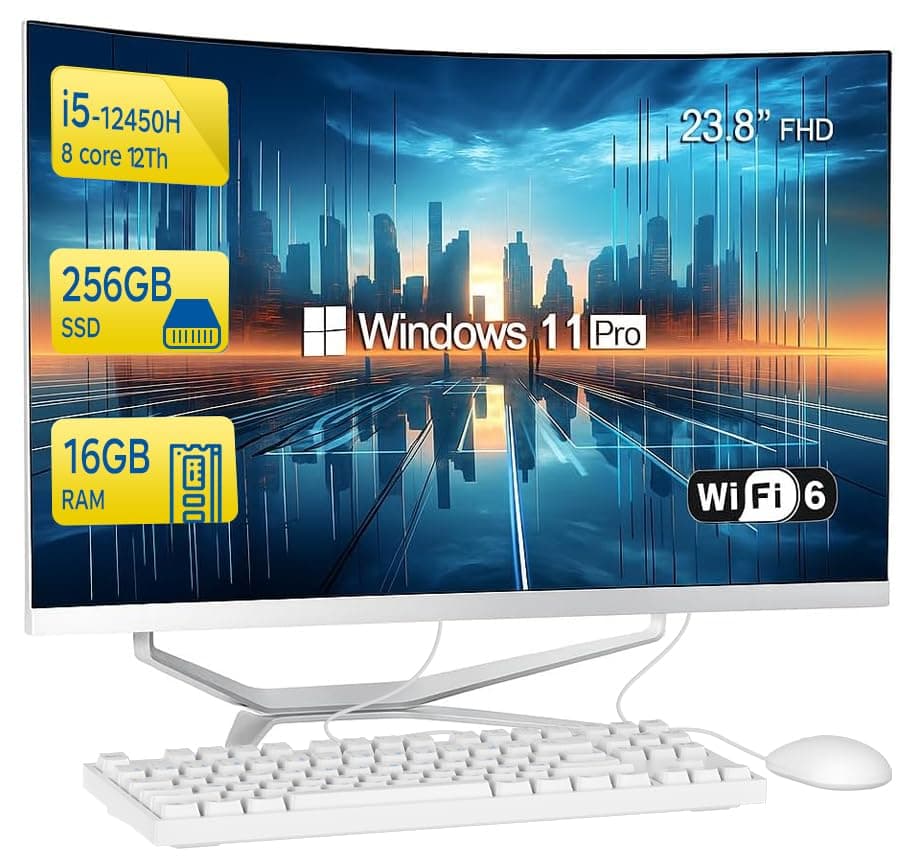
SZTPS 23.8" FHD All in One PC Desktop Computer,i5-12450H 8 core Processor,16 GB RAM,256 GB SSD,WiFi,Bluetooth WiredKeyboard & Mouse,Windows 11 Pro PC (Curved panel)
£398.60 · SZTPS
Frequently asked
7 questions01Does the Stormforce Gaming Lumina Ryzen 5500GT come with Windows installed?+
No. The machine ships with no operating system. You will need to purchase a Windows licence separately and install it yourself using a bootable USB drive, or alternatively install a Linux distribution such as Ubuntu or Linux Mint, which are free of charge and well-supported on this hardware.
02Can the Lumina run games without a discrete graphics card?+
Yes, to a degree. The AMD Ryzen 5 5500GT includes integrated Radeon 660M graphics based on AMD's RDNA 2 architecture. Less demanding titles such as Minecraft, Fortnite at reduced settings, League of Legends, and Counter-Strike 2 at lower quality settings are manageable. Demanding AAA titles at high settings are not realistic on integrated graphics alone.
03Is 8GB of RAM enough for this machine?+
Eight gigabytes of DDR4 is functional for basic everyday use, but it is the bare minimum for 2025. The integrated Radeon 660M shares a portion of that system memory for graphics work, which further reduces the headroom available. Upgrading to 16GB DDR4 is recommended and is the single most cost-effective improvement you can make. It should also be done in a dual-channel configuration where possible for improved integrated GPU performance.
04Can I add a discrete graphics card to the Lumina later?+
The A520 motherboard does include a PCIe x16 slot that can accept a discrete GPU. However, the 350W power supply is a meaningful constraint. Most budget discrete cards such as the Radeon RX 6600 draw between 120W and 160W under load, and with the CPU and other components also drawing power, the 350W PSU leaves very little headroom. You would most likely need to replace the PSU at the same time as adding a GPU, which adds to the overall cost and complexity.
05Why does this machine use an A520 motherboard rather than a B550?+
The A520 chipset is AMD's entry-level option for the AM4 platform. It keeps costs down compared to B550 or X570 boards. For a build that is not overclocking and is intended as a general-purpose desktop, A520 is functional. The trade-offs are that it does not support CPU overclocking, offers fewer USB ports, and has a more limited CPU compatibility list for future upgrades. If you plan to upgrade the CPU or add demanding components over time, a B550-based machine would offer more flexibility.
06How does the Radeon 660M compare to Intel's integrated graphics in competing budget prebuilts?+
The Radeon 660M is based on AMD's RDNA 2 graphics architecture, the same generation used in the PlayStation 5 and Xbox Series X. Intel's UHD 730 and UHD 770 integrated graphics found in many competing budget prebuilts at this price tier are noticeably weaker for gaming and GPU-accelerated workloads. If integrated graphics performance is relevant to your use case, the 5500GT-based Lumina has a clear advantage over Intel-based alternatives in the same budget range.
07What is the Cougar MX360 case like for airflow and future upgrades?+
The Cougar MX360 is a mid-tower chassis with support for multiple case fans and, on some variants, a mesh front panel that aids intake airflow. It is a more capable enclosure than the cramped small-form-factor cases sometimes used in budget prebuilts. It offers reasonable internal space for upgrading components such as adding a graphics card or swapping the cooler, though the final configuration as shipped by Stormforce Gaming is not fully detailed in the available specification listing.