Prebuilt PCs get a bad reputation, and honestly, a lot of them deserve it. Cheap PSUs, throttled thermals, RAM running at half its rated speed because nobody bothered to enable XMP. The convenience premium is real, and sometimes you're paying it for a machine that's been quietly hobbled before it even leaves the warehouse. So when a prebuilt lands at the very top of the market, the question isn't whether you could build it yourself for less. You probably could. The question is whether the spec is honest, the components are decent, and the whole thing holds together under the kind of load that justifies spending this much money in the first place.
The Titan Xtreme AMD from Stormforce is about as high as prebuilt gaming PCs go right now. AMD's Ryzen 9 9950X3D paired with an RTX 5090, 64GB of DDR5 6000, and four terabytes of fast storage. On paper, this is an absolute monster. But paper is easy. What matters is whether Stormforce have actually done justice to these components, or whether they've stuck a flagship CPU and GPU into a box with a middling motherboard and called it a day. Let's find out.
Core Specifications
The headline components here are genuinely impressive. You're getting AMD's Ryzen 9 9950X3D, which is a 16-core, 32-thread chip built on the Zen 5 architecture with AMD's 3D V-Cache stacked on top. That combination is significant, and we'll get into why in the CPU section. The GPU is NVIDIA's RTX 5090 with 32GB of GDDR7 memory. That's the fastest consumer graphics card available at the time of writing, full stop. Stormforce note that board brand and model may vary, which is standard practice for system integrators and if you're particular about a specific AIB partner.
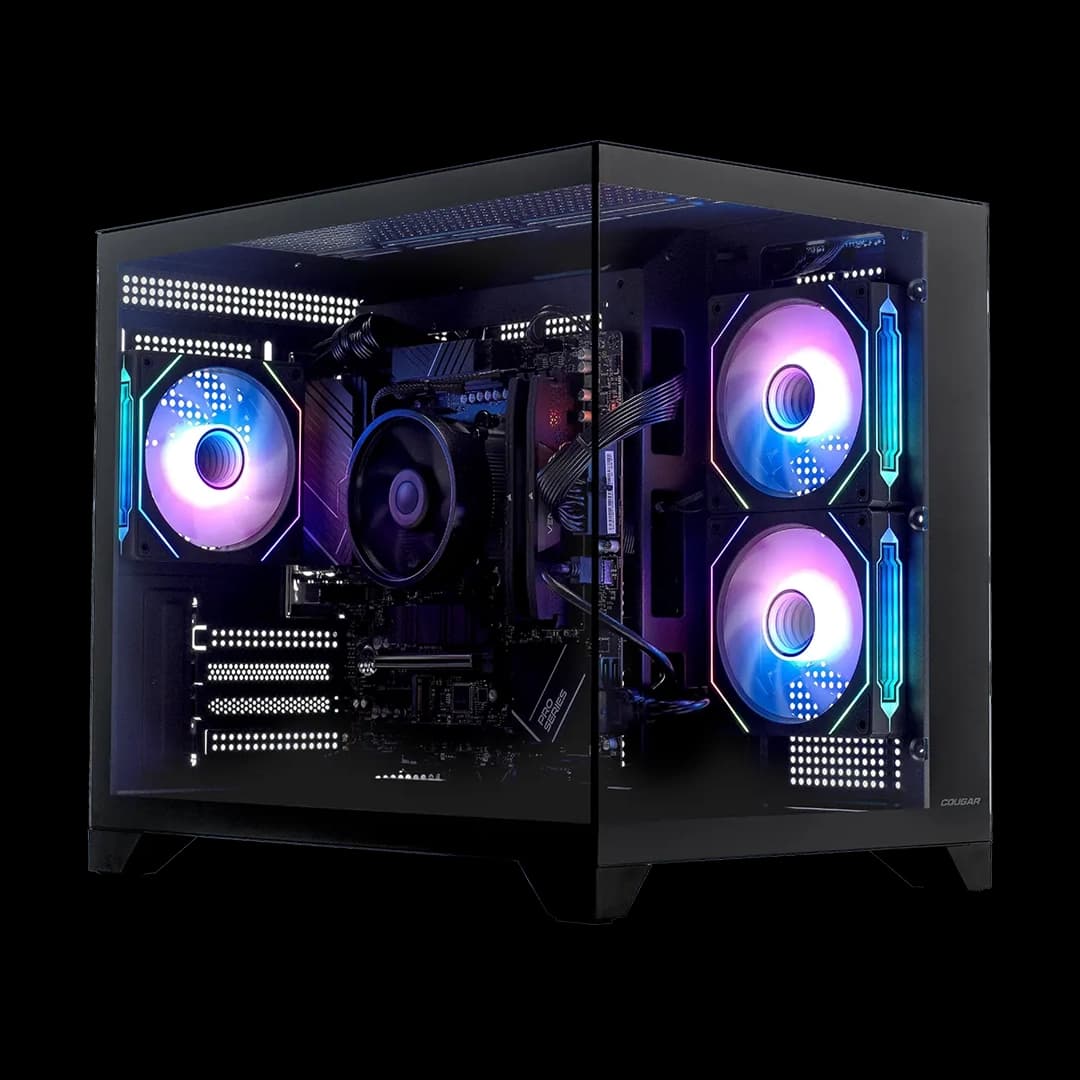
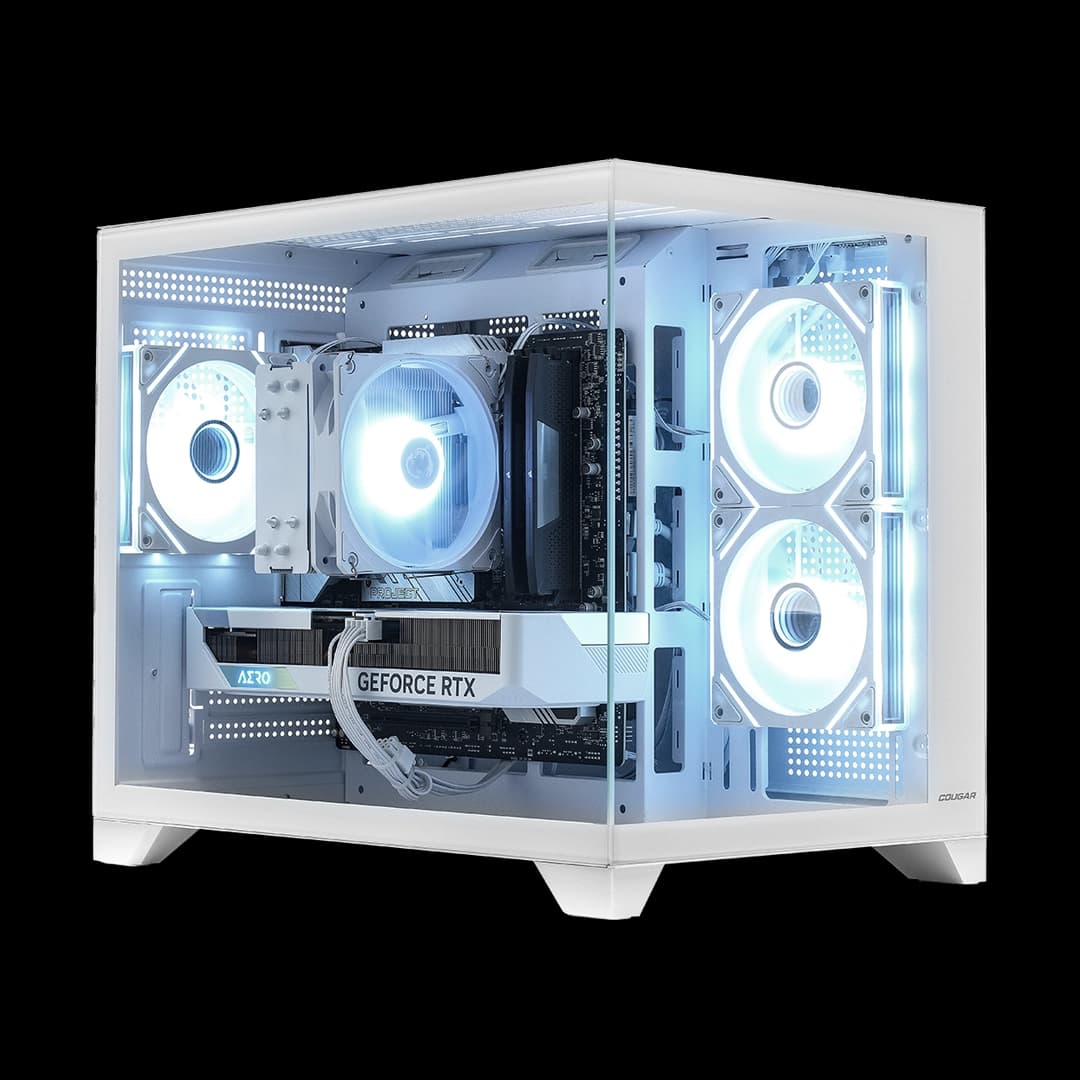
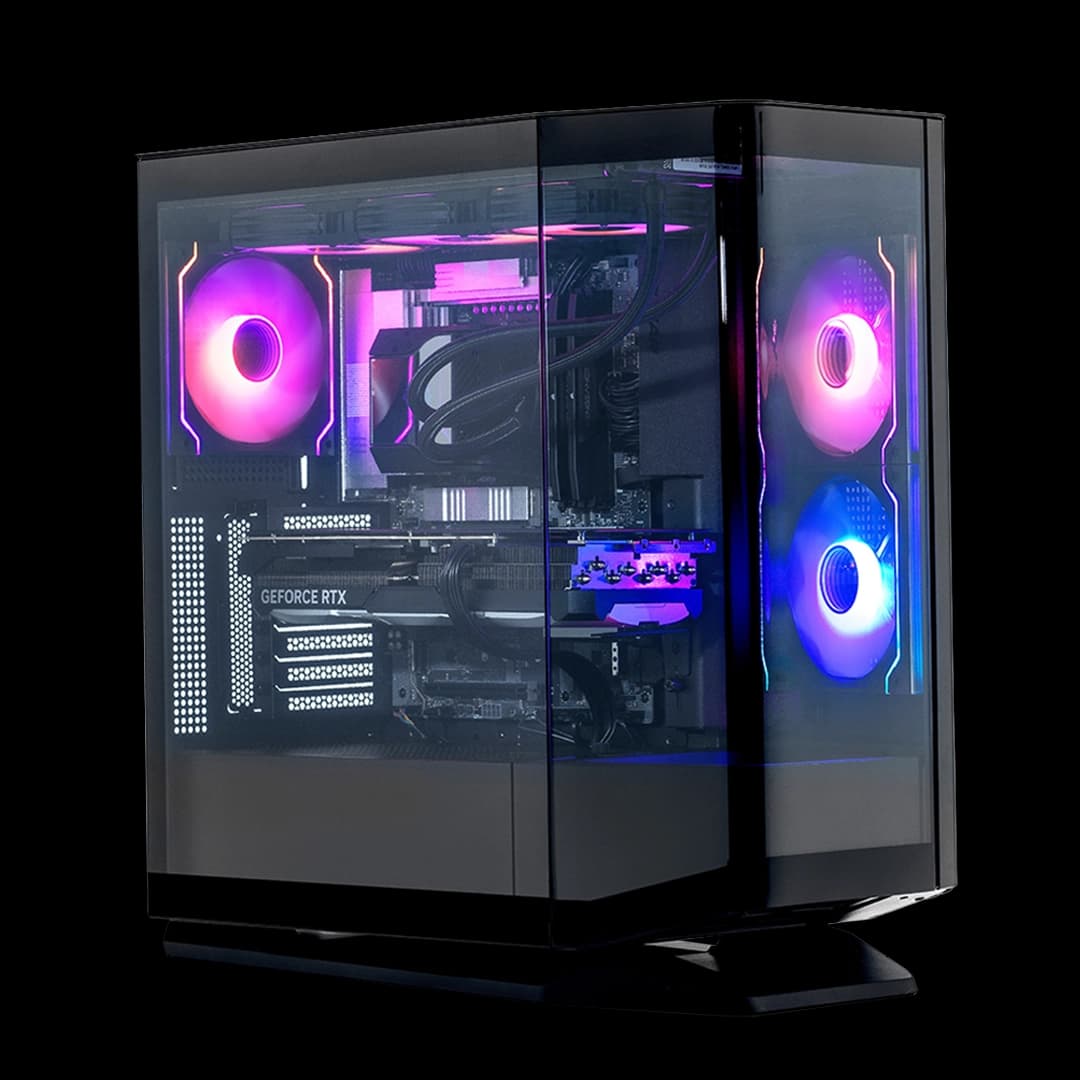
Memory is 64GB of DDR5 running at 6000MHz, which is the sweet spot for AMD's current platform. Storage is genuinely generous: a 2TB PCIe Gen 5 SSD as the primary drive, plus a second 2TB M.2 NVMe SSD for overflow. Four terabytes total, which is enough that you probably won't be juggling installs for a good while. The motherboard is an X870 chipset ATX unit, which is the right choice for a build at this level. Cooling is handled by a 360mm LCD AIO liquid cooler. Power comes from a 1000W 80 Plus Gold fully modular PSU, which is a sensible rating for an RTX 5090 system. And it all lives inside a Cougar FV270 RGB ATX case with panoramic tempered glass.
Windows 11 Home comes preinstalled. That's the standard choice for consumer prebuilts at this price. Some buyers at this tier would prefer Pro for the extra management tools, but Home covers the vast majority of gaming and productivity use cases without issue. The full spec breakdown is below.
| Component | Specification |
|---|---|
| CPU | AMD Ryzen 9 9950X3D (16 cores / 32 threads, Zen 5, 3D V-Cache) |
| GPU | NVIDIA GeForce RTX 5090 32GB GDDR7 |
| RAM | 64GB DDR5 6000 |
| Primary Storage | 2TB PCIe Gen 5 SSD |
| Secondary Storage | 2TB M.2 NVMe SSD |
| Total Storage | 4TB |
| Motherboard | X870 chipset ATX (brand may vary) |
| Cooling | 360mm LCD AIO liquid cooler (brand may vary) |
| PSU | 1000W 80 Plus Gold fully modular (brand may vary) |
| Case | Cougar FV270 RGB ATX with panoramic tempered glass |
| Operating System | Microsoft Windows 11 Home |
| Networking | WiFi 6, Ethernet |
| Price | £8,499.99 |

CPU and Performance
The Ryzen 9 9950X3D is not just a fast chip. It's a genuinely unusual one. AMD's 3D V-Cache technology stacks additional L3 cache directly on top of the processor die, dramatically increasing the amount of data the CPU can hold close to its cores without having to reach out to slower system memory. On the original 5800X3D, that cache boost transformed gaming frame rates. On the 9950X3D, you get that same principle applied to a 16-core Zen 5 chip, which means you're not trading away multi-threaded productivity performance to get better gaming. That's the key thing here. Most gaming-focused cache chips are cut-down designs with fewer cores. This one isn't.
What does that mean practically? For gaming, the 3D V-Cache helps with frame pacing and minimum frame rates particularly in CPU-limited scenarios, which become more relevant as GPUs get faster. If you're running an RTX 5090 and the game is bottlenecked at the CPU, a standard chip leaves performance on the table. The 9950X3D reduces that risk considerably. For content creation, streaming, video editing, or anything that hammers multiple cores simultaneously, the 16-core Zen 5 architecture handles it without breaking a sweat. This is the chip you'd want if you're doing both, not just one or the other.
Zen 5 as an architecture brought meaningful improvements in instructions-per-clock over Zen 4, and the 9950X3D sits at the very top of AMD's current consumer stack. Pairing it with an X870 motherboard is the correct call. X870 supports PCIe 5.0 across the board and AMD's EXPO memory profiles, which means the 64GB DDR5 6000 kit should run at its rated speed out of the box if Stormforce have enabled the profile correctly. That's not guaranteed with every system integrator, but it's something when the machine first boots. Running DDR5 at its default JEDEC speed instead of its rated 6000MHz would leave a noticeable amount of performance on the table, especially on AMD's platform where memory speed has a more direct impact on CPU throughput than it does on Intel.
GPU and Gaming Performance
The RTX 5090 with 32GB of GDDR7 is the fastest consumer GPU NVIDIA has ever shipped. There's no hedging needed there. At 4K with maximum settings, ray tracing enabled, and DLSS 4 doing its thing, this card doesn't really have a ceiling that current game engines can reach. It's the card you buy when you want to know that the GPU is never the limiting factor, regardless of what resolution or settings you're running. If you're on a high refresh rate 4K display, or you're looking at one of the new ultra-wide or super-ultrawide panels, this is the hardware that actually makes sense with that kind of screen.
The 32GB of GDDR7 is separately because it's not just a marketing number. VRAM capacity matters for high-resolution texture packs, for running AI workloads locally, and increasingly for modern open-world games that load large assets. 24GB was the previous top-end consumer standard and already felt generous. 32GB means this card has headroom for whatever the next few years of game development throws at it. GDDR7 as a memory standard also brings higher bandwidth compared to GDDR6X, which helps the GPU move data faster and reduces the latency between the card's compute units and its memory pool.
NVIDIA's DLSS 4 with Multi Frame Generation is relevant here too. On an RTX 5090, the hardware is fully capable of running that feature at its highest quality settings, generating multiple frames between rendered frames to push frame rates far beyond what raw rasterisation alone would produce. For competitive gaming at high refresh rates, or for pushing cinematic games to their absolute visual limit at 4K, that matters. And with the 9950X3D feeding the card, you're not going to hit a CPU wall that undermines what the GPU is capable of. The two components are genuinely well matched.
Memory and Storage
Sixty-four gigabytes of DDR5 running at 6000MHz is a lot of RAM. For pure gaming, 32GB is already more than enough for virtually every title. But this machine isn't really aimed at someone who only games. At 64GB, you can have a game running, a browser with forty tabs open, OBS capturing a stream, Discord, Spotify, and a video editing project sitting in the background, and none of it is going to start competing for memory. For creative professionals who also game, or for anyone who runs virtual machines or does any kind of development work alongside their gaming, 64GB makes the machine feel genuinely spacious rather than managed.
The DDR5 6000 speed rating matters on AMD's platform specifically. AMD's Infinity Fabric, which connects the CPU's internal components, runs most efficiently when memory speed is tuned to match it. 6000MHz with the right timings hits that sweet spot well. The JEDEC DDR5 standard defines base speeds considerably lower than this, so the 6000MHz rating is an overclocked profile that needs to be enabled in the BIOS. As mentioned above, it's worth confirming this is active when the system first boots. If it's running at stock JEDEC speeds, you're leaving real performance behind.
Storage is where this build is genuinely strong without compromise. The primary 2TB PCIe Gen 5 SSD is the fastest storage interface currently available in consumer hardware. Gen 5 SSDs offer sequential read speeds that are roughly double what Gen 4 drives achieve. For game loading, the difference is real but not transformative in most cases. Where Gen 5 starts to matter more is in professional workloads involving large file transfers, video editing with high-bitrate footage, or any scenario where you're moving big chunks of data repeatedly. The second 2TB M.2 NVMe drive running on Gen 4 is a perfectly sensible secondary drive for game installs and general storage. Four terabytes total is enough that most people won't need to think about storage for years.
Cooling Solution
A 360mm AIO liquid cooler is the right call for the 9950X3D. This chip has a fairly high thermal design power, and while 3D V-Cache chips are generally a bit more thermally constrained than their non-cache counterparts (the stacked cache limits how aggressively you can push heat out of the top of the die), a 360mm radiator gives you enough surface area to keep temperatures in a sensible range under sustained load. A 240mm unit would be marginal. A 280mm would be acceptable. Three-sixty is where you stop worrying about it.
The LCD display on the cooler head is a nice touch at this price point. It's not a performance feature, but it's the kind of thing that fits the aesthetic of a premium build, and it gives you a live temperature readout or custom image on the pump head if you want it. Stormforce note that the brand may vary, which is common practice. The major AIO manufacturers at this radiator size, including the well-known names in liquid cooling, all produce competent 360mm units. What matters is that the radiator is genuinely 360mm and that it's mounted with adequate airflow through the case.
The Cougar FV270 case factors into thermal performance too. Panoramic tempered glass panels look great but they're not the most airflow-friendly design choice, since glass doesn't breathe the way mesh does. The FV270's design needs to be assessed on whether Stormforce have configured the fan setup to compensate. A positive pressure setup with intake fans pushing air through the radiator and exhausting through the rear and top will keep things moving. If the fan curve is set conservatively from the factory (which some prebuilts do to keep noise down in idle), it's the thermal performance under load and adjusting the curve in the BIOS or through the cooler's software if needed. That's a five-minute job, not a rebuild.
Case and Build Quality
The Cougar FV270 RGB is a proper mid-tower ATX case with panoramic tempered glass, which means you're getting visibility into the build from multiple angles. For a machine with an LCD AIO, an RTX 5090 (which will likely have its own RGB or illuminated shroud depending on the AIB variant), and presumably some RGB on the RAM, the case is designed to show the build off. That's fine. It's what people buying a machine at this price point generally want. The question is whether the case is actually well-built beyond the aesthetics.
Cougar is a Taiwanese brand with a reasonable track record in the mid-range to enthusiast case market. The FV270 is a relatively recent design and sits in their upper-mid tier. Build quality on Cougar cases at this level is generally solid: decent steel thickness, properly finished edges, and cable management routing that doesn't require you to fight the chassis to get tidy results. For a prebuilt, cable management quality varies by whoever assembled it on the day, but a case with good routing options at least gives the builder the tools to do it properly.
ATX form factor means full-size motherboard support, which is important for upgrade potential down the line. You're not boxed into a micro-ATX or mini-ITX chassis that limits what you can add later. The panoramic glass does mean you'll see dust accumulation over time, so keeping on top of cleaning the filters (assuming the case has them, which most modern designs do) is more important than it would be with a solid panel. That's a minor point, but it's the kind of thing that affects how the machine looks after a year of use.

Connectivity and Ports
Networking on the Titan Xtreme AMD is WiFi 6 and Ethernet, per the Stormforce spec table. WiFi 6, standardised by the Wi-Fi Alliance, delivers theoretical throughput up to 9.6Gbps across the full standard, though real-world speeds depend heavily on your router and network conditions. For a desktop gaming PC, wired Ethernet is almost always the better choice for latency and stability, and the Ethernet port is there for exactly that. What's is that this machine does not include Bluetooth, per the spec sheet. That's confirmed in the verified data. If you're planning to use Bluetooth peripherals, a wireless headset, or anything else that relies on Bluetooth, you'll need to factor in a USB Bluetooth adapter.
The X870 chipset motherboard will carry the standard rear I/O you'd expect from a high-end AMD platform, including USB Type-A and Type-C ports, audio jacks, and the Ethernet port. Stormforce haven't published a detailed port count breakdown in the verified spec data, so specific USB port counts and video output configurations aren't something we can confirm precisely here. What the X870 platform supports in general terms is extensive: multiple USB 4 and USB 3.2 Gen 2 ports on the rear, plus whatever the case provides on the front panel. For a machine at this price, you'd expect a well-specced rear I/O from any competent X870 board.
The RTX 5090 will handle video output. NVIDIA's current-generation cards support HDMI 2.1 and DisplayPort 2.1, which covers 4K at high refresh rates and 8K output where monitors support it. Again, the exact configuration depends on the specific AIB card Stormforce use in any given build, but current RTX 50-series cards universally support both standards. If you're running multiple monitors at 4K, or a single high-refresh-rate 4K display, the GPU's output options will cover it.
Pre-installed Software and OS
Windows 11 Home comes preinstalled, which is the standard choice across consumer prebuilts and covers everything most users need. The difference between Home and Pro comes down to features like BitLocker encryption, Remote Desktop hosting, Hyper-V virtualisation, and domain join capabilities. If you need any of those, a Pro licence upgrade is straightforward and available directly through Microsoft. For gaming and general use, Home is perfectly fine and there's no performance difference between the two editions.
Stormforce don't appear to load their machines with heavy third-party bloatware in the way that some of the larger OEM brands do. That's a meaningful point. A fresh Windows install that isn't cluttered with trial software and manufacturer utilities that run at startup makes a real difference to the out-of-box experience. You'll still get the standard Windows 11 first-run setup and whatever Microsoft includes by default, but that's a different beast from the kind of preinstalled software some system builders add. It's worth running through the installed apps list on first boot regardless, just to confirm nothing unexpected is sitting there consuming resources.
AMD's software ecosystem is relevant here too. The Ryzen 9 9950X3D will be managed through AMD's chipset drivers and Ryzen Master if you want to tweak anything. NVIDIA's drivers for the RTX 5090 will need to be kept current for optimal performance, particularly as new games release and DLSS updates roll out. Both are standard practice and not specific to this prebuilt, but The software side of a build like this requires a bit of attention to stay current. Neither AMD nor NVIDIA makes that difficult, but it's not entirely set-and-forget either.
Upgrade Potential
The X870 ATX motherboard is one of the better foundations a prebuilt can ship with from an upgrade perspective. X870 supports the full AM5 socket, which AMD has committed to through at least 2027, meaning future CPU upgrades within that window are a realistic possibility without a motherboard swap. The platform also supports PCIe 5.0 across multiple slots, so if a faster GPU or a new Gen 5 storage device comes along, the board can handle it. That kind of forward compatibility is genuinely valuable in a machine you're expecting to use for several years.
RAM upgrades are straightforward in principle. The system ships with 64GB, which is already a generous amount, but DDR5 DIMMs are standard and the X870 platform supports higher capacities. Whether there are free slots depends on how Stormforce have configured the kit: 64GB could be two sticks of 32GB (leaving two slots free on a four-slot board) or four sticks of 16GB (filling all slots). That distinction matters if you ever want to expand beyond 64GB. It's the motherboard configuration on arrival. Storage expansion is similarly dependent on how many M.2 slots the specific board has populated versus available.
The 1000W 80 Plus Gold PSU is fully modular, which is a genuinely useful feature for cable management and future upgrades. At 1000W, it's appropriately rated for the current RTX 5090 build with headroom. Whether it has headroom for a hypothetical next-generation GPU depends on what that GPU demands, but 1000W is a sensible ceiling for now. The fully modular design means if you ever need to swap the PSU, you're not wrestling with a bundle of fixed cables. And the case being a full ATX chassis means there's physical room to work with. This isn't a machine that's going to fight you when you open it up.
How It Compares
Comparing the Titan Xtreme AMD to the competition at this tier is a bit of a strange exercise, because very few prebuilt system integrators are shipping RTX 5090 and Ryzen 9 9950X3D combinations. The realistic comparison is between this machine and building the equivalent yourself, or between this and a similarly specced Intel-based prebuilt from another UK system integrator.
A self-build at equivalent spec would require sourcing the 9950X3D, an RTX 5090, a quality X870 board, 64GB DDR5 6000, the two SSDs, a 360mm AIO, a 1000W Gold PSU, and a case. At current component prices, that's a substantial bill before you've accounted for your time, any assembly mistakes, and the lack of a warranty covering the complete system. Prebuilt system integrators buy components at volume and often have access to pricing that individual buyers don't. The convenience premium on a machine like this is real, but it's not as large as it would be on a mid-range build where margins are tighter. At the flagship end of the market, the gap between DIY and prebuilt tends to narrow.
Against Intel-based alternatives at this price tier, the 9950X3D's 3D V-Cache gives it a specific advantage in gaming workloads where cache size is the limiting factor. Intel's top-end chips are competitive in multi-threaded productivity but don't have an equivalent cache-stacking technology at the same core count. For a pure gaming machine, the AMD chip is the stronger choice right now. For workloads that heavily favour Intel's architecture, the calculation shifts, but this machine is clearly positioned as a gaming-first build.
| Feature | Titan Xtreme AMD | Equivalent DIY Build | Intel-Based Prebuilt (Similar Tier) |
|---|---|---|---|
| CPU | Ryzen 9 9950X3D (Zen 5, 3D V-Cache) | Your choice (same chip available) | Typically Intel Core Ultra 9 or i9-14900K class |
| GPU | RTX 5090 32GB GDDR7 | Same GPU, sourced separately | RTX 5090 or RTX 5080 depending on config |
| RAM | 64GB DDR5 6000 | Equivalent available | Varies, often 32GB at this tier |
| Storage | 4TB total (Gen 5 + NVMe) | Configurable | Typically 2TB to 4TB depending on builder |
| Warranty | Stormforce system warranty | Component-level only | Varies by integrator |
| 3D V-Cache | Yes | Yes (if you choose the same chip) | No Intel equivalent at this core count |
| Bluetooth | Not specified (WiFi 6 confirmed, no Bluetooth per spec) | Configurable | Typically included |

Final Verdict
The Titan Xtreme AMD is a properly specced machine. There's no obvious corner-cutting in the headline components: the 9950X3D is the right CPU for a gaming-focused flagship, the RTX 5090 is the fastest consumer GPU available, the storage configuration is generous and fast, and the 360mm AIO and 1000W Gold PSU are appropriate for the thermal and power demands of what's inside. Stormforce have put together a coherent build rather than a spec-sheet exercise with a compromised foundation.
The things worth watching: confirm the DDR5 6000 EXPO profile is enabled on first boot, check the fan curve under sustained load if the machine feels warm, and note that Bluetooth isn't included per the verified spec. That last point is a genuine gap if you rely on Bluetooth peripherals, and it's unusual for a machine at this price. A USB Bluetooth adapter sorts it for a few pounds, but you shouldn't have to think about that on a flagship prebuilt. The Cougar FV270 case is a reasonable choice aesthetically but glass-heavy designs need good fan configuration to compensate for reduced natural airflow, so it's worth verifying Stormforce have set that up properly.
Who is this for? Seriously, it's for someone who wants the fastest gaming PC money can buy right now without spending weeks sourcing parts, doing research, and building it themselves. Content creators who game heavily, streamers who need CPU headroom for encoding while the GPU renders a game at 4K, or anyone who simply wants to spend money once and not think about hardware limitations for the next three to four years. The price, which you can check live below, is premium territory. That's not a surprise given what's inside.
Who should skip it? If your gaming is primarily at 1440p on a 165Hz monitor, an RTX 5080-based build at a significantly lower price point would serve you just as well for gaming, and you'd have money left over. The 9950X3D and RTX 5090 combination is specifically justified by 4K high-refresh-rate gaming, dual-purpose gaming and creative workloads, or future-proofing over a longer replacement cycle. If that's not your situation, a step down in spec is the smarter financial decision and there's no shame in it.
As a prebuilt, the Titan Xtreme AMD does what a good system integrator build should: it takes components that would take most people significant time and effort to source and assemble correctly, wraps them in a warranty, and ships them ready to use. The spec is honest, the component choices are defensible, and the platform has genuine upgrade headroom. For the buyer it's aimed at, it's a strong option.
What works. What doesn’t.
7 + 6What we liked7 reasons
- AMD Ryzen 9 9950X3D delivers both 3D V-Cache gaming advantages and strong 16-core multi-threaded productivity in a single chip
- RTX 5090 with 32GB GDDR7 is the fastest consumer GPU available, with genuine headroom for 4K high-refresh-rate gaming and AI workloads
- 4TB total storage combining a PCIe Gen 5 primary drive with a secondary NVMe SSD is genuinely generous and fast
- 64GB of DDR5 6000 is well-suited to AMD's platform and leaves ample headroom for creative and productivity workloads alongside gaming
- X870 ATX motherboard supports PCIe 5.0 and AMD's AM5 socket commitment through at least 2027, providing real upgrade potential
- 1000W 80 Plus Gold fully modular PSU is appropriately rated with headroom and simplifies future cable management and upgrades
- 360mm LCD AIO cooler is the correct thermal solution for the 9950X3D under sustained load
Where it falls6 reasons
- Bluetooth is not included per the verified spec sheet, which is an unusual omission for a flagship prebuilt at this price
- The Cougar FV270's glass-heavy panoramic design prioritises aesthetics over airflow, requiring careful fan configuration to maintain safe thermals
- DDR5 EXPO profile at 6000MHz must be confirmed as active on first boot as some system integrators ship without enabling it
- Motherboard, AIO cooler, and PSU brands may vary, offering no certainty over the specific component quality from each supplier
- Windows 11 Home rather than Pro may disappoint buyers who need BitLocker, Remote Desktop, or Hyper-V out of the box
- Buyers with 1440p setups or lighter workloads will find significantly better value stepping down to an RTX 5080-based configuration
Full specifications
11 attributes| CPU | AMD Ryzen 9 9950X3D (16 cores / 32 threads, Zen 5, 3D V-Cache) |
|---|---|
| GPU | NVIDIA GeForce RTX 5090 32GB GDDR7 |
| RAM | 64GB DDR5 6000 |
| Storage | 2TB PCIe Gen 5 SSD + 2TB M.2 NVMe SSD (4TB total) |
| Connectivity | WiFi 6 (no Bluetooth), Ethernet |
| Cooling | 360mm LCD AIO liquid cooler |
| Motherboard | X870 chipset, ATX |
| OS | Microsoft Windows 11 Home |
| PC case | Cougar FV270 RGB ATX, tempered glass |
| PSU | 1000W 80 Plus Gold, fully modular |
| Warranty | 3 year collect, repair and return (parts and labour), per Stormforce |
Frequently asked
7 questions01Does the Stormforce Titan Xtreme AMD include Bluetooth?+
No. According to the verified specification data from Stormforce, the Titan Xtreme AMD includes WiFi 6 and Ethernet but does not include Bluetooth. If you use Bluetooth peripherals such as a wireless headset or controller, you will need to add a USB Bluetooth adapter, which is available for a few pounds.
02Is the DDR5 running at its full 6000MHz speed out of the box?+
The RAM is rated at DDR5 6000, but that speed requires AMD's EXPO profile to be enabled in the BIOS. This is not guaranteed to be active by default on every system integrator build. It is the memory speed in Windows or in the BIOS on first boot. If it is running at the lower JEDEC default speed, enabling EXPO takes only a few minutes and recovers a noticeable amount of performance on AMD's platform.
03Why is the Ryzen 9 9950X3D a better choice than a standard high-core-count CPU for this type of build?+
The 9950X3D combines AMD's 3D V-Cache technology with a 16-core Zen 5 design. The additional L3 cache stacked on the die improves gaming frame rates and frame pacing in CPU-limited scenarios, which become more relevant as GPU performance increases. Unlike some cache-focused chips that use fewer cores, the 9950X3D retains full multi-threaded capability, making it strong for both gaming and demanding creative workloads such as video editing and streaming simultaneously.
04Will the 1000W PSU be sufficient if NVIDIA releases a more power-hungry GPU in the future?+
At 1000W with an 80 Plus Gold rating, the PSU is appropriately sized for the current RTX 5090 build with reasonable headroom above peak demand. Whether it would be sufficient for a future GPU depends on what that card requires. A 1000W Gold unit is a sensible ceiling for now, and the fully modular design makes swapping it out straightforward if a future upgrade demands more headroom.
05Can the RAM or storage be upgraded later?+
Yes, in principle. The X870 ATX motherboard supports standard DDR5 DIMMs and higher capacities than the 64GB shipped. However, whether there are free memory slots depends on the kit configuration: 64GB could be two sticks of 32GB leaving two slots open, or four sticks of 16GB filling all slots. It is the installed configuration on arrival. Storage expansion similarly depends on how many M.2 slots the specific board has available beyond the two already populated.
06Is the Cougar FV270 case good for thermal performance?+
The Cougar FV270 uses panoramic tempered glass panels, which look impressive but restrict natural airflow compared to mesh-fronted designs. Thermal performance depends heavily on how Stormforce have configured the fan setup. A positive pressure arrangement with intake fans pushing air through the 360mm radiator and exhausting through the rear and top is the correct approach. If the machine runs warmer than expected under sustained load, checking and adjusting the fan curve in the BIOS or cooler software is a straightforward fix.
07What is the advantage of a PCIe Gen 5 SSD over a standard Gen 4 drive?+
PCIe Gen 5 SSDs offer sequential read speeds roughly double those of Gen 4 drives. For most gaming workloads the practical difference in load times is modest, since game engines rarely saturate even Gen 4 speeds. The Gen 5 drive becomes more meaningful for professional workloads involving large file transfers, high-bitrate video editing, or repeated movement of very large data sets. The secondary 2TB NVMe drive running on Gen 4 is a perfectly capable complement for game installs and general storage.