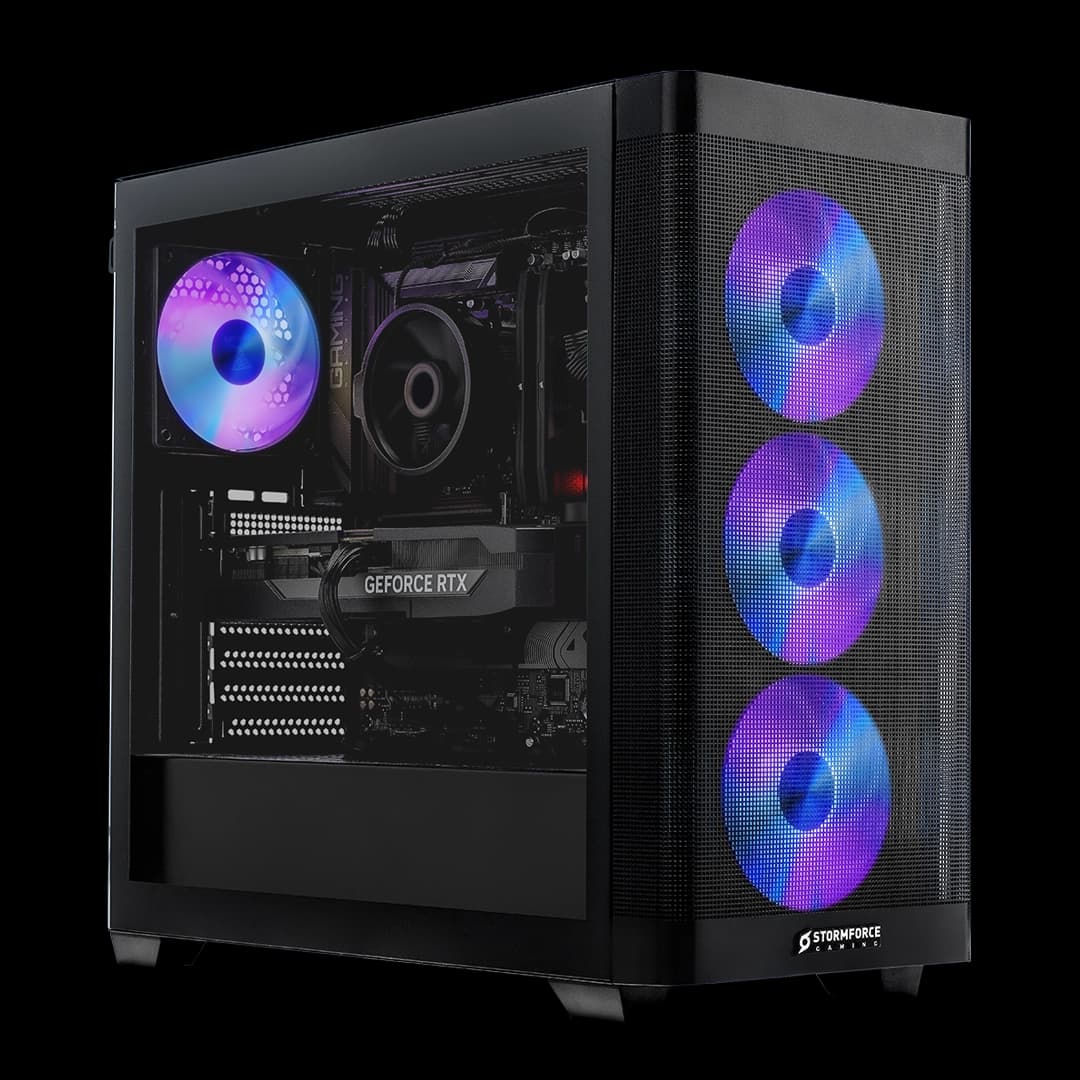
Buying a prebuilt gaming PC is basically an act of trust. You're handing over your money and hoping the manufacturer didn't cheap out on the PSU, stuff the case with a single sad 80mm fan, and slap a "gaming" sticker on otherwise mediocre components. Most of the time, that anxiety is justified. But occasionally a prebuilt lands with a spec sheet that actually makes sense, and the Stormforce Gaming Recon Pro AMD is one of those occasions. Ryzen 7 5700X, RTX 5060, a Gen 4 NVMe, and WiFi 6 all in one box. Is it perfect? No. Is it a solid starting point for someone who wants to game without spending a weekend watching YouTube cable management tutorials? Actually, yes.
This Recon Pro AMD review covers what matters: whether the components are worth the mid-range asking price, where Stormforce cut corners (because they always cut somewhere), and whether you'd genuinely be better off pricing up the parts yourself. Spoiler: at this tier, the DIY maths gets tighter than people expect, especially once you factor in Windows 11 Home, a case, and the hours of your life you'll never get back chasing a bent CPU pin. Let's get into the spec sheet.
Core Specifications
On paper, this machine is doing a lot of the right things for a mid-range gaming PC. The AMD Ryzen 7 5700X is a proper eight-core, 16-thread processor built on AMD's Zen 3 architecture, clocking in at 3.4GHz base with a 4.6GHz boost and 32MB of L3 cache. That's not a budget chip dressed up in gaming clothing. It's a chip that genuinely handles both gaming and background workloads without breaking a sweat. Pair that with the NVIDIA RTX 5060 carrying 8GB of VRAM and you've got a combination that's built for 1080p and 1440p gaming without compromise.
The storage situation is good. A 1TB Gen 4 M.2 NVMe SSD is the kind of drive that makes a real difference to daily use, not just boot times but game loading, file transfers, everything. Gen 4 is meaningfully faster than the Gen 3 SSDs that cheaper prebuilts often sneak in, so this is a genuine spec highlight rather than marketing padding. The 16GB of DDR4 running at 3200MHz is fine for gaming right now, though it's the platform's limits (more on that in the memory section). Windows 11 Home comes pre-installed, so you're up and running from the moment you plug it in.
The motherboard is an A520 mATX board, which is the budget end of AMD's AM4 platform. It does the job, supports M.2 storage, SATA devices, and USB connectivity, but it's not a board you'd pick if you were building from scratch with ambitions of heavy overclocking. The 500W Bronze-rated PSU is another area where Stormforce has kept costs down. It's adequate for this hardware combination, but it's not the kind of PSU that leaves you loads of headroom if you start thinking about GPU upgrades down the line. That said, it's not the 400W no-name disaster you sometimes find in budget prebuilts either.
| Specification | Detail |
|---|---|
| CPU | AMD Ryzen 7 5700X (8-core, 16-thread, 3.4GHz base, 4.6GHz boost, 32MB L3) |
| GPU | NVIDIA RTX 5060 8GB |
| RAM | 16GB DDR4 3200MHz |
| Storage | 1TB Gen 4 M.2 NVMe SSD |
| Motherboard | A520 mATX |
| PSU | 500W Bronze |
| Case | Vortex Athena M3 ATX (tempered glass side panel) |
| Cooling | Compact aluminium heatsink with integrated fan |
| Networking | WiFi 6, Ethernet |
| Operating System | Microsoft Windows 11 Home |
| Price | £1,149.99 (Price checked 03:40, 3 Oct 2026, UK time) |
CPU & Performance
The Ryzen 7 5700X is a chip that deserves more credit than it usually gets. AMD's Zen 3 architecture brought a significant IPC (instructions per clock) improvement over Zen 2, and the 5700X sits in a sweet spot: eight cores and 16 threads means it handles gaming comfortably while also being genuinely useful for productivity tasks like video editing, streaming, or running a bunch of browser tabs alongside your game. The 4.6GHz boost clock is competitive, and the 32MB L3 cache helps with gaming workloads that are sensitive to memory latency.
Where the 5700X shows its age slightly is in its DDR4 dependency. The AM4 platform maxes out at DDR4, and while DDR4 3200 is a perfectly reasonable gaming spec, newer platforms running DDR5 do offer some advantages in memory bandwidth-heavy workloads. For pure gaming at 1080p and 1440p though, the practical difference is minimal. Most games simply don't hit the ceiling DDR4 3200 imposes, and the Ryzen 7 5700X paired with an RTX 5060 is not a bottlenecked combination in any scenario you'd reasonably throw at it.
It's also worth thinking about what this processor means for longevity. The AM4 socket has been around since 2017 and AMD supported it for years, but it's now a mature platform rather than a growing one. You won't be dropping a next-generation AMD chip into this board because AM5 is where AMD's future lies. What you will get is a processor that remains genuinely capable for gaming for the next three to four years without feeling like it's holding the GPU back. And for a mid-range prebuilt, that's the right question to be asking: not "is this cutting edge?" but "will I still be happy with it in 2028?" The answer here is probably yes, as long as you're not chasing 4K ultra settings.
GPU & Gaming Performance
The RTX 5060 is the headline component here and it's a genuinely interesting card for this price tier. NVIDIA's RTX 5000 series brings the latest generation of ray tracing hardware and DLSS technology, and 8GB of VRAM is the standard allocation at this tier. For 1080p gaming, the RTX 5060 is comfortably in the "high settings, high frame rates" territory across essentially everything currently available. Titles like Cyberpunk 2077, Alan Wake 2, and Hogwarts Legacy all run well at 1080p on this card, and DLSS helps recover performance in the most demanding scenes without visually obvious quality loss.
At 1440p, the picture is still positive but more nuanced. The RTX 5060 handles 1440p gaming well in most titles, though you might find yourself nudging settings down from ultra to high in the most demanding games to maintain smooth frame rates. NVIDIA's DLSS technology is particularly useful here: DLSS 4 with Multi Frame Generation can significantly boost perceived frame rates in supported titles, which makes the 1440p experience feel better than the raw rasterisation numbers alone would suggest. Ray tracing is supported and genuinely usable at 1080p with DLSS doing the heavy lifting, though at 1440p with ray tracing fully enabled you'll want to lean on DLSS performance mode.
4K is not really this card's territory, and that's fine. The Recon Pro AMD is not positioning itself as a 4K machine and the spec sheet doesn't pretend otherwise. If you own a 4K monitor and want to drive it properly, you'd want to be looking at an RTX 5070 or above. But for the vast majority of gaming monitors in UK living rooms right now, which are 1080p or 1440p panels, the RTX 5060 8GB is a solid and future-aware choice. The 8GB VRAM figure is the minimum you'd want to see in 2026, and it passes that bar.
Memory & Storage
Sixteen gigabytes of DDR4 at 3200MHz is the gaming standard right now. It's not exciting, but it's not a problem either. Most games in 2026 are hitting their stride at 16GB system RAM, and the 3200MHz speed is a decent match for the Ryzen 7 5700X, which responds reasonably well to faster memory but doesn't demand it the way some chips do. If you're running a game, Discord, Chrome with twelve tabs, and Spotify simultaneously (and you are, we all are), 16GB is enough to keep everything moving without constant page file thrashing.
The bigger question is whether there's room to expand. The A520 mATX motherboard will have RAM slots, and DDR4 is still widely available and relatively affordable, so upgrading to 32GB later is a realistic option. That said, Stormforce Gaming's spec sheet doesn't detail the exact slot configuration, so check it before you buy if RAM upgradability is a priority for you. The platform supports dual-channel memory, and if the system ships with two 8GB sticks in dual-channel configuration rather than a single 16GB stick, you're already getting the better memory bandwidth setup for gaming.
The 1TB Gen 4 M.2 NVMe SSD is a genuine highlight. Gen 4 drives offer substantially higher sequential read and write speeds compared to Gen 3, and while the day-to-day difference in loading a game isn't always dramatic, it matters for large file operations and for the general snappiness of the system. PCIe Gen 4 is the current mainstream standard and it's good to see it here rather than a cheaper Gen 3 drive being passed off as equivalent. One terabyte is enough for a solid library of games, though heavy users with large game collections will find themselves making decisions about what stays installed. The A520 board supports SATA devices too, so adding a secondary storage drive later is straightforward.
Cooling Solution
This is where you have to be honest about what a mid-range prebuilt delivers. The Recon Pro AMD ships with what Stormforce Gaming describes as an optimised air cooling solution: a compact aluminium heatsink with an integrated fan. That's a stock-style cooler, essentially. It's not a tower cooler, it's not a 240mm AIO liquid cooler, it's the kind of cooler that keeps a processor alive and within spec under normal gaming loads without being particularly impressive about it.
For the Ryzen 7 5700X, this is adequate rather than ideal. The 5700X has a 65W TDP (thermal design power), which is on the lower end for an eight-core chip and means it doesn't demand an aggressive cooling solution to stay within its boost clocks. AMD's own stock cooler for similar-TDP chips manages fine in most scenarios, and a compact aluminium heatsink with a fan should keep the 5700X ticking along at its rated boost speeds during gaming sessions. Under sustained heavy workloads like video rendering or prolonged CPU-heavy productivity tasks, you might see the chip pulling back slightly to manage thermals, but for gaming specifically this is unlikely to be a problem.
The Vortex Athena M3 case is described as having optimised airflow, which is encouraging. A case with sensible airflow design can compensate significantly for a modest CPU cooler by keeping the ambient temperature inside the chassis lower. If you find the system running warm after extended sessions, the case design does at least suggest that adding a case fan or two later would be straightforward. And if you ever decide to drop in a beefier aftermarket cooler for the 5700X, the AM4 mounting standard is well supported by third-party cooler manufacturers, so you're not locked into whatever ships in the box.
Case & Build Quality
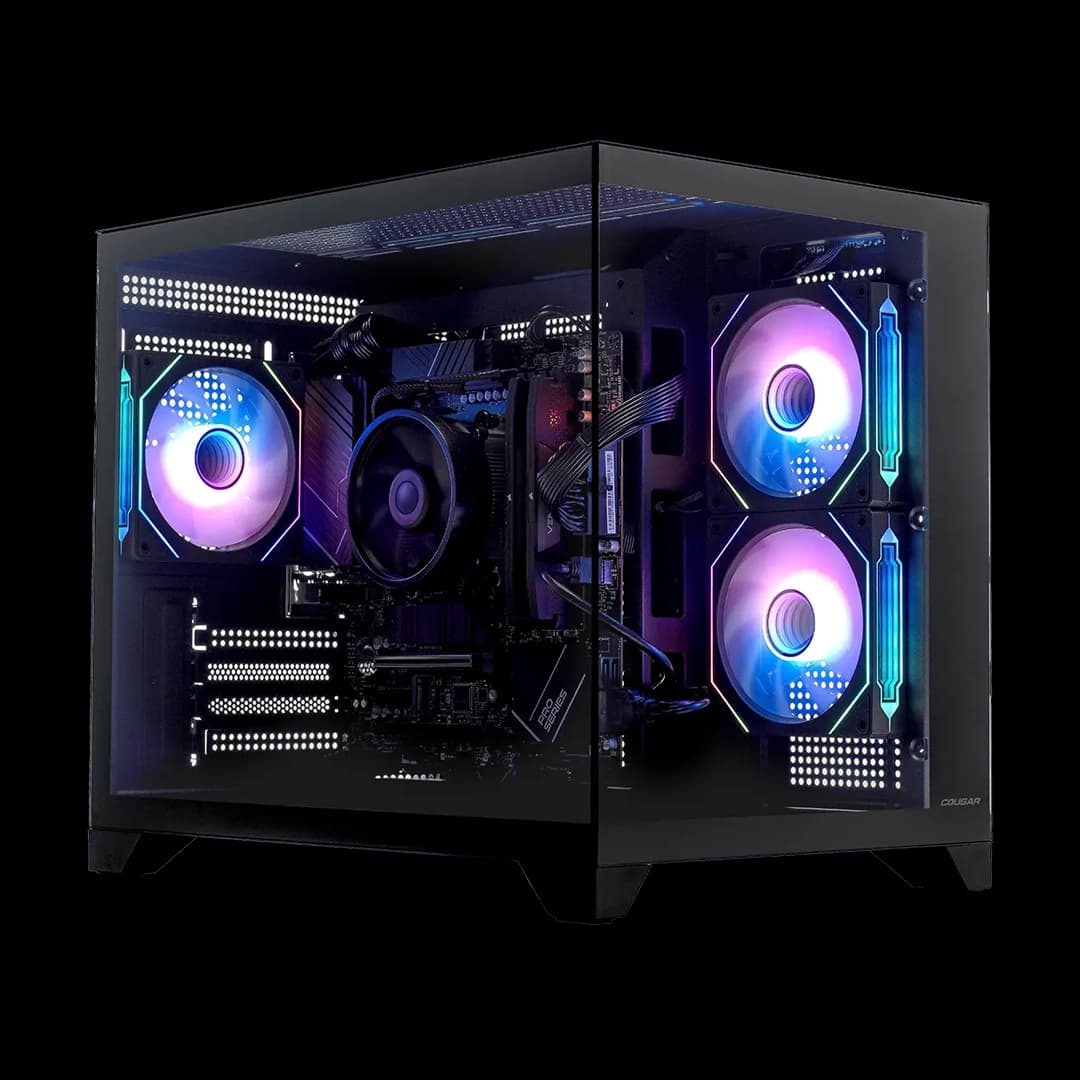
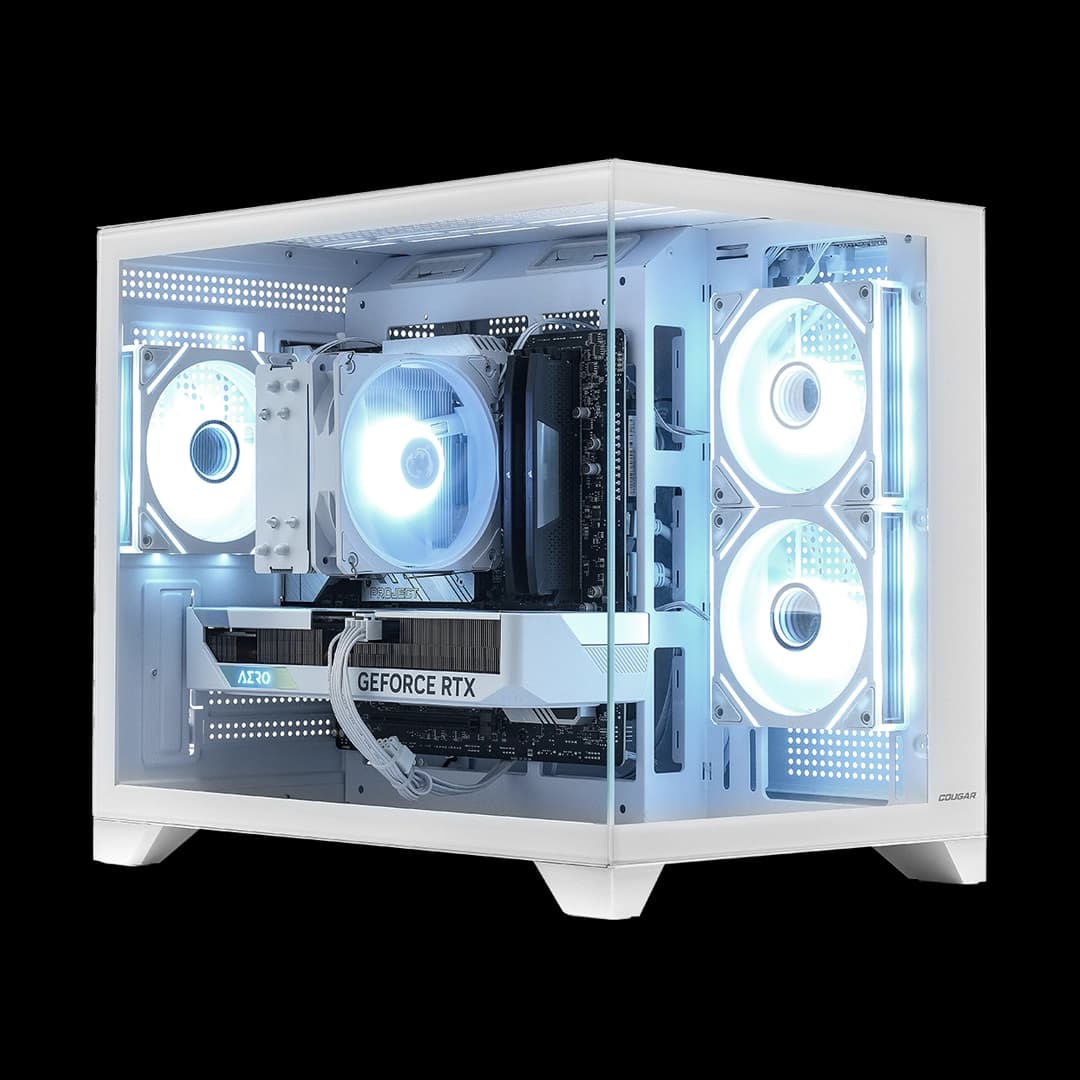
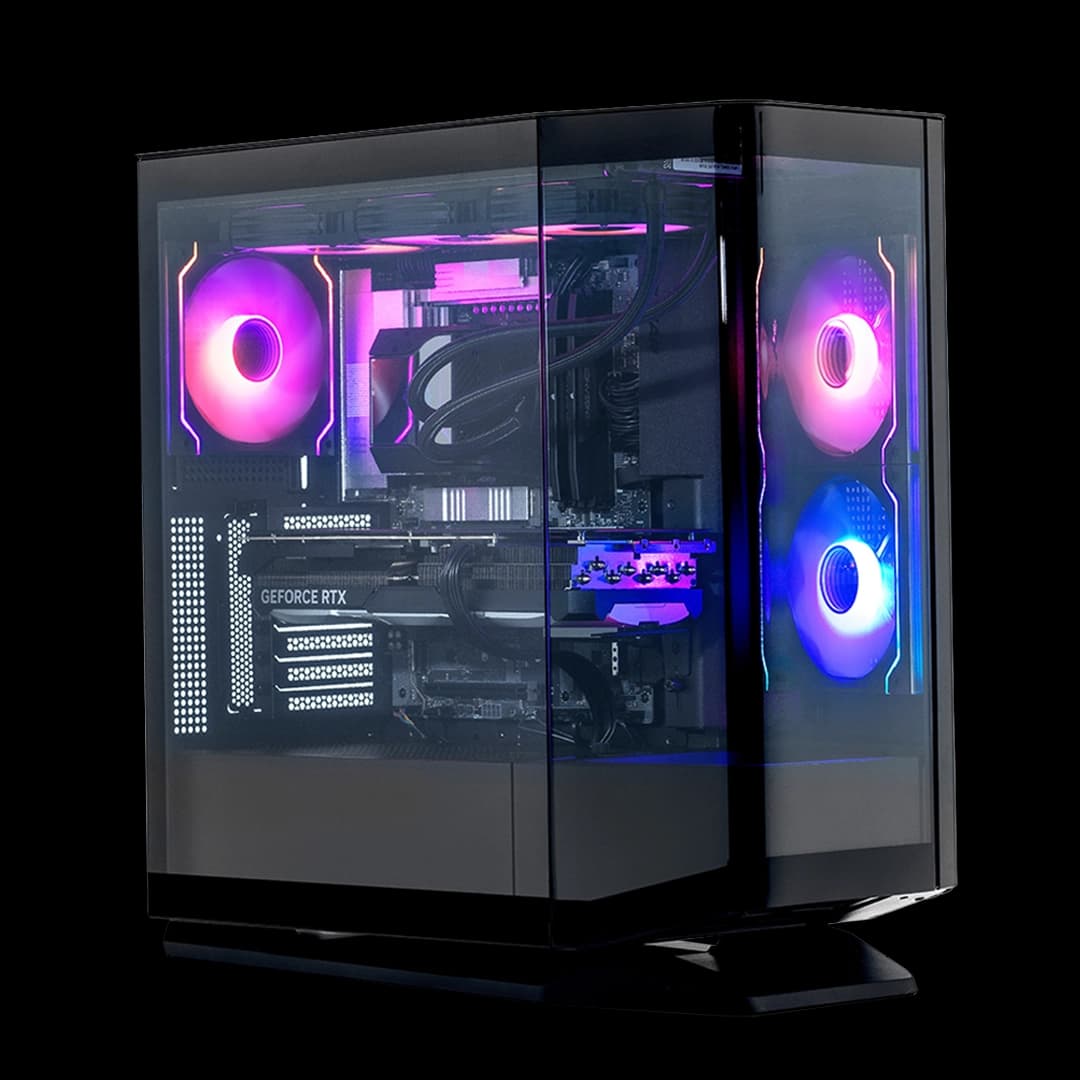
The Vortex Athena M3 is an ATX case with a tempered glass side panel, which is the kind of thing that would have cost you extra a few years ago and now just comes as standard on anything calling itself a gaming PC. The tempered glass panel means you can see the internals, which is either a feature or an irrelevance depending on whether you care about that sort of thing. The case is described as having a compact footprint, which is welcome if desk space is limited, though "compact" is relative when you're talking about a full ATX chassis.
Stormforce Gaming builds these machines in-house in the UK, which matters for a couple of reasons. First, it means the build quality is generally more consistent than machines assembled at scale in overseas factories. Second, it means support and warranty queries are going back to a UK-based company rather than a distant customer service centre with a three-day response time. The spec sheet mentions optimised airflow as a feature of the case, suggesting some thought has gone into fan placement and intake/exhaust positioning rather than just sticking components in a box and hoping for the best.
What you won't find here is heavy RGB lighting. The Recon Pro AMD appears to prioritise function over flashy aesthetics, which is either a relief or a disappointment depending on your taste. The tempered glass panel is there if you want to see the components, but this isn't a machine that's going to turn your desk into a nightclub. Cable management in prebuilts is always a bit of a lottery, and without being able to physically inspect the internals it's impossible to say definitively how tidy it is inside. What we can say is that Stormforce Gaming's reputation for UK-assembled machines generally results in cleaner builds than the worst prebuilt offenders on the market.
Connectivity & Ports
Networking is properly sorted here. WiFi 6 is a meaningful upgrade over the WiFi 5 that cheaper prebuilts often include. The practical difference is lower latency and better performance in busy wireless environments (a house with multiple devices competing for bandwidth, for example), and for online gaming where latency matters more than raw throughput, WiFi 6 is the right choice. Ethernet is also present for those who prefer a wired connection, which remains the gold standard for competitive online gaming regardless of how good your WiFi is.
The A520 mATX motherboard provides USB connectivity via both front and rear panel connections, which covers the basics for peripherals, headsets, and external storage. The exact port count and configuration isn't broken down in granular detail in the verified spec data, so if you have specific USB requirements (multiple USB-A ports, USB-C front panel access, and so on) it's the detailed motherboard spec before committing. What the A520 platform does guarantee is a standard set of rear I/O that covers the essentials without being particularly generous.
Video output is handled by the RTX 5060, which will carry NVIDIA's standard display output configuration for the generation. This means you'll have multiple monitor support covered, and HDMI and DisplayPort outputs for connecting to modern monitors and TVs. Again, the exact output count isn't specified in the verified data, but RTX 5000 series cards standardly offer both HDMI and DisplayPort options, which covers the vast majority of display setups. If you're running a multi-monitor setup or connecting to a TV alongside a monitor, the GPU handles that independently of the motherboard's own I/O.
Pre-installed Software & OS
Windows 11 Home comes pre-installed, which is exactly what you want to see. Not a trial version, not a "free upgrade" voucher, not Windows 10 with a promise. A full, activated copy of Windows 11 Home is included in the price, and that alone is worth factoring into any DIY cost comparison because a retail Windows 11 Home licence is not cheap. The Home tier rather than Pro is appropriate for gaming use: you'd only want Pro if you're doing domain joining, BitLocker drive encryption, or remote desktop hosting, none of which are gaming requirements.
Stormforce Gaming doesn't specify what additional software comes pre-installed beyond the operating system. Most UK prebuilt manufacturers keep bloatware relatively minimal compared to some of the larger international brands, but it's reasonable to expect some manufacturer utilities and potentially trial software. The good news is that Windows 11 Home is a clean enough base, and any unwanted software is straightforward to remove. NVIDIA's drivers will need to be installed or updated on first boot, which is standard practice regardless of who builds the machine.
One thing is that Windows 11 Home does have some limitations compared to Pro, specifically around features like local account creation during setup (Microsoft pushes you towards a Microsoft account) and certain Group Policy settings. For a gaming PC used by one person at home, none of this is a practical problem. But if you're buying this for a household where you'd want more granular user account control, it's worth being aware of the distinction. For the overwhelming majority of buyers, Windows 11 Home is exactly what they need and nothing less.
Upgrade Potential
This is where the A520 motherboard choice becomes a genuine conversation. The AM4 platform is mature and well-supported, which means there are plenty of CPU upgrade options available on the second-hand market. You could theoretically drop in a Ryzen 9 5900X or 5950X for a significant core-count boost without changing anything else. But the A520 board limits overclocking support, so if you're planning to push a higher-end AM4 chip hard, you'd ideally want a B550 or X570 board. That said, most people buying a prebuilt aren't planning to delid CPUs and push voltage limits, so the A520's limitations are largely academic for the target buyer.
RAM expansion is straightforward in principle. DDR4 is still widely available, and upgrading from 16GB to 32GB is a realistic near-future upgrade if you find yourself hitting memory limits. The 1TB NVMe SSD is a good starting point, and the A520 board's support for SATA devices means adding a secondary storage drive (either another M.2 or a 2.5-inch SATA SSD) is a practical option when your game library outgrows 1TB. The Vortex Athena M3 case, being an ATX chassis, should have room for additional drives without requiring any creative solutions.
The PSU is the honest limiting factor for future upgrades. A 500W Bronze-rated unit is fine for the current hardware combination, but if you're thinking about swapping the RTX 5060 for something more powerful in a year or two, you'd want to check the power requirements of whatever GPU you're considering. Higher-end RTX 5000 series cards can pull significantly more power under load, and a 500W PSU doesn't leave much margin. Replacing the PSU isn't a complex job, but it's an additional cost to factor in if GPU upgradability is a priority. For most buyers who'll use this machine as-is for three to four years, the 500W unit is fine.
How It Compares
The honest comparison for any prebuilt at this price tier is against a self-build with equivalent components. Pricing up a Ryzen 7 5700X, RTX 5060 8GB, 16GB DDR4 3200, 1TB Gen 4 NVMe, a decent A520 or B550 mATX board, a 500W PSU, a tempered glass case, and a Windows 11 Home licence individually puts you in a similar price bracket once you've factored in everything. The DIY route gives you more control over component selection (you could choose a better PSU or a bigger case fan), but the price advantage over a complete prebuilt has narrowed considerably in recent years. If your time has any value at all, the prebuilt proposition makes more sense than it did five years ago.
Within the prebuilt market itself, the Recon Pro AMD sits in the mid-range tier where competition is genuinely fierce. Machines at this level from other UK-based builders vary significantly in where they make their compromises: some go cheaper on the GPU to put a better PSU in, some go cheaper on storage to hit a lower headline price. The Stormforce configuration prioritises a current-generation GPU (the RTX 5060 is a proper 2026 card) and a Gen 4 SSD, which are arguably the right calls for a gaming PC. The A520 board and 500W PSU are where the cost savings have been made, and those are the less glamorous components that most buyers won't notice in day-to-day use.
| Feature | Recon Pro AMD | Typical Rival A (Same Tier) | Typical Rival B (Same Tier) |
|---|---|---|---|
| CPU | Ryzen 7 5700X (8-core Zen 3) | Often Ryzen 5 5600 (6-core) | Intel Core i5 13th Gen (6-core) |
| GPU | RTX 5060 8GB | RTX 4060 8GB (last gen) | RTX 4060 Ti 8GB |
| RAM | 16GB DDR4 3200 | 16GB DDR4 3200 | 16GB DDR4 3200 |
| Storage | 1TB Gen 4 NVMe | 1TB Gen 3 NVMe | 1TB Gen 3 NVMe |
| WiFi | WiFi 6 | WiFi 5 (common at this tier) | WiFi 6 |
| PSU | 500W Bronze | 500W Bronze | 600W Bronze |
| OS | Windows 11 Home | Windows 11 Home | Windows 11 Home |
| Assembled | UK (Stormforce Gaming) | Varies | Varies |
The comparison table above uses generalised specs for the tier rather than specific named rivals (rival pricing changes constantly and it would be misleading to hardcode it). What stands out is that the Recon Pro AMD's use of the RTX 5060 rather than a last-generation RTX 4060 is a genuine differentiator. You're getting a current-generation GPU with newer architecture, better ray tracing hardware, and the latest DLSS iteration. That matters for longevity. A machine built around a brand-new GPU in 2026 has a longer useful gaming life than one built around a GPU that was already mid-cycle when it shipped.
Final Verdict
The Stormforce Gaming Recon Pro AMD is a genuinely solid mid-range gaming PC that gets the important decisions right. The Ryzen 7 5700X is a proper gaming processor, not a cost-cut six-core chip. The RTX 5060 is a current-generation GPU that handles 1080p and 1440p gaming comfortably and brings DLSS 4 to the table. The Gen 4 NVMe SSD is a meaningful quality choice. And WiFi 6 is included rather than the WiFi 5 that cheaper builds sneak in. These are the components that actually affect your day-to-day experience, and Stormforce has prioritised them correctly.
The compromises are real but honest. The A520 mATX motherboard is the budget end of the AM4 platform, which limits overclocking and isn't the board you'd choose for a high-end build. The 500W Bronze PSU is adequate for now but leaves limited headroom if you want to upgrade to a more powerful GPU later. The compact aluminium heatsink cooler is a stock-style solution that keeps the 5700X within spec but won't win any thermal performance awards. None of these are deal-breakers for the target buyer, but they're about if you're planning to use this machine as a stepping stone to heavier upgrades.
Who is this for? Someone who wants to play games at 1080p or 1440p without building a PC from scratch, who wants a machine that's going to remain capable for the next three to four years, and who doesn't want to spend serious enthusiast money to get there. First-time gaming PC buyers, people moving from console to PC, or anyone who's priced up a DIY build and realised the convenience premium on a UK-assembled prebuilt is actually pretty reasonable right now. This machine fits that brief well.
Who should probably look elsewhere? If you're already comfortable building PCs and you're specifically after upgrade flexibility, the A520 board and 500W PSU will frustrate you eventually. You'd be better off spending a bit more on a B550-based prebuilt or just building yourself. And if your budget is tighter than the current asking price, there are Ryzen 5 5600 and RTX 4060-based machines that do a respectable job at 1080p for less money. The Recon Pro AMD earns its mid-range positioning, but it's not the only option at this tier.
Checked against current pricing at £1,149.99 (Price checked 03:40, 3 Oct 2026, UK time), this machine represents fair value for what you're getting. Not a steal, not overpriced. The RTX 5060 and Gen 4 NVMe are doing the heavy lifting on value, and the UK-assembled build quality from Stormforce Gaming is a genuine plus over some of the alternatives. As a complete package, it does what it promises.
What works. What doesn’t.
6 + 5What we liked6 reasons
- Current-generation RTX 5060 GPU with DLSS 4 support delivers genuine 1080p and 1440p gaming capability
- Ryzen 7 5700X provides eight cores and 16 threads, comfortably handling gaming and background workloads simultaneously
- 1TB Gen 4 M.2 NVMe SSD is a meaningful quality choice over the Gen 3 drives common at this price tier
- WiFi 6 is included rather than the older WiFi 5 standard found in cheaper prebuilts
- Full activated copy of Windows 11 Home is included, which adds real value against a DIY cost comparison
- UK-assembled by Stormforce Gaming, offering more consistent build quality and accessible domestic warranty support
Where it falls5 reasons
- A520 mATX motherboard is the budget end of AM4, restricting overclocking and offering limited expansion options
- 500W Bronze-rated PSU leaves little headroom for future GPU upgrades to more power-hungry cards
- Compact aluminium heatsink cooler is a stock-style solution adequate for gaming loads but unimpressive under sustained heavy workloads
- AM4 is a mature platform with no future AMD CPU generations planned, limiting the processor upgrade path
- Exact RAM slot configuration and USB port layout are not fully detailed in the available specification data
Full specifications
12 attributes| CPU | AMD Ryzen 7 5700X |
|---|---|
| GPU | NVIDIA RTX 5060 8GB |
| RAM | 16GB DDR4 3200 |
| Storage | 1TB Gen 4 M.2 NVMe SSD |
| Case | Vortex Athena M3 ATX |
| Connectivity | WiFi 6, Ethernet |
| Cooling | Optimised Air Cooling |
| Motherboard | A520 |
| OS | Microsoft Windows 11 Home |
| PSU | 500w Bronze PSU |
| RAM GB | 16 |
| RAM type | DDR4-3200 |
If this isn’t right for you
2 options

Frequently asked
7 questions01What resolution and settings can the RTX 5060 handle in this machine?+
The RTX 5060 8GB is well suited to 1080p gaming at high to ultra settings across the majority of current titles. At 1440p it performs well in most games, though the most demanding titles may benefit from dropping from ultra to high settings or using DLSS to maintain smooth frame rates. Four-K gaming is not the RTX 5060's target use case.
02Can the RAM be upgraded and what is the maximum supported?+
The AM4 platform and A520 motherboard support DDR4 RAM, and upgrading from 16GB to 32GB is a realistic option using widely available DDR4 modules. Stormforce Gaming does not detail the exact slot configuration in the published specification, so it is worth confirming before purchase whether the system ships with one 16GB stick or two 8GB sticks, as dual-channel configuration offers better memory bandwidth for gaming.
03Is the Ryzen 7 5700X a significant bottleneck with the RTX 5060?+
No. The Ryzen 7 5700X with its eight cores, 16 threads, and 4.6GHz boost clock is not a meaningful bottleneck for the RTX 5060 at 1080p or 1440p. The pairing is well balanced for the target use case, and while the AM4 platform is now mature rather than growing, the processor itself remains capable for gaming for the foreseeable future.
04What are the main upgrade limitations of this prebuilt?+
The two primary constraints are the A520 mATX motherboard and the 500W Bronze PSU. The A520 board does not support CPU overclocking and the AM4 platform has no future AMD processor generations planned, so the CPU upgrade path is limited to existing AM4 chips available on the second-hand market. The 500W PSU is adequate for the current hardware but leaves limited headroom if you wish to install a more power-hungry GPU in the future.
05Does the Recon Pro AMD include a genuine copy of Windows 11?+
Yes. A full activated copy of Windows 11 Home is pre-installed, not a trial version or an upgrade voucher. This is worth factoring into any cost comparison against a self-build, as a retail Windows 11 Home licence represents a meaningful additional expense when pricing up components independently.
06Is WiFi 6 meaningful for online gaming compared to WiFi 5?+
WiFi 6 offers lower latency and better performance in environments where multiple devices are competing for wireless bandwidth, both of which matter for online gaming. While a wired Ethernet connection remains the most reliable option for competitive gaming, WiFi 6 is a genuine improvement over the WiFi 5 adapters commonly found in prebuilts at this price tier, and Ethernet is also available for those who prefer a wired setup.
07Who assembles the Recon Pro AMD and where?+
The Recon Pro AMD is assembled in the UK by Stormforce Gaming. UK assembly generally results in more consistent build quality than machines produced at scale in overseas facilities, and it means warranty and support queries are handled by a UK-based company.