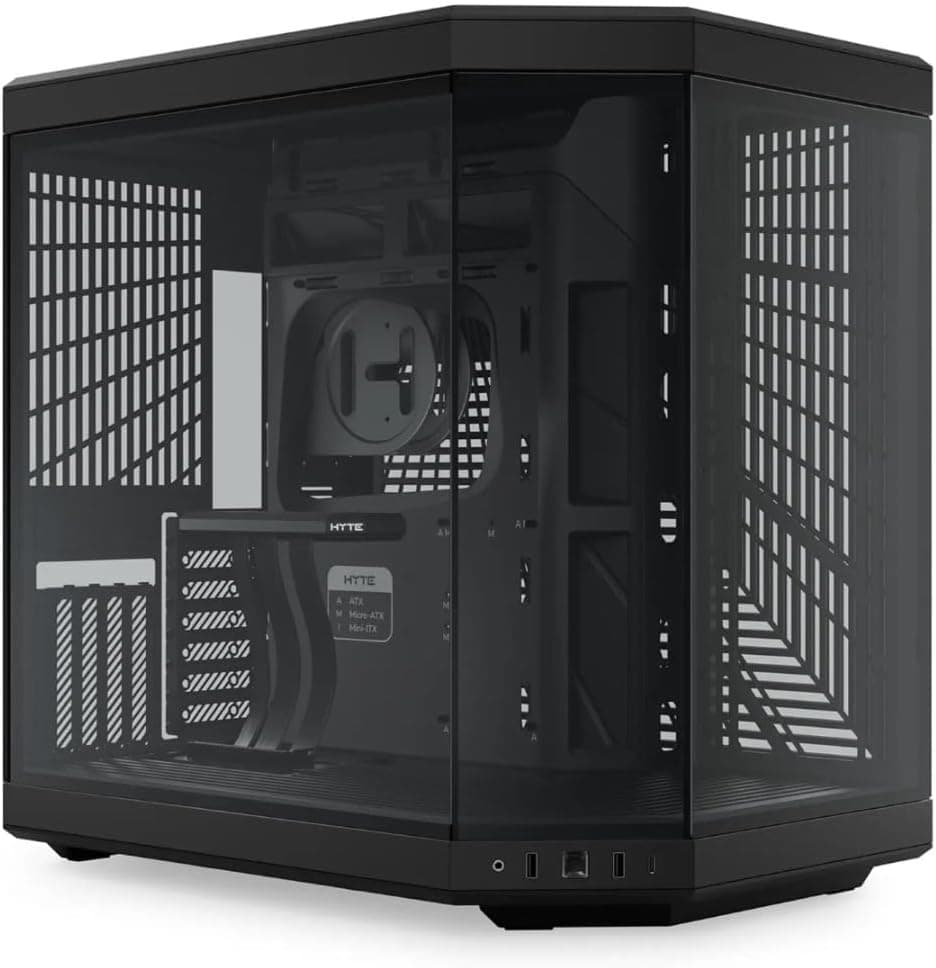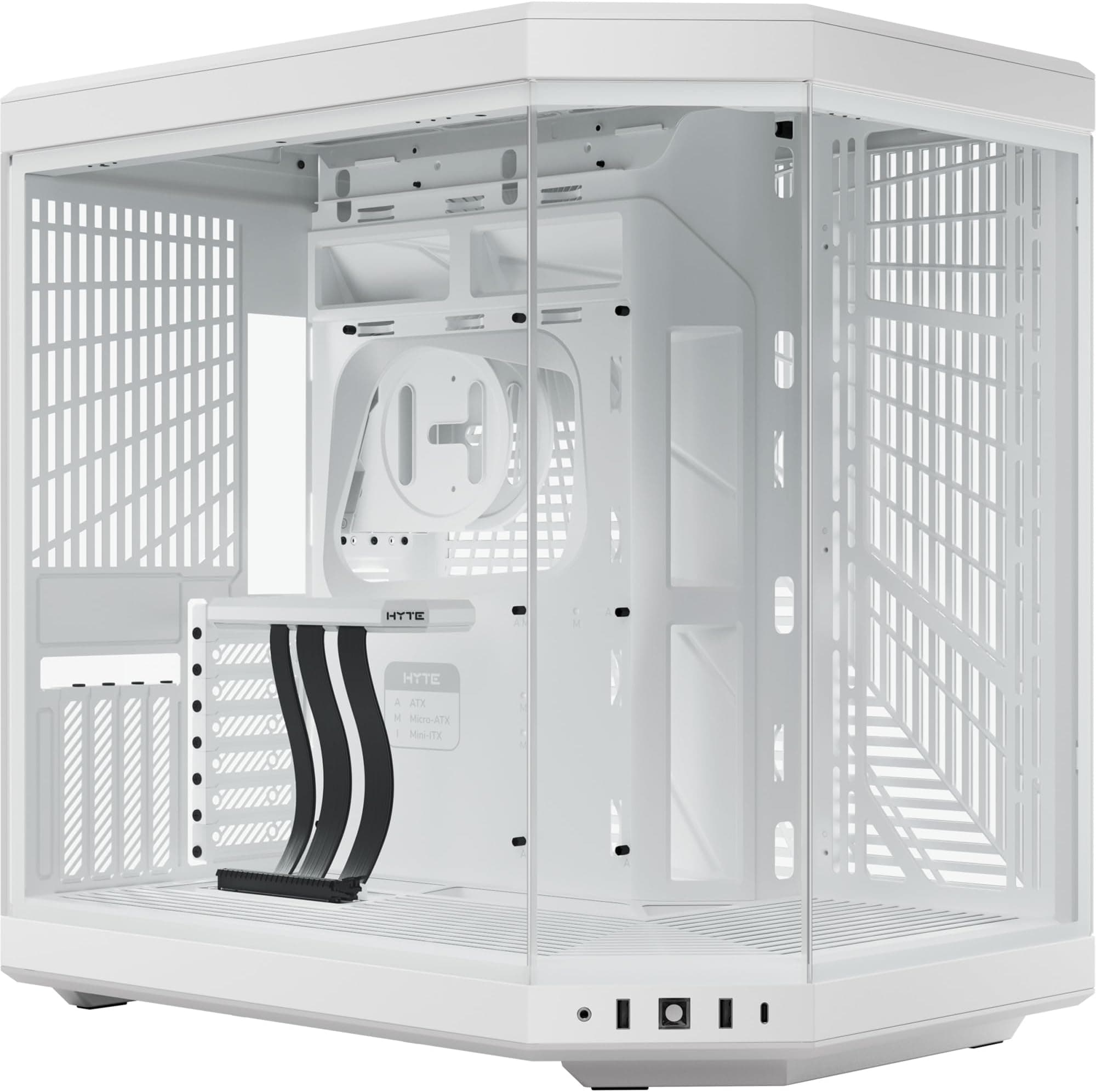
The case you pick for a home theatre PC isn't just about looks on a shelf. It's a decision that sets hard limits on every component you can fit inside, determines how hot everything runs, and dictates whether the build itself is a calm Saturday afternoon or two hours of swearing at a cable that won't reach. The SilverStone SST-GD09B, part of the long-running Grandia series, is an HTPC-oriented ATX chassis that tries to do something genuinely awkward: fit a full-size ATX board and a proper GPU into a low-profile enclosure that won't look ridiculous sitting next to your telly. Based on the published specifications and the patterns across 752 owner reviews averaging ★★★★½ (4.6), it largely pulls that off. But there are trade-offs, and they're before you commit.
This is a SilverStone Grandia HTPC case review aimed squarely at people building a living-room PC who don't want to compromise on component choice. The GD09B's horizontal layout, 270mm GPU clearance, and front-mounted fan array make it a more capable machine than most HTPC cases dare to be. Whether it's the right call at mid-range pricing depends on what you're building and how much the low-profile form factor actually matters to you. Let's get the numbers out first, then we'll talk about what they mean in practice.
Core Specifications
The GD09B is built around a horizontal chassis designed to accept full ATX motherboards, which is the headline claim and the reason most people look at it in the first place. The external dimensions come in at approximately 420mm wide, 210mm tall, and 400mm deep. That height figure is the one that matters most in an HTPC context: 210mm is low enough to sit on an AV rack shelf without dominating the room, but it does impose real constraints on what goes inside, particularly on CPU cooler height. SilverStone rates the maximum CPU cooler clearance at 83mm, which is tight by any standard.
Fan support is where the GD09B earns its "high airflow" billing. There are three 120mm fan mounts at the front acting as intake, one 120mm exhaust at the rear, and the chassis ships with two 120mm fans pre-installed at the front. The PSU sits at the rear of the chassis in a dedicated compartment. Drive support includes two 3.5-inch bays and two 2.5-inch bays, which is adequate for a media PC but won't satisfy anyone planning a large NAS-style storage array. The case uses steel construction throughout, and the top panel features a mesh section to aid passive exhaust. Weight sits at around 5.5kg without components, which is reasonable for the size and material choice.
One thing to flag from the spec sheet before we get into the individual sections: this is a case designed with a specific use case in mind. It's not trying to be a compact mid-tower. It's trying to be a horizontal HTPC chassis that doesn't force you onto a mini-ITX platform. That's a genuinely useful proposition, but it means the clearances and layout decisions only make sense once you accept the horizontal orientation as the starting point rather than a compromise.
| Specification | Detail |
|---|---|
| Form Factor | HTPC / Horizontal ATX |
| Motherboard Support | ATX, Micro-ATX, Mini-ITX |
| Dimensions (W x H x D) | Approx. 420 x 210 x 400mm |
| Max GPU Length | 270mm (with HDD cage installed) |
| Max CPU Cooler Height | 83mm |
| Drive Bays (3.5") | 2 |
| Drive Bays (2.5") | 2 |
| Fan Mounts | 3 x 120mm front, 1 x 120mm rear |
| Included Fans | 2 x 120mm front |
| Expansion Slots | 4 |
| PSU Support | ATX (rear compartment) |
| Material | Steel |
| Weight | Approx. 5.5kg |
| Colour | Black |
| Price | £99.98 |

Form Factor and Dimensions
The GD09B is a horizontal HTPC chassis, and that single design decision shapes everything else about it. Most PC cases stand upright on a desk. This one lies flat, like a traditional hi-fi amplifier or AV receiver, and it's sized to fit on a standard AV rack shelf or sit beneath a television without looking out of place. At 210mm tall, it's noticeably slimmer than even compact mid-towers, and the 420mm width means it fills a shelf in a way that looks deliberate rather than awkward.
The 400mm depth is worth measuring against your intended location before you buy. It's not a shallow unit. Some AV furniture has shelves with only 380 to 390mm of usable depth once you account for the rear panel and cable routing space, so check your measurements. The footprint overall is roughly equivalent to a large AV amplifier, which is exactly the aesthetic SilverStone is going for. Owner reviews consistently mention that it looks at home in a living room setup, which isn't something you can say about most ATX cases.
What this form factor costs you is vertical space inside the chassis. Because the board lies flat and the components above it are constrained by the top panel, CPU cooler height becomes a hard limit in a way it simply isn't in a tower. That 83mm ceiling is real, and it rules out the majority of popular tower coolers. The Noctua NH-L9i is a common recommendation in owner discussions precisely because it's designed for this kind of constrained environment. If you're already planning around a low-profile cooler or an AIO, the form factor works. If you assumed you could drop in a 165mm Noctua NH-D15, you'll be disappointed.
Motherboard Compatibility
The GD09B supports ATX, Micro-ATX, and Mini-ITX motherboards. Full ATX support in a horizontal HTPC chassis is the point of the whole exercise, and SilverStone has engineered the internal layout to accommodate it. Standard ATX boards measure 305 x 244mm, and the GD09B's internal tray is sized accordingly. The standoff layout follows the standard ATX specification, so there's nothing unusual here for anyone who's fitted a board before.
Micro-ATX and Mini-ITX boards obviously fit with room to spare, though with a smaller board you'll have more internal space to work with around the GPU and storage. Some owners building Micro-ATX systems report that the extra room makes cable routing noticeably easier, which makes sense given the relatively tight internal volume when a full ATX board is installed. If you're not specifically tied to ATX, it's whether a Micro-ATX build might give you a bit more breathing room inside.
One thing to check before finalising your component list is the height of your motherboard's VRM heatsink or any tall capacitors near the board edges. Because the chassis is horizontal and the clearance above the board is limited, unusually tall components near the board perimeter can occasionally conflict with the side panel or internal structures. This isn't a widespread issue in the owner reviews, but it's the kind of thing worth verifying against your specific board's dimensions rather than assuming everything will clear. SilverStone's own product page lists the internal clearances, and cross-referencing your motherboard's datasheet against those numbers before buying is just good practice.
GPU Clearance
The GD09B supports GPUs up to 270mm in length with the hard drive cage installed. Remove the cage entirely and that figure extends further, though SilverStone's official spec is the 270mm number, and that's the one to plan around unless you're definitely going storage-light. At 270mm, you're looking at a reasonable range of mid-range cards fitting without issue. Cards like the AMD Radeon RX 7600 and Nvidia RTX 4060 both come in well under that limit in most board partner configurations, making them natural fits for this kind of media PC build.
Where it gets trickier is with higher-end cards. The RTX 4070 Super and RX 7800 XT both have board partner variants that push past 270mm, sometimes significantly. A three-slot, 320mm card simply won't fit here, full stop. And even if the length works out, the three-slot width of many modern flagship GPUs can be an issue in a horizontal chassis where the card sits above the motherboard rather than beside it. Owner reviews include a handful of people who've successfully fitted cards in the 260 to 270mm range, but the message is consistent: measure twice, buy once.
There's no vertical GPU mount option on the GD09B, which isn't surprising given the horizontal layout makes such a feature redundant. The GPU sits in a conventional PCIe slot orientation, lying flat above the motherboard. This is fine functionally, and it means the card's cooler exhausts heat upward and out through the mesh top panel, which is actually a reasonably sensible airflow path in this configuration. The four expansion slot cutouts give you options beyond the GPU too, though with a horizontal chassis and a 210mm height limit, stacking multiple thick cards isn't really on the table.
CPU Cooler Clearance
The 83mm CPU cooler height limit is the single most important spec in this entire case, and it deserves a proper discussion. In a vertical tower, 83mm would be laughably restrictive. In an HTPC chassis, it's actually within the normal range for the category, but it still rules out a huge proportion of popular coolers. The Noctua NH-D15 is 165mm. The be quiet! Dark Rock Pro 5 is 162mm. Even the Cooler Master Hyper 212 sits at 159mm. None of these fit.
What does fit? Low-profile coolers designed explicitly for HTPC and SFF builds. The Noctua NH-L9i at 37mm is the obvious choice for Intel sockets, with the NH-L9a covering AMD. The Noctua NH-L12S at 70mm gives you a bit more thermal headroom while still clearing the 83mm limit. Thermalright's AXP90-X47 at 47mm is another option that comes up regularly in owner discussions. The pattern in the reviews is clear: people who research their cooler compatibility before buying have a smooth experience, and people who assume their existing tower cooler will fit do not.
AIO liquid cooling is also an option, but it's constrained here too. Because the chassis is horizontal and the CPU is on the motherboard lying flat, mounting an AIO radiator requires careful thought about where the radiator goes. The rear 120mm fan mount can accommodate a single 120mm radiator, and some owners have made this work with compact 120mm AIOs. A 240mm or 360mm AIO is not going to happen in this chassis. If you're running a high-TDP processor that really needs serious cooling, the GD09B's thermal limits may be a genuine barrier. For typical HTPC workloads, media playback, light gaming, and general computing, a quality low-profile air cooler will manage perfectly well.
Storage Bay Options
Two 3.5-inch bays and two 2.5-inch bays is the full storage allocation here. For a living-room PC that's primarily streaming, gaming from a couple of drives, and maybe running Plex off a local library, that's genuinely sufficient. Two 3.5-inch drives gives you room for a couple of large spinning disks for media storage, and the 2.5-inch bays cover your boot SSD. If you're also using an M.2 slot on the motherboard for your primary drive, the 2.5-inch bays become bonus space rather than essential.
Where this falls short is if you're building a more serious home server or NAS-adjacent machine. Two 3.5-inch bays won't satisfy anyone who wants four or more drives for a RAID array or a large Plex library with redundancy. That's not really the target use case for the GD09B, but it's worth being honest about. If storage expansion is a priority, you'd be better served by a proper NAS enclosure or a larger tower case rather than trying to shoehorn more drives into this chassis than it was designed for.
The drive mounting itself is fairly straightforward based on owner reports. The 3.5-inch cage uses screws rather than tool-free sleds, which a few owners mention as a minor irritation compared to cases with fully tool-free drive mounting. The 2.5-inch bays are accessible without too much drama. The cage can be removed entirely to free up GPU length clearance, as mentioned earlier, which is a useful option if you're going all-M.2 for storage and want to maximise the space available for your graphics card. Several owners have taken this approach and report it works well.

Cable Management
Cable management in a horizontal HTPC chassis is always going to be more challenging than in a full tower, and the GD09B is no exception. The internal volume is tighter, the routing paths are less obvious, and there's no cavernous rear chamber to hide a bundle of excess cable. What SilverStone has done is include some cable routing provisions, but the consensus from owner reviews is that it takes patience and planning to get a tidy result.
The PSU sits in its own dedicated compartment at the rear of the chassis, which helps keep the main chamber cleaner. A modular PSU is strongly recommended here, and this comes up repeatedly in owner feedback. With a non-modular PSU you'll have a significant number of unused cables to deal with in a space that doesn't have room to absorb them gracefully. A modular or semi-modular unit lets you bring in only the cables you actually need, which makes a real difference to how manageable the build is. SilverStone rates the PSU compartment for standard ATX power supplies, so length compatibility is against your specific unit.
Velcro straps aren't included as standard, and the rear panel clearance for cable routing is limited compared to what you'd find in a dedicated mid-tower. A handful of owners mention that the build process requires more forethought than a conventional tower, particularly around routing the 24-pin ATX connector and the CPU power cable. Neither is impossible, but this isn't the case to reach for if you want a quick, casual build. Plan your cable runs before you start, use a modular PSU, and budget some time for getting things tidy. The owners who mention a clean finished result consistently credit preparation rather than the case making it easy for them.
Airflow and Thermal Design
The SilverStone Grandia HTPC case review wouldn't be complete without a proper look at the thermal design, because it's genuinely one of the more interesting aspects of the GD09B. SilverStone's approach here is a front-to-rear positive pressure airflow path: three 120mm fan mounts at the front pull cool air in, and a single 120mm exhaust at the rear pushes it out. Two fans come pre-installed at the front. The top panel features a mesh section that allows warm air to rise and escape passively, which is a sensible addition given the horizontal orientation means heat naturally wants to move upward.
The three-fan front intake is a meaningful design choice. In a horizontal chassis, the GPU sits above the motherboard and its cooler blows heat upward. Having strong front-to-rear airflow helps carry that heat out before it can build up. Owner reviews generally report reasonable temperatures for mid-range GPUs and low-profile CPU coolers, which aligns with what the airflow path suggests. Nobody is reporting thermal throttling under normal media PC workloads. A few owners running more demanding hardware, particularly older high-TDP GPUs, do mention temperatures that are higher than they'd see in a conventional tower, which is expected given the constrained volume.
Dust filtration is present on the front intake, which is important for a case that's likely sitting on a low shelf close to carpet or a rug. The filter is accessible for cleaning, though some owners note it requires removing the front panel to get at it properly, which is mildly annoying but not a serious problem. There's no filter on the top mesh panel, which means some dust ingress from above is inevitable over time. For a living-room PC that might go months between cleaning sessions, this is worth factoring in. Overall the thermal design is sensible for the form factor, and the high airflow claim in the product name isn't entirely marketing fluff, though it comes with the caveat that "high airflow for an HTPC" and "high airflow for a mid-tower" are very different things.
Front I/O and Connectivity
The front I/O panel on the GD09B is minimal, which is probably appropriate for a case designed to sit in a living room rather than on a desk. You get USB 3.0 Type-A ports, a headphone and microphone combo jack, and the power button. There's no USB Type-C port, which is a genuine omission by 2026 standards. When this case was designed, Type-C was far less ubiquitous, but it's now the connector people reach for most often with modern peripherals, phones, and storage devices.
The placement of the I/O panel on the front face works reasonably well for a horizontal HTPC setup. Because the case sits low on a shelf, having the ports on the front rather than the top means you're not reaching over the top of the unit to plug things in. That's a thoughtful call for the intended use case. The power button is tactile and well-positioned. There's no reset button, which is fairly common at this form factor and not something most users will miss.
What's absent is any RGB or fan controller hub on the front I/O, which keeps things clean and simple. This is an HTPC case, not a gaming showpiece, and the restrained front panel reflects that. If you're building a silent, understated living-room PC, the lack of RGB buttons and lighting controls is a feature rather than a limitation. But if you were hoping for onboard fan control to manage noise levels, you'll need to handle that through your motherboard's BIOS or a separate controller. Given that noise management is genuinely important in a living-room context, it's worth having a motherboard with decent fan curve controls if you're going this route.
Build Quality and Materials
The GD09B is steel throughout, which is standard for this price tier and generally fine. The panels feel solid rather than premium, and owner reviews don't report any significant flexing or rattling under normal use. The top mesh panel is a separate piece that sits in place without excessive fuss. A few owners mention that panel alignment is good out of the box, with no obvious gaps or misalignments on their units. That's a decent sign for a case at mid-range pricing.
Sharp edges are mentioned by a small number of owners during the build process, particularly around some of the internal cutouts and the drive cage area. This is a fairly common complaint across steel cases in this price range and isn't unique to SilverStone, but it's worth wearing a glove or two when routing cables through tight spots. The finish is consistent matte black, which photographs well and looks smart in a living-room environment. It doesn't show fingerprints as badly as glossy panels, which is a practical advantage for a case that might be handled more than a desk-mounted unit.
The overall build quality impression from the owner review pool is positive. At a 4.6 average across 754, there's clearly a large majority of buyers who are happy with what they received. The criticisms that do appear tend to focus on the build experience rather than the case itself falling apart, which is a meaningful distinction. A case that's slightly fiddly to build in but solid once assembled is a different proposition from one that feels cheap and rattles after a month. The GD09B appears to fall into the former category. SilverStone has a reasonable track record in the HTPC space, and the Grandia line has been around long enough that the obvious design problems have been iterated away.
How It Compares
The honest comparison for the GD09B is against other horizontal ATX HTPC cases, because comparing it to conventional mid-towers misses the point entirely. The two most relevant alternatives are the SilverStone SST-GD11B (the newer Grandia variant) and the Fractal Design Node 605. The Node 605 is the traditional rival in this space, offering a similar horizontal ATX layout with a slightly different internal arrangement and a cleaner aesthetic on the exterior. The GD11B is the more modern SilverStone option with some updated features.
Against the Fractal Node 605, the GD09B wins on fan support and airflow potential. Three front fan mounts versus the Node 605's more conservative ventilation gives the SilverStone a clear advantage for builds with higher thermal demands. The Node 605 has a slightly more refined interior layout that some builders find easier to work in, but it typically commands a higher price for that premium. Against the GD11B, the GD09B is generally cheaper and the feature set is similar enough that the price difference is the deciding factor for most buyers.
It's also worth acknowledging that the mini-ITX route is a genuine alternative for HTPC builds. Cases like the Fractal Design Node 202 or the SilverStone SST-ML08B offer even smaller footprints if you're willing to drop to a mini-ITX platform. The trade-off is component choice: mini-ITX limits you to one PCIe slot, one or two memory slots depending on the board, and generally more expensive motherboard options. The GD09B's ATX support is its main differentiator, and if you need that, the comparison shrinks considerably.
| Feature | SilverStone GD09B | Fractal Design Node 605 | SilverStone GD11B |
|---|---|---|---|
| Form Factor | Horizontal HTPC ATX | Horizontal HTPC ATX | Horizontal HTPC ATX |
| Max GPU Length | 270mm | 310mm | 265mm |
| Max CPU Cooler | 83mm | 82mm | 83mm |
| Included Fans | 2 x 120mm | None | 2 x 120mm |
| Front Fan Mounts | 3 x 120mm | 2 x 120mm | 3 x 120mm |
| USB Type-C Front I/O | No | No | No |
| 3.5" Drive Bays | 2 | 2 | 2 |
| Price Tier | Mid-range | Premium | Mid-range |

Final Verdict
The SilverStone Grandia HTPC case review conclusion is fairly straightforward: this is a good chassis for a specific, well-defined job. If you need an ATX-compatible horizontal HTPC case that looks at home in a living room, fits a proper GPU, and moves enough air to keep mid-range components healthy, the GD09B delivers. The 4.6 average across 754 isn't a fluke. Most people buying it know what they're getting into, plan their build accordingly, and end up with exactly what they wanted.
The limitations are real though, and they're not minor footnotes. The 83mm CPU cooler limit rules out most of the popular air coolers on the market. The 270mm GPU clearance means modern high-end cards won't fit. There's no USB Type-C on the front I/O, which feels like an oversight for a case that's still being sold at mid-range pricing in 2026. Cable management requires patience and a modular PSU. None of these are dealbreakers for the right buyer, but they're the kind of things that make this the wrong case for someone who didn't read the spec sheet carefully.
The build quality is solid without being exceptional. Steel construction, decent panel alignment, and a finish that suits its intended environment. It's not going to impress anyone who handles premium aluminium HTPC cases, but it doesn't feel cheap either. SilverStone's engineering in the Grandia line has always been more about functional layout than tactile luxury, and the GD09B reflects that priority honestly.
Who should buy this? Someone building a living-room ATX PC who needs GPU support beyond what mini-ITX allows, is willing to plan around a low-profile CPU cooler, and wants a case that looks like it belongs next to a hi-fi stack rather than on a gaming desk. It's a genuinely useful product that fills a real gap in the market, and the owner feedback confirms it works well when used as intended.
Who should skip it? Anyone running a high-TDP CPU that needs serious cooling, anyone who wants to fit a long modern flagship GPU, or anyone who finds the idea of a challenging cable management exercise unappealing. And honestly, if you don't specifically need the horizontal HTPC form factor, a conventional Micro-ATX mid-tower in the same price bracket will give you more internal space, better clearances, and an easier build experience. The Fractal Design Pop Mini Air or similar compact towers are worth a look if the living-room aesthetic isn't your priority.
Score: 7.5 out of 10. Excellent at what it's designed for. Limited by the constraints that come with the territory.
What works. What doesn’t.
5 + 4What we liked5 reasons
- Full ATX support in a low-profile horizontal chassis is genuinely rare
- Three front 120mm fan mounts with two fans included gives solid airflow for the form factor
- Looks at home on an AV rack or living-room shelf
- Solid build quality and good panel alignment reported by most owners
- Removable HDD cage extends GPU clearance if you go all-M.2
Where it falls4 reasons
- 83mm CPU cooler limit rules out most popular air coolers
- No USB Type-C on front I/O
- Cable management is fiddly and demands a modular PSU
- 270mm GPU limit excludes most modern high-end cards
Full specifications
10 attributes| Form factor | Mid-Tower |
|---|---|
| CPU cooler clearance MM | 138 |
| Dimensions MM | 440 x 170 x 358 |
| Fans included | 1 |
| GPU clearance MM | 309 |
| MAX FAN count | 5 |
| PSU support | ATX up to 180mm |
| Side panel | solid steel |
| Supported motherboard | ATX, Micro-ATX, Mini-ITX |
| Weight KG | 4.2 |
If this isn’t right for you
2 options 9.0 / 10
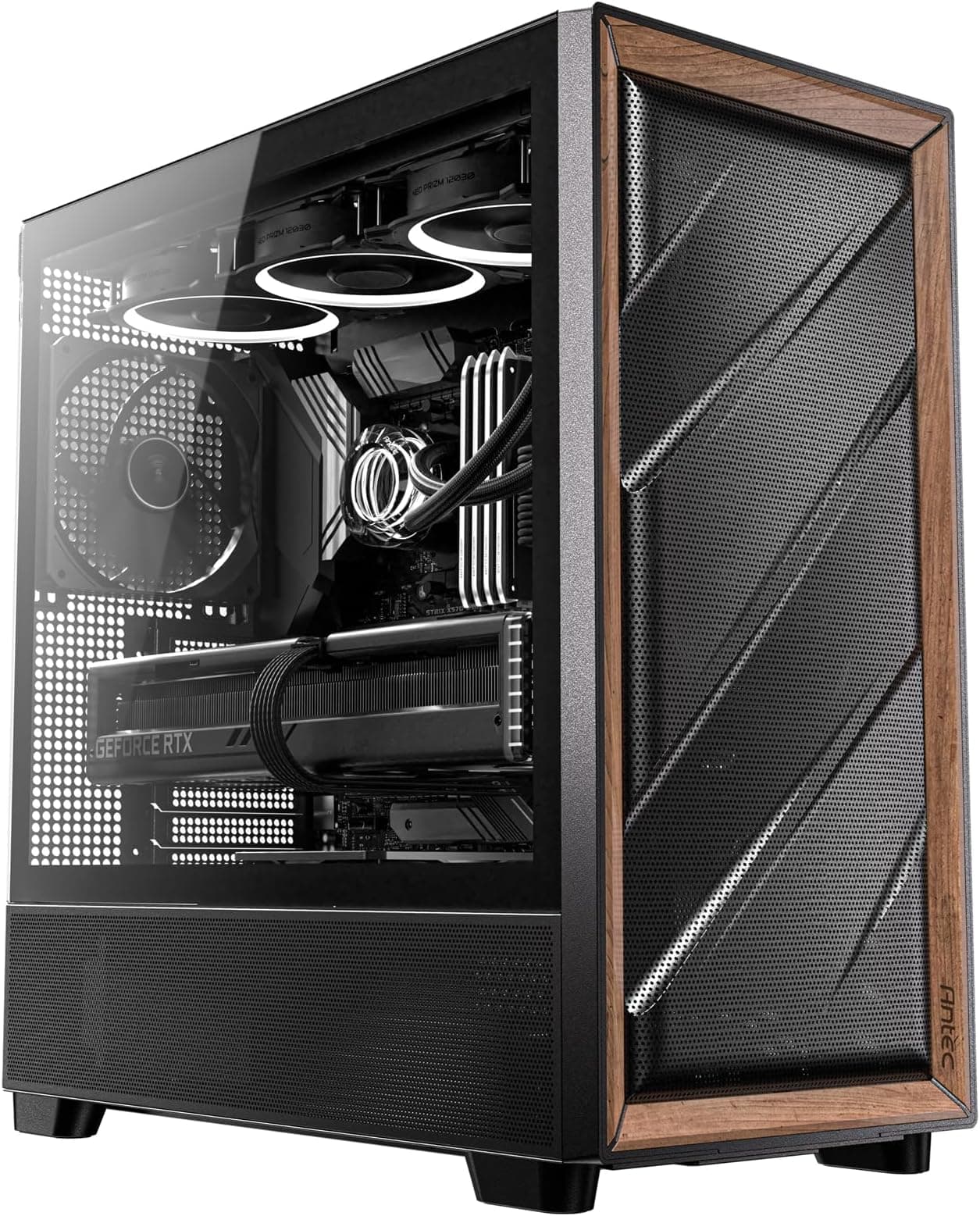
Fractal Design North Charcoal Black - Wood Walnut front - Mesh side panels - Two 140mm Aspect PWM fans included - Type C USB - ATX Airflow Mid Tower PC Gaming Case
£122.99 · Fractal Design
 8.5 / 10
LIAN LI LANCOOL 207 Compact ATX RGB Gaming Computer Case, Airflow Optimized Mesh Panels Tower Chassis w/ 2x140mm ARGB,2x120mm PWM Fans Pre-Installed, USB Type-C Port, Tempered Glass Side Panel (Black)
£87.36 · Lian Li
Frequently asked
5 questions01Is the SilverStone SST-GD09B - Grandia HTPC ATX Computer Case, Silent High Airflow Performance, black good for airflow?+
For an HTPC chassis, the airflow design is genuinely strong. Three 120mm front intake mounts with two fans included, a rear 120mm exhaust, and a mesh top panel for passive heat escape give it a proper front-to-rear airflow path. Owner reviews report reasonable temperatures for mid-range GPUs and low-profile CPU coolers under typical HTPC workloads. It's not going to match a full mesh mid-tower, but for the horizontal HTPC form factor it's one of the better-ventilated options available. Dust filtration is present on the front intake, though the top mesh panel has no filter, so periodic cleaning is important.
02What's the GPU clearance on the SilverStone SST-GD09B - Grandia HTPC ATX Computer Case, Silent High Airflow Performance, black?+
SilverStone rates the maximum GPU length at 270mm with the hard drive cage installed. Remove the cage entirely and you gain additional clearance, though the official spec is 270mm. Cards like the RTX 4060 and RX 7600 fit comfortably within this limit in most configurations. Longer high-end cards from the RTX 4070 Super tier and above often exceed 270mm in triple-fan board partner variants and will not fit. Always check your specific GPU's length against the 270mm limit before purchasing.
03Can the SilverStone SST-GD09B - Grandia HTPC ATX Computer Case, Silent High Airflow Performance, black fit a 360mm AIO?+
No. A 360mm AIO radiator is not compatible with this chassis. The horizontal layout and constrained internal volume make large radiator mounting impractical. The rear panel supports a single 120mm fan mount, and some owners have fitted compact 120mm AIOs here with success. A 240mm AIO is also not a realistic option given the internal dimensions. If liquid cooling is important to your build, a 120mm AIO at the rear is the practical limit, and most builders opt for a quality low-profile air cooler like the Noctua NH-L12S or NH-L9i instead.
04Is the SilverStone SST-GD09B - Grandia HTPC ATX Computer Case, Silent High Airflow Performance, black easy to build in?+
Honest answer: it's manageable but not effortless. The horizontal layout and tighter internal volume mean cable management requires more planning than a conventional mid-tower. A modular PSU is strongly recommended based on owner feedback, as non-modular units leave too many unused cables with nowhere sensible to go. Some owners mention minor sharp edges around internal cutouts, so gloves during the build are sensible. The 83mm CPU cooler height limit means you need to choose your cooler carefully before starting. Owners who plan the build in advance generally report a positive experience; those who go in expecting a quick casual build tend to find it more frustrating.
05What warranty and returns apply to the SilverStone SST-GD09B - Grandia HTPC ATX Computer Case, Silent High Airflow Performance, black?+
Specific warranty terms for this product are not confirmed in the available product data. For purchases made through Amazon UK, the standard 30-day returns window applies under Amazon's A-to-Z Guarantee, which covers items that arrive damaged or not as described. For warranty queries beyond the Amazon returns window, contact SilverStone directly via their official support channels to confirm the applicable terms for your purchase.