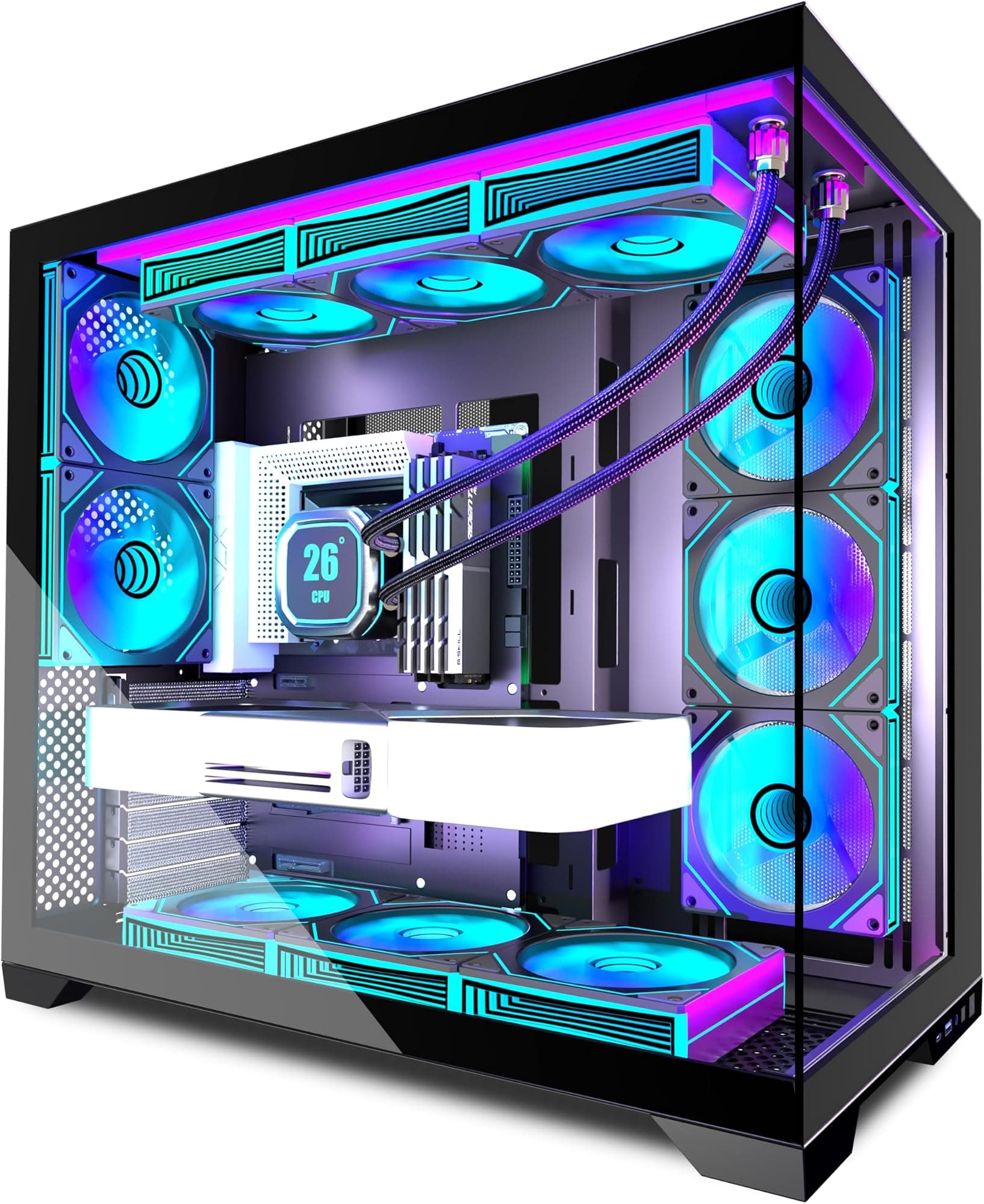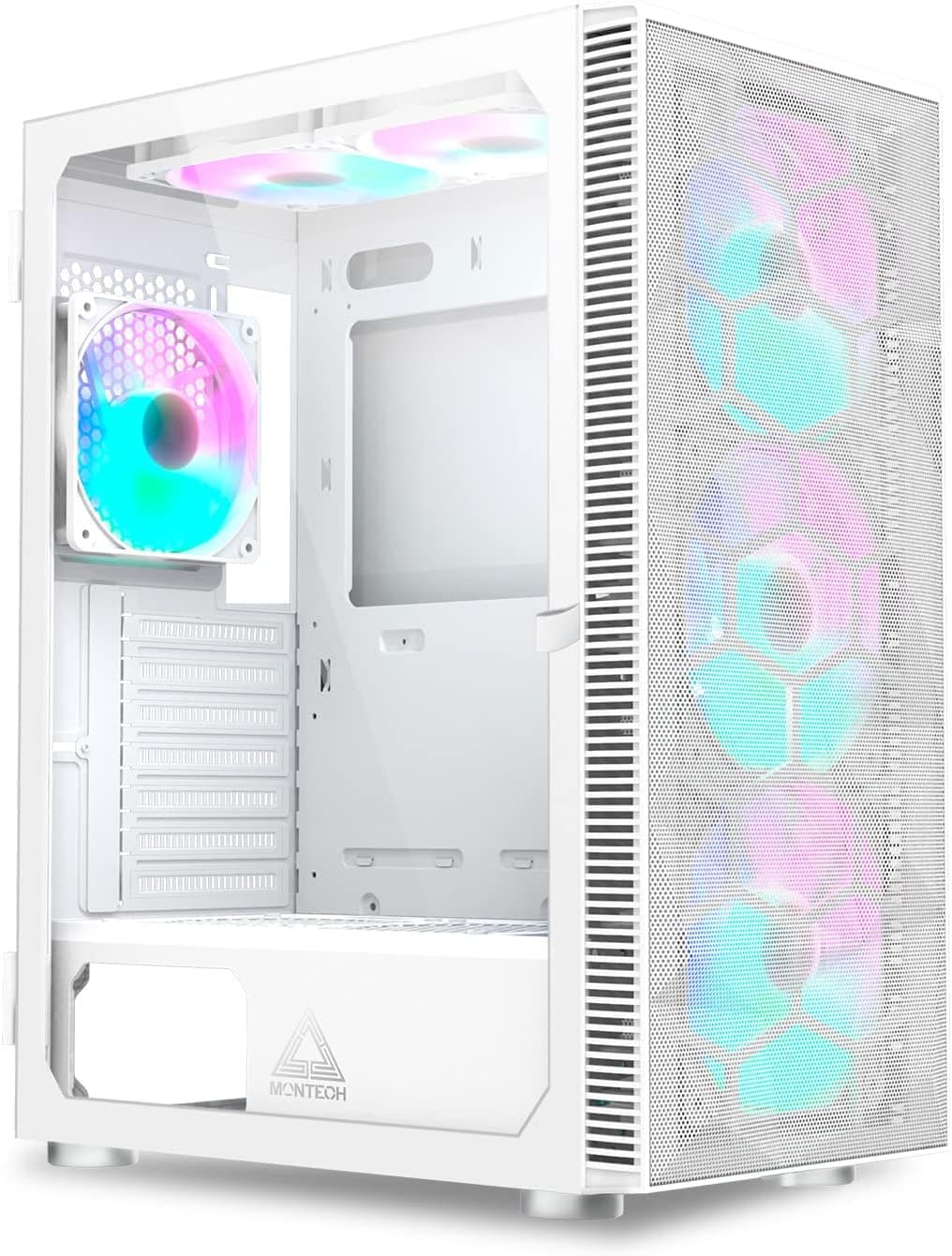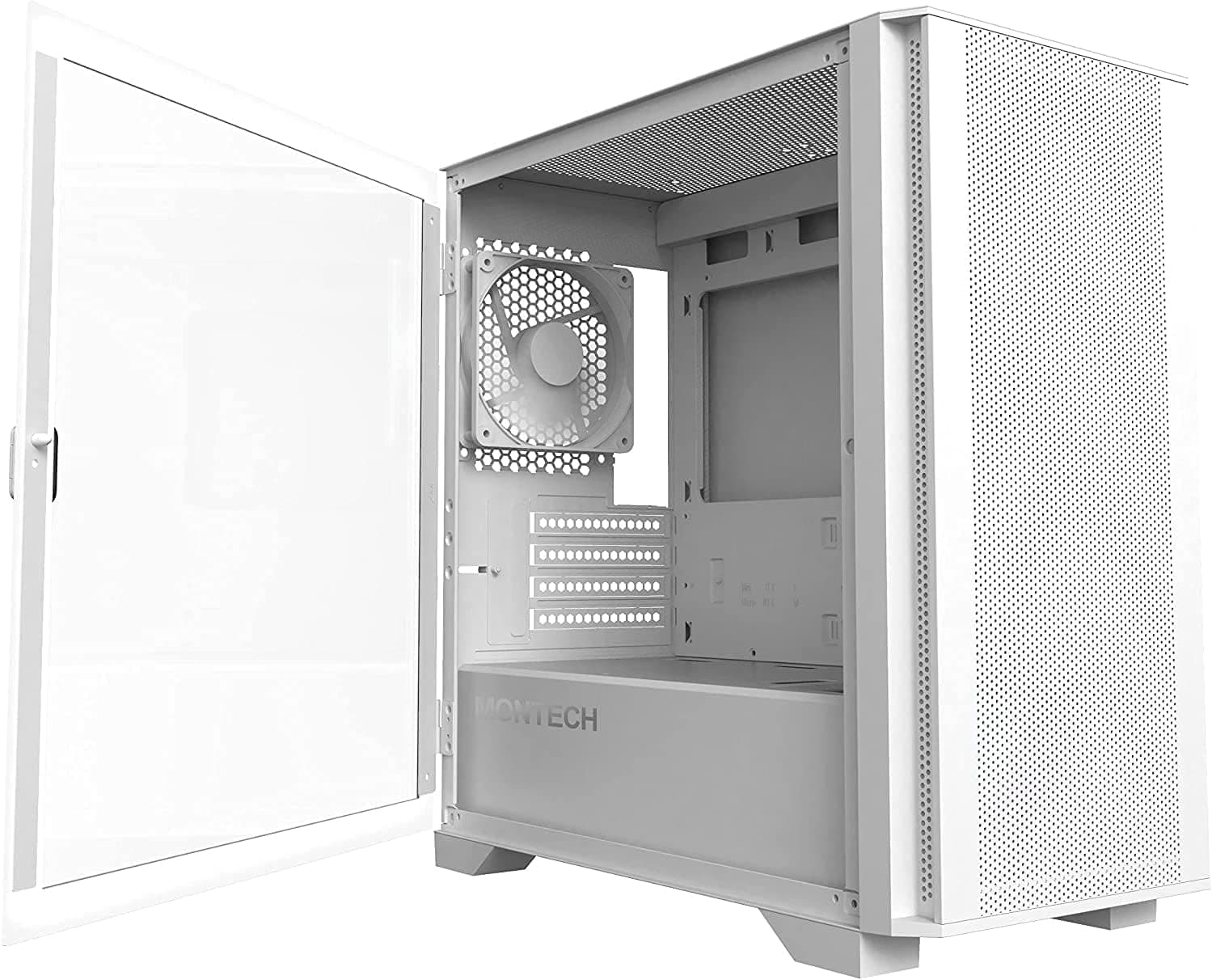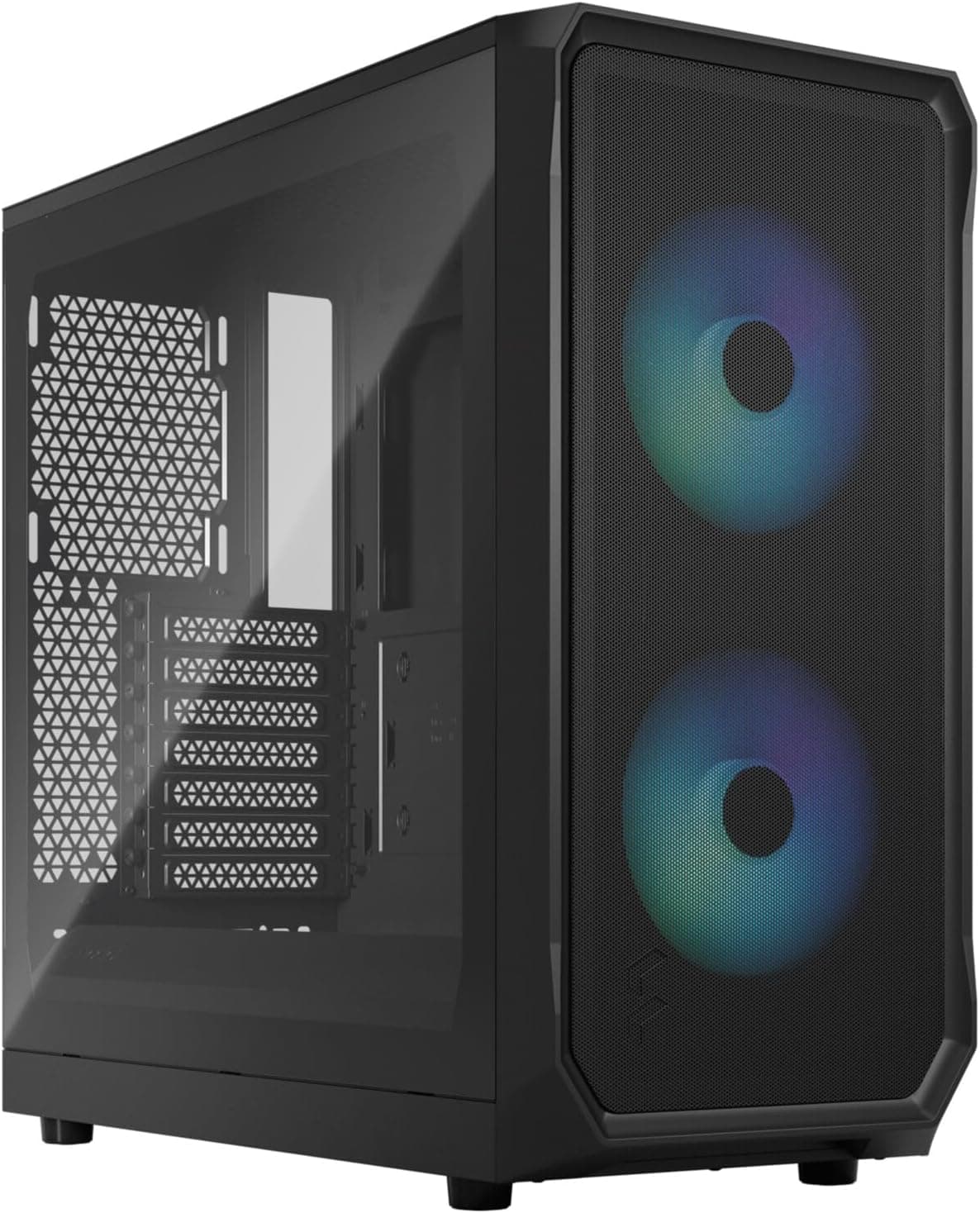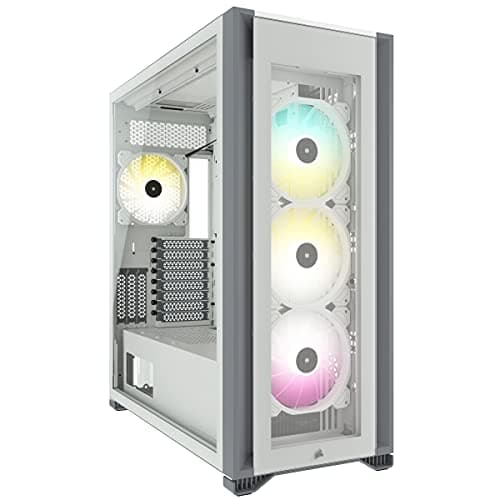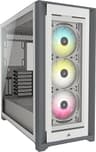
Glass panels and temperatures. It sounds like a niche argument until you're the one watching your CPU hit 90°C during a render because you prioritised looks over airflow. The Corsair iCUE 5000X RGB sits right in the middle of that debate, and the spec sheet makes it pretty clear which side Corsair is betting on. Three tempered glass panels. An RGB-forward design. A front panel that's more showcase than intake. That's the trade-off you're signing up for, and you should know it upfront before you hand over your money.
So, is the Corsair iCUE 5000X RGB any good? Yes, actually. With some caveats. It's a genuinely well-built mid-range case with thoughtful cable management, excellent clearances, and more fan mounting options than most builders will ever use. The 4.8-star average across nearly 2,900 owner reviews isn't a fluke. But it's not a thermal powerhouse, and if airflow is your absolute priority, there are smarter options at a similar price. What you're paying for here is a premium-looking, well-organised build platform that happens to run a bit warmer than a mesh-front alternative would. Whether that matters depends entirely on what you're putting inside it.
Core Specifications
The 5000X is a full-size mid-tower, and it feels like one. The chassis measures 520mm tall, 245mm wide, and 520mm deep. That's a proper footprint, not a compact case pretending to be a mid-tower. It tips the scales at around 11.5kg empty, which tells you something about the steel and glass involved. Corsair isn't using budget-grade materials here, and the weight reflects that. You'll want a desk that can handle it, and you'll want a second pair of hands when you're manoeuvring it into position.
Fan support is where the spec sheet gets genuinely impressive. The case supports up to 10 fans in total across the front (three 120mm or three 140mm), top (three 120mm or two 140mm), rear (one 120mm), and bottom (two 120mm). Corsair includes three 120mm LL120 RGB fans in the box, all pre-wired through the iCUE Lighting Node PRO and a Commander CORE XT hub. That's a decent starting point, though most builders running high-end components will want to add more, particularly at the front. Radiator support matches the fan layout, with a 360mm or 420mm radiator fitting up front, a 360mm or 280mm on top, and a 120mm at the rear.
The case supports ATX, Micro-ATX, and Mini-ITX motherboards. Maximum GPU length is 420mm. CPU cooler height clearance sits at 170mm. The PSU shroud accommodates units up to 225mm long. There are two 3.5-inch drive bays and two 2.5-inch trays, with additional 2.5-inch mounting points behind the motherboard tray. Front I/O includes two USB 3.0 Type-A ports, one USB 3.1 Gen 2 Type-C port, and a combined headphone and microphone jack. The iCUE Smart Case designation refers to the integrated lighting and fan controller ecosystem, which connects to Corsair's iCUE software for RGB and fan curve management.
| Specification | Detail |
|---|---|
| Form Factor | Mid-Tower ATX |
| Dimensions (H x W x D) | 520 x 245 x 520mm |
| Weight | ~11.5kg |
| Motherboard Support | ATX, Micro-ATX, Mini-ITX |
| Max GPU Length | 420mm |
| Max CPU Cooler Height | 170mm |
| Max PSU Length | 225mm |
| Front Fan Support | 3x 120mm or 3x 140mm |
| Top Fan Support | 3x 120mm or 2x 140mm |
| Rear Fan Support | 1x 120mm |
| Bottom Fan Support | 2x 120mm |
| Max Front Radiator | 420mm (3x 140mm) |
| Max Top Radiator | 360mm (3x 120mm) |
| Drive Bays (3.5") | 2 |
| Drive Bays (2.5") | 4 (2 dedicated + 2 behind tray) |
| Included Fans | 3x 120mm LL120 RGB |
| Front I/O | 2x USB 3.0, 1x USB 3.1 Gen 2 Type-C, Audio Combo |
| Side Panels | Tempered Glass (left + right) |
| Front Panel | Tempered Glass |
| Price | £82.50 |

Form Factor and Dimensions
At 520mm deep and 520mm tall, the 5000X is not a small case. It's a proper mid-tower with the internal volume to match, and that's mostly a good thing. You get genuine breathing room for large components, long GPUs, and chunky AIO radiators without having to resort to creative cable origami. The 245mm width is fairly standard for the class, though the three-panel glass design means the external footprint feels a bit more imposing than the numbers suggest on paper.
Desk placement is worth thinking about. This case is tall enough that on a standard desk it'll sit at roughly monitor-bezel height, which looks great if you want to show off your build. The feet are rubberised and give a solid, stable base with no wobble. Owners consistently mention how solid the case feels in place, which isn't something you always get at this price point. The white finish (this variant) is a clean matte-ish white on the steel panels, not the slightly-yellow-after-six-months white you sometimes get from cheaper cases.
Floor-standing use is also an option if your desk can't accommodate the height. The bottom clearance is adequate for the PSU intake fans, assuming you're not putting it directly on thick carpet without a riser. The overall build volume is generous enough that most standard ATX builds won't feel cramped, and even E-ATX boards up to around 277mm wide can technically squeeze in, though Corsair officially lists ATX as the maximum supported size. your specific board dimensions if you're going that route.
Motherboard Compatibility
The 5000X officially supports ATX, Micro-ATX, and Mini-ITX. The standoff layout is pre-installed for ATX, which is the sensible default for a case this size. If you're dropping a Mini-ITX board in here, it'll work fine mechanically, but you're paying for a lot of case you won't use, and the proportions will look a bit odd with all that empty space. Micro-ATX is a more reasonable pairing if you want a slightly smaller board without wasting the case's potential.
The motherboard tray itself is well-positioned. There's a large CPU cutout behind the tray, measuring generously enough to accommodate most mainstream cooler backplates without removing the motherboard. Owners specifically call this out as a time-saver during builds and upgrades, which it genuinely is. Nothing worse than having to pull an entire board just to swap a cooler because the manufacturer skimped on the cutout size.
Standoff alignment is straightforward. The ATX holes are clearly marked, and the tray has enough rigidity that it doesn't flex when you're tightening screws, which matters more than people realise. A flexing tray makes standoff alignment a pain and can stress the PCB. The 5000X avoids this. For anyone running a standard full-size ATX board, this is a non-issue build, and that's exactly how it should be.
GPU Clearance
420mm of GPU clearance is the headline number, and it's a good one. To put that in context, an RTX 4090 Founders Edition measures 336mm long. A triple-fan AIB card like the ASUS ROG STRIX RTX 4090 comes in at around 358mm. Even the most comically oversized triple-slot, triple-fan monsters on the market today sit comfortably under 420mm. In practice, you're not going to buy a GPU in 2026 that won't physically fit in this case length-wise.
Width is a different consideration. Modern high-end GPUs are increasingly wide, sometimes hitting 3.5 slots or more. The 5000X has enough internal width to handle this without fouling on cable runs or the PSU shroud, provided you're sensible about where you route your PCIe power cables. Owners with large AIB cards report no clearance issues, though a few note that very wide cards can make accessing the bottom PCIe slot fiddly if you're running multiple cards (which almost nobody does any more, but there it is).
There's no native vertical GPU mount bracket included in the box, which is a mild disappointment at this price point given how RGB-forward the case is. Showing off a GPU through all that glass is kind of the point, and a vertical mount would serve that goal perfectly. Corsair does sell a compatible vertical GPU mount separately, and third-party options exist too. It's not a dealbreaker, but it's worth factoring in if a vertical display is on your wishlist. The PCIe slot covers are tool-free, which is a nice touch regardless.
CPU Cooler Clearance
170mm of CPU cooler clearance is the spec, and that's enough for the vast majority of air coolers on the market. The Noctua NH-D15 measures 165mm tall. The be quiet! Dark Rock Pro 4 comes in at 162.8mm. The DeepCool AK620 is 160mm. You'd have to go looking for a cooler that exceeds 170mm, and most of the ones that do are niche enthusiast towers that you'd already know about. For practical purposes, this clearance is fine.
AIO radiator support is where the 5000X really opens up. Front mounting supports up to a 420mm radiator (three 140mm fans), which is about as large as AIOs get. Top mounting handles up to 360mm. Rear takes a single 120mm. So you could theoretically run a 420mm AIO up front and a 360mm AIO on top simultaneously, though at that point you're building a very specific kind of machine and you know exactly what you're doing. For most builders, a 360mm front-mounted AIO is the sweet spot, and the 5000X handles it without any fuss.
One thing: if you mount a 360mm or 420mm radiator at the front, GPU clearance does reduce slightly depending on the radiator and fan thickness. Corsair's own specs account for this, and owners report that even with a front 360mm AIO and a large GPU, there's still adequate clearance. But it's worth measuring your specific radiator depth before assuming everything will slot in perfectly. Pump head clearance on the top-mounted position is also generous, with no reports from owners of interference with tall RAM kits, which is a common complaint with top-mounted AIOs in other cases.
Storage Bay Options
Two 3.5-inch bays and four 2.5-inch mounting positions. That's the storage story for the 5000X. The 3.5-inch cages sit behind the PSU shroud, out of sight, which is exactly where you want spinning hard drives in a glass-panelled showcase case. They're tool-free, using a push-and-click mechanism that owners generally find reliable, though a small number mention the plastic clips feel less substantial than the rest of the case's construction. Not a structural issue, just a tactile one.
The 2.5-inch options split between two dedicated trays (also behind the shroud area) and two positions directly behind the motherboard tray. The behind-tray positions are handy for SSDs you want hidden away, and they keep the rear cable management area from becoming completely chaotic. M.2 drives live on your motherboard itself, obviously, so the 2.5-inch count is really about SATA SSDs and the occasional 2.5-inch mechanical drive. For most modern builds, two 2.5-inch positions is plenty.
If you're building a NAS-adjacent machine or a content creation rig with a lot of local storage, two 3.5-inch bays might feel limiting. There's no expansion cage option that drops in natively, so you're capped at what the case provides. For a gaming build or a workstation running primarily NVMe storage, though, it's absolutely fine. The reality is that most people building into a case like this are running one or two NVMe drives and maybe a SATA SSD for overflow, and the 5000X covers that without breaking a sweat.

Cable Management
This is one of the areas where the 5000X genuinely earns its price tag. The PSU shroud runs the full width of the bottom of the case, hiding the power supply and the bulk of your cable runs. Behind the motherboard tray, there's approximately 30mm of clearance for cables, which is enough to actually route things properly rather than just stuffing them in and hoping the panel closes. Velcro straps are included at multiple points along the tray spine, which is the right way to do it. Zip ties are fine, but Velcro makes future upgrades so much less miserable.
The cable routing channels are clearly defined, with rubber-grommeted openings at logical positions around the motherboard area. The 24-pin ATX cable has a dedicated channel that keeps it from flopping across the board, and the CPU EPS routing channels at the top of the tray are positioned to reach both single and dual EPS connector boards without stretching. Owners consistently rate the cable management as one of the case's strongest points, with multiple reviews specifically mentioning clean builds being achievable even for first-time builders.
The right-side tempered glass panel (the one covering the cable management area) is where things get slightly less perfect. It's glass, which looks great, but it means you can see the cables behind the tray. That's fine if your routing is tidy, slightly embarrassing if it isn't. Some cases use a solid panel on the cable side for exactly this reason. Whether you consider the glass rear panel a feature or a liability depends entirely on how much pride you take in your cable runs. The included Commander CORE XT hub also needs to be mounted somewhere back there, and it's chunky enough to be visible. Plan its placement before you start routing everything else.
Airflow and Thermal Design
Here's where the Corsair iCUE 5000X RGB review has to be honest with you. The front panel is tempered glass. Not mesh. Not perforated steel. Glass. That means the three 120mm LL120 fans Corsair includes are pulling air through the narrow gaps around the panel's edge rather than through a large open mesh surface. The thermal difference between a glass-front and a mesh-front case is real, and published comparisons from independent benchmarkers consistently show a gap of 5 to 15 degrees Celsius under sustained load depending on the components and ambient conditions. That's not nothing.
The included LL120 fans are Corsair's dual-ring RGB fans. They look spectacular. They move a reasonable amount of air. But they're not high-static-pressure workhorses, and they're working against a restrictive front panel. If you're building with a mid-range CPU and GPU and you're not planning to push them hard, you'll probably never notice. If you're dropping in a high-TDP CPU and a power-hungry GPU and running them both at load simultaneously, you might find yourself wanting to swap the front fans for something with more static pressure, or considering whether a mesh-front alternative would have been the better call from the start.
That said, the fan mounting flexibility is genuinely impressive. Ten total fan positions means you can run a positive pressure setup with strong front intake and adequate exhaust, which does help. The bottom intake positions are filtered, the top has a removable magnetic dust filter, and the front panel lifts off for cleaning. Dust filtration is decent across the board, which is more than you can say for some cases at this price. Owners in warmer climates or with high-TDP builds do sometimes mention adding fans or swapping the front panel for a mesh alternative (third-party options exist), but for a typical gaming build in a reasonably cool room, the stock configuration is liveable. Just go in with realistic expectations about what three glass panels do to your airflow.
Front I/O and Connectivity
The front I/O sits at the top of the case, which is the sensible place for it when the case is floor-standing. Two USB 3.0 Type-A ports, one USB 3.1 Gen 2 Type-C port, a combined headphone and microphone jack, power button, and reset button. The Type-C port is the headline addition here, and it's a proper Gen 2 connection (10Gbps) rather than the USB 2.0 Type-C that some budget cases sneak in. Your motherboard needs a USB 3.2 Gen 2 internal header to use it, which most modern ATX boards have, but if you're pairing this with an older board.
The power button has a satisfying click to it, according to multiple owner reports. Small thing, but it's the kind of detail that separates a case that feels premium from one that just looks it. The reset button is slightly recessed, which reduces the chance of accidentally hitting it. The audio jack is a combo port rather than separate headphone and mic sockets, which is fine for headsets with a single TRRS plug but means you'll need an adapter if you're using separate headphone and microphone connections. Most people won't care.
The iCUE lighting controller and Commander CORE XT hub are the other connectivity story here. The three included LL120 fans connect to the hub, which connects to the motherboard via USB 2.0 internal header and SATA power. Corsair's iCUE software then gives you control over both the RGB and the fan curves. The software is functional and reasonably polished, though some owners find it resource-heavy and prefer to set fan curves in BIOS and leave the RGB on a static colour to avoid running iCUE at all. That's a perfectly valid approach. The hardware works fine without the software; you just lose the dynamic lighting control.
Build Quality and Materials
The steel used throughout the 5000X is noticeably thicker than what you get in budget cases. The chassis doesn't flex when you press on the side panels or pick it up by the top. The motherboard tray is rigid. The PSU shroud doesn't wobble. These things matter because a chassis that flexes puts stress on your components and makes panel alignment a constant battle. The 5000X avoids all of that. It feels like a case that cost more than it did, which is a genuine compliment.
The tempered glass panels are thick and well-fitted. They attach via thumbscrews at the rear, and the fit is snug enough that there's no vibration rattle at fan speeds. Owners almost universally praise the panel quality, with the white version specifically getting comments about how clean the finish looks and how well it holds up over time. The white steel doesn't yellow, and the glass stays clear. Sharp edges are essentially absent, which is because some cases at this price bracket still manage to draw blood during a build. The 5000X is notably clean in this regard.
The front panel is the one area where build quality and practicality diverge slightly. It's a glass panel that attaches magnetically, which makes it easy to remove for cleaning. But the magnetic attachment means it can feel a little loose if you knock it, and a few owners mention it coming off when moving the case. It's not a structural failure, just a minor annoyance. The tempered glass itself is fine; it's the magnetic retention that some people find less than confidence-inspiring. Overall though, the build quality here is solidly above average for the mid-range price tier, and the owner review pattern backs that up consistently.
How It Compares
The two most natural comparisons for the Corsair iCUE 5000X RGB are the Fractal Design Meshify 2 and the Lian Li Lancool 216. Both sit in a similar price bracket. Both are mid-towers. But they make very different choices about the airflow-versus-aesthetics trade-off, and those differences are worth understanding before you commit.
The Fractal Design Meshify 2 has a mesh front panel. Full stop. That single design decision means it runs meaningfully cooler than the 5000X under load, and independent thermal comparisons back this up consistently. It's not as visually striking, doesn't have the three-panel glass showcase effect, and the included fans are less RGB-heavy. But if your priority is keeping temperatures down on a high-TDP build, the Meshify 2 is the more sensible tool for the job. The Lian Li Lancool 216 also uses a mesh front, includes two large 160mm fans that move serious air, and comes in under the 5000X's price in most markets. It's a genuinely strong thermal performer that gives up some of the premium feel and RGB ecosystem integration of the Corsair.
Where the 5000X wins is the complete package: the iCUE ecosystem integration, the three included RGB fans and their controllers, the cable management infrastructure, and the sheer visual impact of three glass panels. For a builder who wants a showcase PC and is running a mid-range CPU and GPU that won't push thermal limits, the 5000X is a genuinely excellent choice. For a builder prioritising maximum thermal headroom above all else, it isn't.
| Feature | Corsair iCUE 5000X RGB | Fractal Design Meshify 2 | Lian Li Lancool 216 |
|---|---|---|---|
| Front Panel | Tempered Glass | Mesh | Mesh |
| Max GPU Length | 420mm | 467mm | 435mm |
| Max CPU Cooler Height | 170mm | 185mm | 176mm |
| Included Fans | 3x 120mm RGB | 3x 140mm Dynamic X2 | 2x 160mm ARGB |
| RGB Ecosystem | iCUE (strong) | None included | L-Connect 3 (good) |
| Drive Bays (3.5") | 2 | 3 | 2 |
| USB Type-C Front I/O | Yes (Gen 2) | Yes (Gen 2) | Yes (Gen 2) |
| Airflow Priority | Aesthetics first | Airflow first | Airflow first |
| Price Tier | Mid-range | Mid-range | Mid-range |

Final Verdict: Corsair iCUE 5000X RGB Review
The Corsair iCUE 5000X RGB is a very good case for a specific kind of builder. If you want a showcase build, you care about the RGB ecosystem, you're running mid-to-high-end components that aren't constantly screaming at their thermal limits, and you want cable management that actually works, this case delivers all of that at a mid-range price. The build quality is genuinely impressive. The clearances are generous. The included fans and controllers save you money versus buying them separately. And nearly 2,900 owner reviews averaging 4.8 stars is about as strong a signal as you'll find that this case does what it promises.
The trade-off is thermal performance. Three glass panels look great and restrict airflow in equal measure. This isn't a case designed for builders who want to push a high-TDP CPU and a power-hungry GPU to their limits and keep temperatures in check. If that's you, the Fractal Design Meshify 2 or the Lian Li Lancool 216 will serve you better, and both come in at a similar price. You'll give up the RGB spectacle and the iCUE integration, but your components will run cooler and that matters over the long term.
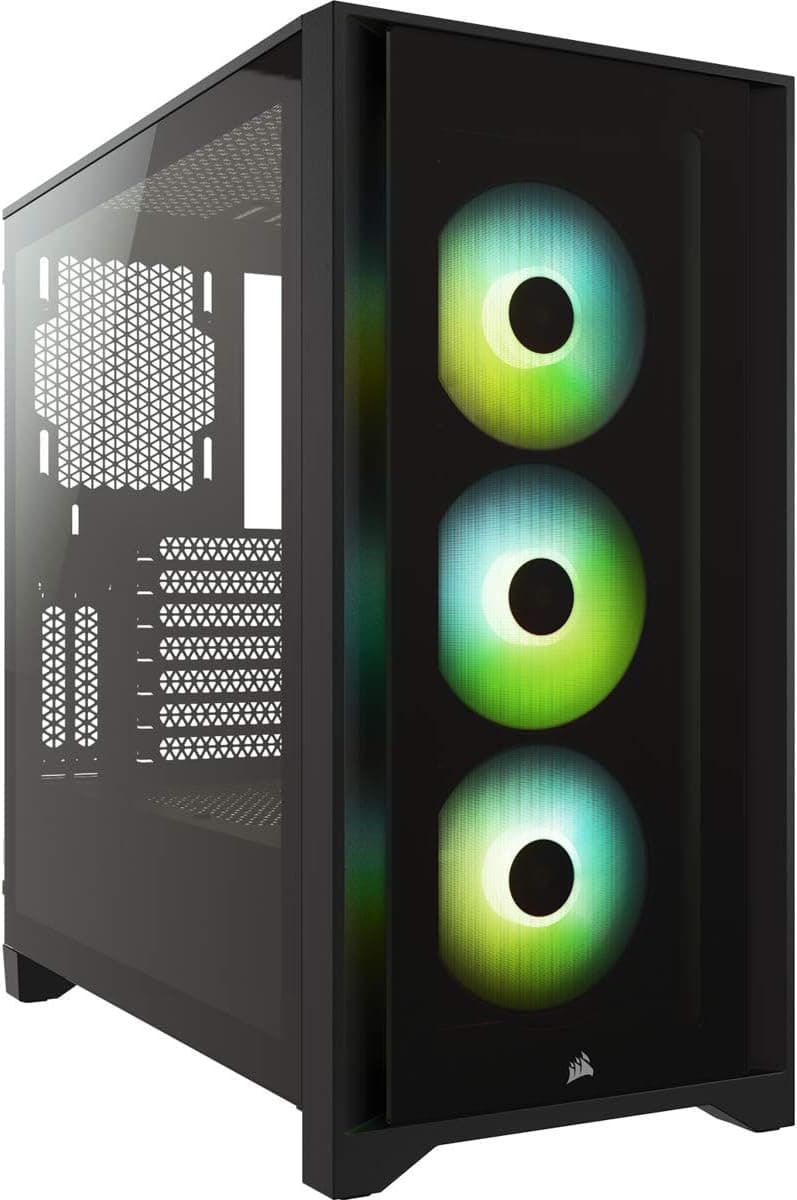
For the Corsair iCUE 5000X RGB review verdict in plain terms: it's an 8.5 out of 10. Exceptional build quality, genuinely good cable management infrastructure, and a complete RGB ecosystem out of the box. The glass-front thermal compromise is real and about, but for the majority of mid-range gaming builds it's a very capable home. If your build skews more workstation than gaming showcase, or if you're running components with serious TDP demands, spend a few quid less on the Corsair 4000D Airflow instead. Same brand, similar quality, mesh front, better thermals, lower price. But if you want the full glass showcase experience done properly, the 5000X is the one to get.
What works. What doesn’t.
5 + 4What we liked5 reasons
- Exceptional cable management infrastructure with 30mm rear clearance and included Velcro straps
- 420mm GPU clearance handles every current flagship card without compromise
- Three LL120 RGB fans plus Commander CORE XT and Lighting Node PRO included in the box
- Noticeably thick steel construction with no flex and clean edge finishing
- USB 3.1 Gen 2 Type-C front I/O is a genuine Gen 2 connection, not a downgraded port
Where it falls4 reasons
- Glass front panel restricts intake airflow compared to mesh alternatives at the same price
- No vertical GPU mount bracket included despite the RGB showcase design
- Right-side glass panel exposes cable management area, so tidy routing is non-negotiable
- Magnetic front panel retention can feel insecure when moving the case
Full specifications
11 attributes| Form factor | Mid-Tower |
|---|---|
| CPU cooler clearance MM | 170 |
| Dimensions MM | 520 x 245 x 520 |
| Fans included | 3 |
| GPU clearance MM | 420 |
| MAX FAN count | 10 |
| MAX radiator MM | 360 |
| PSU support | ATX up to 250mm |
| Side panel | tempered glass |
| Supported motherboard | Mini-ITX, Micro-ATX, ATX, E-ATX |
| Weight KG | 15 |
Frequently asked
5 questions01Is the Corsair iCUE 5000X RGB Tempered Glass Mid-Tower ATX PC Smart Case, White good for airflow?+
It's decent but not exceptional. The glass front panel restricts intake airflow compared to mesh-front cases, and published thermal comparisons consistently show a 5 to 15 degree Celsius gap under load versus mesh alternatives. The case supports up to 10 fans across front, top, rear, and bottom positions, and the three included 120mm LL120 fans give you a reasonable starting point. Dust filters are present on the top and bottom. For mid-range gaming builds in a cool room, the thermal performance is acceptable. For high-TDP builds running a powerful CPU and GPU simultaneously at sustained load, a mesh-front alternative like the Fractal Design Meshify 2 would be the more sensible choice.
02What's the GPU clearance on the Corsair iCUE 5000X RGB Tempered Glass Mid-Tower ATX PC Smart Case, White?+
Maximum GPU length is 420mm. To put that in practical terms, an RTX 4090 Founders Edition measures 336mm, and even the largest triple-fan AIB cards on the market today sit well under 400mm. In practice, you will not find a current consumer GPU that exceeds this clearance. Width is not an issue either, with the internal volume accommodating 3.5-slot cards without fouling on the PSU shroud or cable runs. Note that fitting a front-mounted 360mm or 420mm AIO radiator does slightly reduce effective GPU clearance depending on radiator and fan thickness, though owners report no issues even with large AIB cards and front AIOs installed simultaneously.
03Can the Corsair iCUE 5000X RGB Tempered Glass Mid-Tower ATX PC Smart Case, White fit a 360mm AIO?+
Yes, comfortably. The front panel supports radiators up to 420mm (three 140mm fans), so a 360mm AIO fits with room to spare. The top panel supports up to 360mm (three 120mm fans). You could technically run a 420mm AIO at the front and a 360mm on top simultaneously, though that is an unusual configuration. For a standard 360mm front-mounted AIO, which is the most common choice for high-end cooling, the 5000X handles it without issue. Owners report no interference between top-mounted AIOs and tall RAM kits, which is a common problem in other cases.
04Is the Corsair iCUE 5000X RGB Tempered Glass Mid-Tower ATX PC Smart Case, White easy to build in?+
Yes, genuinely. The cable management is one of the case's strongest points, with around 30mm of rear clearance behind the motherboard tray, multiple Velcro strap anchor points, rubber-grommeted routing channels, and a full-width PSU shroud that hides the bulk of your cable runs. The CPU cutout behind the motherboard tray is large enough to access most cooler backplates without removing the board. Sharp edges are essentially absent throughout, which is not always a given at this price point. The tool-free PCIe slot covers and drive bay mechanisms reduce the need for screwdrivers. Owner reviews consistently rate the build experience as above average, with first-time builders specifically calling it out as manageable.
05What warranty and returns apply to the Corsair iCUE 5000X RGB Tempered Glass Mid-Tower ATX PC Smart Case, White?+
Corsair typically offers a two-year warranty on their cases, though you should verify the current terms directly on the Corsair UK support pages as warranty periods can vary by region and product revision. If you purchase through Amazon UK, you also benefit from Amazon's standard 30-day return window and the A-to-Z Guarantee, which covers you if the item arrives damaged or not as described. For warranty claims after the return window, contact Corsair support directly with your proof of purchase.