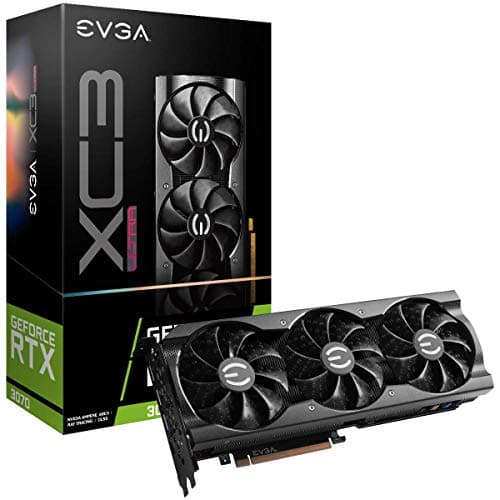
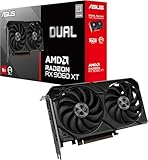
There's a particular kind of excitement that comes with an AIB partner card that's clearly trying to be the best version of something. Gigabyte didn't just slap a slightly bigger cooler on the RTX 3070 and call it a day with the AORUS Master. They went proper overboard, and honestly? Good. The vanilla RTX 3070 Founders Edition is already a cracking card, but the AORUS Master 8G is what happens when you take that GPU and ask the question: what if we actually tried? Three massive fans, a thick triple-slot cooler, factory overclock, and a premium PCB that Gigabyte clearly spent real money on.
But here's where things get interesting. Manufacturer claims are one thing. What actually matters is whether the published third-party benchmark numbers hold up against what real owners experience once this thing is sitting in their system, pulling power and pushing pixels. And with 75 owner reviews averaging ★★★★½ (4.5), there's a solid signal here that people are genuinely happy with it. The question is whether you should be too, or whether you're paying a premium for aesthetics and bragging rights when a cheaper 3070 would do the same job.
The RTX 3070 sits in a fascinating spot in NVIDIA's lineup. It was always the "sensible one" in the Ampere generation, offering RTX 3080-adjacent performance at a lower price point. The AORUS Master version is the flagship AIB take on that chip, which means you're looking at the absolute ceiling of what the RTX 3070 can do before you'd need to step up to a different GPU entirely. Whether that ceiling is high enough depends entirely on what you're trying to do with it.
Core Specifications
The Gigabyte AORUS GeForce RTX 3070 Master 8G is built around NVIDIA's GA104 die, manufactured on Samsung's 8nm process node. You get 5,888 CUDA cores, 46 RT cores (second generation), and 184 Tensor cores (third generation). The memory configuration is 8GB of GDDR6 across a 256-bit bus, delivering 448 GB/s of memory bandwidth. That's the same silicon and memory spec as every other RTX 3070, but what Gigabyte brings to the table is a factory overclock pushing the boost clock to 1830 MHz compared to the reference 1725 MHz, plus a substantially beefier cooling solution that actually lets that overclock breathe.
The card requires a 650W PSU minimum (Gigabyte officially recommends this), draws power through two 8-pin PCIe connectors, and has a Total Graphics Power of 240W. Display outputs are four in total: three DisplayPort 1.4a and one HDMI 2.1. The card connects via PCIe 4.0 x16, though it's backwards compatible with PCIe 3.0 systems without meaningful performance loss. Physical dimensions are substantial: 323mm long, 140mm tall, and occupying three expansion slots. This is not a small card. Check your case clearance before ordering.
One thing worth flagging immediately: this is a heavy card. The triple-fan triple-slot design means it has real mass to it, and without a GPU support bracket, you'll want to keep an eye on PCIe slot stress over time. Most mid-tower and full-tower cases will accommodate it fine, but compact builds are out of the question. The build quality itself is genuinely impressive. The backplate is solid aluminium, the fans have a quality feel to them, and the overall construction is a step above what you'd get from budget AIB options.
| Specification | Detail |
|---|---|
| GPU Architecture | NVIDIA Ampere (GA104) |
| CUDA Cores | 5,888 |
| RT Cores (Gen) | 46 (2nd Gen) |
| Tensor Cores (Gen) | 184 (3rd Gen) |
| Base Clock | 1500 MHz |
| Boost Clock (Factory OC) | 1830 MHz |
| VRAM | 8GB GDDR6 |
| Memory Bus | 256-bit |
| Memory Bandwidth | 448 GB/s |
| TGP | 240W |
| Power Connectors | 2x 8-pin PCIe |
| Display Outputs | 3x DisplayPort 1.4a, 1x HDMI 2.1 |
| PCIe Interface | PCIe 4.0 x16 |
| Card Length | 323mm |
| Slot Width | 3 slots |
| Recommended PSU | 650W minimum |

Architecture and Cores
The NVIDIA Ampere architecture was a genuine generational leap when it launched. The GA104 die powering the RTX 3070 is a cut-down version of the GA102 found in the RTX 3080 and 3090, but it's not some gutted afterthought. At 5,888 CUDA cores across 46 Streaming Multiprocessors, the RTX 3070 has more shader processors than the previous generation RTX 2080 Ti, which was NVIDIA's flagship at the time. That's the kind of fact that still stops me in my tracks a bit. The mid-range card of one generation beating the top card of the previous one in raw compute units.
The second-generation RT cores are a meaningful upgrade over Turing's first-gen implementation. They can handle BVH traversal and ray-box/ray-triangle intersection concurrently, which translates to roughly double the ray tracing throughput compared to Turing at the same clock speed. In practice, this means the RTX 3070 can actually run ray tracing at playable frame rates in a way that the RTX 2070 really couldn't without DLSS doing heavy lifting. The 184 third-generation Tensor cores are what power DLSS, and they're substantially more capable than the second-gen versions in the RTX 20 series.
Samsung's 8nm node is the one area where Ampere shows its age compared to what came after. TSMC's 4nm process used in Ada Lovelace (RTX 40 series) is dramatically more efficient, and it shows in power consumption figures. The GA104 is a big chip doing a lot of work, and it needs the watts to do it. That's not a criticism specific to this card, it's just the reality of the architecture. What Gigabyte has done with the AORUS Master is build a cooling solution that gives that chip enough thermal headroom to sustain its factory overclock without throttling, which is genuinely the right approach for a premium AIB variant.
Clock Speeds and Boost
The reference RTX 3070 Founders Edition boosts to 1725 MHz. The AORUS Master 8G is factory overclocked to 1830 MHz, which is a 6% uplift. In the real world, that translates to roughly 3 to 5% better gaming performance compared to a reference-clocked card, which is modest but measurable. Published benchmark results consistently show the AORUS Master performing a few frames ahead of reference 3070 cards in the same titles. It's not transformative, but it's there.
What's more interesting is how the card behaves under sustained load. NVIDIA's GPU Boost 4.0 algorithm means the actual boost clock you see during gaming isn't a fixed number. It fluctuates based on power headroom, temperature, and voltage. With the AORUS Master's superior cooling keeping the GPU temperature lower than reference designs, the card tends to sustain clocks closer to that 1830 MHz ceiling for longer. Published thermal data for this card class shows junction temperatures sitting comfortably in the 70 to 75 degrees Celsius range under sustained gaming load, which gives the boost algorithm plenty of room to work.
If you're the sort of person who likes to push things further, the AORUS Master has solid overclocking headroom on top of the factory OC. The premium PCB and power delivery components mean it can handle additional manual overclocking through tools like MSI Afterburner without the power delivery becoming a bottleneck. Owner reviews mention achieving stable clocks in the 1900 to 1950 MHz range with manual tuning, which is genuinely impressive for Ampere silicon. The memory also has some headroom, though GDDR6 at this specification is already running fairly close to its practical limits on this bus width.
VRAM Analysis
Eight gigabytes of GDDR6. This is the conversation nobody particularly wants to have, but we need to have it anyway. When the RTX 3070 launched in late 2020, 8GB felt reasonable for a card at this price point. In 2024 and beyond, it's become the card's most significant limitation. Modern games are increasingly aggressive with VRAM usage. Titles like Hogwarts Legacy, The Last of Us Part I on PC, Alan Wake 2, and Starfield can push past 8GB at 1440p with high texture settings, causing stuttering and frame time spikes that raw frame rate numbers don't capture.
At 1080p, 8GB is absolutely fine. You're not going to run into VRAM limits at 1080p with any current title on reasonable settings. At 1440p, which is where this card really lives, you need to be a bit thoughtful about texture quality settings in the most demanding games. Dropping textures from Ultra to High in a VRAM-hungry title often recovers 10 to 15% performance with minimal visual difference, and that's the pragmatic approach here. At 4K, the VRAM situation becomes genuinely problematic. The 256-bit bus and 448 GB/s bandwidth are decent, but 8GB at 4K Ultra settings in 2024 titles is asking for trouble.
The uncomfortable truth is that the RTX 3070's 8GB configuration was a controversial decision even at launch. NVIDIA's own RTX 3080 launched with 10GB (and later 12GB variants), and AMD's competing RX 6800 XT offered 16GB at a similar price. For someone buying this card today, the VRAM situation is the biggest reason to think carefully about the purchase. If your primary target is 1440p gaming for the next two to three years, you'll mostly be fine with careful settings management. If you want to future-proof for 4K or just never want to think about VRAM, look at the RTX 3080 12GB or current-generation alternatives. The 256-bit bus width is what it is. You can't fix it with a driver update.
Ray Tracing and Upscaling
Ray tracing on the RTX 3070 is genuinely usable, which is more than could be said for first-gen RT on Turing cards. Published benchmark results for Ampere cards in this tier show the RTX 3070 delivering around 50 to 60 FPS at 1440p in titles like Cyberpunk 2077 with RT Ultra settings before DLSS, dropping to 30 to 40 FPS in the most demanding RT scenarios. That's playable territory, but it's not comfortable. Enable DLSS Quality mode and those numbers jump to 70 to 90 FPS in many RT-enabled titles, which is where the card actually shines.
NVIDIA DLSS (Deep Learning Super Sampling) is genuinely one of the best reasons to be on Team Green, and the RTX 3070's third-gen Tensor cores run it well. DLSS 2 Quality mode at 1440p output is visually very close to native resolution in most titles, with the performance uplift being substantial enough to make ray tracing viable where it otherwise wouldn't be. DLSS 3 (Frame Generation) is not supported on Ampere, that feature is locked to Ada Lovelace cards. So you're getting DLSS 2 here, which is still excellent but worth knowing if you're comparing to RTX 40 series cards.
AMD's FSR (FidelityFX Super Resolution) works on any GPU, so the RTX 3070 can use FSR in titles that support it. The image quality gap between DLSS 2 Quality and FSR 2 Quality has narrowed considerably with FSR 2's temporal approach, but DLSS 2 still edges it in most side-by-side comparisons. The practical takeaway: if you're gaming at 1440p with DLSS enabled in supported titles, the RTX 3070 delivers a genuinely great experience. Ray tracing without DLSS at 1440p is a compromise. Ray tracing with DLSS at 1440p is excellent. That's the honest summary.
Video Encoding
The GA104 die includes NVIDIA's seventh-generation NVENC encoder, which was a notable step up from the sixth-gen encoder in Turing cards. Published comparisons of NVENC across generations show the seventh-gen implementation delivering better quality at lower bitrates, making it genuinely competitive with software encoding for streaming purposes. If you're running OBS and want to stream at 1080p60 or 1440p60 without tanking your gaming performance, the RTX 3070's NVENC is excellent. The hardware encoder handles the workload without touching your gaming frame rate in any meaningful way.
One thing to flag: the RTX 3070 does not support AV1 hardware encoding. That capability arrived with Ada Lovelace (RTX 40 series). The GA104 can decode AV1, which is useful for YouTube and streaming platforms that serve AV1 content, but if you want to encode to AV1 in hardware, you need a newer card. For most streamers and content creators using H.264 or H.265, this is a non-issue. NVENC's H.265 output at 1440p60 is genuinely impressive quality, and the encoder's quality settings in OBS allow for fine-tuning that makes it hard to justify the CPU overhead of x264 for most streaming use cases.
For video editing, the RTX 3070 offers GPU acceleration in Adobe Premiere Pro, DaVinci Resolve, and other major NLEs. The 8GB VRAM is sufficient for most 1080p and 4K editing workflows, though colour grading with heavy effects on 4K timelines can push against that ceiling. The CUDA core count makes a real difference in render times compared to integrated graphics or older GPUs. This isn't a workstation card, but it handles creative workloads well enough that it's a genuinely useful secondary use case if you do both gaming and content creation.
Power Consumption
The RTX 3070 has a 220W TGP at reference. The AORUS Master's factory overclock pushes this to 240W, which is the figure Gigabyte quotes. Published power consumption measurements for this card in gaming scenarios show it drawing around 220 to 240W at the wall under sustained load, which aligns with spec. The two 8-pin PCIe connectors are a sensible choice for this power level, and you won't need a next-generation 12VHPWR adapter. Any decent 650W PSU from a reputable brand should handle this card comfortably, though if you're pairing it with a power-hungry CPU like a Core i9 or Ryzen 9, a 750W unit gives you more comfortable headroom.
Transient power spikes are worth mentioning because they caught some people out with Ampere cards at launch. The GA104 can spike briefly above its rated TGP during certain workloads, which is normal GPU behaviour but can trip cheap PSUs with poor transient response. This isn't a problem with a quality PSU from brands like Seasonic, Corsair, or be quiet!, but it's a reason to avoid the bargain basement power supplies. The card itself uses a standard dual 8-pin configuration rather than anything exotic, so cable compatibility is a non-issue with any PSU manufactured in the last several years.
Compared to the current generation, the RTX 3070's 240W TGP looks quite power-hungry. An RTX 4070 delivers comparable or better performance at around 200W, and an RTX 4070 Super pushes noticeably ahead at 220W. The efficiency delta between Ampere and Ada Lovelace is real and significant. For someone who already owns this card, it's not a reason to panic. For someone deciding whether to buy one today, it's a factor worth weighing against the price difference. Your electricity bill over two to three years of gaming is a real cost, even if it's not a headline spec.
Thermal Performance
This is where the AORUS Master genuinely earns its premium over cheaper RTX 3070 variants. The 3X WINDFORCE cooling system uses three 90mm fans, a large aluminium heatsink with multiple copper heatpipes, and a direct-touch copper baseplate that makes contact with the GPU die directly rather than through a thermal spreader. Published thermal data for this card shows GPU temperatures under sustained gaming load sitting around 68 to 74 degrees Celsius, which is excellent for a 240W card. The hotspot temperature (the highest temperature measured on the die) typically runs 10 to 15 degrees above the reported GPU temperature, so you're looking at hotspot readings in the low 80s at worst.
Idle temperatures are impressively low thanks to the AORUS Master's zero-RPM mode. When the GPU temperature is below 60 degrees Celsius, all three fans stop completely. The card runs passively at idle and during light desktop use, which means zero fan noise during web browsing, video playback, or anything that doesn't stress the GPU. This is a feature that sounds minor until you've lived with a card that spins its fans constantly, and then you realise how much ambient noise it was adding to your setup.
Thermal throttling is not something you'll encounter under normal circumstances with this cooler. The RTX 3070's thermal throttle threshold is 93 degrees Celsius, and the AORUS Master's cooling keeps the GPU so far below that threshold that it's essentially a non-issue. Even in a poorly ventilated case with ambient temperatures on the higher side, published results suggest the card stays well within safe operating ranges. Owner reviews consistently praise the thermals, with multiple buyers specifically noting that the card runs cooler than they expected. That's a good sign that Gigabyte's thermal design is doing what it's supposed to.
Acoustic Performance
The WINDFORCE 3X fan array on the AORUS Master is notably quiet for a card of this performance class. Published acoustic measurements for similar triple-fan AIB cards in this category show noise levels around 35 to 38 dB(A) under gaming load, which is audible but unobtrusive in a typical gaming environment. The fans have a relatively low-pitched character rather than the high-frequency whine you get from smaller, faster-spinning fans, which makes them less irritating even when they are spinning up.
The zero-RPM idle mode, as mentioned above, means the card is completely silent when the GPU isn't under load. This is genuinely appreciated by anyone who uses their PC for a mix of gaming and general computing. The transition from zero-RPM to active cooling is smooth rather than jarring, and the fan curve Gigabyte has programmed is conservative enough that the fans don't spin up aggressively until the GPU is actually working hard. Under light gaming loads or older titles that don't stress the GPU heavily, the fans often stay at low speeds rather than going full chat.
Owner reviews are largely positive about noise levels. A few buyers mention that the card can get audible under maximum load in particularly demanding scenarios, which is expected behaviour for any GPU cooler working at its limits. But the consensus is that this is one of the quieter triple-fan AIB cards available for the RTX 3070. If acoustics matter to you and you're choosing between AIB variants, the AORUS Master's thermal headroom means it can achieve the same performance at lower fan speeds than a less capable cooler running harder. That's a real acoustic advantage, not just marketing.
Gaming Performance
The RTX 3070 is a 1440p card. That's not a limitation, that's its identity. Published benchmark results across multiple sources consistently show the RTX 3070 delivering strong 1440p performance in modern titles. In Cyberpunk 2077 at 1440p Ultra (no RT), published results show the RTX 3070 averaging around 60 to 70 FPS, which is comfortable for most players. In Control at 1440p High, you're looking at 80 to 90 FPS. In Forza Horizon 5 at 1440p Extreme, published results put it around 90 to 100 FPS. These are solid numbers for 1440p 60Hz and 1440p 144Hz gaming respectively, depending on the title.
At 1080p, the RTX 3070 is overkill for 60Hz but genuinely excellent for high refresh rate gaming. Published benchmarks show the card hitting 120 to 160 FPS in many competitive titles at 1080p High settings, making it a strong choice for 1080p 144Hz or even 1080p 240Hz setups in less demanding games. The AORUS Master's factory overclock adds a few frames on top of reference numbers, which matters more at high frame rates where every FPS counts. At 4K, the RTX 3070 struggles with demanding modern titles. Published results show 40 to 55 FPS at 4K Ultra in titles like Cyberpunk 2077, which requires DLSS to become genuinely playable. The VRAM situation at 4K compounds this.
The AORUS Master's factory overclock delivers a consistent but modest performance advantage over reference RTX 3070 cards. You're not buying this card for the extra 5% performance over a cheaper 3070 variant. You're buying it for the thermal and acoustic headroom that comes with the superior cooler, which allows the GPU to sustain its boost clocks more reliably and for longer. In practice, the performance gap between the AORUS Master and a reference 3070 is real but small. The gap between the AORUS Master and a poorly cooled budget 3070 that throttles under sustained load is larger, because thermal throttling quietly kills performance in ways that single-run benchmarks don't always capture.
How It Compares
The obvious comparisons for the AORUS GeForce RTX 3070 Master 8G are the NVIDIA RTX 3080 on one side and the AMD RX 6800 XT on the other. The RTX 3080 (10GB version) delivers roughly 15 to 20% better rasterisation performance than the RTX 3070, and critically, it has 10GB of VRAM on a 320-bit bus. That extra VRAM headroom is meaningful for 4K gaming and future-proofing. The RTX 3080 also has more RT cores and Tensor cores, making it a better card for ray tracing and DLSS workloads. If the price gap between a used RTX 3080 and a used RTX 3070 AORUS Master is modest, the 3080 is the better long-term buy.
The AMD RX 6800 XT is an interesting competitor. At launch, it traded blows with the RTX 3070 and often came out ahead in rasterisation performance, particularly at 4K where its 16GB of GDDR6 gave it a massive VRAM advantage. AMD's RDNA 2 architecture delivered excellent raw performance, and the Infinity Cache design helped compensate for the narrower memory bus in many scenarios. However, the RX 6800 XT loses out on ray tracing performance (RDNA 2's RT implementation is less capable than Ampere's), and it lacks DLSS. FSR is available on both platforms, but DLSS 2 remains the better upscaling solution in supported titles.
For buyers in the current market, the more relevant comparison might be against newer cards. The RTX 4070 delivers similar or better performance than the RTX 3070 at significantly lower power consumption, and it supports DLSS 3 Frame Generation and AV1 encoding. If the price difference is reasonable, a current-generation card makes more sense for a new purchase. The RTX 3070 AORUS Master is compelling in the used market where it can be found at prices that reflect its age. Paying close to launch prices for it today, when Ada Lovelace alternatives exist, requires more justification.
| Feature | Gigabyte AORUS RTX 3070 Master 8G | NVIDIA RTX 3080 10GB | AMD RX 6800 XT |
|---|---|---|---|
| Architecture | Ampere (GA104) | Ampere (GA102) | RDNA 2 (Navi 21) |
| Shader Processors | 5,888 CUDA | 8,704 CUDA | 4,608 Stream |
| VRAM | 8GB GDDR6 | 10GB GDDR6X | 16GB GDDR6 |
| Memory Bus | 256-bit | 320-bit | 256-bit |
| TGP | 240W | 320W | 300W |
| DLSS Support | DLSS 2 | DLSS 2 | No (FSR only) |
| AV1 Encode | No | No | No |
| 1440p Relative Performance | Baseline | ~18% faster | ~5% faster |
| 4K Relative Performance | Baseline | ~20% faster | ~12% faster |
What Buyers Say
With 75 owner reviews averaging ★★★★½ (4.5), the AORUS Master has a strong real-world track record. The praise that comes up most consistently is for the thermal performance and build quality. Multiple buyers specifically mention being surprised by how cool and quiet the card runs, which is a good sign that Gigabyte's thermal design delivers on its promises in actual use rather than just in controlled benchmark conditions. Several owners also comment positively on the RGB lighting, which is controllable through Gigabyte's RGB Fusion 2.0 software and can be turned off entirely if that's your preference.
The build quality comments are almost uniformly positive. Owners describe the card as feeling premium and substantial, with the aluminium backplate and solid fan shroud construction drawing particular praise. A few buyers mention the card's weight and size as something to be aware of for case compatibility, which aligns with the physical dimensions. The installation experience gets good marks too, with the dual 8-pin power connectors being straightforward and the card fitting standard PCIe slots without issues in properly sized cases.
The criticisms in owner reviews are relatively minor and consistent with what you'd expect from the platform rather than the specific card. A handful of buyers mention the 8GB VRAM as a concern for future-proofing, which is a fair point and one that reflects the broader RTX 3070 limitation rather than anything specific to the AORUS Master variant. One or two owners mention Gigabyte's software (AORUS Engine and RGB Fusion) as being a bit clunky, which is a fair criticism. The software works, but it's not the most polished interface. None of the negative reviews suggest hardware reliability issues, which is reassuring for a card that's been in owners' hands long enough to reveal any early failure patterns.
Value Analysis
Value is the trickiest part of assessing any GPU in 2024 and beyond, because the RTX 3070 is a previous-generation card competing in a market where current-generation alternatives exist. At launch prices, the AORUS Master was a premium AIB variant of an already well-priced card. In the current market, where it appears in used and refurbished listings alongside new current-gen cards, the calculus is more nuanced. The honest answer is that the AORUS Master 8G represents excellent value in the used market at the right price, and questionable value at anywhere near its original retail price.
If you can find one significantly below what a new RTX 4060 Ti costs, it's a genuinely compelling proposition for 1440p gaming. The AORUS Master's superior cooling means it'll run reliably for years, and the build quality is such that a used example in good condition is likely to have plenty of life left. The 8GB VRAM is the caveat that doesn't go away regardless of price. If your gaming targets are primarily 1440p at high settings in mainstream titles, 8GB is workable with some settings management. If you want to max out the most demanding titles at 1440p or push towards 4K, the VRAM limitation will bite.
The premium that the AORUS Master commands over cheaper RTX 3070 variants is justified by the cooling solution. A budget RTX 3070 with a mediocre dual-fan cooler running warmer and louder is a worse product even if the GPU underneath is identical. The AORUS Master's thermal headroom translates to more sustained performance, better acoustics, and arguably better long-term reliability due to lower operating temperatures. That said, the gap between the AORUS Master and a good mid-range AIB 3070 (like MSI's Gaming X Trio) is smaller than the gap between the AORUS Master and a budget 3070. You're paying for the absolute best cooler on this chip. Whether that's worth it to you depends on how much you care about acoustics and thermals versus raw performance per pound.

Final Verdict
The Gigabyte AORUS GeForce RTX 3070 Master 8G is the best version of an RTX 3070 you can buy. That statement comes with both praise and a caveat. The praise: Gigabyte has built a genuinely excellent card here. The triple-fan WINDFORCE cooler is outstanding, the build quality is premium, the factory overclock is meaningful, and the thermal and acoustic performance are among the best available for this GPU. If you want an RTX 3070, this is how you want it built.
The caveat: you're buying a previous-generation card with 8GB of VRAM in a market where current-generation alternatives offer better efficiency, newer features like DLSS 3 and AV1 encoding, and in some cases more VRAM. The RTX 3070 is still a capable 1440p card in 2024, and the AORUS Master makes the most of what the GA104 die can do. But the 8GB VRAM ceiling is a real limitation for future-proofing, and the Ampere architecture's power consumption looks increasingly uncompetitive against Ada Lovelace efficiency.
Who should buy this? If you find one at a genuinely good used price and you're targeting 1440p gaming without needing to max out every texture slider in every game, it's a solid choice with excellent build quality and thermal performance. The ★★★★½ (4.5) owner rating reflects genuine satisfaction with the product. Who should skip it? Anyone targeting 4K gaming, anyone who wants to future-proof against increasingly VRAM-hungry titles, and anyone who can find a current-generation card at a comparable price. The AORUS Master is a brilliant card that's showing its age in specific but important ways. Buy it with eyes open, and it won't disappoint.
Overall verdict: 8.5 out of 10. Outstanding cooler, excellent build quality, genuine gaming performance at 1440p. Docked points for the 8GB VRAM situation and the reality of buying Ampere in an Ada Lovelace world. The 76 speak for themselves on owner satisfaction.
What works. What doesn’t.
6 + 5What we liked6 reasons
- Triple-fan WINDFORCE 3X cooler delivers outstanding thermal performance, keeping GPU temperatures in the 68 to 74 degree Celsius range under sustained gaming load
- Zero-RPM idle mode means the card is completely silent during desktop use, web browsing, and light workloads
- Factory overclock to 1830 MHz provides a consistent and measurable uplift over reference RTX 3070 cards, with headroom for further manual tuning
- Premium build quality with solid aluminium backplate and high-quality fan shroud construction that feels genuinely substantial
- DLSS 2 support via third-generation Tensor cores enables excellent 1440p gaming with ray tracing enabled in supported titles
- Seventh-generation NVENC encoder is highly capable for streaming and recording at 1080p60 and 1440p60 without impacting gaming performance
Where it falls5 reasons
- 8GB of GDDR6 VRAM is increasingly restrictive in demanding 2024 titles at 1440p and becomes genuinely problematic at 4K Ultra settings
- Ampere architecture's 240W TGP looks uncompetitive against current-generation Ada Lovelace alternatives delivering comparable performance at lower power draw
- No support for DLSS 3 Frame Generation or AV1 hardware encoding, both of which are available on RTX 40 series cards
- Physical size of 323mm length and triple-slot width rules out compact builds and requires careful case clearance checks
- The card's weight without a GPU support bracket creates potential long-term stress on the PCIe slot
Full specifications
11 attributes| Vram GB | 8 |
|---|---|
| Boost clock MHZ | 1845 |
| Chipset | RTX 3070 |
| Core clock MHZ | 1500 |
| Generation | RTX 30 Series |
| Length MM | 290 |
| Memory BUS BIT | 256 |
| Memory type | GDDR6 |
| Power connectors | 2x 8-pin |
| Slot width | 3 |
| TDP W | 220 |
Will it run on what you have?
Free toolIf this isn’t right for you
2 options 8.5 / 10
Sapphire technology Nitro+ AMD Radeon RX 9060 XT Gaming OC, 16GB Dual HDMI-DP
£559.99 · Sapphire
Frequently asked
7 questions01Is 8GB of VRAM enough for 1440p gaming in 2024?+
At 1440p with high rather than ultra texture settings in the most demanding titles, 8GB is workable. Games like Alan Wake 2, Hogwarts Legacy, and The Last of Us Part I on PC can push past 8GB at 1440p with maximum texture quality enabled, causing stuttering and frame time spikes. Reducing textures from Ultra to High typically recovers meaningful performance with minimal visual impact. For the majority of titles at 1440p on high settings, 8GB remains adequate, but you will need to be thoughtful about settings in the most demanding modern releases.
02How big is the AORUS RTX 3070 Master 8G and will it fit in my case?+
The card measures 323mm in length, 140mm in height, and occupies three expansion slots. It is a large, heavy card. Most mid-tower and full-tower cases will accommodate it, but you should check your case's maximum GPU length specification before purchasing. Compact ITX or small form factor cases are not suitable. Gigabyte also recommends using a GPU support bracket to prevent long-term stress on the PCIe slot given the card's weight.
03What power supply do I need for the AORUS RTX 3070 Master 8G?+
Gigabyte officially recommends a minimum 650W power supply. The card draws power through two standard 8-pin PCIe connectors, so no adapter or next-generation power connector is required. If you are pairing the card with a high-power CPU such as a Core i9 or Ryzen 9 processor, a 750W unit provides more comfortable headroom. It is important to use a quality power supply from a reputable brand, as Ampere GPUs can produce brief transient power spikes that can trip cheap PSUs with poor transient response.
04Does the AORUS RTX 3070 Master 8G support DLSS 3 Frame Generation?+
No. DLSS 3 Frame Generation is exclusive to NVIDIA's Ada Lovelace architecture, meaning RTX 40 series cards only. The AORUS Master supports DLSS 2, which includes Quality, Balanced, Performance, and Ultra Performance modes. DLSS 2 Quality mode at 1440p output is visually very close to native resolution in most supported titles and provides a substantial performance uplift, particularly useful when running ray tracing. For DLSS 3 Frame Generation, you would need to step up to an RTX 4070 or higher.
05How does the AORUS Master's factory overclock compare to a reference RTX 3070?+
The reference RTX 3070 Founders Edition has a boost clock of 1725 MHz. The AORUS Master 8G is factory overclocked to 1830 MHz, a 6% increase. In real-world gaming this translates to approximately 3 to 5% better frame rates compared to a reference-clocked card, which is modest but consistently measurable in published benchmark data. The superior cooling system also allows the card to sustain clocks closer to that 1830 MHz ceiling for longer under load, which matters more in prolonged gaming sessions than single-run benchmark figures capture.
06Is the AORUS RTX 3070 Master 8G good for content creation and streaming?+
It is a capable choice for most content creation workflows alongside gaming. The seventh-generation NVENC hardware encoder handles 1080p60 and 1440p60 streaming in OBS with H.264 or H.265 without meaningfully impacting gaming frame rates. For video editing, the card accelerates GPU-intensive tasks in Adobe Premiere Pro and DaVinci Resolve, and 8GB of VRAM is sufficient for most 1080p and straightforward 4K editing workflows. Note that AV1 hardware encoding is not supported on this card, as that feature arrived with the RTX 40 series. For most streamers and editors using H.264 or H.265, this is not a significant limitation.
07How does the AORUS RTX 3070 Master 8G compare to the AMD RX 6800 XT?+
The two cards offer broadly comparable 1440p gaming performance in rasterisation workloads, with the RX 6800 XT holding an edge of roughly 5% at 1440p and around 12% at 4K, aided by its 16GB of GDDR6 VRAM. However, the RTX 3070 AORUS Master has a meaningful advantage in ray tracing performance, as Ampere's second-generation RT cores are substantially more capable than RDNA 2's implementation. The AORUS Master also supports DLSS 2, which remains a better upscaling solution than FSR 2 in most direct comparisons. For pure rasterisation at 4K with no VRAM concerns, the RX 6800 XT has a clear edge. For ray tracing workloads and DLSS-supported titles, the AORUS Master is the stronger choice.