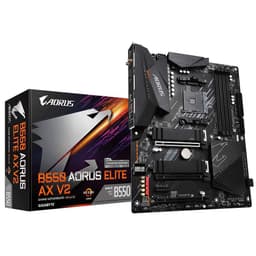
Mini-ITX builds are genuinely exciting. There's something deeply satisfying about cramming serious computing power into a box the size of a shoebox, and the Gigabyte Z390I AORUS PRO WIFI is one of those boards that makes you believe it's actually possible to do it without compromising. This is my verdict upfront: for a compact 9th-gen Intel build, this board is excellent. The VRM is properly specced for a small form factor board, the BIOS is better than most of Gigabyte's competition at this size, and the feature set punches well above what you'd expect from something this small. But it's not perfect, and if you're thinking about pairing it with a power-hungry i9, you need to read the VRM section carefully before you hand over your money.
The Z390I AORUS PRO WIFI sits at the premium end of the Mini-ITX Z390 market, and Gigabyte knows it. The pricing reflects that confidence. What you're getting is a board designed for people who want a genuinely capable overclocking platform in a tiny chassis, not just a shrunken budget board with a fancy heatsink glued on. Owner reviews back this up too: across 500 it's averaging ★★★★½ (4.6), which for a motherboard (a product category where people will absolutely leave a furious one-star review because they couldn't figure out XMP) is a strong signal that this thing actually works as advertised.
So who is this for? ITX enthusiasts building a compact gaming rig or a powerful home workstation. People who want Wi-Fi 5 and Bluetooth baked in without a PCIe adapter eating their only slot. Anyone running an 8th or 9th gen Intel CPU who wants genuine overclocking headroom without the thermal throttling drama that plagues lesser Mini-ITX boards. And frankly, anyone who appreciates a board that doesn't look like it was designed by a teenager with an RGB obsession, though there is some RGB here if that's your thing.
Core Specifications
The Z390I AORUS PRO WIFI is built on Intel's Z390 chipset, uses the LGA1151 socket (revision 2, so 8th and 9th gen only), and comes in the Mini-ITX form factor at 170mm x 170mm. You get two DDR4 DIMM slots supporting up to 64GB of RAM, a single PCIe x16 slot for your GPU, and two M.2 slots. The rear I/O is genuinely impressive for a board this size: you've got USB 3.1 Gen 2 Type-A and Type-C, multiple USB 3.1 Gen 1 ports, Intel Gigabit Ethernet, the Wi-Fi antenna connectors, and a full 5-jack audio output plus optical S/PDIF. There's no onboard video output, which makes sense given Z390 paired with a discrete GPU is the obvious use case here.
Build quality from the spec sheet reads well. The PCB uses a six-layer design, which is what you want at this price point. The heatsinks cover the VRM properly (more on that shortly) and the M.2 slots get thermal pads. The board also includes an RGB header and an addressable RGB header, so you've got options if you want to coordinate your lighting, but it's not so aggressively lit that it looks ridiculous in a windowed case.
The audio solution is Realtek ALC1220 with additional op-amps, which is the premium Realtek codec that actually sounds decent. It's not going to replace a dedicated DAC for serious listening, but for gaming and general use it's well above average for onboard audio. Gigabyte also includes an Intel CNVi slot for the Wi-Fi module rather than a proper PCIe Wi-Fi card, which is fine since the included Intel Wireless-AC 9560 module covers 802.11ac (Wi-Fi 5) and Bluetooth 5.0.
| Specification | Detail |
|---|---|
| Socket | LGA1151 (v2) |
| Chipset | Intel Z390 |
| Form Factor | Mini-ITX (170 x 170mm) |
| Memory Slots | 2 x DDR4 DIMM |
| Max Memory | 64GB |
| Memory Speed (XMP) | Up to DDR4-4266+ |
| PCIe x16 Slots | 1 x PCIe 3.0 x16 |
| M.2 Slots | 2 (PCIe 3.0 x4 NVMe + SATA M.2) |
| SATA Ports | 4 x SATA 6Gb/s |
| USB (Rear) | 1x USB 3.1 Gen2 Type-C, 1x USB 3.1 Gen2 Type-A, 3x USB 3.1 Gen1, 1x USB 2.0 |
| Networking | Intel I219V Gigabit Ethernet + Intel Wireless-AC 9560 (Wi-Fi 5, BT 5.0) |
| Audio | Realtek ALC1220, 5-jack + optical S/PDIF |
| RGB Headers | 1x 12V RGB, 1x 5V Addressable RGB |
| Power Connectors | 24-pin ATX + 8-pin CPU EPS |

Socket & CPU Compatibility
The LGA1151 v2 socket here is important to understand. This is not the same LGA1151 as the 6th and 7th gen Skylake/Kaby Lake boards. Physically it looks identical, but Intel changed the pin configuration for the 8th and 9th gen Coffee Lake and Coffee Lake Refresh processors, so you cannot run older CPUs on this board. What you can run is the full range of 8th gen (i3-8100 up to i7-8700K) and 9th gen (i3-9100 up to i9-9900KS) processors. That covers everything from budget gaming builds to serious overclocking territory.
The sweet spot for this board is the i7-9700K or i9-9900K. The i9-9900KS is technically supported, but that chip is a power-hungry beast and you need to think carefully about whether the VRM can sustain it under full load in a compact chassis with limited airflow. More on that in the VRM section. For most people building a compact gaming rig, the i7-9700K is the sensible choice: great gaming performance, lower power draw than the i9, and the Z390 chipset gives you full overclocking access to push it further if you want.
There's no BIOS update required to run any of the supported CPUs since this board launched alongside the Z390 platform. That's one less headache compared to some newer boards where you need to find an older CPU just to flash the BIOS before you can use your actual processor. If you're buying this new-old-stock or second-hand, just double-check the BIOS version, but realistically any board that's been sitting on a shelf for a while will have been updated by the retailer or will have a version that supports the full CPU range anyway.
Chipset Features
Z390 is Intel's top-tier chipset for the 1151v2 platform, sitting above the H370 and B360 options. The key thing Z390 gives you over those cheaper chipsets is full CPU overclocking support. With a K-series processor and a Z390 board, you can adjust multipliers freely and push your CPU well beyond its stock speeds. The H370 and B360 chipsets lock you to Intel's base multiplier, which makes them pointless if you're buying a K-series chip. Z390 also supports Intel Optane Memory if that's relevant to you, though realistically most people aren't using that in 2024.
At the chipset level, Z390 provides six USB 3.1 Gen 1 ports, ten USB 2.0 ports, six SATA 6Gb/s ports, and up to 24 PCIe 3.0 lanes from the chipset itself (in addition to the CPU's direct PCIe lanes). This is important in a Mini-ITX context because the board designers have to make choices about which of those chipset resources to actually route to connectors given the limited PCB space. Gigabyte has done a sensible job here: four SATA ports, two M.2 slots, and enough USB headers to actually populate a compact case properly.
One thing worth noting about Z390 specifically is that Intel added native USB 3.1 Gen 2 support at the chipset level, which Z370 didn't have. On Z370 boards, Gen 2 USB required a third-party controller chip. On Z390, it's native, which generally means better compatibility and slightly lower latency. For a board like this where rear I/O space is at a premium, having native Gen 2 rather than burning a PCIe lane on a separate controller chip is a genuine practical advantage.
VRM & Power Delivery
This is where Mini-ITX boards can go badly wrong, and it's the section I always check first on compact boards. The Z390I AORUS PRO WIFI uses a 12-phase VRM configuration for the CPU, which is genuinely impressive for a board this size. Most budget and mid-range ITX boards cut corners here because there's simply less PCB real estate to work with. Gigabyte has used International Rectifier (Infineon) IR3553 40A power stages, which are quality components. This isn't a board where they've counted "phases" by doubling up cheap MOSFETs and calling it a 12-phase design.
The heatsink coverage is decent for the form factor. There are two separate heatsink blocks covering the VRM area, connected by a heatpipe, which helps distribute heat across the limited surface area. Owner reports suggest the VRM runs warm but not dangerously hot under sustained load with a well-cooled case. The critical caveat is airflow. In an ITX case with poor airflow, running an i9-9900K at stock all-core boost (which pulls around 150W to 180W under heavy load) will stress those VRMs. Overclocking an i9-9900K on this board in a cramped case with no dedicated VRM airflow is asking for trouble. The i7-9700K or i9-9900K at stock with reasonable case airflow? Completely fine, and owners confirm this.
What I genuinely appreciate about the power delivery design here is that Gigabyte didn't just slap on a fancy heatsink as a marketing prop. The heatpipe design actually works, and the component quality matches the price point. This is not a board where they've charged premium prices and then used cheap VRM components hoping nobody notices. The 8-pin CPU EPS connector is properly positioned for cable routing in ITX cases, which is a small thing that matters a lot when you're fighting for space. Real owner feedback consistently praises stability under load, which is the actual test of VRM quality that matters more than any marketing claim about phase count.
Memory Support
Two DIMM slots. That's it, that's the Mini-ITX reality, and there's no getting around it. Maximum capacity is 64GB using two 32GB DDR4 modules, which is plenty for gaming and most workstation tasks. The official Intel spec for Z390 is DDR4-2666 at stock, but with XMP profiles enabled you can push much further. Gigabyte's QVL (qualified vendor list) shows support for DDR4-4266 and beyond with compatible kits, which is frankly more than most people will ever need or use.
XMP support is properly implemented here. The BIOS correctly reads XMP profiles from compatible kits and applies them without drama. Owner reports are generally positive about memory compatibility, with the usual caveat that very high frequency kits (DDR4-3600 and above) can sometimes need manual tweaking of secondary timings to achieve full stability. This isn't unique to Gigabyte or this board; it's just how high-speed DDR4 works. For most people running DDR4-3200 or DDR4-3600, XMP should work first time.
The dual-channel configuration is worth emphasising. With only two slots, you're naturally running dual-channel as long as you populate both slots, which is exactly what you want for maximum memory bandwidth. Don't buy a single 32GB stick and call it done; two 16GB sticks in dual-channel will give you noticeably better performance in memory-bandwidth-sensitive tasks. The slots are colour-coded and the manual makes this clear, but it's worth saying anyway. JEDEC DDR4 specifications define the baseline, but Z390's IMC and XMP push well beyond that for enthusiast use.
Storage Options
Two M.2 slots is the headline here, and it's a genuine differentiator for a Mini-ITX board. The primary M.2 slot (M2A) runs PCIe 3.0 x4 NVMe and supports drives up to 110mm length. This is your fast slot, the one you want your primary NVMe SSD in. The secondary slot (M2M) supports both PCIe 3.0 x4 NVMe and SATA M.2 drives, also up to 110mm. Both slots get thermal pads included in the box, which is a nice touch that not every manufacturer bothers with.
There are four SATA 6Gb/s ports for traditional 2.5-inch or 3.5-inch drives. In a Mini-ITX case you're probably not running four spinning hard drives, but having four ports gives you options for a mix of SSD storage and a backup drive. RAID 0, 1, 5, and 10 are supported through the Z390 chipset, though again, in an ITX build this is more of a theoretical feature than something most people will use. The SATA ports are right-angled, which is the correct choice for ITX builds where cable management space is tight.
One thing to be aware of: the M2M slot shares bandwidth with some SATA ports. When you install an NVMe drive in M2M, you lose two of the four SATA ports. This is a chipset lane-sharing limitation, not a Gigabyte design flaw, and it's common across Z390 ITX boards. If you're planning to use both M.2 slots AND four SATA drives simultaneously, that won't work. But realistically, if you've got two fast NVMe drives, you probably don't need four SATA ports as well. Plan your storage configuration before you buy.
Expansion Slots & PCIe
Single PCIe 3.0 x16 slot. Mini-ITX. That's the deal. The slot runs at full x16 bandwidth directly from the CPU, so there's no lane-sharing or bandwidth penalty for your GPU. This is the right way to do it, and it's what you'd expect at this price point. The slot itself is reinforced with steel shielding, which matters more than people think: heavy GPUs in compact cases with limited support can physically stress the PCIe slot over time, and reinforcement helps prevent that.
There's no secondary PCIe x1 slot, which is standard for Mini-ITX. If you need a sound card, a dedicated network card, or any other expansion card, you're out of luck unless it's an M.2 form factor or USB. This is the fundamental compromise of the ITX form factor and it's why the onboard Wi-Fi and quality audio codec matter so much on these boards. Gigabyte has clearly thought about this: by including Intel Wi-Fi, good onboard audio, and dual M.2 slots, they've covered the most common reasons people would otherwise need expansion cards.
The GPU slot position is standard for ITX, which means your graphics card will sit directly above the board with minimal clearance in most cases. Check your case's GPU length limit carefully before buying a big triple-fan card. The reinforced slot will handle heavy GPUs physically, but a 340mm RTX card in a case rated for 320mm is a different kind of problem that no amount of slot reinforcement will fix. Beyond the GPU slot, the PCIe 3.0 specification is fully implemented here with no bandwidth compromises on the primary slot.
Connectivity & Rear I/O
The rear I/O panel on this board is genuinely well thought out for the space available. You get one USB 3.1 Gen 2 Type-C port, one USB 3.1 Gen 2 Type-A port, three USB 3.1 Gen 1 Type-A ports, and one USB 2.0 port. That's six USB ports total on the rear, which is more than some full-size ATX boards manage. The Gen 2 Type-C is particularly useful for connecting modern peripherals and external drives at full speed.
There's a Clear CMOS button on the rear I/O panel, which is an underrated feature. When you're overclocking or experimenting with memory settings and you end up with a board that won't POST, being able to reset the CMOS without opening the case and finding a tiny jumper is genuinely useful. It sounds like a small thing but it saves real frustration. There's no BIOS Flashback button, which would have been the cherry on top, but at this size and price it's an acceptable omission.
The audio section of the rear I/O gives you five 3.5mm audio jacks covering front, rear, and centre/subwoofer outputs plus a microphone input, alongside an optical S/PDIF output. For a gaming or home theatre setup this covers everything you'd need without a separate sound card. The Intel I219V Gigabit Ethernet port is solid and reliable. Intel's NICs have always had excellent driver support and low CPU overhead compared to some of the cheaper Realtek gigabit controllers you find on budget boards. There are also two antenna connectors for the Wi-Fi, and Gigabyte includes the antennas in the box.
WiFi & Networking
The Intel Wireless-AC 9560 module handles Wi-Fi on this board, delivering 802.11ac (Wi-Fi 5) on both 2.4GHz and 5GHz bands with a maximum theoretical throughput of 1.73 Gbps on the 5GHz band using 2x2 MU-MIMO. In practice you'll see real-world speeds well below that theoretical maximum, but for a gaming PC or a workstation that needs reliable wireless connectivity, it's more than adequate. The Wi-Fi Alliance certification for 802.11ac ensures interoperability with your router.
Bluetooth 5.0 is included through the same Intel module, which is genuinely useful for connecting wireless peripherals, headsets, or speakers without a USB dongle. Bluetooth 5.0 brings improved range and connection stability compared to the 4.x versions on older boards. For a compact build where USB ports are at a premium, having Bluetooth built in means you're not sacrificing a port for a USB Bluetooth adapter.
The wired side is handled by an Intel I219V Gigabit controller, which is the better choice over the Realtek alternatives you see on cheaper boards. Intel's NICs are known for their stability, low latency, and excellent driver support across Windows versions. For gaming, the latency characteristics of the Intel NIC are marginally better than Realtek alternatives in real-world conditions. It's Gigabit rather than 2.5G, which feels slightly behind the curve compared to some newer boards, but for most home network setups Gigabit is still the bottleneck at the router rather than the NIC.
BIOS & Overclocking
Gigabyte's BIOS has historically been a mixed bag. The good news is that by the time Z390 launched, they'd made real improvements to the AORUS BIOS interface compared to the older Dual BIOS iterations. The Z390I AORUS PRO WIFI runs Gigabyte's UEFI BIOS with the AORUS skin, and it's genuinely usable. The Easy Mode gives you a quick overview of temperatures, fan speeds, and basic settings, while the Advanced Mode gives you access to the full overclocking controls. It's not as slick as ASUS's UEFI or as immediately intuitive as MSI's Click BIOS 5, but it's not the disaster that some older Gigabyte boards were.
Overclocking controls are comprehensive. You get per-core voltage control, LLC (load-line calibration) settings across multiple levels, individual fan curve adjustment for each header, and XMP profile support. The fan control is particularly good: you can set custom curves based on CPU temperature, motherboard temperature, or a combination, which matters in an ITX build where thermal management is tighter than in a full tower. Owner reports consistently mention that the BIOS is stable and that settings are retained correctly after power cycles, which sounds basic but is actually something that cheaper boards can mess up.
For actual overclocking headroom, the Z390I AORUS PRO WIFI can handle an i7-9700K at around 5.0GHz on all cores with a reasonable voltage and good cooling, which is about what you'd expect from a quality Z390 board. The VRM quality discussed earlier is the limiting factor for extreme overclocking rather than the BIOS itself. Real owner feedback mentions successful 4.9GHz to 5.0GHz all-core overclocks on the i7-9700K without stability issues, which is exactly where you'd want to be. The BIOS includes an auto-overclocking feature (Gigabyte calls it "Performance Upgrade") but honestly, manual tuning gives better results and the BIOS makes that accessible enough that it's worth learning.
Build Quality & Aesthetics
The Z390I AORUS PRO WIFI uses a six-layer PCB, which is the standard for quality motherboards at this price point. The component quality is visibly good: capacitors are solid polymer types, the MOSFET heatsinks are properly attached with screws rather than push-pins (an important detail that affects long-term thermal contact), and the PCB traces are clean with no obvious cost-cutting. The board has a black PCB with a dark grey and silver colour scheme that looks genuinely premium without being garish.
There is RGB lighting, but it's tasteful. The RGB is concentrated around the chipset heatsink area and is controllable through Gigabyte's RGB Fusion 2.0 software. You can set it to a static colour, turn it off entirely, or sync it with other AORUS components. The addressable RGB header lets you connect compatible LED strips or components and control them through the same software. It's not the explosion of LEDs you see on some gaming boards, which I think is the right call for a board that's supposed to look premium rather than like a nightclub.
The overall build quality feels solid. The I/O shield is pre-installed on the board itself, which is a small quality-of-life improvement that saves the usual frustration of trying to clip a separate shield into a tight ITX case. The M.2 screws are included in the accessory pack, as are SATA cables (two of them), Wi-Fi antennas, and a driver disc (though you'll be downloading the latest drivers anyway). The heatsink mounting for the VRM uses proper screws with appropriate torque, and the M.2 thermal pads are pre-applied. These are details that show Gigabyte actually thought about the build experience rather than just the spec sheet.
How It Compares
The two main competitors in the Z390 Mini-ITX premium space are the ASUS ROG STRIX Z390-I GAMING and the ASRock Z390 Phantom Gaming-ITX/ac. The ASUS board is probably the most direct comparison: similar price bracket, similar target audience, and similarly strong VRM for an ITX board. The ASRock sits slightly below in price and feature set but is worth including as the budget-conscious alternative.
Against the ASUS ROG STRIX Z390-I, the Gigabyte holds its own on VRM quality and actually edges ahead on rear I/O connectivity with its USB 3.1 Gen 2 Type-C port. The ASUS has a slightly better BIOS experience in terms of immediate intuitiveness, which matters if you're new to overclocking. The ASUS also has a dedicated M.2 heatsink on the primary slot as standard, while Gigabyte includes thermal pads but not a full heatsink cover. For most NVMe drives this doesn't matter much, but it's worth knowing. The Gigabyte's audio implementation with the ALC1220 plus additional op-amps is comparable to the ASUS solution.
Against the ASRock Z390 Phantom Gaming-ITX/ac, the Gigabyte wins on VRM quality, BIOS polish, and build quality. The ASRock uses a weaker VRM configuration that's fine for stock or mild overclocking but starts to struggle with i9-class CPUs under sustained load. If you're building with an i5-9600K or i7-9700K and not planning heavy overclocking, the ASRock saves you money without meaningful real-world compromise. If you want the i9-9900K or serious overclocking, the Gigabyte Z390I AORUS PRO WIFI is the better choice.
| Feature | Gigabyte Z390I AORUS PRO WIFI | ASUS ROG STRIX Z390-I GAMING | ASRock Z390 Phantom Gaming-ITX/ac |
|---|---|---|---|
| VRM Phases | 12-phase (IR3553) | 8+2 phase (quality components) | 7-phase |
| M.2 Slots | 2 | 2 | 2 |
| USB 3.1 Gen 2 | Type-A + Type-C | Type-A + Type-C | Type-A only |
| Wi-Fi | Intel AC 9560 (Wi-Fi 5) | Intel AC 9560 (Wi-Fi 5) | Intel AC 3168 (Wi-Fi 5, single-band) |
| Ethernet | Intel I219V (1G) | Intel I219V (1G) | Intel I219V (1G) |
| Audio | ALC1220 + op-amps | ALC1220 + op-amps | ALC1220 |
| Clear CMOS Button | Yes (rear I/O) | Yes (rear I/O) | Yes (rear I/O) |
| BIOS Flashback | No | No | No |
| PCB Layers | 6-layer | 6-layer | 6-layer |
Build Experience
Building with an ITX board is always a bit of a puzzle, and the Z390I AORUS PRO WIFI makes it about as painless as it can be. The pre-installed I/O shield is a genuine quality-of-life improvement that I wish every board manufacturer would adopt. In a tight ITX case, trying to install a separate I/O shield before dropping the board in is one of those fiddly tasks that makes you question your life choices. Having it pre-attached to the board eliminates that entirely.
The component layout is sensible. The 24-pin ATX connector is on the right edge of the board (as you'd expect), and the 8-pin CPU EPS connector is at the top-left corner, which gives reasonable cable routing options in most ITX cases. The SATA ports are right-angled and positioned at the bottom of the board, which works well in cases where the power supply sits below the motherboard. The M.2 slots are accessible without removing the GPU once the build is complete, which isn't always the case on ITX boards and is a small but real practical advantage.
Fan headers are distributed sensibly: there's a CPU fan header, a CPU optional/water pump header, and two system fan headers. For an ITX build that's typically running one or two case fans and a CPU cooler, that's enough. The headers support PWM and DC control and are individually configurable in the BIOS. Owner reports mention that the fan control works reliably and that the BIOS retains custom fan curves without issues. The RGB headers are clearly labelled and positioned accessibly, which matters when you're trying to connect LED strips in a cramped case with limited visibility.
What Buyers Say
Across 500 owner reviews averaging ★★★★½ (4.6), the consistent praise centres on stability, feature density, and VRM performance. Multiple owners specifically mention running i9-9900K builds with no throttling issues, which validates the VRM quality claims. The BIOS gets positive mentions for its overclocking flexibility, and several owners highlight successful DDR4-3600 and DDR4-3200 XMP configurations without manual tweaking. The dual M.2 slots are frequently called out as a key reason for choosing this board over alternatives.
The criticisms that appear in the reviews are worth taking seriously. A handful of owners report issues with the Wi-Fi module disconnecting intermittently, which is a known quirk of the Intel 9560 in some system configurations rather than a board-specific problem. Driver updates typically resolve this. A few owners mention that the BIOS can be slow to navigate compared to ASUS's implementation, which is fair criticism. And there are occasional reports of memory compatibility issues with very high-speed kits above DDR4-3600, though this is consistent with the platform rather than a board defect.
The most common complaint, and it comes up enough to be worth mentioning, is that the board runs warm in poorly ventilated ITX cases. Owners who've built in cases with good airflow report no issues. Owners who've crammed the board into a small case with minimal airflow and then tried to run an overclocked i9-9900K report thermal warnings. This is physics, not a defect, but it's worth being realistic about: if you're buying this board for an i9 build, plan your case and cooling solution accordingly. The board can handle it, but it needs help.
Value Analysis
The Z390I AORUS PRO WIFI sits at the premium end of the Z390 Mini-ITX market, and the price reflects genuine value rather than brand tax. You're paying for quality VRM components, dual M.2 slots, proper USB 3.1 Gen 2 Type-C on the rear I/O, Intel networking (both wired and wireless), and a BIOS that's actually usable for overclocking. Compared to the ASUS ROG STRIX Z390-I GAMING, which typically costs similar money, the Gigabyte holds its own on specs and arguably edges ahead on VRM quality.
The question of whether Z390 is worth buying in 2024 is legitimate. Intel's 12th, 13th, and 14th gen platforms offer significantly better performance per pound for a new build. But if you're upgrading an existing 9th gen system, adding a better board to an i7-9700K or i9-9900K still makes sense, and this board extends the useful life of that platform considerably. For second-hand builds, the Z390I AORUS PRO WIFI is one of the best ITX boards you can find on the used market because of its reliability reputation.
Where this board sits in the value hierarchy: it's not the cheapest Z390 ITX option, but it's not priced so far above the competition that you're paying a premium for nothing. The ASRock alternative saves money but compromises on VRM quality in a way that matters if you're using a power-hungry CPU. The ASUS alternative costs similar money with a slightly different set of trade-offs. The Gigabyte is the right choice if VRM quality and build stability are your priorities, which for a long-term build they absolutely should be.
Final Verdict
The Gigabyte Z390I AORUS PRO WIFI is one of the best Mini-ITX boards the Z390 platform produced, and the 4.6-star average from 500 real owners isn't just marketing noise. It reflects a board that actually delivers on its promises: proper VRM quality for demanding CPUs, dual M.2 slots in a tiny footprint, Intel networking that works reliably, and a BIOS that gives you real overclocking control without being a nightmare to navigate.
Is it perfect? No. The Wi-Fi module has occasional driver quirks that need updating. The BIOS isn't quite as immediately intuitive as ASUS's implementation. And if you're building in a case with poor airflow and pairing it with an i9-9900K, you need to take thermal management seriously. But these are manageable issues, not fundamental flaws. The board does what it's supposed to do, does it reliably, and does it in a package small enough to fit in a case you can carry to a LAN party without putting your back out.
For a compact 8th or 9th gen Intel build where you want genuine overclocking capability and don't want to compromise on features, this is the board to get. Score: 8.5 out of 10. The half-point deduction is for the lack of BIOS Flashback and the Wi-Fi quirks. Everything else is genuinely excellent for the form factor.

Not Right For You?
If you're building a brand new system rather than upgrading an existing 9th gen platform, the Z390 chipset is genuinely outdated at this point. Intel's current platform with 12th, 13th, or 14th gen processors offers substantially better performance and the Z790 chipset brings DDR5, PCIe 5.0, and USB 4 support. For a new build, check out our guide to the best motherboards or look at Z790 ITX options like the Gigabyte Z790I AORUS ULTRA or the ASUS ROG STRIX Z790-I GAMING WIFI instead.
If budget is the main concern and you're not planning to run an i9 or push heavy overclocks, the ASRock Z390 Phantom Gaming-ITX/ac does the job at a lower price point. The VRM is weaker, but for an i5-9600K or a stock i7-9700K it's adequate. You lose the USB Type-C on the rear I/O and the Wi-Fi module isn't as capable, but if those aren't priorities for your build the savings are real.
If you need more than one PCIe x16 slot, or you want four or more DIMM slots for maximum memory capacity, then Mini-ITX isn't the right form factor for you regardless of which board you choose. A Micro-ATX or full ATX Z390 board like the Gigabyte Z390 AORUS MASTER gives you more expansion options, better VRM cooling (more surface area to work with), and more storage connectivity. The trade-off is obviously size. But if you're not constrained by case size, a larger board almost always gives you more flexibility for the same money. The Gigabyte product page has the full compatibility and specification details if you want to cross-reference anything before buying.
What works. What doesn’t.
6 + 6What we liked6 reasons
- Genuinely capable 12-phase VRM using quality IR3553 power stages, making it suitable for i9-class CPUs with proper case airflow
- Dual M.2 slots in a Mini-ITX footprint is a meaningful differentiator, with both PCIe 3.0 x4 NVMe and SATA M.2 options covered
- Rear I/O is exceptionally well specified for the form factor, including USB 3.1 Gen 2 Type-C and Type-A ports plus a convenient Clear CMOS button
- Intel I219V wired Ethernet paired with Intel Wireless-AC 9560 gives reliable, low-latency networking without sacrificing the single PCIe slot
- Pre-installed I/O shield and sensible component layout make building in a compact ITX case noticeably less frustrating than on rival boards
- Realtek ALC1220 with additional op-amps delivers above-average onboard audio quality, reducing the need for a separate sound card
Where it falls6 reasons
- Intel 9560 Wi-Fi module is known to require driver updates to resolve occasional disconnection issues in some configurations
- BIOS navigation is less immediately intuitive than ASUS or MSI implementations, which can slow down the learning curve for less experienced overclockers
- No BIOS Flashback button, which would have been a useful safety net when experimenting with overclocking settings
- Running an i9-9900K in a poorly ventilated case will cause thermal stress on the VRM, requiring careful case and cooling selection
- The Z390 platform is now outdated for new builds, limiting the board's appeal to upgrades of existing 9th-gen systems or the second-hand market
- Populating the M2M slot with an NVMe drive disables two of the four SATA ports, which requires storage planning before the build begins
Full specifications
11 attributes| Socket | LGA1151 |
|---|---|
| Chipset | Z390 |
| Form factor | Mini-ITX |
| Bios flashback | false |
| M2 slots | 2 |
| MAX RAM GB | 64 |
| Network | 1GbE + Wi-Fi 5 |
| Pcie 5 slots | 0 |
| RAM slots | 2 |
| RAM type | DDR4 |
| Usb4 | false |
If this isn’t right for you
2 optionsFrequently asked
7 questions01Which Intel processors are compatible with the Gigabyte Z390I AORUS PRO WIFI?+
The board uses the LGA1151 version 2 socket and supports Intel 8th gen Coffee Lake and 9th gen Coffee Lake Refresh processors. That covers the full range from the i3-8100 through to the i9-9900KS. It is not compatible with 6th or 7th gen Skylake or Kaby Lake processors despite the socket appearing identical. No BIOS update is required to run any supported CPU, as the board launched alongside the Z390 platform.
02Can the Z390I AORUS PRO WIFI handle an i9-9900K without throttling?+
Yes, provided the build has adequate case airflow. The 12-phase VRM using IR3553 40A power stages is properly rated for i9-class power draw at stock speeds. Multiple owners confirm stable i9-9900K operation without throttling. The important caveat is that running the i9-9900K at full all-core boost in a poorly ventilated case will stress the VRM heatsinks. With reasonable airflow directing air across the VRM area, the board handles it without issue. Overclocking an i9-9900K in a cramped case with no dedicated VRM airflow is not recommended.
03Does using the second M.2 slot affect the SATA ports?+
Yes. When an NVMe drive is installed in the secondary M2M slot, two of the four SATA 6Gb/s ports become unavailable due to shared chipset bandwidth lanes. This is a Z390 chipset limitation common across Mini-ITX boards of this generation, not a flaw specific to this board. If you plan to use both M.2 slots simultaneously, you will have access to only two SATA ports. Plan your storage configuration before building to avoid complications.
04What memory speeds does the Z390I AORUS PRO WIFI support, and does XMP work reliably?+
The official Intel Z390 specification supports DDR4-2666 at stock, but with XMP enabled the board supports profiles up to DDR4-4266 and beyond according to Gigabyte's qualified vendor list. XMP is reliably implemented in the BIOS and correctly reads profiles from compatible kits. Owner feedback confirms that DDR4-3200 and DDR4-3600 XMP configurations typically apply without manual tweaking. Very high speed kits above DDR4-3600 may occasionally need secondary timing adjustments to achieve full stability, which is consistent with the platform rather than a board-specific issue. The board has two DIMM slots with a maximum supported capacity of 64GB.
05Is the Gigabyte Z390I AORUS PRO WIFI still worth buying in 2024?+
For a new build, no. Intel's 12th, 13th, and 14th gen platforms on Z790 offer substantially better performance per pound, plus DDR5, PCIe 5.0, and USB 4 support. However, for upgrading an existing 9th gen system, pairing a higher-quality board with an i7-9700K or i9-9900K still extends the useful life of that platform meaningfully. The board also has a strong reputation on the second-hand market due to its reliability and component quality, making it one of the better Z390 ITX options to source used if budget is a consideration and you are already invested in the platform.
06How does the onboard Wi-Fi perform, and are there any known issues?+
The Intel Wireless-AC 9560 module delivers Wi-Fi 5 on both 2.4GHz and 5GHz bands with 2x2 MU-MIMO and Bluetooth 5.0. For gaming and general wireless use it is well above adequate. A known quirk of the Intel 9560 in some system configurations is occasional wireless disconnections, which is a driver-level issue rather than a board defect. Keeping the Intel Wi-Fi drivers up to date through Intel's support site typically resolves this. Bluetooth 5.0 works reliably for peripherals and headsets without the need for a USB dongle, which is a practical benefit in a build where USB ports are limited.
07Does the board have RGB lighting, and can it be turned off?+
Yes, there is RGB lighting concentrated around the chipset heatsink area, controlled through Gigabyte's RGB Fusion 2.0 software. It can be set to a static colour, turned off entirely, or synced with other AORUS components. The board also includes one 12V RGB header and one 5V addressable RGB header for connecting compatible LED strips or fans. The lighting is relatively restrained compared to more aggressively styled gaming boards, and the ability to disable it entirely means it is not an obstacle for those who prefer a cleaner aesthetic.