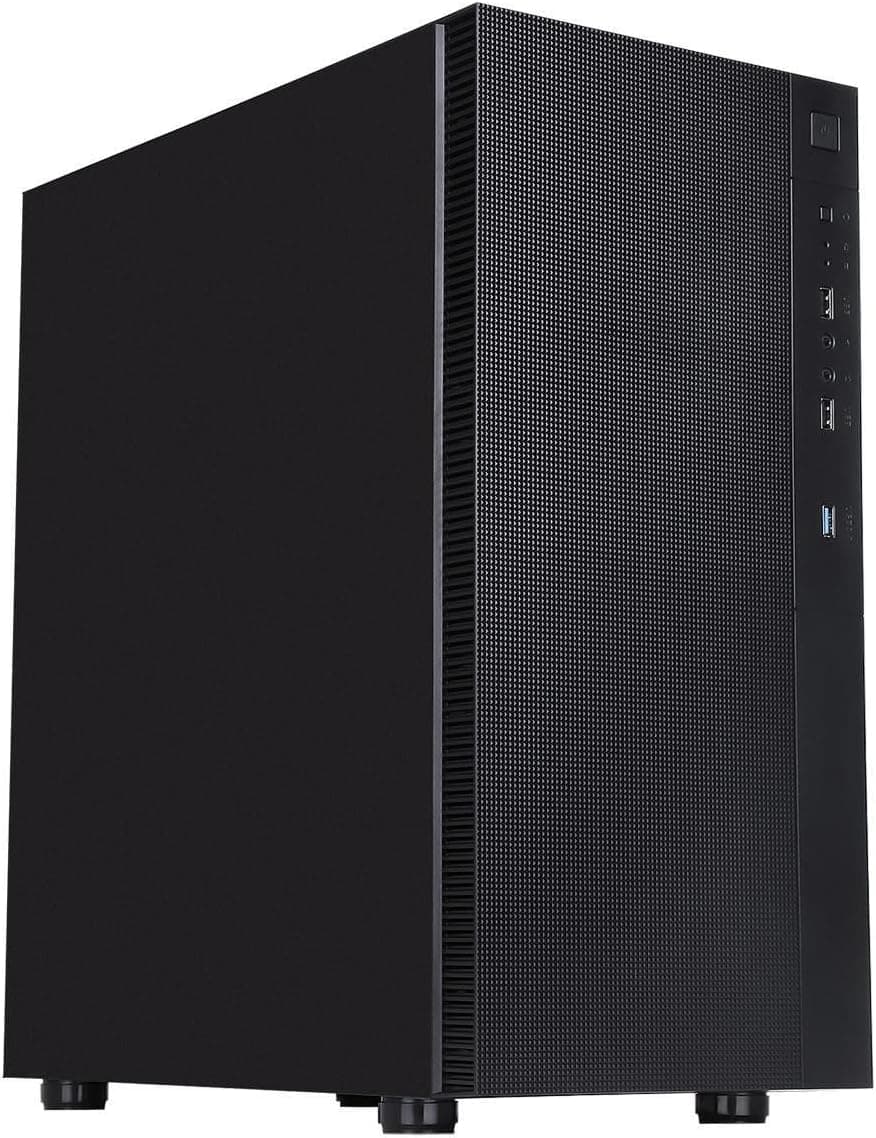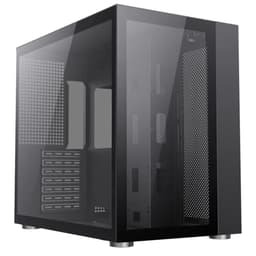
There's a particular kind of frustration that comes from building inside a badly designed case. You know the type: panels that flex when you look at them wrong, cable routing holes that are either in completely the wrong place or just too small to thread anything through, and edges sharp enough to remind you that you're mortal. I've built in cases that cost less than a takeaway and cases that cost more than some people's entire systems. After twelve years of this, I can tell pretty quickly whether a case is going to be a pleasure or a punishment. The GameMax Silent Mid-Tower PC Gaming case, ATX, Sound Dampening, SD/TF Card Reader Built-In | Black sits firmly in the budget-to-entry bracket, and that's exactly where things get interesting.
Budget cases are where manufacturers have to make real choices. Do you cut corners on steel thickness? Skip the dust filters? Forget about cable management? GameMax has been quietly building a reputation in the UK market for offering more than you'd expect at this price point, and the Silent is one of their longer-running designs. It's been around for a while, which either means it's a proven product or it's been coasting on early goodwill.
The current price sits at £108.49, which puts it squarely in entry-level territory. At that price, you're not expecting miracles. But you are expecting something that won't make you bleed, route cables properly, and keep your components cool. Whether the GameMax Silent delivers on those basics is what we're here to find out.
Core Specifications
The GameMax Silent is a mid-tower chassis built around the standard ATX form factor, which means it's designed to house full-size ATX motherboards as its primary target. The case measures approximately 490mm tall, 210mm wide, and 450mm deep, which is fairly typical for a mid-tower. It's not a slim case by any means, but it's not going to dominate your desk either. Weight comes in around 6kg without any components, which tells you something about the steel gauge being used. It's not featherlight, but it's not the kind of heft you'd associate with premium builds either.
The exterior is finished in matte black, and the side panels include a tempered glass window on the left side for showing off your build. The right side panel is solid steel. The front panel is where the sound dampening material lives, and we'll get into how effective that actually is later. GameMax includes three pre-installed 120mm fans: two at the front as intake and one at the rear as exhaust. That's a reasonable starting point for a case at this price. The front I/O includes USB 3.0 ports, audio jacks, and the SD/TF card reader that's called out in the product name. There's no USB Type-C here, which is worth knowing upfront.
Drive support is decent for the price. You get two 3.5-inch drive bays and two 2.5-inch dedicated bays, plus the option to mount 2.5-inch drives in the 3.5-inch trays with adapters. PSU support is bottom-mounted, which is the right call for thermal reasons. The case supports radiators up to 240mm at the front and a single 120mm at the rear. No top radiator support, which is a limitation worth flagging. Here's the full spec breakdown:
| Specification | Detail |
|---|---|
| Form Factor | Mid-Tower |
| Motherboard Support | ATX, Micro-ATX, Mini-ITX |
| Dimensions (H x W x D) | ~490 x 210 x 450mm |
| Weight | ~6kg |
| Front Panel | Solid with sound dampening foam |
| Side Panel | Tempered glass (left), steel (right) |
| Drive Bays (3.5") | 2 |
| Drive Bays (2.5") | 2 dedicated + 2 via adapters |
| Included Fans | 3x 120mm (2 front intake, 1 rear exhaust) |
| Fan Mounts | Front: 3x 120mm / 2x 140mm, Rear: 1x 120mm, Top: 2x 120mm |
| Radiator Support | Front: 240mm, Rear: 120mm |
| Max GPU Length | ~380mm |
| Max CPU Cooler Height | ~160mm |
| PSU Mount | Bottom, rear |
| Front I/O | 2x USB 3.0, HD Audio, SD/TF Card Reader |
| Sound Dampening | Front panel foam lining |
| Price | £108.49 |

Form Factor and Dimensions
Mid-tower is the right class for most builds, and the GameMax Silent sits comfortably within that category. The 210mm width is on the narrower side for a mid-tower, which means it'll fit on most desks without eating into your workspace too aggressively. For comparison, something like the Fractal Design Focus 2 comes in around 210mm wide as well, so this isn't unusual. The 450mm depth is where you need to pay attention, particularly if you're working with a smaller desk setup or an enclosed cabinet.
The footprint is manageable. I had this sitting on a standard desk for the testing period and it didn't feel intrusive. The bottom panel has rubber feet that actually grip properly, which sounds like a small thing but matters when you're plugging and unplugging cables repeatedly. The case doesn't slide around, which I appreciated. Some budget cases have feet that are basically decorative.
The overall silhouette is fairly traditional. There's no dramatic angular design here, no RGB lighting strips built into the chassis itself. It's a clean, rectangular black box with a tempered glass side panel. If you want something that looks understated on your desk, this works. If you want a case that looks like a spaceship, look elsewhere. Personally, I think the clean look ages better, but that's a preference thing.
Motherboard Compatibility
The GameMax Silent supports ATX, Micro-ATX, and Mini-ITX motherboards. The standoff layout is standard, and I had no issues mounting an ATX board during my build. The motherboard tray has pre-installed standoffs for ATX, which is the most common configuration. If you're dropping in a Micro-ATX board, you'll need to check which standoffs to remove, but that's true of most cases at this price point.
One thing I noticed is that the I/O cutout at the rear is a reasonable size, and the motherboard tray alignment was accurate enough that I didn't need to fight the rear I/O shield into place. That might sound like a low bar, but I've built in cases where the tray is slightly off and you end up with the I/O shield sitting at a slight angle. Not a problem here. The tray itself has a large CPU backplate cutout, which is essential for installing aftermarket coolers without pulling the motherboard out. The cutout measures roughly 150mm across, which covers most mainstream cooler mounting systems.
E-ATX is not supported, which is expected at this price and size. If you're running a high-end workstation or enthusiast platform board, this case isn't for you anyway. For standard gaming builds on Intel or AMD platforms, the compatibility is solid. The case handles standard ATX boards without any clearance issues around the edges, and there's enough room around the board to work comfortably during the build process.
GPU Clearance
GameMax quotes approximately 380mm of GPU clearance, and in practice that held up. A card that sits around the 320mm mark fits with plenty of room to spare. Modern mid-range cards from AMD and Nvidia tend to sit in the 280-330mm range for most models, so you're covered for the vast majority of current hardware. The triple-slot, triple-fan monsters that some flagship cards use are a different story, but those cards belong in bigger cases anyway.
The GPU sits on a standard PCIe riser from the motherboard, and there's no vertical GPU mount option here. That's not unusual at this price, but it's worth knowing if you wanted to show off a card through the glass. The PCIe slot covers at the rear are the standard punch-out type rather than tool-free, which means once you've opened them, they're gone. A minor annoyance if you ever want to reconfigure your expansion slots, but again, typical for the price bracket.
With the front fans installed and a 240mm radiator hypothetically mounted at the front, you'd lose some of that GPU clearance. GameMax suggests around 320mm remains with a front radiator in place, which still covers most cards. I didn't test with a front radiator during this build, but the geometry checks out. The drive cage is removable if you need more clearance, which is a nice touch that not every budget case offers. Removing it opens up the front area considerably and makes cable routing to the front fans much cleaner too.
CPU Cooler Clearance
The 160mm CPU cooler height clearance is adequate for most tower coolers. The popular Noctua NH-U12S sits at 158mm, so it fits with a couple of millimetres to spare. The be quiet! Pure Rock 2 comes in at 155mm. You're fine with the mainstream options. Where you start running into trouble is with the larger dual-tower coolers. The Noctua NH-D15 is 165mm tall, and that's going to be a problem here. If you're planning to run a big air cooler, measure carefully before committing.
AIO liquid cooler support is limited compared to some competitors. The front supports up to a 240mm radiator, and the rear supports a single 120mm. There's no top radiator support, which is a genuine limitation. If you want a 360mm AIO, this case won't accommodate it. For a 240mm AIO mounted at the front, you'll need to consider the RAM clearance situation. Tall RAM with large heatspreaders can sometimes conflict with front-mounted radiators depending on the specific motherboard layout, so check your RAM height against the radiator thickness before assuming it'll all fit neatly.
The rear 120mm fan mount is positioned at the standard location, roughly centred on the rear panel. This works fine for a 120mm AIO pump head or just the included exhaust fan. The mounting points are solid and the fan screws in without any drama. One thing I'd note is that the top panel does have two 120mm fan mounting positions even though there's no radiator support there, so you can add top exhaust fans if you want to improve airflow. Just don't expect to hang a radiator from the top.
Storage Bay Options
Two 3.5-inch bays and two dedicated 2.5-inch bays is a reasonable allocation for a gaming build in 2026. Most people are running one or two SSDs and maybe a spinning disk for bulk storage, and this case handles that configuration without any issues. The 3.5-inch trays slide in and out reasonably smoothly, and they accept 2.5-inch drives with the right screws, though you'll need to source your own adapter if you want a clean mount rather than just screwing a 2.5-inch drive into a 3.5-inch tray.
The 2.5-inch dedicated bays are mounted on the back of the motherboard tray, which keeps them out of the main chamber and helps with cable management. This is a design choice I genuinely like because it keeps the interior looking clean and means your SSD cables are routed naturally behind the tray. The mounting is screw-based rather than tool-free, which is fine. Tool-free SSD mounting tends to be fiddly anyway, and screws are more secure for drives that might get moved around.
M.2 support is handled by your motherboard rather than the case, so that's not a case-specific consideration. But notably, that the case doesn't have any dedicated M.2 mounting positions of its own, which is increasingly common in newer case designs. If you're running an all-M.2 storage setup, the drive bay situation becomes less relevant, but you'll still want somewhere to tuck the 3.5-inch cage if you remove it. There's no dedicated storage spot for it inside the case, so it just comes out and goes in a drawer somewhere.

Cable Management
This is where budget cases often fall apart, and the GameMax Silent does a reasonable job without being exceptional. The rear panel clearance behind the motherboard tray is around 20-25mm, which is enough to route most cable bundles without the side panel bulging. I've seen worse on cases costing more. The cable routing holes are grommeted with rubber, which is a nice touch that keeps things looking tidy and protects cables from sharp edges on the cutouts.
There are several cable tie anchor points behind the tray, which is essential for keeping things organised. No Velcro straps included in the box, which is a minor omission. A couple of Velcro ties cost almost nothing to include and make a real difference to the build experience. You'll want to pick up a pack before you start building. The 24-pin ATX cable routing hole is positioned sensibly, and the CPU power cable routing hole at the top of the tray is large enough to pass an 8-pin connector through without too much wrestling.
The PSU shroud covers the bottom of the case and hides most of the power supply cables, which makes the interior look much cleaner. The shroud has a cutout for the PSU fan and a pass-through opening for cables to reach the motherboard area. It's not a full-coverage shroud, so some cables will be visible depending on how your PSU's modular connectors are arranged, but it's better than no shroud at all. Overall, cable management is workable. Not the best I've seen at this price, but definitely not the worst.
Airflow and Thermal Design
Here's where the GameMax Silent's design philosophy creates a genuine tension. The name says "Silent" and the front panel is a solid piece with sound dampening foam behind it. That foam does reduce noise from the front fans. But solid front panels are the enemy of good airflow. You can't have maximum silence and maximum airflow from the same design, and GameMax has clearly prioritised the former. Whether that's the right call depends entirely on what you're building and what you care about.
The three included 120mm fans are basic units. They move air, they're not particularly loud, and they're not going to win any awards for static pressure or airflow volume. The two front fans pull air through the solid front panel, which means they're working against some resistance. Temperatures were acceptable for a mid-range gaming build but not impressive. A case with a mesh front panel and the same fan configuration would run noticeably cooler. If you're building with a high-end GPU that generates serious heat, you'll want to consider adding a third front fan and possibly replacing the included units with something better.
The top panel has mesh venting, which helps with exhaust. The rear 120mm fan does its job as an exhaust point. The overall airflow path is front-to-rear with some top exhaust, which is the standard positive pressure setup. Dust filtration is present on the front panel and the bottom PSU intake, which is good to see. The filters are removable for cleaning, though the front one requires removing the front panel entirely, which is a bit more involved than a simple slide-out filter. The bottom filter slides out from the front, which is more convenient. Fan placement and filter design are areas where GameMax has made sensible if unspectacular choices.
Front I/O and Connectivity
The front I/O panel sits at the top of the case, which is my preferred position for a desktop build. Reaching down to the front of a case that's sitting on the floor is annoying, and top-mounted I/O solves that. You get two USB 3.0 Type-A ports, a combined headphone and microphone jack (or separate jacks, depending on the revision), and the SD/TF card reader that's highlighted in the product name. The power button and reset button are also up here, with the power button being a reasonable size and having a satisfying click to it.
The absence of USB Type-C is the most significant omission here. In 2026, USB Type-C on the front panel is increasingly expected, and plenty of peripherals and devices now use it as their primary connection. If you're regularly plugging in phones, controllers, or external drives via USB-C, you'll be reaching around to the back of your system constantly. That's a real-world inconvenience that adds up over time. It's a cost-driven decision, and understandable at this price, but it's still a limitation worth flagging clearly.
The SD and TF card reader is genuinely useful if you work with camera cards or other removable media. It's not something every case includes, and having it built into the front panel is more convenient than a separate USB card reader dangling off the back. The reader supports standard SD cards and the smaller TF (microSD) format. It worked reliably during the review period, reading cards from a camera and a drone without any issues. It's a small feature but a thoughtful one that distinguishes this case from some competitors at the same price.
Build Quality and Materials
The steel used in the GameMax Silent is SPCC, which is standard cold-rolled steel. The gauge feels like around 0.6-0.7mm, which is typical for budget cases. It's not going to flex dramatically, but it's not as rigid as the 0.8mm steel you find in cases from Fractal Design or be quiet! at higher price points. The side panels have a bit of give if you push on them, but they don't rattle during normal use, which is the important thing. The tempered glass panel is a proper piece of glass rather than acrylic, which I appreciate. Acrylic scratches easily and looks cheap after a few months.
Panel alignment was good out of the box. The tempered glass panel sits flush with the chassis, the front panel clips on securely, and the rear panel screws in without any gaps. I've seen budget cases where the panels don't quite line up and you end up with visible gaps or panels that don't sit flat. Not an issue here. The screws included in the box are the standard thumbscrew and Phillips head mix, and they're not the soft-metal type that strip immediately if you look at them wrong. Small detail, but it matters.
Sharp edges. Let's talk about sharp edges. This is the thing that separates a case that's been properly finished from one that's been stamped out and shipped. The GameMax Silent has rolled edges on the main chassis openings, which means the drive bay area and the main interior edges are safe to work around. The rear panel cutouts are a bit less refined, and I'd recommend running your fingers carefully before reaching in blind. It's not the worst I've seen, but it's not as clean as premium options either. Overall build quality is appropriate for the price. You're not getting Fractal Design quality, but you're not getting the kind of flimsy construction that makes you regret the purchase either.
How It Compares
The GameMax Silent's main competition in the UK entry-level market comes from the Fractal Design Focus G and the Antec NX200M. Both sit in a similar price bracket and target the same audience: builders who want a functional, decent-looking case without spending a lot. The Focus G is a well-regarded option that's been around for years and has a strong reputation for build quality and airflow. The NX200M is a newer entry that offers a mesh front panel as a key differentiator.
The Focus G edges out the GameMax Silent on build quality and airflow. The steel feels more substantial, the panel alignment is tighter, and the mesh front panel means better thermal performance. But the GameMax Silent fights back with the SD card reader, the sound dampening foam (which the Focus G doesn't have), and competitive pricing. If noise matters to you and you're not pushing high-end components, the GameMax Silent's approach makes sense. If you're building a gaming rig with a hot GPU and you care about temperatures, the Focus G's airflow advantage is meaningful.
The Antec NX200M brings a mesh front panel and a more modern aesthetic to the comparison. It's a strong option if airflow is your priority, and it generally offers better thermal performance than the GameMax Silent. But it lacks the SD card reader and the sound dampening, and the build quality is similarly entry-level. The GameMax Silent's unique selling point is really that combination of noise reduction and the card reader, which is a niche but genuine differentiator. Neither competitor offers both of those features at this price point.
| Feature | GameMax Silent | Fractal Design Focus G | Antec NX200M |
|---|---|---|---|
| Form Factor | Mid-Tower ATX | Mid-Tower ATX | Mid-Tower ATX |
| Front Panel | Solid + foam dampening | Mesh with dust filter | Mesh |
| Included Fans | 3x 120mm | 2x 120mm | 2x 120mm |
| Tempered Glass | Yes | Yes (some SKUs) | Yes |
| USB Type-C | No | No | No |
| SD Card Reader | Yes | No | No |
| Sound Dampening | Yes (front panel) | No | No |
| Max GPU Length | ~380mm | ~315mm | ~380mm |
| Max CPU Cooler Height | ~160mm | ~170mm | ~165mm |
| Top Radiator Support | No | 240mm | 240mm |
| Airflow Performance | Moderate | Good | Good |
| Build Quality | Adequate | Good | Adequate |
| Price Tier | Entry | Entry | Entry |

Final Verdict
The GameMax Silent Mid-Tower PC Gaming case, ATX, Sound Dampening, SD/TF Card Reader Built-In | Black is a case that knows what it is. It's not trying to compete with Fractal Design on build quality or with mesh-front cases on thermal performance. It's carving out a specific niche: a quiet-ish, tidy-looking mid-tower with a card reader built in, at a price that won't make you wince. And within that niche, it does a decent job.
The build experience is fine. Nothing exceptional, nothing catastrophic. The cable management is workable, the clearances are adequate for mainstream components, and the included fans give you a functional starting point. The sound dampening foam on the front panel does take the edge off fan noise, though it's not going to transform a loud system into a silent one. Think of it as a modest improvement rather than a dramatic one. The SD card reader is genuinely useful if you use removable media regularly, and it's the kind of feature that makes you wonder why more cases don't include it.
The main weaknesses are the lack of USB Type-C on the front panel, the limited radiator support (no top mount, 240mm max at the front), and the thermal compromise that comes with a solid front panel. If you're building a high-performance gaming rig with a power-hungry GPU, you'll want better airflow than this case provides. But for a mid-range gaming build or a general-purpose system where noise matters more than peak temperatures, the GameMax Silent is a reasonable choice at its price point. The ★★★★½ (4.5) rating from 351 reviews on Amazon reflects a product that generally delivers on its promises without overpromising.
I'd give it a 6.5 out of 10. Solid for the price, with a clear target audience. If you fit that audience, it's worth considering. If you need top radiator support, USB Type-C, or maximum airflow, look at the Fractal Design Focus G or the Antec NX200M instead. The GameMax Silent earns its place in the market by doing the basics competently and adding a couple of features that genuinely differentiate it. That's enough to recommend it to the right buyer.
What works. What doesn’t.
5 + 4What we liked5 reasons
- SD and TF card reader built into the front panel is genuinely useful
- Sound dampening foam on the front panel reduces fan noise noticeably
- Three 120mm fans included out of the box
- Tempered glass side panel rather than cheaper acrylic
- Removable drive cage opens up GPU and front fan clearance
Where it falls4 reasons
- No USB Type-C on the front I/O panel
- Solid front panel limits airflow compared to mesh alternatives
- No top radiator support, 240mm maximum at the front
- Steel gauge feels slightly thin compared to competitors at similar prices
Full specifications
8 attributes| Form factor | Mid-Tower |
|---|---|
| Dimensions MM | 475 x 230 x 468 |
| Fans included | 1 |
| MAX FAN count | 5 |
| MAX radiator MM | 240 |
| PSU support | ATX |
| Side panel | solid with sound dampening |
| Supported motherboard | ATX, Micro ATX, Mini-ITX |
If this isn’t right for you
2 options 9.0 / 10
Fractal Design North Charcoal Black - Wood Walnut front - Mesh side panels - Two 140mm Aspect PWM fans included - Type C USB - ATX Airflow Mid Tower PC Gaming Case
£122.99 · Fractal Design
 8.5 / 10
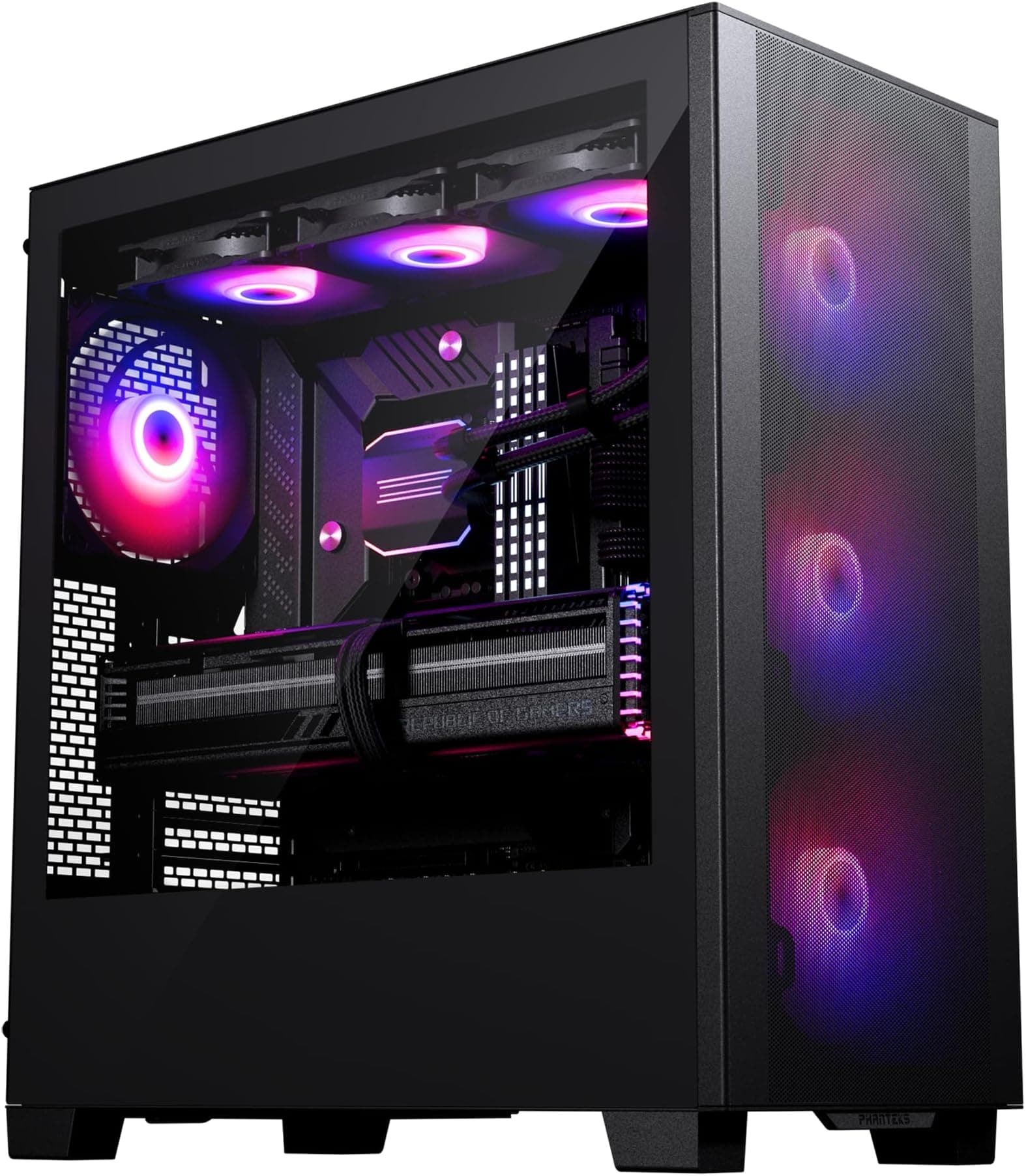
Phanteks XT Pro Ultra ATX Mid Tower Case, Tempered Glass, Black, DRGB Fans, Zero Clutter Cable Management
£76.99 · Phanteks
Frequently asked
5 questions01Is the GameMax Silent Mid-Tower PC Gaming case, ATX, Sound Dampening, SD/TF Card Reader Built-In | Black good for airflow?+
Airflow is the main trade-off with this case. The solid front panel with sound dampening foam restricts intake airflow compared to mesh-front alternatives. The three included 120mm fans (two front intake, one rear exhaust) provide adequate cooling for mid-range builds, but high-end GPUs or overclocked CPUs will run warmer than they would in a mesh-front case. There are dust filters on the front and bottom PSU intake, which is good for long-term maintenance. If airflow is your top priority, a mesh-front case will serve you better. If you're building a mid-range system and value quieter operation, the thermal performance here is acceptable.
02What's the GPU clearance on the GameMax Silent Mid-Tower PC Gaming case, ATX, Sound Dampening, SD/TF Card Reader Built-In | Black?+
The GameMax Silent supports GPUs up to approximately 380mm in length with the drive cage installed. If you remove the drive cage, clearance increases further. Most current mid-range and high-end GPUs from AMD and Nvidia fall in the 280-330mm range, so the vast majority of cards will fit comfortably. If you're planning to install a front 240mm radiator alongside a long GPU, available clearance reduces to around 320mm, which still covers most cards. There is no vertical GPU mount option on this case.
03Can the GameMax Silent Mid-Tower PC Gaming case, ATX, Sound Dampening, SD/TF Card Reader Built-In | Black fit a 360mm AIO?+
No. The GameMax Silent does not support a 360mm AIO radiator. The front panel accommodates a maximum 240mm radiator, and the rear supports a single 120mm radiator or fan. There is no top radiator mounting support. If you want to run a 360mm AIO, you'll need to choose a different case. For a 240mm AIO at the front, check your RAM height against the radiator thickness as tall heatspreaders can sometimes cause clearance issues depending on your specific motherboard layout.
04Is the GameMax Silent Mid-Tower PC Gaming case, ATX, Sound Dampening, SD/TF Card Reader Built-In | Black easy to build in?+
Building in the GameMax Silent is a straightforward experience overall. The cable management is workable with grommeted routing holes and several tie anchor points behind the motherboard tray, though no Velcro straps are included so you'll want to pick some up separately. Rear panel clearance of around 20-25mm is adequate for routing cable bundles. The large CPU backplate cutout on the motherboard tray means you can install aftermarket coolers without removing the board. The main frustrations are the standard punch-out PCIe slot covers (once opened, they're gone) and the front dust filter requiring full front panel removal to access. Sharp edges are present but not severe, with rolled edges on the main interior openings.
05What warranty and returns apply to the GameMax Silent Mid-Tower PC Gaming case, ATX, Sound Dampening, SD/TF Card Reader Built-In | Black?+
Amazon offers 30-day hassle-free returns if the case doesn't suit your build. GAMEMAX typically provides a 1-2 year warranty on manufacturing defects. Check the product listing for exact warranty terms.