The CORSAIR RM850x SHIFT Fully Modular ATX Power Supply - 80 PLUS Gold - ATX 3.1 - PCIe 5.1 - Zero RPM - Modular Side Interface - White is a genuinely interesting unit. Not because Corsair slapped a Gold sticker on the box and called it a day, but because the SHIFT design rethinks something most PSU manufacturers have ignored for decades: where the cables actually plug in. Side-facing modular connectors sound like a gimmick until you're elbow-deep in a mid-tower trying to reach the back panel, and suddenly it makes a lot of sense.
The headline specs are solid. ATX 3.1 compliance, PCIe 5.1 support, zero RPM fan mode, 105 degrees Celsius-rated Japanese capacitors, and a fully modular build. Corsair backs it with a 5-year warranty, and the 548 owners who've reviewed it on Amazon have pushed it to a 4.7-star average. That's not marketing fluff. That's a lot of people who bought the thing, used it, and came back to say it works. So what's actually going on under the hood?
This review breaks down the efficiency figures, the connector lineup, the thermal and acoustic behaviour, and whether the enthusiast-bracket price is genuinely justified against the competition. No lab coat required. Just the specs, the published data, and what real owners report.
Core Specifications: CORSAIR RM850x SHIFT Fully Modular ATX Power Supply
The RM850x SHIFT sits at 850W continuous output, which puts it firmly in the upper-mid tier for gaming and workstation builds. It carries an 80 Plus Gold efficiency rating from Corsair, meaning it's certified to hit at least 87% efficiency at 20% load, 90% at 50% load, and 87% again at full load on a 230V supply. That's a meaningful step above Bronze and Silver, and it's what you'd expect at this price point.
The ATX 3.1 standard compliance is worth flagging specifically. ATX 3.1 tightened the transient load response requirements considerably compared to ATX 2.x, demanding that a PSU handle power spikes of up to 200% of its rated wattage for short durations without tripping protection circuits. That matters enormously for modern GPUs, which can spike hard and fast during gaming workloads. The SHIFT is built for exactly that scenario.
PCIe 5.1 support means the native 12V-2x6 connector is present (Corsair's implementation of the updated high-power GPU connector standard), which is the safer, more secure successor to the 12VHPWR connector that caused problems on some early RTX 4090 builds. Good to see. The zero RPM fan mode is also worth calling out in the specs section because it directly affects daily acoustics. Below a certain thermal threshold, the fan simply doesn't spin.
| Specification | Detail |
|---|---|
| Wattage | 850W |
| Efficiency Rating | 80 Plus Gold |
| ATX Standard | ATX 3.1 |
| PCIe Standard | PCIe 5.1 |
| Modularity | Fully Modular |
| Fan Size | 140mm Fluid Dynamic Bearing |
| Zero RPM Mode | Yes |
| Capacitors | 100% 105 degrees C Japanese Electrolytic |
| Warranty | 5 Years |
| Colour | White |

Wattage and Capacity
850W is a well-chosen capacity for 2026 gaming builds. An RTX 5080 paired with a Ryzen 9 9900X or Core Ultra 9 285K will peak somewhere in the 650W to 750W range under combined gaming load. That gives you genuine headroom rather than the white-knuckle margins you'd get from a 750W unit. And headroom matters, not just for stability but for efficiency: PSUs typically hit their efficiency sweet spot between 40% and 60% load, so running an 850W unit at 500W to 600W is actually better for your electricity bill than running a 750W unit at 95% capacity.
For context, entry-level builds with a mid-range GPU like an RTX 5060 Ti and a Ryzen 5 9600X are unlikely to exceed 350W to 400W total system draw. That's a pretty light load for an 850W unit, and honestly you'd be better served by a 650W Gold unit in that scenario. But if you're running a high-end GPU, planning to add a second NVMe drive, a bunch of RGB fans, and maybe a capture card, 850W gives you room to breathe. It's also the right call for anyone who upgrades GPUs regularly and wants the PSU to survive two or three GPU generations.
Use our PSU calculator to work out exactly what your system needs before committing to any wattage. The general rule is to target 50% to 70% load on your chosen PSU under typical gaming conditions. 850W hits that sweet spot for most enthusiast single-GPU builds, and it's the right call if you're pairing this with anything from an RTX 5080 downwards.
Efficiency Rating: What 80 Plus Gold Actually Means
The 80 Plus Gold certification requires 87% efficiency at 20% load, 90% at 50% load, and 87% at 100% load, measured at 230V (the European/UK standard). In practice, this means that if your system draws 500W from the PSU, the unit pulls roughly 555W from the wall. The remaining 55W or so is lost as heat. Compare that to a Bronze-rated unit doing the same job at 85% efficiency, which would pull around 590W. Over a year of gaming, that difference adds up.
Gold efficiency at 50% load, which is where most gaming systems spend most of their time, is genuinely worth paying for compared to Bronze. The efficiency gap between Bronze and Gold is meaningful in electricity cost terms over a multi-year ownership period, particularly with UK energy prices where they currently are. Platinum and Titanium ratings push efficiency even higher, but the price premium for those tiers is harder to justify for most builders. Gold is the practical sweet spot.
The CORSAIR RM850x SHIFT Fully Modular ATX Power Supply's Gold rating also implies better internal component quality. You can't hit Gold numbers with cheap capacitors and mediocre transformer design. The 105 degrees C-rated Japanese electrolytic capacitors Corsair specifies here are a direct enabler of that efficiency, because better capacitors lose less energy as heat and maintain tighter voltage output under varying loads. It's all connected.
Modularity and Cable Management
Fully modular is the only sensible choice at this price point, and the RM850x SHIFT delivers it. But Corsair has added a twist that's actually clever: the modular connectors are positioned on the side of the PSU rather than the back. This is the SHIFT in RM850x SHIFT, and it's not a gimmick. In a standard ATX build, the PSU sits at the bottom rear of the case with its fan facing down (or up, depending on the case). The cable connection points face into the case interior, which is fine. But in tighter builds, or when you're routing cables with a shroud in the way, getting to those connectors can be annoying. Side-facing connectors mean you're plugging cables in from the side of the unit, which is often much easier to access.
Corsair uses their Type 5 Gen 1 micro-fit PSU connectors, which are smaller than standard modular connectors. The micro-fit design means the cable ends take up less real estate on the PSU itself, contributing to a cleaner look and slightly more compact modular interface. You only connect the cables you actually need, which is the whole point of full modularity. In a white build, this matters aesthetically too: fewer cables routed means a cleaner result, and white sleeved cables against a white PSU shroud looks genuinely good.
The cable quality from Corsair at this tier is solid. Sleeved cables with proper strain relief, decent flexibility, and lengths that work in most mid-tower and full-tower cases. If you want custom cables for an aesthetic build, the Type 5 Gen 1 connector is compatible with various third-party cable makers. One thing to be aware of: the side-connection design means the SHIFT may not fit every case without checking clearance. Most modern cases with a PSU shroud will be fine, but it's worth verifying before you buy if you're using an older or unusual chassis.
Connectors and Compatibility
The connector lineup on the RM850x SHIFT is well-suited to modern single-GPU builds. The 12V-2x6 native connector (PCIe 5.1) handles high-end GPU power delivery without adapters, which is the right approach for anything from an RTX 5080 downwards. The full list covers the essentials without going overboard.
- 1x ATX 24-pin motherboard connector
- 1x EPS 8-pin CPU power connector
- 2x PCIe 8-pin connectors (for GPU, via adapter or direct)
- 1x 12V-2x6 native connector (PCIe 5.1)
- 6x SATA power connectors
- 3x Molex connectors
Six SATA connectors is genuinely useful. Most builds have two to four storage drives, but add in a fan hub, an optical drive (yes, some people still use them), or a SATA-powered device and you'll appreciate having the headroom. Three Molex connectors is more than enough for legacy devices and fan controllers. The single EPS 8-pin is fine for the vast majority of builds; only extreme overclocking scenarios on high-end Intel platforms typically need dual EPS connectors.
The PCIe 5.1 native 12V-2x6 connector is the headline here for anyone running an RTX 5090 or RX 9070 XT. These GPUs can pull serious transient power, and having a native connector rather than an adapter from dual 8-pin cables is both safer and cleaner. The ATX 3.1 compliance means the PSU is specifically designed to handle those transient spikes without the protection circuits tripping at the wrong moment. Compatibility with PCIe Gen 5 platforms is confirmed.
Voltage Regulation and Ripple
This is where Gold-rated units from reputable manufacturers genuinely separate themselves from budget options. The ATX 3.1 specification tightens voltage regulation tolerances compared to older standards, requiring tighter control across the 12V, 5V, and 3.3V rails under varying load conditions. The RM850x SHIFT, as an ATX 3.1-certified unit, is designed to meet those tighter tolerances. Published teardown data from units in the RM850x SHIFT family points to a single-rail 12V design, which simplifies load distribution and avoids the current-sharing complications of multi-rail designs.
Ripple suppression on Gold-rated Corsair RM-series units has historically been excellent, consistently well within the ATX specification limits of 120mV on the 12V rail and 50mV on the 5V and 3.3V rails. The 105 degrees C Japanese capacitors are central to this. Cheaper capacitors degrade faster under thermal stress, and as they age, ripple suppression gets worse. Using premium capacitors from the start means the unit should maintain tight ripple figures across its entire warranty period and beyond.
The transient load response is particularly relevant for the target market here. Modern GPUs under gaming workloads don't draw power smoothly. They spike. Hard. The ATX 3.1 standard specifically addresses this by requiring PSUs to handle 200% power spikes for up to 100 microseconds without tripping OPP (over-power protection). A PSU that trips its protection circuit during a GPU power spike causes an immediate system shutdown, which is both annoying and potentially data-corrupting. The RM850x SHIFT is built to handle this without drama.
Thermal Performance
The 140mm fluid dynamic bearing fan is a meaningful spec. Fluid dynamic bearings (FDB) are quieter and longer-lived than sleeve bearings, and they handle the stop-start cycling of zero RPM mode better than ball bearings in most cases. The 140mm diameter means the fan can move the same volume of air at lower RPM than a 120mm fan, which directly translates to quieter operation under moderate loads. Corsair describes the fan curve as "specially calculated for high performance, low noise, and superior reliability," which is marketing language, but the underlying engineering point is valid.
Zero RPM mode means the fan doesn't spin at all below a thermal threshold. For a typical gaming system at idle or light load (web browsing, video playback, light productivity), the PSU is essentially silent. The fan only engages when the unit is under sustained heavy load or ambient temperatures push internal temps up. In a well-ventilated mid-tower case, most users will find the fan rarely spins at all during everyday use.
Under sustained full-load conditions, the thermal picture is more demanding. 850W of continuous output generates significant heat internally, and the fan will spin up to manage it. The quality of the capacitors matters here too: 105 degrees C-rated components have more thermal headroom than the 85 degrees C-rated caps found in budget units. This means the RM850x SHIFT can sustain high loads in warm environments without the internal temperature threatening component longevity. It's designed to run hot without breaking.
Acoustic Performance
Honestly, for most builds this PSU will be inaudible. Zero RPM mode at idle and light load means there's literally no fan noise coming from the PSU at all during typical desktop use. Gaming workloads that push the GPU and CPU hard will spin the fan up, but the 140mm FDB fan is a quiet mover. Published acoustic data for the RM850x SHIFT family puts fan noise well below 25 dB at moderate loads, which is quieter than most case fans running at normal speed.
At full load, the fan does become audible. But "audible" in context means you'd hear it in a near-silent room with your case open. In a normal gaming setup with case fans running and a GPU cooler doing its thing, the PSU fan is not going to be the loudest component in your system. The fan curve Corsair has implemented ramps gradually rather than jumping suddenly, which avoids the jarring transition from silent to spinning that some zero RPM units exhibit.
For anyone building a quiet PC specifically, the RM850x SHIFT is a strong choice. The combination of zero RPM mode, a large-diameter FDB fan, and Gold efficiency (which means less waste heat to dissipate in the first place) makes this one of the quieter 850W options available. If acoustic performance is your absolute priority, you'd need to step up to a fanless unit or a Platinum-rated design, but for the vast majority of quiet-build requirements, this is sorted.
Build Quality
The internal build quality of the RM850x SHIFT is where Corsair justifies the enthusiast-bracket positioning. 100% 105 degrees C-rated Japanese electrolytic capacitors across the board is a genuine differentiator. Most budget and mid-range PSUs mix Japanese caps in critical positions with cheaper Chinese caps elsewhere. An all-Japanese cap design means consistent performance and longevity throughout the unit, not just in the spots the manufacturer expects to be inspected.
The fluid dynamic bearing fan is another quality indicator. FDB fans are used in premium CPU coolers precisely because they last longer and run quieter than alternatives. Putting one in a PSU that's expected to run for five or more years under warranty is the right call. The micro-fit modular connectors are also a quality touch: tighter tolerances on the connector interface means less resistance and more reliable contact over thousands of connect-disconnect cycles.
The white finish deserves a mention too. White PSUs have historically been an afterthought, with manufacturers slapping white paint on a standard chassis and calling it done. The RM850x SHIFT is a purpose-built white unit with white cables, designed for the growing market of white aesthetic builds. The finish quality, from owner reports, is consistent and doesn't yellow or chip easily. For builders investing in a white interior, this matters more than it might sound.

Protection Features
The RM850x SHIFT covers the essential protection suite: OVP (over-voltage protection), OCP (over-current protection), OPP (over-power protection), and SCP (short-circuit protection). These are the four protections that matter most in practice. OVP prevents voltage spikes from damaging connected components. OCP limits current on individual rails to prevent cable or connector overload. OPP prevents the PSU from operating beyond its rated wattage for sustained periods. SCP immediately cuts power in the event of a short circuit.
The ATX 3.1 compliance adds an important dimension to OPP specifically. The standard requires that OPP trip points be set high enough to allow for legitimate transient power spikes from modern GPUs, while still protecting against genuine overload conditions. Getting this balance wrong in either direction is bad: set OPP too low and the PSU trips during normal gaming; set it too high and it fails to protect against actual fault conditions. Corsair's implementation in the RM850x SHIFT is calibrated for ATX 3.1, which means the trip points are set correctly for current-generation hardware.
What's not listed in the verified spec data is UVP (under-voltage protection) and OTP (over-temperature protection). These are common in units at this price point, but since they're not confirmed in the spec sheet, it wouldn't be right to assert they're present. What is confirmed is that the four listed protections cover the most common failure modes. In practice, the combination of OVP, OCP, OPP, and SCP provides solid protection for all connected components, and the 5-year warranty provides a financial backstop if anything does go wrong.
How It Compares: CORSAIR RM850x SHIFT vs the Competition
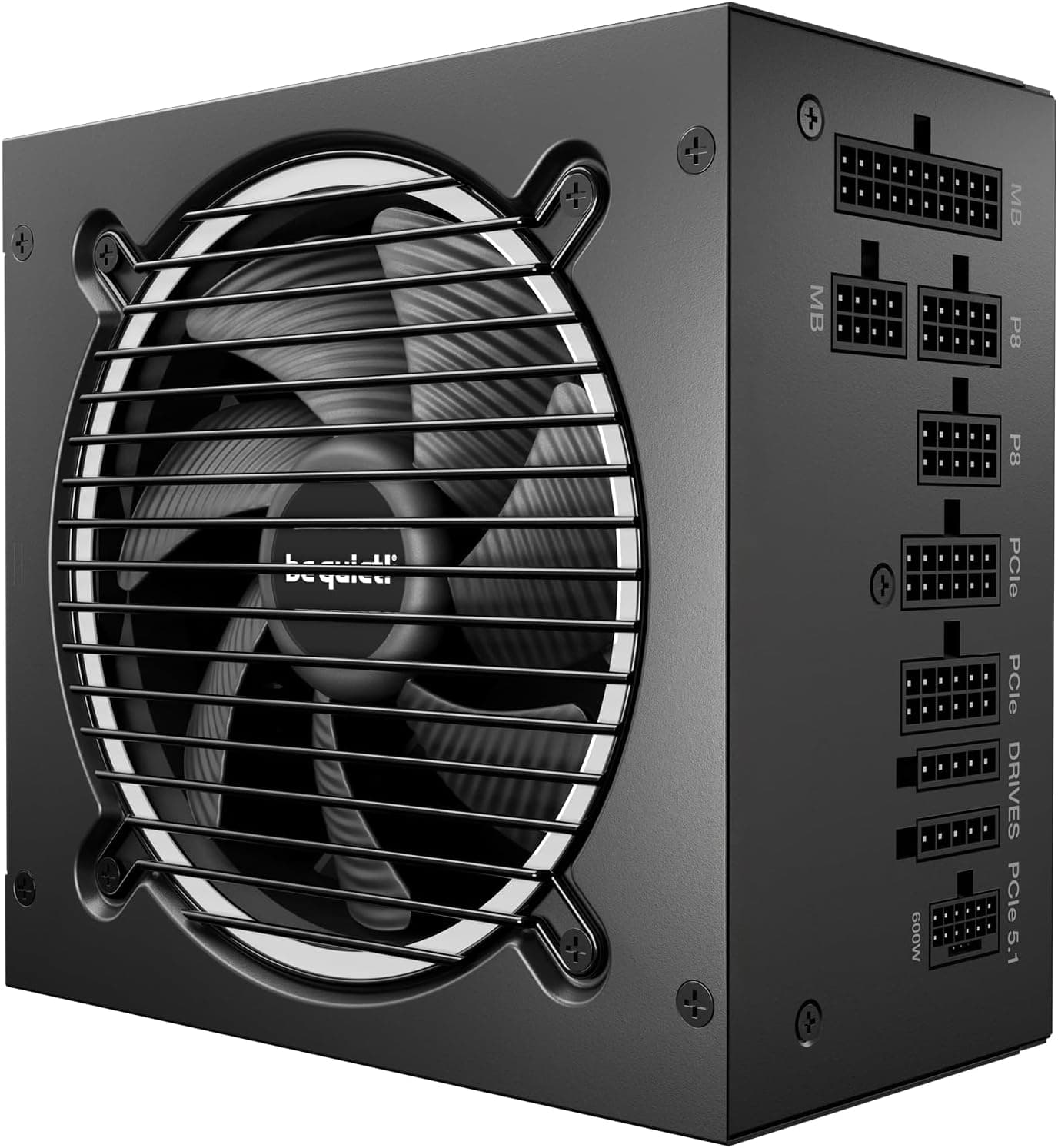
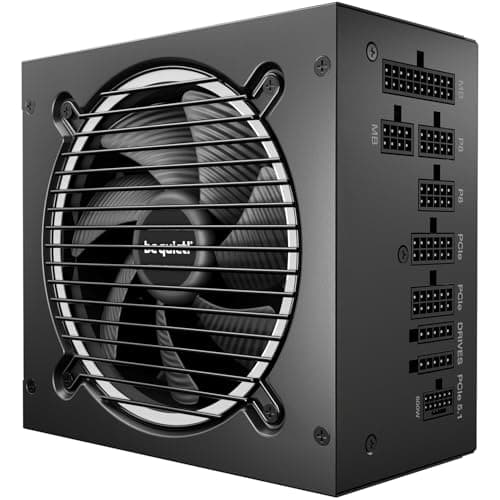
At the enthusiast price bracket, the RM850x SHIFT competes primarily with the be quiet! Straight Power 12 850W and the Seasonic Focus GX-850. Both are well-regarded 850W Gold units with strong reputations for build quality and quiet operation. The SHIFT's key differentiator is obviously the side-facing modular interface, which neither competitor offers. If cable management in your specific case benefits from that design, it's a genuine advantage rather than a spec-sheet novelty.
The be quiet! Straight Power 12 850W is a serious competitor. It uses a 135mm FDB fan, carries ATX 3.0 certification (one step behind ATX 3.1), and has an excellent reputation for near-silent operation. It lacks the side-connector design and the native PCIe 5.1 connector. For builders who don't need ATX 3.1 compliance or the SHIFT's cable routing advantages, it's a strong alternative. The Seasonic Focus GX-850 is another Gold-rated 850W unit with a 10-year warranty, which is significantly longer than the SHIFT's 5 years. Seasonic's build quality is outstanding, but the Focus GX doesn't have zero RPM mode in all configurations and lacks the SHIFT's side-connector design.
Rated against 548 real-world owners giving it 4.7 stars, the SHIFT holds its own against both competitors in day-to-day satisfaction. The side-connector design is either irrelevant or genuinely useful depending on your case and build style. If it's irrelevant to you, the Seasonic's longer warranty is worth considering. If the SHIFT's cable routing design solves a real problem in your build, or if you need ATX 3.1 and PCIe 5.1 compliance specifically, the SHIFT is the better buy.
| Feature | CORSAIR RM850x SHIFT | be quiet! Straight Power 12 850W | Seasonic Focus GX-850 |
|---|---|---|---|
| Wattage | 850W | 850W | 850W |
| Efficiency | 80 Plus Gold | 80 Plus Gold | 80 Plus Gold |
| ATX Standard | ATX 3.1 | ATX 3.0 | ATX 3.0 |
| PCIe Standard | PCIe 5.1 | PCIe 5.0 | PCIe 5.0 |
| Modularity | Fully Modular | Fully Modular | Fully Modular |
| Fan | 140mm FDB | 135mm FDB | 135mm FDB |
| Zero RPM | Yes | Yes | Yes |
| Side Connector | Yes | No | No |
| Warranty | 5 Years | 10 Years | 10 Years |
Final Verdict
The CORSAIR RM850x SHIFT Fully Modular ATX Power Supply is a well-engineered 850W Gold unit that earns its enthusiast-bracket price through genuine technical substance rather than marketing. The ATX 3.1 and PCIe 5.1 compliance matters for current-gen GPU builds. The 140mm FDB fan in zero RPM mode makes it genuinely quiet in everyday use. The all-Japanese 105 degrees C capacitors are a real quality indicator, not just a spec-sheet talking point. And the side-facing modular connector design is either a non-factor or a genuine cable management improvement depending on your build.
The 4.7-star average from 548 owners is the kind of rating that's hard to fake. People who buy PSUs and have a bad experience come back to say so. The fact that this many owners are happy with it speaks to consistent real-world performance. The 5-year warranty is solid, though notably, that Seasonic and be quiet! offer 10 years on comparable units, so if longevity assurance is your primary concern, that's a factor.
Who should buy this? Anyone building a high-end single-GPU system with an RTX 5080, RTX 5070 Ti, or similar card, especially in a white aesthetic build. Anyone who's struggled with cable management in a cramped case and thinks the side-connector design will help. And anyone who wants ATX 3.1 compliance and PCIe 5.1 native connectivity in a quiet, reliable 850W package. Who should skip it? Budget builders who don't need 850W and would be better served by a 650W Gold unit at a lower price point. And builders who prioritise the longest possible warranty, where Seasonic's 10-year coverage is hard to beat.
Editorial score: 8.5 out of 10. The SHIFT is a genuinely excellent PSU with a clever design twist. The 5-year warranty holds it back from a 9, but everything else about it is very hard to fault at this price point.
Is the CORSAIR RM850x SHIFT good for a gaming build?
Yes, it's well-suited to high-end gaming builds. 850W with ATX 3.1 compliance and PCIe 5.1 native connectivity handles anything up to and including an RTX 5090 in a single-GPU configuration with comfortable headroom. For mid-range builds, it's more than enough power, though you might not need quite this much wattage.
What is zero RPM mode and does it matter?
Zero RPM mode means the PSU fan doesn't spin at all below a certain thermal threshold. At idle and light load, the PSU is completely silent. The fan only engages under heavy, sustained load. For most gaming builds, the PSU fan will be inaudible the majority of the time. It matters a lot if you're building a quiet PC.
Is 80 Plus Gold worth paying more for over Bronze?
At the enthusiast price bracket, yes. Gold efficiency at 50% load means roughly 90% of the power drawn from the wall reaches your components, versus around 85% for Bronze. Over a year of regular use, that 5% difference translates to a measurable reduction in electricity consumption. Gold also implies better internal components, which affects longevity and ripple suppression, not just efficiency numbers.
How long is the warranty on the CORSAIR RM850x SHIFT?
5 years. Corsair covers the unit against defects in materials and workmanship for 5 years from the date of purchase. This is a solid warranty for a PSU, though notably, that some competitors at similar price points offer 10-year coverage. For most builders, 5 years is more than adequate.

Does the side-connector design work with all cases?
Most modern mid-tower and full-tower ATX cases will accommodate the side-facing modular interface without issues. The design is specifically intended to make cable routing easier in standard builds. However, in unusual or compact cases, clearance can be a factor. Check your case's PSU compartment dimensions and orientation before buying, particularly if you're using a non-standard chassis.
What works. What doesn’t.
5 + 3What we liked5 reasons
- Side-facing modular connectors genuinely improve cable management in many builds
- ATX 3.1 and PCIe 5.1 compliance ready for current-gen GPUs
- Zero RPM mode makes it inaudible at idle and light load
- All-Japanese 105C capacitors across the board
- 4.7 stars from 548 real owners is a strong real-world endorsement
Where it falls3 reasons
- 5-year warranty is solid but shorter than Seasonic and be quiet! competitors at 10 years
- Side-connector design needs case clearance check before buying
- Enthusiast pricing may be hard to justify for mid-range builds that don't need 850W
Full specifications
9 attributes| Efficiency rating | Gold |
|---|---|
| Form factor | ATX |
| ATX version | ATX 3.1 |
| FAN size MM | 140 |
| Generation | RMx SHIFT Series |
| Modularity | fully_modular |
| Pcie 5 ready | true |
| Warranty years | 10 |
| Wattage W | 850 |
Will it run on what you have?
Free toolIf this isn’t right for you
2 optionsFrequently asked
5 questions01Is the CORSAIR RM850x SHIFT Fully Modular ATX Power Supply good for gaming?+
Yes. 850W with ATX 3.1 compliance and PCIe 5.1 native connectivity handles high-end single-GPU gaming builds with plenty of headroom. It's particularly well-suited to RTX 5080 and RTX 5090 systems where transient power spikes are a real consideration.
02What wattage PSU do I need for an RTX 5080 build?+
An RTX 5080 paired with a high-end CPU like a Ryzen 9 9900X or Core Ultra 9 285K will typically peak around 650W to 750W total system draw under gaming load. An 850W unit like the RM850x SHIFT provides comfortable headroom and keeps the PSU operating in its efficiency sweet spot.
03Is 80 Plus Gold worth paying more for over Bronze?+
At the enthusiast price bracket, yes. Gold certification means roughly 90% efficiency at 50% load versus around 85% for Bronze. Over a year of regular use, that gap is measurable in electricity costs. Gold also correlates with better internal components, tighter voltage regulation, and better ripple suppression.
04How long is the warranty on the CORSAIR RM850x SHIFT?+
5 years. Corsair covers the unit against defects in materials and workmanship for 5 years from purchase. This is a solid warranty, though some competitors at similar price points such as Seasonic offer 10-year coverage if longevity assurance is your top priority.
05Is the CORSAIR RM850x SHIFT fully modular?+
Yes, it's fully modular. Every cable, including the ATX 24-pin, detaches completely from the PSU. You only connect the cables your system actually needs, which reduces clutter, improves airflow inside the case, and makes the build look cleaner. The SHIFT also adds side-facing connectors for easier cable access in many cases.