Prebuilt PCs attract a certain kind of scepticism, and honestly, most of it is earned. Dig into the spec sheet of the average budget tower and you'll find a decent CPU propped up by a no-name PSU, a motherboard that was clearly chosen by someone whose job was to spend as little as possible, and RAM running well below its rated speed because nobody bothered to enable XMP. So when the Rogue Origin AMD landed on our radar, the first thing to do was go through every component and ask the obvious question: where did the money actually go?
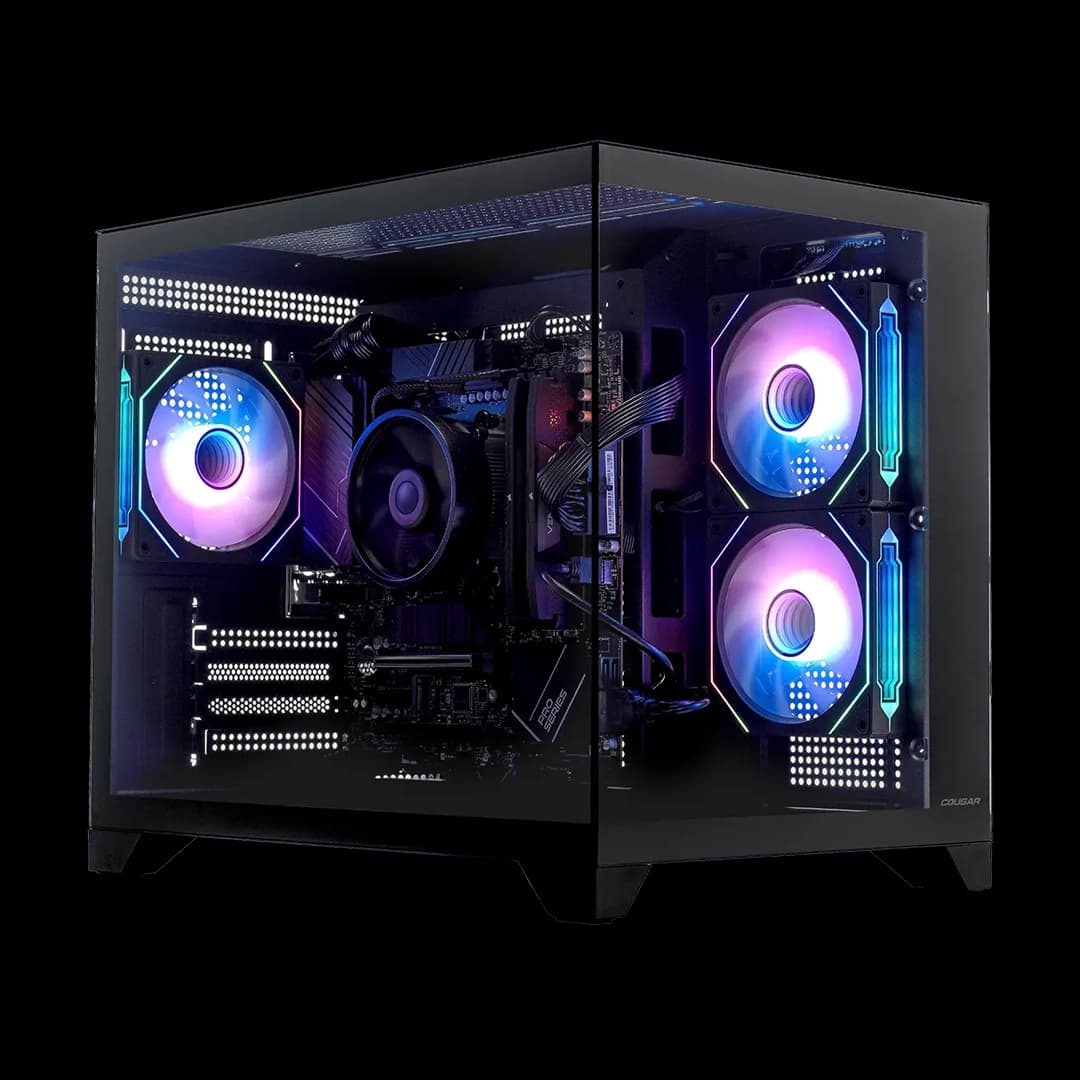
The short answer is: mostly in the right places, with a couple of predictable compromises. The Rogue Origin AMD is a Stormforce-built entry-level desktop running an AMD Ryzen 5 5600GT with integrated Radeon graphics, 16GB of DDR4, and a 1TB Gen 4 NVMe SSD in a Cougar UniFace Mini case. At this price tier, it sits in a genuinely competitive spot. A DIY build to the same spec would cost you roughly the same once you factor in Windows 11 Home, the case, and the PSU, so the convenience argument is stronger here than it usually is at budget level. But this machine is not for everyone, and the integrated GPU is the single biggest thing you need to understand before handing over your money.
There are no owner reviews to draw on yet, so the analysis here is grounded entirely in the verified spec sheet, AMD's published specifications for the 5600GT, and what the component choices tell us about how Stormforce put this together. Let's get into it.
Core Specifications
The headline component is the AMD Ryzen 5 5600GT, which is a slightly unusual chip. It's a Zen 3 processor with six cores and twelve threads, a 3.6GHz base clock boosting to 4.6GHz, built on a 7nm process with a 65W TDP. What makes it different from a plain 5600 is the integrated Radeon graphics. The "GT" suffix means you get a capable iGPU baked in, which is the entire reason this machine exists without a discrete GPU. That's a deliberate design choice, not an oversight.
The rest of the build is sensible. 16GB of DDR4 at 3200MHz is a proper dual-channel setup (assuming Stormforce has populated two slots, which is standard practice at this price point). The 1TB Gen 4 M.2 NVMe SSD is faster than most budget prebuilts bother with. Gen 4 at this tier is a genuine upgrade over the Gen 3 drives you'll find in a lot of competing systems. The A520 motherboard is budget-grade but functional, and the 350W Bronze PSU is adequate for a system without a discrete GPU. The Cougar UniFace Mini is a recognisable, decent-quality mATX case with a tempered glass panel and integrated RGB.
Windows 11 Home is pre-installed, which means you get DirectStorage support, Auto HDR, and Microsoft's Copilot AI built in from day one. No messing around with licence keys or USB installers. For a first PC or a family machine, that matters more than people give it credit for. The full spec breakdown is below.
| Component | Specification |
|---|---|
| CPU | AMD Ryzen 5 5600GT (6 cores, 12 threads, 3.6GHz base / 4.6GHz boost, Zen 3, 7nm, 65W TDP) |
| GPU | Integrated AMD Radeon Graphics |
| RAM | 16GB DDR4 3200MHz |
| Storage | 1TB Gen 4 M.2 NVMe SSD |
| Motherboard | A520 (mATX, AMD AM4) |
| Case | Cougar UniFace Mini RGB mATX |
| Cooling | Compact aluminium heatsink with integrated fan |
| PSU | 350W Bronze |
| Connectivity | WiFi 6, Ethernet |
| Operating System | Microsoft Windows 11 Home |
| Price | £699.99 |

CPU & Performance: Rogue Origin AMD Where It Counts
The Ryzen 5 5600GT is a chip that doesn't get enough credit. Six cores and twelve threads on Zen 3 architecture means you're getting AMD's mature, well-optimised microarchitecture from the same generation as the acclaimed Ryzen 5000 series. The 4.6GHz boost clock is competitive for anything that relies on single-core speed, which includes most games, most browsers, and most productivity apps. For everyday use, spreadsheets, video calls, light photo editing, and browser-based work, this CPU is genuinely quick. It won't break a sweat.
Where the 5600GT starts to show limits is in heavily multi-threaded workloads. Video encoding, 3D rendering, and compiling large codebases will eventually hit the ceiling of six cores. That said, at this price tier, you're not buying a workstation. The target user is someone who wants a fast, responsive desktop for daily computing and light gaming, not someone rendering 4K timelines in DaVinci Resolve. For that audience, the 5600GT is more than adequate. AMD's own published specifications confirm the 65W TDP, which means thermals are manageable even with the compact cooler Stormforce has fitted.
One thing the 5600GT does that a plain 5600 doesn't is bring the integrated graphics. AMD rates the iGPU in this chip as Radeon Graphics with Vega architecture cores. It's not a gaming powerhouse by any stretch, but it handles 4K video playback, dual-monitor desktop use, and light gaming without complaint. The CPU and iGPU share system memory, so the 16GB of DDR4 3200 is doing double duty here, feeding both the processor and the graphics. That's the right RAM spec for this configuration. Skimping to 8GB on a system with integrated graphics would have been a mistake, and Stormforce didn't make it.
GPU & Gaming Performance
This is the section where you need to be honest with yourself about what you want. The Rogue Origin AMD has no discrete GPU. The graphics come entirely from the integrated Radeon cores inside the 5600GT. That changes the conversation about gaming performance completely. You're not getting a system that can push 1080p at high settings in modern AAA titles. That's not what this machine is for.
What integrated Radeon graphics on the 5600GT can handle is a meaningful list, though. Older and less demanding games, think titles from a few years back or anything with modest system requirements, run fine. Minecraft, League of Legends, CS2 at reduced settings, older FIFA titles, Stardew Valley, and similar games will all run without drama. Esports titles that are designed to be playable on modest hardware are the sweet spot. If you're buying this for a teenager who plays Roblox and Fortnite at low settings, or for a family member who wants to dabble in casual gaming alongside everyday computing, the iGPU is sufficient.
Modern AAA games at 1080p high settings? No. That's not a criticism of this specific machine, it's just physics. Integrated graphics share system memory rather than having dedicated VRAM, which creates a bandwidth bottleneck that no amount of driver optimisation fully resolves. The honest framing is this: if gaming is your primary reason for buying a PC, the Rogue Origin AMD is the wrong choice at this price. If gaming is one thing among many that you want to do occasionally, and you're open to playing at lower settings or in less demanding titles, it works. And crucially, the AM4 socket and the case size leave the door open for adding a discrete GPU later, which is the real long-term play for anyone who catches the gaming bug.
Memory & Storage
Sixteen gigabytes of DDR4 at 3200MHz is the right call for a system like this. With integrated graphics pulling from system memory, having a sensible amount of RAM at a decent speed actually moves the needle on iGPU performance in a way that it wouldn't on a system with dedicated VRAM. DDR4 3200 is the sweet spot for Zen 3, matching what AMD's architecture prefers and keeping latency reasonable. Whether Stormforce has enabled the XMP profile by default is not confirmed in the spec sheet, but it's standard practice for reputable builders to do so.
The storage choice is where this build genuinely punches above its weight. A 1TB Gen 4 NVMe SSD at this price tier is not a given. A lot of budget prebuilts still ship with Gen 3 drives or, worse, a SATA SSD. Gen 4 brings significantly faster sequential read and write speeds compared to Gen 3, which translates to faster boot times, faster application launches, and snappier game loading. The A520 motherboard supports Gen 4 M.2, so the drive is running at full speed rather than being bottlenecked by the platform. One terabyte is also a sensible starting capacity. It's not enormous, but it's enough to hold Windows, a handful of games, and a decent amount of files before you start feeling the squeeze.
The A520 motherboard typically provides at least one M.2 slot and SATA ports for additional storage, so expanding later is straightforward. Adding a second SSD or a large hard drive for media storage is a realistic upgrade path. RAM expansion is similarly uncomplicated on AM4 platforms. The A520 supports up to 128GB of DDR4 across four slots, so if you start with two sticks and want to add more later, the headroom is there. The practical ceiling for most users will be 32GB, which is more than enough for gaming and productivity combined.
Cooling Solution
Stormforce has fitted a compact aluminium heatsink with an integrated fan. This is a stock-style cooler, and for a 65W TDP chip like the 5600GT, it's an appropriate match. The Ryzen 5 5600GT is not a hot-running processor. AMD's design discipline with the 65W TDP envelope means this chip doesn't need a massive tower cooler to stay within safe temperatures under typical loads. The compact cooler will handle everyday computing, light gaming, and even sustained productivity workloads without the CPU throttling.
Where compact coolers on budget systems tend to show their limits is under sustained, heavy multi-threaded load over long periods. If you're running CPU-intensive tasks for hours at a time, the cooler may not maintain the full 4.6GHz boost clock indefinitely. In practice, for the target user of this machine, that's unlikely to be a real-world concern. Browsing, video streaming, office work, and casual gaming don't push a Zen 3 six-core anywhere near its thermal limits. The cooler is sized for the job this PC is actually going to do, which is the right engineering call.
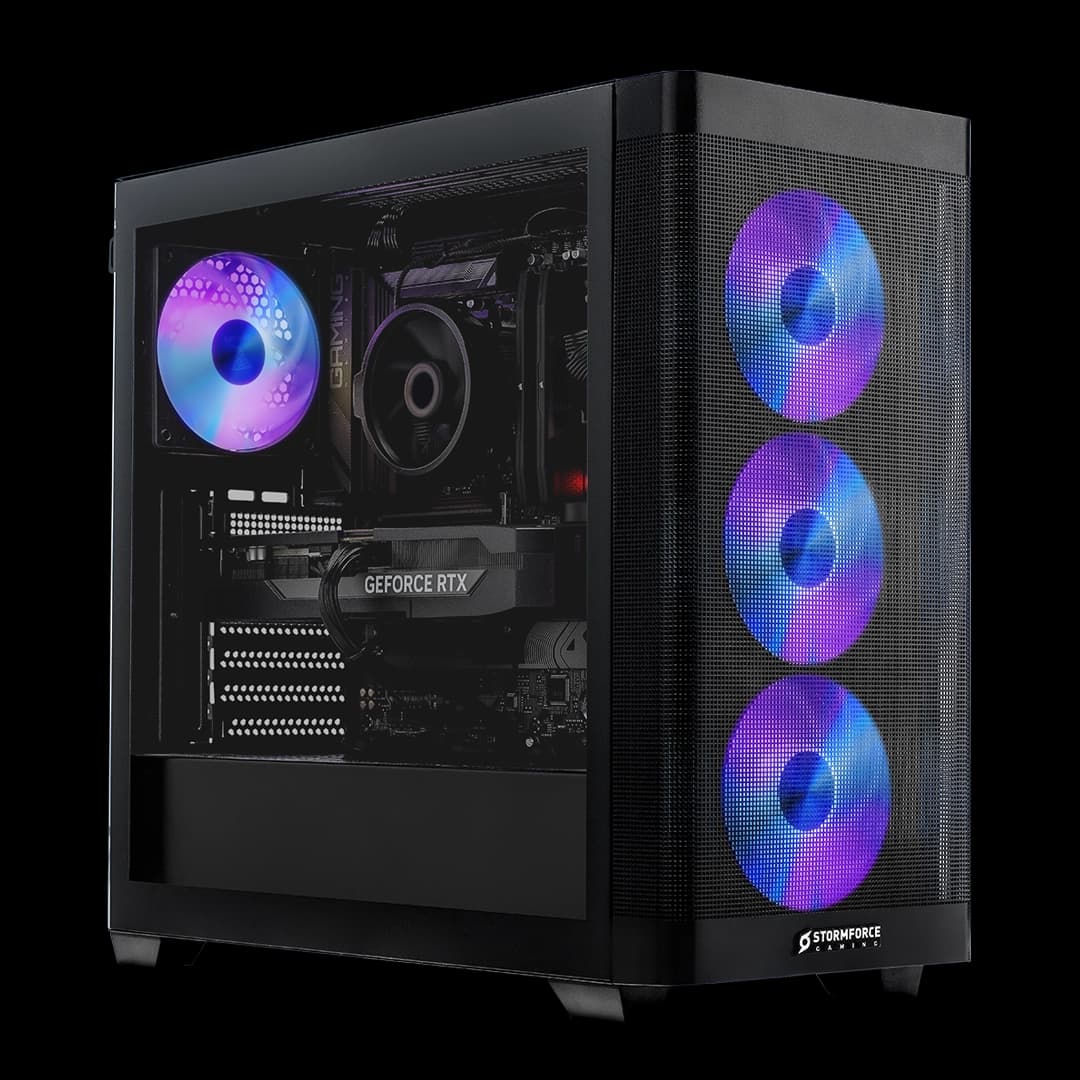
The Cougar UniFace Mini case has a high-airflow design, which helps the overall thermal picture. Good case airflow reduces ambient temperatures inside the chassis, which in turn reduces the load on the CPU cooler. The case supports Micro ATX and Mini ITX motherboards, and the airflow-focused design means there's enough movement through the case to keep things sensible. If you ever add a discrete GPU, airflow becomes more important, and the case's design gives you a reasonable foundation. Noise levels from the stock cooler should be modest at normal loads, though Stormforce doesn't publish specific acoustic figures.
Case & Build Quality
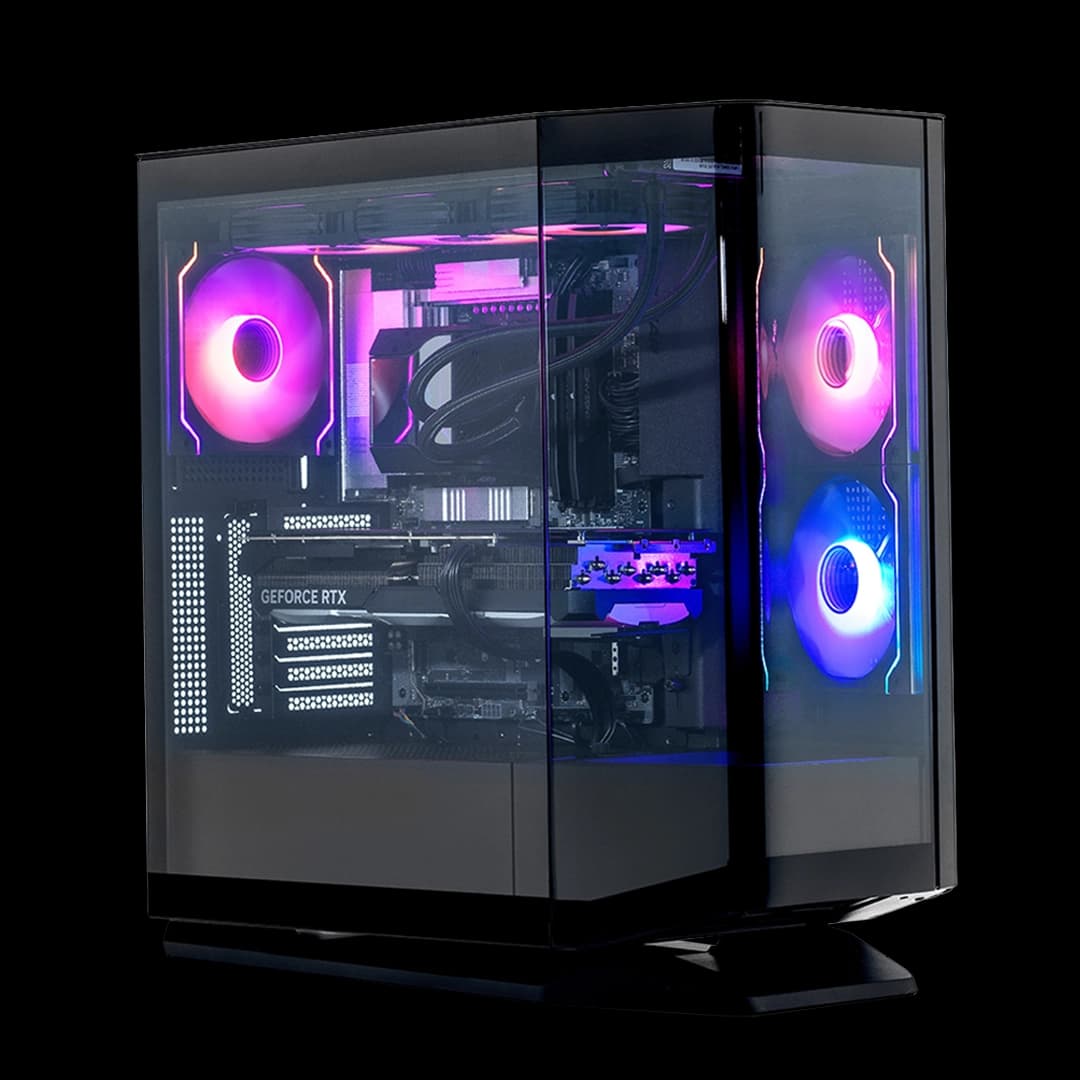
The Cougar UniFace Mini is a recognisable case in the budget-to-mid market, and it's a better choice than the generic no-name towers that a lot of prebuilt builders reach for at this price. The tempered glass side panel is a genuine feature rather than a gimmick. It's thinner than you'd get on a premium case, but it does the job visually and gives you a clear view of the internals. The integrated RGB lighting adds some personality without requiring a separate controller or software setup.
Build quality on Stormforce systems is generally consistent. Cable management in a compact mATX build is always a constraint, but the UniFace Mini has routing channels and enough internal space to keep things tidy. A clean cable job matters for airflow as much as aesthetics. Stormforce's reputation as a UK-based builder means quality control is more reliable than some of the grey-market prebuilts that come through third-party sellers. The A520 motherboard, cooler, RAM, and SSD brands may vary depending on availability, which is standard practice for prebuilt builders managing component supply, but the specifications are fixed.
The mATX form factor is worth thinking about in terms of desk space. This is a compact machine. It won't dominate your desk or require a dedicated tower position on the floor. For a bedroom gaming setup, a home office, or a living room media PC, the physical footprint is genuinely convenient. The Cougar case also supports Mini ITX motherboards, though in this configuration it ships with a Micro ATX board. The overall build feels purposeful rather than thrown together, which is more than you can say for some prebuilts at this price.

Connectivity & Ports
The Rogue Origin AMD ships with WiFi 6 and Ethernet. WiFi 6 is a meaningful upgrade over WiFi 5 in practical terms. It handles congested networks better, which matters if you're in a flat or house with multiple devices competing for bandwidth. The theoretical maximum throughput is higher, and latency is lower under load. For a desktop that might live in a room away from the router, having WiFi 6 rather than a budget WiFi 5 card is a genuine quality-of-life improvement. The Ethernet port is there for anyone who can run a cable, which will always be the more stable option for gaming or video calls.
One thing the spec sheet confirms clearly: there is no Bluetooth listed. The connectivity specification explicitly states WiFi 6 and Ethernet without Bluetooth. If you need Bluetooth for wireless peripherals, a headset, or a controller, you'll need to factor in a USB Bluetooth adapter. These are cheap and widely available, but it's something to account for before you buy. A lot of wireless gaming headsets and controllers use proprietary USB dongles anyway, so it may not be a practical issue depending on your setup.
Specific port counts for the front panel and rear I/O are not detailed in the verified spec sheet. The A520 motherboard platform typically includes a range of USB options, and the Cougar UniFace Mini case has front panel USB ports as standard for the form factor. For exact port counts and video output options, checking the Stormforce product page directly before purchasing is the sensible move. What can be said with confidence is that the A520 platform supports a range of USB connectivity and the iGPU will output to a display via the motherboard's rear video outputs.
Pre-installed Software & OS
Microsoft Windows 11 Home comes pre-installed, which is a clean starting point. Windows 11 Home brings a few features that are directly relevant to PC users: DirectStorage allows games to load assets directly from the NVMe SSD to the GPU without going through the CPU, which reduces load times in supported titles. Auto HDR can automatically apply HDR processing to older games on compatible displays. And Copilot AI is built into the taskbar for anyone who wants to use it. These are genuine additions to the platform, not marketing fluff.
Stormforce doesn't advertise heavy bloatware as a feature, which is a good sign. The worst prebuilt experiences involve systems that ship with trial software, antivirus subscriptions, and manufacturer utilities that run at startup and slow everything down. A clean Windows install with minimal additions is the right approach, and it's what you'd expect from a reputable UK builder. The system is ready to use out of the box, which is the whole point of buying a prebuilt rather than building yourself.
The Windows 11 Home licence is tied to the hardware, so if you ever replace the motherboard in a major upgrade, you'd need to consider the licence situation. For most users who are buying this as a complete system and plan to use it as-is for several years, that's not a practical concern. The operating system is current, supported, and receives regular security updates from Microsoft. There's no reason to immediately reinstall or upgrade to Pro unless you have specific enterprise or remote desktop requirements, which is unlikely at this price tier.
Upgrade Potential
This is where the Rogue Origin AMD makes a decent argument for itself as a long-term purchase rather than a disposable budget box. The AM4 platform is mature and well-supported, which means upgrade paths are real rather than theoretical. The A520 motherboard won't support BIOS Flashback or PCIe 4.0 on the CPU lanes in the same way a B550 would, but it does support the full range of Ryzen 5000 series processors. If you wanted to drop in a Ryzen 7 5700X or a Ryzen 9 5900X down the line, the socket is compatible. Used AM4 CPUs are also becoming increasingly affordable as the market moves on to AM5, which makes the upgrade economics genuinely attractive.
Adding a discrete GPU is the most impactful upgrade this system could receive, and it's entirely feasible. The A520 board has a PCIe slot for a graphics card, and the Cougar UniFace Mini case has space for a full-length GPU. The 350W Bronze PSU is the constraint here. It's adequate for the current iGPU configuration, but a mid-range discrete GPU would push power requirements up significantly. A card like an RX 6600 or an RTX 3060 would likely require a PSU upgrade alongside the GPU itself, adding to the total cost. Budget for both if you're planning that route. A quality 550W or 650W unit from a reputable brand would be the sensible target.
RAM expansion is uncomplicated. If the system ships with two 8GB sticks in dual-channel (which is the expected configuration for 16GB on this platform), all four slots are occupied and you'd need to replace rather than add. If it ships with a single 16GB stick, you have a free slot for a matched module. The spec sheet doesn't confirm the stick count, so checking with Stormforce directly is the right move before assuming you can simply slot in more. Storage expansion is easier to plan around: the A520 typically has at least one additional M.2 slot and SATA ports, giving you room to add drives without replacing anything.
How the Rogue Origin AMD Compares
The honest comparison for a machine like this is a DIY build to the same spec, not a rival prebuilt with a discrete GPU. If you price up an AM4 build with the Ryzen 5 5600GT, 16GB DDR4 3200, a 1TB Gen 4 NVMe, an A520 board, a 350W PSU, and a comparable mATX case, you're looking at a component cost that gets uncomfortably close to the prebuilt price once you add Windows 11 Home. The 5600GT in particular has become more affordable as the AM4 platform matures, but the supporting components add up. For someone who doesn't want to spend a weekend sourcing parts, checking compatibility, and building, the convenience premium here is small enough to be defensible.
Against other prebuilts at this price tier, the differentiator is the Gen 4 NVMe and the WiFi 6. A lot of budget prebuilts at this level ship with Gen 3 SSDs and WiFi 5, or skip wireless entirely. Getting Gen 4 storage and WiFi 6 in a compact, well-cased system from a UK builder with proper warranty support is a meaningful package. The integrated graphics is the obvious compromise versus systems that include a discrete GPU at a similar price, but those systems often cut corners elsewhere, typically on the PSU or the storage, to fit the GPU into the budget.
The table below frames the key comparisons between the Rogue Origin AMD, a self-build to the same spec, and a typical budget prebuilt with a discrete GPU at a similar price point.
| Feature | Rogue Origin AMD | DIY AM4 Equivalent Build | Budget Prebuilt with Discrete GPU |
|---|---|---|---|
| CPU | Ryzen 5 5600GT (Zen 3, 6C/12T) | Ryzen 5 5600GT or similar | Often Ryzen 5 5600 or older |
| GPU | Integrated Radeon (iGPU) | iGPU only unless you add one | Entry discrete GPU (e.g. RX 6500 XT tier) |
| Storage | 1TB Gen 4 NVMe | Your choice, often Gen 3 to save money | Frequently 512GB Gen 3 or SATA SSD |
| RAM | 16GB DDR4 3200 | 16GB DDR4 3200 | Often 8GB, sometimes 16GB |
| WiFi | WiFi 6 | Depends on motherboard/card chosen | Often WiFi 5 or wired only |
| Windows 11 Home | Included | Extra cost (OEM licence needed) | Usually included |
| Warranty/Support | Stormforce UK builder warranty | Component warranties only, self-support | Varies by brand |
| Gaming Performance | Casual/esports only | Same without discrete GPU | Better 1080p gaming capability |
| PSU | 350W Bronze | Your choice | Often underpowered no-name unit |

Final Verdict: Who Should Buy the Rogue Origin AMD
The Rogue Origin AMD is a well-specified, honest machine for the right buyer. If you want a compact, quiet, capable desktop for everyday computing, media consumption, video calls, light gaming, and general productivity, this is a genuinely good option at this price. The Ryzen 5 5600GT is a proper CPU, not a budget afterthought. The Gen 4 NVMe SSD is faster than most competitors bother with at this tier. WiFi 6 is a real-world improvement over the WiFi 5 adapters that often get bundled into budget prebuilts. And the Cougar UniFace Mini is a case with actual design credentials rather than a generic black box. Stormforce as a UK builder means you're getting a warranty and support structure that matters when something eventually goes wrong.
The integrated graphics is the line in the sand. If you want to play modern AAA games at 1080p with decent settings, this is not the machine. Full stop. The iGPU in the 5600GT is capable for casual and older titles, but it cannot compete with even an entry-level discrete GPU for gaming workloads. If gaming is the primary reason you're buying a PC, spend a bit more and get a system with at least an RX 6600 or an RTX 4060 in it. The money is better spent there. The Rogue Origin AMD makes sense as a gaming machine only if you're planning to add a GPU yourself later and want a solid foundation to build on, or if casual gaming alongside everything else is genuinely what you're after.
The 350W PSU and the A520 motherboard are the two components that reflect the budget positioning most clearly. Neither is bad, but both will become constraints if you want to push the system hard with upgrades. A GPU upgrade will almost certainly require a PSU swap. The A520 limits some of the more advanced features you'd get on a B550 board. These are known quantities, not hidden surprises, and they're appropriate trade-offs for the price. The upgrade path is real, it just comes with additional costs that you should factor in upfront rather than discover later.
For a first family PC, a home office machine that occasionally runs a game or two, or a compact desktop for a student, the Rogue Origin AMD delivers more than its price suggests in several key areas. The CPU is strong, the storage is fast, and the wireless is current-generation. Those are the things that make a PC feel quick and modern in daily use, and Stormforce got them right. If you're in the target audience, it's a solid buy. If you're a dedicated gamer, keep looking.
What works. What doesn’t.
7 + 6What we liked7 reasons
- Ryzen 5 5600GT delivers strong single-core performance for everyday productivity and light gaming
- 1TB Gen 4 NVMe SSD is faster than most competitors bother with at this price tier
- WiFi 6 included as standard, a genuine upgrade over the WiFi 5 adapters common in budget prebuilts
- 16GB DDR4 3200MHz is the correct amount of RAM for a system relying on integrated graphics
- Cougar UniFace Mini is a recognisable, well-designed case with tempered glass and integrated RGB
- Stormforce UK builder warranty provides proper support that grey-market prebuilts cannot match
- Windows 11 Home pre-installed with DirectStorage and Auto HDR support out of the box
Where it falls6 reasons
- No discrete GPU means modern AAA titles at 1080p high settings are not achievable
- 350W Bronze PSU will require replacement if you plan to add a discrete graphics card later
- A520 motherboard lacks the advanced features of a B550 board, limiting future flexibility
- Bluetooth is not listed in the confirmed specifications, requiring a USB adapter for wireless peripherals
- Compact cooler may struggle to maintain peak boost clocks under sustained heavy multi-threaded workloads
- Exact RAM stick configuration and front or rear port counts are not confirmed in the verified spec sheet
Full specifications
12 attributes| CPU | AMD Ryzen 5 5600GT |
|---|---|
| GPU | Integrated Graphics |
| RAM | 16GB DDR4 3200 |
| Storage | 1TB Gen 4 M.2 NVMe SSD |
| Case | Cougar UniFace Mini RGB mATX |
| Connectivity | WiFi 6, Ethernet |
| Cooling | Optimised Air Cooling |
| Motherboard | A520 |
| OS | Microsoft Windows 11 Home |
| PSU | 350w Bronze PSU |
| RAM GB | 8 |
| RAM type | DDR4-3200 |
If this isn’t right for you
2 options
Frequently asked
7 questions01Can the Rogue Origin AMD run modern games?+
It depends on the game. The integrated Radeon graphics in the Ryzen 5 5600GT handle older titles, esports games such as League of Legends and CS2 at reduced settings, and casual games like Minecraft and Stardew Valley without issue. Modern AAA titles at 1080p high settings are not achievable with integrated graphics. If gaming in demanding modern titles is your priority, this machine is not the right choice without a subsequent GPU and PSU upgrade.
02Can I add a discrete GPU to the Rogue Origin AMD later?+
Yes, the A520 motherboard includes a PCIe slot for a graphics card, and the Cougar UniFace Mini case has space for a full-length GPU. However, the 350W Bronze PSU is only adequate for the current integrated graphics configuration. Adding a mid-range GPU such as an RX 6600 or RTX 3060 would require a PSU upgrade at the same time. Budget for both components if you are planning this upgrade route.
03Does the Rogue Origin AMD include Bluetooth?+
No. The confirmed connectivity specification lists WiFi 6 and Ethernet only. Bluetooth is not included. If you need Bluetooth for wireless peripherals, a headset, or a controller, you will need to purchase a USB Bluetooth adapter separately. These are widely available and inexpensive, but it is worth factoring in before buying if Bluetooth is important to your setup.
04What makes the Gen 4 NVMe SSD significant in this build?+
Gen 4 NVMe SSDs offer significantly faster sequential read and write speeds compared to the Gen 3 drives that many budget prebuilts still ship with. This translates to faster boot times, quicker application launches, and snappier game loading. The A520 motherboard supports Gen 4 M.2, so the drive runs at full speed. At this price tier, including a Gen 4 drive is a genuine differentiator rather than a standard offering.
05Is the Ryzen 5 5600GT a good processor for everyday use?+
Yes. The Ryzen 5 5600GT is a six-core, twelve-thread Zen 3 processor with a boost clock of 4.6GHz. It handles everyday tasks such as web browsing, video calls, spreadsheets, and light photo editing with ease, and its single-core performance is competitive for the price. Its main limitation is sustained heavily multi-threaded workloads such as 4K video encoding or 3D rendering, but those use cases are unlikely for the target audience of this machine.
06How does the Rogue Origin AMD compare to building a PC yourself to the same specification?+
A DIY build to the same specification, including the Ryzen 5 5600GT, 16GB DDR4 3200MHz, 1TB Gen 4 NVMe, A520 motherboard, a comparable case, a 350W PSU, and a Windows 11 Home OEM licence, costs a comparable total once all components are priced individually. The prebuilt offers the convenience of a warranty, professional assembly, and an out-of-the-box ready system. For buyers who do not want to spend time sourcing parts and building, the convenience premium is small enough to be justified.
07What upgrade paths are available for the Rogue Origin AMD?+
The AM4 platform supports the full Ryzen 5000 series, so a CPU upgrade to a Ryzen 7 5700X or Ryzen 9 5900X is possible. RAM can be expanded, though the exact starting stick configuration should be confirmed with Stormforce to know whether free slots are available. Storage can be expanded via additional M.2 or SATA drives. Adding a discrete GPU is the most impactful upgrade but requires a PSU upgrade alongside it. The Cougar UniFace Mini has space for a full-length graphics card.