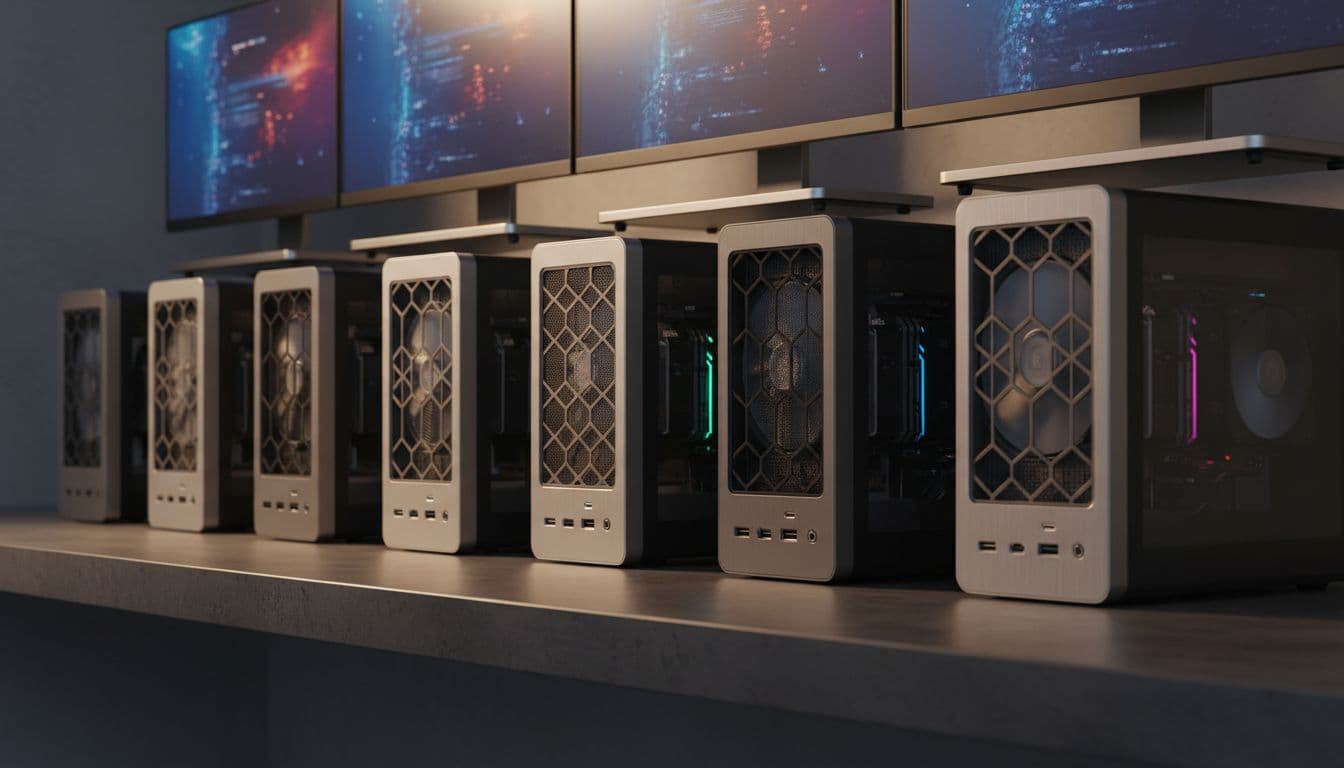
Prebuilt PCs get a bad reputation, and honestly, sometimes they deserve it. But the real question isn't whether you should build your own or buy prebuilt. It's whether the parts inside are worth what they're charging, and whether the convenience premium is reasonable or just daylight robbery. With the Stormforce Gaming Recon Core Intel, that calculation is genuinely interesting, and not entirely in a bad way.
This is a mid-range machine built around the Intel Core i5-14400F and an NVIDIA RTX 3050 6GB, running Windows 11 Home out of the box. On paper, that's a capable 1080p gaming rig. Whether the supporting cast, the motherboard, the PSU, the case, holds up to scrutiny is where things get more nuanced. This Recon Core Intel review digs into exactly that.
There are no owner reviews to lean on here yet. This is a relatively new listing, so the authority has to come from what the spec sheet tells us and what we know about these components from the wider market. Fortunately, the specs are specific enough to be honest about, and the component choices tell their own story.
Core Specifications
Stormforce Gaming lists the Recon Core Intel with a fairly clear set of internals. You get an Intel Core i5-14400F processor, which is a solid mid-range chip with no integrated graphics (the F suffix means it relies entirely on the discrete GPU, which is fine here since there is one). The GPU is an NVIDIA RTX 3050 with 6GB of VRAM, which is the newer, slightly cut-down version of the RTX 3050 that NVIDIA pushed out in 2024. It's not the same 8GB card that launched in 2022, and that matters, which we'll come to.
Memory is 16GB of DDR4 running at 3200MHz, storage is a 1TB M.2 NVMe SSD, and the whole thing sits on an H610 chipset motherboard inside a Vortex Athena M3 ATX case. Power comes from a 350W Bronze-rated PSU. Connectivity covers WiFi 5, Ethernet, and Bluetooth. Windows 11 Home is pre-installed. That's the full picture, no hidden extras, no mystery components.
The H610 chipset is upfront because it's Intel's most basic 12th and 14th gen board tier. It supports the CPU fine, but it limits your upgrade options further down the line, specifically around RAM slots and PCIe lane availability. The 350W PSU is another thing to keep an eye on. It's adequate for this exact configuration, but it leaves very little headroom if you ever want to swap in a more demanding GPU. More on both of those in the upgrade section.
| Specification | Detail |
|---|---|
| CPU | Intel Core i5-14400F |
| GPU | NVIDIA RTX 3050 6GB |
| RAM | 16GB DDR4 3200MHz |
| Storage | 1TB M.2 NVMe SSD |
| Motherboard | H610 chipset |
| Case | Vortex Athena M3 ATX |
| PSU | 350W Bronze |
| Cooling | Optimised Air Cooling |
| Connectivity | WiFi 5, Ethernet, Bluetooth |
| OS | Microsoft Windows 11 Home |
| Price | £949.99 |
CPU & Performance
The Intel Core i5-14400F is genuinely one of the better value CPUs Intel has produced in recent memory. It's a 10-core, 16-thread chip (six performance cores, four efficiency cores) built on the Raptor Lake Refresh architecture. Intel's own specification page confirms it runs a base clock of 2.5GHz on the efficiency cores and up to 4.7GHz boost on the performance cores. For gaming, the six P-cores do the heavy lifting, and they're more than capable of keeping an RTX 3050 fed without becoming the bottleneck.
Where the i5-14400F really earns its keep is in productivity tasks alongside gaming. If you're someone who runs a game, has a browser with forty tabs open, maybe a Discord call running in the background, this chip handles that without breaking a sweat. The 16 threads mean multitasking doesn't feel like a punishment the way it does on older quad-core chips. It's not a chip that'll edit 4K video in real time, but for everyday computing and gaming, it's properly capable.
The F-suffix means no Intel UHD integrated graphics, which is a non-issue here since the RTX 3050 handles all display output. What it does mean is that if the GPU ever fails or gets removed during an upgrade, you won't have a fallback display output. Minor point, but. Overall though, the CPU choice here is one of the Recon Core Intel's genuine strengths. Stormforce Gaming didn't cheap out on the processor, and that's not always a given with prebuilts at this price tier.
GPU & Gaming Performance
This is where things get a bit more complicated. The NVIDIA RTX 3050 6GB that ships in this machine is the 2024 revision of the card, not the original 8GB RTX 3050 from 2022. NVIDIA quietly launched this 6GB variant as a budget option, and while it still carries the RTX 3050 name, it's built on a cut-down GA107 die with a narrower 96-bit memory bus. That narrower bus is the main limitation. It restricts memory bandwidth, and in texture-heavy games or higher resolution settings, that can show up as stuttering or performance drops compared to what you might expect from the RTX 3050 name.
At 1080p with medium to high settings, the RTX 3050 6GB is workable for most modern titles. Games like Fortnite, Valorant, Apex Legends, and older AAA titles will run well. More demanding recent releases at high settings will push the card harder, and you may find yourself dropping settings to medium to maintain smooth frame rates. It's not a card for 1440p gaming in any serious sense, and 4K is off the table entirely. NVIDIA's own product page positions this as an entry-level ray tracing card, and that's probably the fairest framing. Ray tracing is technically supported, but enabling it will hurt performance noticeably on a card with this level of headroom.
The 6GB VRAM is the other concern. Modern games are increasingly pushing past 6GB of VRAM at high texture settings, and while 8GB isn't a magic number either, the 6GB ceiling here means you'll want to keep texture quality in check in newer titles. That's a real constraint for a machine sitting in the mid-range price bracket. If you're primarily playing esports titles or less demanding games, it's a non-issue. If you want to run the latest open-world games at their best-looking settings, you'll hit the limit sooner than you'd like. It's an honest limitation, and it's worth going in with eyes open.
Memory & Storage
Sixteen gigabytes of DDR4 at 3200MHz is the right amount of RAM for a gaming PC in 2026, full stop. It's not exciting, but it's correct. Games are increasingly using 12GB to 16GB under load with a browser and Discord running alongside, so 8GB would already be a problem and 16GB keeps things comfortable. The DDR4 specification rather than DDR5 isn't a performance issue at this GPU tier, the RTX 3050 6GB won't be RAM-bandwidth limited in any meaningful way, so the choice of DDR4 3200 is sensible and keeps costs down.
The 1TB M.2 NVMe SSD is a proper highlight. NVMe storage means fast boot times, quick game loading, and snappy general Windows responsiveness. This is one of the areas where prebuilts used to routinely cut corners by fitting SATA SSDs or, worse, spinning hard drives. A 1TB NVMe drive gives you enough space for Windows, a healthy game library, and day-to-day files without immediately running out of room. NVMe as a standard is significantly faster than SATA in sequential read and write, and the real-world difference in how snappy the system feels is noticeable.
What Stormforce Gaming doesn't specify is the exact NVMe drive manufacturer or whether the SSD is PCIe Gen 3 or Gen 4. Given the H610 motherboard, Gen 4 support depends on the specific board revision, so it's possible this is a Gen 3 drive. For a gaming machine at this level, that distinction is largely academic since game loading times don't differ dramatically between Gen 3 and Gen 4 NVMe in practice. The capacity is what matters day-to-day, and 1TB is a reasonable starting point. You'll want more eventually if you're a heavy game installer, but it won't feel cramped immediately.
Cooling Solution
Stormforce Gaming describes the cooling setup as "Optimised Air Cooling," which is one of those phrases that tells you something but not everything. What it almost certainly means is a stock-style air cooler on the CPU and case fans for airflow, rather than an AIO liquid cooler. For the i5-14400F, that's entirely appropriate. This chip has a 65W TDP in its base configuration, and a decent air cooler handles that without drama. It's not a chip that runs particularly hot compared to the unlocked K-series Intel processors.
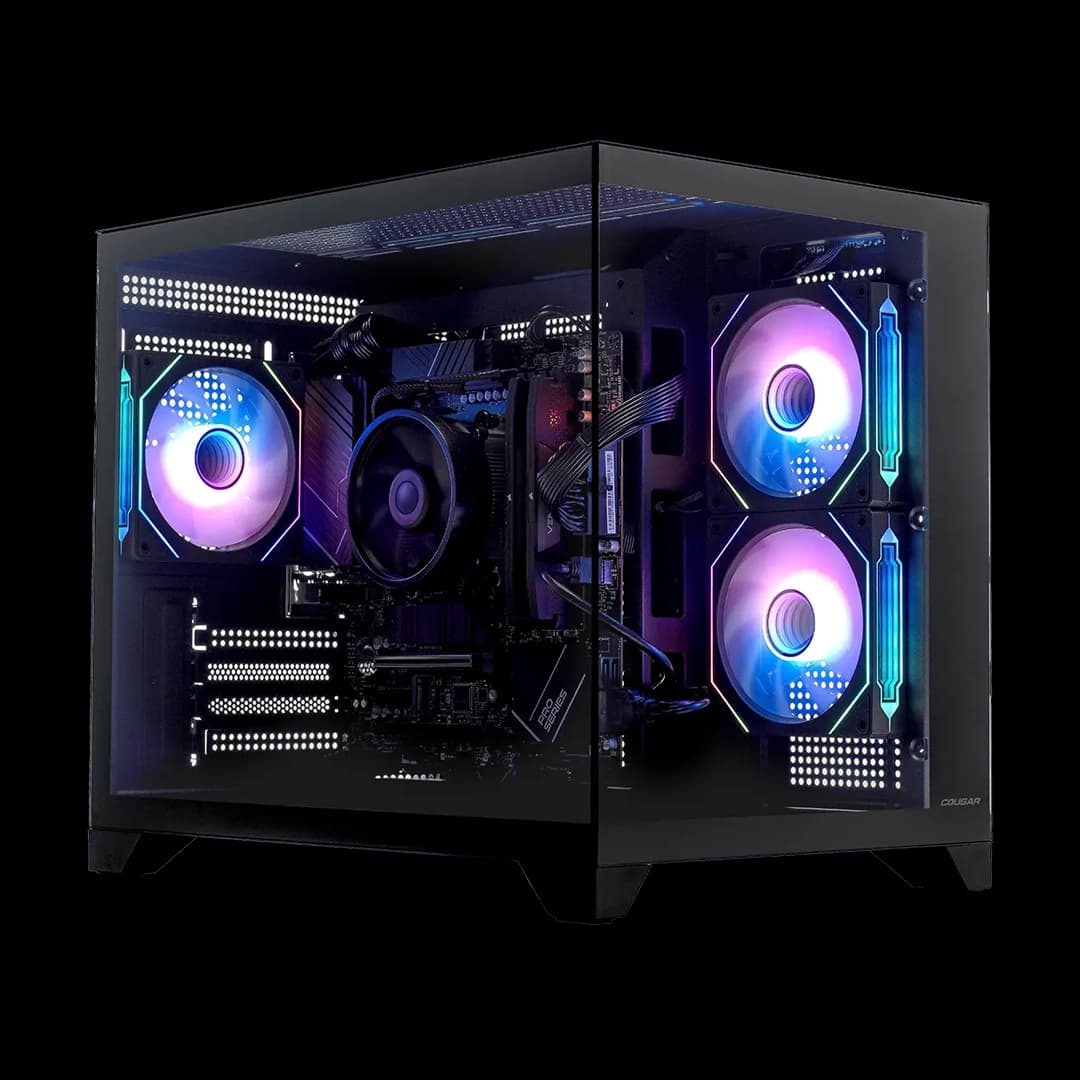
The Vortex Athena M3 ATX case is described as an ATX form factor chassis, which means there's physical space for reasonable airflow. ATX cases generally allow for better fan placement and airflow routing than smaller form factors, so the thermal situation should be manageable. The concern with prebuilts at this price point is often that the case fans are minimal, maybe one or two, and the cable management is chaotic enough to restrict airflow. Without detailed internal photos from Stormforce Gaming beyond the hero shot, it's hard to confirm the exact fan configuration.
What the spec sheet does confirm is that this isn't a small form factor machine being asked to do something thermally unreasonable. The i5-14400F and RTX 3050 6GB are both relatively modest in their thermal demands compared to, say, a Core i7-14700K or an RTX 4070. That combination in an ATX case with even basic air cooling should maintain sensible temperatures under gaming load. If you're planning to run the machine in a well-ventilated spot rather than stuffed inside a cabinet, thermal throttling shouldn't be a concern with normal use.
Case & Build Quality
The Vortex Athena M3 is Stormforce Gaming's own branded ATX case, which means it's designed specifically for their prebuilt configurations. ATX is the standard full-size form factor, so there's plenty of room inside for the components and, importantly, for future upgrades. The hero shot from Stormforce Gaming shows a clean enough exterior with what looks like a mesh front panel, which is a good sign for airflow compared to solid front panels that restrict intake.
Prebuilt cable management is one of the most consistent complaints you'll find about machines in this price range, regardless of brand. The economics of building hundreds of systems quickly don't encourage the kind of meticulous cable routing that a careful self-builder would do. That said, in an ATX case with a 350W PSU, there simply isn't a huge amount of cabling to manage. Fewer cables means less chaos, so the situation is probably acceptable rather than impressive.
The case itself won't win any awards for premium feel. At this price point, you're getting steel construction with plastic accents, which is standard. What matters more than aesthetics is that the panels fit properly, the drive mounts are solid, and there's enough room to work inside if you need to add or swap components later. The ATX standard at least guarantees compatibility with standard ATX motherboards and PSUs, so if you ever want to migrate components into a different case, that's a straightforward option. It's a functional chassis rather than a showpiece, which is the honest way to describe it.
Connectivity & Ports
Stormforce Gaming confirms WiFi 5, Ethernet, and Bluetooth connectivity for the Recon Core Intel. WiFi 5 (802.11ac) is dual-band, supporting both 2.4GHz and 5GHz connections. It's not the latest standard, WiFi 6 or WiFi 6E would be preferable, but for most home broadband setups WiFi 5 is more than adequate. If you're gaming wirelessly, a wired Ethernet connection is always the better choice anyway for latency reasons, and that's confirmed to be present here.
Bluetooth is listed without a version number in the verified spec data, so it's not possible to confirm whether it's Bluetooth 4.x or 5.x. For connecting a wireless headset, controller, or keyboard, any modern Bluetooth version will do the job. The Ethernet port handles wired networking, which is what most serious gamers will use as their primary connection. The combination of all three connectivity options means you're not locked into a single networking approach, which is sensible for a desktop machine that might move rooms or need to connect to different setups over its life.
The specific port layout, front USB count, rear USB configuration, video output types on the GPU, and audio jacks, isn't detailed in the verified spec data from Stormforce Gaming. The RTX 3050 6GB typically carries DisplayPort and HDMI outputs as standard for NVIDIA's 30-series cards, but since the exact outputs aren't confirmed in the spec table, that's not something to state as fact here. What is confirmed is that this is an ATX desktop with standard connectivity options for its class, and the networking side of things is properly covered. If specific port counts matter for your setup, checking the Stormforce Gaming product page directly is the right move before purchasing.
Pre-installed Software & OS
Windows 11 Home comes pre-installed, which is the correct choice for a gaming PC in 2026. Windows 11 Home covers everything a gamer needs: DirectX 12 Ultimate support, Auto HDR, DirectStorage (though that requires a compatible game and NVMe drive, both of which are present here), and full compatibility with all major gaming platforms including Steam, Epic Games Store, Xbox Game Pass, and Battle.net. There's no reason to want Windows 11 Pro for a gaming machine unless you specifically need domain joining or BitLocker, and most people don't.
What Stormforce Gaming doesn't specify is the bloatware situation. Some prebuilt manufacturers load their machines with trial software, antivirus subscriptions, and manufacturer utilities that slow down the initial experience and require a cleanup session before the machine feels properly fast. It's a legitimate concern. The best prebuilts ship with a clean Windows install plus their own system management utility. The worst ship with a dozen third-party trials fighting for resources. Without owner reviews to reference here, it's genuinely not possible to say with certainty which camp this falls into.
What's is that Windows 11 Home is a full, genuine licence, not a trial. So whatever else might be on there, the operating system itself is sorted. If you do find unwanted software on first boot, a fresh Windows install from a USB drive takes about 20 minutes and leaves you with a completely clean system. The licence is tied to the hardware, so reinstalling doesn't cost anything extra. It's not ideal to have to do that on a new machine, but it's a known and easy fix if needed. Stormforce Gaming's own software, if present, is likely a system monitoring or support tool rather than anything malicious.
Upgrade Potential
This is where the Recon Core Intel's compromises become most visible, and it's worth being straight about it. The H610 chipset motherboard is Intel's entry-level board for 12th and 14th gen processors. It supports the i5-14400F perfectly well, but it comes with limitations. Intel's H610 specification confirms it supports a maximum of two DIMM slots and doesn't support memory overclocking. So you're limited to two RAM sticks maximum, and you can't push the DDR4 beyond its rated speed through XMP profiles in most H610 implementations. If 16GB eventually feels tight, you can upgrade to 32GB by swapping both sticks, but you can't go beyond 32GB on a two-slot board.
The 350W Bronze PSU is the bigger concern for future upgrades. It's adequate for the current i5-14400F and RTX 3050 6GB combination, which draws well under 300W under full load. But if you ever want to drop in a more capable GPU, say an RTX 4060 or RX 7600, you'll need to replace the PSU first. A 500W or 550W 80 Plus Bronze unit would give you proper headroom for a meaningful GPU upgrade, and those cost around £50 to £70 from reputable brands. It's not a disaster, but it does mean a GPU upgrade isn't as simple as just swapping the card. You're also buying a new PSU at the same time.
The ATX case format is genuinely good news for upgrades. Full ATX cases accommodate standard ATX and Micro-ATX motherboards, full-length GPU cards, multiple storage drives, and additional case fans. If you wanted to add a second M.2 drive for more storage (assuming the H610 board has a second M.2 slot, which some do and some don't), or fit an additional case fan for better airflow, the Athena M3 case gives you the physical space to do it. The CPU itself is also socketed on LGA1700, which means it's compatible with Intel 12th, 13th, and 14th gen processors, so a CPU upgrade is technically possible, though the H610 board limits how far you can push that. Overall, this is a machine you can tinker with, but the PSU and motherboard will need attention before any serious upgrade path opens up.
How It Compares
Comparing the Recon Core Intel to the DIY self-build option is the most honest comparison available here. If you were to source an i5-14400F, an RTX 3050 6GB, 16GB DDR4 3200, a 1TB NVMe SSD, an H610 motherboard, a 350W PSU, a case, and a Windows 11 Home licence separately right now, you'd be looking at component costs that often come surprisingly close to or exceed the prebuilt price once you factor in the OS licence (which retails at around £100 to £120 on its own). The convenience premium on this machine isn't as egregious as it can be with some prebuilts, particularly at the budget end of the market where margins tend to be more punishing.
The honest counterargument is that a self-builder with the same budget could make different choices. They might opt for a B660 or B760 motherboard instead of H610, giving more upgrade flexibility. They might choose a 500W PSU from the start. They might even stretch to an RTX 4060 with a tighter CPU budget. Those are valid points. The prebuilt route trades component optimisation for simplicity, and whether that trade is worth it depends entirely on how much you value your time and how comfortable you are with the building process.
Against other prebuilts at a similar price tier, the Recon Core Intel sits in a competitive spot. The i5-14400F is a genuinely good CPU choice that many competitors at this level match or undercut with older or weaker processors. The RTX 3050 6GB is the weakest link, and some rival prebuilts at similar pricing have started fitting RTX 4060 cards, which would be a significant step up in gaming performance. If you're comparing prebuilts specifically, it's whether a similarly priced machine from another brand offers a more capable GPU, even if the CPU is slightly less impressive. The GPU matters more for gaming than the CPU at this performance tier.
| Feature | Recon Core Intel | DIY Self-Build (Same Budget) | RTX 4060 Prebuilt Alternative |
|---|---|---|---|
| CPU | Intel Core i5-14400F | Flexible (could match or exceed) | Varies by brand |
| GPU | RTX 3050 6GB | Could stretch to RTX 4060 | RTX 4060 (where available) |
| RAM | 16GB DDR4 3200 | 16GB DDR4/DDR5 (choice) | Typically 16GB |
| Storage | 1TB NVMe SSD | 1TB NVMe SSD (standard) | Typically 1TB NVMe |
| Motherboard | H610 (limited) | B660/B760 (more headroom) | Varies |
| PSU | 350W Bronze | 500W+ (recommended) | Varies |
| OS | Windows 11 Home (included) | Extra cost or DIY licence | Windows 11 Home (included) |
| Upgrade Headroom | Limited by PSU and H610 | High (your choices) | Depends on PSU/board |
| Effort Required | None, plug and play | Several hours minimum | None |
Final Verdict
The Stormforce Gaming Recon Core Intel is a machine that gets some things right and some things wrong, and knowing which is which matters for whether it's the right buy for you. The i5-14400F is a proper CPU, not a cost-cut compromise. The 1TB NVMe SSD is the right storage choice. Windows 11 Home is included. The ATX case gives you room to work. Those are genuine positives that not every prebuilt at this tier can claim.
But the RTX 3050 6GB is a real concern. It's not a terrible GPU, but it's the weakest link in a machine that sits at a mid-range price point. The 6GB VRAM and narrow memory bus mean it'll struggle with demanding modern titles at anything above medium settings, and it has a shorter useful life than the CPU it's paired with. The 350W PSU and H610 motherboard compound the issue by making a GPU upgrade more involved than it should be. You're not just swapping a card, you're likely swapping the PSU too, and possibly thinking about whether the motherboard limits you further down the line.
So who should actually buy this? Honestly, it makes most sense for someone who wants a capable everyday PC that can handle casual to moderate gaming, doesn't want the hassle of building their own, and isn't planning to run the latest demanding titles at high settings. Esports games, older AAA titles, indie games, general productivity, it handles all of that fine. If you're the kind of person who just wants a computer that works without fuss, the Recon Core Intel delivers that. Stormforce Gaming is a UK-based builder with a track record in the prebuilt market, so support and warranty aren't the wild card they can be with some grey-market alternatives.
If you're a more serious gamer who wants to push modern titles at high settings, or someone who plans to upgrade the GPU in a year or two, this configuration will frustrate you. The RTX 3050 6GB will feel limiting sooner than you'd like, and the upgrade path requires more investment than just buying a new card. In that case, it's worth looking at whether Stormforce Gaming or another UK prebuilt brand offers a similarly priced machine with an RTX 4060. That extra GPU headroom makes a meaningful difference for gaming longevity, even if other specs have to give slightly to fit the budget.
One more honest note: if you're comfortable building a PC, the same budget spent on components gives you more flexibility, better upgrade choices from day one, and probably a more capable GPU. The DIY route isn't for everyone, and there's no shame in choosing the prebuilt path. But the value equation here is tighter than it looks at first glance, and the GPU is the reason why. The Recon Core Intel is a decent machine for the right buyer. Just make sure you're that buyer before committing.
What works. What doesn’t.
5 + 5What we liked5 reasons
- The Intel Core i5-14400F is a genuinely strong mid-range CPU that does not feel like a cost-cut compromise for a prebuilt at this price tier
- A 1TB M.2 NVMe SSD provides fast boot times and responsive general use, which is something prebuilts at this level have not always delivered
- Windows 11 Home is included as a full genuine licence, saving buyers the cost of purchasing an OS separately
- The ATX case format provides ample internal space for future component additions and straightforward access when needed
- 16GB of DDR4 at 3200MHz is the correct amount of RAM for a gaming PC in 2026 and will not bottleneck the GPU in any meaningful way
Where it falls5 reasons
- The RTX 3050 6GB uses a narrower 96-bit memory bus and less VRAM than the original 2022 RTX 3050, making it the weakest link in an otherwise sensible build
- The 350W Bronze PSU leaves very little headroom for a GPU upgrade, meaning any future graphics card swap will almost certainly require replacing the power supply at the same time
- The H610 chipset motherboard limits RAM to two slots, prevents memory overclocking, and restricts the upgrade path compared to B660 or B760 alternatives
- WiFi 5 rather than WiFi 6 is a minor but noticeable shortfall for a machine sold in 2025 and 2026
- Stormforce Gaming does not confirm the NVMe drive manufacturer, PCIe generation, or detailed port layout, making it harder to assess the full specification before purchase
Full specifications
12 attributes| CPU | Intel Core i5-14400F |
|---|---|
| GPU | NVIDIA RTX 3050 6GB |
| RAM | 16GB DDR4 3200 |
| Storage | 1TB M.2 NVMe SSD |
| Case | Vortex Athena M3 ATX |
| Case size | micro-ATX |
| Connectivity | WiFi 5, Ethernet, Bluetooth |
| Cooling | Optimised Air Cooling |
| Motherboard | H610 |
| Motherboard chipset | H610 |
| OS | Microsoft Windows 11 Home |
| PSU | 350w Bronze PSU |
If this isn’t right for you
2 options
Frequently asked
7 questions01What GPU does the Stormforce Gaming Recon Core Intel use?+
It uses the NVIDIA RTX 3050 6GB, which is the 2024 revision of the card rather than the original 2022 8GB version. This newer variant has a narrower 96-bit memory bus and 6GB of VRAM, which limits performance in texture-heavy or demanding titles compared to the original RTX 3050.
02Is the RTX 3050 6GB good enough for 1080p gaming?+
For esports titles such as Fortnite, Valorant, and Apex Legends, and for older AAA games at medium to high settings, yes. For more demanding recent releases at high settings, you may need to reduce settings to maintain smooth frame rates. At 1440p or 4K, the card is not a practical choice.
03Can you upgrade the GPU in the Recon Core Intel later?+
Technically yes, but it requires more than just swapping the card. The 350W Bronze PSU is adequate for the current configuration but does not have sufficient headroom for a more capable GPU such as an RTX 4060. You would likely need to replace the PSU at the same time, adding to the cost and complexity of the upgrade.
04What are the main limitations of the H610 chipset motherboard?+
The H610 is Intel's entry-level board for 12th and 14th gen processors. It supports a maximum of two RAM slots, which caps you at 32GB of DDR4, and it does not support memory overclocking via XMP on most implementations. It also has fewer PCIe lanes and expansion options compared to B660 or B760 boards, which limits future upgrade flexibility.
05Does the Recon Core Intel include a Windows licence?+
Yes, Windows 11 Home is pre-installed as a full genuine licence tied to the hardware. This means you can reinstall Windows from a USB drive at no additional cost if needed, and you are not running a trial or limited version of the operating system.
06How does the Recon Core Intel compare to building your own PC with the same budget?+
A self-build with the same budget offers more flexibility, including the option to choose a B660 or B760 motherboard with better upgrade headroom, a 500W or larger PSU from the start, and potentially a more capable GPU such as an RTX 4060. The trade-off is the time and effort required to source parts and build the system, plus the additional cost of a Windows licence. The prebuilt route suits those who value convenience over component optimisation.
07Is WiFi built into the Recon Core Intel, and is it reliable for gaming?+
Yes, WiFi 5 (802.11ac) and Bluetooth are included alongside a wired Ethernet port. WiFi 5 supports dual-band connections on 2.4GHz and 5GHz and is adequate for most home broadband setups. For gaming, a wired Ethernet connection is always preferable to reduce latency, and that option is available here. WiFi 6 or WiFi 6E would have been preferable, but WiFi 5 is not a dealbreaker for typical home use.