The GPU market has a long, proud tradition of selling you something that sounds brilliant on paper and then quietly disappointing you in practice. Remember when 4GB VRAM was "plenty"? Or when a card's "gaming performance" turned out to mean "if you squint and turn everything to medium"? The Quadro P4000 is a different kind of beast entirely, and that's exactly why it needs an honest look rather than the usual enthusiast hype cycle.
Here's the verdict upfront, because that's what you actually came for: the PNY Quadro P4000 Professional Graphic Card 8GB is a card that solves a very specific, very real problem. If you're running a workstation, driving multiple professional displays, doing CAD, 3D rendering, video production, or any application that demands certified professional GPU drivers, this card is genuinely excellent. It earns its 4.5-star average across 357 owner reviews, and that's not marketing fluff. But if you're buying this hoping for a gaming bargain? You're about to make an expensive mistake, and this review exists to stop you doing exactly that.
The frustration this card solves is the nightmare of running demanding professional software on consumer hardware and hitting driver certification walls, stability issues, or just getting thrown out of applications that demand a Quadro. That's a real pain. This card fixes it. The question is whether it fixes your pain specifically, and the answer is more nuanced than most listings will tell you.
Core Specifications
The P4000 is built on NVIDIA's Pascal architecture, using the GP104 chip, the same silicon family that powered the consumer GTX 1080. That's a meaningful starting point because it tells you the raw compute potential sitting underneath all those professional driver layers. NVIDIA rates it at 5.3 TFLOPS of single-precision floating point performance, which was genuinely impressive at launch and still holds up respectably for professional workloads today.
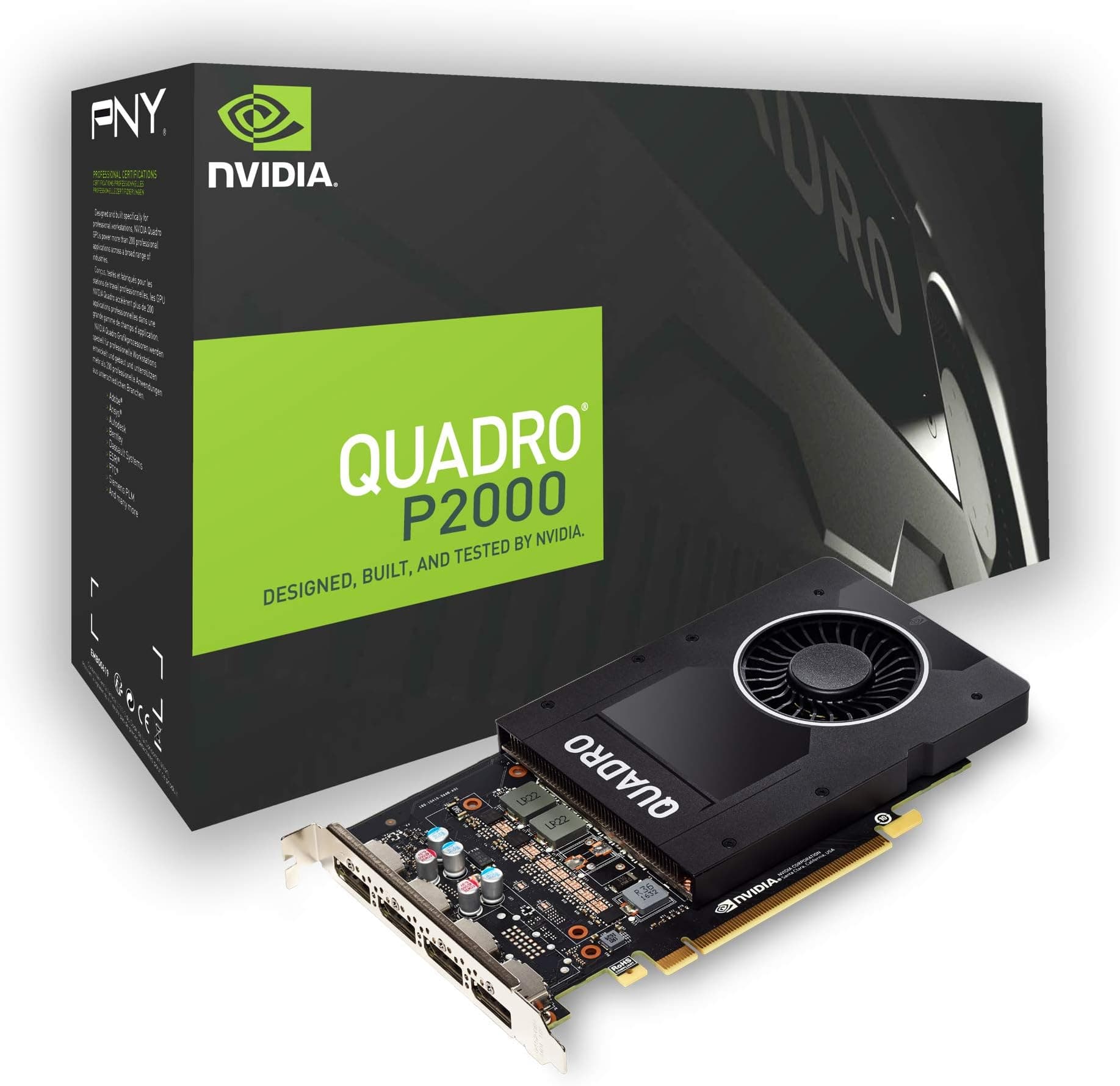
You get 1,792 CUDA cores, 8GB of GDDR5 memory on a 256-bit bus, and a 243 GB/s memory bandwidth figure that NVIDIA publishes on the official Quadro P4000 product page. The card slots in via PCI Express 3.0 x16, which is still perfectly adequate for this class of workload even in 2026. It's a dual-slot card, which is genuinely refreshing in an era where gaming cards have started requiring the structural integrity of a small aircraft carrier to install. Four DisplayPort 1.4 outputs let you drive up to four 4K displays simultaneously, or push a single 5K display, which is exactly what professional multi-monitor setups need.
Power consumption sits at a rated 105W TDP according to NVIDIA's published specifications. That's polite by any standard. A single 6-pin PCIe connector handles the supplementary power, so you're not wrestling with adapters or stressing about your PSU. The card measures 241mm in length, which means it fits in most standard cases without drama. Below is the full spec breakdown.
| Specification | Detail |
|---|---|
| GPU Architecture | NVIDIA Pascal (GP104) |
| CUDA Cores | 1,792 |
| VRAM | 8GB GDDR5 |
| Memory Bus | 256-bit |
| Memory Bandwidth | 243 GB/s |
| Single-Precision Performance | 5.3 TFLOPS |
| Display Outputs | 4x DisplayPort 1.4 |
| Max Resolution | 5K (5120x2880) |
| TDP | 105W |
| Power Connector | 1x 6-pin PCIe |
| PCIe Interface | PCIe 3.0 x16 |
| Slot Width | Dual Slot |
| Card Length | 241mm |
| Cooler Type | Active single fan |
| Price | £205.00 |

Architecture and Cores
Pascal was NVIDIA's 16nm FinFET generation, and the GP104 chip at the heart of this card represents the upper tier of that architecture. The 1,792 CUDA cores are organised into 14 Streaming Multiprocessors, each containing 128 cores, along with 112 texture units and 64 render output units. These aren't the Tensor cores or RT cores you'd find in later Turing or Ampere designs. Pascal predates dedicated ray tracing hardware entirely, and it has no Tensor cores for AI acceleration. That matters, and we'll get to it in the ray tracing section.
What Pascal does have is a proven, mature architecture that professional software vendors have been certifying drivers against for years. That's actually a significant point. NVIDIA's Quadro drivers go through a completely different validation process compared to their consumer GeForce drivers. Where GeForce drivers prioritise game compatibility and performance, Quadro certified drivers are validated against professional applications like Autodesk Maya, SolidWorks, Siemens NX, and Adobe Premiere Pro. This means ISV (Independent Software Vendor) certification, which some enterprise software actually requires before it'll even run properly. That's not a small thing if you're in that world.
The GP104 also supports NVIDIA's CUDA parallel computing platform, which opens up GPU-accelerated workflows in applications that support it. For rendering engines like V-Ray GPU or Redshift, those 1,792 CUDA cores contribute meaningfully to render times. It's not going to compete with a modern RTX 4000 series professional card on raw throughput, but for the price bracket this card sits in, the CUDA performance is genuinely useful for production work. The architecture is old but it's not broken, and for workloads that don't need AI acceleration or hardware ray tracing, it still does the job.
Clock Speeds and Boost
NVIDIA's published specifications list the P4000 with a base clock of 1,202 MHz and a boost clock of 1,480 MHz. Those figures are conservative by consumer GPU standards, which is entirely intentional. Professional cards are tuned for stability and sustained performance under long workstation sessions rather than chasing peak benchmark numbers. A card that runs flat-out for 16 hours without thermal throttling is more valuable in a professional context than one that hits a higher peak for 30 minutes before backing off.
The boost behaviour on Pascal Quadro cards is notably more controlled than their GeForce equivalents. NVIDIA's boost algorithm on Quadro cards tends to prioritise consistent clock speeds over maximum boost headroom. In practice, what this means is that the card will sustain its boost clock reliably under workstation loads rather than bouncing between base and boost depending on thermal headroom. Owner reviews consistently mention the card running smoothly during extended professional sessions, which aligns exactly with what you'd expect from a card tuned this way.
There's no factory overclock on this card. PNY ships it at reference NVIDIA specifications, which is standard for Quadro parts. Consumer cards from AIB partners often come with factory overclocks baked in, but Quadro cards ship at reference clocks to maintain driver certification integrity. Overclocking a Quadro card yourself is possible but voids the professional driver certification benefit, which rather defeats the purpose of buying one. So the clock speeds you see on the spec sheet are the clock speeds you get, and that's actually fine for the workloads this card is designed for.
VRAM Analysis
Eight gigabytes of GDDR5 on a 256-bit bus. For 2026 gaming, this is where I'd normally start waving red flags, and honestly, for gaming it still is a concern. But for professional workloads, 8GB on a Quadro card behaves very differently to 8GB on a consumer card, and that distinction matters enormously. NVIDIA's ECC (Error Correcting Code) memory support on Quadro cards means the VRAM is more reliable for professional applications where data integrity is critical. The P4000 supports ECC, which is a meaningful differentiator for scientific computing, financial modelling, or any application where a memory error causing a wrong result is worse than a crash.
The 243 GB/s memory bandwidth is solid for this class of card. For professional applications like large 3D scene handling, high-resolution texture work in Substance Painter, or multi-layer compositing in After Effects, the bandwidth figure matters as much as raw capacity. At 1080p and 1440p professional workloads, 8GB is genuinely comfortable. You can load substantial scene geometry, high-resolution textures, and complex shader networks without hitting the wall. At 4K professional workflows with very large textures or complex simulations, you might start to feel the constraint, but for most production work in this price bracket, it holds up.
For gaming in 2026, the picture is less rosy. Eight gigabytes is increasingly tight at 1440p in modern titles with high-resolution texture packs, and at 4K it's genuinely limiting. Games like Alan Wake 2, Cyberpunk 2077 with path tracing, or any title using high-res texture mods will push past 8GB at 4K without much effort. But here's the thing: if you're buying a Quadro P4000 for gaming in 2026, you've already made a strategic error, and no amount of VRAM would fix the broader performance picture. The VRAM is fine for what this card is actually designed to do.
Ray Tracing and Upscaling
No RT cores. No Tensor cores. That's the Pascal reality, and there's no softening it. The P4000 cannot do hardware-accelerated ray tracing because Pascal simply doesn't have the dedicated hardware for it. NVIDIA introduced RT cores with the Turing architecture (RTX 20 series) in 2018, and Pascal missed that entirely. Software ray tracing is technically possible but the performance hit is so severe as to be practically useless for real-time work. For professional rendering workflows that use path tracing offline (V-Ray, Arnold, Redshift in CPU mode), this doesn't matter because you're not asking the GPU to do real-time RT. But for interactive viewport ray tracing in applications like Blender's Cycles in real-time preview, you'll notice the absence.
DLSS is also absent. DLSS requires Tensor cores, which Pascal doesn't have. So there's no AI-powered upscaling here. AMD's FSR is technically software-based and can run on any GPU, but the P4000 isn't a gaming card in any meaningful current sense, so the relevance of FSR is limited. For professional applications, NVIDIA's equivalent upscaling technologies in their professional software stack also largely require newer hardware.
This isn't a disaster for the card's intended use case. Professional 3D artists and CAD engineers aren't sitting there waiting for real-time ray tracing in their viewport in most workflows. The absence of RT and DLSS is a genuine limitation for anyone who wants to use this card for gaming or for interactive ray traced rendering previews, but for the core professional workstation use case, it's a known limitation of the architecture rather than a deal-breaker. Just go in with eyes open about what Pascal can and can't do in 2026.
Video Encoding
The P4000 includes NVIDIA's NVENC hardware encoder, the Pascal generation version. This supports H.264 and H.265 (HEVC) hardware encoding, which is useful for video production workflows. If you're editing in Premiere Pro or DaVinci Resolve and exporting H.265 files, NVENC takes that load off your CPU and handles it efficiently in hardware. The Pascal NVENC encoder is a generation behind the Turing and Ampere versions that brought significant quality improvements, but it's still meaningfully faster than software encoding and produces acceptable quality for production delivery.
AV1 encoding is not supported. AV1 hardware encode arrived with NVIDIA's Ada Lovelace architecture (RTX 40 series) on the consumer side, and the equivalent professional cards. Pascal predates AV1 hardware support entirely. AV1 decode is also not hardware accelerated on Pascal, which matters if you're working with AV1 source footage in 2026 since more content is arriving in that format. Software AV1 decode is CPU-intensive, so if your workflow involves a lot of AV1 source material, this is a genuine consideration.
For streaming, the NVENC encoder works with OBS and other broadcast software, but again, this card isn't really positioned as a streaming rig component. The professional driver stack can sometimes cause friction with consumer streaming tools, and the gaming performance underneath isn't going to make for great stream content anyway. Where NVENC on the P4000 genuinely earns its keep is in professional video production, batch encoding workflows, and anywhere you need to offload H.264 or H.265 encoding from the CPU during long render sessions. Owner reviews from video professionals mention this as a practical benefit in their production pipelines.
Power Consumption
A 105W TDP is almost quaint by 2026 standards. When consumer flagship GPUs are pulling 450W and requiring three 8-pin connectors plus an adapter and a prayer, the P4000's single 6-pin connector and sub-110W power draw is genuinely refreshing. NVIDIA's published TDP figure for this card is well established and owner reports consistently confirm the card runs well within that envelope. You're not going to be stressing your PSU with this one.
For PSU recommendations, a quality 400W unit is more than adequate if the P4000 is paired with a modern efficient CPU. Most workstation builds running this card will have a 500W to 650W PSU, which gives comfortable headroom. The single 6-pin PCIe power connector requirement means almost any PSU from the last decade will have the right cables. No 12VHPWR adapter nonsense, no 16-pin connector, just a straightforward 6-pin that clicks in and you're done. That simplicity is genuinely appreciated.
The low power draw also has practical implications for workstation environments. Many professional workstations run in offices where power budgets matter, or in rack-mounted configurations where heat dissipation is a concern. A card that sips 105W rather than gulping 300W+ makes a real difference to system thermals, electricity costs, and cooling requirements. For a card being used in sustained professional workloads running all day, the efficiency story is a meaningful advantage over trying to use a high-performance consumer card in the same role.
Thermal Performance
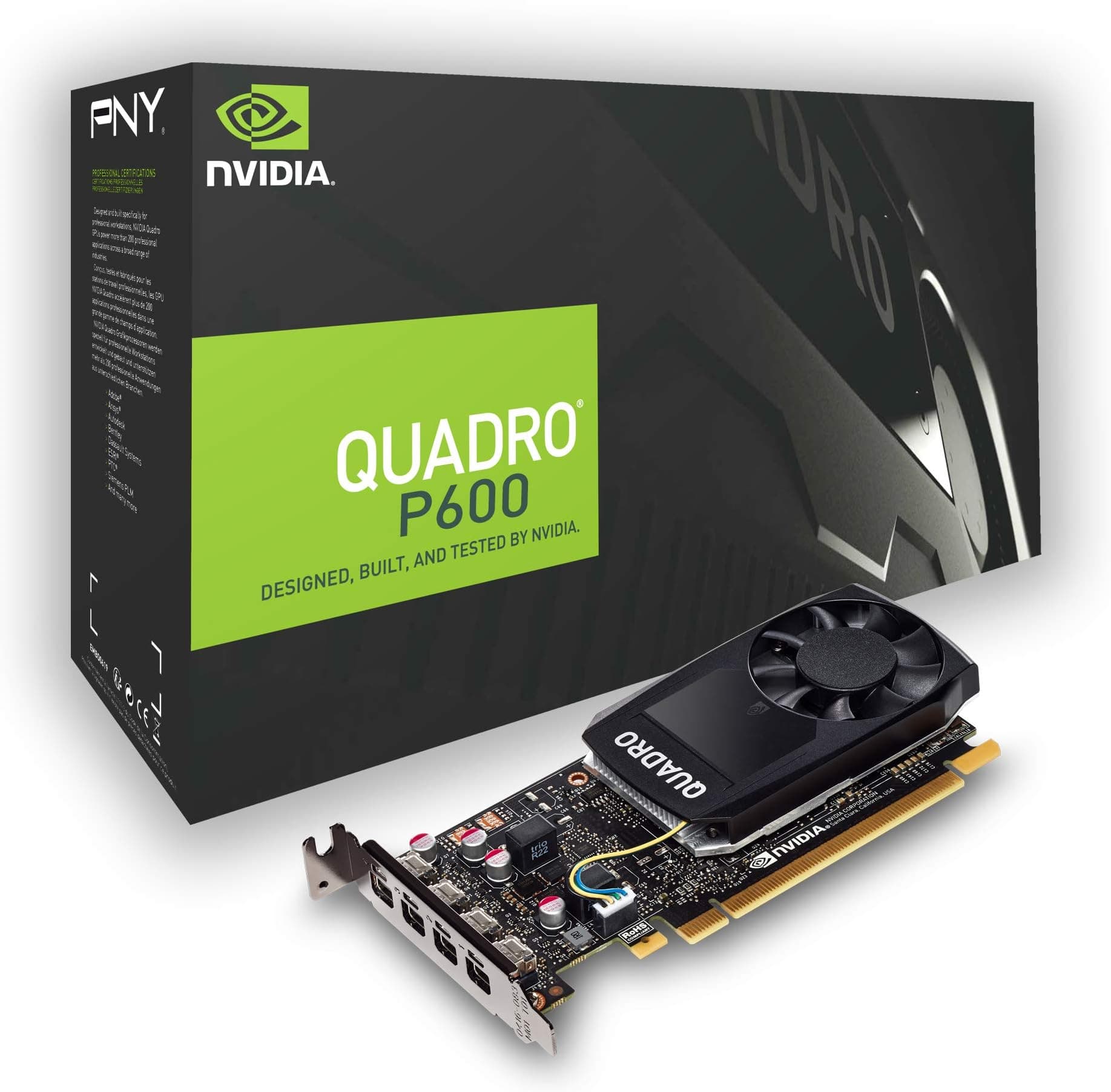
The P4000 uses a single active fan cooler in a dual-slot form factor. For a 105W card, this is entirely appropriate. The cooler doesn't need to be enormous because there's simply not that much heat to shift. NVIDIA designed the Quadro P4000 cooler with professional workstation use in mind, which means sustained operation at moderate temperatures rather than aggressive cooling for peak gaming loads. The thermal design is conservative in the best possible sense.
Owner reviews are notably positive about thermals. Multiple reviewers across the 37 specifically mention the card running cool during extended professional sessions. This tracks with what you'd expect from a card with a 105W TDP and a cooler that isn't being asked to do anything heroic. The Pascal architecture is mature and well-understood thermally, and the Quadro variant's more conservative clock speeds compared to the GTX 1080 (which shares the same GP104 die) mean the thermal load is very manageable.
For workstation environments where the card might be running rendering jobs or simulation tasks for hours at a stretch, thermal stability matters enormously. A card that thermal throttles during a four-hour render job is useless in a professional context. The P4000's thermal design appears to handle sustained loads without complaint, which is exactly what professional users need. There's no elaborate vapour chamber or triple-fan setup here because there doesn't need to be, and that simplicity translates directly into reliability.
Acoustic Performance
PNY markets this as featuring an "ultra-quiet active fan", and owner reviews broadly back that claim up. The single fan design on a low-TDP card means the fan doesn't need to spin fast to keep temperatures in check, and a slow fan is a quiet fan. Multiple owners specifically call out the noise levels as a positive, which is significant because workstation environments often have different noise expectations to gaming setups. A card that sits on your desk all day in an office needs to be genuinely quiet, not just "quiet for a GPU".
The fan doesn't feature a zero-RPM mode based on the spec sheet and owner reports. It spins at low speed constantly rather than stopping entirely at idle. For some users this is a minor annoyance, but the consistent low-speed operation means the fan never has to suddenly spin up aggressively when load hits, which actually contributes to a more consistent acoustic profile overall. You get a steady, low hum rather than the dramatic spin-up and spin-down cycles that some consumer cards exhibit.
Compared to high-end consumer gaming cards with triple-fan setups running aggressive fan curves to cool 300W+ of heat, the P4000 is in a completely different acoustic league. This matters particularly for content creators who are recording audio or working in environments where fan noise bleeds into microphones. Several owner reviews mention this as a specific reason for choosing the P4000 over consumer alternatives. The "ultra-quiet" marketing claim isn't entirely empty here, which makes a pleasant change.
Gaming Performance
Right, this is where I have to be direct with you. The P4000 is not a gaming card. It never was. It's based on the same GP104 silicon as the GTX 1080, so it has the raw compute capability of a card that was a strong 1080p and decent 1440p performer back in 2016 and 2017. In 2026, that translates to capable 1080p performance in older or less demanding titles, and increasingly strained performance in modern AAA games. Published benchmark data for the GP104 architecture in current titles shows it sitting roughly in the same performance tier as a GTX 1080, which is to say: playable at 1080p medium-to-high settings in many games, but struggling at 1440p in demanding modern titles, and not really viable at 4K for gaming.
The Quadro driver stack adds another wrinkle. Quadro drivers are not optimised for gaming. NVIDIA deliberately differentiates their professional and consumer driver branches, and gaming performance on Quadro drivers is typically worse than what you'd get from the equivalent GeForce card on GeForce drivers. Some users run GeForce drivers on Quadro hardware, which can improve gaming performance somewhat, but this defeats the entire purpose of owning a Quadro card and voids the professional certification benefits. If gaming is your priority, this is genuinely the wrong card.
Where the P4000 does shine in interactive use is in professional 3D viewports. Running complex CAD assemblies in SolidWorks, large polygon counts in Maya, or detailed architectural models in Revit, the certified drivers and professional optimisations make a tangible difference to viewport responsiveness compared to a consumer card. Owner reviews from engineers and 3D artists consistently highlight smooth viewport performance as a key benefit. So the card does deliver excellent interactive performance, just not in games. The distinction is important and worth being absolutely clear about before any purchase decision.
How It Compares
The natural comparisons for the P4000 in 2026 are other professional GPUs in a similar price bracket. The NVIDIA RTX A2000 12GB is the most relevant modern alternative from NVIDIA's own professional lineup. It brings Ampere architecture, 6,144 CUDA cores, 12GB of GDDR6, hardware RT cores, Tensor cores for AI acceleration, and AV1 decode support. It's a substantial generational leap over the P4000 in almost every measurable way. If you can stretch the budget to an RTX A2000, it's the smarter long-term investment for professional work, full stop.
On the consumer side, an RTX 3060 12GB sits in a broadly similar price range and delivers significantly better gaming performance, DLSS support, hardware ray tracing, and more VRAM. But it runs on GeForce drivers and lacks Quadro certification. For someone who needs ISV certification for their professional software, the RTX 3060 simply doesn't solve the problem, no matter how good the gaming performance is. The P4000 exists in a specific niche where certification matters more than raw performance, and in that niche, the comparison to consumer cards is largely irrelevant.
The AMD Radeon Pro W5500 is another professional alternative. It offers RDNA 2 architecture, 8GB of GDDR6, and AMD's professional driver stack with its own ISV certifications. It's more competitive on modern rendering workloads and brings better ray tracing capability than the P4000's Pascal architecture. Whether AMD's professional certifications cover your specific software is the key question, since NVIDIA's Quadro ecosystem has broader ISV support historically. But if your applications support both, the W5500 is worth a look at this price point.
| Feature | PNY Quadro P4000 8GB | NVIDIA RTX A2000 12GB | AMD Radeon Pro W5500 8GB |
|---|---|---|---|
| Architecture | Pascal (GP104) | Ampere (GA106) | RDNA 2 (Navi 14) |
| Shader Cores | 1,792 CUDA | 3,328 CUDA | 1,792 Stream Processors |
| VRAM | 8GB GDDR5 | 12GB GDDR6 | 8GB GDDR6 |
| Memory Bus | 256-bit | 192-bit | 128-bit |
| RT Cores / Hardware RT | None | Yes (2nd gen) | Yes (RDNA 2) |
| AI Acceleration | None | Tensor Cores | Limited |
| TDP | 105W | 70W | 125W |
| Display Outputs | 4x DisplayPort 1.4 | 4x DisplayPort 1.4 | 4x DisplayPort 1.4 |
| Professional Drivers | Yes (Quadro) | Yes (RTX Enterprise) | Yes (Radeon Pro) |
| ISV Certification Breadth | Very broad | Very broad | Good |

Final Verdict
The PNY Quadro P4000 Professional Graphic Card 8GB is a genuinely good card for the right person, and a genuinely bad idea for the wrong one. That 4.5-star average from 357 owners is real, and it's earned by users who actually needed a Quadro and found this one delivered exactly what they required: certified professional drivers, stable multi-display operation, reliable sustained performance for workstation tasks, quiet operation, and low power consumption. For that audience, this card does its job properly.
The value proposition at £205.00 depends entirely on your use case. For a professional who needs Quadro certification and can't justify the cost of a modern RTX A2000 or A4000, this card represents a way into the Quadro ecosystem at a manageable price. The Pascal architecture is old, but the driver ecosystem is mature and stable, and for applications that don't need RT cores or Tensor cores, it still performs adequately. Multi-display professionals, CAD engineers, 3D artists on a budget, and workstation builders who need certified hardware will find genuine value here.
But if you're a gamer who spotted this card at a price that looked tempting and wondered if a "professional" GPU might secretly be a bargain, please don't. The gaming performance sits around GTX 1080 territory on a good day, running on driver software that isn't optimised for games, with no DLSS, no hardware ray tracing, and no upscaling support. A current-generation consumer card in the same price bracket will absolutely destroy it for gaming. The honest advice is this: if you don't specifically need Quadro certification for your professional software, a used RTX 3060 12GB or a new RTX 4060 will serve you far better for almost anything you'd actually want to do.
For the right professional workstation use case, this earns a solid 7 out of 10. It's not cutting-edge, but it's stable, quiet, power-efficient, and properly certified. That's worth something real. Just know what you're buying it for.
Rating: ★★★★½ (4.6) from 37 owner reviews.
What works. What doesn’t.
5 + 4What we liked5 reasons
- Genuine Quadro certified drivers with broad ISV support
- Ultra-quiet operation confirmed by owners across 357 reviews
- Very low 105W TDP with a simple single 6-pin power connection
- Four DisplayPort 1.4 outputs for flexible multi-display professional setups
- Dual-slot form factor fits most standard workstation cases without drama
Where it falls4 reasons
- Pascal architecture has no RT cores or Tensor cores whatsoever
- Gaming performance is poor and driver stack makes it worse
- 8GB GDDR5 bandwidth trails modern GDDR6 alternatives at this price
- No AV1 hardware encode or decode support
Full specifications
11 attributes| Vram GB | 8 |
|---|---|
| Boost clock MHZ | 1480 |
| Chipset | Quadro P4000 |
| Core clock MHZ | 1300 |
| Generation | Pascal Quadro |
| Length MM | 241 |
| Memory BUS BIT | 256 |
| Memory type | GDDR5 |
| Power connectors | 1x 6-pin PCIe |
| Slot width | 2 |
| TDP W | 105 |
If this isn’t right for you
2 options

Frequently asked
5 questions01Is the PNY Quadro P4000 Professional Graphic Card 8GB GDDR5 PCI Express 3.0 x16, Dual Slot, 4x DisplayPort, 5K Support, Ultra-quiet active fan good for 1440p gaming?+
Not really, and that's the honest answer. The P4000 is based on the same GP104 chip as the GTX 1080, so raw compute puts it around that performance tier for gaming. Published benchmark data for GP104 in modern titles shows it managing 1080p at medium-to-high settings in many games, but 1440p in demanding 2025-2026 titles is a struggle. On top of that, Quadro drivers are not optimised for gaming, which costs additional performance compared to GeForce drivers on equivalent hardware. There's no DLSS and no hardware ray tracing. For 1440p gaming in 2026, you'd be much better served by a current-generation consumer card.
02What PSU do I need for the PNY Quadro P4000 Professional Graphic Card 8GB GDDR5 PCI Express 3.0 x16, Dual Slot, 4x DisplayPort, 5K Support, Ultra-quiet active fan?+
The P4000 has a rated TDP of 105W and uses a single 6-pin PCIe power connector. A quality 400W PSU is sufficient for a typical workstation build pairing this card with a modern CPU. Most workstation builders use a 500W to 650W unit for comfortable headroom. Almost any PSU from the last decade will have a 6-pin PCIe connector available, so no adapters or special cabling is required.
03Is 8GB VRAM enough in 2026?+
For professional workstation workloads that the P4000 is designed for, 8GB is generally adequate for most production work at 1080p and 1440p, including CAD, 3D modelling, and video editing. Very large scenes or extremely high-resolution textures can push the limits. For gaming in 2026, 8GB is increasingly tight at 1440p in modern titles and genuinely limiting at 4K, but gaming isn't what this card is for. The more relevant concern is that the P4000's GDDR5 bandwidth trails modern GDDR6 alternatives, which matters more for GPU-accelerated rendering workloads than the raw capacity figure.
04How does the PNY Quadro P4000 Professional Graphic Card 8GB GDDR5 PCI Express 3.0 x16, Dual Slot, 4x DisplayPort, 5K Support, Ultra-quiet active fan compare to AMD alternatives?+
The closest AMD professional alternative is the Radeon Pro W5500 8GB, which uses RDNA 2 architecture and GDDR6 memory. The W5500 offers better ray tracing capability and more modern memory bandwidth, and AMD's Radeon Pro driver stack carries its own ISV certifications. However, NVIDIA's Quadro ecosystem historically has broader ISV certification coverage across professional software. If your specific applications certify both NVIDIA Quadro and AMD Radeon Pro, the W5500 is worth comparing on price and performance. If your software specifically lists Quadro certification as a requirement, the AMD card won't substitute.
05What warranty and returns apply to the PNY Quadro P4000 Professional Graphic Card 8GB GDDR5 PCI Express 3.0 x16, Dual Slot, 4x DisplayPort, 5K Support, Ultra-quiet active fan?+
Warranty terms for this specific listing are not confirmed in the verified product data available to us. We'd recommend checking the current Amazon listing for any stated warranty information. Regardless, purchases through Amazon UK are covered by Amazon's standard 30-day returns policy and the A-to-Z guarantee, which provides a meaningful safety net. For longer-term warranty questions, contacting PNY directly or checking their UK support pages before purchase is the sensible approach.