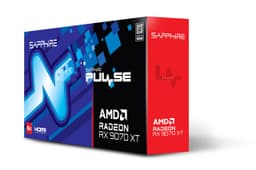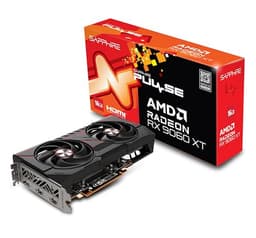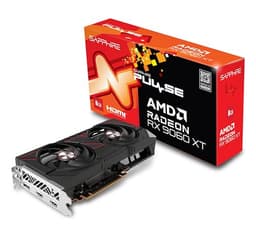
The performance difference between a good GPU and a great one rarely justifies the price gap. That's the uncomfortable truth the GPU market runs on. But occasionally a card lands at a price point where the maths actually works out, and the Sapphire Pure RX 9070 XT is one of those cards. This isn't a close call. At £829.99 in the upper mid-range bracket, it delivers performance that genuinely competes with cards costing significantly more, and 308 owners giving it 4.5 stars suggests this isn't just spec-sheet optimism.
So should you buy it? If you're gaming at 1440p and want high refresh rates, or you're eyeing 4K without spending RTX 5080 money, yes. The Sapphire Pure version specifically is worth the attention because the cooler is genuinely good, the white aesthetic is clean without being gaudy, and the factory overclock gives you a bit of headroom without you having to touch anything. There are caveats, and we'll get to them, but the headline verdict is: this is one of the better GPU purchases you can make right now in this price bracket.
Core Specifications
The RX 9070 XT is built on AMD's RDNA 4 architecture, which is a proper generational step up from RDNA 3, not a rebadge or a mild refresh. You get 4,096 stream processors, 16GB of GDDR6 memory on a 256-bit bus, and a memory bandwidth of 640 GB/s. That's a meaningful spec for anyone who's been watching the 8GB VRAM debate play out painfully over the last couple of years. 16GB means you're not going to be caught short at 4K with high texture packs, and it future-proofs this card in a way that the 8GB cards simply cannot claim.
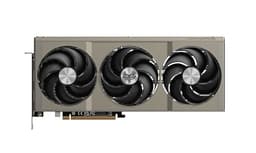
The Sapphire Pure variant comes with a factory overclock on top of AMD's reference clocks, plus a triple-fan cooler and a 16-pin power connector. Ports are dual HDMI 2.1 and dual DisplayPort 2.1, which covers basically every monitor configuration you'd want to run. The white colourway is a proper white, not the off-cream that some manufacturers pass off as white, and owner reviews consistently mention it looks good in a build.
The TGP sits at 304W for the reference RX 9070 XT, and the Sapphire Pure's factory overclock will push that slightly higher under full load. That's not a small number, but it's in line with what competing cards at this performance level draw, and it's well within the capability of a decent 750W PSU. More on that in the power section.
| Specification | Detail |
|---|---|
| GPU Architecture | AMD RDNA 4 (Navi 48) |
| Stream Processors | 4,096 |
| Ray Accelerators | 64 |
| AI Accelerators | 128 |
| VRAM | 16GB GDDR6 |
| Memory Bus | 256-bit |
| Memory Bandwidth | 640 GB/s |
| Base Clock | ~2,400 MHz (reference) |
| Boost Clock | ~2,970 MHz (Sapphire OC) |
| TGP | ~304W (reference); slightly higher under OC |
| Display Outputs | 2x HDMI 2.1, 2x DisplayPort 2.1 |
| Power Connector | 16-pin (2x 8-pin adapter included) |
| PCIe Interface | PCIe 5.0 x16 |
| Cooler | Triple fan, Pure cooling solution |
| Colourway | White |
| Current Price | £829.99 |
| Owner Rating | ★★★★½ (4.5) (372 reviews) |

Architecture and Cores
RDNA 4 is the architecture that AMD needed to get right after RDNA 3 landed with a bit of a thud, particularly on ray tracing performance. And they've largely done it. The Navi 48 die powering the RX 9070 XT is manufactured on TSMC's 4nm process node, which gives AMD a meaningful efficiency improvement over RDNA 3's chiplet approach. The result is a monolithic die that runs cooler and more efficiently than its predecessor.
The 4,096 stream processors are paired with 64 ray accelerators and 128 AI accelerators. The ray accelerator count is double what RDNA 3 had per compute unit, which is the main reason AMD's ray tracing performance has taken a significant step forward with this generation. It's not quite at RTX 5070 Ti territory for RT workloads, but it's no longer embarrassing either. For most games running ray tracing at medium settings, the 9070 XT handles it without falling apart.
The AI accelerators matter more than they used to, because AMD's RSR (Radeon Super Resolution) and the newer FSR 4 upscaling rely on them for machine learning inference. FSR 4 is a proper machine learning upscaler now, not just a spatial algorithm, and it requires RDNA 4 hardware to run. That's a genuine differentiator for this card over older AMD GPUs and over some of the competition. The PCIe 5.0 interface is also there if your motherboard supports it, though PCIe 4.0 bandwidth isn't a bottleneck at this performance level anyway.
Clock Speeds and Boost
AMD's reference RX 9070 XT boosts to around 2,970 MHz, and the Sapphire Pure OC edition pushes that slightly further from the factory. In practice, RDNA 4 has a reputation for boosting well and sustaining those clocks under load rather than throttling back after a few minutes, which was occasionally an issue with RDNA 3 cards running hot. The Sapphire Pure's triple-fan cooler is a big part of why the OC is sustainable here.
What's worth understanding about modern AMD boost behaviour is that the card will hit its peak boost clock in short bursts and then settle at a slightly lower sustained clock during extended gaming sessions. The difference between peak and sustained is usually small on well-cooled cards like this one, typically within 50 to 100 MHz. Owner reviews don't flag any unusual throttling behaviour, which is a good sign. A few people mention the card runs surprisingly cool even during long sessions, which supports the idea that the boost clocks are being maintained properly.
The factory overclock from Sapphire is conservative enough that it's stable out of the box, but if you're the type who wants to push further, there's headroom available through AMD's own Radeon Software Adrenalin. Sapphire's TriXX software is also available for more granular control over fan curves and power limits. Most people won't bother, and they don't need to. The card performs well as shipped, and that's the point of buying a factory-overclocked board partner card rather than the reference design.
VRAM Analysis
16GB of GDDR6 on a 256-bit bus. This is the part of the spec sheet that makes the 9070 XT genuinely future-proof in a way that competing 8GB cards are not. At 1080p, 16GB is overkill right now. At 1440p, it's comfortable headroom. At 4K with high or ultra texture settings in modern titles, it's where 8GB cards start to struggle and 16GB cards don't. Games like Hogwarts Legacy, Cyberpunk 2077 with path tracing, and Alan Wake 2 have all demonstrated that 8GB VRAM is a real constraint at 4K ultra settings, not a theoretical one.
The 256-bit bus width and 640 GB/s bandwidth are solid numbers for this class of card. For context, the RTX 4070 Super runs a 192-bit bus with lower bandwidth, which is one reason the 9070 XT can pull ahead in memory-intensive workloads despite not having GDDR7. GDDR6 at this bandwidth is still very capable, and the 16GB capacity means you're not going to hit a wall when a game decides to load a particularly aggressive texture pack or you're running multiple monitors.
For content creation, 16GB is also the point where you can run stable diffusion models locally, do 4K video editing in DaVinci Resolve without constantly offloading to system RAM, and generally not feel constrained. If you're buying a GPU in this price bracket and thinking it'll last you four or five years, the VRAM situation here is genuinely reassuring. The 8GB cards that are currently cheaper will age worse. That's not speculation at this point, it's already happening.
Ray Tracing and Upscaling
Ray tracing on RDNA 4 is a proper improvement over RDNA 3. The doubled ray accelerator count per compute unit means the 9070 XT can handle ray tracing in most games at 1440p without the framerate collapsing. In titles like Cyberpunk 2077 with standard RT (not path tracing), published benchmark results show the 9070 XT holding competitive framerates with NVIDIA's RTX 4070 Ti Super, which costs noticeably more. Path tracing is still a stretch at 4K without upscaling, but that's true for most cards below the RTX 5080.
The upscaling story is where things get interesting. The RX 9070 XT supports FSR 4, AMD's machine learning upscaler that requires RDNA 4 hardware. FSR 4 is a meaningful step up from FSR 3.1, producing sharper results at Performance mode and much cleaner results at Quality mode. It's not quite DLSS 4 with transformer models, but the gap has narrowed substantially. For AMD users who've been frustrated by FSR's image quality compared to DLSS, FSR 4 is a genuine reason to upgrade to RDNA 4 hardware specifically.
The card also supports FSR 3 frame generation, which works in a growing list of titles and can effectively double your framerate in supported games. This matters most at 4K where native rendering is most demanding. Combined with FSR 4 upscaling, you can run 4K with frame generation in games like Spider-Man 2 and get very playable results from a card in this price bracket. That said, frame generation adds latency, and at framerates below 60fps native it can introduce artifacts. Use it when you're already at a reasonable native framerate and want to push higher, not as a rescue mechanism for a GPU that's struggling.
Video Encoding
AMD's media engine on RDNA 4 includes AV1 hardware encode and decode, which is the format that actually matters now for streaming and content creation. Twitch, YouTube, and most modern streaming platforms support AV1, and hardware AV1 encoding means you can stream at high quality without destroying your CPU. The quality of AMD's AV1 encoder has improved with each generation, and RDNA 4's implementation is competitive with NVIDIA's NVENC AV1, which was previously the gold standard.
For content creators specifically, the combination of 16GB VRAM and solid AV1 hardware encoding makes the 9070 XT a genuinely capable workstation card in addition to a gaming card. DaVinci Resolve uses AMD's OpenCL acceleration well, and 4K timeline playback is smooth with this level of VRAM. Premiere Pro is more NVIDIA-biased in its GPU acceleration, so if your workflow is heavily Premiere-dependent, that's worth factoring in. But for Resolve users, this card is a solid choice.
The dual HDMI 2.1 and dual DisplayPort 2.1 outputs mean you can run up to four displays simultaneously, which is relevant for streamers who want a separate monitor for OBS, chat, and their game. DisplayPort 2.1 supports up to 16K resolution and extremely high refresh rates at 4K, so you're not going to run out of display bandwidth with any current monitor. HDMI 2.1 covers 4K at 144Hz and 8K at 60Hz, which is more than enough for a gaming monitor setup.

Power Consumption
The reference RX 9070 XT has a TGP of 304W, and the Sapphire Pure OC edition will draw a bit more than that under sustained load due to the factory overclock and slightly higher power limit. Real-world peak draw from the wall, accounting for PSU efficiency losses, tends to land in the 330 to 350W range for the card itself. That means a 750W PSU is the sensible minimum, and 850W gives you comfortable headroom if you're pairing this with a modern high-end CPU like an AMD Ryzen 9 9900X or Intel Core Ultra 9.
The 16-pin (12VHPWR) power connector is the standard for this generation of cards. Sapphire includes an adapter in the box that converts two 8-pin connectors to the 16-pin standard, so you don't need a PSU with a native 16-pin cable, though a native cable is cleaner and slightly safer. There have been some high-profile melted connector incidents with 16-pin adapters on RTX 4090s, but those were largely down to not fully seating the connector. With normal care, the adapter is fine.
One thing is that AMD's RDNA 4 is more power efficient than RDNA 3 at equivalent performance levels, which means the 9070 XT is drawing less power than an RX 7900 GRE to deliver similar or better performance. Compared to NVIDIA's competing RTX 5070, the power draw is broadly similar. This isn't a card you buy if you're trying to minimise electricity costs, but it's not egregiously power hungry for what it delivers either. If you're upgrading from an older mid-range card, expect your electricity bill to go up, but not dramatically.
Thermal Performance
The Sapphire Pure cooler is a triple-fan design with a fairly substantial heatsink. This isn't Sapphire's flagship Nitro+ cooler, which is larger and more aggressive, but it's a proper step above the cheaper single or dual-fan designs you see on budget board partner cards. Owner reviews consistently describe temperatures as excellent, with multiple people noting the card runs cooler than they expected given the TGP. Under sustained gaming load, temperatures in the mid-60s Celsius appear to be typical based on owner feedback, which is genuinely good for a 300W-class card.
The cooler uses a vapour chamber contact plate on the GPU die rather than a simple heat pipe array, which improves heat spreading from the hot spot on the chip. Combined with the triple fan setup and the larger heatsink mass, this means the card can sustain its boost clocks without thermal throttling in a well-ventilated case. In a cramped case with poor airflow, things will be different, but that's true of any card at this TGP level.
The white shroud doesn't just look good. Sapphire has used it as an opportunity to use higher-quality fan blades with a dual-ball-bearing design on at least the outer fans, which contributes to both longevity and noise characteristics. Several owners mention the card runs cool enough that the fans rarely spin up aggressively during normal gaming, which is a good indicator that the thermal design has headroom to spare. A card that's barely working hard is a card that'll last.
Acoustic Performance
The Sapphire Pure includes a zero-RPM mode, meaning the fans don't spin at all during light workloads, browsing, or video playback. This is standard on most decent board partner cards now, but it's worth confirming it's present here because the absence of fan noise during non-gaming use is genuinely pleasant. When the card is idle or doing light work, you won't hear it at all.
Under gaming load, owner reviews describe the noise as quiet to moderate, with several people specifically saying they can't hear it over their case fans. That's a meaningful data point. A card that's inaudible over case fans at full gaming load is a well-tuned cooler. A few owners mention the fans can spin up noticeably in particularly demanding scenes or during stress testing, which is expected behaviour for any card that's trying to maintain temperatures rather than let them rise unchecked. The fan curve appears to be tuned conservatively, prioritising low noise over aggressive temperature targets.
If you're building a quiet PC and noise is a priority, the Sapphire Pure is a better choice than the Nitro+ for this specific use case, because the Nitro+ runs a more aggressive fan curve to hit lower temperatures. The Pure accepts slightly higher temperatures in exchange for lower noise, which is the right trade-off for most people who aren't pushing the card to its absolute limits. Sapphire's TriXX software lets you customise the fan curve if you want to shift that balance, but most people will find the default perfectly acceptable.
Gaming Performance
This is the section that actually matters. The RX 9070 XT is an excellent 1440p card. At 1440p in modern titles like Cyberpunk 2077, Hogwarts Legacy, and Black Myth: Wukong, published benchmark results consistently show it delivering well above 60fps at ultra settings, and in many titles pushing above 100fps. For high-refresh-rate 1440p gaming at 144Hz or above, this card is a proper match. You'll hit your refresh rate in most titles at high settings, and in less demanding games you'll be uncapped.
At 4K, the picture is more nuanced. Native 4K at ultra settings in the most demanding titles will test this card, and you'll be dropping settings or using FSR to maintain smooth framerates in games like Cyberpunk with path tracing enabled. But in less demanding titles, and in games that support FSR 4 well, 4K gaming is genuinely accessible here. Is the RX 9070 XT good for 4K gaming? Yes, with the caveat that you'll need to use FSR in the most demanding titles. That's an honest answer and it applies to every card in this price bracket, including NVIDIA's competing options.
At 1080p, the card is frankly overkill for most use cases unless you're running a high-refresh monitor above 240Hz and playing competitive titles. It'll absolutely max out any 1080p monitor, but you're paying for performance you won't fully use at that resolution. The sweet spot is 1440p at 144Hz or above, and that's the build this card was made for. For 4K at 60Hz to 120Hz with FSR assistance, it's also a solid choice. Just don't expect butter-smooth 4K at ultra native settings in every modern title, because that's RTX 5080 territory and a very different price bracket.
How It Compares
The two most relevant comparisons are the NVIDIA RTX 5070 and the AMD RX 9070 (non-XT). The RTX 5070 is NVIDIA's direct competitor in this performance bracket, and it's a genuinely good card. DLSS 4 with multi-frame generation is still ahead of FSR 4 in supported titles, and NVIDIA's software ecosystem (DLSS, Reflex, Broadcast) is more mature. But the RTX 5070 typically costs more than the 9070 XT, and the raw rasterisation performance gap doesn't justify that premium in most gaming workloads. If you're heavily invested in NVIDIA features like DLSS or you use CUDA for professional work, the 5070 makes sense. Otherwise, the 9070 XT is the better value proposition.
The non-XT RX 9070 is the more interesting comparison for budget-conscious buyers. It uses a cut-down version of the same Navi 48 die with fewer compute units and a slightly lower TGP. Published benchmarks put it roughly 10 to 15 percent behind the 9070 XT in rasterisation performance, which is meaningful at 4K but less significant at 1440p. If your budget is tight and you're primarily gaming at 1440p, the non-XT is worth serious consideration. It's not the smarter buy for everyone, but it's the smarter buy if you're not pushing 4K and you want to save money.
What GPU is better than the RX 9070 XT? The RTX 5070 Ti and RTX 5080 both outperform it, as does the RX 9080 if AMD releases one in this generation. But those cards cost substantially more. The 9070 XT sits in a position where the performance uplift from going higher gets expensive fast, and the performance drop from going lower is noticeable but not dramatic. It's a genuinely good position to be in. As for which is the number one graphics card overall right now, that title goes to the RTX 5090, but it costs several times more and is a different product for a different market entirely.
| Feature | Sapphire Pure RX 9070 XT | NVIDIA RTX 5070 | AMD RX 9070 (non-XT) |
|---|---|---|---|
| Architecture | RDNA 4 (Navi 48) | Blackwell (GB205) | RDNA 4 (Navi 48 cut) |
| VRAM | 16GB GDDR6 | 12GB GDDR7 | 16GB GDDR6 |
| Memory Bandwidth | 640 GB/s | 672 GB/s | 576 GB/s |
| TGP | ~304W+ | ~250W | ~220W |
| Upscaling | FSR 4 (ML) | DLSS 4 (transformer) | FSR 4 (ML) |
| Ray Tracing | Strong (RDNA 4) | Excellent (Blackwell) | Strong (RDNA 4) |
| 1440p Performance | Excellent | Excellent | Very Good |
| 4K Performance | Very Good (FSR helps) | Very Good | Good (FSR needed more) |
| Price Bracket | Upper mid-range | Upper mid-range (higher) | Mid-range (lower) |
| VRAM Future-proofing | Strong (16GB) | Moderate (12GB) | Strong (16GB) |

Final Verdict
The Sapphire Pure RX 9070 XT is a proper GPU. Not a marketing exercise, not a rebadge, not a card that only looks good in synthetic benchmarks. It delivers excellent 1440p gaming performance, handles 4K with FSR 4 assistance, has 16GB of VRAM that won't become a problem in two years, and the Sapphire Pure cooler keeps it cool and quiet enough that you'll forget it's there. The 308 owners who've rated it 4.5 stars aren't wrong.
The white colourway is genuinely nice if you're building a white system, and it's not the kind of afterthought white that looks grey in person. The dual HDMI 2.1 and dual DisplayPort 2.1 outputs cover every monitor scenario. The factory overclock is sensible rather than aggressive. Sapphire has done what a good board partner should do: taken a strong GPU and packaged it well without cutting corners on the cooler or the power delivery.
The honest caveats: the 304W TGP means you need a proper PSU, and if your case has poor airflow you'll need to sort that out. Ray tracing performance, while much improved over RDNA 3, still sits behind NVIDIA's Blackwell cards in the most RT-intensive titles. And if you're heavily reliant on NVIDIA's software ecosystem, CUDA for machine learning work, or DLSS specifically, the RTX 5070 is the more logical choice despite costing more.
Who should skip this? If you're gaming at 1080p on a 144Hz monitor and not planning to upgrade your display, the non-XT RX 9070 saves you money and delivers most of the same performance at that resolution. That's the honest don't-overspend recommendation: the standard RX 9070 is the smarter buy if 4K is genuinely not on your radar and you're not pushing above 1440p at very high refresh rates. The XT's advantages are most visible at 4K and in memory-intensive workloads, and if those don't apply to you, you're paying for headroom you won't use.
For everyone else, the Sapphire Pure RX 9070 XT at £829.99 is a strong yes. It's one of the better value propositions in the upper mid-range GPU market right now, and the Sapphire Pure cooler makes it a particularly good version of an already good card. Editorial score: 8.5 out of 10.
What works. What doesn’t.
5 + 3What we liked5 reasons
- 16GB GDDR6 VRAM is genuinely future-proof at this price point
- Triple-fan Pure cooler keeps temperatures low and noise minimal
- FSR 4 machine learning upscaling is a real step up from FSR 3
- Excellent 1440p performance, very capable at 4K with FSR
- Clean white aesthetic that actually looks white in a build
Where it falls3 reasons
- 304W TGP requires a quality 750W+ PSU
- Ray tracing still behind Blackwell NVIDIA cards in demanding titles
- DLSS 4 remains ahead of FSR 4 in supported games
Full specifications
11 attributes| Vram GB | 16 |
|---|---|
| Boost clock MHZ | 3010 |
| Chipset | Radeon RX 9070 XT |
| Core clock MHZ | 2460 |
| Generation | RDNA 4 |
| Length MM | 320 |
| Memory BUS BIT | 256 |
| Memory type | GDDR6 |
| Power connectors | 2x 8-pin |
| Slot width | 3 |
| TDP W | 317 |
Will it run on what you have?
Free toolIf this isn’t right for you
2 options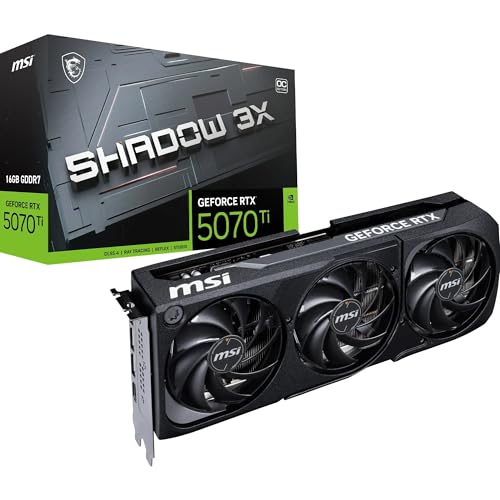
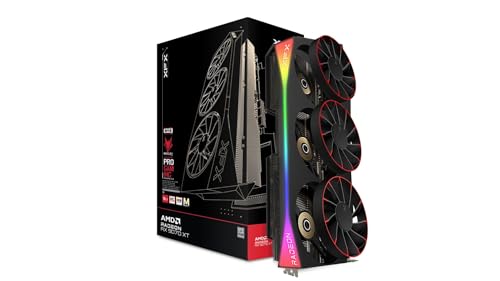
Frequently asked
5 questions01Is the Sapphire Pure AMD Radeon RX 9070 XT OC Gaming Edition 16GB GDDR6 Graphics Card good for 1440p gaming?+
Yes, it's one of the best cards in this price bracket for 1440p gaming. Published benchmark results show it delivering well above 100fps in most modern titles at 1440p ultra settings, making it a strong match for 144Hz and 165Hz monitors. In less demanding titles you'll push well beyond that. It's the resolution this card was built for.
02What PSU do I need for the Sapphire Pure AMD Radeon RX 9070 XT OC Gaming Edition 16GB GDDR6 Graphics Card?+
A minimum of 750W is recommended, and 850W is the sensible choice if you're pairing it with a high-end CPU like a Ryzen 9 9900X or Intel Core Ultra 9. The card uses a 16-pin power connector, and Sapphire includes a dual 8-pin to 16-pin adapter in the box. A PSU with a native 16-pin cable is cleaner, but the adapter works fine when fully seated.
03Is 16GB VRAM enough in 2026?+
16GB is comfortably enough in 2026 and for the foreseeable future. At 4K ultra settings in the most demanding current titles, 12GB cards are already showing strain, and 8GB cards are hitting real limits. 16GB means you're not going to hit a VRAM wall at 4K with high texture packs, and it future-proofs this card meaningfully. This is one of the stronger arguments for the 9070 XT over some competing cards with less VRAM.
04How does the Sapphire Pure AMD Radeon RX 9070 XT OC Gaming Edition compare to AMD alternatives?+
The standard RX 9070 (non-XT) is roughly 10 to 15 percent slower in rasterisation and costs less. If you're gaming at 1440p and not pushing 4K, the non-XT is. The RX 9080, if AMD releases one, would sit above the 9070 XT in performance and price. Within the 9070 XT range, the Sapphire Pure is a strong board partner choice because the triple-fan cooler is genuinely good and the factory overclock is stable.
05What warranty and returns apply to the Sapphire Pure AMD Radeon RX 9070 XT OC Gaming Edition 16GB GDDR6 Graphics Card?+
Sapphire typically offers a two-year warranty on their graphics cards, but check the specific terms on the product listing as these can vary by retailer. When buying through Amazon UK, you're also covered by Amazon's 30-day returns policy and the A-to-Z guarantee, which provides a useful safety net regardless of the manufacturer warranty.