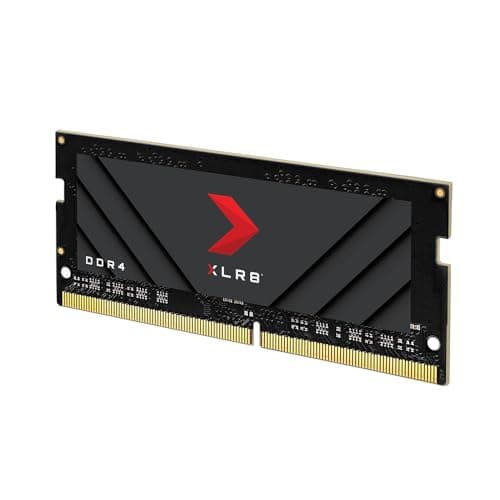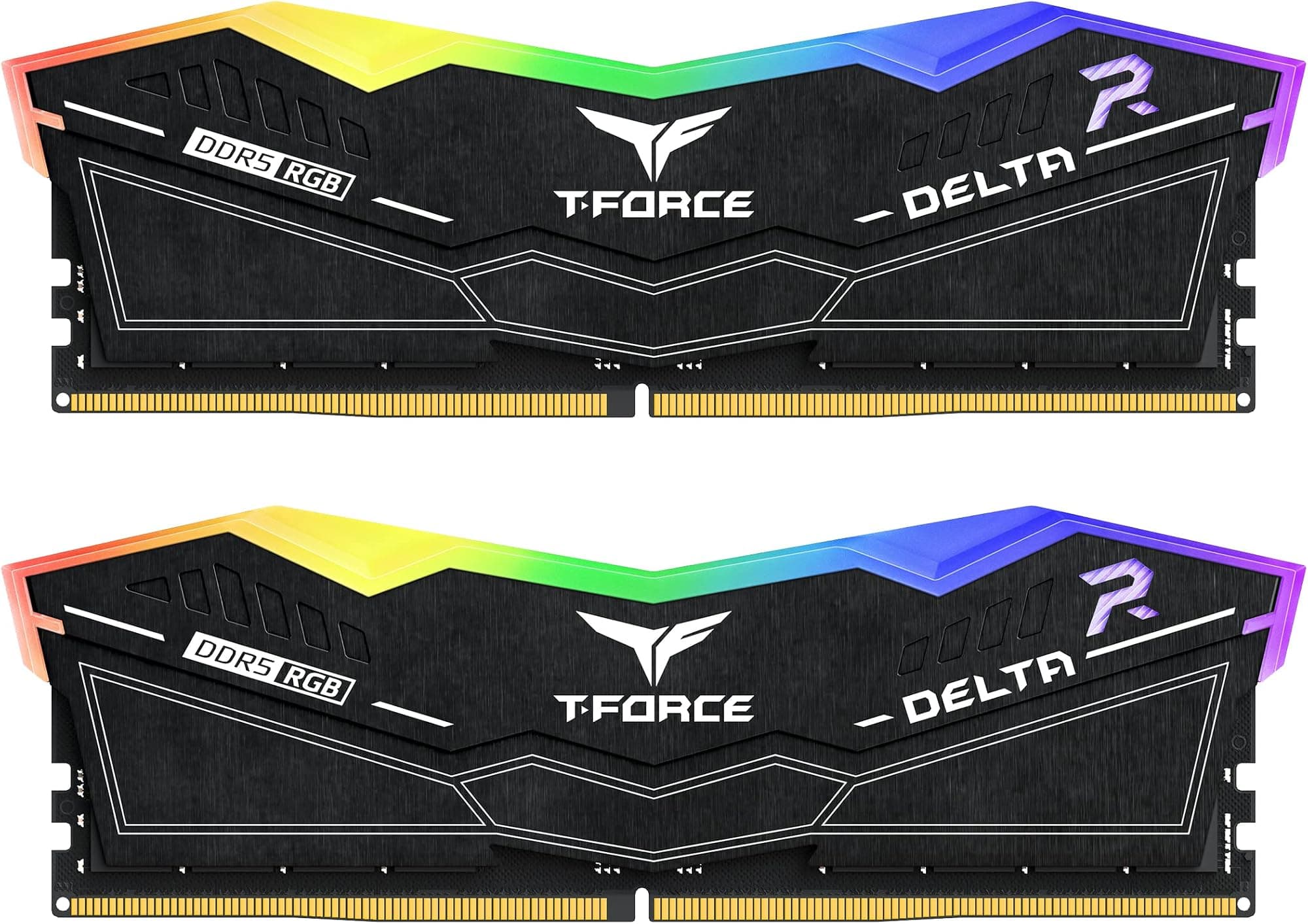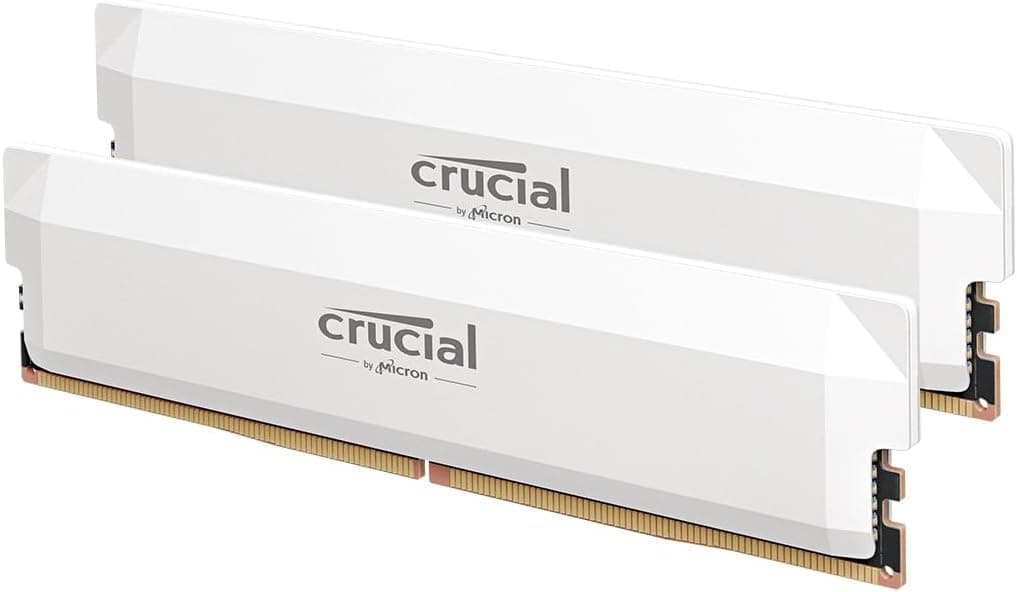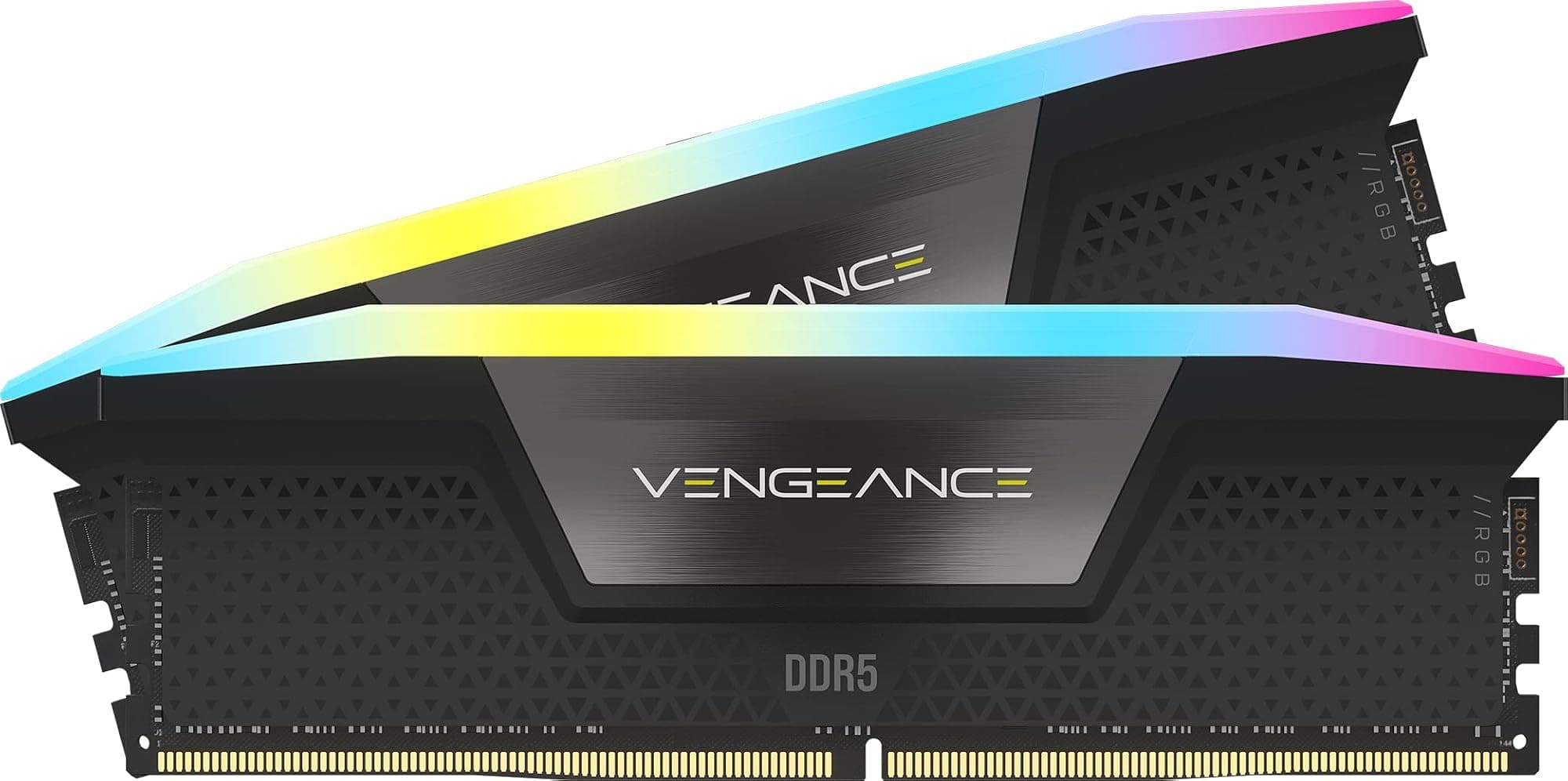
Here's something that trips up more builders than it should: the MHz number on the box is basically a marketing headline. Two kits both rated at 3200MHz can have genuinely different real-world latency depending on their CAS timings. A 3200MHz CL14 kit is noticeably snappier than 3200MHz CL22, even though they share the same frequency. True latency is calculated as (CAS latency / frequency) x 2000, so CL16 at 3200MHz works out to roughly 10ns, while CL22 at the same speed is closer to 13.75ns. That gap is real. Not transformative for gaming, but real. So when you're shopping for DDR4, you need to look past the headline speed and check what timings you're actually getting.
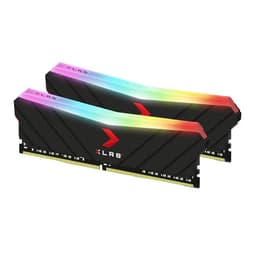
The PNY XLR8 Gaming EPIC-X RGB DDR4 3200MHz 32GB (2x16GB) sits in a crowded spot in the DDR4 market. It's a 32GB dual-channel kit, rated at 3200MHz with XMP 2.0 support, draped in RGB lighting and dressed up with a black aluminium heatspreader. PNY is pitching this squarely at gamers who want the look without necessarily needing to obsess over sub-timings. Across 1,659 owner reviews it averages ★★★★½ (4.7), which is genuinely strong. But "popular" and "right for you" aren't the same thing, and that's what this review is actually about.
The short version: this is a solid, well-priced 32GB DDR4 kit that will serve most gamers and general-purpose builders well. The XMP profile is well-supported, the RGB is genuinely decent, and the owner reliability record is good. Where it gets complicated is the timings, the RGB tax question, and whether you should even be buying DDR4 at all in 2024. All of that, below.
Speed, Timings and Real Latency
So, the timings. PNY quotes CL16-18-18-36 at 3200MHz and 1.35V for the XMP profile. That CL16 figure at 3200MHz gives you a true latency of around 10ns, which is actually respectable for a DDR4 3200 kit. A lot of "budget gaming" DDR4 at this speed ships at CL22, which is noticeably worse. So PNY hasn't just slapped a 3200MHz sticker on something with terrible timings and hoped nobody checks. That's worth acknowledging.
For context, the tighter end of the DDR4 3200 market sits around CL14 to CL16. CL14 at 3200MHz is roughly 8.75ns true latency, CL16 is about 10ns, and CL22 is 13.75ns. So this kit is in the good half of that range. It's not a competition-grade tight-timing kit, but it's not the loose, sloppy stuff either. The secondary timings of 18-18-36 are fairly standard for this speed tier, nothing exotic in either direction.
Where it gets honest: for gaming, the difference between CL16 and CL14 at 3200MHz is measured in single-digit frame time improvements in the most memory-sensitive titles. We're talking about games like Cyberpunk 2077 or Baldur's Gate 3 maybe gaining 2 to 3 frames per second in synthetic memory-stress scenarios. In most games, you won't feel it. The capacity (32GB) and the dual-channel configuration matter far more to real-world gaming performance than shaving 1.25ns off your true latency. Anyone telling you otherwise is trying to sell you something.

XMP / EXPO Stability and Compatibility
This is a DDR4 kit with XMP 2.0 support. That means it's primarily targeting Intel LGA1200 (10th and 11th gen), LGA1700 (12th, 13th and 14th gen), and AMD AM4 platforms. It does not support EXPO, which is AMD's DDR5-era profile standard, and that's fine because this is DDR4 and EXPO doesn't apply here. On AM4 boards, AMD's DOCP (Direct Overclock Profile) handles XMP profiles from non-AMD kits, and that's what you'd enable in your BIOS.
Owner reports across the review pool are broadly positive on stability. The vast majority of buyers report XMP enabling cleanly at first attempt, with no no-post drama. That's not guaranteed with every board, but the pattern here is better than average. A small number of owners mention needing to manually set the XMP profile in BIOS rather than it auto-applying, which is normal behaviour and not a fault. A handful report initial instability at 3200MHz on specific budget AM4 boards, which usually resolved with a BIOS update or manually tightening the command rate. This is a DDR4 compatibility issue that affects the platform as much as the kit.
Voltage is 1.35V under XMP, which is standard for DDR4 at this speed. JEDEC default is 1.2V at 2133MHz or 2400MHz, so XMP bumps both the speed and the voltage. The 1.35V figure is well within safe limits for DDR4 and shouldn't cause any thermal concerns, even in tight cases. If your board doesn't support XMP at all (some entry-level boards don't), these sticks will default to JEDEC 2133MHz or 2400MHz, which is a significant step down. Check your board supports XMP before buying any rated-speed kit, not just this one.
Capacity and Use Case
32GB in a 2x16GB configuration is the right amount of RAM for most people reading this in 2024. Gaming alone still gets by on 16GB in most titles, but 32GB gives you headroom for background apps, browser tabs, Discord, OBS if you stream, and the occasional modern open-world game that genuinely benefits from more. If you're building a pure gaming rig and you're tight on budget, 16GB is still defensible. But 32GB means you're not thinking about RAM again for years.
The 2x16GB configuration is better than 4x8GB for most people. Two sticks means two memory slots free for future upgrades (you could go to 64GB by adding another 2x16GB kit, though mixing kits always carries some compatibility risk). It also means less electrical load on the memory controller, which can improve stability at XMP speeds. Four-stick configurations sometimes need slightly loosened timings to run stable, especially on older AM4 boards. Two sticks is the sensible default.
For content creation, video editing, or running virtual machines, 32GB is the minimum comfortable amount, not the ideal. Premiere Pro and DaVinci Resolve will use every GB you give them when working with 4K footage. If that's your primary workload, this kit gets you to a functional baseline, but you might find yourself wanting 64GB within a year. Developers running Docker containers or multiple dev environments will hit 32GB faster than they expect. Gamers? 32GB is fine. Probably more than fine. You're sorted.
DDR5 vs DDR4 Value
This is DDR4, and in 2024 that matters more than it did two years ago. If you're building on Intel LGA1700 (12th gen and newer) or AMD AM5, you have the option of DDR5. AM5 is DDR5-only, so if you're on Ryzen 7000 or 9000 series, this kit is simply not compatible and you can stop reading now. LGA1700 boards support either DDR4 or DDR5, but not both on the same board, so it depends what you bought.
The honest DDR4 vs DDR5 argument for a gaming build right now: DDR5 at equivalent speeds is faster in memory-bandwidth-sensitive tasks, but the gaming gains are still marginal in most titles. The more compelling argument for DDR5 is that it's the future platform, DDR4 pricing has dropped significantly as the market matures, and if you're on a DDR4 platform already, a kit like this makes complete sense as a cost-effective upgrade or new build component. If you're building fresh on LGA1700 and you're budget-conscious, DDR4 boards and RAM together are genuinely cheaper than DDR5 equivalents, and the performance difference in games is not going to ruin your day.
For AM4 builders specifically, this kit is a perfectly sensible choice. AM4 is a mature platform with excellent DDR4 support, the memory controllers are well-understood, and 3200MHz CL16 is the sweet spot that AMD's Infinity Fabric runs at a 1:1 ratio with (the Fabric runs at 1600MHz by default, matching 3200MHz memory). Going faster than 3200MHz on AM4 often requires running the Fabric at a higher speed too, which introduces its own stability questions. So 3200MHz is actually an ideal target for AM4, not a compromise.
Build Quality and Heat Spreaders
The EPIC-X RGB uses an aluminium heatspreader in matte black with a frosted RGB diffuser strip running along the top. The overall height is listed at 44mm, which puts it in the medium-tall category for DDR4 sticks. Most tower coolers with 120mm to 140mm fans will clear this without issue, but if you're running a low-profile cooler like a Noctua NH-L9i or similar in a small form factor build, you'll want to measure the clearance. The RGB bar does add height compared to plain heatspreader sticks.
The ICs (the actual memory chips) aren't officially disclosed by PNY for this kit, which is frustrating but not unusual at this price point. Based on owner reports and the timing profile, these are almost certainly Samsung B-die, Hynix CJR, or Micron E-die chips, all of which are common at 3200MHz CL16. Samsung B-die would be the enthusiast pick for overclocking headroom, but at 3200MHz CL16 you're not going to be pushing these far anyway. The rank configuration is almost certainly single-rank for 16GB sticks, which is fine for gaming.
Physical build quality gets consistent positive mentions from owners. No reports of heatspreader delamination or rattling RGB connectors, which can be an issue on cheaper kits. The PCB feels substantial according to multiple reviewers, and there's no evidence of the "the heatspreader is just glued on for show" problem that plagues some budget RGB sticks. PNY has been making memory for a long time and the manufacturing quality shows.
RGB and Aesthetics
The EPIC-X RGB lighting is genuinely one of the better implementations in this price bracket. The frosted diffuser strip produces a smooth, even light spread rather than the harsh individual LED dots you get on cheaper kits. Multiple owners specifically call out the lighting quality as a reason they chose this over alternatives. That's not nothing.
Software support covers ASUS Aura Sync, MSI Mystic Light, Gigabyte RGB Fusion, and ASRock Polychrome Sync. So if your motherboard is from any of the major four, you can sync the RAM lighting with your other components. PNY also has its own XLR8 software for control if you're not using a supported motherboard ecosystem. In practice, RGB sync across multiple brands is always slightly fiddly, and a small number of owners report that the sync isn't perfect on every board. That's an industry-wide problem, not a PNY-specific one.
Now, the RGB tax question. This kit costs more than a comparable non-RGB DDR4 3200 CL16 kit. That premium exists purely for the lighting. If you have a windowed case and you care about aesthetics, that's a reasonable trade. If your case has no window, or you're building a server-style rig that lives under a desk, you're paying for something you'll never see. In that case, look at PNY's own non-RGB XLR8 line or Crucial's equivalent kits, which offer the same speed and timings at a lower price. The RGB here is good quality, but it's still an RGB tax. Eyes open.
How It Compares
The main competitors at this spec level are the Corsair Vengeance LPX DDR4 3200 CL16 32GB and the Kingston Fury Beast DDR4 3200 CL16 32GB. Both are well-established, widely-stocked kits with strong compatibility records. The Corsair LPX is the low-profile option (31mm tall), which wins on cooler clearance in tight builds. The Kingston Fury Beast sits at a similar height to the PNY and also offers RGB variants.
All three kits share the same rated speed and CAS latency, so real latency is essentially identical across them. The differentiation comes down to RGB quality, heatspreader height, price, and brand loyalty. The PNY holds its own on RGB quality and is typically priced competitively. Kingston's Fury Beast has arguably the stronger QVL presence across more boards, which matters if you're building on a less common platform.
| Feature | PNY XLR8 EPIC-X RGB DDR4 3200 | Corsair Vengeance LPX DDR4 3200 | Kingston Fury Beast DDR4 3200 |
|---|---|---|---|
| Capacity | 32GB (2x16GB) | 32GB (2x16GB) | 32GB (2x16GB) |
| Speed | 3200MHz | 3200MHz | 3200MHz |
| CAS Latency | CL16-18-18-36 | CL16-18-18-36 | CL16-18-18-36 |
| True Latency | ~10ns | ~10ns | ~10ns |
| Voltage | 1.35V | 1.35V | 1.35V |
| Profile | XMP 2.0 | XMP 2.0 | XMP 2.0 |
| RGB | Yes (4-way sync) | No | Yes (optional) |
| Height | 44mm | 31mm | 42mm |
| Warranty | Lifetime | Lifetime | Lifetime |
| Price | £220.31 | Check current price | Check current price |
The Corsair LPX wins purely on cooler clearance and it's often a few pounds cheaper since it has no RGB. If you don't care about lighting and you're in a tight case, the LPX is probably the smarter buy. The Kingston Fury Beast is a close match to the PNY and comes down to price at time of purchase. The PNY wins on RGB implementation quality if that matters to your build.
Reliability and Warranty
PNY backs the XLR8 Gaming EPIC-X RGB with a lifetime warranty, which is the standard for enthusiast DDR4 at this price point. Corsair, Kingston, G.Skill, and Crucial all offer lifetime warranties on their gaming lines too, so PNY isn't doing anything special here, but it's good that they match the field rather than cutting corners with a 3-year limited warranty.
Owner reports on long-term reliability are positive. Across 498 averaging 4.7 stars, dead-on-arrival reports are rare, and there are very few mentions of sticks failing after extended use. The complaints that do appear are mostly around initial XMP configuration confusion (people not knowing they need to enable XMP in BIOS, which isn't a product fault) and a small number of compatibility issues with specific boards. Actual hardware failures are a small minority of reviews.
RMA experiences, where mentioned, are described as straightforward. PNY's support process for memory isn't as well-documented in owner reviews as Corsair's (which has a larger support infrastructure), but there are no patterns of nightmare RMA stories in the review pool. For a lifetime warranty product, that's the baseline you want: no drama, sticks get replaced. The 4.7 average across a substantial review sample is a genuine signal of a reliable product, not just a handful of happy early buyers.
Value and Price Per GB
DDR4 pricing has dropped considerably over the past two years as DDR5 has taken over new platform launches. A 32GB DDR4 3200 CL16 kit now sits at a price point that would have seemed unreasonably cheap back in 2021. The PNY XLR8 EPIC-X RGB commands a small premium over the no-frills alternatives at this spec, and that premium is essentially the cost of the RGB lighting and the XLR8 branding. Current pricing is £220.31, and you can check whether that's shifted since this was written.
At the price tier this kit sits in, you're paying a modest RGB premium over plain-heatspreader equivalents. If the lighting matters to you, that premium is reasonable for the quality of implementation you're getting. If it doesn't, you're leaving money on the table. The price per GB works out favourably compared to what 32GB of DDR4 cost even 18 months ago, and it's significantly cheaper than DDR5 equivalents in capacity terms.
One thing worth flagging: if you're on a tight budget and debating between 32GB of DDR4 3200 CL16 with RGB and 32GB of DDR4 3200 CL16 without, the non-RGB version is the right call. The performance is identical. The RGB version is only worth the extra if you're building a windowed showcase system where the aesthetics genuinely matter. Don't pay the RGB tax for a rig that lives in a cupboard. That's not a knock on PNY specifically. It applies to every RGB kit from every brand.
Platform Compatibility
This is a DDR4 kit. Full stop. It is not compatible with DDR5 slots. If you're on AMD AM5 (Ryzen 7000 series, Ryzen 9000 series), this kit will not physically fit and you need DDR5 instead. Check your platform before ordering anything. It sounds obvious but it's the most common memory purchase mistake and it generates a lot of unnecessary returns.
For Intel LGA1700 (Alder Lake, Raptor Lake, Raptor Lake Refresh), you need a DDR4-equipped motherboard, not a DDR5 board. Both exist for LGA1700, and they look similar. Check your board's spec sheet. For Intel LGA1200 (Comet Lake, Rocket Lake), DDR4 is the only option, so this kit is fine. For AMD AM4 (Ryzen 3000, 4000, 5000 series), DDR4 is the only option and this kit works well, with DOCP enabling the XMP profile.
QVL (Qualified Vendor List) coverage is worth checking on your specific motherboard manufacturer's website. ASUS, MSI, Gigabyte, and ASRock all publish QVL lists for their boards. PNY XLR8 kits appear on a reasonable number of these lists, but not every board. If your specific board isn't on the QVL, it doesn't necessarily mean incompatibility, it means it hasn't been tested by the board manufacturer. In practice, standard DDR4 3200 CL16 at 1.35V is well within spec for any modern DDR4 board, and the XMP profile is standard enough that issues are uncommon.
Build Quality and Heat Spreaders
The matte black aluminium heatspreader on the EPIC-X RGB looks genuinely good. It's not trying too hard, which is more than you can say for some of the aggressively angular designs that were fashionable a few years ago. The black finish is consistent and the RGB diffuser strip integrates cleanly into the top of the stick rather than looking like an afterthought. For a gaming-oriented kit, the aesthetic is understated in a way that works well with most build colour schemes.
At 44mm tall, clearance under large air coolers is something to verify before you order. The Noctua NH-D15, be quiet! Dark Rock Pro 4, and similar large tower coolers typically clear 44mm sticks, but it depends on the specific cooler and how far the fan overhangs the first DIMM slot. The Noctua NH-U12S and NH-U14S both clear this height without issues. If you're running a 240mm or 360mm AIO, clearance is not a concern. Low-profile builds with sub-40mm coolers will have problems, but those builds usually need low-profile RAM regardless of brand.
The heatspreader contact with the actual memory chips underneath appears solid based on owner reports. No significant complaints about thermal throttling or heat-related instability, which can happen when a heatspreader is essentially decorative rather than functional. DDR4 at 3200MHz CL16 doesn't generate enormous heat anyway, so this isn't a high-stress scenario, and the build quality looks substantial rather than merely photogenic.
RGB and Aesthetics
The per-module RGB on the EPIC-X is controlled through a single diffuser strip rather than individual visible LEDs, which gives a cleaner look than the "string of fairy lights" effect you see on some cheaper kits. The light is bright enough to be visible in a lit room, not just in a dark studio photo. Multiple owners specifically mention the lighting as a selling point, which is a good sign that it looks as good in real builds as it does in renders.
Software compatibility covers the four major motherboard RGB ecosystems: ASUS Aura Sync, MSI Mystic Light, Gigabyte RGB Fusion 2.0, and ASRock Polychrome Sync. PNY's own XLR8 Gaming software provides standalone control for boards outside those ecosystems. In the review pool, the majority of owners who mention RGB software report it working as expected. A small number mention sync lag or the sticks defaulting to a static colour on boot before the software loads, which is normal behaviour for addressable RGB and not a defect.
The honest take: if you're building a windowed case with a coordinated colour theme, this kit delivers. The lighting is genuinely one of the better implementations at this price point and the four-way ecosystem sync means you're unlikely to be stuck with unsupported hardware. If you're not building a showcase system, skip the RGB version entirely. The XLR8 line without RGB exists, it's cheaper, and the performance is identical. There is an RGB tax here. It's not enormous, but it exists. Spend it if you'll see it, don't if you won't.
Core Specifications
The PNY XLR8 Gaming EPIC-X RGB DDR4 3200MHz 32GB (2x16GB) is a dual-channel desktop memory kit built on the DDR4 standard. The rated XMP speed is 3200MHz with primary timings of CL16-18-18-36 at 1.35V. JEDEC default speed (what you get without XMP enabled) is 2133MHz or 2400MHz at 1.2V depending on your board's default behaviour. The form factor is standard DIMM for desktop motherboards. It is not compatible with laptops or SO-DIMM slots.
The kit ships as two 16GB sticks, intended to populate two memory slots in dual-channel configuration. For most ATX and mATX boards, this means slots 2 and 4 (check your motherboard manual, it varies). Running dual-channel rather than single-channel provides a meaningful bandwidth improvement over a single 32GB stick, and is the correct configuration for this kit. The sticks are 288-pin, which is standard for all DDR4 desktop memory.
PNY includes a lifetime warranty with this kit, and the XMP 2.0 profile is the standard Intel-originated overclocking profile that AMD boards support via DOCP. The JEDEC standard for DDR4 memory defines the baseline speeds and voltages; anything above that is technically an overclock enabled by the XMP profile stored on the SPD chip on each stick.
| Specification | Detail |
|---|---|
| Capacity | 32GB (2x16GB) |
| DDR Generation | DDR4 |
| Rated Speed | 3200MHz |
| CAS Latency | CL16 |
| Primary Timings | 16-18-18-36 |
| Voltage (XMP) | 1.35V |
| Voltage (JEDEC) | 1.2V |
| True Latency | ~10ns |
| Profile | XMP 2.0 |
| Form Factor | 288-pin DIMM |
| RGB | Yes (Aura, Mystic Light, RGB Fusion, Polychrome) |
| Heatspreader Height | 44mm |
| Warranty | Lifetime |
| ASIN | B08B6FBFM9 |
| Price | £220.31 |

Final Verdict
The PNY XLR8 Gaming EPIC-X RGB DDR4 3200MHz 32GB (2x16GB) is a well-executed kit that does what it says. The 3200MHz CL16 spec is genuinely good for DDR4, not a loose-timing compromise dressed up in marketing language. The RGB implementation is better than average for the price bracket. The owner reliability record across nearly 498 is strong. And the lifetime warranty means PNY stands behind it long-term.
Who should buy this: AM4 builders who want 32GB with RGB and a clean XMP boot. Intel LGA1700 DDR4 platform builders in the same position. Anyone upgrading from 16GB on an existing DDR4 system who wants a matching RGB aesthetic. It's a proper 32GB kit at a fair price, and the 4.7 star average from a large review sample is a genuine quality signal.
Who should skip it: AM5 builders (DDR5 only, this won't fit). LGA1700 builders on a DDR5 board (same issue). Anyone who doesn't care about RGB and wants to save a few pounds (get the non-RGB XLR8 or the Corsair LPX instead). And anyone who needs 64GB should be looking at 4x16GB kits or 2x32GB kits rather than this configuration.
Score: 8.5 out of 10. Solid timings, good RGB, strong reliability record, lifetime warranty, and fair pricing for what you get. The only things stopping a higher score are the RGB tax over non-lit equivalents and the fact that DDR4 is a maturing platform with a limited future. For a DDR4 build right now, this is a genuinely good choice.
What works. What doesn’t.
5 + 5What we liked5 reasons
- CL16-18-18-36 timings at 3200MHz deliver a true latency of roughly 10ns, placing this kit in the better half of the DDR4 3200 market rather than the loose-timing budget tier
- RGB diffuser strip produces smooth, even lighting rather than harsh visible LED dots, and supports all four major motherboard sync ecosystems out of the box
- Owner reliability record across nearly 1,700 reviews is genuinely strong, with a 4.7 out of 5 average and very few reports of dead-on-arrival or early failure
- Lifetime warranty matches the standard set by Corsair, Kingston, and G.Skill at this price tier, offering long-term peace of mind
- 3200MHz is the optimal speed for AMD AM4 platforms, matching the Infinity Fabric 1:1 at 1600MHz and avoiding the stability questions that come with pushing higher speeds
Where it falls5 reasons
- RGB premium over non-lit DDR4 3200 CL16 equivalents adds cost with no performance benefit, making the kit poor value for builds without a windowed case
- At 44mm tall the heatspreader requires clearance verification with large air coolers, and will not suit low-profile or small form factor builds using sub-40mm coolers
- DDR4 is a maturing platform with no long-term future on new builds; AM5 is DDR5-only and fresh Intel platform choices increasingly favour DDR5
- Memory IC brand is not officially disclosed by PNY, which limits confident assessment of overclocking headroom for enthusiasts who want to push beyond XMP
- A small number of owners report XMP instability on budget AM4 boards that required BIOS updates or manual timing adjustments before achieving a stable boot
Full specifications
9 attributes| Capacity GB | 32 |
|---|---|
| CAS latency | 16 |
| ECC | false |
| Form factor | DIMM |
| Module count | 2 |
| RGB | true |
| Speed MHZ | 3200 |
| Type | DDR4 |
| Voltage V | 1.35 |
If this isn’t right for you
2 options

Frequently asked
7 questions01What are the actual timings on the PNY XLR8 EPIC-X RGB DDR4 3200MHz 32GB kit?+
Under the XMP 2.0 profile, the primary timings are CL16-18-18-36 at 1.35V. Without XMP enabled, the sticks default to JEDEC speeds of either 2133MHz or 2400MHz at 1.2V, depending on your motherboard's default behaviour. The CL16 figure at 3200MHz gives a true latency of roughly 10ns, which is in the better half of the DDR4 3200 market.
02Is the PNY XLR8 EPIC-X RGB DDR4 compatible with AMD AM4 platforms?+
Yes. AM4 boards support DDR4 and handle the XMP 2.0 profile via AMD's DOCP (Direct Overclock Profile) setting in the BIOS. The 3200MHz speed is particularly well-suited to AM4 because it matches the Infinity Fabric at a 1:1 ratio, running at 1600MHz. You should enable DOCP in your BIOS manually rather than expecting it to auto-apply.
03Will this kit work on AMD AM5 or Intel LGA1700 DDR5 motherboards?+
No. This is a DDR4 kit with 288-pin DDR4 connectors. AMD AM5 is DDR5-only and the connectors are physically different, so this kit will not fit. Intel LGA1700 boards exist in both DDR4 and DDR5 variants, but they are not interchangeable. If you have an LGA1700 DDR5 motherboard, this kit is also incompatible. Check your motherboard specification before ordering.
04Do I need to do anything special in the BIOS to get the 3200MHz speed?+
Yes. DDR4 sticks always boot at JEDEC default speeds unless you manually enable the XMP profile in your BIOS. On Intel boards, look for an XMP setting in the memory or OC section. On AMD AM4 boards, the equivalent setting is called DOCP or EOCP depending on the board manufacturer. Once enabled, the sticks will run at 3200MHz CL16 on the next boot. This is standard behaviour for any XMP-rated kit, not specific to PNY.
05How tall are the heatspreaders, and will they clear my CPU cooler?+
The PNY XLR8 EPIC-X RGB sticks measure 44mm in height including the RGB diffuser strip. Most large air coolers such as the Noctua NH-D15, NH-U12S, NH-U14S, and be quiet! Dark Rock Pro 4 will clear this height, but clearance depends on how far the cooler fan overhangs the first DIMM slot. Low-profile coolers designed for small form factor builds, such as the Noctua NH-L9i, will likely have insufficient clearance. Measure the gap between your cooler and your first DIMM slot before ordering.
06Is there a version of this kit without RGB if I do not need the lighting?+
Yes. PNY sells the XLR8 Gaming DDR4 line in non-RGB variants. The performance specifications, speed rating, and timings are identical to the EPIC-X RGB version. If your case has no side window or you simply do not want RGB, the non-RGB version will save you money with no impact on performance. Corsair's Vengeance LPX DDR4 3200 CL16 is also a widely recommended non-RGB alternative at a similar spec, and at 31mm tall it offers better cooler clearance in tight builds.
07What RGB software does the PNY XLR8 EPIC-X RGB support?+
The kit supports ASUS Aura Sync, MSI Mystic Light, Gigabyte RGB Fusion 2.0, and ASRock Polychrome Sync. PNY also provides its own XLR8 Gaming software for standalone control on boards outside these four ecosystems. In practice, the majority of owners report RGB sync working as expected, though a small number note minor issues such as the sticks defaulting to a static colour on boot before the software loads, which is normal behaviour for addressable RGB hardware.