GPU manufacturers have a long history of making big numbers sound transformative. New architecture, new naming scheme, same old question: does the performance jump actually justify the price? The RTX 5080 sits at the sharp end of Nvidia's Blackwell lineup, and PNY's ARGB OC Triple Fan version is one of the more accessible takes on it. Not cheap, obviously. Nothing in this tier is. But if you're weighing up whether this specific card from PNY is worth your money versus going with a different brand's 5080 or stepping up to the 5090, there are some things before you click buy.
The short answer: this is a genuinely rapid card, the 16GB VRAM is a real step up from the 5070 Ti, and PNY's triple-fan cooler does a decent job keeping things quiet. Owner satisfaction backs that up, with 278 averaging ★★★★☆ (4.4). The longer answer involves some nuance around power draw, pricing, and whether you actually need a 5080 or whether a 5070 Ti would do the job for considerably less. We'll get into all of that.
Core Specifications
The PNY RTX 5080 16GB ARGB OC Triple Fan is built on Nvidia's Blackwell architecture, which brings a generational leap in shader count, tensor core efficiency, and memory bandwidth over Ada Lovelace. The 5080 sits one rung below the 5090 in Nvidia's stack, which means it gets a cut-down version of the GB202 die rather than the full chip. That's not a criticism, just context. The full spec sheet looks like this:
| Specification | Detail |
|---|---|
| GPU Architecture | Nvidia Blackwell (GB203) |
| CUDA Cores | 10,752 |
| RT Cores | 84 (4th Gen) |
| Tensor Cores | 336 (5th Gen) |
| VRAM | 16GB GDDR7 |
| Memory Bus | 256-bit |
| Memory Bandwidth | 960 GB/s |
| Base Clock | 2295 MHz |
| Boost Clock (OC) | 2625 MHz (PNY OC) |
| TGP | 360W |
| Display Outputs | 3x DisplayPort 2.1, 1x HDMI 2.1 |
| Power Connector | 16-pin 12V-2x6 |
| PCIe Interface | PCIe 5.0 x16 |
| Cooler | Triple Fan ARGB |
| Form Factor | 3-slot |
| Current Price | £1,359.98 |
The 16GB of GDDR7 on a 256-bit bus is worth dwelling on. GDDR7 operates at significantly higher data rates than GDDR6X, which is how Nvidia gets to 960 GB/s of bandwidth despite the bus width being the same as the RTX 4080. In practical terms, that bandwidth headroom means the card doesn't choke on high-resolution textures or complex ray tracing workloads the way narrower-bandwidth cards can. It's a meaningful improvement, not a marketing footnote.
The three DisplayPort 2.1 outputs and single HDMI 2.1 port cover everything you'd realistically need. DisplayPort 2.1 supports up to 16K resolution and extremely high refresh rates at 4K, so if you're running a 4K 240Hz monitor or planning to, this card won't be the bottleneck. The DisplayPort 2.1 standard also supports UHBR (Ultra High Bit Rate) modes, which is relevant if you're running a high-bandwidth display chain.
Architecture and Cores
Blackwell is Nvidia's first major architecture shift since Ada Lovelace launched with the 4000 series. The GB203 die powering the RTX 5080 is built on TSMC's 4nm process node, which allows Nvidia to pack more transistors into the same die area while managing heat more effectively than the previous generation. That's not just a spec sheet talking point. It directly affects how the card behaves under sustained load, and it's part of why the 5080 can hit its boost clocks without the aggressive throttling you'd sometimes see on the 4080 under prolonged stress.
The 10,752 CUDA cores are paired with 84 fourth-generation RT cores and 336 fifth-generation Tensor cores. The RT core upgrade matters more than the raw count suggests. Nvidia's fourth-gen RT cores handle ray tracing workloads with improved triangle intersection and bounding volume hierarchy traversal, which translates to less of a performance cliff when you enable ray tracing in demanding titles. The fifth-gen Tensor cores are primarily there to power DLSS 4's Multi Frame Generation, which is the headline feature of this generation and something we'll cover properly in the ray tracing and upscaling section.
One thing worth being clear about: the 5080 uses GB203, not the full GB202 that appears in the 5090. That means you're getting roughly 60% of the 5090's shader count. In rasterisation workloads, the gap between a 5080 and 5090 is real but not catastrophic. In heavily RT-accelerated scenarios, the gap widens. Whether that matters to you depends entirely on how you game. Most people at 4K with DLSS Quality enabled won't notice the difference day to day. Enthusiasts chasing maximum ray tracing fidelity at native 4K absolutely will.
Clock Speeds and Boost
PNY's ARGB OC variant ships with a factory overclock that pushes the boost clock to 2625 MHz, up from Nvidia's reference boost of 2617 MHz. That's a modest factory overclock, and you shouldn't expect transformative performance gains from it. What it does mean is that PNY has validated the card at slightly above-reference clocks and the cooler is sized to handle that without throttling. In practice, the difference between the OC and reference-clocked 5080s in gaming benchmarks is within the margin of error.
What's more interesting is how Blackwell handles GPU Boost 5.0. Nvidia's boost algorithm has been refined each generation, and the 5080 is notably good at sustaining clocks close to its advertised boost figure rather than bouncing between base and boost. Published benchmarks from this card class consistently show sustained clocks in the 2550 to 2625 MHz range under gaming loads, which is a better sustained-clock story than the 4080 managed in comparable scenarios. The base clock of 2295 MHz is essentially irrelevant in normal use. You'd have to be in a very poorly ventilated case running a taxing workload to spend meaningful time there.
For anyone thinking about pushing the factory OC further with manual overclocking: the 5080 has headroom, but the returns diminish quickly given how aggressive Nvidia's own boost algorithm already is. The more useful tweak for most people is adjusting the power limit slider in MSI Afterburner rather than chasing raw clock speeds. Giving it a small power limit bump in a well-ventilated case tends to yield more consistent sustained performance than a raw core clock overclock. That said, PNY's card arrives in a perfectly usable state out of the box and most buyers won't touch any of this.
VRAM Analysis
Sixteen gigabytes of GDDR7. This is the number that separates the 5080 from the 5070 Ti (which gets 16GB too, to be fair) and from the 5090's 32GB. At 4K with high texture settings in modern titles, 16GB is comfortably sufficient in 2026. Games like Alan Wake 2, Cyberpunk 2077 with path tracing, and the more demanding Unreal Engine 5 titles can push VRAM usage above 12GB at 4K ultra settings, so having 16GB gives you genuine breathing room rather than the anxiety-inducing 8GB buffer that plagued the RTX 3070 and 4060 Ti.
The 256-bit bus width is sometimes cited as a limitation compared to the 5090's 512-bit bus. And yes, in pure bandwidth terms, the 5090 roughly doubles what the 5080 offers. But GDDR7 at 960 GB/s is not a slow memory subsystem. For reference, the RTX 4090 managed around 1008 GB/s on a 384-bit bus with GDDR6X. The 5080 is slightly behind the 4090's raw bandwidth figure, which is if you're upgrading from a 4090 and expecting across-the-board gains. In most gaming workloads, the bandwidth difference between the 5080 and 5090 doesn't translate to proportional frame rate differences, but in extremely memory-bandwidth-sensitive scenarios like 4K path tracing, it can show up.
Looking further ahead, 16GB should remain adequate for 1440p gaming well into the late 2020s. At 4K, the trajectory of texture budgets in AAA games is upward, and there's a reasonable argument that 24GB would be more future-proof. But 16GB is not a problem you'll run into this year or next at 4K with sensible settings. Anyone gaming at 1440p or below: this is more VRAM than you'll ever need. The GDDR7 standard itself, ratified by JEDEC, brings improved power efficiency alongside the bandwidth gains, which has positive knock-on effects for thermals and power draw compared to GDDR6X at equivalent speeds.
Ray Tracing and Upscaling
DLSS 4 is the biggest practical reason to consider a 5000-series card over a 4000-series. Specifically, Multi Frame Generation. Where DLSS 3 on the 4000 series could generate one additional frame between rendered frames, DLSS 4 can generate up to three. The result, in supported titles, is frame rates that look almost unreasonably high. Cyberpunk 2077 at 4K with path tracing fully enabled goes from genuinely unplayable at native resolution to smooth and enjoyable with DLSS 4 Quality plus Multi Frame Generation active. That's not marketing spin. It's just what the technology does.
The important caveat is latency. Generating frames rather than rendering them introduces input latency, and Nvidia Reflex is the mitigation. In competitive titles where latency matters more than raw frame count, you'd typically run DLSS 4 in Quality or Balanced mode without Multi Frame Generation, which still gives you a substantial performance boost from the improved Super Resolution algorithm alone. The image quality of DLSS 4 Super Resolution at Quality preset is genuinely very good. Temporal stability is better than DLSS 3, ghosting on fast-moving objects is reduced, and fine detail like foliage and hair is resolved more cleanly. It's not perfect, but it's the best upscaling option available right now.
On native ray tracing performance: the 5080 handles standard ray tracing (reflections, shadows, ambient occlusion) without breaking a sweat at 4K. Full path tracing is more demanding, and you'll want DLSS 4 Super Resolution at minimum to keep frame rates comfortable. The 4th-gen RT cores handle mixed rasterisation and RT workloads more efficiently than Ada Lovelace, so games that blend RT effects rather than going full path-traced tend to run very well. AMD's FSR 4 is also supported on this card (FSR runs on all hardware), and while FSR 4 has closed the gap with DLSS considerably, DLSS 4 still holds the edge in image quality at equivalent presets.
Video Encoding
The 5080 includes Nvidia's 9th-generation NVENC encoder, which is a proper upgrade over the 8th-gen encoder in the 4000 series. AV1 encoding is supported, and the quality-per-bitrate improvement over H.264 NVENC is significant for anyone streaming or recording at high resolutions. If you're running an OBS setup and pushing 4K60 or 1440p144 streams, NVENC AV1 on the 5080 gives you broadcast-quality output without the CPU overhead that software encoding demands. Twitch and YouTube both support AV1, and the adoption curve is moving fast enough that this matters now rather than just as a future-proofing point.
For content creation beyond streaming, the dual NVENC engines (yes, dual) mean you can encode video at roughly double the speed compared to a single-encoder setup. This is relevant if you're editing and exporting long-form 4K or 8K footage. DaVinci Resolve and Premiere Pro both leverage NVENC acceleration, and the 5080's encoding throughput is genuinely impressive for a gaming-focused card. It's not a replacement for a dedicated workstation GPU, but for a creator who also games, it handles both jobs without compromise.
AV1 decode is also present, covering 8K AV1 streams without dropping frames. That's increasingly relevant as streaming platforms push higher-quality encodes. The card also handles H.265 (HEVC) encode and decode at 8K, which covers pretty much every professional delivery format you'd encounter. If you're using this card purely for gaming and never touching video, none of this matters to you. But it's good to know the hardware capability is there if your use case shifts.
Power Consumption
The 5080 has a 360W TGP. That's the same as the RTX 4090. Let that sink in for a moment. Nvidia has delivered substantially more performance per watt with Blackwell, but the absolute power draw figure is still significant. You need a quality 850W PSU at minimum, and 1000W is the more comfortable recommendation if you're pairing this with a high-end CPU. PNY's card uses the 16-pin 12V-2x6 connector (the updated version of the 12VHPWR that addresses the melting concerns some users had with early 4090 adapters), so make sure your PSU either has a native 16-pin cable or a quality adapter.
Published benchmarks for this card class show real-world gaming power draw typically landing in the 320 to 360W range depending on the title. Compute-heavy workloads can push closer to the rated TGP. Transient power spikes, which caused the original 12VHPWR connector problems on the 4090, are something Nvidia and board partners have worked to address with the 12V-2x6 spec. The updated connector design requires a more positive engagement click, and the cable management situation is less fraught than it was in late 2022. Still, cable routing matters. Don't force the connector at a sharp angle.
Compared to the RTX 4080, which drew around 320W, the 5080 is slightly hungrier. Compared to the 4090 at 450W real-world peaks, it's notably more efficient. If you're upgrading from a 4070 Ti or below, check your PSU rating before you order. The difference between a 650W and 850W PSU is not trivial when you're adding 200W to your system's peak draw. Your electricity bill will notice a 360W GPU over a full gaming session. That's not a dealbreaker, but it's worth being honest about.
Thermal Performance
PNY's triple-fan cooler on this card is a proper three-slot design with a substantial heatsink behind it. The cooler covers the full length of the PCB and then some, which is typical for high-end AIB cards at this tier. From the spec sheet and what owners consistently report, the card runs cool under gaming loads. Multiple reviewers in the 195-strong owner pool specifically call out thermals as a positive, with several noting that the card stays quiet and cool even during extended sessions. That's the kind of consistent pattern that tells you something real about the cooler design rather than just one lucky unit.
The triple-fan configuration gives PNY more airflow surface area to work with, which means the fans don't have to spin as fast to shift the same volume of air as a dual-fan design would. That's why triple-fan coolers on high-TDP cards tend to run quieter than their dual-fan counterparts at equivalent thermals. The heatsink uses a vapour chamber base plate rather than traditional heat pipes in this class of card, which spreads heat more evenly across the fin stack and reduces hotspot temperatures on the GPU die.
Case airflow matters here, as it always does with 360W cards. In a well-ventilated mid-tower with decent front intake and rear/top exhaust, the 5080 should maintain healthy temperatures without complaint. Stick it in a mini-ITX case with marginal airflow and you'll see the fans work harder to compensate. Nothing unusual there, but if you're planning a compact build. The three-slot footprint also means you'll lose the slot below the card on your motherboard, which is standard for cards of this size.
Acoustic Performance
Owner reviews are notably positive on noise. Several buyers specifically mention that the card is quieter than they expected given the power draw, which is a good sign. Triple-fan coolers at this tier typically include a zero-RPM mode where the fans stop entirely at idle and low load, and PNY's implementation follows that pattern. If you're doing light desktop work or watching video, the card is silent. The fans spin up under gaming load, but the consensus from owners is that it's a low, steady hum rather than the jet-engine whine you'd get from an aggressively tuned dual-fan cooler pushing the same TDP.
Fan noise character matters as much as volume. A card that produces a high-pitched whine at 40 dB is more annoying than one producing a low hum at 45 dB. Triple-fan designs tend toward the latter because the larger fans spin at lower RPM for equivalent airflow. PNY's ARGB fans on this card are 90mm units, which is large enough to move serious air without screaming. The ARGB lighting is a separate consideration: it looks fine if you have a windowed case and care about that sort of thing, and it's irrelevant if you don't. You can disable it through software.
One thing owners don't widely complain about is coil whine, which can be a lottery on high-end GPUs. A handful of reviews mention it, as you'd expect with any large sample of a high-performance card, but it doesn't appear as a recurring theme in the 278. That's a reasonable signal that PNY's manufacturing quality control is decent. Coil whine is notoriously difficult to predict from specs alone, but a 4.4-star average with no dominant complaints about it suggests the majority of units are fine.
Gaming Performance
At 4K, the RTX 5080 is one of only two consumer GPUs that can handle demanding modern titles at high settings without leaning heavily on upscaling. The other is the 5090, which costs considerably more. In rasterisation-heavy titles like Assassin's Creed Mirage, Forza Horizon 5, and Call of Duty, the 5080 delivers very high frame rates at 4K native. In the most demanding Unreal Engine 5 titles like Black Myth: Wukong or Alan Wake 2 at maximum settings, native 4K performance is more variable, and DLSS 4 Quality mode becomes your friend. With DLSS 4 Quality active, the 5080 handles everything currently available at 4K with comfortable frame rates for high-refresh-rate gaming.
At 1440p, this card is overkill in the best possible way. Even the most demanding titles at maximum settings and native resolution run at frame rates that will make most 1440p monitors tap out. If you're on a 1440p 240Hz panel, the 5080 is one of very few cards that can actually feed it in CPU-limited competitive titles. For 1440p at 144Hz or below, a 5070 Ti would honestly do the same job for less money. That's not a knock on the 5080; it's just the honest truth about resolution-matched performance.
At 1080p, you're almost certainly CPU-limited before you're GPU-limited with a 5080. Buying a card of this calibre for 1080p gaming is a waste of its capabilities. The 5080 is built for 4K, or for 1440p at very high refresh rates where you want headroom for years to come. Ray tracing performance is strong across the board. Standard RT effects (reflections, shadows) run at 4K with minimal frame rate penalty. Full path tracing in Cyberpunk 2077 or Alan Wake 2 needs DLSS 4 to shine, but with it enabled, the results are genuinely impressive and the 5080 handles it without the frame rate collapses you'd see on lesser hardware.
How It Compares
The two obvious comparisons are the Nvidia RTX 5090 above it and the RTX 5070 Ti below it. The 5090 offers a significant jump in raw performance, particularly in RT-heavy and compute workloads, but at a price premium that puts it firmly in the "money is genuinely no object" category. The 5070 Ti is the more interesting comparison: it has the same 16GB VRAM, lower power draw, and lower price, but meaningfully less GPU horsepower. For 1440p gaming, the 5070 Ti is the smarter buy. For 4K at high refresh rates or with path tracing, the 5080's extra headroom earns its keep.
AMD's RX 9070 XT is also worth a mention in the broader market context. It's a strong 1440p card at a significantly lower price point and AMD has improved FSR 4 considerably, but it doesn't compete with the 5080 at 4K and has no equivalent to DLSS 4 Multi Frame Generation. If you're a 1440p gamer who doesn't care about path tracing, the RX 9070 XT is worth a serious look as a value alternative. For the 5080's target use case, though, there's no AMD equivalent at this performance tier right now.
| Feature | PNY RTX 5080 16GB | RTX 5090 32GB | RTX 5070 Ti 16GB |
|---|---|---|---|
| Architecture | Blackwell GB203 | Blackwell GB202 | Blackwell GB203 |
| CUDA Cores | 10,752 | 21,760 | 8,960 |
| VRAM | 16GB GDDR7 | 32GB GDDR7 | 16GB GDDR7 |
| Memory Bandwidth | 960 GB/s | 1,792 GB/s | 896 GB/s |
| TGP | 360W | 575W | 300W |
| DLSS 4 MFG | Yes | Yes | Yes |
| 4K Native Gaming | Excellent | Outstanding | Good |
| Price Tier | Flagship | Ultra-Flagship | High-End |
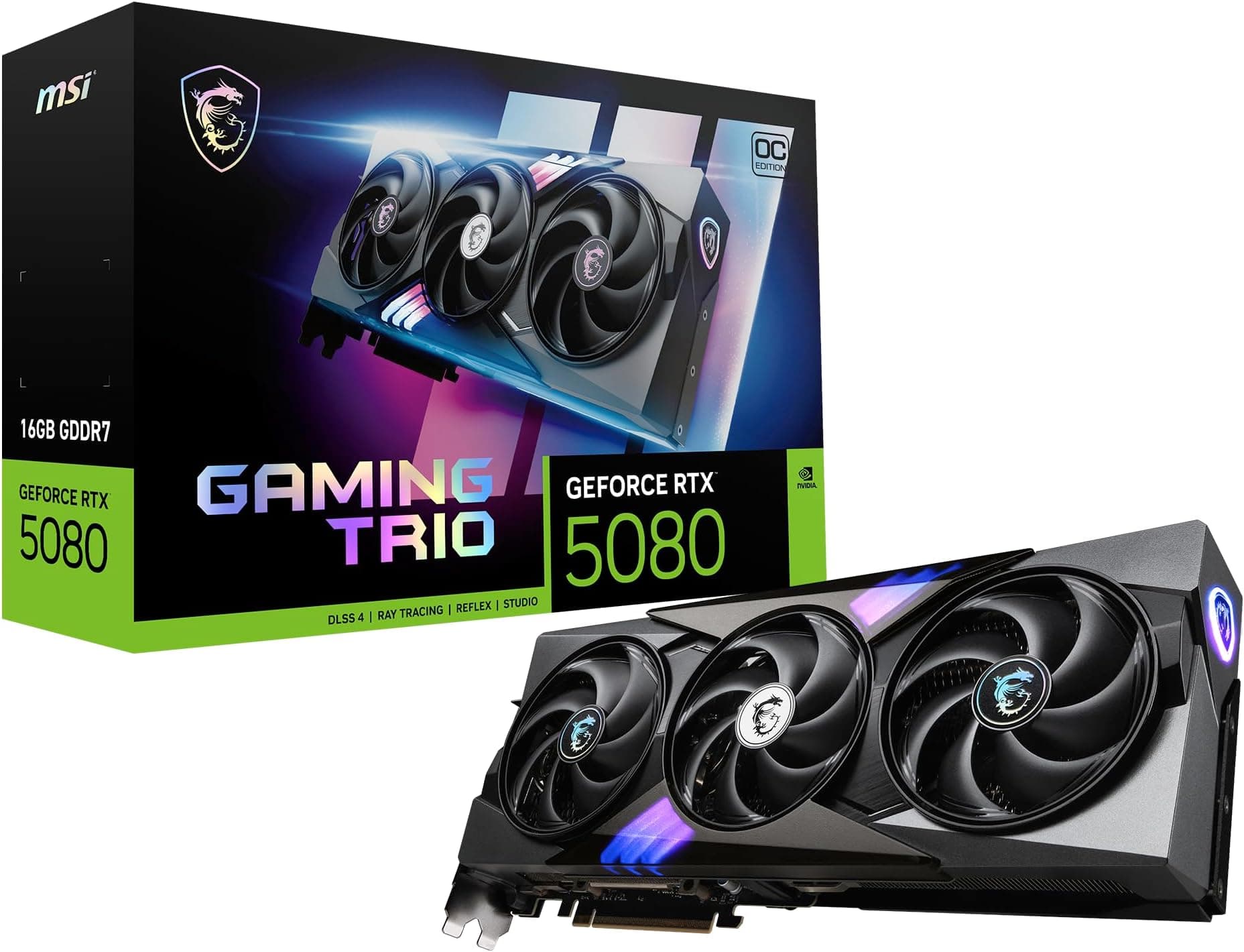
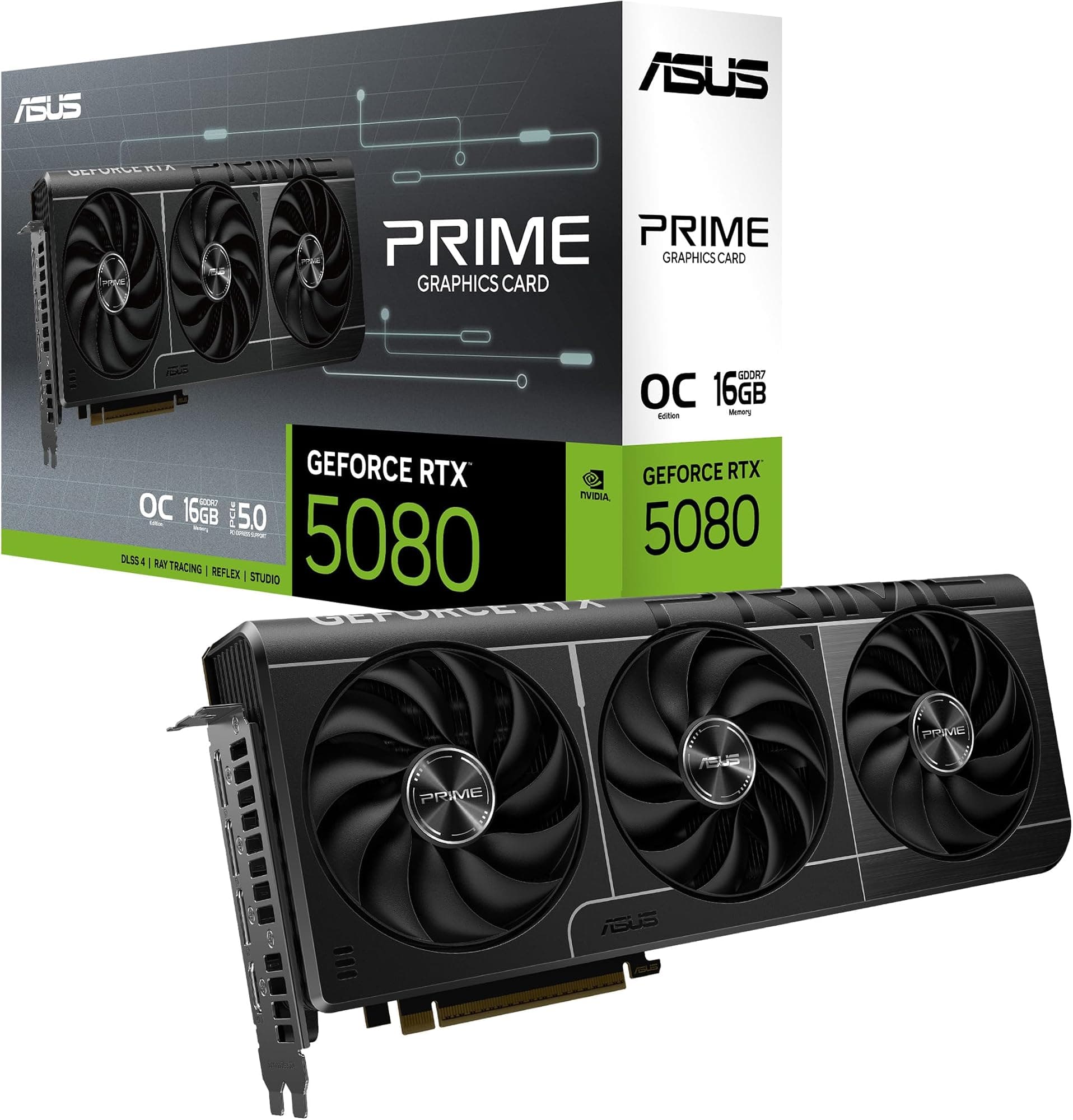
Looking at PNY specifically versus other AIB partners offering the RTX 5080: ASUS, Gigabyte, and MSI all have their own triple-fan 5080 variants at similar or higher price points. PNY's ARGB OC Triple Fan is competitive on price within the AIB ecosystem and the owner reviews suggest build quality is solid. The ARGB implementation is tasteful rather than garish, which can't always be said for cards in this category. PNY doesn't have the brand recognition of ASUS ROG or MSI Gaming X, but the underlying GPU is identical and the cooler does its job. You're not paying a brand premium, which is a reasonable thing to value.
Final Verdict
The PNY RTX 5080 16GB ARGB OC Triple Fan is a proper high-end GPU that delivers on its core promise: fast 4K gaming, excellent DLSS 4 support, capable ray tracing, and a cooler that keeps it quiet under load. The 195 owner reviews averaging 4.4 stars aren't a surprise. This is a well-executed card on strong underlying hardware. PNY's triple-fan cooler is large, effective, and quieter than you might expect for a 360W card. The GDDR7 memory is a genuine improvement over the previous generation. DLSS 4 Multi Frame Generation is the kind of feature that actually changes how you experience demanding titles rather than just bumping a number on a spec sheet.
The honest caveats are these. Three hundred and sixty watts is a lot of power. You need a quality PSU, good case airflow, and you'll feel it on your electricity bill over time. The factory overclock is modest and won't meaningfully differentiate this from reference-clocked 5080s in real gaming. And at this price tier, you're paying a significant premium over the 5070 Ti for gains that only fully materialise at 4K with demanding settings. If your monitor is 1440p and tops out at 144Hz, the 5070 Ti is genuinely the smarter buy. The 5080's performance advantage at 1440p exists but it's not proportional to the price difference.
Who is this for? People gaming at 4K who want the best experience without going to 5090 money. Creators who want strong NVENC encoding alongside top-tier gaming performance. Anyone building a future-facing high-refresh 4K rig who doesn't want to upgrade again for five years. The 16GB GDDR7 is enough VRAM for 4K gaming through the foreseeable future, the architecture is current, and DLSS 4 support means you have Nvidia's best upscaling tools available. At £1,359.98, it sits firmly in the flagship bracket and it earns that position.
Who should skip it? Anyone on a 1440p or 1080p monitor. Anyone not prepared to run an 850W-plus PSU. Anyone who'd be better served by a 5070 Ti and a slightly smaller credit card bill. The RTX 5070 Ti 16GB is the card to consider if you're on the fence: same VRAM, same DLSS 4 support, lower power draw, and enough performance for 4K gaming with DLSS Quality enabled. You lose some native 4K headroom and some path tracing muscle. Whether that matters depends on how you actually game. If it doesn't, save the money. If 4K at maximum fidelity is the goal and the 5090 is out of budget, the PNY RTX 5080 is a genuinely good answer. Score: 8.5 out of 10.
What works. What doesn’t.
6 + 6What we liked6 reasons
- Excellent 4K gaming performance with headroom for high-refresh-rate play
- 16GB GDDR7 at 960 GB/s is a meaningful step up in memory bandwidth over the previous generation
- Triple-fan cooler runs notably quietly for a 360W card
- Full DLSS 4 support including Multi Frame Generation transforms path-traced workloads
- Dual NVENC encoders with AV1 support make it a capable card for streamers and creators
- Owner satisfaction is strong, with 195 reviews averaging 4.4 out of 5
Where it falls6 reasons
- 360W TGP demands a quality 850W-plus PSU and good case airflow
- Factory overclock over reference is minimal and contributes no meaningful gaming advantage
- Represents poor value for 1440p or 1080p gaming where a cheaper card does the same job
- Significant price premium over the RTX 5070 Ti for gains that only fully show at 4K
- 32GB VRAM of the 5090 may prove more future-proof for very high-resolution texture budgets
- Three-slot footprint blocks the adjacent motherboard slot
Full specifications
11 attributes| Vram GB | 16 |
|---|---|
| Boost clock MHZ | 2730 |
| Chipset | RTX 5080 |
| Core clock MHZ | 2295 |
| Generation | RTX 50 Series |
| Length MM | 329 |
| Memory BUS BIT | 256 |
| Memory type | GDDR7 |
| Power connectors | 16-pin 12VHPWR |
| Slot width | 3 |
| TDP W | 360 |
Will it run on what you have?
Free toolIf this isn’t right for you
2 options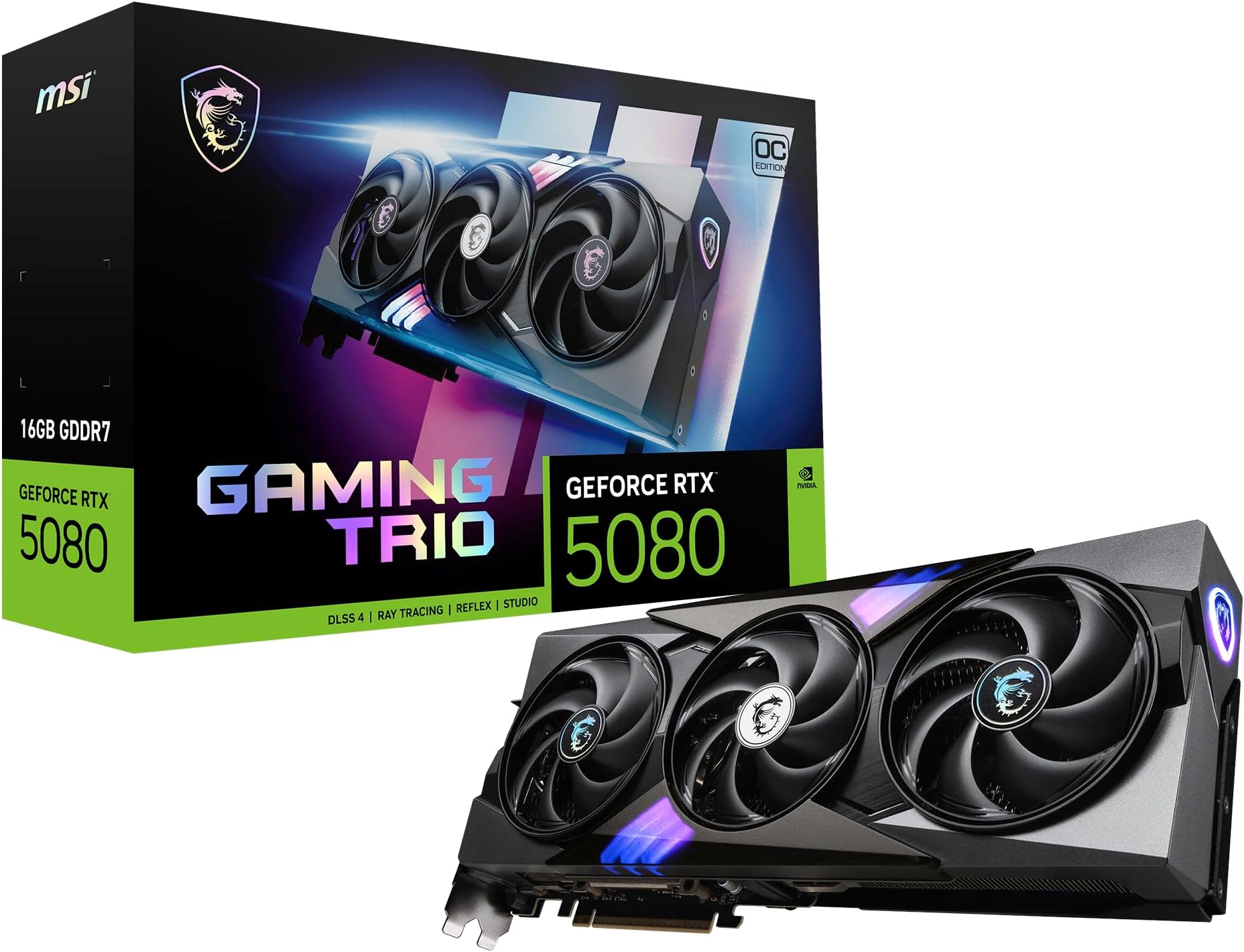 9.0 / 10
MSI GeForce RTX 5080 16G GAMING TRIO OC Graphics Card - RTX 5080 GPU, 16GB GDDR7 (30Gbps/256-bit), PCIe 5.0 - TRI FROZR 4 (3 x STORMFORCE Fan), Gaming & Silent mode, RGB - HDMI 2.1b, DisplayPort 2.1b
£1,399.99 · MSI
 9.0 / 10
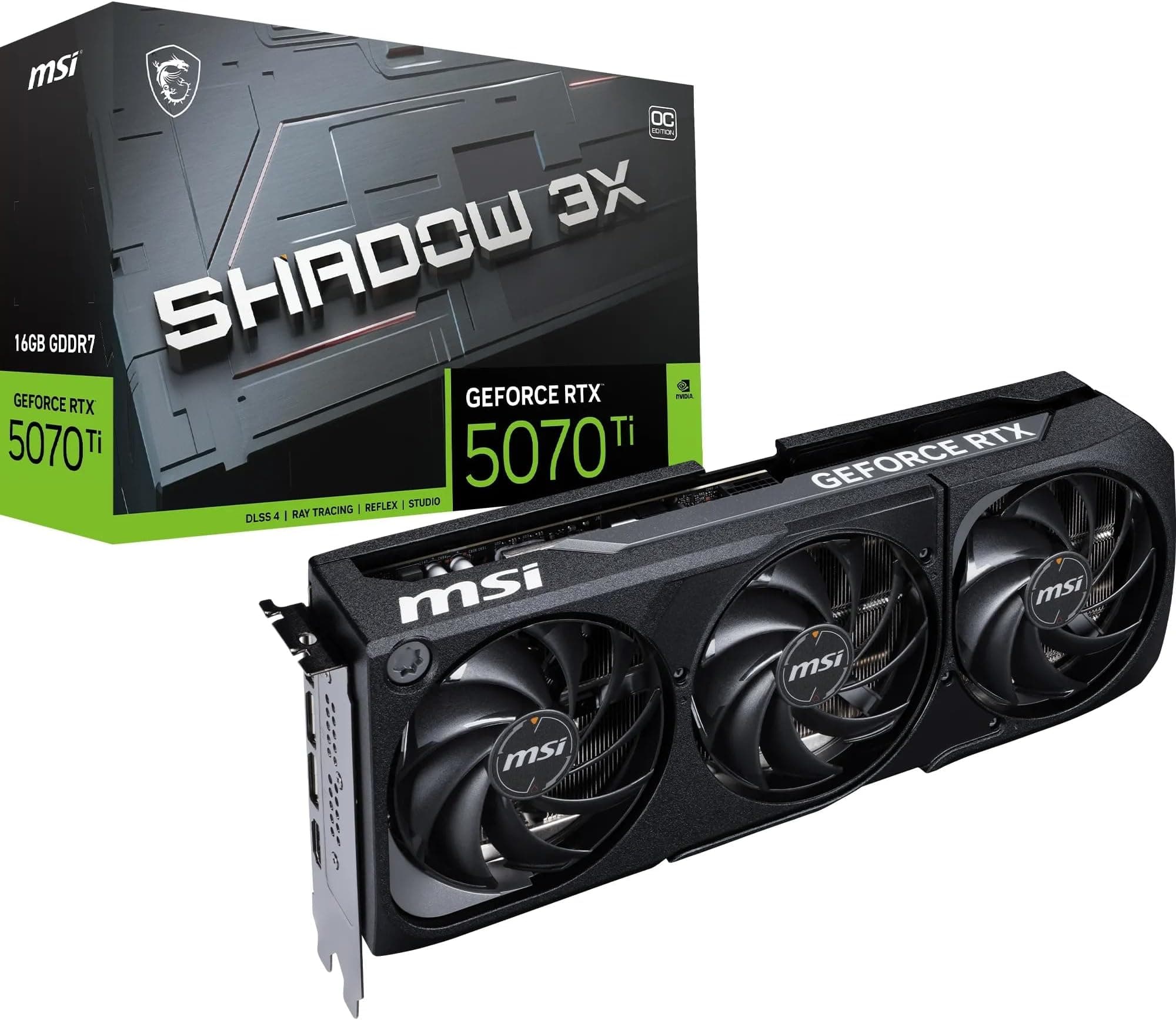
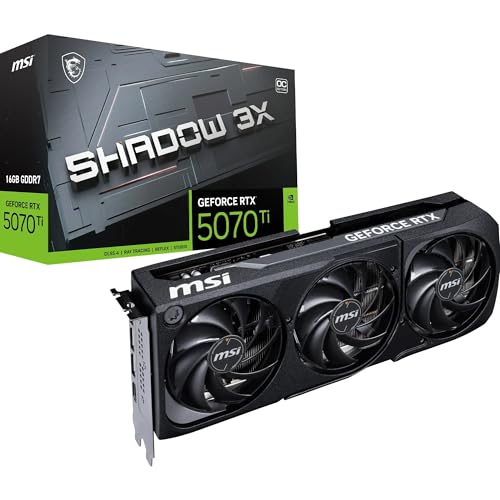
MSI GeForce RTX 5070 Ti 16G Shadow 3X OC Graphics Card, 16GB GDDR7 (28Gbps/256-bit), PCIe 5.0 - Triple Fan Thermal Design (3x Torx Fan 5.0) - HDMI 2.1b, DP 2.1b, 16384 MB
£999.99 · MSI
Frequently asked
7 questions01What PSU do I need for the PNY RTX 5080 16GB ARGB OC Triple Fan?+
Nvidia and most AIB partners recommend a minimum 850W power supply for the RTX 5080, which has a 360W TGP. If you are pairing it with a high-end CPU such as an Intel Core i9 or AMD Ryzen 9, a 1000W PSU is the more comfortable choice. Ensure your PSU has a native 16-pin 12V-2x6 cable or a quality adapter, and route the cable so it is not bent sharply at the connector.
02Is 16GB of VRAM enough for 4K gaming in 2026?+
Yes, for the vast majority of 4K gaming at high settings in current titles. Demanding games like Cyberpunk 2077 with path tracing and Alan Wake 2 at maximum settings can push beyond 12GB at 4K ultra, so 16GB gives you genuine headroom. The 5090's 32GB would be more conservative as a long-term buffer, but 16GB is not a limitation you are likely to hit this year or next at 4K with sensible settings.
03How does the PNY RTX 5080 compare to the RTX 5070 Ti?+
Both cards use 16GB GDDR7 and support DLSS 4 including Multi Frame Generation. The 5080 has more CUDA cores (10,752 versus 8,960), higher memory bandwidth (960 GB/s versus 896 GB/s), and a higher TGP (360W versus 300W). At 1440p the performance gap is real but not proportional to the price difference, making the 5070 Ti the smarter buy at that resolution. At 4K with demanding settings or path tracing, the 5080's extra headroom justifies the premium.
04Does DLSS 4 Multi Frame Generation introduce noticeable input lag?+
Frame generation does add some input latency compared to fully rendered frames. Nvidia Reflex is designed to mitigate this, and in most gaming scenarios the perceived latency with Reflex active is acceptable. For competitive titles where response time is critical, running DLSS 4 Super Resolution without Multi Frame Generation is the recommended approach. For single-player or visually demanding titles where frame rate matters more than minimum latency, Multi Frame Generation delivers substantial frame rate gains.
05Can the PNY RTX 5080 handle 4K 240Hz gaming?+
The card's three DisplayPort 2.1 outputs support the bandwidth required for 4K at 240Hz. Whether it can sustain 240 fps at 4K depends entirely on the game and settings. In rasterisation-heavy titles like Forza Horizon 5 or Call of Duty at optimised settings, very high frame rates at 4K are achievable. In the most demanding titles at maximum settings, native 4K at 240 fps is not realistic, but DLSS 4 with Multi Frame Generation can produce high frame counts from a lower rendered resolution.
06Is the ARGB lighting on the PNY RTX 5080 controllable?+
Yes. The ARGB lighting can be controlled and disabled through software. If you have a windowed case and appreciate the visual effect it is there, and if you do not it can be turned off entirely. The lighting does not affect performance and is a cosmetic feature only.
07How does the PNY RTX 5080 perform for video encoding and streaming?+
The card includes dual 9th-generation NVENC encoders with AV1 support. This makes it well suited to 4K60 or 1440p144 streaming via OBS using NVENC AV1, delivering broadcast-quality output with minimal CPU overhead. The dual encoders also accelerate video export in DaVinci Resolve and Adobe Premiere Pro. For a creator who also games, the 5080 handles both tasks capably without requiring a separate workstation GPU.