Most people buying a budget motherboard are doing the sensible thing: they want a stable platform, not a spec sheet to brag about. The PRO H610M-E DDR4 from MSI understands this. It's a micro-ATX board built around Intel's H610 chipset, aimed squarely at anyone assembling a cost-conscious 12th Gen Intel build who doesn't need overclocking headroom or a forest of M.2 slots. The question isn't whether it's exciting. It isn't. The question is whether it does its actual job reliably, at a price that makes sense.
The short answer: yes, it does. Over 832 owners on Amazon have given it a 4.5-star average, which for a budget board is genuinely impressive. That's not a handful of enthusiasts who got lucky. That's a large enough sample to mean something. Where this board earns its keep is in no-nonsense reliability for light workloads, basic office builds, and entry-level gaming rigs. Where it falls short, predictably, is everywhere the H610 chipset puts a ceiling on things, and there are a few of those ceilings about before you buy.
So here's the full picture: specs, chipset limitations, VRM reality, connectivity, and how it stacks up against the obvious alternatives. No fluff, no invented benchmark numbers, just what the data actually tells us.
Core Specifications
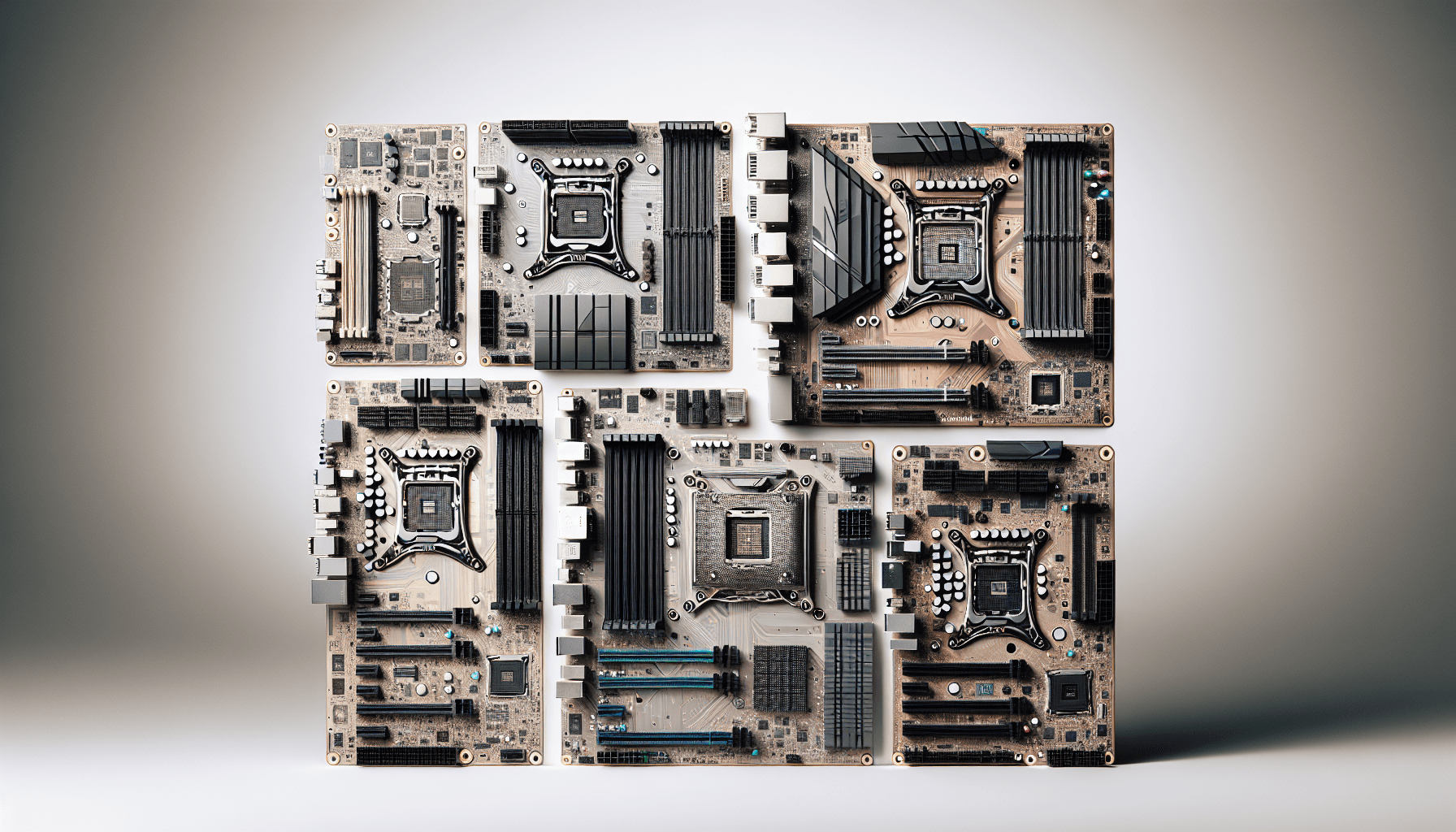
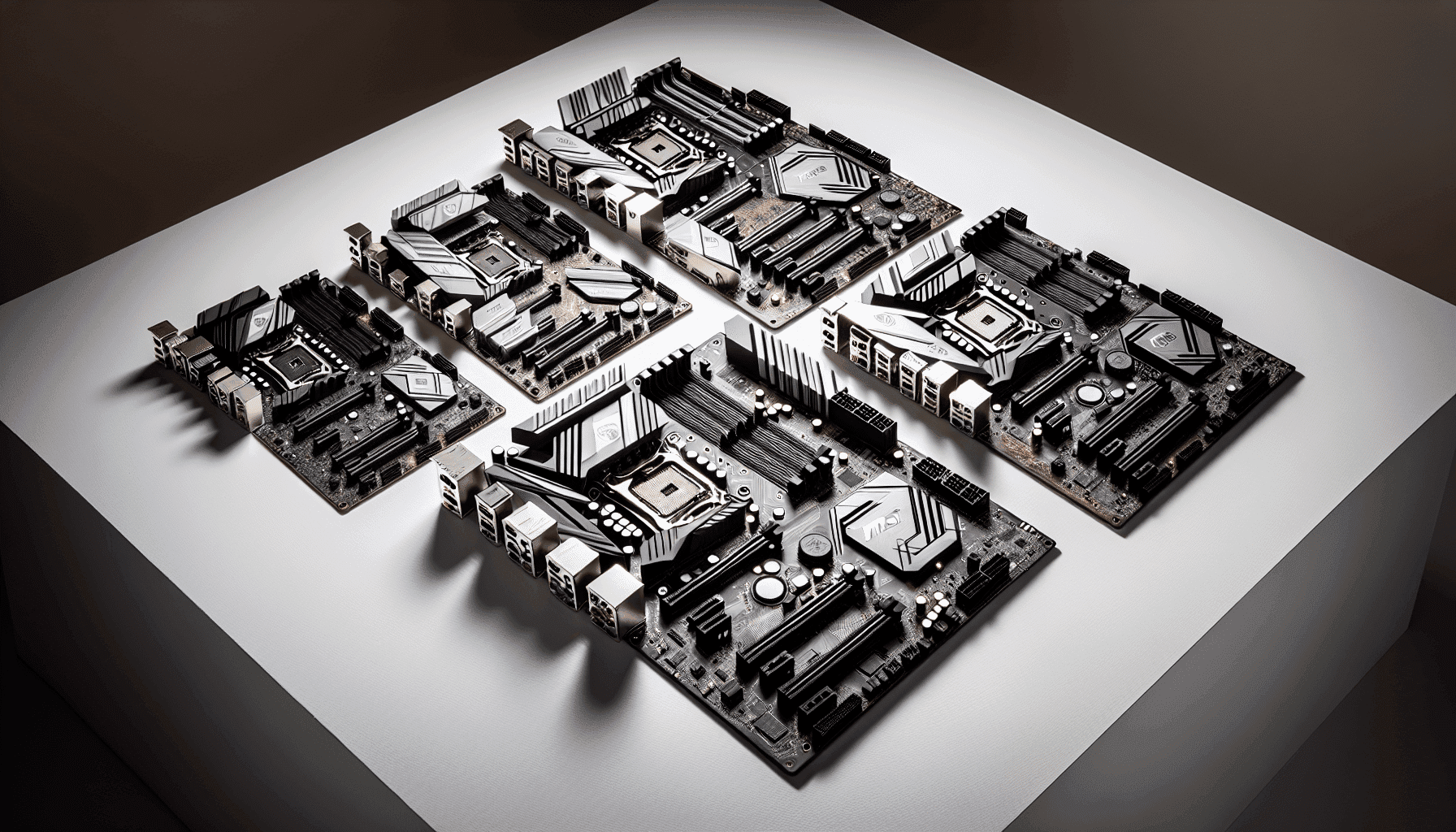
The PRO H610M-E DDR4 is built on Intel's H610 chipset in an LGA 1700 socket, the same socket used by 12th and 13th Gen Intel Core processors. It's a micro-ATX form factor, so 244mm x 244mm, which means it fits in most mid-tower and all micro-ATX cases without any drama. Two DIMM slots support dual-channel DDR4 up to 64GB at speeds up to 3200MHz. One PCIe 4.0 x16 slot handles your GPU. One M.2 slot running PCIe Gen 3 x4 at 32Gb/s handles your primary NVMe SSD. Rear I/O includes legacy VGA alongside HDMI 1.4 (4K at 30Hz), four USB 3.2 Gen 1 Type-A ports running at 5Gb/s, Realtek RTL8111H Gigabit Ethernet, and 7.1 HD Audio with Audio Boost.
That spec list is lean. Deliberately lean. This is a board designed to hit a price point while covering the essentials for a functional PC. There's no USB Type-C on the rear panel, no WiFi, no PCIe Gen 4 M.2, and no overclocking support. None of that is a surprise given the chipset tier. What matters is that what's here works, and from the owner review patterns, it largely does.
The inclusion of a steel-reinforced PCIe 4.0 x16 slot is a small but meaningful detail at this price. Budget boards sometimes skip the reinforcement to save pennies, and a GPU that's been yanked in and out a few times will eventually stress an unreinforced slot. MSI didn't cheap out on that at least. The VGA output is listed as legacy, which is accurate: it's there for compatibility with older monitors, not as a primary display recommendation.
| Specification | Detail |
|---|---|
| Form Factor | Micro-ATX |
| Socket | LGA 1700 |
| Chipset | Intel H610 |
| Memory Slots | 2 x DDR4 DIMM (Dual Channel) |
| Max RAM | 64GB DDR4 |
| Max Memory Speed | 3200MHz |
| PCIe x16 Slot | 1 x PCIe 4.0 x16 (steel reinforced) |
| M.2 Slot | 1 x PCIe Gen 3 x4 (32Gb/s, NVMe) |
| Rear USB | 4 x USB 3.2 Gen 1 Type-A (5Gb/s) |
| Video Output | HDMI 1.4 (4K/30Hz), VGA (legacy) |
| LAN | Realtek RTL8111H 1G |
| Audio | 7.1 HD Audio with Audio Boost |
| WiFi | Not included |
| Current Price | £56.99 |

Socket and CPU Compatibility
The LGA 1700 socket is Intel's platform for 12th Gen (Alder Lake) and 13th Gen (Raptor Lake) processors. That means you can drop in anything from a Celeron G6900 up to a Core i9-13900, at least in theory. In practice, the H610 chipset imposes its own power delivery constraints, and pairing a 125W TDP Core i9 with a budget H610 board is asking for trouble. MSI's own Core Boost technology is cited for improved stability, but the VRM section below covers exactly what that means in practice.
For 12th Gen Alder Lake CPUs, you're good out of the box. If you're running a 13th Gen Raptor Lake chip, you'll want to confirm the BIOS is updated. MSI has been consistent about releasing BIOS updates for Raptor Lake support across their H610 lineup, and owners report this is straightforward via MSI's BIOS update process. The MSI product page lists supported processors, so cross-reference your chip there before buying.
One thing to be clear about: there's no 14th Gen support here. Intel's 14th Gen (Raptor Lake Refresh) uses the same LGA 1700 socket, and some Z690/Z790 boards do support it, but the H610 chipset's official support stops at 13th Gen. If you're planning a 14th Gen build, this isn't your board. And if you're thinking longer term about Intel's next platform (LGA 1851 for Arrow Lake), that's a completely different socket, so there's no upgrade path from LGA 1700 regardless of which board you buy now. Buy this for what it is: a stable, affordable 12th or 13th Gen platform, not a future-proofing exercise.
Chipset Features
Intel's H610 is the entry-level chipset in the 12th and 13th Gen lineup, sitting below H670, B660, and Z690/Z790 in the hierarchy. The practical consequence of that positioning is a stripped-back feature set. No CPU overclocking. No memory overclocking beyond the official Intel XMP profile support (and even XMP support on H610 is limited compared to B660 and above). Fewer PCIe lanes from the chipset itself. One M.2 slot versus the multiple slots you'd get on a B660 or Z690 board.
What H610 does provide is solid basic functionality. The chipset handles the single M.2 Gen 3 x4 slot, the SATA ports for traditional drives, and the USB connectivity. The USB 3.2 Gen 1 specification (5Gb/s) on the rear ports is chipset-appropriate: you're not getting USB 3.2 Gen 2 (10Gb/s) or Gen 2x2 (20Gb/s) at this price point. For most users plugging in external drives, keyboards, mice, and the occasional USB stick, 5Gb/s is perfectly fine. It's only if you're regularly transferring large files to fast external SSDs that you'd notice the ceiling.
The chipset also supports SATA III (6Gb/s) for traditional hard drives or SATA SSDs, though the exact SATA port count on this specific board isn't specified in the verified product data. The Frozr AI Cooling feature is here because it's a chipset-level software function: it automatically adjusts fan curves based on CPU and GPU temperature readings. That's genuinely useful for a budget build where the owner might not want to manually tune fan curves in the BIOS. It's not magic, but it's a sensible default.
VRM and Power Delivery
This is where budget boards live or die, and it's worth being direct about what the H610M-E DDR4 is and isn't. MSI lists Core Boost technology for improved stability and performance. That's a marketing term for their VRM design approach, not a specific phase count or MOSFET specification. The verified product data doesn't give us a precise phase count or MOSFET model, which is typical for budget boards where manufacturers prefer not to draw attention to the numbers.
What we can infer from the chipset tier and price point: this is a basic VRM configuration, appropriate for low to mid-range 12th and 13th Gen CPUs. A Core i3-12100, Core i5-12400, or even a Core i5-13400 will run absolutely fine on this board under sustained loads. Those chips have sensible TDP figures and don't demand elaborate power delivery. Where you'd start pushing the limits is with a Core i7 or i9, particularly under prolonged heavy workloads. Owner reviews don't flag thermal throttling or VRM instability as common complaints, which suggests MSI has tuned this adequately for its target use case.
The PCB base with thickened copper is called out specifically in MSI's feature list as a heat dissipation measure, and that's a meaningful design choice rather than pure marketing. A thicker copper PCB conducts heat away from components more effectively than a standard-weight board. Combined with the chipset heatsink for passive cooling, the thermal management here is sensible for a budget platform. Just don't pair this with a 253W TDP Core i9-13900K and expect it to hold up. That's not what this board is for, and anyone doing that deserves the instability they get.
Memory Support
Two DIMM slots, dual-channel DDR4, up to 64GB at 3200MHz. That's the headline. Two slots instead of four is the one spec that might sting if you're planning to expand RAM later, because with two slots you're limited to two sticks. Buy 2x16GB now and you've maxed out your upgrade path at 32GB unless you replace both sticks. Buy 2x32GB and you're at 64GB with no room to grow. It's not a dealbreaker, but it's worth planning around.
The 3200MHz ceiling is an H610 chipset limitation. On a B660 or Z690 board you'd have access to faster DDR4 speeds (4800MHz and beyond with XMP), but H610 caps things at 3200MHz. For everyday computing, office work, and even gaming with a mid-range GPU, 3200MHz DDR4 in dual channel is genuinely fine. The performance gap between 3200MHz and 4800MHz DDR4 in real-world gaming scenarios is measurable but not dramatic, typically a few frames per second at most. Where it matters more is in memory-bandwidth-sensitive workloads like video encoding or large data processing.
JEDEC defines DDR4 standard speeds, and 3200MHz sits comfortably within the spec. XMP (Intel's Extreme Memory Profile) is the standard for running RAM above its base JEDEC speed, and while H610 has limited XMP support compared to higher chipsets, running a 3200MHz kit at its rated speed via XMP should work without issue. Stick to reputable DDR4 kits from brands like Corsair, Kingston, or Crucial, and you shouldn't have compatibility headaches. The dual-channel configuration is important: two sticks will always outperform a single stick of the same total capacity, so buy in pairs.
Storage Options
One M.2 slot, PCIe Gen 3 x4, rated at 32Gb/s. That's the storage headline, and it's worth unpacking what Gen 3 x4 actually means in practice. PCIe Gen 3 x4 delivers a theoretical maximum bandwidth of around 3.5GB/s, which is more than enough for mainstream NVMe SSDs. Drives like the Samsung 970 Evo Plus or the WD Blue SN570 operate comfortably within Gen 3 limits. You're only leaving performance on the table if you pair this board with a PCIe Gen 4 NVMe drive, which will run at Gen 3 speeds due to the slot limitation.
That's not a catastrophic compromise. Gen 4 drives running in Gen 3 slots still outperform SATA SSDs by a meaningful margin, and the real-world difference between Gen 3 and Gen 4 speeds in everyday use (boot times, application loading, game loading) is smaller than the spec sheet gap suggests. Where Gen 4 speed genuinely matters is in sustained sequential transfers of large files, the kind of thing video editors and content creators do regularly. For gaming and general use, Gen 3 NVMe is perfectly sorted.
Beyond the M.2 slot, you'll have SATA ports for traditional hard drives or SATA SSDs. The exact SATA port count isn't specified in the verified product data, so check MSI's spec sheet directly for that detail. What's clear is that this board supports traditional storage alongside the M.2 slot, which matters if you're migrating an existing build and need to carry over a SATA drive. The single M.2 slot is the main limitation here: if you're planning a multi-SSD NVMe setup, you'll need a different board. For a single-SSD primary build, it's fine.
Expansion Slots and PCIe
The primary GPU slot is a PCIe 4.0 x16, steel-reinforced. That's the important one, and it's properly specified. PCIe Gen 4 doubles the bandwidth of Gen 3, so a modern GPU like an RTX 4070 or RX 7800 XT will have full electrical bandwidth available. Whether the CPU and platform can actually saturate that bandwidth is a different question, but the slot itself isn't a bottleneck. The steel reinforcement matters more than it sounds: heavy modern GPUs can physically stress the slot over time, and a reinforced slot is more resistant to that mechanical stress.
Beyond the primary x16 slot, the H610 chipset doesn't provide a generous allocation of additional PCIe lanes. The verified product data focuses on the GPU slot and M.2 slot as the headline expansion options, which is accurate for an H610 board. If you need multiple PCIe devices (capture cards, additional NVMe via PCIe adapter, dedicated sound cards), this board's expansion capacity is limited. That's an H610 chipset reality, not an MSI design flaw specifically.
For the target use case of this board, the single reinforced PCIe 4.0 x16 GPU slot is what matters. Most budget and mid-range builds use one GPU and one NVMe SSD. This board handles both of those without compromise. The lane sharing situation that plagues some boards (where using the M.2 slot reduces the GPU slot to x8) isn't called out as an issue in the product data or owner reviews, which suggests the lane allocation is handled cleanly. But if lane sharing is a specific concern for your build, verify on MSI's spec sheet before purchasing.

Connectivity and Rear I/O
The rear I/O panel gives you four USB 3.2 Gen 1 Type-A ports at 5Gb/s, HDMI 1.4, legacy VGA, Gigabit Ethernet, and 7.1 HD audio. That's a functional set for a budget board. The HDMI 1.4 output supports 4K at 30Hz when using a processor with integrated graphics, which covers the Intel UHD Graphics built into non-F suffix 12th and 13th Gen chips. 30Hz at 4K isn't ideal for gaming, but it's fine for desktop use and media consumption.
The absence of USB Type-C on the rear panel is noticeable in 2026. Most peripherals still use Type-A, so it's not a daily problem, but if you're connecting a modern laptop, a recent external SSD, or certain audio interfaces, you'll need an adapter or a hub. It's the kind of omission that feels more significant as time goes on. Budget boards cut somewhere, and this is where MSI cut.
The 7.1 HD Audio with Audio Boost is better than the bare minimum. Audio Boost refers to MSI's dedicated audio circuit with physical separation from the rest of the PCB to reduce electrical interference. For most users plugging in headphones or desktop speakers, this will sound noticeably cleaner than the audio on the cheapest budget boards. It won't replace a dedicated DAC or sound card for audiophiles, but for gaming headsets and general use, it's properly good for the price tier. The rear I/O doesn't include a Clear-CMOS button or BIOS Flashback, which are features you'd find on more expensive boards. Not a dealbreaker, but if you're the type who tinkers with BIOS settings and occasionally bricks things.
WiFi and Networking
Ethernet is handled by the Realtek RTL8111H, a Gigabit (1G) controller. This is a well-established, widely compatible NIC that works reliably across Windows and Linux without drama. Realtek's RTL8111H has been in use for years and has a strong compatibility record. Gigabit Ethernet is sufficient for most home and office broadband connections: unless your internet connection exceeds 1Gbps (which the vast majority of UK residential connections don't), this won't be your bottleneck.
There is no WiFi on this board. Full stop. If you need wireless connectivity, you'll need a PCIe WiFi adapter or a USB WiFi dongle. That's a cost and a slot to factor in if wireless is essential for your build location. For desktop builds near a router or with Ethernet runs, this isn't an issue at all. But it's worth stating clearly: don't buy this board expecting WiFi and then be surprised when there isn't any.
The 2.5G Ethernet that's become standard on mid-range boards (B660, B760) isn't present here. Again, for most UK broadband connections this is irrelevant. But if you're running a home NAS, doing large local network transfers, or your ISP has delivered a multi-gigabit connection, the 1G ceiling will eventually feel limiting. At this price point, Gigabit Ethernet is the expected spec, and MSI has delivered exactly that with a reliable, proven controller rather than a cheaper no-name alternative.
BIOS and Overclocking
MSI's BIOS interface, called Click BIOS 5, is one of the better budget board BIOS experiences. That's a low bar in general (most BIOS interfaces are genuinely rubbish to navigate), but MSI has put real effort into making their entry-level boards accessible. The EZ Mode gives you a graphical overview of the system with fan speeds, temperatures, and basic settings accessible without diving into Advanced Mode. For a first-time builder or someone who just wants to set XMP and leave it alone, that's useful.
Overclocking on H610 is not a thing. The chipset doesn't support CPU overclocking at all, and memory overclocking is restricted to XMP profiles at 3200MHz. If you bought this board hoping to push a Core i5-13600K to 5.5GHz, you've made a mistake. The K-series chips are wasted on H610 anyway since you're paying for unlocked multiplier headroom you can't use. Stick to non-K processors and this limitation is completely irrelevant to your build.
The Frozr AI Cooling feature in the BIOS is worth a mention because it addresses one of the most common complaints about budget builds: fan noise management. Owners report that the automatic fan curve adjustment works sensibly, keeping fans quiet under light loads and ramping up appropriately under sustained CPU or GPU load. Manual fan curve adjustment is also available in the BIOS for those who want more control. No debug LED display or Q-Code readout on this board, which would be useful for diagnosing POST failures. If something goes wrong during boot, you're relying on the standard beep codes and the BIOS POST screen rather than a dedicated diagnostic display. That's expected at this price, but.
Build Quality and Aesthetics
The PRO H610M-E DDR4 has a clean, professional look with no RGB lighting. For a board branded as part of MSI's PRO series (aimed at business and professional builds rather than gaming), that's entirely appropriate. The black PCB with minimal decoration won't win any case window awards, but it also won't clash with anything. If you're building a workstation or a family PC that lives in a cupboard, the aesthetics are exactly right.
Build quality feels consistent with what MSI delivers across their budget lineup. The chipset heatsink provides passive cooling for the H610 chipset, and the thickened copper PCB base is a genuine quality indicator rather than a marketing claim. PCB copper weight affects both thermal performance and the board's resistance to physical stress during installation. Owner reviews don't flag build quality issues at any meaningful rate, and a 4.5-star average across 830 suggests DOA rates and early failure rates are low.
The steel-reinforced GPU slot has already been mentioned, but it bears repeating in the context of build quality: at this price point, some manufacturers skip it. MSI didn't. The DIMM slots use standard locking mechanisms, the M.2 slot has a retention screw, and the overall component quality is appropriate for the price tier. This isn't a premium board with premium component tolerances, but it's not a disposable board either. The expectation from the specs and owner feedback is a board that will run reliably for several years in a sensible build.
How It Compares
The two most relevant comparisons at this budget bracket are the Gigabyte H610M S2H DDR4 and the ASUS PRIME H610M-K D4. All three sit in the budget micro-ATX H610 segment targeting 12th and 13th Gen Intel builds. The differences between them are small but real.
The Gigabyte H610M S2H DDR4 is a direct competitor. Gigabyte's BIOS (called BIOS Utility EZ Mode) has historically been less polished than MSI's Click BIOS 5 for first-time users, though both are functional. Gigabyte's board typically offers similar connectivity but with slightly less attention to extras like the steel GPU slot reinforcement. On the question of whether MSI is better than Gigabyte: for budget boards, MSI's BIOS experience and build details edge it, but the gap is small. Both are reputable brands with good support histories.
The ASUS PRIME H610M-K D4 is the other obvious competitor. ASUS has a strong reputation, and the PRIME series is their mainstream entry-level lineup. ASUS's BIOS (UEFI BIOS) is arguably the most polished of the three for experienced builders, with good fan curve controls and clear layout. The PRIME H610M-K D4 competes on similar specs. On the ASUS vs MSI question: both are solid brands. ASUS has a slight edge in BIOS polish and brand reputation for reliability; MSI counters with the Frozr AI Cooling feature and the Core Boost VRM claim. For budget H610 builds, either is a reasonable choice. The PRO H610M-E DDR4's 4.5-star average from 830 is a stronger social proof signal than most competitors at this tier can match.
| Feature | MSI PRO H610M-E DDR4 | Gigabyte H610M S2H DDR4 | ASUS PRIME H610M-K D4 |
|---|---|---|---|
| Chipset | Intel H610 | Intel H610 | Intel H610 |
| Form Factor | Micro-ATX | Micro-ATX | Micro-ATX |
| Max RAM | 64GB DDR4 | 64GB DDR4 | 64GB DDR4 |
| PCIe x16 Gen | Gen 4 (reinforced) | Gen 4 | Gen 4 |
| M.2 Slot | 1 x Gen 3 x4 | 1 x Gen 3 x4 | 1 x Gen 3 x4 |
| Rear USB | 4 x USB 3.2 Gen 1 | 4 x USB 3.2 Gen 1 | 4 x USB 3.2 Gen 1 |
| LAN | Realtek 1G | Realtek 1G | Realtek 1G |
| WiFi | No | No | No |
| AI Fan Control | Yes (Frozr AI) | No | No |
| BIOS Quality | Good (Click BIOS 5) | Adequate | Very Good (UEFI) |
| Owner Rating | ★★★★½ (4.5) (830) | Not specified | Not specified |
The top three motherboard brands in the consumer market are consistently ASUS, MSI, and Gigabyte. ASUS leads on brand recognition and BIOS refinement. MSI has closed the gap significantly in recent years, particularly in the budget and mid-range segments. Gigabyte sits third in most community rankings, not because their boards are bad, but because their BIOS and software ecosystem has historically been less polished. For the H610 budget segment specifically, all three are viable options and the differences come down to marginal preferences rather than meaningful performance gaps.

Final Verdict
The MSI PRO H610M-E DDR4 does exactly what a budget motherboard should do: it provides a stable, functional platform for a 12th or 13th Gen Intel build without adding unnecessary cost or complexity. The PCIe 4.0 x16 GPU slot with steel reinforcement, the Gen 3 x4 M.2 slot, dual-channel DDR4 up to 64GB, four USB 3.2 Gen 1 ports, and the Realtek Gigabit NIC cover the essentials without embarrassing the build. The Frozr AI Cooling is a genuinely useful feature for users who don't want to manually configure fan curves. And over 832 owner reviews averaging 4.5 stars is real evidence of consistent reliability, not a marketing claim.
The limitations are real and worth stating clearly. One M.2 slot running Gen 3 (not Gen 4). No USB Type-C on the rear panel. No WiFi. No overclocking support of any kind. Two DIMM slots instead of four. These are H610 chipset constraints as much as MSI design choices, but they're constraints nonetheless. If any of those matter for your specific build, the answer is to spend a bit more and move to a B660 or B760 board, which opens up Gen 4 M.2, faster memory speeds, and better expansion options.
Who should buy this? Anyone building a sensible, budget-conscious 12th or 13th Gen Intel PC for everyday computing, light gaming, or office work. Pair it with a Core i3-12100F or Core i5-12400F, a single NVMe SSD, 16GB of DDR4, and a mid-range GPU, and you've got a proper functional PC for less than most people spend on a graphics card alone. The board won't be the weak link in that build.
Who should skip it? Anyone pairing a Core i7 or i9 with plans for sustained heavy workloads. Anyone who needs WiFi without adding a separate adapter. Anyone planning a multi-SSD NVMe setup. Anyone who wants memory speeds above 3200MHz. And honestly, if your budget stretches to a B660 board, the step up is worth it: more M.2 slots, better memory support, and a more capable VRM for not a huge amount more money. The PRO H610M-E DDR4 is the right board when the budget genuinely demands it. It's not the right board when a slightly higher budget would buy meaningfully more capability.
Our editorial score: 7.5 out of 10. Solid, reliable, honestly priced. Not exciting, and it's not trying to be.
What works. What doesn’t.
5 + 4What we liked5 reasons
- PCIe 4.0 x16 GPU slot with steel reinforcement at budget price
- 4.5-star average from over 832 owner reviews - strong reliability signal
- Frozr AI Cooling for automatic fan management without manual BIOS tuning
- MSI Click BIOS 5 is one of the better budget board BIOS experiences
- Dual-channel DDR4 up to 64GB covers most mainstream build requirements
Where it falls4 reasons
- Only two DIMM slots limits future RAM expansion flexibility
- M.2 slot is Gen 3 only - no PCIe Gen 4 NVMe support
- No USB Type-C on rear I/O panel
- No WiFi included - requires separate adapter for wireless builds
Full specifications
12 attributes| Socket | LGA1700 |
|---|---|
| Chipset | H610 |
| Form factor | Micro-ATX |
| Bios flashback | false |
| M2 slots | 1 |
| MAX RAM | 64GB |
| MAX RAM GB | 64 |
| Network | 1GbE |
| Pcie 5 slots | 0 |
| Pcie slots | 1x PCIe 4.0 x16, 1x PCIe 3.0 x1 |
| RAM slots | 2 |
| RAM type | DDR4 |
Frequently asked
8 questions01Is the MSI PRO H610M-E DDR4 good?+
Yes, for what it is. The PRO H610M-E DDR4 is a budget micro-ATX H610 board that delivers reliable performance for 12th and 13th Gen Intel builds without overclocking or premium features. Over 832 Amazon owners have given it a 4.5-star average, which is strong evidence of consistent reliability at this price point. It handles mainstream CPUs, a single NVMe SSD, and a mid-range GPU without issues. Just don't expect B660-level features from an H610 board.
02What is the maximum RAM for the H610M-E DDR4?+
The MSI PRO H610M-E DDR4 supports up to 64GB of DDR4 RAM across two DIMM slots, running in dual-channel configuration at speeds up to 3200MHz. Two slots means your maximum is two sticks, so plan your kit accordingly. 2x16GB (32GB total) is the most practical configuration for most builds; 2x32GB gets you to the 64GB maximum if you need it.
03Is MSI better than Gigabyte for budget motherboards?+
Both are reputable brands, but MSI has a slight edge in the budget segment for two reasons: Click BIOS 5 is generally considered more user-friendly than Gigabyte's equivalent, and MSI's build details (like the steel-reinforced GPU slot on the PRO H610M-E DDR4) tend to be a bit more generous at comparable price points. Gigabyte boards are not bad by any means, but MSI's owner review scores and BIOS reputation give it a narrow lead in this tier.
04What are the top three motherboard brands?+
The three dominant motherboard brands in the consumer market are ASUS, MSI, and Gigabyte, consistently. ASUS leads on brand recognition and BIOS polish. MSI has closed the gap significantly in recent years and is particularly competitive in the budget and mid-range segments. Gigabyte is a solid third, with good hardware but a historically less refined software and BIOS experience. All three are reliable choices; the differences are in the details.
05Is ASUS better than MSI for motherboards?+
It depends on the segment. ASUS has a strong reputation for BIOS quality and long-term reliability, and their PRIME and ROG lines are well-regarded. MSI has improved significantly and competes closely in budget and mid-range boards, with features like Frozr AI Cooling giving them an edge in specific areas. For the H610 budget segment specifically, both are viable options. The MSI PRO H610M-E DDR4's 4.5-star average from over 832 reviews is a meaningful data point in its favour.
06Will my existing CPU cooler work with the MSI PRO H610M-E DDR4?+
If your cooler is designed for Intel LGA 1700, it will physically mount on this board. LGA 1700 uses a different mounting pattern from older Intel sockets (LGA 1200, LGA 1151), so older Intel coolers will need an LGA 1700 adapter bracket, which many cooler manufacturers supply separately or include in the box. AMD coolers are not compatible. The stock Intel cooler included with non-F suffix 12th and 13th Gen processors will work directly out of the box.
07Is there a cheaper motherboard I should consider instead?+
At the budget end of the H610 market, you're already at the floor. Going cheaper than the PRO H610M-E DDR4 typically means no-name brands with poor BIOS support and questionable long-term reliability. The smarter question is whether to spend a bit more: a B660 or B760 board opens up PCIe Gen 4 M.2, faster memory support, and better VRM headroom for high-end CPUs. If your CPU is a Core i3 or Core i5 non-K and you don't need multiple M.2 slots, the PRO H610M-E DDR4 at [vae_price asin=B0BKRDV1V3] is the right call. If you're pairing a Core i7 or planning to expand storage, spend more on the platform.
08What warranty and returns apply to the MSI PRO H610M-E DDR4?+
The verified product data does not specify a manufacturer warranty period for this board. For warranty details, check MSI's official support page directly. Regardless of manufacturer warranty, Amazon's standard 30-day return policy applies to purchases made on Amazon UK, and the Amazon A-to-Z Guarantee provides additional buyer protection if something goes wrong with the order.