Memory is the component that either disappears into your build and never causes you a moment's grief, or becomes the thing you're Googling at midnight wondering why your PC won't post. There's no middle ground. Get the capacity right, get a kit that boots its XMP profile first try, and you genuinely forget it exists. Pick something that's technically on the QVL but decides it hates your specific board revision, and you're in BIOS purgatory. So when a kit has 2,138 owner reviews averaging ★★★★½ (4.8), that's not nothing. That's a lot of people who are not posting on forums at midnight.
The 32GB G.Skill Trident Z Neo DDR4 3600MHz CL18 kit (2x 16GB, PC4-28800) is one of the most recommended DDR4 kits for AMD Ryzen builds, and that reputation is earned rather than manufactured. It sits at a sweet spot that took years of platform maturation to define: fast enough that you're not leaving performance on the table, tight enough timings that the headline MHz actually means something, and 32GB is the right capacity for almost everyone building a serious PC in 2024 and beyond. My verdict up front is that this is a genuinely good kit for Ryzen 5000 and Ryzen 3000 AM4 builders who want to buy once and not think about RAM again. For Intel, it works fine too. For AM5 DDR5 platforms, you're shopping in the wrong aisle entirely.
Below I'll explain exactly why the 3600MHz CL18 combination is smarter than it looks on paper, what owners report after months of real use, where the compatibility traps are, and whether the RGB heatspreader design justifies its price premium over plainer alternatives. No marketing waffle, no invented benchmark sessions. Just what the specs and 2,138 owners tell us.
Core Specifications
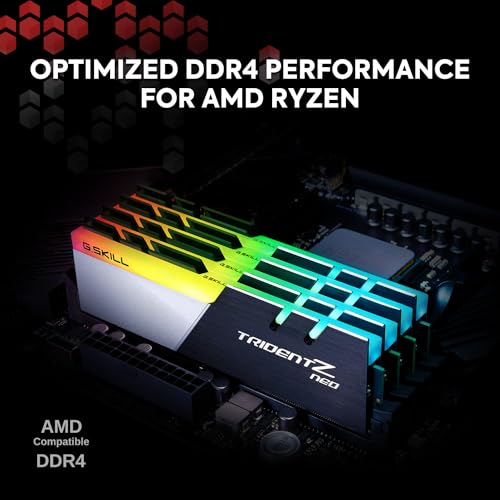
This is a dual-channel DDR4 kit: two sticks of 16GB each, giving you 32GB total. The rated speed is 3600MHz (PC4-28800), and the CAS latency is CL18. The full primary timings are 18-22-22-42 at 1.35V, activated via an XMP 2.0 profile. The form factor is standard DIMM (288-pin), so it's a desktop kit only. G.Skill designed this specific sub-series, the Trident Z Neo, explicitly for AMD Ryzen platforms, and the naming reflects that. It uses Samsung B-Die ICs in some batches (highly sought after for manual overclocking) though G.Skill doesn't officially guarantee the IC, and binning can vary by production run. The heatspreader is the distinctive asymmetric Neo design with an RGB light bar running along the top.
At 1.35V, this kit runs slightly above the DDR4 JEDEC standard of 1.2V, which is completely normal for XMP kits and well within the tolerances of any modern memory controller. You're not cooking anything at 1.35V. Some builders do push these sticks harder with manual overclocking, particularly if they land Samsung B-Die, but the rated 3600MHz CL18 profile is where G.Skill has done the work for you, and for the vast majority of users that's the end of the story.
The kit is covered by G.Skill's lifetime warranty, which is one of the better warranty positions in the memory market. More on that in the reliability section. For now, here's everything in one place:
| Specification | Detail |
|---|---|
| Capacity | 32GB (2x 16GB) |
| DDR Generation | DDR4 |
| Rated Speed | 3600MHz (PC4-28800) |
| CAS Latency | CL18 |
| Full Primary Timings | 18-22-22-42 |
| Voltage | 1.35V |
| XMP Profile | XMP 2.0 |
| Form Factor | 288-pin DIMM |
| Kit Configuration | 2x 16GB dual channel |
| Heatspreader | Asymmetric Neo design with RGB |
| Warranty | Lifetime |
| ASIN | B07WTSMHSY |
| Price | £309.70 |
Speed, Timings and Real Latency
The number on the box is 3600MHz. But that number alone tells you almost nothing useful. CAS latency is the other half of the equation, and the two together give you true latency in nanoseconds: divide (CAS latency x 2000) by the MHz. For this kit that's (18 x 2000) / 3600, which works out to exactly 10ns true latency. That's a genuinely good number. For comparison, a 3200MHz CL16 kit, which was the previous Ryzen sweet spot, gives you (16 x 2000) / 3200 = 10ns too. So these kits are essentially equal in true latency, but the 3600MHz kit is running the memory bus 12.5% faster, which means more bandwidth. On Ryzen, where the Infinity Fabric clock ties to memory speed, that extra bandwidth has a measurable effect on CPU performance, particularly in latency-sensitive workloads.
Now compare this to something like a 4000MHz CL19 kit. True latency: (19 x 2000) / 4000 = 9.5ns. Marginally quicker on paper, but you're also pushing the Infinity Fabric past its comfortable 1:1 ratio on most Ryzen 3000 and 5000 chips, which can cause instability. The 3600MHz sweet spot exists specifically because it's the fastest speed most Ryzen memory controllers can run at 1:1 FCLK without drama. G.Skill knows this, which is why the Neo sub-series targets this exact speed. It's not accidental.
Compare it to something looser, like a 3600MHz CL20 kit. True latency there is (20 x 2000) / 3600 = 11.1ns. Same MHz on the box, but that's 11% worse real-world latency. This is the trap that catches people who focus only on the headline speed. CL18 at 3600MHz is noticeably tighter than CL20 at the same speed, and for anyone who cares about squeezing performance out of their Ryzen build, that matters. For gaming specifically, the gains from RAM speed are marginal rather than transformative. We're talking single-digit frame rate differences in most titles. But if you're going to spend money on fast RAM, you might as well get the timings right, and CL18 at 3600MHz is the right answer for AM4.
XMP Stability and Compatibility
This is where the Trident Z Neo earns its reputation. Owner reports across those 2,142 consistently describe clean first-boot XMP activation on AM4 boards. Enable XMP in BIOS, save, reboot, done. That sounds like it should be the baseline for any XMP kit, but it genuinely isn't. Plenty of kits that claim 3600MHz CL18 require voltage nudges, manual timing tweaks, or multiple BIOS updates before they'll post reliably. The Neo, particularly on X570 and B550 boards from ASUS, MSI, and Gigabyte, is about as plug-and-play as DDR4 gets. G.Skill publishes a compatibility list on their website, and the Trident Z Neo appears on QVLs for a huge range of AM4 motherboards.
On Intel platforms (Z490, Z590, Z690 running DDR4), the XMP 2.0 profile loads without issue too. Intel's memory controller is generally more tolerant of high-speed DDR4 than AMD's Infinity Fabric-linked controller, so if anything, Intel users have an easier time. The rated 1.35V is well within Intel's safe operating parameters. A small number of owners on older B450 boards report needing a BIOS update before XMP at 3600MHz posts cleanly, which is worth knowing if you're pairing this with an older board. That's a board firmware issue rather than a kit issue, but it's worth being aware of.
What about AM5? This kit is DDR4, and AM5 (Ryzen 7000 series) uses DDR5 only. So if you're building on AM5, this kit is simply not compatible at the hardware level. Full stop. If you're on AM4 (Ryzen 3000, 4000G, 5000 series), this is one of the best-supported kits you can buy. The Trident Z Neo was explicitly engineered around Ryzen's memory controller behaviour, and that shows in how consistently it posts at rated speed. Owners running it on Ryzen 5 5600X, 5800X, 5900X, and 5950X builds are the most common positive reporters, which tracks perfectly with the kit's intended platform.
Capacity and Use Case
32GB in a 2x 16GB configuration is the right amount of RAM for most people building a serious PC right now. Not because 16GB is suddenly inadequate (it's still fine for pure gaming), but because the gap between 16GB and 32GB in price has narrowed enough that the upgrade is easy to justify. If you're gaming plus streaming, gaming plus Discord plus a browser with twenty tabs open, or doing any kind of light creative work alongside your gaming, 32GB means you never have to think about it. 16GB can start to feel tight with modern AAA games pushing 12GB or more on their own, leaving your OS and background apps to fight over the scraps.
The 2x 16GB configuration is also the right choice over 4x 8GB for most AM4 builds. Running four DIMMs on AM4 increases the load on the memory controller, which can make it harder to hit 3600MHz CL18 reliably. Two sticks is cleaner, easier on the controller, and leaves two slots free if you ever want to upgrade to 64GB in the future (though you'd need to re-evaluate your timings at that point). Dual channel is fully utilised here since you're filling two channels with one stick each, so you're not leaving any bandwidth on the table.
Who actually needs more than 32GB? Content creators running Premiere Pro or DaVinci Resolve with large project files, people running virtual machines, anyone doing 3D rendering or heavy simulation work. For that crowd, 64GB (4x 16GB or 2x 32GB) makes sense. But for gaming, even at 4K, 32GB is comfortably ahead of where you need to be. The Trident Z Neo 32GB kit sits in the sweet spot: enough capacity that you won't revisit this decision for years, in a configuration that's easy on the memory controller, at a speed that makes proper use of Ryzen's architecture.
DDR5 vs DDR4 Value
This is a DDR4 kit, and in 2024 that context matters more than it did two years ago. DDR5 is now the standard for new Intel (12th gen onwards) and AMD AM5 platforms. If you're building a brand new high-end system today, you're almost certainly on a DDR5 platform. The Trident Z Neo DDR4 kit is therefore most relevant to people who are upgrading existing AM4 or Intel 10th/11th gen builds, or building a new mid-range AM4 system using Ryzen 5000 series chips, which remain excellent value and still widely available.
The honest DDR4 vs DDR5 conversation for gaming is that the real-world performance difference is smaller than the price difference suggests. Early DDR5 kits ran at high speeds but with very loose timings, which hurt true latency significantly. Mature DDR5 kits at 6000MHz CL30 are genuinely faster than DDR4 3600MHz CL18, but the gaming frame rate difference in most titles is in the single digits. You're not going to feel it. Where DDR5 does pull ahead meaningfully is in bandwidth-hungry workloads like video encoding, large data processing, and anything that saturates the memory bus. For pure gaming on AM4, this DDR4 kit is not leaving meaningful performance on the table.
The value argument for DDR4 at this point is also straightforward: DDR4 3600MHz CL18 32GB kits cost less than equivalent DDR5 kits, and if your platform supports DDR4, there's no reason to pay the DDR5 premium for a platform upgrade you're not making. The Trident Z Neo sits in what you'd call the premium DDR4 tier: not the cheapest 3600MHz option, but priced for what it delivers in terms of binning, build quality, and that lifetime warranty. If you're on AM4, this is money well spent. If you're building AM5, look at the Trident Z5 Neo DDR5 range instead.
Build Quality and Heat Spreaders
The Trident Z Neo heatspreader is a proper piece of kit. The asymmetric design, where one side is taller than the other to accommodate the RGB diffuser bar, looks distinctive without being ridiculous. The aluminium construction feels solid and the finish is consistent across both sticks. At 44mm tall, it's worth checking cooler clearance before you buy. Most tower coolers clear 44mm without issue, but low-profile coolers and some larger air coolers with wide bases (the Noctua NH-D15's inner fan position, for example) can be tight. If you're using a 240mm or 360mm AIO, clearance is almost never a problem since the pump head doesn't overhang the DIMM slots.
The PCB quality is consistent with G.Skill's reputation at this price tier. The ICs are soldered properly, the traces are clean, and the build doesn't feel like something that's going to develop cold solder joints after a year. Owner reports over extended use back this up: dead-on-arrival rates in the reviews are very low, and reports of sticks failing after months of use are rare enough to be statistical noise rather than a pattern. The heatspreader does its job thermally too. DDR4 at 1.35V doesn't generate enormous heat, but the aluminium spreader keeps things comfortable and consistent under sustained load.
There's no low-profile version of the Trident Z Neo specifically, so if you're building in a small form factor case with a low-profile cooler, you might want to look at G.Skill's Ripjaws V series instead, which comes in much shorter heatspreader variants. For standard ATX and mid-tower builds with mainstream tower coolers or AIOs, the 44mm height is a non-issue. The sticks also feel well-matched between the two in a kit: same height, same finish, same RGB behaviour. That sounds obvious but there are kits out there where the two sticks in a box look like they came from different production runs.
RGB and Aesthetics
The RGB on the Trident Z Neo is genuinely good, which I say as someone who's deeply sceptical of paying an RGB premium on mediocre kits. The light bar runs the full length of each stick and uses a frosted diffuser that spreads the light evenly rather than showing individual LEDs as hot spots. The effect in a windowed case is clean and consistent. Brightness is high enough to be visible in a lit room without being the kind of aggressive glow that bounces off your monitor at 2am.
Software sync works through G.Skill's own Trident Z Lighting Control app, and the kit also supports ASUS Aura Sync, MSI Mystic Light, and Gigabyte RGB Fusion 2.0. In practice, ecosystem RGB sync is always a bit of a lottery. Getting everything to talk to each other properly depends on your motherboard's RGB software version, your other components, and frankly the phase of the moon. The good news is that the Trident Z Neo's RGB works fine as a standalone without any software at all: it defaults to a rainbow cycle on boot, and plenty of owners just leave it there. If you want proper sync, it does work with Aura Sync on ASUS boards most reliably, based on owner feedback.
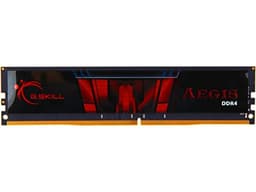
Now, the honest question: are you paying an RGB tax here? Compared to the non-RGB Trident Z Neo (which doesn't exist in this specific sub-series, the Neo line is RGB by design), you're comparing against something like the Ripjaws V or Aegis range, which are cheaper and non-RGB. The price gap isn't enormous, and the Neo's build quality and binning justify some of the premium independently of the lighting. But if you genuinely don't care about RGB and your case doesn't have a window, there are cheaper ways to get 3600MHz CL18 32GB DDR4. The RGB here is good enough that it doesn't feel like a cynical upsell, but it's still worth being honest that you're paying something for it.
Reliability and Warranty
Across 2,138 owner reviews averaging ★★★★½ (4.8), the pattern is clear: this kit is reliable. Dead-on-arrival reports exist but are rare, and the more meaningful signal is the absence of long-term failure reports. Memory that's going to fail usually does so either immediately (bad IC from the factory) or after years of use (gradual degradation under sustained voltage). The Neo at 1.35V is running well within comfortable DDR4 operating parameters, which helps. The reviews don't show a pattern of sticks dying after six months, which is what you'd see if the binning or voltage spec was pushing the ICs too hard.
G.Skill backs this kit with a lifetime warranty, which is the right answer for memory. RAM should last the life of the build and beyond. A lifetime warranty means that if a stick does fail three years from now, you're covered. G.Skill's RMA process gets positive mentions in owner reviews: not painless (no RMA process is), but responsive and not the kind of experience that makes you regret buying the brand. A few owners mention having to provide proof of purchase, which is standard, and replacement sticks arriving within a week or two.
One thing worth knowing: G.Skill is a Taiwanese brand that sells globally but doesn't have a physical UK retail presence in the traditional sense. RMA requests go through their international process. It works, but if you're the kind of person who wants to walk into a shop and swap a faulty stick over the counter, that's not an option here. Buy from a reputable UK retailer (Amazon UK, Scan, Overclockers UK) so you have the retailer's own warranty as a first line of defence. In practice, given how rarely these sticks fail, this is a theoretical concern more than a practical one.
Value and Price Per GB
The Trident Z Neo 32GB DDR4 3600MHz CL18 kit sits at the premium end of the DDR4 market. To put the price in context: you're paying for the Neo-specific binning (G.Skill selects ICs for this speed/timing combo rather than just slapping a sticker on whatever passes), the build quality of the heatspreader, the RGB implementation, and the lifetime warranty. The price per GB works out at a premium over budget DDR4 options at the same speed but looser timings.
Is it worth it compared to a cheaper 3600MHz CL18 kit? That depends on what the cheaper kit actually is. There are 3600MHz CL18 kits at lower prices that use Hynix or Micron ICs rather than Samsung B-Die, and while those can be perfectly stable at rated speed, they typically have less headroom for manual overclocking and occasionally show more variance in XMP stability across different board revisions. The Neo's consistency in owner reports across a wide range of AM4 boards is partly a product of that IC selection and binning process. You're paying for reliability and headroom, not just the RGB.
Compared to 32GB DDR5 kits for AM5, the DDR4 Neo is cheaper. But that comparison is only relevant if you're choosing between platforms. If you're on AM4, DDR5 isn't an option regardless of price. The better comparison is: Trident Z Neo 3600MHz CL18 vs Ripjaws V 3600MHz CL16 (tighter timings, no RGB, lower price) or vs Corsair Vengeance LPX 3600MHz CL18 (similar spec, lower profile, lower price). The Neo commands a small premium over those alternatives. Whether that premium is worth it comes down to whether you want the RGB, the Neo's specific QVL coverage on AMD boards, and the peace of mind of G.Skill's binning reputation.

Platform Compatibility
The Trident Z Neo DDR4 is compatible with AMD AM4 (Ryzen 1000, 2000, 3000, 4000G, 5000 series) and Intel LGA1200 and LGA1151 platforms (10th and 11th gen, 9th and 8th gen Intel Core). It is not compatible with AM5 (DDR5 only) or Intel LGA1700 running DDR5. Some Z690 and B660 boards support DDR4, and the Neo will work on those too, but that's a niche configuration at this point. Check your motherboard's memory support list before buying.
For AM4 specifically, the kit appears on QVLs for boards from ASUS (ROG Crosshair, TUF Gaming, Prime series), MSI (X570, B550, B450 MAG and Tomahawk), Gigabyte (X570 Aorus, B550 Aorus), and ASRock (X570 Taichi, B550 Steel Legend). That's broad coverage. The important caveat for B450 boards is that some require a BIOS update to support 3600MHz XMP reliably. If you're on a B450 board, check that your BIOS is up to date before expecting a clean first boot at rated speed.
One thing to be clear about: mixing this kit with another kit of different speed, timings, or brand is always a gamble. Memory kits are binned and validated as pairs. If you add a second 2x 16GB kit later to reach 64GB, the system may drop to a lower stable speed, or you may need to manually tune timings. This is true of all DDR4 kits, not just the Neo. If you know you'll want 64GB eventually, either buy a 4x 16GB kit from the start or buy two identical kits of the same part number at the same time and hope they're from the same production batch. Running four sticks of 3600MHz CL18 on AM4 is possible but requires more BIOS attention than two sticks.
How It Compares
The two most natural comparisons for the Trident Z Neo 32GB DDR4 3600MHz CL18 are the Corsair Vengeance RGB Pro 32GB 3600MHz CL18 and the Kingston Fury Beast 32GB 3600MHz CL18. All three target the same speed and timing spec, all three are 2x 16GB dual-channel kits, and all three are aimed at gaming builds. The differences are in build quality, RGB implementation, IC binning, and price.
The Corsair Vengeance RGB Pro is the closest direct competitor: similar RGB quality, similar price bracket, similar XMP stability. The main practical difference is that Corsair's iCUE software is more polished for RGB management if you're already in the Corsair ecosystem, while the Trident Z Neo has better native support on AMD-specific boards through Aura Sync and Mystic Light. The Kingston Fury Beast is the budget-conscious option: no RGB (or minimal RGB in some variants), slightly lower profile, and generally cheaper. If you genuinely don't care about aesthetics and just want 3600MHz CL18 32GB DDR4 that works, the Fury Beast is worth a look. But the Neo's build quality and lifetime warranty do justify some of the premium.
| Feature | G.Skill Trident Z Neo 3600 CL18 | Corsair Vengeance RGB Pro 3600 CL18 | Kingston Fury Beast 3600 CL18 |
|---|---|---|---|
| Capacity | 32GB (2x 16GB) | 32GB (2x 16GB) | 32GB (2x 16GB) |
| Speed | 3600MHz | 3600MHz | 3600MHz |
| CAS Latency | CL18 | CL18 | CL18 |
| True Latency | 10ns | 10ns | 10ns |
| Voltage | 1.35V | 1.35V | 1.35V |
| RGB | Yes, full-length bar | Yes, full-length bar | Limited or none |
| Heatspreader Height | 44mm | 51mm | 34mm |
| Warranty | Lifetime | Lifetime | Lifetime |
| AMD QVL Focus | Strong (Neo = Ryzen-specific) | Good | Good |
| Price | £309.70 | Similar bracket | Lower |
One practical note on the Corsair: at 51mm tall, the Vengeance RGB Pro is noticeably taller than the Neo's 44mm. That can cause clearance issues with some coolers where the Neo would clear fine. If you're using a large air cooler, the Neo's lower profile is a genuine advantage. The Kingston Fury Beast at 34mm is the clear winner for tight cooler clearance situations.
What People Love
The dominant theme in positive reviews is exactly what you'd want to hear: clean XMP activation on first boot, no drama, no tweaking required. Ryzen 5000 builders in particular are enthusiastic about how well the Neo plays with their boards. Multiple owners specifically mention pairing this kit with ASUS ROG and TUF Gaming X570 and B550 boards and having it post at 3600MHz CL18 immediately after enabling XMP. That's the best possible outcome and it happens consistently enough that it's clearly not luck. Owners also repeatedly praise the RGB quality: the even diffusion, the brightness, and the fact that it looks genuinely good in a windowed case rather than cheap and gimmicky.
Long-term reliability gets positive mentions too. Owners who've had the kit for a year or more report no stability issues, no degradation in performance, and no surprises. The lifetime warranty gets a specific callout from people who've had to use it: the process isn't instant, but G.Skill follows through. Build quality comments are consistently positive, with people noting the heatspreader feels premium and the sticks look well-matched as a pair.
Common Complaints
The most common complaint, and it's worth taking seriously, is price. Some owners feel the premium over non-RGB or less well-known alternatives is hard to justify purely on performance grounds, since the true latency is the same as cheaper CL18 kits at the same speed. That's a fair point. You're paying for the Neo's specific binning, build quality, and RGB, and if none of those matter to you, there are cheaper routes to 3600MHz CL18 32GB DDR4.
A smaller number of owners report issues on older B450 boards without updated BIOS, which as discussed is a board firmware issue rather than a kit issue. There are also occasional reports of RGB sync being temperamental with non-ASUS motherboard software, particularly with MSI Mystic Light on some board revisions. This is the eternal RGB ecosystem problem and not unique to G.Skill. The actual memory performance is never the complaint. Nobody's posting "3600MHz CL18 didn't deliver" because it does. The gripes are about price and RGB software, which is about as good a complaint profile as you can hope for.
Value and Price Per GB
At current pricing, the Trident Z Neo 32GB DDR4 3600MHz CL18 kit sits in the premium DDR4 segment. The price per GB is higher than budget DDR4 alternatives and higher than plain-heatspreader kits at the same speed and timings. What you're getting for that premium: G.Skill's binning process (selecting ICs that reliably hit 3600MHz CL18 at 1.35V rather than needing voltage nudges), the asymmetric Neo heatspreader with full-length RGB, and the lifetime warranty. Whether that premium is worth it depends on your build priorities.
For a high-end AM4 build where you're spending significant money on a Ryzen 5 5600X or better, a quality B550 or X570 board, and a decent GPU, the incremental cost difference between the Neo and a budget 3600MHz CL18 kit is relatively small in the context of the total build. Buying the kit with the best compatibility track record and the most reliable XMP behaviour makes sense. For a budget AM4 build where you're watching every pound, the Kingston Fury Beast or G.Skill's own Aegis range at the same speed and timings will serve you well for less money.
The DDR4 vs DDR5 value conversation is worth revisiting briefly here. DDR5 32GB kits at 6000MHz CL30 are available at similar or slightly higher price points now that DDR5 has matured. But those kits are only relevant if you're on a DDR5 platform. For AM4, the Neo's price is what it is, and in the context of what it delivers, it's fair. This isn't a kit where you're paying for marketing gloss on mediocre hardware. The binning and compatibility track record are real.
Platform Compatibility
The G.Skill Trident Z Neo DDR4 kit is designed for AM4 first and foremost, but it's fully compatible with Intel DDR4 platforms too. On AM4, it works with Ryzen 1000 through 5000 series processors. On Intel, it's compatible with LGA1151 (8th and 9th gen) and LGA1200 (10th and 11th gen) platforms, as well as DDR4-capable Z690 and B660 boards on LGA1700. It is not compatible with AM5 or with Intel LGA1700 boards running DDR5 exclusively.
For AM4 compatibility specifically, the kit has been validated against a wide range of boards. ASUS ROG Crosshair VIII series, TUF Gaming X570-Plus, Prime X570-P, MSI MEG X570 Ace, MAG B550 Tomahawk, Gigabyte X570 Aorus Elite, B550 Aorus Pro, and ASRock X570 Taichi are among the boards where owners report clean XMP boots. The JEDEC DDR4 standard ensures baseline 2133MHz compatibility on any DDR4 board even without XMP, so the kit will always work at stock speeds even if you encounter a board that's stubborn about XMP.
Mixing this kit with other kits is not recommended. If you're planning a 64GB build, buy a matched 4x 16GB kit or two identical 2x 16GB kits from the same production batch (same part number, bought at the same time from the same retailer). Running four DIMMs on AM4 at 3600MHz CL18 is achievable but may require manual timing adjustments in BIOS. Two sticks is the path of least resistance, and 32GB is enough for the vast majority of use cases anyway.
How It Compares
Already covered in the comparison table above, but the summary is: the Trident Z Neo is the best-optimised kit for AMD Ryzen AM4 builds at this speed and timing combination, with the most consistent XMP compatibility reports and a build quality that justifies its premium over budget alternatives. The Corsair Vengeance RGB Pro is the closest rival and is a good kit, but it's taller and the iCUE software advantage only matters if you're already in the Corsair ecosystem. The Kingston Fury Beast is the right answer if you want the same performance without the RGB premium.
For people who want tighter timings, the G.Skill Trident Z Neo also comes in 3600MHz CL16 variants (F4-3600C16D-32GTZNC), which tighten the true latency to (16 x 2000) / 3600 = 8.9ns. That's a meaningful improvement for latency-sensitive workloads and manual overclockers who want headroom, but it costs more. For most gaming builds, the CL18 kit is the value pick within the Neo range. The CL16 is for people who know why they want it.
There's also the question of whether you should be looking at DDR5 kits for a new build instead. If you're building on AM5 or Intel 12th gen or newer, yes, absolutely. But the Neo DDR4 CL18 3600MHz kit isn't competing with those. It's competing for the AM4 upgrade and new-build market, and in that context it's one of the top two or three kits you should be considering.
Final Verdict
The 32GB G.Skill Trident Z Neo DDR4 3600MHz PC4-28800 CL18 RGB Dual Channel Kit (2x 16GB) is one of the best DDR4 kits you can buy for an AMD Ryzen AM4 build. That's not hyperbole. The 3600MHz CL18 combination hits the exact sweet spot for Ryzen's Infinity Fabric, the XMP stability on AM4 boards is genuinely excellent based on owner reports, the 32GB capacity is right for almost every use case from gaming to light content creation, and the lifetime warranty means you're covered if anything ever goes wrong. The RGB is properly done rather than an afterthought, and the 44mm heatspreader height is manageable under most mainstream coolers.
The caveats are real but limited. This is a DDR4 kit for DDR4 platforms: if you're building on AM5 or a modern Intel platform, you need DDR5 and this review isn't for you. The RGB premium is real, and if aesthetics don't matter, there are cheaper ways to get 3600MHz CL18 32GB DDR4. On older B450 boards, make sure your BIOS is current before expecting a clean first boot at rated speed. And if you're building a system primarily for gaming, don't expect this kit to transform your frame rates: the gains from fast RAM in gaming are marginal, and you'd see more impact from a better GPU or CPU. What you're buying here is reliability, compatibility, and the right spec done properly.
Score: 9 out of 10. The missing point is for the RGB premium and the DDR4 platform limitation in an increasingly DDR5 world. But on its intended platform, doing its intended job, this is about as good as DDR4 32GB gets.

Not Right For You?
If you're building on AMD AM5 (Ryzen 7000 series or newer), you need a DDR5 kit. Look at the G.Skill Trident Z5 Neo DDR5 range, which is the spiritual successor to this kit for the AM5 platform and has the same Ryzen-optimised design philosophy. For Intel 12th gen and newer on DDR5, the Trident Z5 series is the equivalent option.
If you want the same performance without the RGB and at a lower price, the Kingston Fury Beast 32GB DDR4 3600MHz CL18 is worth considering. It's lower profile at 34mm (better for tight cooler clearance), no RGB, and costs less. The performance is essentially identical at rated spec. G.Skill's own Ripjaws V range at 3600MHz CL16 is another option if you want tighter timings without the RGB tax, though availability varies.
If you need more than 32GB, G.Skill makes the Trident Z Neo in 64GB configurations (4x 16GB). Just be aware that running four DIMMs on AM4 at 3600MHz CL18 requires a board with good memory trace routing and possibly some manual BIOS tuning. It's doable, but it's not as plug-and-play as the 2x 16GB configuration reviewed here.
What works. What doesn’t.
5 + 5What we liked5 reasons
- XMP 2.0 activates cleanly at 3600MHz CL18 on first boot across a wide range of AM4 boards, with minimal need for manual intervention
- 3600MHz CL18 hits Ryzen's Infinity Fabric sweet spot, delivering 10ns true latency and maximum bandwidth without pushing the memory controller into unstable territory
- 32GB in a 2x16GB configuration gives ample headroom for gaming, streaming, and light creative work while keeping controller load low and leaving two slots free for future expansion
- Lifetime warranty is among the best in the DDR4 market, and owner reports indicate G.Skill's RMA process is responsive when needed
- RGB light bar uses a frosted diffuser that produces even illumination without hot spots, and the 44mm heatspreader is lower profile than many rivals, improving cooler clearance
Where it falls5 reasons
- Price carries a premium over non-RGB and budget alternatives at the same speed and timings, which is difficult to justify on performance grounds alone if aesthetics are irrelevant to you
- This is a DDR4 kit only, making it incompatible with AM5 and modern Intel DDR5 platforms, limiting its relevance for anyone building a new high-end system today
- RGB ecosystem synchronisation can be unreliable outside of ASUS Aura Sync, with MSI Mystic Light integration in particular drawing complaints from some owners
- Older B450 boards may require a BIOS update before XMP at 3600MHz posts cleanly, adding a step for users on legacy hardware
- No low-profile variant exists in the Trident Z Neo sub-series, so builders using compact cases or low-clearance coolers must look elsewhere
Full specifications
9 attributes| Capacity GB | 32 |
|---|---|
| CAS latency | 18 |
| ECC | false |
| Form factor | DIMM |
| Module count | 2 |
| RGB | true |
| Speed MHZ | 3600 |
| Type | DDR4 |
| Voltage V | 1.35 |
If this isn’t right for you
2 options 8.5 / 10
PNY XLR8 Gaming EPIC-X RGB DDR4 3200MHz 32GB (2x16GB) Desktop Memory Dual Pack Black
£220.31 · PNY

Frequently asked
8 questions01Is the G.Skill Trident Z Neo DDR4 3600MHz CL18 compatible with AMD Ryzen 5000 processors?+
Yes. The Trident Z Neo sub-series was specifically designed around AMD Ryzen memory controller behaviour, and Ryzen 5000 series processors on AM4 boards (X570, B550, B450 with updated BIOS) are the primary intended platform. Owner reports consistently describe clean XMP activation at 3600MHz CL18 on boards such as the ASUS TUF Gaming X570-Plus and MSI MAG B550 Tomahawk.
02Will this kit work with an Intel motherboard?+
Yes. The kit is compatible with Intel LGA1151 (8th and 9th gen Core) and LGA1200 (10th and 11th gen Core) platforms, and also works on DDR4-capable Z690 and B660 LGA1700 boards. Intel's memory controller is generally tolerant of high-speed DDR4, and the XMP 2.0 profile loads without issue on these platforms.
03Can I use this DDR4 kit on an AMD AM5 motherboard with a Ryzen 7000 processor?+
No. AM5 uses DDR5 memory exclusively and is not physically or electrically compatible with DDR4. If you are building on AM5, you will need a DDR5 kit such as the G.Skill Trident Z5 Neo range, which follows the same Ryzen-optimised design philosophy.
04Why is 3600MHz CL18 considered the sweet spot for AMD Ryzen AM4 builds?+
Ryzen's Infinity Fabric clock (FCLK) ties to the memory speed. At 3600MHz, most Ryzen 3000 and 5000 processors can run the FCLK at a 1:1 ratio without instability. Going faster, such as 4000MHz, risks pushing the FCLK beyond a comfortable threshold. CL18 at 3600MHz produces a true latency of 10 nanoseconds, which is competitive with faster kits at looser timings. The combination of high bandwidth and good true latency at a speed the Ryzen controller handles reliably is what makes 3600MHz CL18 the recommended choice for AM4.
05Does the heatspreader cause clearance issues with CPU air coolers?+
At 44mm tall, the Trident Z Neo heatspreader is shorter than some rivals such as the Corsair Vengeance RGB Pro at 51mm, which reduces the risk of clearance conflicts. Most mainstream tower coolers clear 44mm without difficulty. However, large air coolers with wide bases or low-profile coolers may be tight depending on the board layout and cooler design. If you are using an AIO liquid cooler, clearance is very rarely a concern. It is always worth checking your cooler's specifications against 44mm DIMM height before purchasing.
06What warranty does the G.Skill Trident Z Neo come with?+
G.Skill covers this kit with a lifetime warranty. If a stick fails at any point, you can submit an RMA request through G.Skill's international process. Owner reports indicate the process is responsive, though it requires proof of purchase and typically takes one to two weeks for replacement sticks to arrive. Buying from a reputable UK retailer also provides the retailer's own warranty as a first line of support.
07Can I add a second 2x16GB kit later to reach 64GB?+
Technically yes, but it is not straightforward. Memory kits are binned and validated as matched pairs. Mixing two different 2x16GB kits, even of the same part number from different production batches, may result in the system dropping to a lower stable speed or requiring manual timing adjustments in the BIOS. Running four DIMMs at 3600MHz CL18 on AM4 is possible but demands more BIOS attention than running two. If you know you want 64GB, buying a matched 4x16GB kit from the outset is the more reliable approach.
08Does the RGB require software to function, and which programmes support it?+
The RGB works without any software installed, defaulting to a rainbow cycle on boot. For custom lighting effects and synchronisation, G.Skill's Trident Z Lighting Control application is available. The kit also supports ASUS Aura Sync, MSI Mystic Light, and Gigabyte RGB Fusion 2.0. Aura Sync on ASUS boards receives the most consistently positive feedback from owners. Mystic Light integration is less reliable on some MSI board revisions, which is a known limitation of cross-brand RGB ecosystem synchronisation rather than a fault specific to this kit.