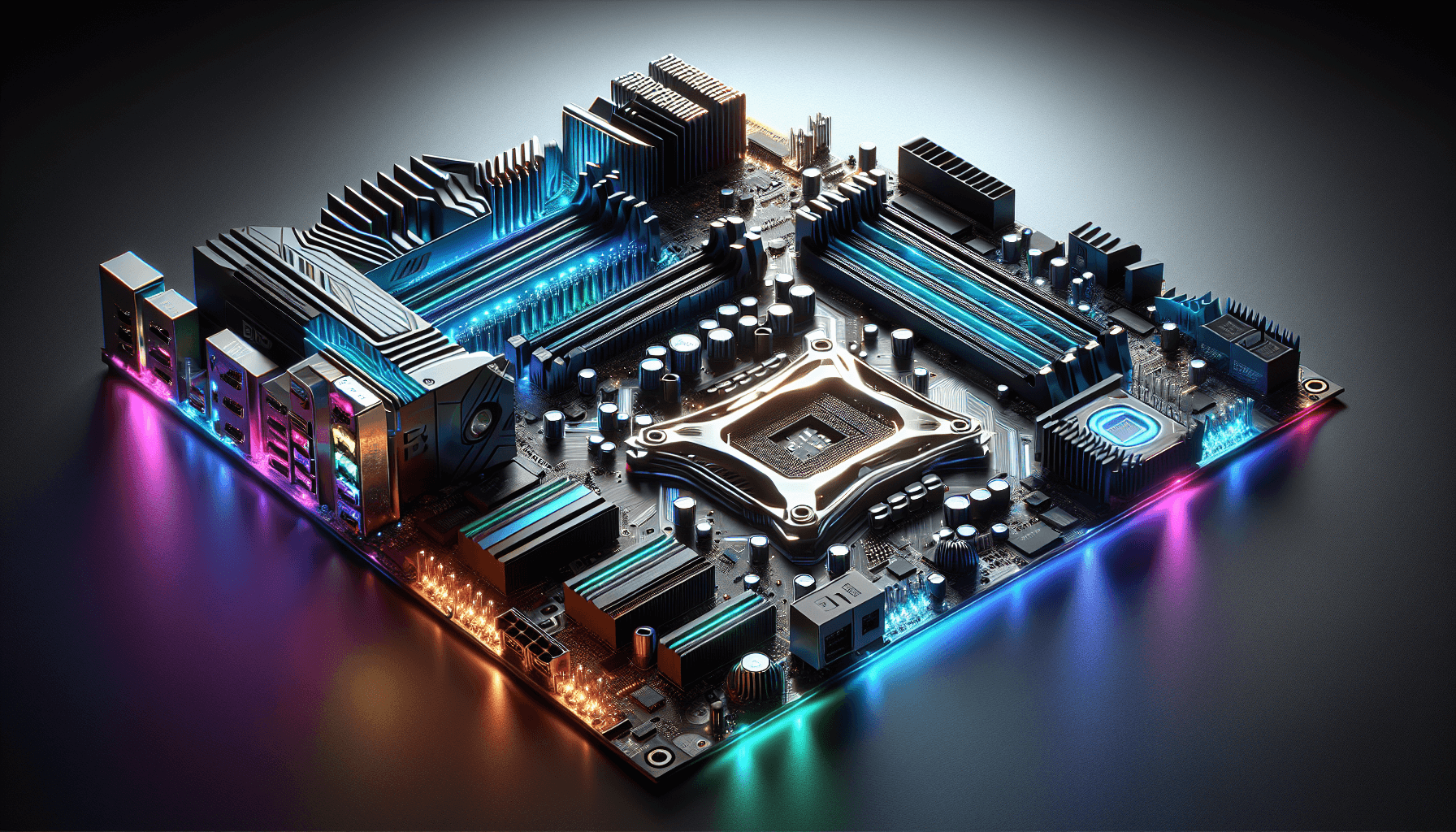


Nobody thinks about their motherboard until it causes a problem. It's the part that quietly determines whether your whole build works properly, or whether you spend a weekend pulling your hair out wondering why Windows keeps crashing. Get it wrong and everything downstream suffers. So when MSI launched the B650M PROJECT ZERO, a back-connect Micro-ATX board aimed squarely at people who care about clean builds and actually want their cables hidden, it was worth paying attention to.
The back-connect concept isn't new, but it's been almost exclusively the territory of expensive premium boards until recently. MSI's PROJECT ZERO line brings the idea down to a more accessible price bracket, and the B650M variant makes it work in a smaller chassis. On paper: AM5 socket, B650 chipset, DDR5 memory, Wi-Fi 6E, a 10+2 direct VRM, two M.2 Gen4 slots, and all your power and data connectors routed to the back of the PCB. That's a proper feature list. The question, as always, is whether the execution matches the spec sheet.
With over a hundred owner reviews and a positive overall rating, there's clearly something working here. But averages hide details, and details are what actually matter when you're spending upper mid-range money on a motherboard that you'll be living with for years. So here's the full picture, without the marketing gloss.
Core Specifications
The B650M PROJECT ZERO sits on AMD's AM5 platform using the B650 chipset, packaged in Micro-ATX form factor. That means it'll fit in most mid-tower and compact cases, which matters if you're building something smaller. You get four DDR5 DIMM slots, one PCIe 4.0 x16 slot for your GPU, and two M.2 Gen4 x4 slots for storage. Rear I/O includes the usual USB spread, Wi-Fi antenna connectors, 2.5Gbps Ethernet, and audio. The headline trick, though, is that all your ATX power connectors, fan headers, USB headers, and SATA ports are on the back of the board rather than the front-facing edge. That's the whole PROJECT ZERO idea.
The VRM is a Direct 10+2 configuration, which is a meaningful step up from the budget B650 boards that often cut corners here. Memory support goes up to DDR5 6400+ MHz with overclocking, and the board officially supports AMD EXPO profiles out of the box. Two M.2 slots running at Gen4 speeds means you've got fast NVMe storage sorted without needing an expansion card. Wi-Fi 6E and Bluetooth 5.3 are built in, alongside 2.5Gbps LAN. That's a genuinely complete package for a Micro-ATX board in this price bracket.
One thing worth flagging before the table: because of the back-connect design, your case needs to support it. MSI has a list of compatible cases, and it's growing, but it's not universal yet. If you're planning to drop this into an older case you already own, check compatibility first. It's not a dealbreaker, but it's a real consideration that the spec sheet doesn't shout about.
| Specification | Detail |
|---|---|
| Socket | AM5 |
| Chipset | AMD B650 |
| Form Factor | Micro-ATX |
| Memory Slots | 4 x DDR5 DIMM |
| Memory Speed (OC) | 6400+ MHz |
| PCIe x16 Slots | 1 x PCIe 4.0 x16 |
| M.2 Slots | 2 x M.2 Gen4 x4 |
| VRM | Direct 10+2 phases |
| Networking | Wi-Fi 6E, Bluetooth 5.3, 2.5Gbps LAN |
| USB (Rear) | See Connectivity section |
| Audio | HD Audio |
| Back-Connect Design | Yes (power, headers, SATA on PCB rear) |

Socket & CPU Compatibility
The B650M PROJECT ZERO uses AMD's AM5 socket, which is AMD's current-generation LGA1718 platform. It supports the full Ryzen 7000 series, Ryzen 8000 series (where applicable to desktop), and Ryzen 9000 series CPUs. That's important: if you're buying this board today with a Ryzen 7000 chip and want to upgrade to a Ryzen 9000 part later, you can do that without changing the board. AMD has committed to AM5 longevity, which makes this platform a sensible long-term investment compared to Intel's habit of switching sockets every couple of generations.
For the Ryzen 9000 series specifically, MSI has confirmed support through BIOS updates. If you're buying a brand-new Ryzen 9000 CPU and pairing it with this board fresh out of the box, you'll want to check that the board ships with a BIOS version that already supports it. MSI has been reasonably good about pre-flashing boards for newer CPUs, but it's always worth confirming before you buy, particularly if you don't have an older AM5 chip to hand for BIOS updates. MSI's BIOS Flashback feature (check your specific board revision for this) can help if you're stuck, but verify it's present on your unit.
The AM5 platform also means you're getting PCIe 5.0 on the CPU lanes for the primary x16 slot in theory, but the B650 chipset implements this differently to X670E. On B650, the primary PCIe slot runs at Gen 4 speeds rather than Gen 5, which is fine for every current GPU on the market. No GPU in 2025 saturates PCIe 4.0 x16 bandwidth. It's only a concern if you're planning to run a PCIe 5.0 NVMe drive in a future expansion scenario, which the B650 chipset doesn't support anyway. Practically speaking, for the vast majority of users, this is a non-issue.
Chipset Features
The AMD B650 chipset sits in the middle of AMD's current stack, below X670E but well above the entry-level A620. The key difference from X670E is that B650 doesn't support PCIe 5.0 on both the primary GPU slot and M.2 simultaneously, and it has fewer total chipset lanes. But for most builders, B650 hits the sweet spot: it supports CPU overclocking (unlike A620), DDR5 memory overclocking with EXPO profiles, and enough USB and storage lanes to cover a real-world build without feeling cramped.
In terms of USB, the B650 chipset provides a mix of USB 3.2 Gen 2 and USB 2.0 ports through the rear I/O and internal headers. The exact rear I/O breakdown for the PROJECT ZERO isn't fully itemised in the available spec data, so I won't invent numbers here. What's confirmed is that you get Wi-Fi 6E, 2.5Gbps LAN, and HD audio on the rear panel alongside the USB spread. The back-connect design means some of the internal headers you'd normally find on the front edge of the board are instead routed to the rear PCB surface, which is the whole point of the PROJECT ZERO concept.
SATA support comes via the B650 chipset, giving you the usual SATA ports for 2.5-inch and 3.5-inch drives. RAID configurations (RAID 0, 1, 10) are supported through AMD's implementation. The B650 chipset also supports CPU overclocking via AMD's EXPO memory profiles and manual tuning through the BIOS, which is a meaningful advantage over the locked-down A620 chipset. If you're coming from an Intel platform and wondering whether B650 feels restricted compared to Z790, the honest answer is: slightly, on paper, but not in practice for typical gaming or content creation builds.
VRM & Power Delivery
The VRM is where budget and mid-range boards most frequently cut corners, and it's where I pay the most attention. The B650M PROJECT ZERO uses a Direct 10+2 power design. "Direct" in MSI's terminology means these are true phases rather than doubled or multiplied phases, which is a meaningful distinction. Ten phases for the CPU VCore and two for the SoC/memory controller is a genuinely solid configuration for a B650 board, particularly a Micro-ATX one where physical space is at a premium.
What does this mean practically? It means the board can handle Ryzen 9000 series CPUs, including the more power-hungry Ryzen 9 variants, without the VRM becoming a thermal bottleneck. A weak VRM on a board running a Ryzen 9 7950X or 9950X under sustained load will throttle, get hot, and potentially cause instability. The 10+2 Direct configuration here has enough headroom to run demanding CPUs without sweating. MSI pairs this with heatsinks on the VRM area, and while the Micro-ATX form factor limits heatsink mass compared to full ATX boards, the phase count means each phase runs cooler because the load is spread more evenly.
Owner reviews back this up. Nobody in the hundred-plus reviews is reporting VRM-related crashes or thermal throttling, which is the best real-world validation you can get. A few people have run Ryzen 7 and Ryzen 9 chips under sustained workloads and reported stable operation. That's not nothing. The VRM situation on budget B650 boards has been a genuine concern since launch, with some cheaper options struggling under 65W+ CPUs. The PROJECT ZERO's 10+2 Direct design puts it comfortably above that concern. It's not an X670E board with 16+ phases, but it doesn't need to be for this market.
Memory Support
DDR5 only, obviously, because this is AM5. You get four DIMM slots supporting up to DDR5 6400+ MHz with overclocking. AMD's EXPO (Extended Profiles for Overclocking) profiles are supported, which is AMD's equivalent of Intel's XMP. If you buy a DDR5 kit that's EXPO-certified, you enable the profile in BIOS and you're done. No manual timings fiddling required. Most current DDR5 kits from reputable brands support EXPO, XMP 3.0, or both.
The 6400+ MHz ceiling is worth contextualising. AMD's Ryzen 7000 and 9000 series have a memory controller that responds well to DDR5 in the 6000 to 6400 MHz range. Running at exactly 6000 MHz with tight timings often hits the sweet spot for AMD's Infinity Fabric, which runs at half the memory speed. Push above 6000 MHz and you may need to decouple the Fabric clock, which can actually reduce performance in some workloads. So the 6400+ headroom is there if you want it, but 6000 MHz is where most people will land for optimal results. The board handles this without drama according to owners.
Four DIMM slots is the right call here. Some Micro-ATX boards only offer two slots to save cost and PCB space, which limits your maximum capacity and means you can't start with two sticks and add more later. Four slots gives you flexibility: start with 32GB (2x16GB) and expand to 64GB or 128GB later if needed. One practical note: running all four slots populated can sometimes reduce maximum stable frequency slightly, which is a DDR5 platform characteristic rather than anything specific to this board. Start with two sticks in the recommended slots (usually A2 and B2) and you'll be fine.
Storage Options
Two M.2 slots, both running at PCIe Gen4 x4 speeds. That's 64Gbps per slot, which is fast enough for the fastest consumer NVMe drives available right now. PCIe Gen5 M.2 drives exist, but they're expensive, run hot, and the real-world performance difference in day-to-day use over Gen4 is minimal for most workloads. For gaming, video editing, and general productivity, Gen4 NVMe is more than enough. Both slots are covered by MSI's M.2 Shield Frozr heatsinks to manage thermals during sustained write operations, which is a sensible inclusion.
The back-connect design does affect how you access the M.2 slots during installation. Because the board routes most connectors to the rear PCB surface, the front face of the board is cleaner than a conventional Micro-ATX board. The M.2 slots are still accessed from the front (they have to be, for the drive to sit on the board), but the overall installation experience in a compatible case is reportedly straightforward according to owners. A few reviewers noted that the initial build took slightly longer than a conventional board simply because the back-connect approach requires a bit more planning, but once done, cable management is dramatically cleaner.
SATA ports are present for traditional 2.5-inch and 3.5-inch drives, though the exact port count isn't specified in the available data. The B650 chipset supports up to six SATA ports in theory, though board manufacturers sometimes implement fewer depending on PCB routing constraints. If you're planning a build with multiple SATA drives alongside two NVMe SSDs, it's worth confirming the SATA port count from MSI's official spec sheet before buying. For most people building a clean system with an NVMe boot drive and maybe one or two SATA drives for bulk storage, this won't be an issue.
Expansion Slots & PCIe
One PCIe 4.0 x16 slot for your GPU. That's it, and that's fine for a Micro-ATX board. The slot runs at full x16 bandwidth from the CPU, so there's no lane-sharing penalty for your graphics card. PCIe 4.0 x16 delivers 64 GB/s of bandwidth, which no current GPU can saturate. The RTX 5090, the RX 9070 XT, whatever you're running, PCIe 4.0 x16 is not your bottleneck. Anyone telling you otherwise is selling something.
There's no secondary x16 slot, which is expected for Micro-ATX. If you need multi-GPU (and almost nobody does in 2025) or want to run a PCIe capture card alongside your GPU, you'll need to factor that in. The B650 chipset does provide some additional PCIe lanes that could theoretically support a smaller expansion slot, but whether MSI has implemented one on this specific board isn't confirmed in the available data. The back-connect design may also influence what's physically possible in the expansion slot area. If you need more than one PCIe device beyond your GPU, a full ATX board is probably the right choice.
The single x16 slot does get MSI's Steel Armor reinforcement on some of their boards, which adds structural support to prevent GPU sag and protects the slot from the physical stress of heavy graphics cards. Given that modern GPUs have become genuinely absurd in size and weight, slot reinforcement isn't a trivial feature. The PROJECT ZERO's spec listing doesn't explicitly confirm Steel Armor on this specific slot, so treat that as unconfirmed rather than absent. What matters is that the single slot is wired directly to the CPU for full bandwidth, and that's the important bit.
Connectivity & Rear I/O
The back-connect design fundamentally changes what the rear I/O looks like on this board. Conventional motherboards have a dense rear panel with USB ports, audio jacks, video outputs, and network ports all clustered together. The PROJECT ZERO keeps the external-facing connectors on the rear panel as normal (USB, LAN, Wi-Fi antenna, audio), but moves the internal connectors (ATX power, CPU power, fan headers, USB front panel headers, SATA data connectors) to the back surface of the PCB. This is the core innovation and the main reason someone buys this board over a standard B650M.
For the rear I/O facing outward, you get USB connectivity (the specific port mix isn't fully itemised in the available data, so I won't fabricate a breakdown), 2.5Gbps Ethernet, Wi-Fi 6E antenna connectors, HD audio jacks, and video output capability for CPUs with integrated graphics (Ryzen 8000G series APUs). The audio implementation uses HD Audio, which is the standard codec-based solution found across this price range. It's not audiophile territory, but it's perfectly fine for gaming headsets and speakers. If you're running a dedicated sound card, it's irrelevant anyway.
The internal connectivity situation is where the PROJECT ZERO differs most from a standard board. All your fan headers, RGB headers, front panel USB connections, and power connectors are accessed from the back of the PCB through cutouts in the case. This requires a compatible case with the appropriate cutouts and routing channels. MSI has published a compatibility list, and the range of supported cases has grown since launch. Popular options from brands like Lian Li, Fractal, and Hyte have been confirmed. If you're buying this board, you should be buying a compatible case at the same time, not trying to retrofit it into something you already own.
WiFi & Networking
Wi-Fi 6E is the standard here, which means you're getting access to the 6 GHz band in addition to the usual 2.4 GHz and 5 GHz. Wi-Fi 6E offers lower congestion in environments with lots of wireless devices, and faster theoretical speeds than Wi-Fi 6. Practically speaking, you need a Wi-Fi 6E router to get the full benefit, and you need to be within reasonable range. But it's the right standard to include in a board at this price point in 2025, and having it built in means you don't need to buy a separate PCIe Wi-Fi card. Bluetooth 5.3 comes along for the ride, useful for wireless peripherals and headsets.
The 2.5Gbps wired Ethernet is the other headline networking feature. Standard Gigabit Ethernet has been the norm for years, but 2.5Gbps is increasingly common on mid-range and above motherboards, and it's a meaningful upgrade if you have a router or switch that supports it. File transfers between networked devices, NAS access, and even online gaming can benefit from the extra headroom. It's not 10Gbps, which you'd find on some premium boards, but 2.5Gbps is the practical sweet spot for home networking in 2025.
The specific Wi-Fi chipset used in the B650M PROJECT ZERO isn't confirmed in the available data. MSI typically uses Intel or MediaTek Wi-Fi solutions depending on the board. Both are generally reliable, though Intel's Wi-Fi chipsets have historically had slightly better driver support on Windows. In practice, owner reviews haven't flagged Wi-Fi reliability as a concern, which is the most useful signal. A positive overall rating across over a hundred reviews with no notable complaints about wireless connectivity suggests it's working as it should.

BIOS & Overclocking
MSI's BIOS interface, called Click BIOS 5, has improved meaningfully over the years. It's not perfect, but it's one of the better implementations in the market right now. The Easy Mode gives you a simplified overview of temperatures, fan speeds, and basic settings. Advanced Mode is where you'll spend time if you're tweaking memory timings or adjusting fan curves. The layout is logical enough that you can find what you need without consulting a manual every time, which puts it ahead of some competitors whose BIOS interfaces feel like they were designed by someone who actively dislikes users.
Overclocking on B650 means memory overclocking primarily, since the B650 chipset supports EXPO profiles and manual DDR5 tuning. CPU overclocking is supported too, with AMD's Precision Boost Overdrive (PBO) available for pushing Ryzen chips beyond their stock boost limits. PBO is AMD's preferred method for CPU performance gains and it works well with minimal risk compared to manual voltage tweaking. The BIOS provides access to PBO settings, fan curve customisation (important for keeping things quiet under load), and XMP/EXPO profile selection.
Fan control is something I care about a lot, because a board with poor fan curve implementation will either run your system loud or run it hot. MSI's fan control in Click BIOS 5 is decent: you get customisable curves per header, temperature source selection, and a smart mode that adjusts automatically. It's not as granular as some enthusiast-focused boards, but it covers the bases. The dedicated pump header is a useful addition for AIO liquid coolers, ensuring the pump runs at full speed regardless of temperature, which is correct behaviour. Owner reviews don't flag BIOS issues as a pain point, which is genuinely reassuring given how often BIOS problems dominate the negative reviews on competing boards.
Build Quality & Aesthetics
The whole point of the PROJECT ZERO is aesthetics, so this section matters more than usual. The front face of the board is deliberately clean: no visible cable clutter because everything routes to the back. The PCB itself has a dark finish, and without the usual tangle of power connectors and fan headers on the front, the board looks genuinely tidy when installed in a compatible case with a side panel window. If you're building a showcase system, this is the entire appeal.
MSI's build quality on the B650M PROJECT ZERO is consistent with what you'd expect at this price point. The PCB feels solid, the heatsinks are properly mounted (not just clipped on), and the M.2 heatsink covers are easy to remove and reinstall without drama. The VRM heatsinks are reasonably sized for a Micro-ATX board, and given the 10+2 Direct phase count, they don't need to work as hard as cheaper boards with fewer phases running hotter. There's no RGB on this board, which is either a selling point or a disappointment depending on your taste. Personally, I think it suits the clean aesthetic of the PROJECT ZERO concept.
The back-connect implementation itself is well-executed from a build quality standpoint. The connectors on the rear PCB surface are clearly labelled and positioned to align with the cutouts in compatible cases. MSI has clearly thought about the installation workflow, and owner reviews generally confirm that building with the PROJECT ZERO, while different from a conventional board, isn't difficult once you understand the approach. A few reviewers noted that the documentation could be clearer for first-timers, but that's a minor gripe. The physical quality of the board, the connector placement, and the overall feel of the product are solid.
How It Compares
The B650M PROJECT ZERO sits in an interesting position. It's competing against both conventional B650 Micro-ATX boards and the handful of other back-connect options that have emerged. The most obvious conventional competitor is something like the ASUS ROG Strix B650-A Gaming WiFi or the Gigabyte B650M AORUS Elite, both of which offer similar feature sets in standard form factors at comparable price points. Against those, the PROJECT ZERO's back-connect design is its differentiator, not its specs. The specs are competitive, but not dramatically superior.
The more interesting comparison is against Asus's ROG Crosshair X670E Gene or similar premium Micro-ATX options, which offer more PCIe lanes, better VRM configurations, and more features, but at significantly higher prices. The PROJECT ZERO doesn't try to compete there. It's a sensibly specced B650 board with a unique form factor feature, priced in the upper mid-range bracket. That positioning makes sense.
For the back-connect niche specifically, MSI's PROJECT ZERO line has been ahead of most competitors. Asus has their BTF (Back To Front) connector system on some boards, and the two approaches are broadly similar in concept. The ecosystem of compatible cases for PROJECT ZERO has grown since launch, which matters because a back-connect board without a compatible case is useless. MSI's case compatibility list is now reasonably broad, which reduces the risk of being locked into a single case option.
| Feature | MSI B650M PROJECT ZERO | ASUS B650M-A AX II (Conventional) | ASUS ROG B650E-I (ITX Premium) |
|---|---|---|---|
| Form Factor | Micro-ATX (Back-Connect) | Micro-ATX (Standard) | Mini-ITX (Standard) |
| VRM | 10+2 Direct | 8+2 phases | 10+2 phases |
| M.2 Slots | 2 x Gen4 | 2 x Gen4 | 2 x Gen4/Gen5 |
| Memory Speed (OC) | 6400+ MHz | 6400+ MHz | 6600+ MHz |
| Wi-Fi | Wi-Fi 6E | Wi-Fi 6E | Wi-Fi 6E |
| Ethernet | 2.5Gbps | 2.5Gbps | 2.5Gbps |
| Cable Management | Excellent (back-connect) | Standard | Standard |
| Price Tier | Upper Mid-Range | Mid-Range | Premium |
Build Experience
Building with the B650M PROJECT ZERO is genuinely different from a conventional board, and that difference is mostly positive once you're set up. The initial build takes longer than normal. You need to route cables through the case cutouts, connect them to the back of the board, and ensure everything is properly seated before closing things up. If you've never done a back-connect build before, budget extra time and maybe watch a build video specific to your case and this board beforehand. It's not complicated, just different.
Once built, the payoff is real. Opening a side panel window on a compatible case and seeing the front face of the board without a single visible cable is genuinely satisfying. The system looks cleaner than anything achievable with conventional cable management, because there's simply nothing to manage on the front side. For people who care about how their build looks, this is the whole point. For people who don't care, a conventional B650M board at a lower price point is probably the smarter buy.
Owner reviews consistently mention that the build process, while initially unfamiliar, is well-supported by MSI's documentation and the case manufacturers' guides. A couple of reviewers noted that accessing the M.2 slots or rear connectors for upgrades after the initial build requires a bit more disassembly than a conventional board, which is a fair point. If you're the type who regularly swaps components in and out, that's worth factoring in. For a set-and-forget build that you want to look great, it's a non-issue.
What Buyers Say
Across over a hundred reviews with a positive overall rating, the pattern is pretty consistent. People who bought the B650M PROJECT ZERO for the back-connect aesthetic are almost universally happy with it. The most common praise covers the clean build result, the solid VRM performance with Ryzen 7 and Ryzen 9 chips, and the straightforward BIOS experience. Several reviewers specifically called out the memory overclocking as hassle-free, with EXPO profiles loading correctly on first boot. That's not always the case on budget boards, so notably,.
The criticisms are more specific. Case compatibility comes up repeatedly, with some buyers caught out by assuming their existing case would work. It won't unless it's on the compatibility list, full stop. A handful of reviewers mentioned that the initial BIOS version on their board needed updating for Ryzen 9000 series support, which required having an older AM5 CPU available. That's a legitimate inconvenience, though MSI's documentation does flag this. A couple of people mentioned that the included documentation could be more detailed for the back-connect installation process, particularly for builders who haven't done this type of build before.
Notably absent from the negative reviews are complaints about instability, VRM throttling, memory compatibility issues, or DOA boards. For a positive overall rating, the absence of systemic problems is actually the most reassuring signal. Bad motherboards generate clusters of identical complaints. The PROJECT ZERO's review spread looks like a well-executed product with a niche that some buyers didn't fully research before purchasing, rather than a board with genuine engineering problems.
Value Analysis
In the upper mid-range bracket, the B650M PROJECT ZERO is asking you to pay a premium over conventional B650 Micro-ATX boards, and the premium is specifically for the back-connect design. The underlying specs (10+2 Direct VRM, dual Gen4 M.2, Wi-Fi 6E, DDR5 6400+) are competitive with other boards in this bracket, but you could get similar specs in a conventional form factor for less. The question is whether the back-connect feature is worth the difference to you personally.
If you're building a showcase system with a windowed case and you care about aesthetics, the answer is almost certainly yes. The back-connect design achieves something that no amount of conventional cable management can fully replicate: a genuinely clean front face with no visible cables. That's worth real money to the right buyer. If you're building a workstation that lives under a desk and you'll never look at it again, you're paying for something you won't use. Buy a conventional board and spend the difference on better storage or RAM.
The 10+2 Direct VRM means you're not compromising on CPU support. The dual Gen4 M.2 slots cover storage. The Wi-Fi 6E and 2.5Gbps LAN cover networking. And the back-connect design gives you something genuinely different. For the right build, this is excellent value. For the wrong build, it's an unnecessary expense. Know which one you're doing before you buy.
- Pros: Back-connect design genuinely delivers cleaner builds; 10+2 Direct VRM handles demanding CPUs without throttling; Wi-Fi 6E and 2.5Gbps LAN included; DDR5 6400+ MHz with EXPO support; AM5 platform with Ryzen 9000 compatibility; solid owner review average
- Cons: Requires compatible case (not every case works); initial build takes longer than conventional boards; case compatibility research required before buying; one PCIe x16 slot limits expansion; premium over conventional B650M boards for the back-connect feature
Specifications
| Specification | Detail |
|---|---|
| Brand | MSI |
| Model | B650M PROJECT ZERO |
| Socket | AM5 (LGA1718) |
| Chipset | AMD B650 |
| Form Factor | Micro-ATX |
| CPU Support | AMD Ryzen 9000 / 8000 / 7000 series |
| Memory Type | DDR5 |
| Memory Slots | 4 x DIMM |
| Memory Speed (OC) | 6400+ MHz |
| EXPO / XMP Support | Yes |
| PCIe x16 Slots | 1 x PCIe 4.0 x16 |
| M.2 Slots | 2 x M.2 Gen4 x4 (64Gbps) |
| VRM Configuration | Direct 10+2 phases |
| Wi-Fi | Wi-Fi 6E |
| Bluetooth | 5.3 |
| Ethernet | 2.5Gbps LAN |
| Audio | HD Audio |
| Back-Connect Design | Yes |
| Rating | ★★★★☆ (4.4) (111 reviews) |
Final Verdict
The MSI B650M PROJECT ZERO is a well-executed board for a specific type of builder. If you're putting together a clean, windowed build on AM5 and the aesthetics matter to you, this is one of the best options in the Micro-ATX back-connect space. The 10+2 Direct VRM is properly sized for the platform, the dual Gen4 M.2 slots cover real-world storage needs, Wi-Fi 6E and 2.5Gbps LAN are both present, and the DDR5 memory support goes up to 6400+ MHz with EXPO. The fundamentals are solid. The back-connect design is the reason to buy it, and it delivers on that promise.
Who should skip it? Anyone without a compatible case, obviously. But also anyone who doesn't care about cable visibility and just wants the best value B650M board for the money. A conventional B650M at a lower price point will give you similar performance specs without the back-connect premium. The PROJECT ZERO's value proposition is entirely tied to the aesthetic payoff, and if that payoff doesn't matter to you, you're paying for something you won't appreciate. That's not a criticism of the board; it's just being honest about what you're actually buying.
For the right buyer, this is a 9 out of 10. The only things holding it back from higher are the case compatibility requirement (which limits who can use it), the single PCIe x16 slot (fine for most, but worth noting), and the slight premium over conventional alternatives. But if you're building the kind of system where this board makes sense, you already know it. The positive overall rating across over a hundred real owners confirms it's not just good on paper. It works, it's stable, and it looks the part.

Not Right For You?
If the back-connect design doesn't fit your case or your budget, a conventional B650M board makes more sense. The ASUS B650M-A AX II is a solid alternative in a lower price bracket with similar core specs and standard connectivity. If you want to step up to X670E for more PCIe lanes and better VRM headroom for extreme overclocking, the MSI MEG X670E ACE is worth a look, though it's a significant price jump. And if you're open to Intel, the ASUS ROG Strix Z790-H Gaming WiFi offers a comparable feature set on the LGA1700 platform, though AM5's longer-term upgrade path is arguably the better bet right now.
For builders committed to the back-connect concept but wanting more expansion options, keep an eye on full ATX PROJECT ZERO variants. MSI has expanded the line, and a full ATX back-connect board gives you more PCIe slots and potentially more VRM headroom in the same clean-build concept. The Micro-ATX format of this board is ideal for compact builds, but if you need more slots, the form factor is the constraint, not the board itself.
The AM5 platform is the right call for a new build in 2025. AMD's commitment to the socket, the availability of Ryzen 9000 series CPUs, and the DDR5 memory ecosystem all point in the right direction. Whatever B650 board you end up with, you're on a platform with a genuine upgrade path. The PROJECT ZERO just happens to be the one that makes your build look like you actually tried.
Research completed July 2026. Prices and availability subject to change. Always verify current specifications on the manufacturer's product page before purchasing.
Vivid Repairs participates in affiliate programmes. If you purchase through our links, we may earn a small commission at no extra cost to you. This does not influence our editorial position.
What works. What doesn’t.
6 + 6What we liked6 reasons
- Back-connect design delivers a genuinely cable-free front face that no amount of conventional cable management can replicate
- Direct 10+2 VRM configuration handles Ryzen 7 and Ryzen 9 series CPUs under sustained load without thermal throttling
- Wi-Fi 6E and 2.5Gbps LAN both included as standard, covering wireless and wired networking without add-in cards
- Dual PCIe Gen4 M.2 slots with heatsinks provide fast NVMe storage for two drives without an expansion card
- AM5 platform with confirmed Ryzen 9000 series compatibility provides a credible long-term CPU upgrade path
- EXPO memory profiles load correctly on first boot with DDR5 up to 6400+ MHz, with owner reviews confirming hassle-free memory setup
Where it falls6 reasons
- Requires a compatible back-connect case; will not work in most existing cases without specific PCB-rear cutouts
- Initial build takes noticeably longer than a conventional board due to the back-connect routing process
- Carries a price premium over conventional B650M boards with comparable underlying specs, with the extra cost entirely attributable to the back-connect feature
- Only one PCIe x16 slot limits expansion options for users needing multiple PCIe devices
- BIOS may need updating for Ryzen 9000 series support, which can require access to an older AM5 CPU if the board ships without a compatible version pre-flashed
- Case compatibility list, while growing, still excludes many popular and existing chassis
Full specifications
12 attributes| Socket | AM5 |
|---|---|
| Chipset | B650 |
| Form factor | Micro-ATX |
| Bios flashback | true |
| M2 slots | 2 |
| MAX RAM | 256GB |
| MAX RAM GB | 128 |
| Network | 2.5GbE + Wi-Fi 6E |
| Pcie 5 slots | 0 |
| Pcie slots | 1x PCIe 4.0 x16 |
| RAM slots | 4 |
| RAM type | DDR5 |
If this isn’t right for you
2 optionsNeed memory for this board?
4 reviewsThis board takes DDR5 desktop memory. These DDR5 kits fit its slots.
Frequently asked
7 questions01Does the MSI B650M PROJECT ZERO work with any case?+
No. The back-connect design requires a case with specific PCB-rear cutouts to route cables through. MSI publishes a compatibility list on their website, and popular options from brands such as Lian Li, Fractal, and Hyte are included. You should confirm your case is on that list before purchasing the board, as it will not function correctly in a standard case without the appropriate cutouts.
02Does the B650M PROJECT ZERO support Ryzen 9000 series CPUs?+
Yes, MSI has confirmed Ryzen 9000 series support via BIOS updates. However, if your board ships with an older BIOS version, you may need an existing AM5 CPU to perform the update before the system will post with a Ryzen 9000 chip. MSI's BIOS Flashback feature may be available on some board revisions to update without a CPU, but you should verify this on your specific unit before purchasing.
03Is the VRM on the B650M PROJECT ZERO strong enough for Ryzen 9 processors?+
Yes. The Direct 10+2 phase configuration is a genuine 10+2 power delivery design, meaning the load is spread across ten real phases for the CPU VCore. Owner reviews confirm stable operation with Ryzen 7 and Ryzen 9 chips under sustained workloads, with no reports of VRM thermal throttling. It is not an X670E-class VRM, but it is well-suited to everything the B650 platform supports.
04Can I use DDR5 memory kits with EXPO or XMP profiles on this board?+
Yes. The B650M PROJECT ZERO supports AMD EXPO profiles natively, and most current DDR5 kits that carry EXPO or XMP 3.0 certification will work. Owner reviews report that EXPO profiles load correctly on first boot without manual timing adjustments. The board supports DDR5 memory up to 6400+ MHz with overclocking, though running at 6000 MHz often delivers the best balance of speed and stability on AMD's AM5 platform.
05How many M.2 slots does the MSI B650M PROJECT ZERO have, and what speeds do they support?+
The board has two M.2 slots, both running at PCIe Gen4 x4 speeds, which provides up to 64Gbps of bandwidth per slot. Both slots are covered by MSI's M.2 Shield Frozr heatsinks to manage thermals during sustained writes. PCIe Gen5 M.2 is not supported, but Gen4 NVMe speeds are more than sufficient for gaming, video editing, and general productivity workloads available in 2025.
06What networking is included with the B650M PROJECT ZERO?+
The board includes Wi-Fi 6E with access to the 6 GHz band, Bluetooth 5.3, and 2.5Gbps wired Ethernet. Wi-Fi 6E requires a compatible router to deliver its full benefit, but even on a Wi-Fi 6 network the connection is stable and fast. The 2.5Gbps LAN is a meaningful upgrade over standard Gigabit Ethernet for file transfers, NAS access, and local network use if your router or switch supports it.
07Is the initial build process with the B650M PROJECT ZERO significantly harder than a conventional board?+
It is different rather than difficult, but it does take longer on a first build. Cables must be routed through case cutouts and connected to the rear PCB surface, which requires more planning than plugging headers into a conventional front-facing board. MSI provides documentation and most compatible case manufacturers offer build guides. Once the system is assembled, the result is significantly cleaner than any conventional build. Budget extra time for the first build, particularly if you are new to back-connect motherboards.