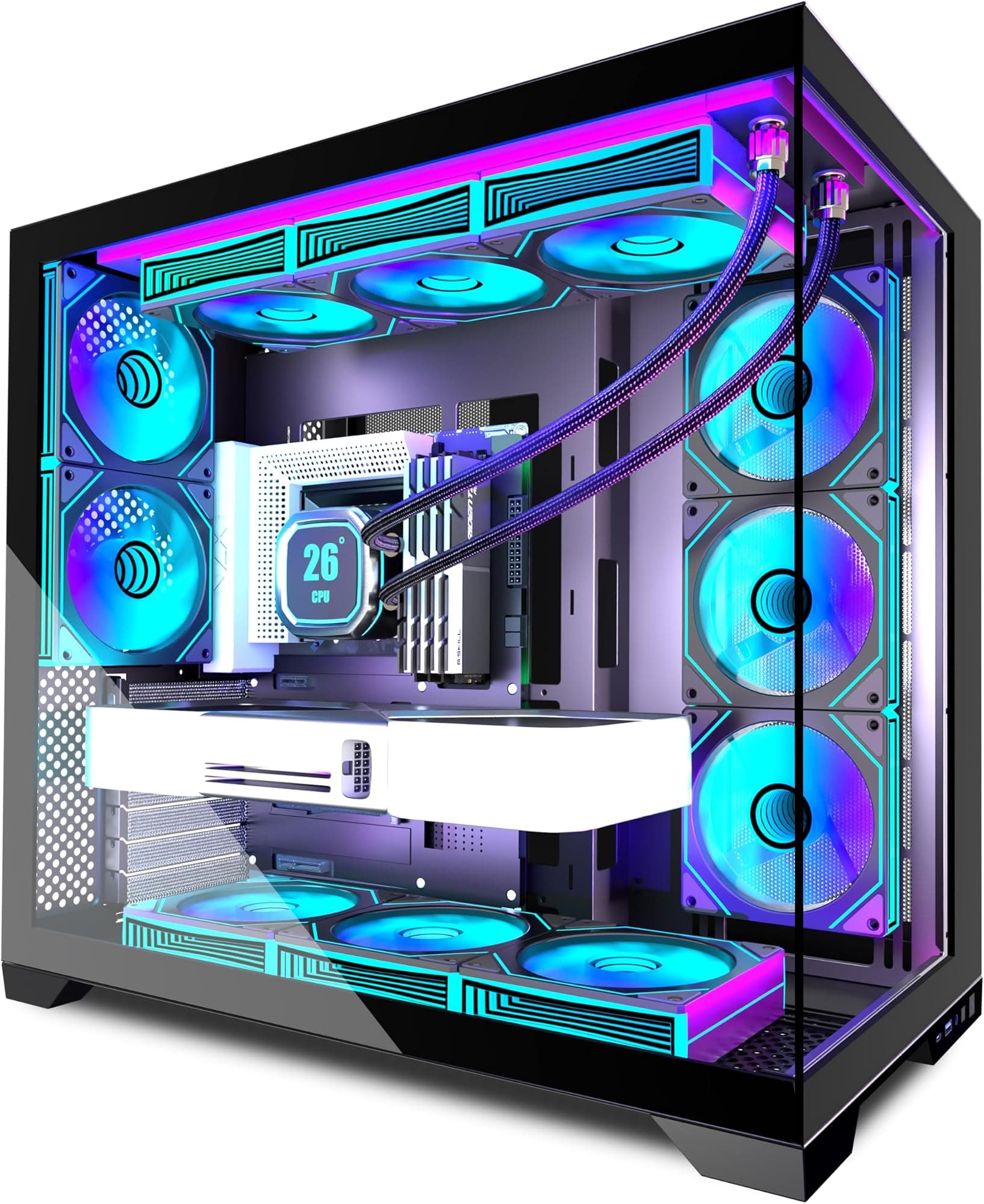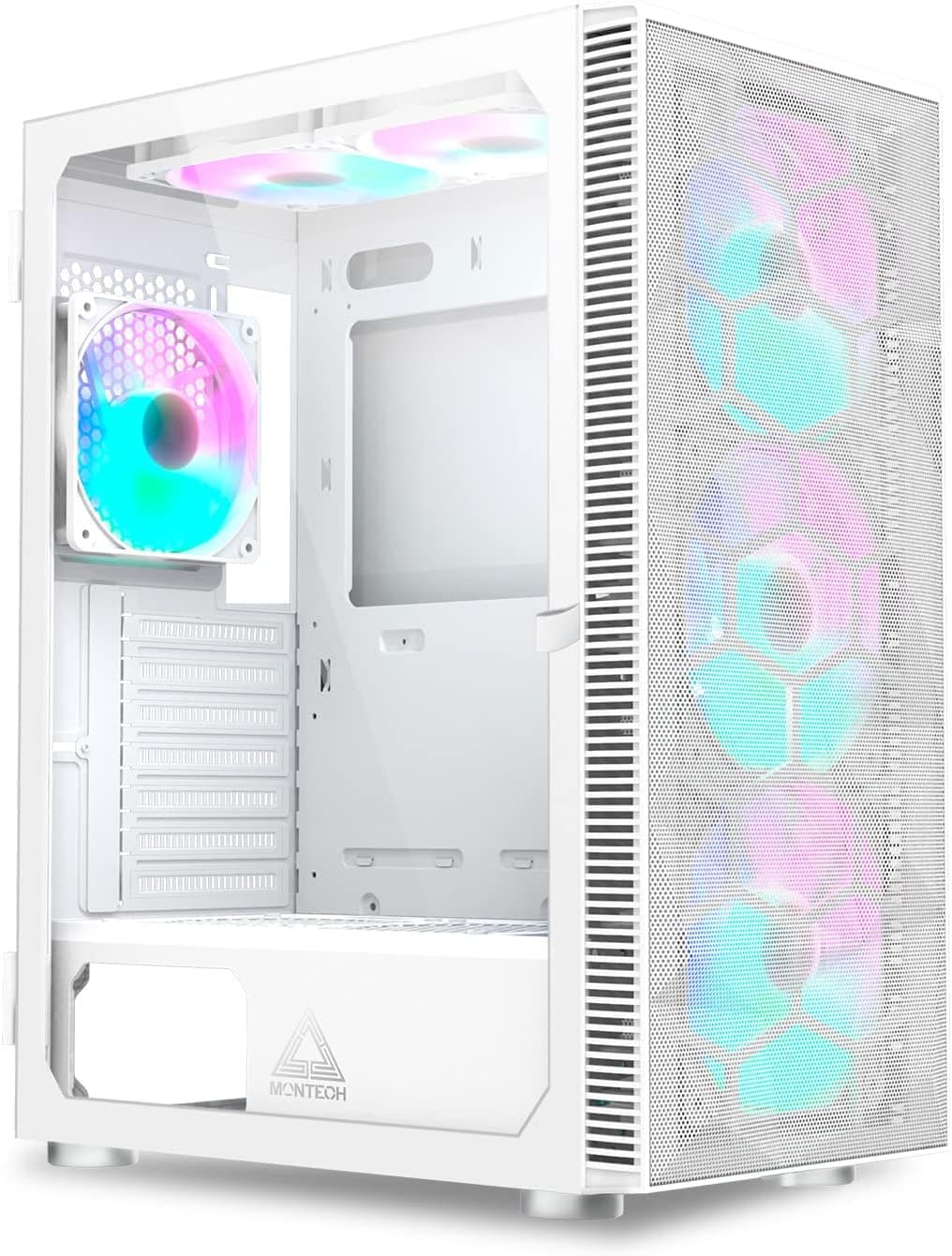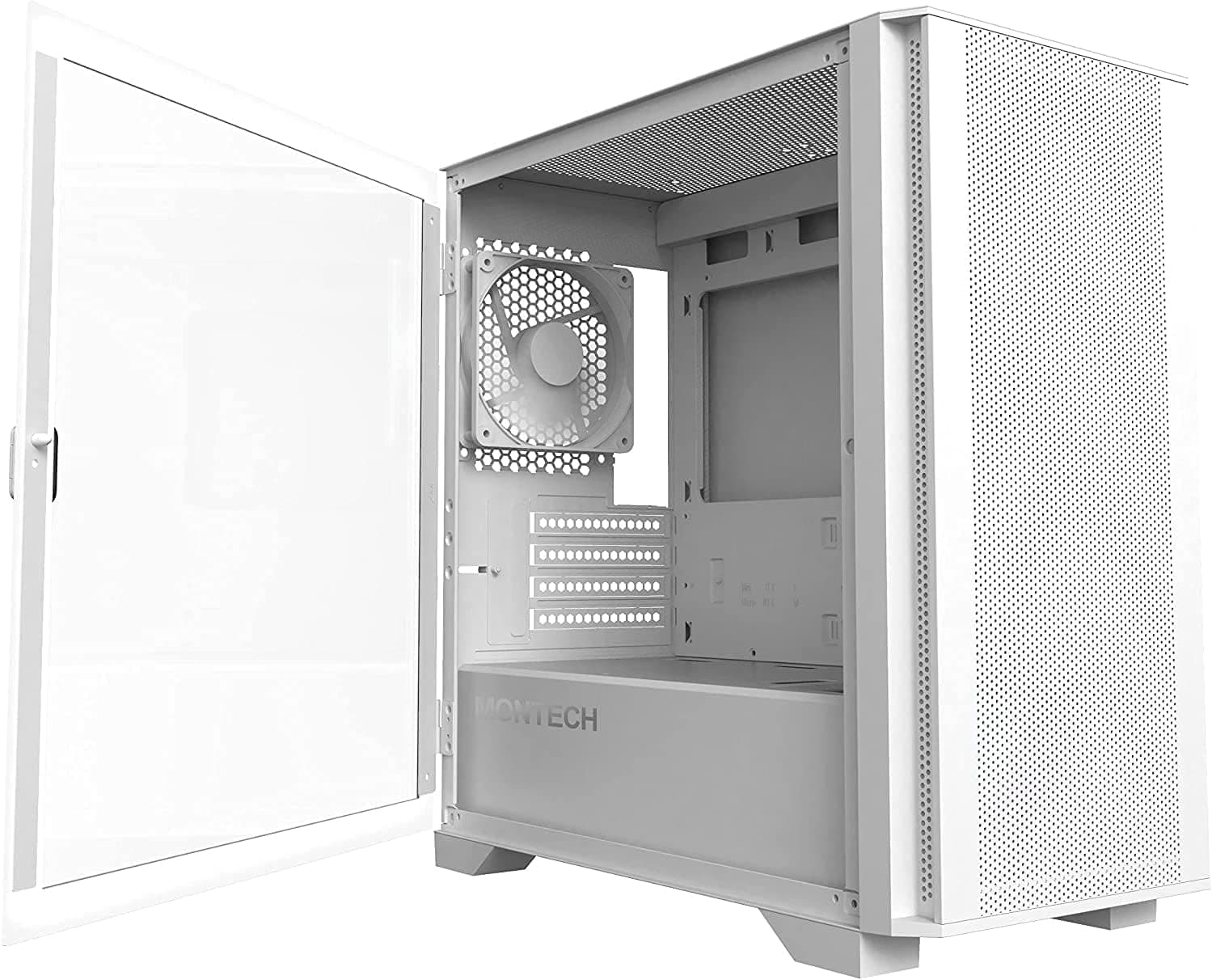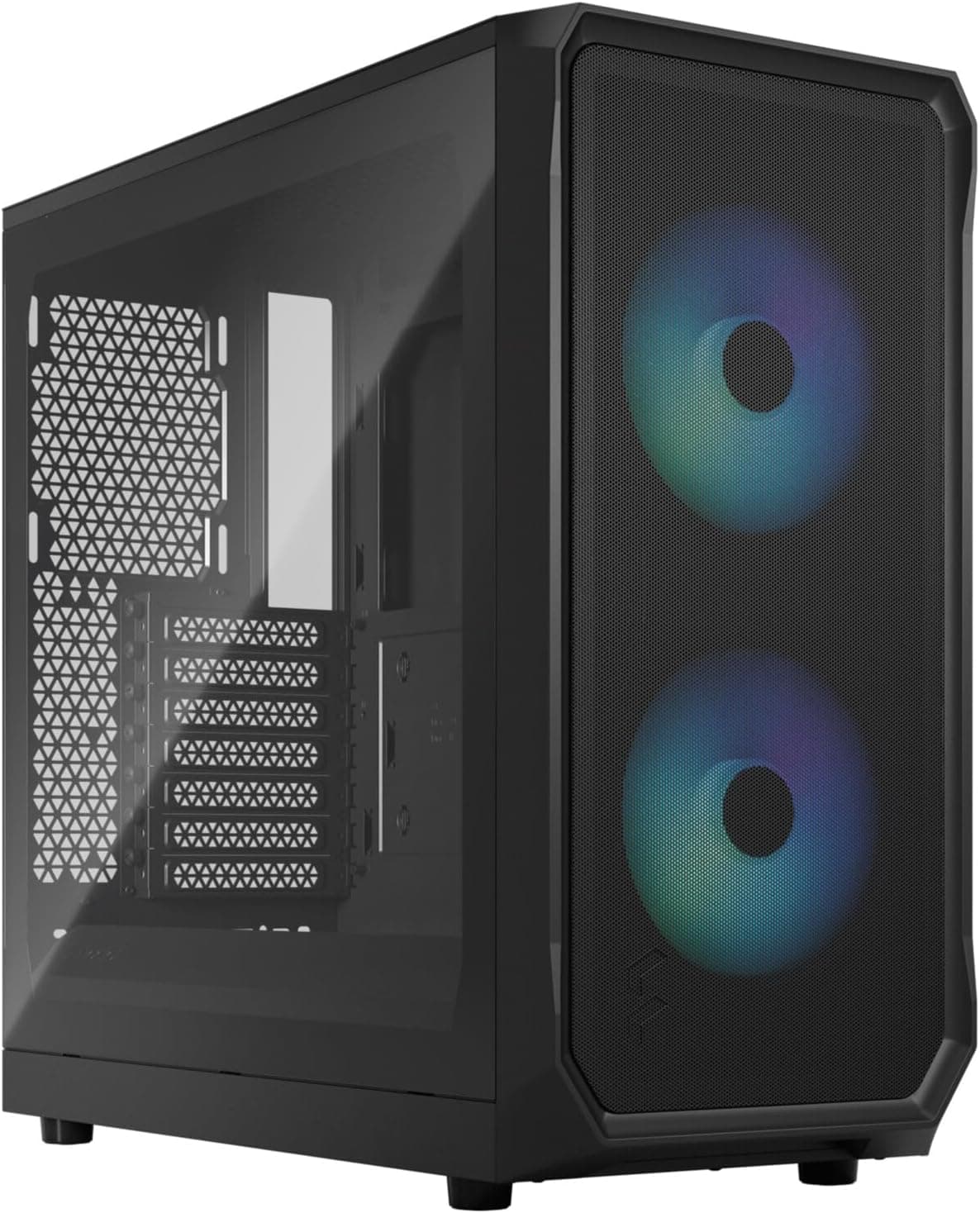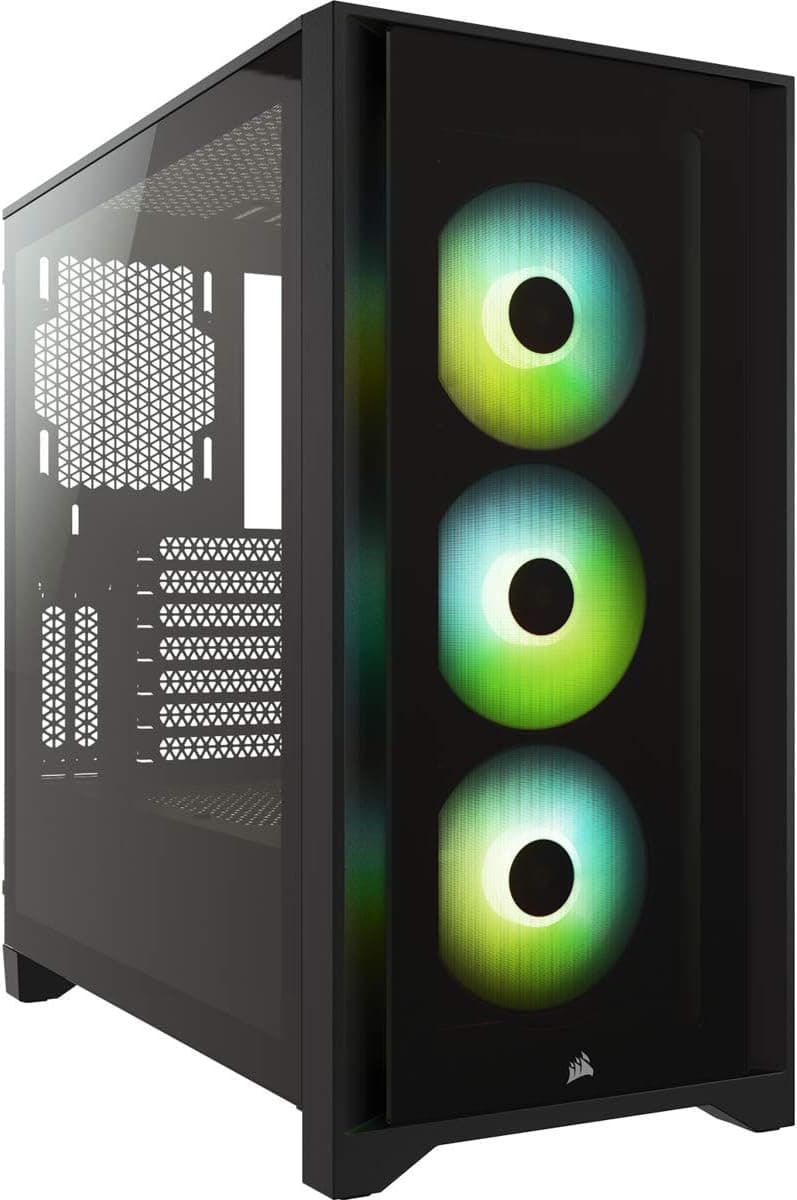
Skip the forty-minute YouTube deep-dives and the spec-sheet gymnastics. What actually matters with the Corsair iCUE 7000X RGB is pretty simple: does a full-tower at this premium price point deliver the space, the airflow, and the build experience that justify spending serious money on a case? Based on the published specifications, Corsair's own documentation, and what 1,058 owners have reported (averaging ★★★★½ (4.7), which is genuinely hard to fake at that volume), the answer is mostly yes. Mostly.
This is a big, glass-heavy, RGB-forward showcase case. It is not subtle. The three tempered glass panels make that very clear from the front. If you want a case that turns your build into a display piece and you have the desk real estate to accommodate something this size, the 7000X RGB is one of the better options at this tier. But there are trade-offs about before you commit, and this Corsair iCUE 7000X RGB review covers all of them.
The headline numbers are good. Three included 140mm LL RGB fans, support for radiators up to 420mm at the front, GPU clearance stretching to 420mm, and a full-tower chassis that will swallow E-ATX motherboards without complaint. That is a strong foundation. Whether the execution matches the spec sheet is what we are here to work out.
Core Specifications
The 7000X RGB is a proper full-tower. It measures 590mm tall, 280mm wide, and 555mm deep, which means it is not going in a tight corner or under a desk without planning. Weight comes in at around 17.5kg with the glass panels fitted, so factor that in if you are moving it around. The chassis is built from steel and tempered glass, with three glass panels covering the front, left side, and top. That is an unusual choice for a case that also wants to claim good airflow, and it creates a tension we will get into properly in the airflow section.
Fan support is extensive. The front panel takes up to three 140mm or three 120mm fans. The top takes up to three 140mm or three 120mm. The rear takes one 140mm or 120mm. That gives you a theoretical maximum of seven fan positions, which is more than enough for even the most thermally demanding builds. Corsair includes three 140mm LL140 RGB fans in the box, all mounted at the front. Radiator support follows the same logic: 420mm or 360mm at the front, 360mm or 420mm at the top, and 120mm or 140mm at the rear. The PSU shroud is present and hides the power supply neatly. Drive bays include two 3.5-inch positions and four 2.5-inch positions.
The iCUE Commander CORE XT hub is included, which controls the RGB and fan speeds and connects to the motherboard via USB. This is important because it means you are not relying entirely on your motherboard's fan headers to run everything. Corsair's official product page lists full compatibility details and the iCUE software integration. The front I/O includes two USB 3.0 Type-A ports, one USB 3.1 Gen 2 Type-C port, and a combined audio/mic jack. That Type-C port is a proper Gen 2 connection, not a watered-down USB 2.0 header hiding behind a modern connector.
| Specification | Detail |
|---|---|
| Form Factor | Full Tower ATX |
| Dimensions (H x W x D) | 590mm x 280mm x 555mm |
| Weight | ~17.5kg |
| Motherboard Support | E-ATX, ATX, mATX, Mini-ITX |
| Included Fans | 3x 140mm LL140 RGB (front) |
| Fan Mounts (total) | 7 positions (front x3, top x3, rear x1) |
| Max Radiator (front) | 420mm |
| Max Radiator (top) | 420mm |
| Max GPU Length | 420mm |
| Max CPU Cooler Height | 190mm |
| Drive Bays (3.5-inch) | 2 |
| Drive Bays (2.5-inch) | 4 |
| Front I/O | 2x USB 3.0, 1x USB 3.1 Gen 2 Type-C, Audio/Mic |
| RGB Controller | iCUE Commander CORE XT included |
| Panel Material | Steel + Tempered Glass (front, side, top) |
| PSU Shroud | Yes |
| Vertical GPU Mount | Yes (PCIe riser not included) |
| Price | £219.98 |

Form Factor and Dimensions
Full-tower is not a marketing exaggeration here. At 590mm tall and 555mm deep, the 7000X RGB is a genuinely large chassis. You need to think seriously about where this is going to live before you buy it. A standard desk with a case sitting beside it is fine, but if you were planning to tuck it under a desk or into a tight alcove, measure first. The 280mm width is actually on the narrower side for a full-tower, which helps a little, but the depth is the dimension that catches people out.
The footprint does have an upside. Because the case is so deep, there is proper room inside for cable routing, large radiators, and long graphics cards without everything feeling cramped. A lot of mid-tower cases at lower price points technically support 360mm radiators and 300mm GPUs, but the internal layout is so tight that building in them is genuinely unpleasant. That is not a problem here. The extra volume translates directly into a more relaxed building experience, which owners consistently mention in their feedback.
The three tempered glass panels give the case a distinctive look. Glass on the front, glass on the left side, glass on the top. It is a bold aesthetic choice and it does look striking when the RGB fans are running. The structural trade-off is that the front panel is glass rather than mesh, which has real implications for airflow (more on that shortly). The glass panels are removable for cleaning and building, and they attach via magnetic latches or hinges depending on the panel. Most owners report the panels feel solid and align well, though a small number of reviews mention the glass can be fiddly to reattach if you have knocked it out of alignment.
Motherboard Compatibility
The 7000X RGB supports E-ATX, ATX, Micro-ATX, and Mini-ITX motherboards. The standoff layout covers the standard positions for all four sizes, and Corsair pre-installs the ATX standoffs from the factory. If you are going E-ATX, check your specific board dimensions because E-ATX is not a perfectly standardised format. Most boards marketed as E-ATX will fit, but some wider HEDT boards from a few years back pushed the limits of what the case can accommodate. Standard E-ATX up to 305mm x 277mm is fine.
For most people building with a current-generation ATX board, compatibility is a non-issue. The motherboard tray has plenty of room around it, and the cutout behind the CPU area is large enough to accommodate most aftermarket cooler backplates without removing the tray entirely. That is a small thing but it saves time during builds and re-builds. Owners building on AMD AM5 and Intel LGA1700 platforms both report straightforward installation without clearance headaches.
One thing: because this is a full-tower, if you are building with a Micro-ATX board, the interior will feel cavernous. That is not a problem exactly, but cable management becomes more of a challenge when your motherboard only occupies a fraction of the available space. You will have more unused tray area and longer cable runs. It is not a deal-breaker, but the 7000X RGB is really designed to shine with ATX and E-ATX builds where the space is put to use. Fitting a Mini-ITX board in here is technically possible and some people do it for the airflow headroom, but it looks a bit odd and you are paying for a lot of case you will never fill.
GPU Clearance
The maximum GPU length is 420mm. To put that in context, an Nvidia RTX 5090 Founders Edition sits around 336mm long, and most third-party triple-fan cards from ASUS, MSI, and Gigabyte come in between 320mm and 360mm. So even the most extreme current cards fit with room to spare, and that 420mm ceiling means this case is future-proofed for at least the next generation or two of graphics hardware. If you have a front radiator installed, Corsair rates clearance at around 330mm depending on radiator thickness, which still covers the vast majority of current cards.
Vertical GPU mounting is supported. The case has a vertical slot position built in, and owners who have used it report it works well aesthetically. The important caveat is that a PCIe riser cable is not included in the box. You need to buy one separately, and for a case at this price point that is a bit disappointing. A decent PCIe 4.0 riser cable will add to your total spend. Also: vertical mounting brings the GPU very close to the side glass panel, so airflow to the GPU is reduced. It looks great. It runs hotter. Pick your priority.
The GPU clearance story is broadly positive. Width clearance (the distance from the PCIe slot to the side panel) is generous enough that even the chunkiest three-slot coolers sit comfortably without pressing against the glass. A few owners with particularly wide cards, like the ASUS ROG Strix models that are nearly three full slots wide, report it is snug but workable. Nothing in the owner feedback suggests cards actually failing to fit at standard lengths, which is reassuring. The 420mm ceiling is not marketing padding. It is real usable space.
CPU Cooler Clearance
The maximum CPU cooler height is 190mm. That clears pretty much every mainstream tower cooler on the market. The Noctua NH-D15 sits at 165mm. The be quiet! Dark Rock Pro 5 is 163mm. Even some of the taller Thermalright and DeepCool options that push 175mm sit comfortably under that 190mm ceiling. You would have to be deliberately choosing an unusually tall cooler to run into problems here, and even then you would likely find a way to make it work.
AIO radiator support is where the 7000X RGB really earns its premium positioning. The front panel supports up to 420mm radiators, which means you can fit a 420mm AIO (three 140mm fans) or a 360mm AIO (three 120mm fans) at the front. The top panel supports the same, 420mm or 360mm. The rear supports a single 120mm or 140mm fan or radiator. That is exceptional flexibility. Most mid-towers cap out at a 360mm front radiator and a 240mm or 280mm top radiator. Having 420mm support at both the front and top means even the most cooling-intensive builds, think overclocked Core i9 or Ryzen 9 paired with a 5090, have room to breathe properly.
A few owners building with top-mounted 360mm AIOs mention that RAM clearance can be tight depending on the radiator and fan combination. Tall RAM heatspreaders can conflict with the bottom fan on a top-mounted radiator. This is a common issue across most cases with top radiator support and is not unique to the 7000X RGB, but it is your specific RAM height before committing to a top-mount AIO. Low-profile RAM or standard-height sticks without tall heatspreaders avoid the issue entirely. Corsair's own Vengeance DDR5 sticks, for example, are fine.
Storage Bay Options
Storage is one area where the 7000X RGB reflects its full-tower status without going overboard. You get two 3.5-inch drive bays and four 2.5-inch drive bays. The 3.5-inch bays sit behind the PSU shroud in a dedicated cage, keeping mechanical drives hidden and reducing visual clutter inside the main chamber. The 2.5-inch bays are distributed around the case, with positions on the back of the motherboard tray and behind the PSU shroud. This is a sensible layout for a modern build where most people are running one or two NVMe SSDs on the motherboard and maybe one mechanical drive for bulk storage.
The drive mounting is tool-free for the 3.5-inch bays, using a tray-and-clip system that owners generally find quick and reliable. The 2.5-inch mounts use screws, which is standard practice. Some reviewers would prefer tool-free 2.5-inch mounting across the board, and that is a fair criticism at this price point, but it is not a significant inconvenience in practice. You are typically installing 2.5-inch drives once and leaving them alone.
If you are coming from an older build with multiple mechanical drives, the two 3.5-inch bays might feel limiting. The 7000X RGB is clearly designed around the assumption that you are running NVMe primary storage with at most one or two mechanical drives for archiving or mass storage. That assumption is reasonable for a 2025 or 2026 build, but if you have a collection of 3.5-inch drives you want to carry over, you may find the storage capacity frustrating. There is no easy way to add more 3.5-inch bays without modifying the internal layout, so factor that in if storage expansion matters to you.

Cable Management
This is one of the genuine strengths of the 7000X RGB. The rear chamber, the space between the motherboard tray and the right-side panel, offers around 25mm to 30mm of clearance for cables. That is enough to route a full modular PSU cable set without the right panel bulging when you try to close it. Velcro straps are included at multiple points along the tray, and there are cable routing channels cut into the tray with rubber grommets to keep things tidy. Owners consistently praise the cable management in their reviews, and this is one of the areas where the full-tower size pays dividends over a cramped mid-tower.
The PSU shroud covers the bottom of the case and hides the power supply and most of the cable mess below the motherboard. It has a small cutout for the main 24-pin ATX cable run, and the routing from the PSU to the motherboard is straightforward with a modular unit. The included Commander CORE XT hub adds some cable complexity because all the fan and RGB cables route to it rather than directly to the motherboard, but Corsair includes enough cable management space to tuck the hub and its cables away cleanly. A few owners mention it takes some planning to route everything neatly, but nobody reports it being impossible or even particularly difficult.
The 24-pin and EPS power cable routing is well thought out. There are dedicated channels behind the tray for the main power cables, and the EPS cutout near the top of the tray is large enough to accommodate even thick braided cables without forcing them into awkward bends. If you are using a fully modular PSU and taking your time with cable management, the 7000X RGB will reward you with a genuinely clean build. If you are using a semi-modular or non-modular PSU, you will need to work a bit harder to hide the excess, but the rear chamber has enough depth to absorb it.
Airflow and Thermal Design
This is the most complicated part of the 7000X RGB story. The case has three tempered glass panels, including the front. Glass does not breathe. A solid glass front panel restricts airflow compared to a mesh front, and that is a real trade-off that Corsair has made in favour of aesthetics. The included LL140 fans are RGB-focused fans, not the highest-airflow fans Corsair makes. The LL series prioritises light diffusion and visual effect. Corsair's own SP or QL series move more air at the same RPM.
So does the glass front make the 7000X RGB a thermal disaster? Not quite. The case compensates with sheer fan mounting capacity and the ability to run large radiators. There are ventilation slots around the edges of the front panel that allow some air movement, and the full-tower volume means heat has more room to dissipate. Owners report that temperatures are acceptable with the stock fan configuration, though not class-leading. If you are building a high-end system with a power-hungry CPU and GPU, you would benefit from adding fans to the top panel and potentially swapping the front fans for higher-airflow alternatives. The iCUE software gives you fan curve control, so you can push the included fans harder when thermals demand it.
The top panel is also glass, which means top exhaust is limited without modification. Some owners remove the top glass panel entirely to improve exhaust airflow, which is a reasonable approach if you care more about temperatures than aesthetics. The dust filters are present on the bottom (for PSU intake) and accessible for cleaning. The front and top panels need to be removed to clean the filters behind them, which is mildly annoying but manageable. Overall, the thermal design is the 7000X RGB's biggest compromise. It is not bad, but a mesh-front case at this price point, like the Fractal Torrent or the Lian Li O11D EVO, will run cooler with equivalent hardware. The 7000X RGB trades some thermal headroom for the showcase aesthetic.
Front I/O and Connectivity
The front I/O sits at the top of the case, which is standard for a full-tower. You get two USB 3.0 Type-A ports, one USB 3.1 Gen 2 Type-C port, a combined headphone and microphone jack, a power button, and a reset button. The Type-C port is the headline here. Gen 2 means 10Gbps throughput, which is fast enough for external SSDs, modern peripherals, and fast charging. A lot of cases in this tier still ship with USB 2.0 hiding behind a Type-C connector, so having genuine Gen 2 is.
The power button has a satisfying tactile feel according to owner reports, and the RGB lighting on the button integrates with the iCUE ecosystem. The reset button is smaller and recessed slightly, which reduces the chance of accidentally hitting it. The audio jack is a single combined port rather than separate headphone and microphone jacks, which is fine for headsets but means you need a splitter if you want to use separate headphones and a standalone microphone. That is a minor inconvenience that is common across most cases.
The placement at the top of the case works well if the case is on a desk beside you, but can be awkward if it is on the floor or tucked under a desk. This is a trade-off inherent to full-tower cases generally rather than a specific criticism of the 7000X RGB. The overall I/O provision is good for a case at this price, and the Type-C Gen 2 port in particular is a feature that cheaper cases often skip or implement poorly. Corsair's iCUE software integration also means the front RGB lighting and the Commander CORE XT hub are all controllable from one interface, which owners generally find convenient once the software is set up.
Build Quality and Materials
The steel chassis feels solid. Panel alignment is good out of the box, and the tempered glass panels are thick enough to feel substantial without being dangerously heavy. Owners across the 1,062 consistently praise the build quality, and complaints about sharp edges or poor panel fit are rare. The glass panels are 4mm tempered glass, which is standard for premium cases. The steel used in the chassis is not the thinnest you will find in the market, and the case does not flex or creak when you move it.
The glass panel attachment system uses a combination of hinges and magnetic latches. The left side panel swings open on a hinge, which is genuinely useful when building and makes repeated access easy. The front and top panels lift off rather than hinge, which is fine for occasional removal but slightly less convenient if you need to access them frequently. The magnetic latches hold securely and the panels do not rattle in normal use. A small number of owners report the magnets can lose strength over time, but this appears to be a minority experience rather than a widespread issue.
The finish on the white version is clean and consistent. The interior is painted white as well, which looks good and helps RGB lighting reflect more evenly through the glass panels. The PSU shroud, drive cages, and fan brackets all feel well-made. The screw quality is fine, nothing exceptional but nothing that strips easily either. At this premium price point, the build quality meets expectations. It does not feel cheap anywhere, and the overall impression from owner feedback is of a case that was designed and manufactured with care. The 4.7 average from over a thousand reviews is not an accident.
How It Compares
The two most natural competitors to the Corsair iCUE 7000X RGB are the Lian Li O11D EVO and the Fractal Design Torrent XL. The O11D EVO is a dual-chamber design that has become extremely popular for high-end builds, particularly water-cooled systems. The Torrent XL is Fractal's flagship airflow full-tower, built around mesh panels and high-static-pressure fans. Both sit in a similar price bracket.
Against the O11D EVO, the 7000X RGB wins on included fans and RGB integration out of the box. The O11D EVO ships without fans, so you are spending extra immediately. The 7000X RGB's iCUE ecosystem is more polished than Lian Li's L-Connect software for most users. The O11D EVO's dual-chamber layout is arguably better for custom water cooling loops, but for air or AIO cooling, the 7000X RGB is at least competitive. The O11D EVO also has a mesh option for better airflow, which the 7000X RGB cannot match with its glass front.
Against the Fractal Torrent XL, the airflow comparison goes firmly in Fractal's favour. The Torrent XL's mesh front and included high-performance fans push significantly more air than the glass-fronted 7000X RGB. If thermal performance is your top priority, the Torrent XL is the stronger choice. But the 7000X RGB wins on RGB, aesthetics, and software integration. The Torrent XL is a case for people who want the best temperatures. The 7000X RGB is a case for people who want the best-looking build that still runs acceptably cool.
| Feature | Corsair iCUE 7000X RGB | Lian Li O11D EVO | Fractal Torrent XL |
|---|---|---|---|
| Form Factor | Full Tower ATX | Mid/Full Tower ATX | Full Tower ATX |
| Front Panel | Tempered Glass | Tempered Glass / Mesh option | Mesh |
| Included Fans | 3x 140mm RGB | None | 2x 180mm + 1x 140mm |
| Max GPU Length | 420mm | 446mm | 461mm |
| Max CPU Cooler | 190mm | 167mm | 188mm |
| Max Front Radiator | 420mm | 360mm | 420mm |
| RGB Ecosystem | iCUE (excellent) | L-Connect (good) | None built-in |
| Airflow Priority | Moderate (glass front) | Moderate (glass front standard) | High (mesh front) |
| E-ATX Support | Yes | Yes | Yes |
| Vertical GPU Mount | Yes (riser not included) | Yes (riser included) | No |
| Price Tier | Premium | Premium | Premium |

Final Verdict
The Corsair iCUE 7000X RGB is a well-made, feature-rich full-tower case that does exactly what it sets out to do. It is a showcase. A display case for a high-end build where the components are as much a visual statement as a functional machine. The three tempered glass panels, the included LL140 RGB fans, the Commander CORE XT hub, and the iCUE software integration all point in the same direction: this case is for people who want their build to look spectacular and who are willing to accept some thermal compromise to achieve that.
The specs are genuinely strong. A 420mm GPU clearance, 190mm CPU cooler height, 420mm radiator support at both the front and top, E-ATX compatibility, and a proper USB 3.1 Gen 2 Type-C front port. The build quality is solid, cable management is excellent, and the 4.7 average from 1,058 owners tells you that the people who buy this are, by and large, happy with it. That is meaningful. Owner satisfaction at that volume and rating does not happen by accident.
But. The glass front is a real trade-off. If you are building a high-power system and you care about temperatures, the 7000X RGB will ask you to either add more fans, swap the included ones, or remove the top glass panel. It is not a thermal disaster, but it is not an airflow champion either. And the missing PCIe riser cable for vertical GPU mounting is a bit stingy at this price. These are known compromises, not hidden surprises, but they are worth being clear about.
Who is this for? Builders who want a premium, RGB-forward full-tower that integrates cleanly with Corsair's iCUE ecosystem, has room for E-ATX boards and 420mm radiators, and looks genuinely impressive on a desk. It suits enthusiast builds where aesthetics matter as much as raw performance. The 4.7 rating from real owners backs up the quality claims.
Who should skip it? If your priority is maximum airflow and the lowest possible temperatures, spend your money on the Fractal Torrent XL instead. You will get better thermals and pay less. Similarly, if you are not bothered about RGB and just want a solid full-tower to build in, the Fractal Define 7 XL gives you a quieter, cleaner experience at a lower price. The 7000X RGB earns its premium, but only if the showcase aesthetic is genuinely what you are after. Buy it for the right reasons and you will not be disappointed. Buy it hoping it performs like a mesh case and you will be.
Our verdict: 8.5 out of 10. A proper premium full-tower that delivers on its showcase promise. The glass-front airflow compromise is real but manageable, and everything else, build quality, clearances, cable management, RGB integration, is genuinely impressive at this tier.
What works. What doesn’t.
5 + 4What we liked5 reasons
- 420mm GPU and radiator clearance covers current and near-future flagship cards
- Three LL140 RGB fans and Commander CORE XT hub included in the box
- Excellent cable management with 25-30mm rear chamber depth and Velcro straps
- USB 3.1 Gen 2 Type-C front I/O, not a watered-down implementation
- 4.7 average from 1,058 owners confirms real-world satisfaction at scale
Where it falls4 reasons
- Glass front panel restricts airflow compared to mesh alternatives
- PCIe riser cable for vertical GPU mount not included at this price
- Only two 3.5-inch drive bays limits legacy HDD storage expansion
- Top glass panel further limits exhaust airflow without modification
Full specifications
11 attributes| Form factor | Full-Tower |
|---|---|
| CPU cooler clearance MM | 190 |
| Dimensions MM | 550 x 248 x 600 |
| Fans included | 4 |
| GPU clearance MM | 450 |
| MAX FAN count | 10 |
| MAX radiator MM | 480 |
| PSU support | ATX up to 225mm |
| Side panel | tempered glass |
| Supported motherboard | Mini-ITX, Micro-ATX, ATX, E-ATX |
| Weight KG | 21 |
Frequently asked
5 questions01Is the Corsair iCUE 7000X RGB Full Tower ATX PC Case, White good for airflow?+
It is acceptable but not exceptional. The three tempered glass panels, including the front and top, restrict airflow compared to mesh-front cases. Corsair includes three 140mm LL140 RGB fans at the front, which are optimised for light diffusion rather than maximum airflow. Temperatures are manageable for most builds, but if you are running a high-TDP CPU and GPU combination, you will benefit from adding fans to the top panel and potentially swapping the included fans for higher-airflow alternatives. The case has dust filters on the bottom and behind the front and top panels. For pure thermal performance, a mesh-front case like the Fractal Torrent XL will outperform it.
02What is the GPU clearance on the Corsair iCUE 7000X RGB Full Tower ATX PC Case, White?+
The maximum GPU length is 420mm without a front radiator installed. With a front radiator fitted, clearance drops to approximately 330mm depending on radiator and fan thickness. An RTX 5090 Founders Edition is around 336mm, and most third-party triple-fan cards sit between 320mm and 360mm, so even flagship cards fit comfortably. Width clearance is generous enough for three-slot cooler designs. Vertical GPU mounting is supported but requires a separately purchased PCIe riser cable, which is not included in the box.
03Can the Corsair iCUE 7000X RGB Full Tower ATX PC Case, White fit a 360mm AIO?+
Yes, easily. The front panel supports radiators up to 420mm, which means a 360mm AIO (three 120mm fans) or a 420mm AIO (three 140mm fans) both fit at the front. The top panel also supports up to 420mm radiators. The rear supports a single 120mm or 140mm radiator. If you are mounting a 360mm AIO at the top, check your RAM heatspreader height as tall heatspreaders can conflict with the bottom fan of a top-mounted radiator. Standard-height or low-profile RAM avoids this issue entirely.
04Is the Corsair iCUE 7000X RGB Full Tower ATX PC Case, White easy to build in?+
Generally yes. The full-tower dimensions give you plenty of room to work, and the rear cable management chamber offers around 25mm to 30mm of clearance with Velcro straps at multiple points. The left side panel opens on a hinge for easy repeated access. The CPU area cutout on the motherboard tray is large enough for most aftermarket cooler backplates without removing the tray. The included Commander CORE XT hub adds some cable routing to manage, but there is enough space to tuck it away cleanly. Owner feedback consistently praises the build experience, with very few reports of sharp edges or frustrating panel alignment.
05What warranty and returns apply to the Corsair iCUE 7000X RGB Full Tower ATX PC Case, White?+
Corsair typically covers their cases with a two-year limited warranty covering manufacturing defects. For purchases made through Amazon UK, you are also covered by Amazon's standard 30-day return policy and the A-to-Z Guarantee. For the most current warranty terms, check Corsair's official support pages directly, as terms can vary by region and purchase date.