Picking a motherboard is one of those decisions that looks simple until you're forty-five minutes deep in spec sheets, wondering whether the difference between X870 and X870E actually matters for what you're building. It does, sometimes. And in the upper mid-range bracket, where the MSI X870E GAMING PLUS WIFI sits, the gap between a genuinely good board and an overpriced one with a flashy name is narrower than manufacturers would like you to believe.
So here's the short version: this is a proper X870E board at a price that undercuts most of the competition, with a VRM setup that can handle a Ryzen 9 9950X without breaking a sweat, Wi-Fi 7, 5Gbps LAN, USB4, and a Gen5 M.2 slot. Owner feedback across 139 sits at ★★★★☆ (4.3), which for a motherboard (a category where people are quick to leave one-star reviews the moment a BIOS update goes sideways) is genuinely encouraging. If you're building an AM5 system and don't want to spend premium board money, this deserves serious consideration. The caveats are real but manageable, and we'll get into them properly.
The board is aimed squarely at people who want X870E chipset features without paying X870E flagship prices. That's a sensible place to aim. Whether MSI has pulled it off is what the rest of this review is about.
Core Specifications
The MSI X870E GAMING PLUS WIFI is a full-size ATX board on the AMD AM5 socket, running the X870E chipset. That chipset distinction matters: X870E is the enthusiast tier above standard X870, and it mandates USB4 40Gbps and PCIe 5.0 on both the primary GPU slot and at least one M.2 slot. Both of those boxes are ticked here. Four DDR5 DIMM slots support memory overclocking up to 8200+ MT/s in OC mode, which is well ahead of what most people will ever use but good to have headroom on.
Storage is covered by three M.2 slots: one Gen5 x4 running at 128Gbps (with the EZ M.2 Shield Frozr II heatsink included), and two Gen4 x4 slots at 64Gbps each. That's a solid spread. The primary GPU slot is PCIe 5.0 x16 with Steel Armor reinforcement, and there's a secondary PCIe 4.0 x4 slot for additional cards. Rear connectivity includes USB4 Type-C at 40Gbps with display output, which is the kind of port that future-proofs a build properly.
Networking is where this board earns its keep at this price point. Full-speed Wi-Fi 7 with Bluetooth 5.4 and a 5Gbps LAN port is a combination you'd normally expect on boards costing noticeably more. Audio is handled by a 7.1 HD Audio setup with Audio Boost. The VRM is a 14-phase Duet Rail Power System using 60A SPS MOSFETs, which is more than adequate for anything in the current Ryzen lineup.
| Specification | Detail |
|---|---|
| Socket | AMD AM5 |
| Chipset | AMD X870E |
| Form Factor | ATX |
| Memory Slots | 4 x DDR5 DIMM (SMT) |
| Max Memory Speed (OC) | 8200+ MT/s |
| Primary PCIe Slot | PCIe 5.0 x16 (Steel Armor) |
| Secondary PCIe Slot | PCIe 4.0 x4 |
| M.2 Slots | 3 total: 1x Gen5 x4, 2x Gen4 x4 |
| VRM | 14-phase Duet Rail, 60A SPS |
| USB (Rear) | USB4 Type-C 40Gbps (with display out) |
| LAN | 5Gbps |
| Wi-Fi | Wi-Fi 7 |
| Bluetooth | 5.4 |
| Audio | 7.1 HD Audio with Audio Boost |
| Current Price | £182.99 |
| Rating | ★★★★☆ (4.3) (139 reviews) |

Socket and CPU Compatibility
The AM5 socket is AMD's current platform, and it's been clear for a while that AMD intends to keep it relevant for longer than AM4's initial run suggested. The MSI X870E GAMING PLUS WIFI supports Ryzen 7000, 8000, and 9000 series processors, which covers everything from the value-oriented Ryzen 5 7600 all the way up to the Ryzen 9 9950X. That's a wide net, and it means this board isn't going to be obsolete the moment AMD refreshes the lineup.
The X870E chipset mandates PCIe 5.0 support at the platform level, so you're getting that regardless of which Ryzen chip you drop in. If you're coming from an older AM4 build, your existing cooler may or may not transfer over. AM5 uses a different mounting standard, so check your cooler manufacturer's compatibility before assuming it'll work. Most major brands (Noctua, be quiet!, Cooler Master) have AM5 mounting kits available, sometimes included in the box, sometimes a free order-away. before your build day.
BIOS updates are here. MSI has been reasonably good about releasing BIOS updates that add support for new Ryzen generations, and the X870E platform is current enough that you're unlikely to need a flash before installing a Ryzen 9000 chip. That said, if you're buying this board to pair with a very new processor at launch, it's always the MSI compatibility page before assuming the board ships with the right firmware. MSI does include a BIOS Flashback-style feature on some boards in this range, though the specifics for this model aren't detailed in the verified spec data, so confirm that before relying on it.
Chipset Features
The AMD X870E chipset sits at the top of AMD's current desktop hierarchy. The 'E' suffix isn't just marketing: it mandates PCIe 5.0 on the primary GPU and primary M.2 slot, plus USB4 40Gbps on the rear I/O. Standard X870 boards only require PCIe 5.0 on the M.2 side, not necessarily the GPU slot. So if you're buying X870E, you're guaranteed the full fat feature set. This board delivers on both counts.
Overclocking is fully unlocked on X870E. That means CPU multiplier adjustments, memory frequency tuning, and voltage control are all on the table. The 8200+ MT/s memory OC figure MSI quotes is in that territory where you'd need a very specific kit and some patience to achieve it, but the platform supports it. More practically, getting DDR5-6000 or DDR5-6400 running stably is straightforward on this chipset, and that's where most Ryzen 9000 builds will land for the best performance-per-pound on memory.
Chipset-level connectivity adds USB lanes and PCIe bandwidth beyond what the CPU alone provides. The X870E chipset is built on two X670E dies working in tandem (AMD's approach to delivering the lane count), which is why X870E boards tend to have more USB ports and M.2 slots than budget chipset boards. The practical upshot: three M.2 slots, multiple USB headers, and enough PCIe lanes that you're unlikely to hit a bandwidth conflict in a normal gaming or workstation build.
VRM and Power Delivery
This is where a lot of boards in the upper mid-range get found out. Manufacturers slap a big phase count on the box and quietly use lower-quality MOSFETs that thermal throttle under sustained load. The MSI X870E GAMING PLUS WIFI uses a 14-phase Duet Rail Power System with 60A SPS (Smart Power Stage) MOSFETs. The Duet Rail architecture means each phase handles both the high-side and low-side MOSFET in a single package, which improves efficiency and reduces component count compared to older split-phase designs. Fourteen phases at 60A each gives you 840A of theoretical headroom, which is absurd overkill for any current Ryzen processor. Even a Ryzen 9 9950X running a sustained all-core workload isn't going to stress this VRM.
Cooling the VRM is handled by what MSI calls the Frozr Guard system: 7W/mK thermal pads on the MOSFETs (which is a legitimately good thermal interface material spec, not a throwaway number), extra choke thermal pads, and an extended heatsink. There's also a chipset heatsink. The combination means heat dissipation is taken seriously here, which matters if you're running a high-TDP chip in a warm case or doing sustained compute workloads rather than gaming sessions with natural breaks. Owner reviews don't flag thermal issues as a concern, which is the real-world validation that the heatsink design is doing its job.
The board also includes a Combo-fan header rated at 3A, which can drive both a pump and a system fan. That's a useful detail if you're running an AIO or custom loop: you're not wasting a dedicated pump header on a fan, and you're not bodging a Y-splitter. It's a small thing but it reflects considered design rather than checkbox engineering. For anyone running a 360mm AIO with a high-TDP Ryzen 9, the VRM and cooling setup here is more than sufficient.
Memory Support
Four DDR5 DIMM slots in a dual-channel configuration. The SMT (Surface Mount Technology) slot design is: MSI uses SMT slots on some boards for improved signal integrity at high memory frequencies, which is part of why they can quote 8200+ MT/s in OC mode with a straight face. Whether you'll ever run your kit that fast is another question entirely, but the platform supports it.
For most people, the relevant numbers are the speeds you can hit with a decent kit without spending hours in BIOS. DDR5-6000 CL30 is generally considered the sweet spot for Ryzen 9000 in terms of performance versus effort, and getting there on this board should be a matter of enabling EXPO (AMD's memory profile standard, equivalent to Intel's XMP) and selecting your kit's rated profile. MSI's EXPO support is solid across their AM5 lineup, and owner feedback doesn't flag memory compatibility as a widespread issue here.
Maximum capacity isn't specified in the verified product data, but four DDR5 DIMM slots on an X870E board typically support 192GB or 256GB depending on the specific implementation. For gaming and content creation, 32GB or 64GB is where most builds land. The 1DPC 1R (one DIMM per channel, single rank) configuration is what achieves the headline OC speeds, so if you're chasing 8000+ MT/s, you'll want two sticks rather than four, and single-rank modules specifically. Four sticks at high frequencies is possible but harder to stabilise, which is true across the AM5 platform generally, not just this board.
Storage Options
Three M.2 slots is the right number for an upper mid-range board in 2026. The primary slot runs PCIe Gen 5 x4 at 128Gbps, which is where the fastest consumer NVMe drives now operate. Drives like the Samsung 990 Pro or the Gen5 options from Crucial and WD sit in this slot and will saturate it. The EZ M.2 Shield Frozr II heatsink is included for this slot, which is good because Gen5 NVMe drives run hot under sustained sequential writes. Having a proper heatsink rather than a thin stamped piece of metal actually matters here.
The two secondary M.2 slots run PCIe Gen4 x4 at 64Gbps each. Gen4 drives are still fast enough for almost any real-world workload, and they're typically cheaper per gigabyte than Gen5. So the sensible build approach is: Gen5 slot for your primary OS and application drive, Gen4 slots for storage expansion. Three M.2 slots means you can run a meaningful amount of fast storage without touching SATA at all, which keeps cable management clean.
SATA port count isn't specified in the verified product data, so if you're planning to run a stack of SATA SSDs or HDDs alongside your M.2 drives, check the full spec sheet on MSI's site before committing. X870E boards typically offer six SATA ports, but confirm rather than assume. RAID support is chipset-level on AMD platforms and should be present, though again, verify the specific modes supported if RAID is a requirement for your build.
Expansion Slots and PCIe
The primary PCIe slot is x16 at Gen5, with Steel Armor reinforcement. Steel Armor is MSI's name for the metal shielding around the slot that prevents the slot from cracking under the weight of a heavy GPU. It's a genuine quality-of-life feature, not just cosmetic, especially if you're running a large three-fan GPU without a vertical mount or GPU support bracket. The PCIe 5.0 x16 bandwidth (128GB/s) is more than current GPUs can use, but it's future-proof for whatever comes next.
The secondary slot runs PCIe 4.0 x4. That's fine for a capture card, a 10GbE NIC, or a USB expansion card. It's not a full x16 slot, so don't plan on running a second GPU in any meaningful configuration here. This isn't a multi-GPU board, and frankly multi-GPU gaming is essentially dead as a use case anyway. The x4 bandwidth is plenty for the peripheral expansion cards that people actually use.
Lane sharing is worth understanding. On X870E, the primary M.2 Gen5 slot draws lanes from the CPU directly, as does the primary GPU slot. The Gen4 M.2 slots and secondary PCIe slot draw from the chipset. This means in a typical build with one GPU and three M.2 drives, you're not sacrificing GPU bandwidth for storage. That's the right architecture for a gaming or workstation build, and it's one of the reasons the X870E chipset costs more than B650E.

Connectivity and Rear I/O
The headline rear I/O feature is the USB4 Type-C port running at 40Gbps with display output. USB4 at 40Gbps is genuinely fast: it's fast enough to drive an external GPU enclosure (in theory), connect Thunderbolt 4 peripherals, or run an external NVMe enclosure at full speed. The display output capability means you can drive a monitor directly from this port, which is useful if you're running a Ryzen chip with integrated graphics for a secondary display or a low-power workstation setup.
The 7.1 HD Audio with Audio Boost covers the audio side. Audio Boost is MSI's implementation of audio isolation on the PCB, separating the audio circuitry to reduce interference from other components. It's a real feature with audible impact if you're using the rear audio jacks with decent headphones or speakers. If you're running a dedicated DAC or USB audio interface, it's irrelevant, but for the majority of users who plug headphones straight into the back of the PC, it's worth having.
The full rear I/O port count beyond USB4 and audio isn't exhaustively listed in the verified product data, so for the complete breakdown of USB-A counts, USB 3.2 Gen1 vs Gen2 ports, and any video outputs, the MSI product page is the place to go. What's confirmed: USB4 Type-C 40Gbps is there, which is the port that matters most for future-proofing. Owner reviews don't flag the rear I/O as sparse, which suggests the overall port selection is reasonable for the price.
Wi-Fi and Networking
Wi-Fi 7 (802.11be) is the current top tier of wireless connectivity. It supports multi-link operation, which means the adapter can use multiple frequency bands simultaneously for lower latency and higher throughput. In practice, most home routers don't yet support the full Wi-Fi 7 feature set, but the adapter will work with Wi-Fi 6 and Wi-Fi 6E networks too. Getting Wi-Fi 7 at this price point is unusual and genuinely useful for longevity: this board will still be running a current-gen wireless standard in five years.
Bluetooth 5.4 comes bundled with the Wi-Fi module. That covers wireless peripherals, headsets, and controllers without any additional hardware. The combination of Wi-Fi 7 and Bluetooth 5.4 in a single module is standard practice, but the quality of the implementation varies. MSI's Wi-Fi modules across their Gaming Plus line have a decent reputation for reliability, and owner reviews here don't flag wireless stability as a problem.
The 5Gbps LAN port is the other headline networking feature. Most motherboards in this bracket ship with 2.5Gbps LAN, so 5Gbps is a meaningful step up. If your router or switch supports 5Gbps (NBASE-T), you'll see the benefit immediately. If not, the port runs at whatever your network supports, so it's not wasted, just banked for when your network catches up. For anyone doing large file transfers between machines or running a NAS, 5Gbps versus 2.5Gbps is a real-world difference, not a spec-sheet footnote.
BIOS and Overclocking
MSI's BIOS, called Click BIOS 5, has improved significantly over the past few years. It's not perfect, but it's no longer the confusing mess it was on earlier AM4 boards. The interface has a decent Easy Mode for basic setup and an Advanced Mode that exposes the full overclocking options. Memory overclocking in particular is well-implemented: EXPO profile selection is straightforward, and manual tuning of subtimings is accessible without requiring a computer science degree to navigate the menus.
Owner feedback on BIOS stability is mixed in the way it always is for AM5 boards: early firmware had some quirks, and a few reviewers mention needing to update the BIOS before everything ran smoothly. This is par for the course on the platform, not specific to MSI. The advice is the same as always: update the BIOS before you install your OS, check the MSI support page for the latest stable release, and don't flash beta firmware unless you have a specific reason to. MSI's BIOS update process is reasonably painless compared to some competitors.
Fan control is handled through the BIOS and optionally through MSI Center software in Windows. The Combo-fan header (pump and system fan combined) is a good sign that the fan control implementation is thoughtful rather than an afterthought. You get proper PWM and DC control options, and the ability to set custom fan curves per header. For a quiet build with an AIO, this matters: you want the pump running at a fixed speed while the radiator fans follow a thermal curve, and this board lets you do that without third-party software hacks. No debug LED or Q-Code display is mentioned in the verified spec data, so if that's important for your build process, confirm before buying.
Build Quality and Aesthetics
The Gaming Plus line from MSI has always leaned toward understated rather than flashy, and this board continues that trend. The colour scheme is black with subtle accents, and there's no mention of addressable RGB in the verified spec data. If you want a light show, you might be disappointed. If you want a board that looks professional in a case with a glass side panel without screaming "gaming PC" at full volume, this is actually refreshing. The heatsink coverage is substantial: VRM heatsinks, chipset heatsink, and the M.2 Shield Frozr II on the primary Gen5 slot all contribute to a board that looks well-equipped rather than bare.
The Steel Armor on the PCIe x16 slot is a build quality detail worth appreciating. Heavy GPUs flex slots over time, and a reinforced slot is genuinely better than an unreinforced one. The EZ M.2 Shield Frozr II uses a tool-free or simplified installation mechanism (the EZ prefix is MSI's branding for screwless M.2 mounting), which makes swapping NVMe drives less of a faff. Anyone who's dropped a tiny M.2 screw into a case during a build will appreciate this.
PCB quality on MSI's Gaming Plus boards has been consistently decent. This isn't the absolute premium PCB you'd get on a flagship MEG board, but it's not the thin, flexing PCB you find on budget boards either. The 7W/mK thermal pad spec on the MOSFETs is a concrete quality indicator: cheaper boards use lower-conductivity pads that compromise cooling even when the heatsink looks substantial. At this price point, that level of thermal engineering is legitimately above average.
How It Compares
The two most relevant comparisons at this price point are the ASUS ROG Strix B650E-F and the Gigabyte X870E AORUS Elite. The B650E-F sits in a similar price bracket but uses the B650E chipset rather than X870E, which means it misses out on the USB4 40Gbps rear port and has a less capable USB ecosystem overall. The VRM on the ASUS is competitive, and ASUS's BIOS (UEFI BIOS Utility) is arguably the most polished in the industry right now, which is a real advantage if you spend time tuning. But the chipset difference is meaningful: X870E mandates PCIe 5.0 on the GPU slot and USB4, which B650E does not.
The Gigabyte X870E AORUS Elite is a more direct competitor, sitting on the same chipset. Gigabyte's BIOS has improved but still trails MSI and ASUS for user-friendliness, and Gigabyte's software ecosystem is less polished. The AORUS Elite typically offers similar VRM specs and connectivity, so the decision between the two often comes down to brand preference and whichever is cheaper on the day. MSI's 4.3 rating across 139 is a solid indicator of real-world satisfaction, and the Frozr Guard thermal solution is a concrete differentiator.
| Feature | MSI X870E Gaming Plus WIFI | ASUS ROG Strix B650E-F | Gigabyte X870E AORUS Elite |
|---|---|---|---|
| Chipset | X870E | B650E | X870E |
| VRM | 14-phase, 60A SPS | 18+2 phase (lower A rating) | 16+2+1 phase |
| PCIe GPU Slot | Gen5 x16 | Gen5 x16 | Gen5 x16 |
| Primary M.2 | Gen5 x4 | Gen5 x4 | Gen5 x4 |
| M.2 Total | 3 slots | 4 slots | 4 slots |
| USB4 Rear | 40Gbps Type-C | Not mandated by B650E | 40Gbps Type-C |
| LAN | 5Gbps | 2.5Gbps | 2.5Gbps |
| Wi-Fi | Wi-Fi 7 | Wi-Fi 6E | Wi-Fi 7 |
| Bluetooth | 5.4 | 5.3 | 5.4 |
| BIOS Quality | Good (Click BIOS 5) | Excellent (UEFI) | Decent |
| Price Tier | Upper mid-range | Upper mid-range | Upper mid-range |
The 5Gbps LAN on the MSI is a genuine differentiator against both competitors, which ship with 2.5Gbps. Wi-Fi 7 versus the ASUS's Wi-Fi 6E is another point in MSI's favour. The ASUS has more M.2 slots (four versus three), and its BIOS is the best in class. But if you're not spending hours in the BIOS tweaking, the MSI's BIOS is perfectly usable, and the connectivity advantages are tangible day-to-day.

Final Verdict
The MSI X870E GAMING PLUS WIFI is a genuinely strong board at this price point. It's not the flashiest option, it doesn't have the most M.2 slots, and the BIOS isn't quite as polished as ASUS's offering. But the things that actually matter for long-term reliability are sorted: a proper 14-phase 60A VRM that won't sweat even under a Ryzen 9 9950X, real thermal engineering on the MOSFETs and the Gen5 M.2 slot, Wi-Fi 7 with Bluetooth 5.4, 5Gbps LAN that most competitors don't bother with, and USB4 40Gbps on the rear. That's a compelling package for the upper mid-range bracket.
The 4.3 star average across 130 owner reviews tells you this isn't a board with a long tail of DOA units or BIOS nightmares that never got fixed. There are always a handful of one-star reviews on any motherboard (usually BIOS issues on launch firmware, which updates typically resolve), but the overall picture is of a board that works as advertised and doesn't cause drama. For a platform as actively developed as AM5, that stability record matters.
Who should buy this? Anyone building a mid-to-high-end Ryzen 9000 system who wants X870E features without paying for a flagship board with features they'll never use. Content creators, streamers, and gamers who want fast storage, fast networking, and a VRM that won't become a bottleneck. People who care about 5Gbps LAN and Wi-Fi 7 for a future-proof network setup. It's a sensible, well-specified board that gets the fundamentals right.
Who should skip it? If your build is a Ryzen 5 or Ryzen 7 gaming-only system and you're not touching memory overclocking or running multiple fast NVMe drives, an X670E or B650E board at a lower price point will give you 95% of the same experience for less money. The MSI MAG B650 TOMAHAWK WIFI, for instance, is a well-regarded board at a lower price that handles mainstream gaming builds without the X870E premium. If you genuinely don't need USB4, 5Gbps LAN, or Wi-Fi 7, don't pay for them.
At £182.99, this sits at the lower end of the X870E market, which is exactly where it should be. It's not a budget board pretending to be premium. It's a proper enthusiast-tier board with honest specs and a track record to match. For the right builder, it's one of the better value propositions in the AM5 ecosystem right now.
What works. What doesn’t.
5 + 4What we liked5 reasons
- 14-phase 60A SPS VRM handles any current Ryzen chip without thermal stress
- 5Gbps LAN when most competitors ship with 2.5Gbps
- Wi-Fi 7 with Bluetooth 5.4 at this price point is genuinely unusual
- USB4 40Gbps with display output on the rear I/O
- Gen5 M.2 slot with proper EZ M.2 Shield Frozr II heatsink included
Where it falls4 reasons
- Only three M.2 slots versus four on some rivals at similar prices
- BIOS is good but not class-leading compared to ASUS
- No debug LED or Q-Code display confirmed in spec data
- SATA port count not specified; verify if you need multiple SATA drives
Full specifications
12 attributes| Socket | AM5 |
|---|---|
| Chipset | X870E |
| Form factor | ATX |
| Bios flashback | true |
| M2 slots | 3 |
| MAX RAM | 256GB |
| MAX RAM GB | 256 |
| Network | 5GbE + Wi-Fi 7 |
| Pcie 5 slots | 1 |
| Pcie slots | 1x PCIe 5.0 x16 |
| RAM slots | 4 |
| RAM type | DDR5 |
If this isn’t right for you
2 options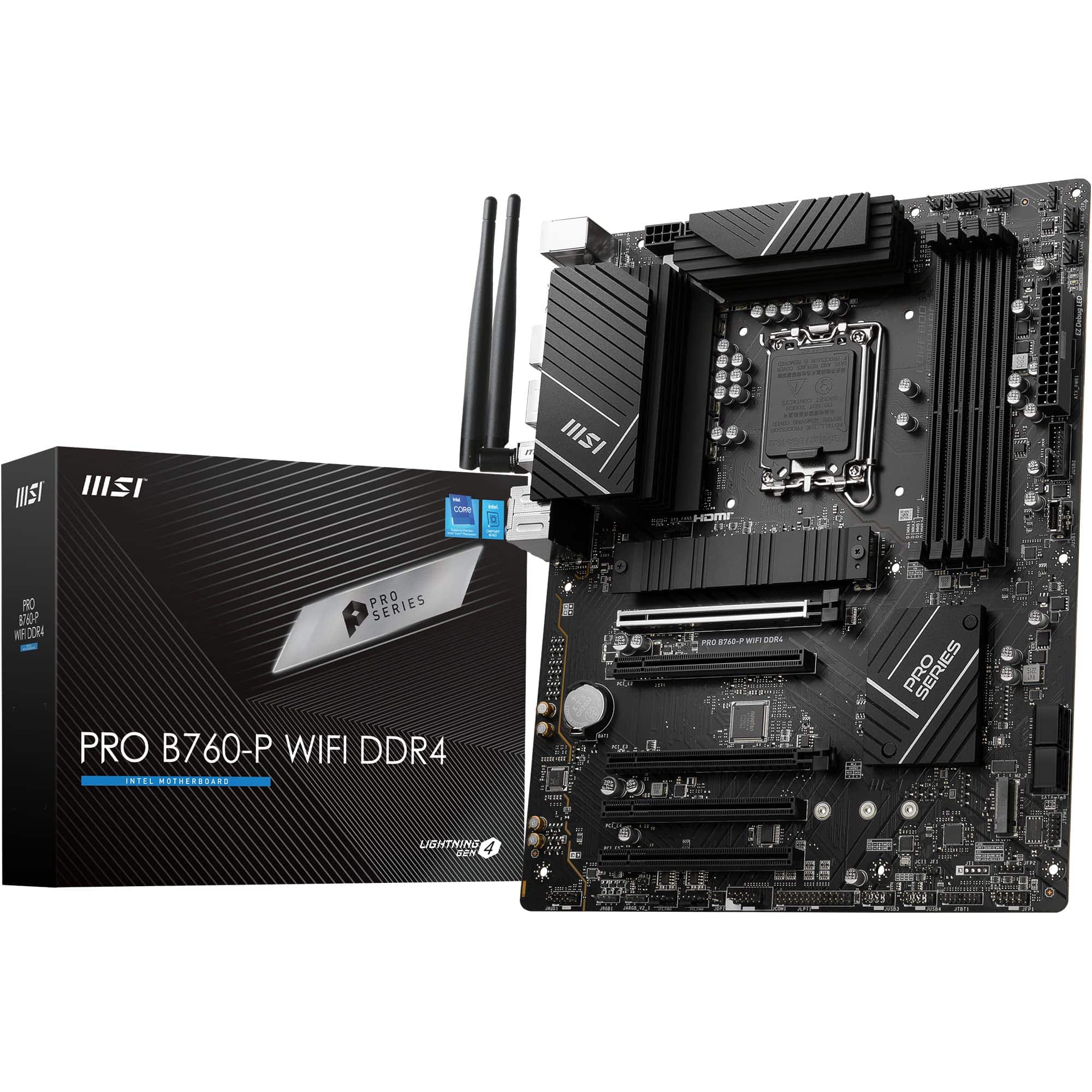 8.5 / 10
MSI PRO B760-P WIFI DDR4 Motherboard, ATX - Supports Intel 14th, 13th & 12th Gen Core Processors, LGA 1700 - DDR4 Memory Boost 5333+MHz/OC, PCIe 4.0 x16 Slots, M.2 Gen4 Slots, 2.5G LAN, Wi-Fi 6E
£129.95 · MSI
 8.5 / 10
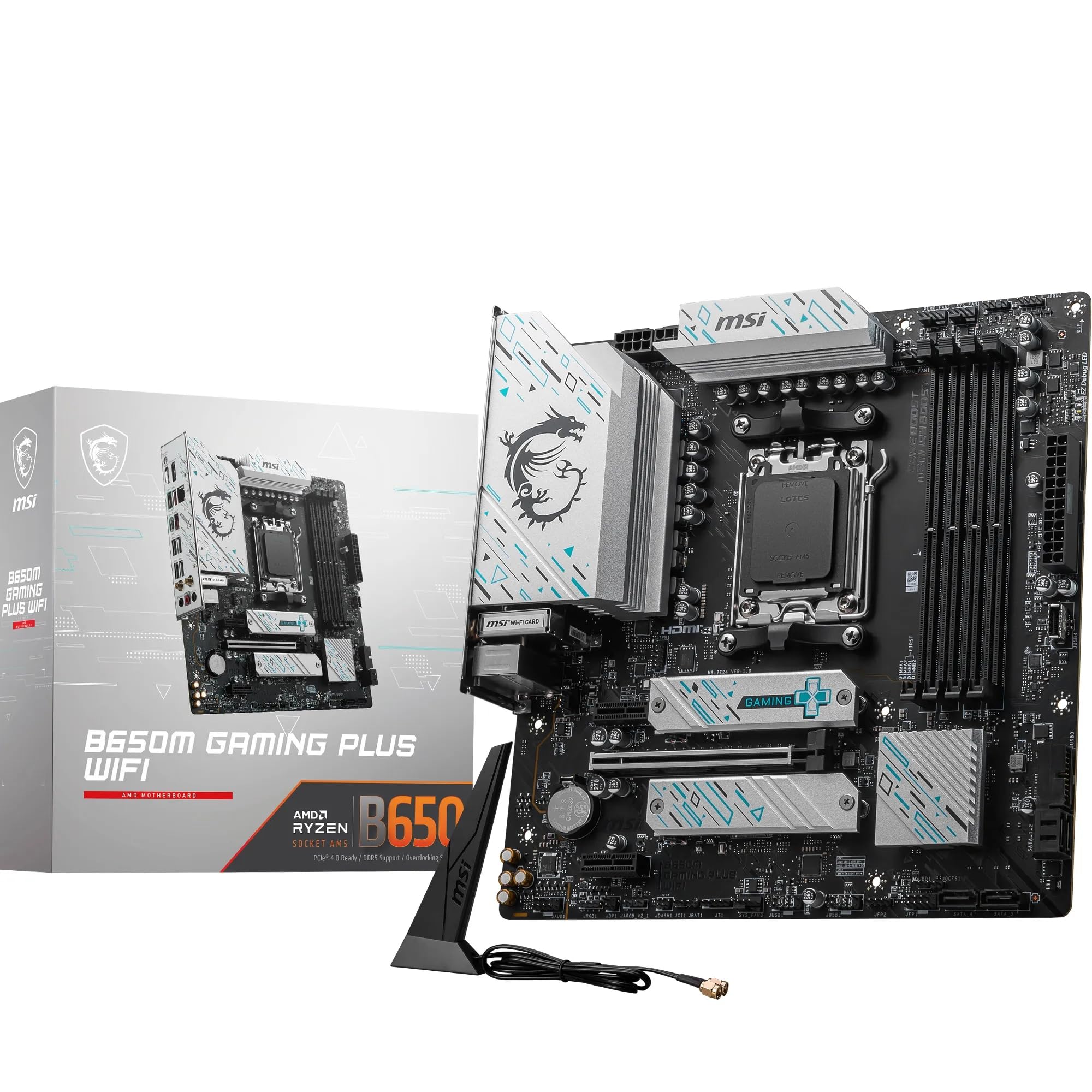
MSI B650M GAMING PLUS WIFI Motherboard, mATX - Supports AMD Ryzen 9000/8000 / 7000 Series Processors, AM5 - DDR5 Memory Boost 7800+ MHz/OC, PCIe 4.0 x16, M.2 Gen4, Wi-Fi 6E
£157.40 · MSI
Frequently asked
5 questions01Is the MSI X870E GAMING PLUS WIFI Motherboard, ATX - Supports AMD Ryzen 9000/8000 / 7000 Processors, AM5-60A SPS VRM, DDR5 Memory Boost 8200+ MT/s (OC), PCIe 5.0 x16 & 4.0 x4, M.2 Gen5, Wi-Fi 7, 5G LAN overkill for just gaming?+
Possibly, depending on your CPU and how much you care about future-proofing. For a Ryzen 5 or Ryzen 7 gaming build, a B650E board at a lower price will handle gaming workloads without any meaningful performance difference. Where the X870E Gaming Plus WIFI earns its keep for gamers is in the extras: Wi-Fi 7 for wireless gaming, 5Gbps LAN if you're on a fast home network, USB4 for peripherals, and a VRM that gives you headroom if you upgrade to a higher-TDP chip later. If you're buying a Ryzen 9 9900X or 9950X, the VRM and chipset are genuinely appropriate rather than overkill.
02Will my existing CPU cooler work with the MSI X870E GAMING PLUS WIFI Motherboard, ATX - Supports AMD Ryzen 9000/8000 / 7000 Processors, AM5-60A SPS VRM, DDR5 Memory Boost 8200+ MT/s (OC), PCIe 5.0 x16 & 4.0 x4, M.2 Gen5, Wi-Fi 7, 5G LAN?+
The board uses the AMD AM5 socket, which has a different mounting standard from AM4. If you're coming from an AM4 build, your cooler will not directly transfer over. Most major cooler brands (Noctua, be quiet!, Cooler Master, Arctic) offer AM5 mounting kits, sometimes included in the box and sometimes available as a free request from the manufacturer. Check your cooler brand's website before assuming compatibility. If you're buying a new cooler for this build, any cooler listed as AM5 compatible will work.
03What happens if the MSI X870E GAMING PLUS WIFI Motherboard, ATX - Supports AMD Ryzen 9000/8000 / 7000 Processors, AM5-60A SPS VRM, DDR5 Memory Boost 8200+ MT/s (OC), PCIe 5.0 x16 & 4.0 x4, M.2 Gen5, Wi-Fi 7, 5G LAN doesn't work with my components?+
Amazon's standard 30-day returns policy applies to this product, and the Amazon A-to-Z Guarantee covers you if the item arrives faulty or not as described. For compatibility issues, check MSI's QVL (Qualified Vendor List) for memory compatibility before purchasing your RAM kit. If you encounter a BIOS issue with a specific CPU, MSI's support page lists compatible firmware versions. Most early compatibility issues on AM5 boards are resolved by updating the BIOS to the latest stable release before installing your operating system.
04Is there a cheaper motherboard I should consider instead?+
Yes, honestly. If you're building around a Ryzen 5 9600X or Ryzen 7 9700X for gaming, the MSI MAG B650 TOMAHAWK WIFI is a well-regarded board at a noticeably lower price that handles mainstream builds without fuss. You lose the X870E chipset's mandatory USB4 and the 5Gbps LAN, but for a gaming-focused build those aren't dealbreakers. The X870E Gaming Plus WIFI makes more sense when you're pairing it with a Ryzen 9 processor, need USB4 for peripherals, or want the 5Gbps LAN and Wi-Fi 7 for a future-proof network setup.
05What warranty and returns apply to the MSI X870E GAMING PLUS WIFI Motherboard, ATX - Supports AMD Ryzen 9000/8000 / 7000 Processors, AM5-60A SPS VRM, DDR5 Memory Boost 8200+ MT/s (OC), PCIe 5.0 x16 & 4.0 x4, M.2 Gen5, Wi-Fi 7, 5G LAN?+
The verified product data does not specify a manufacturer warranty period for this board. MSI typically offers a three-year warranty on their motherboards in the UK, but confirm this directly with MSI or the seller before purchasing. Regardless of manufacturer warranty, Amazon's 30-day return window and the A-to-Z Guarantee apply to purchases made through Amazon UK, covering you for items that arrive faulty or not as described.